Washington Warranty Deed - Three Individuals to a Trust
Understanding this form
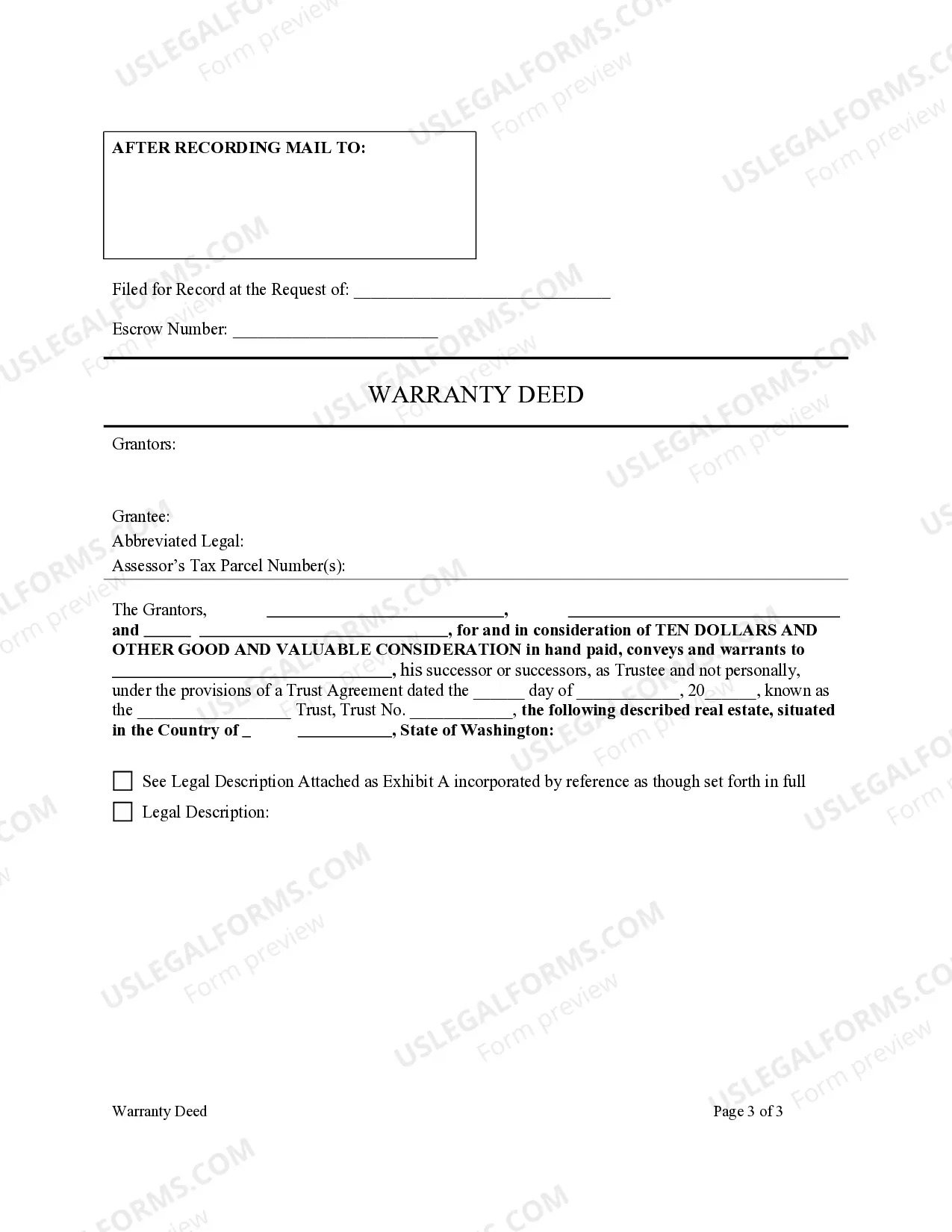
A Warranty Deed - Three Individuals to a Trust is a legal document that allows three individuals (grantors) to transfer property ownership to a trust (grantee). This deed ensures that the grantors convey the property with guarantees against title defects, meaning they affirm the property is free of liens or claims. It is crucial for certain property transactions, particularly when transferring assets into a trust for estate planning purposes.
Main sections of this form
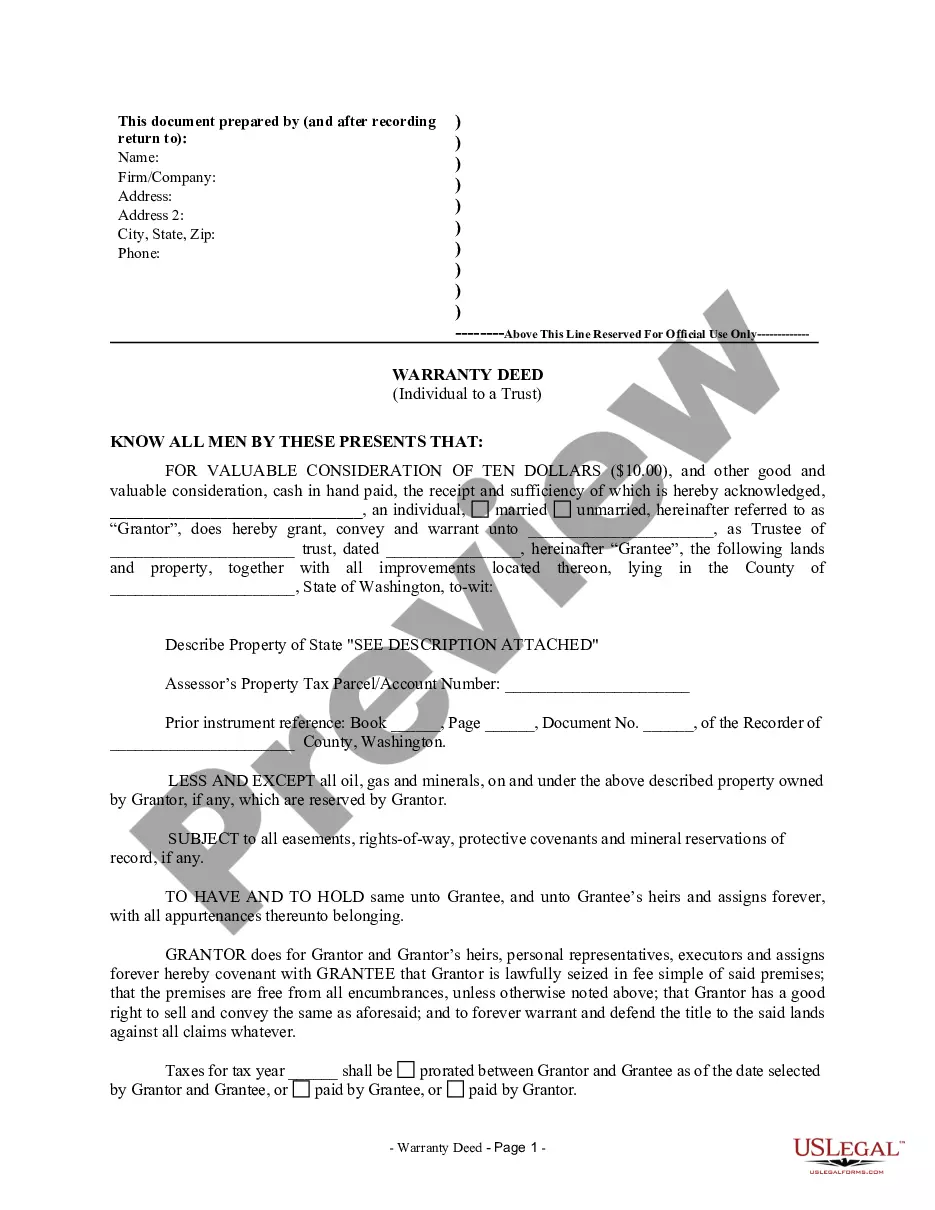
- Identifies the grantors and grantee with necessary personal information.
- Describes the property being transferred in detail, including boundaries.
- Includes warranty clauses ensuring the property title is clear.
- Details any specific terms or conditions related to the transfer.
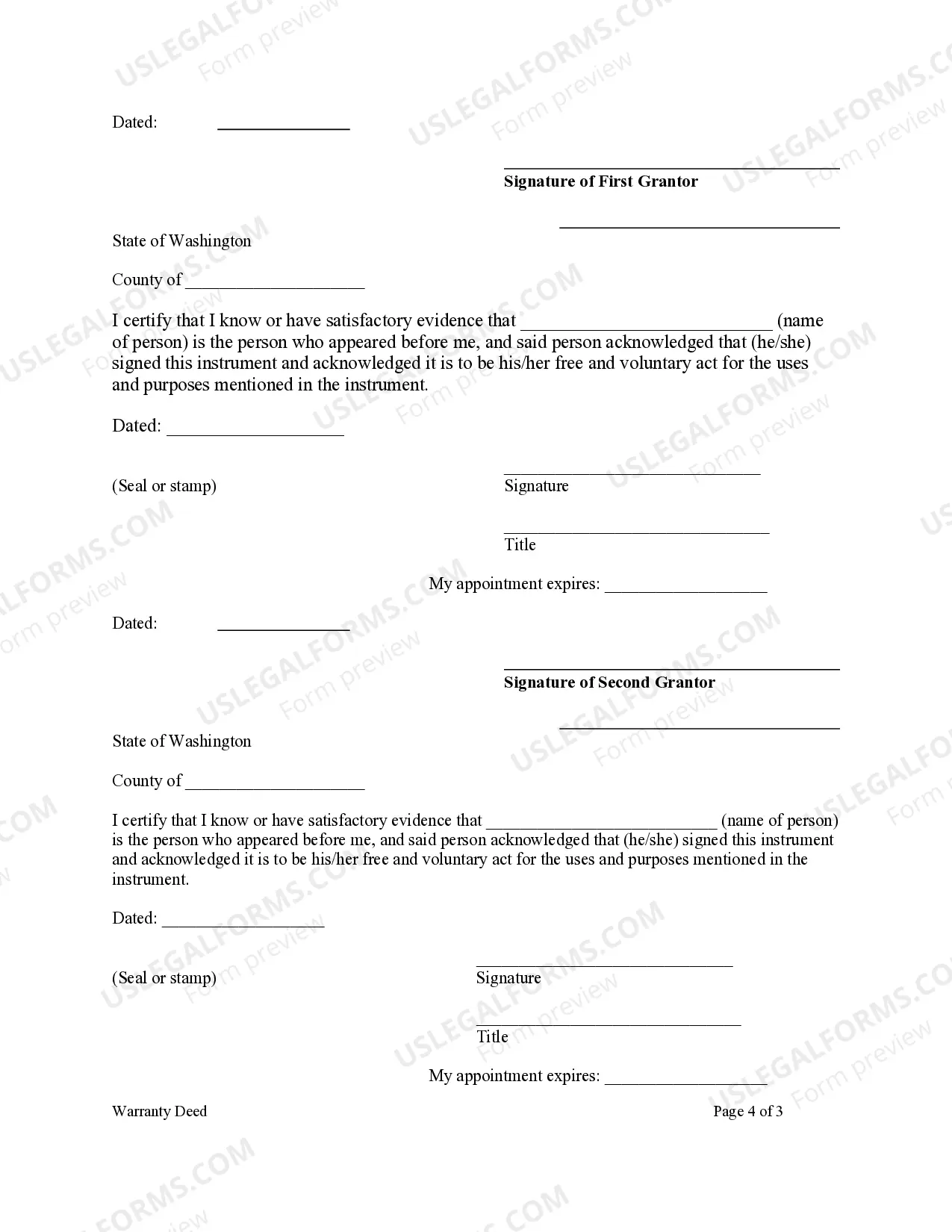
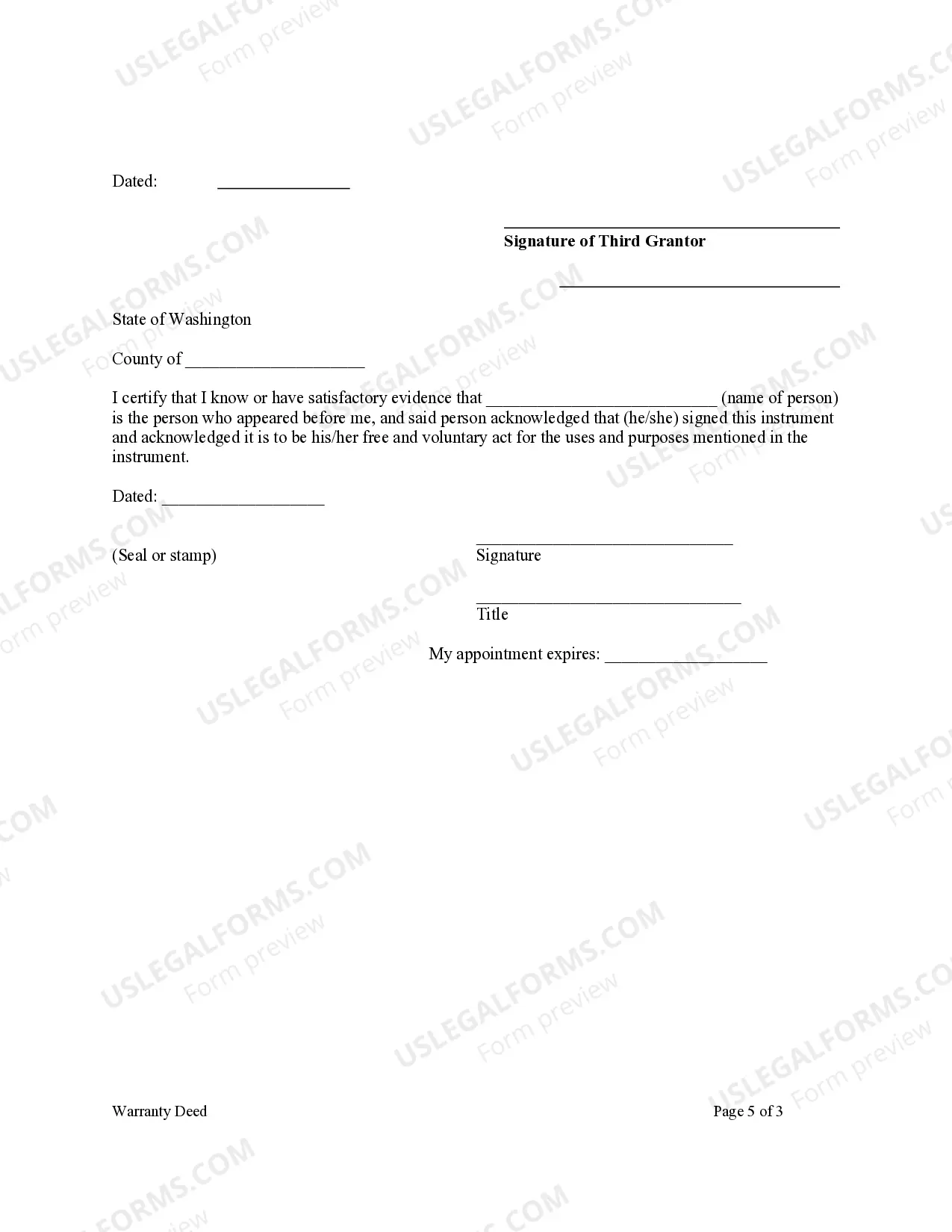
- Contains a section for signatories' names and a space for notarization.





When this form is needed
This form is typically used when three individuals wish to transfer property they own into a trust. It is beneficial for facilitating estate planning, asset protection, and ensuring a smooth transition of property management without going through probate after death.
Who should use this form
- Homeowners looking to transfer their property into a trust.
- Individuals involved in estate planning wanting to safeguard their assets.
- Real estate agents or attorneys handling property transfers for clients.
How to prepare this document
- Identify the parties involved: list all three grantors and the trust as the grantee.
- Specify the property: include a detailed legal description of the property being transferred.
- Complete any warranty clauses to affirm the state of the property title.
- Enter the date of the transfer and ensure all parties sign the form.
- Have the document notarized if required by your state.
Does this form need to be notarized?
Yes, this form must be notarized to be legally valid. This ensures that the signatures are authentic and that all parties are acting voluntarily. US Legal Forms offers integrated online notarization 24/7 via secure video calls, ensuring a smooth and efficient process.
Get your form ready online
Our built-in tools help you complete, sign, share, and store your documents in one place.
Make edits, fill in missing information, and update formatting in US Legal Forms—just like you would in MS Word.
Download a copy, print it, send it by email, or mail it via USPS—whatever works best for your next step.
Sign and collect signatures with our SignNow integration. Send to multiple recipients, set reminders, and more. Go Premium to unlock E-Sign.
If this form requires notarization, complete it online through a secure video call—no need to meet a notary in person or wait for an appointment.
We protect your documents and personal data by following strict security and privacy standards.

Make edits, fill in missing information, and update formatting in US Legal Forms—just like you would in MS Word.

Download a copy, print it, send it by email, or mail it via USPS—whatever works best for your next step.

Sign and collect signatures with our SignNow integration. Send to multiple recipients, set reminders, and more. Go Premium to unlock E-Sign.

If this form requires notarization, complete it online through a secure video call—no need to meet a notary in person or wait for an appointment.

We protect your documents and personal data by following strict security and privacy standards.
Typical mistakes to avoid
- Failing to accurately describe the property details.
- Not having all grantors sign the deed.
- Neglecting to notarize the document if required.
- Using outdated or incorrect state-specific language.
Why use this form online
- Convenient access from home, eliminating the need to visit a law office.
- Editable fields allow for easy customization to fit specific needs.
- Reliable templates ensure compliance with state laws.
Looking for another form?


Form popularity
FAQ
2. Organize your paperwork. Gather together documentation pertaining to your assets. This should include the titles and deeds to real property, bank account information, investment accounts, stock certificates, life insurance policies, and other assets you will be using to fund the trust.
If the Trust list you both as Co-Trustees, both signature are required. Make sure you have the right, as specified in the Trust Agreement, to sell the real property. Equally important, is the party entitled to the proceeds.
1Determine the Current Title and Vesting to Your Property.2Prepare a Deed.3Be Aware of Your Lender and Title Insurance.4Prepare a Preliminary Change of Ownership Report.5Execute Your Deed.6Record Your Deed.7Wait for the Deed to be Returned.8Keep the Property in the Trust.
1Locate your current deed.2Use the proper deed.3Check with your title insurance company and lender.4Prepare a new deed.5Sign in the presence of a notary.6Record the deed in the county clerk's office.7Locate the deed that's in trust.8Use the proper deed.How to Transfer a Deed in a Living Trust .com\ninfo..com > article > how-transfer-deed-living-trust
You can put jointly held property in a living trust. However, what you end up placing in the trust depends on the structure by which the property is held jointly as well as the structure of the trust. In some cases, it might be unnecessary to put the property in a trust at all.
Obtain a California grant deed from a local office supply store or your county recorder's office. Complete the top line of the deed. Indicate the grantee on the second line. Enter the trustees' names and addresses.
1Obtain a California grant deed from a local office supply store or your county recorder's office.2Complete the top line of the deed.3Indicate the grantee on the second line.4Enter the trustees' names and addresses.How to Put My House in a Trust\nhomeguides.sfgate.com > put-house-trust-46549
To transfer real estate (also called real property) into your living trust, you must prepare and sign a new deed, transferring ownership. You can usually fill out a new deed yourself.
Transferring Real Property to a Trust You can transfer your home (or any real property) to the trust with a deed, a document that transfers ownership to the trust. A quitclaim deed is the most common and simplest method (and one you can do yourself).