Missouri Living Trust for Individual Who is Single, Divorced or Widow (or Widower) with No Children

What this document covers
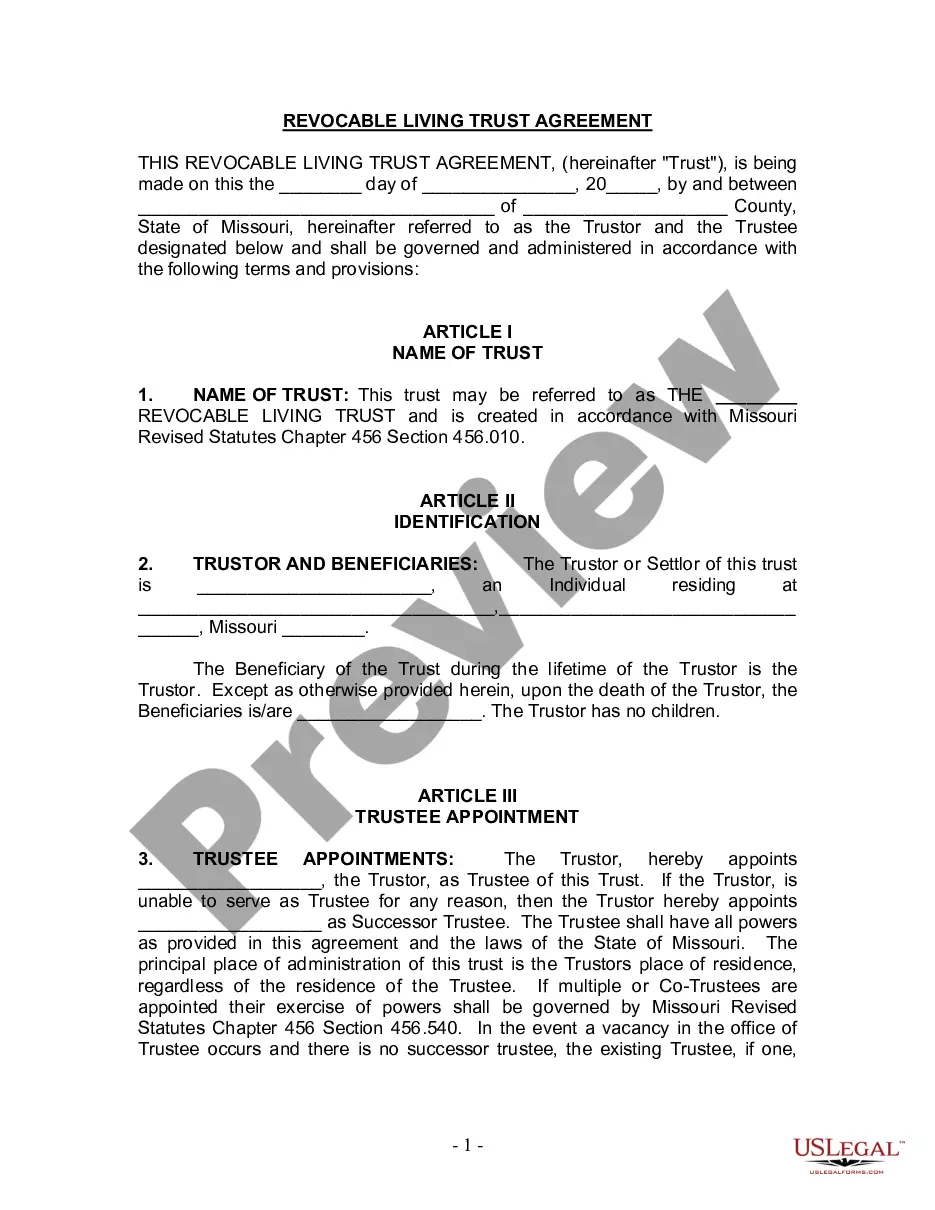
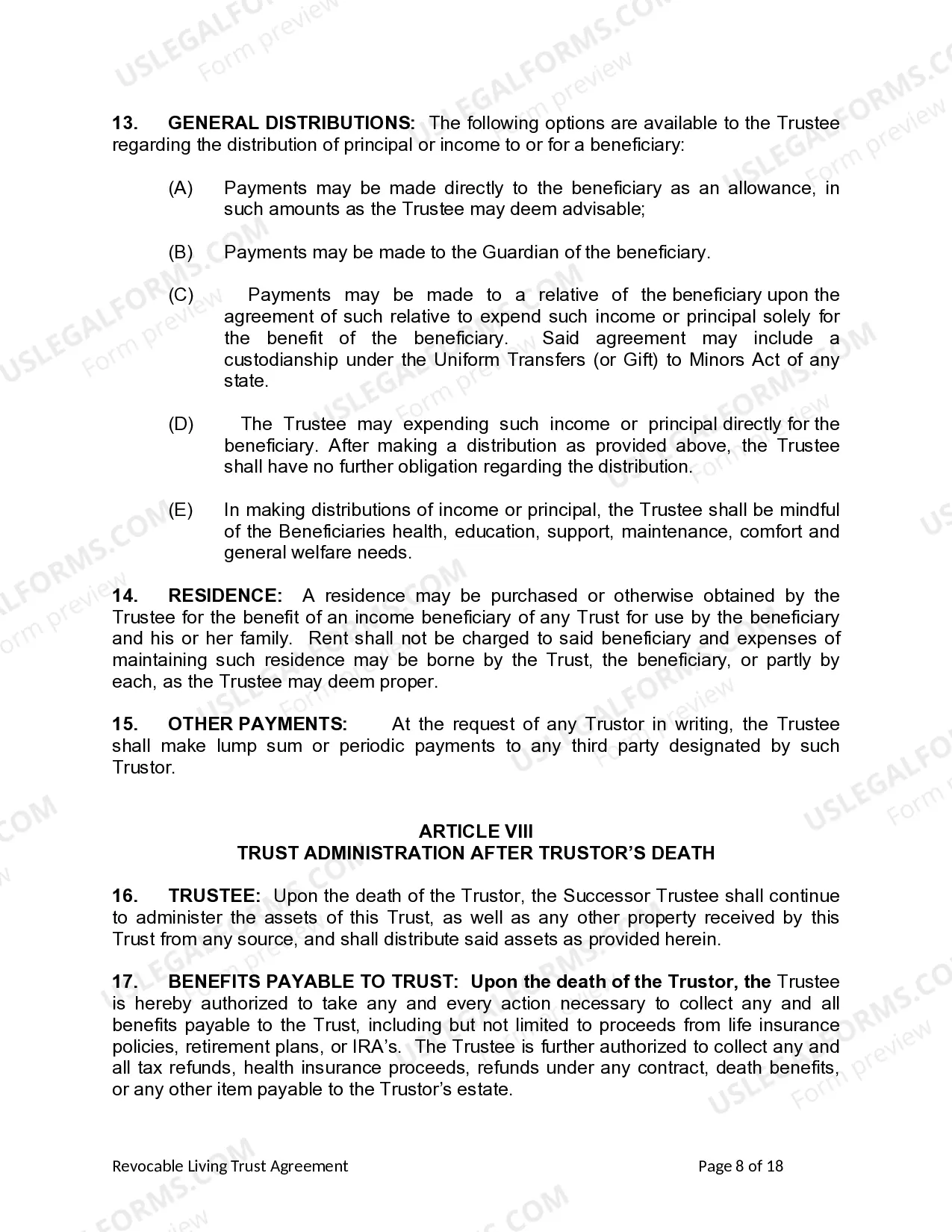
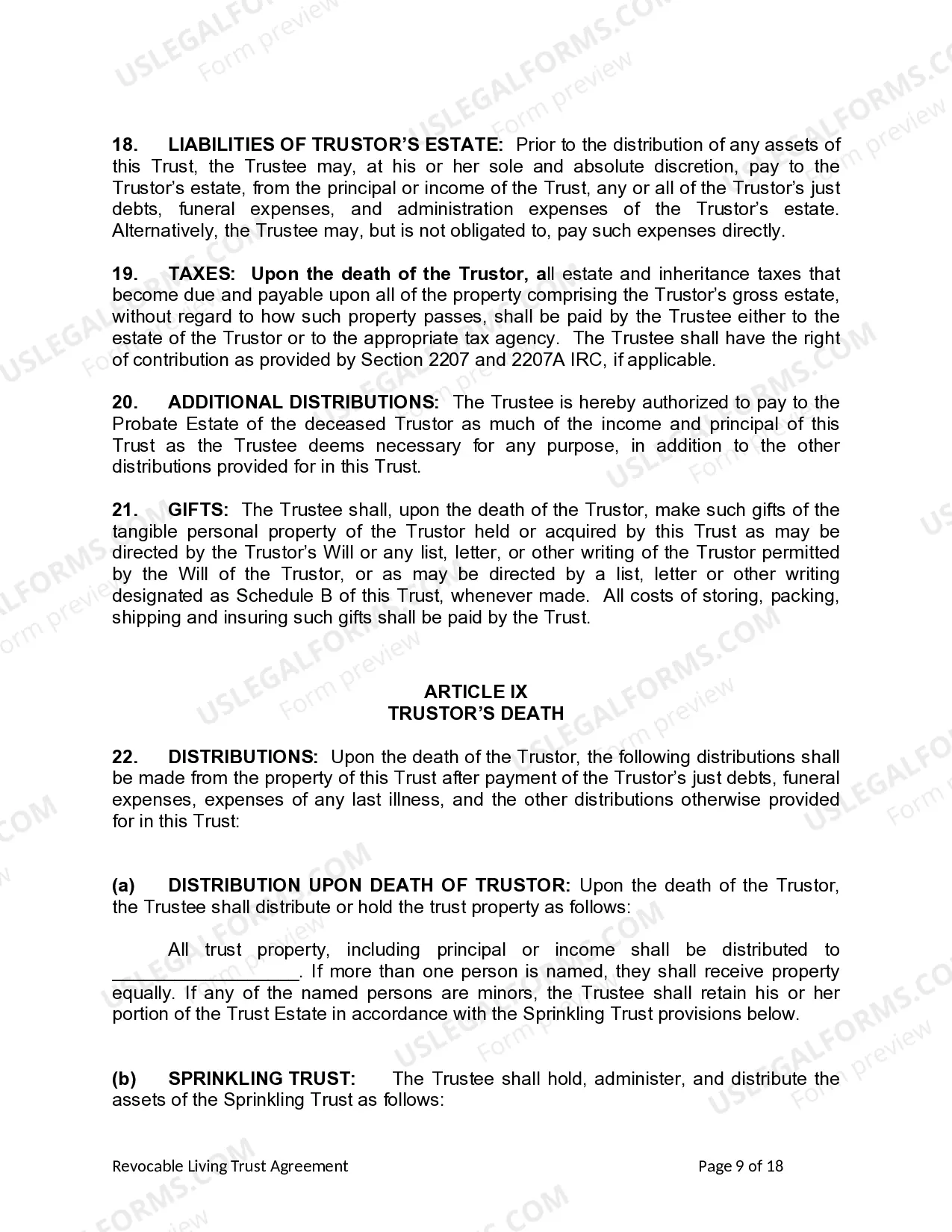
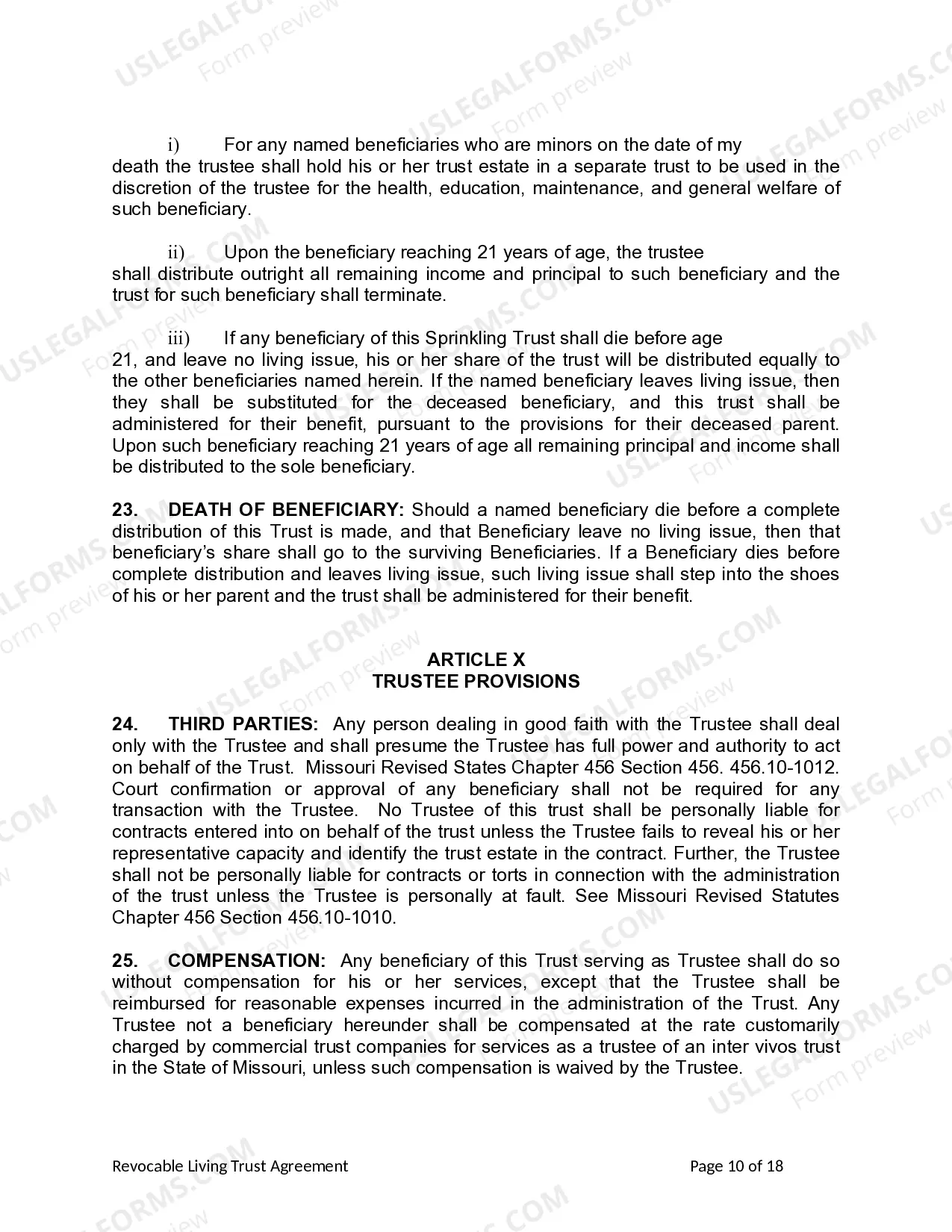
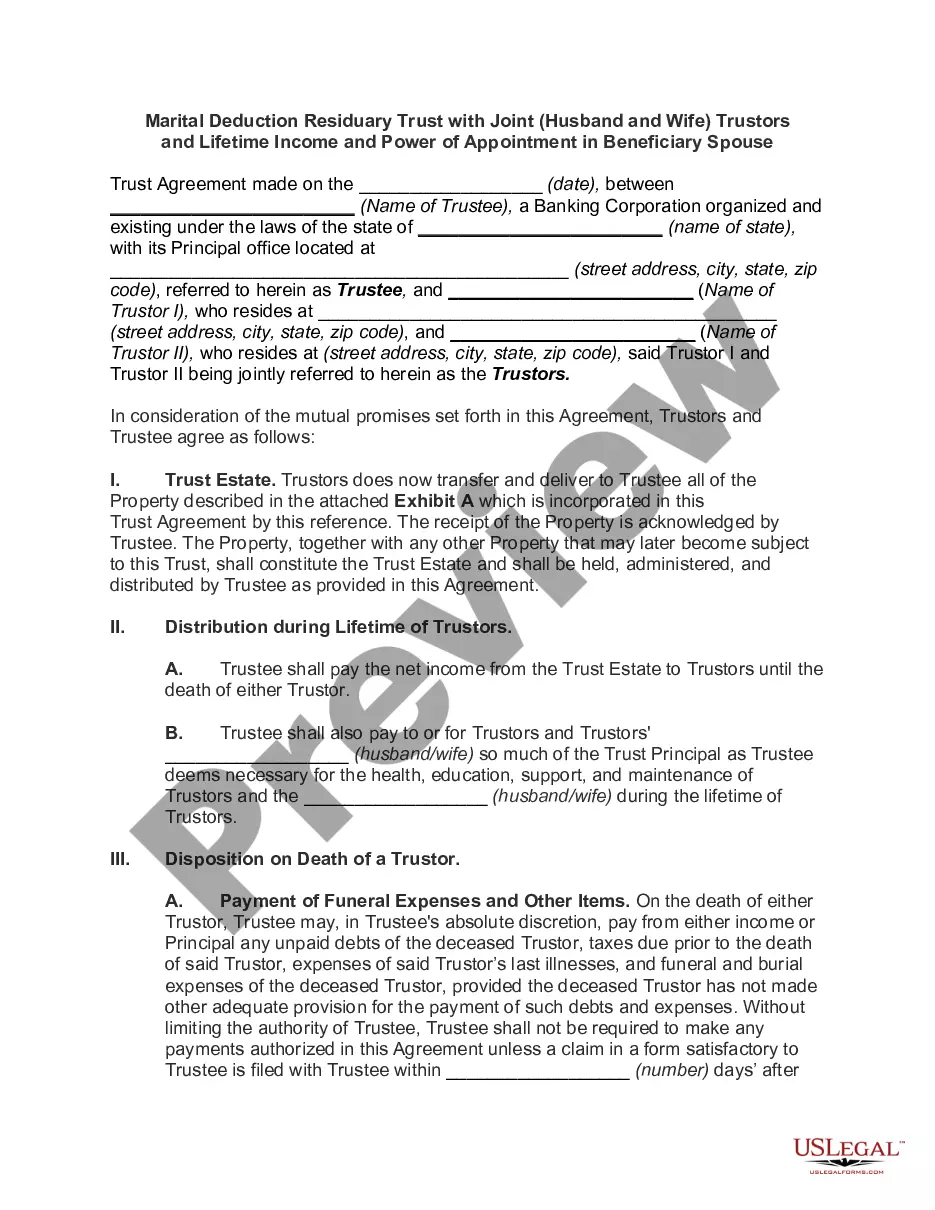
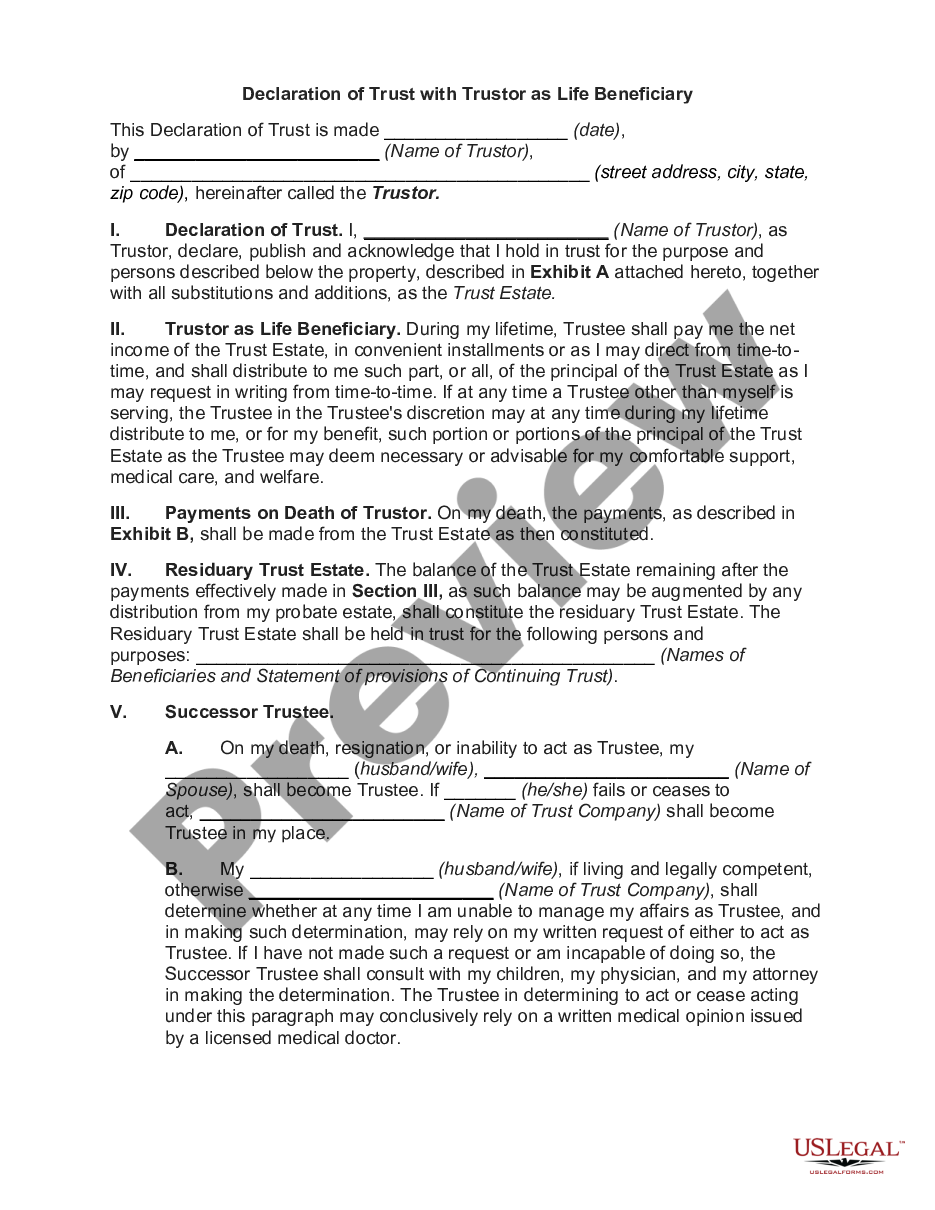
This Living Trust for an Individual Who is Single, Divorced or a Widow (or Widower) with No Children is a legal document designed for individuals who want to manage their assets and plan their estate without going through the probate process. A living trust allows the individual to control their property while they are alive and specify how their assets should be distributed upon their death. This form is distinct from other estate planning tools, such as a will, as it provides more privacy and reduces the time and cost associated with probate.
What’s included in this form
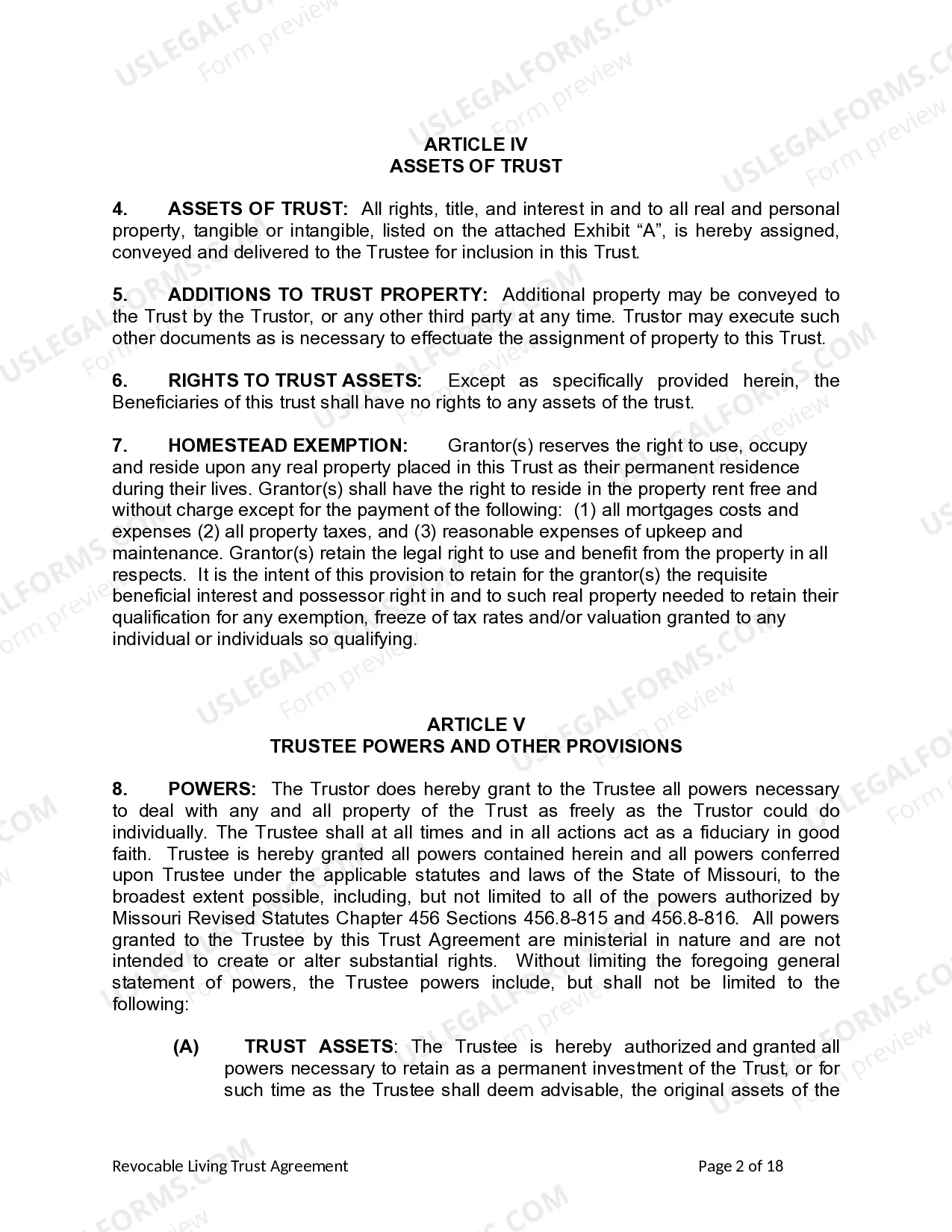
- Trustor and trustee identification: Details concerning the individual creating the trust and the appointed trustee.
- Name of the trust: The designated title for the living trust.
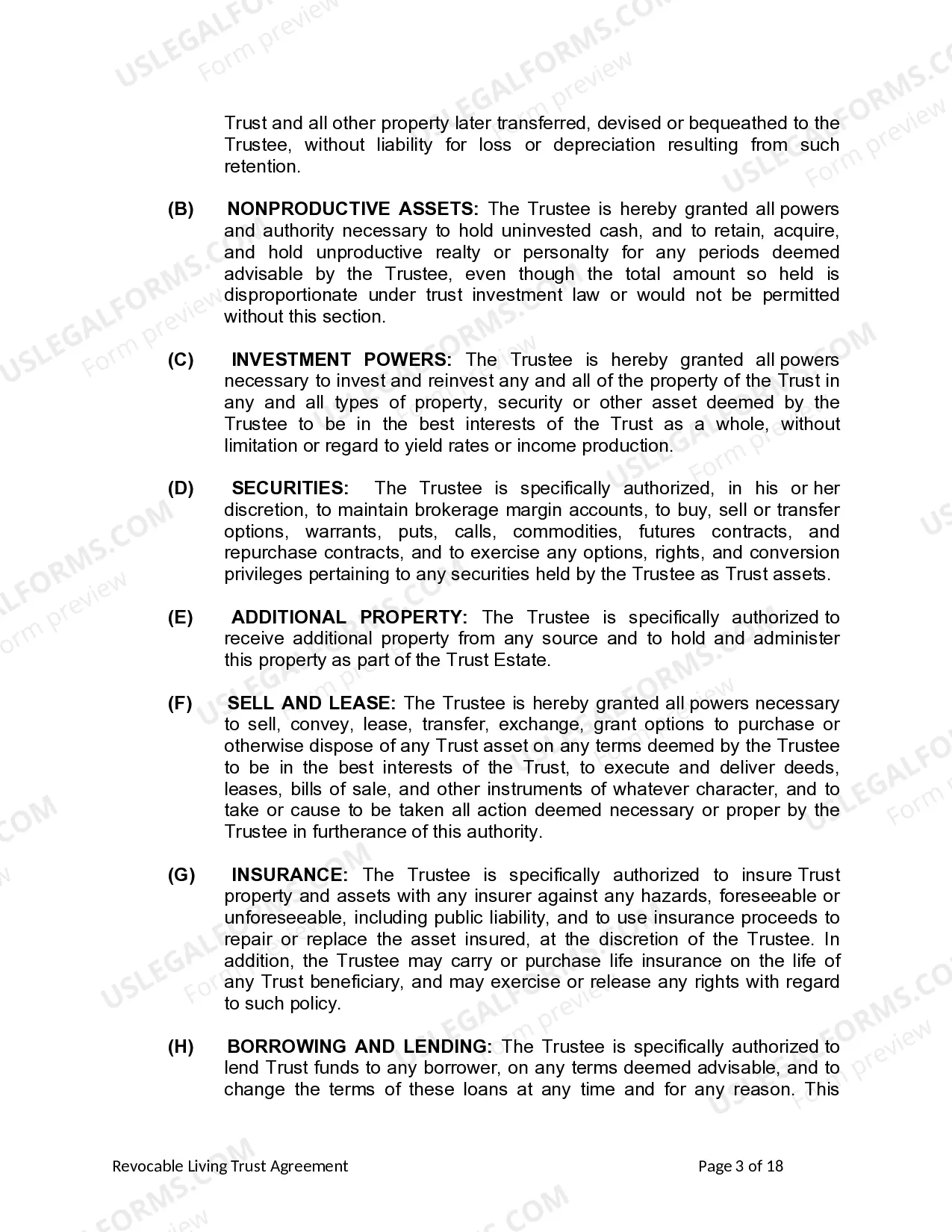
- Trust assets: A section to list all assets included in the trust.
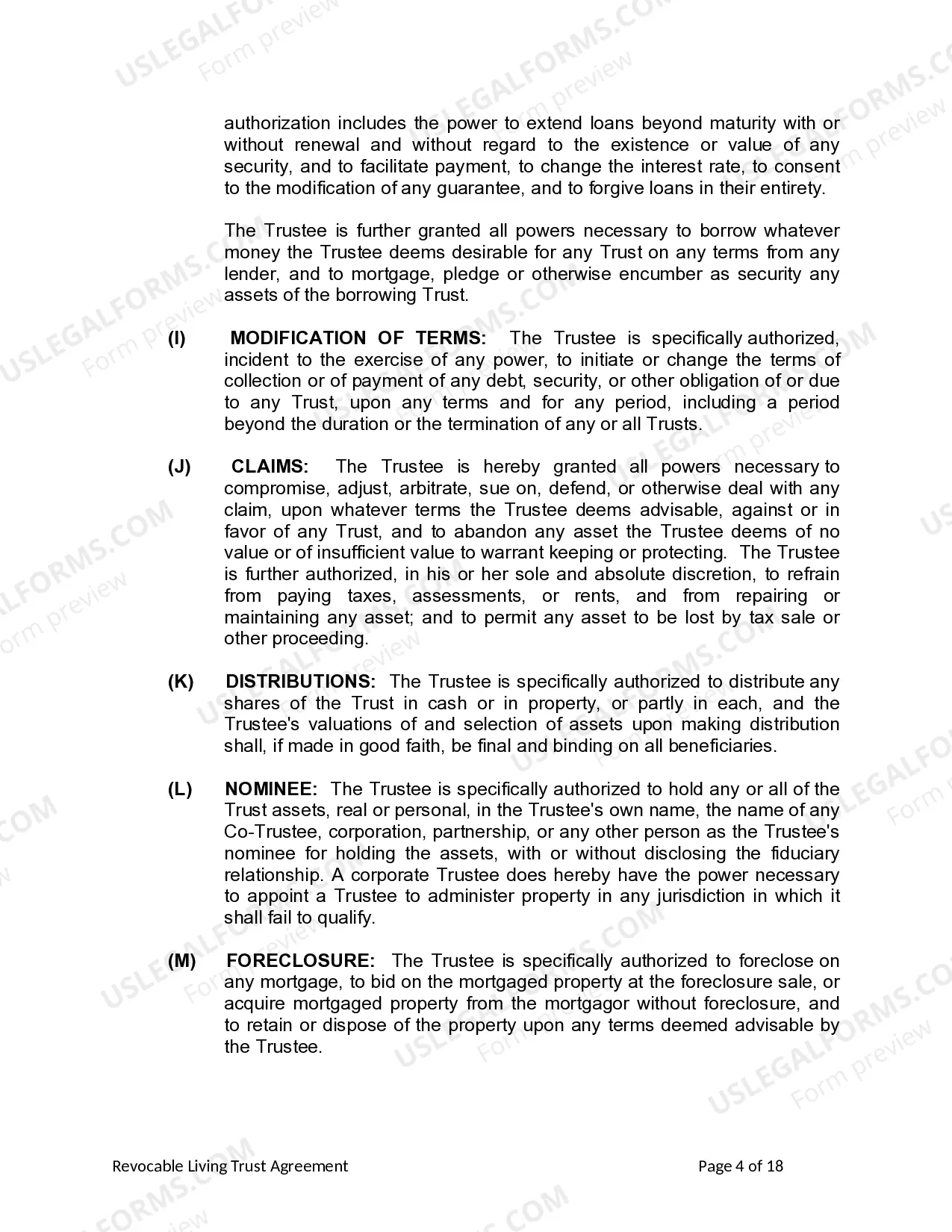
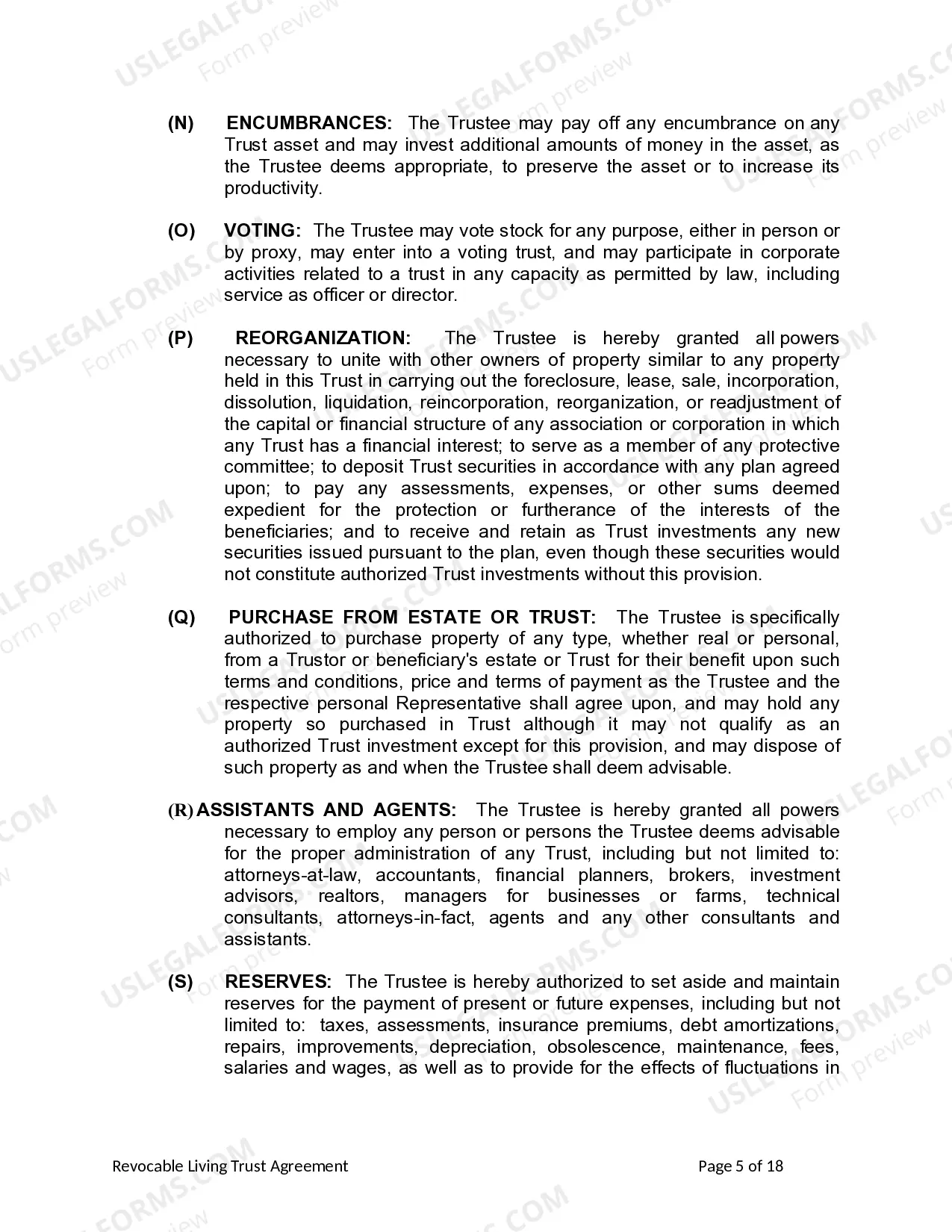
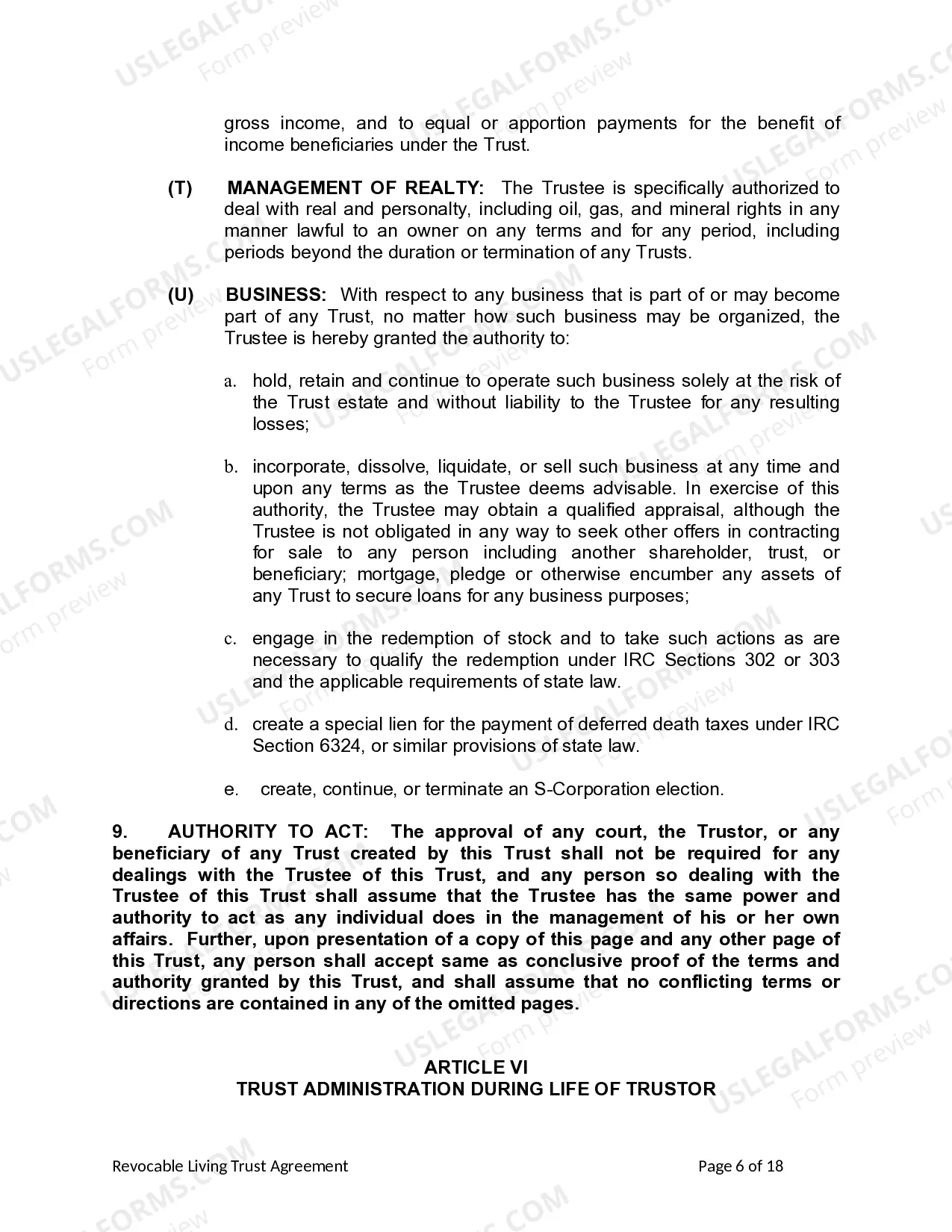
- Trustee powers: Outlines the specific powers and responsibilities granted to the trustee.
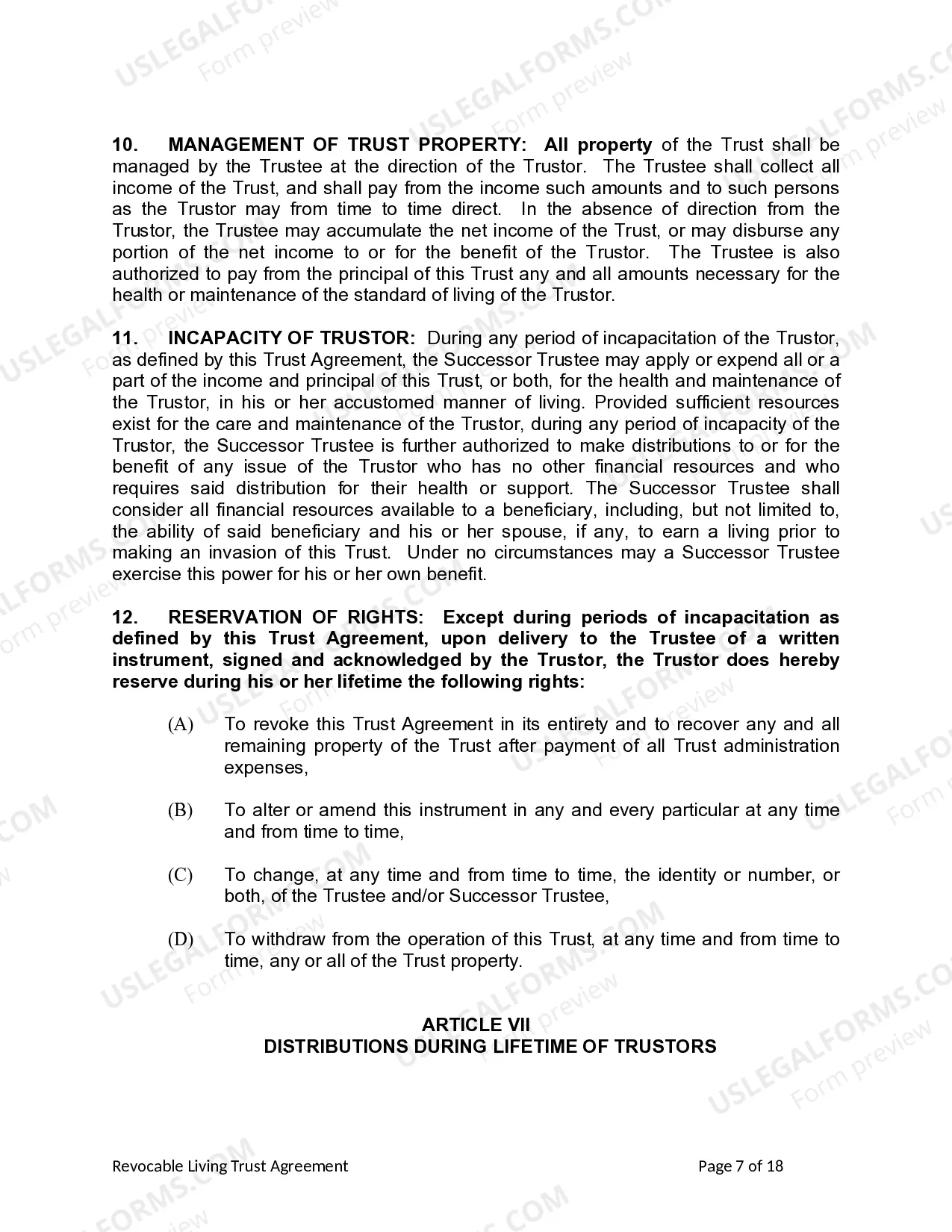
- Conditions for distribution: Provisions on how and when assets are distributed after the trustor's death.



When this form is needed
This form should be used when an individual who is single, divorced, or a widow/widower with no children wishes to establish control over their assets during their lifetime and ensure a smooth transition of those assets upon their death. It is particularly beneficial for those looking to minimize probate complications and maintain privacy in their estate planning.
Intended users of this form
- Individuals who are single, divorced, or widowed without children.
- People looking to establish a trust for managing their assets during their lifetime.
- Anyone wanting to avoid probate for their estate after death.
- Individuals who wish to retain control over their property and dictate how it is handled after their death.
Instructions for completing this form
- Identify the parties involved: Enter the names and addresses of the trustor and trustee.
- Specify the name of the trust: Assign a clear and identifiable name for the trust.
- List the trust assets: Provide detailed information about the assets to be included in the trust.
- Review and outline the trustee powers: Specify the powers granted to the trustee for managing the trust assets.
- Sign and date the form: Ensure all parties sign the document in front of a notary, if required by state law.
Does this form need to be notarized?
To make this form legally binding, it must be notarized. Our online notarization service, powered by Notarize, lets you verify and sign documents remotely through an encrypted video session.
Get your form ready online
Our built-in tools help you complete, sign, share, and store your documents in one place.
Make edits, fill in missing information, and update formatting in US Legal Forms—just like you would in MS Word.
Download a copy, print it, send it by email, or mail it via USPS—whatever works best for your next step.
Sign and collect signatures with our SignNow integration. Send to multiple recipients, set reminders, and more. Go Premium to unlock E-Sign.
If this form requires notarization, complete it online through a secure video call—no need to meet a notary in person or wait for an appointment.
We protect your documents and personal data by following strict security and privacy standards.

Make edits, fill in missing information, and update formatting in US Legal Forms—just like you would in MS Word.

Download a copy, print it, send it by email, or mail it via USPS—whatever works best for your next step.

Sign and collect signatures with our SignNow integration. Send to multiple recipients, set reminders, and more. Go Premium to unlock E-Sign.

If this form requires notarization, complete it online through a secure video call—no need to meet a notary in person or wait for an appointment.

We protect your documents and personal data by following strict security and privacy standards.
Mistakes to watch out for
- Failing to clearly identify all trust assets.
- Not specifying the powers of the trustee, which can lead to misunderstandings.
- Missing signatures or failing to have the document notarized when required.
- Not keeping the trust updated with changes in assets or personal circumstances.
Advantages of online completion
- Convenience of accessing and filling out the form anytime, anywhere.
- Editability allows users to customize the trust according to their specific needs.
- Reliability of using a professionally drafted form ensures compliance with state laws.
Quick recap
- This living trust is specifically for individuals who are single, divorced, or widowed with no children.
- It allows the trustor to manage their assets and avoids probate upon death.
- Proper completion and notarization of this form are crucial for it to be legally valid.
- It's important to keep the trust updated as life circumstances change.
Looking for another form?
Form popularity
FAQ
In the case of a revocable living trust, when one spouse dies, the trust typically becomes irrevocable. This means that the trust's terms cannot be changed, and it continues to manage the assets for the surviving spouse or designated beneficiaries. This arrangement is beneficial as it can help avoid probate and ensure a smooth transfer of assets. If you are considering a Missouri Living Trust for Individual Who is Single, Divorced or Widow (or Widower) with No Children, consult US Legal Forms for tailored guidance.
Yes, you can create a Missouri Living Trust for Individual Who is Single, Divorced or Widow (or Widower) with No Children without involving a spouse. This legal instrument allows you to manage your assets according to your wishes, independent of a partner. It provides a straightforward way to ensure your estate is handled as you desire. Using platforms like US Legal Forms can simplify this process and guide you through the necessary steps.
While a trust offers many benefits, there are some downsides to consider. Setting up a Missouri Living Trust for Individual Who is Single, Divorced or Widow (or Widower) with No Children can involve initial costs and require ongoing management. Additionally, if assets are not properly transferred into the trust, they may still be subject to probate. However, with proper guidance and resources like UsLegalForms, you can effectively navigate these challenges.
Even without children, establishing a Missouri Living Trust for Individual Who is Single, Divorced or Widow (or Widower) with No Children is a wise decision. A trust allows you to specify how your assets should be handled upon your death, providing clarity and reducing potential conflicts among relatives or friends. Furthermore, a trust can help manage your affairs if you become incapacitated. This proactive approach ensures your wishes are respected.
When one spouse passes away, the living trust typically continues to operate, provided it is established as a joint trust. The surviving spouse retains control over the trust assets and can manage them as before. If the trust was created solely for a single individual, the assets would be distributed according to the trust terms after the individual's death. This flexibility makes a Missouri Living Trust for Individual Who is Single, Divorced or Widow (or Widower) with No Children a valuable estate planning tool.
In Missouri, a living trust operates by allowing you to transfer ownership of your assets into the trust while you are alive. You maintain control over the assets and can make changes as needed. Upon your death, the assets are distributed according to the terms of the trust without going through probate. This streamlined process makes a Missouri Living Trust for Individual Who is Single, Divorced or Widow (or Widower) with No Children an efficient choice for managing your estate.
Yes, a single person with no children can benefit from establishing a Missouri Living Trust for Individual Who is Single, Divorced or Widow (or Widower) with No Children. A trust allows you to manage your assets during your lifetime and dictate how they are distributed after your passing. This can provide peace of mind, knowing your wishes are clearly outlined. Additionally, a trust can help avoid the lengthy probate process.
Yes, you can establish a trust without your spouse, especially if you are single, divorced, or a widow (or widower) with no children. A Missouri Living Trust for Individuals Who are Single, Divorced, or Widows (or Widowers) with No Children allows you to maintain control over your assets and how they will be distributed. It empowers you to make decisions that align with your personal goals. Utilizing a service like US Legal Forms can provide you with the necessary resources to set up your trust efficiently.
Assets held in a living trust may offer some protection from division during a divorce, but this largely depends on how the trust is structured and your individual circumstances. For a Missouri Living Trust for Individuals Who are Single, Divorced, or Widows (or Widowers) with No Children, it is crucial to understand that marital assets are typically subject to division. Properly setting up your trust with clear terms can help clarify ownership, but consulting with a legal expert is advisable to navigate these complexities.
To obtain a Missouri Living Trust for Individuals Who are Single, Divorced, or Widows (or Widowers) with No Children, start by outlining your assets and your wishes for their distribution. You can use platforms like US Legal Forms for reliable templates and guidance specific to Missouri laws. After preparing the trust document, you will need to fund the trust by transferring your assets into it. Finally, consider consulting with an attorney to ensure everything is in order and compliant with state regulations.