Missouri Marital Domestic Separation and Property Settlement Agreement no Children parties may have Joint Property or Debts where Divorce Action Filed
Understanding this form
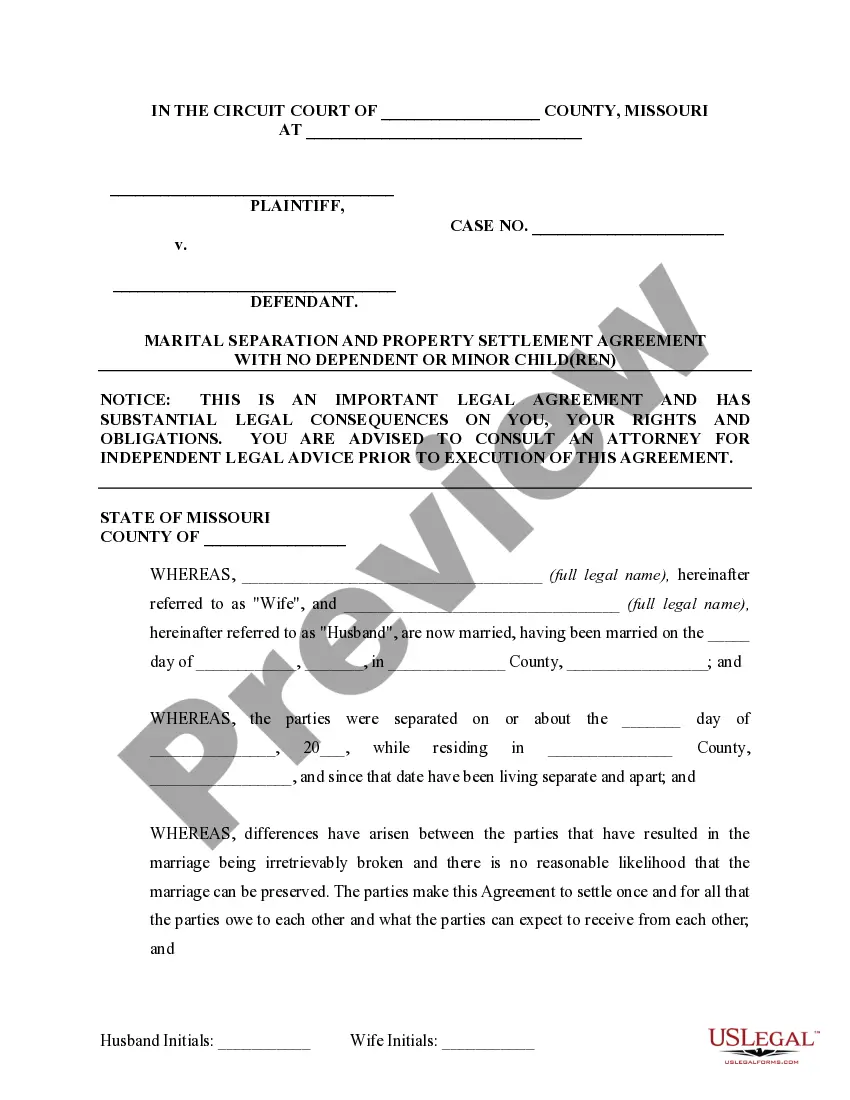
The Marital Domestic Separation and Property Settlement Agreement is a legal document designed for couples who are separating without children. This form addresses the division of joint property and debts, specifically when a divorce action has been initiated or is expected to begin. It differs from other separation agreements by focusing on financial matters, making it essential for couples seeking clarity and resolution regarding their shared assets and liabilities.
Key components of this form
- Introduction outlining the parties and their marital history.
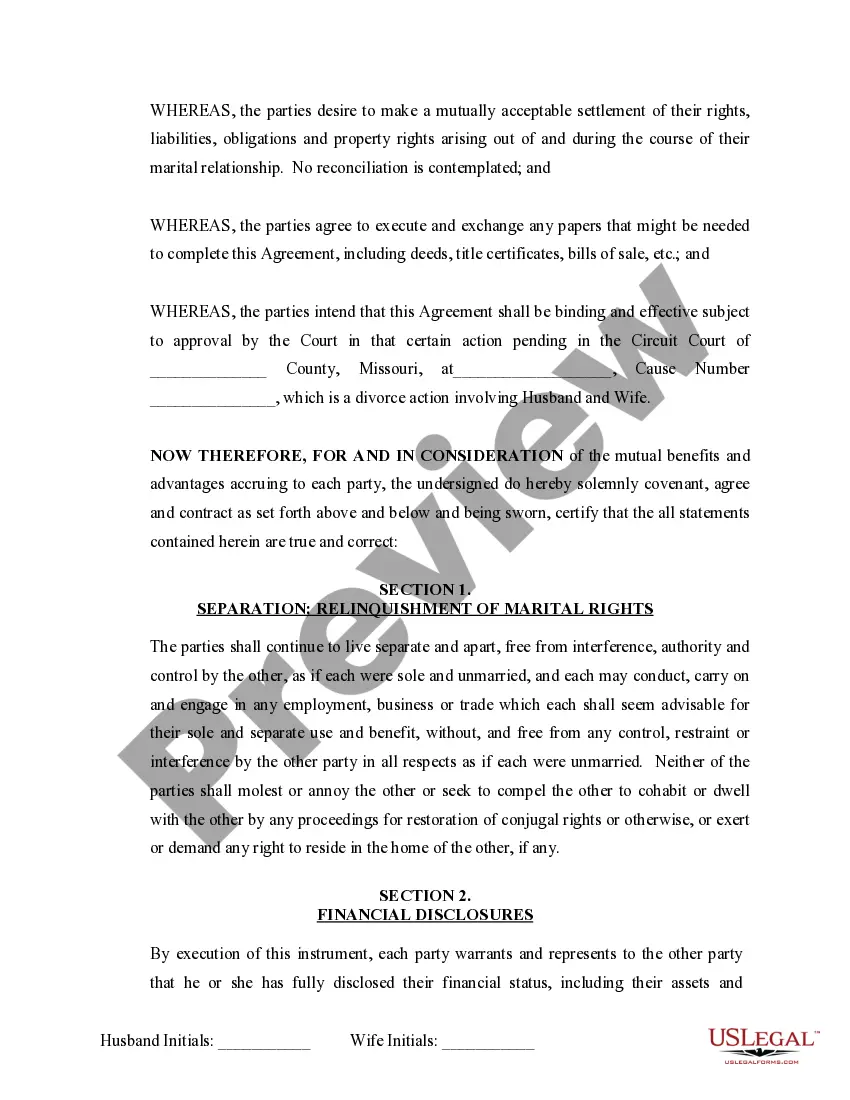
- Section on separation and relinquishment of marital rights.
- Detailed financial disclosures required from each party.
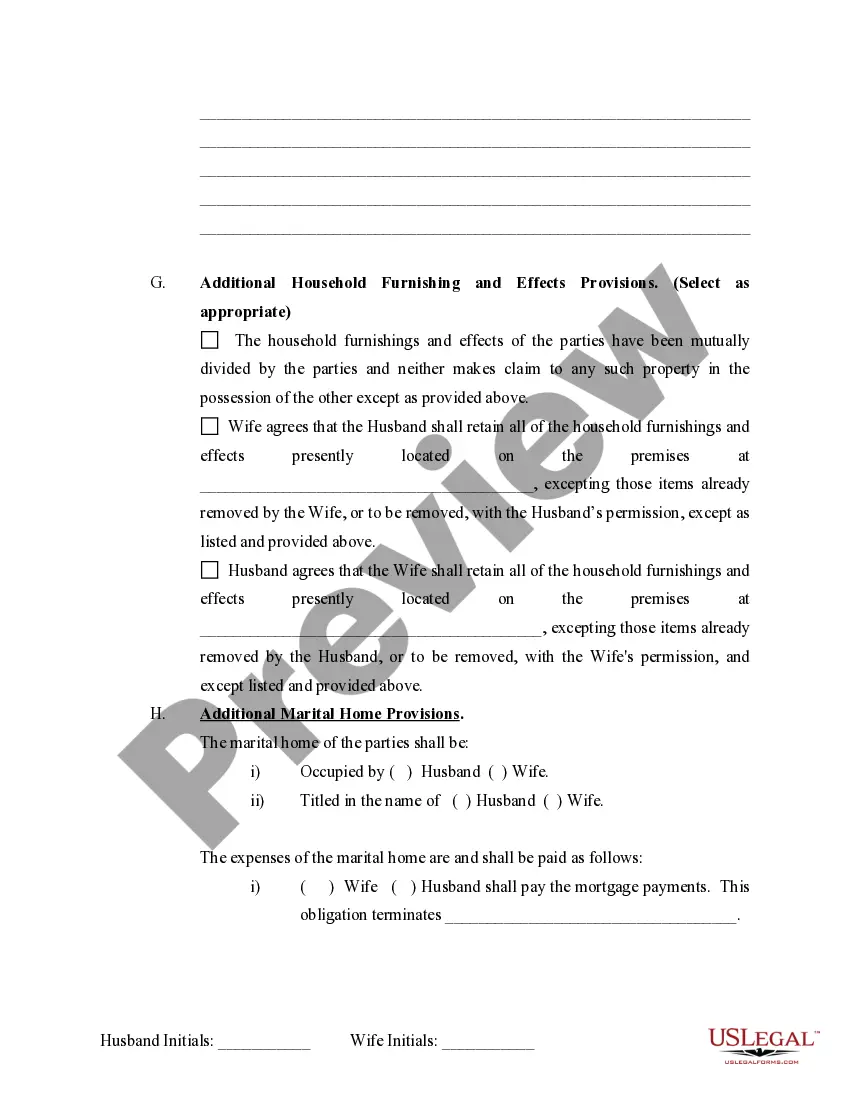
- Specific clauses for asset division, including personal property and financial accounts.
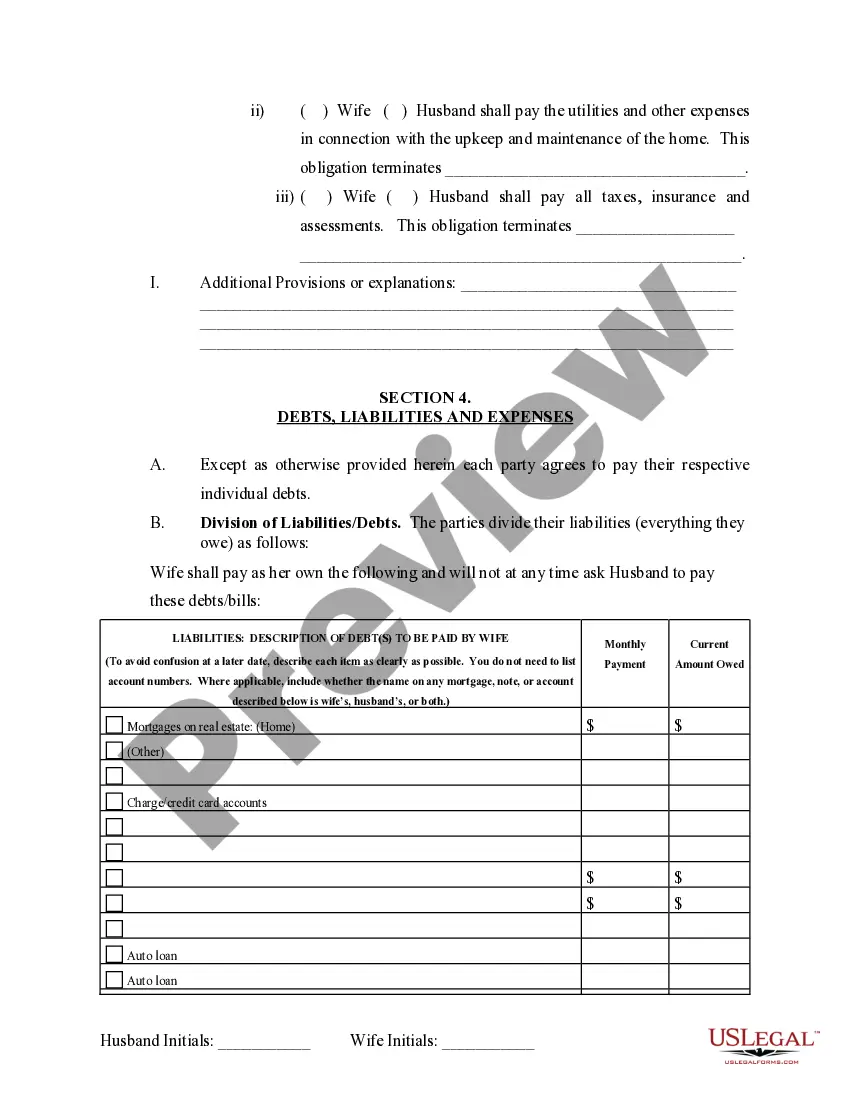
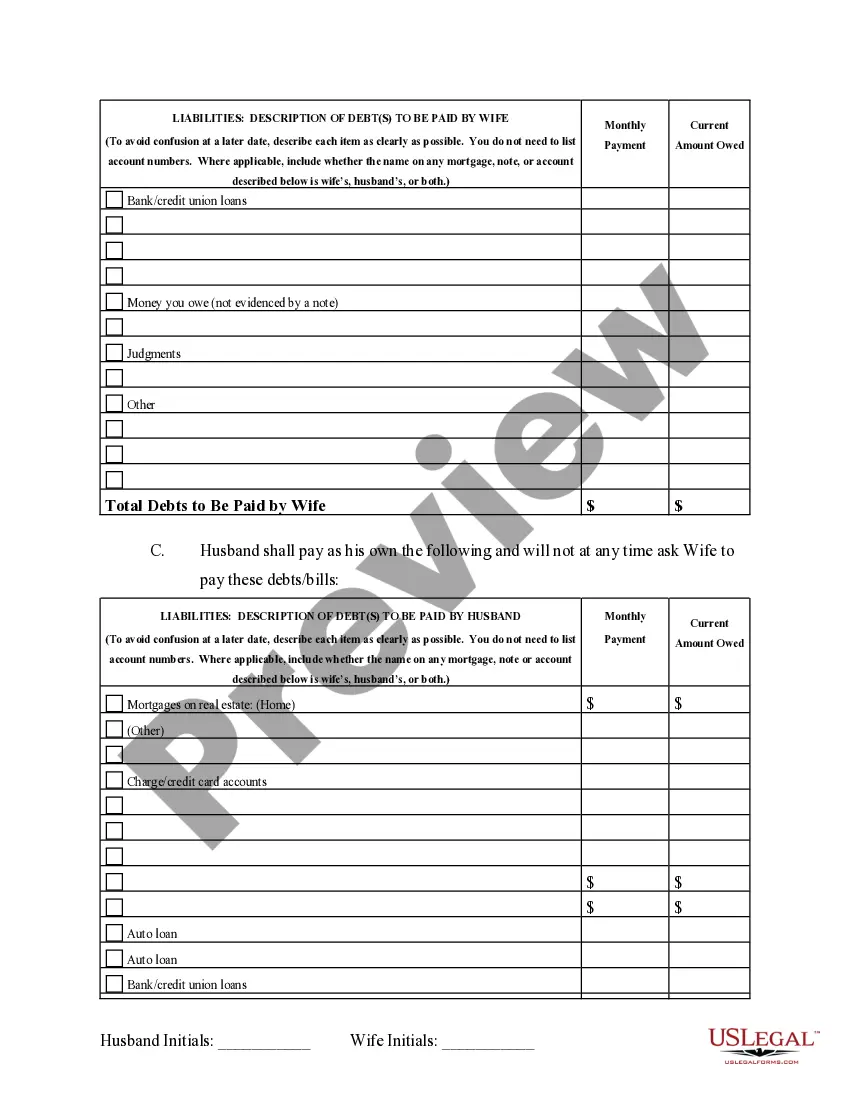
- Provisions regarding debt responsibility and obligations.
- Final agreement acknowledging understanding and acceptance of terms.
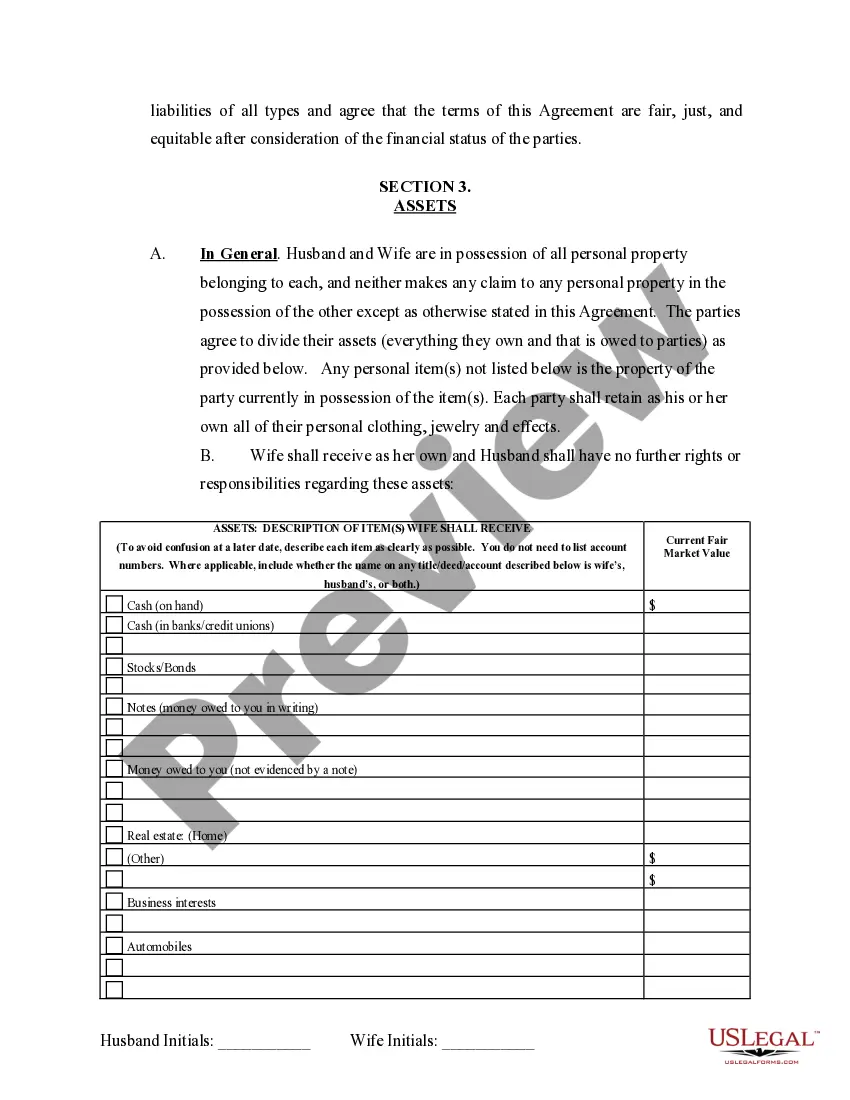
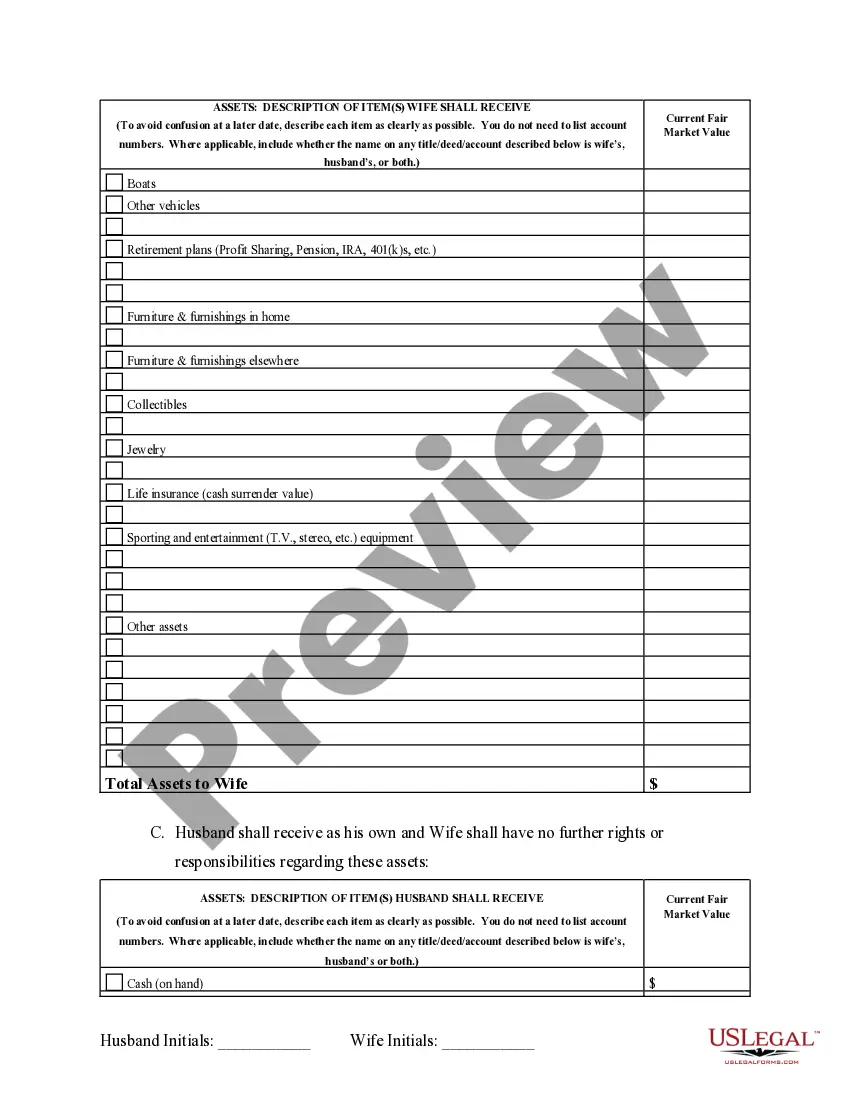
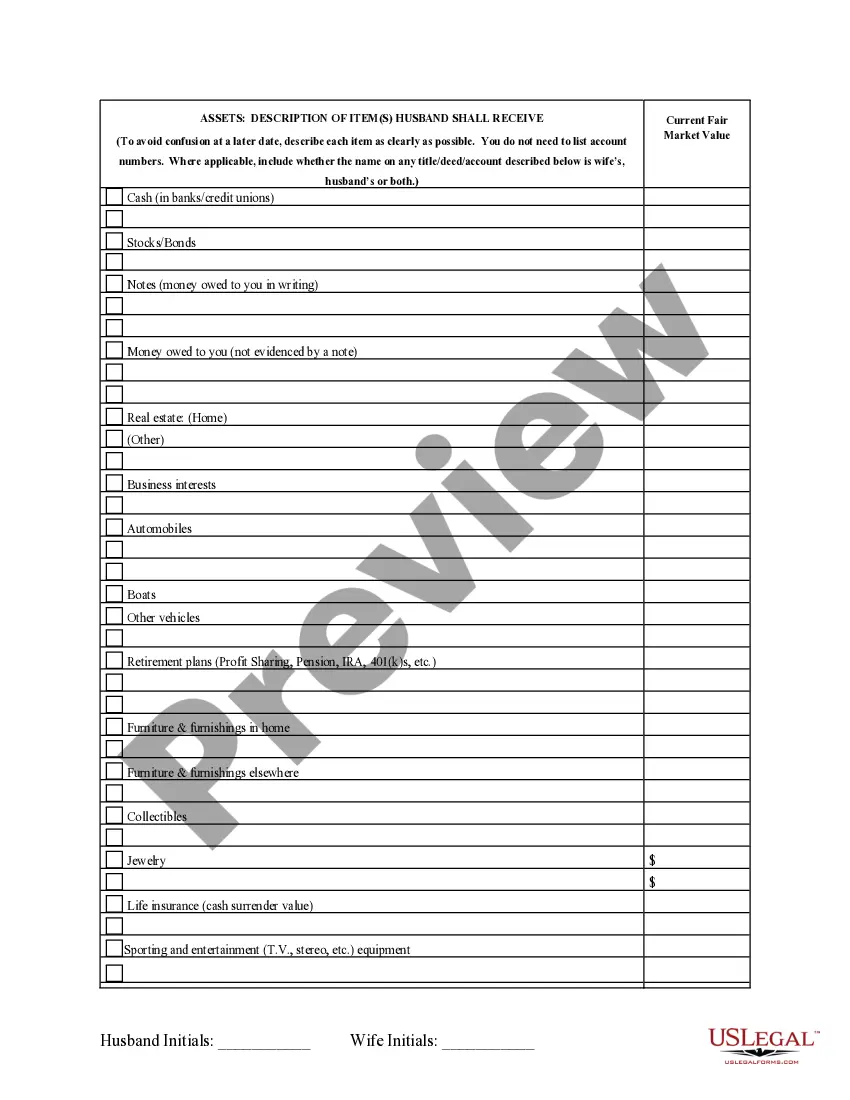
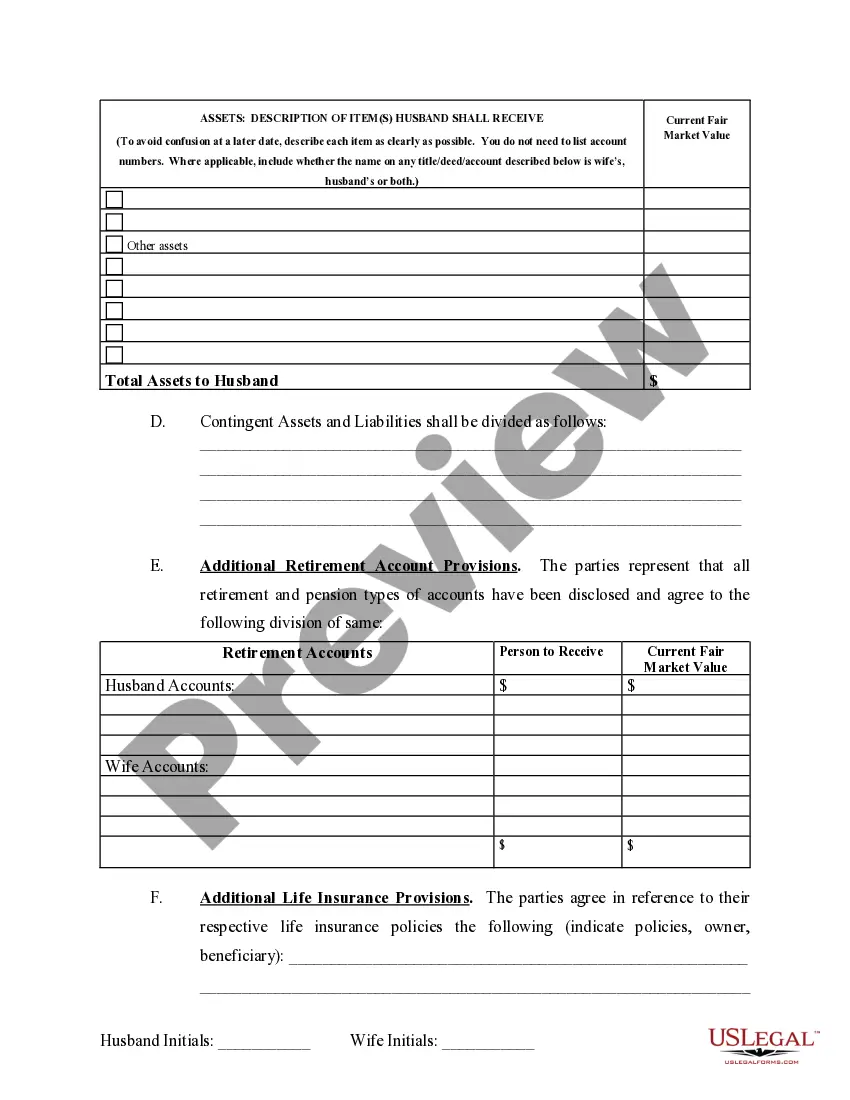


When to use this form
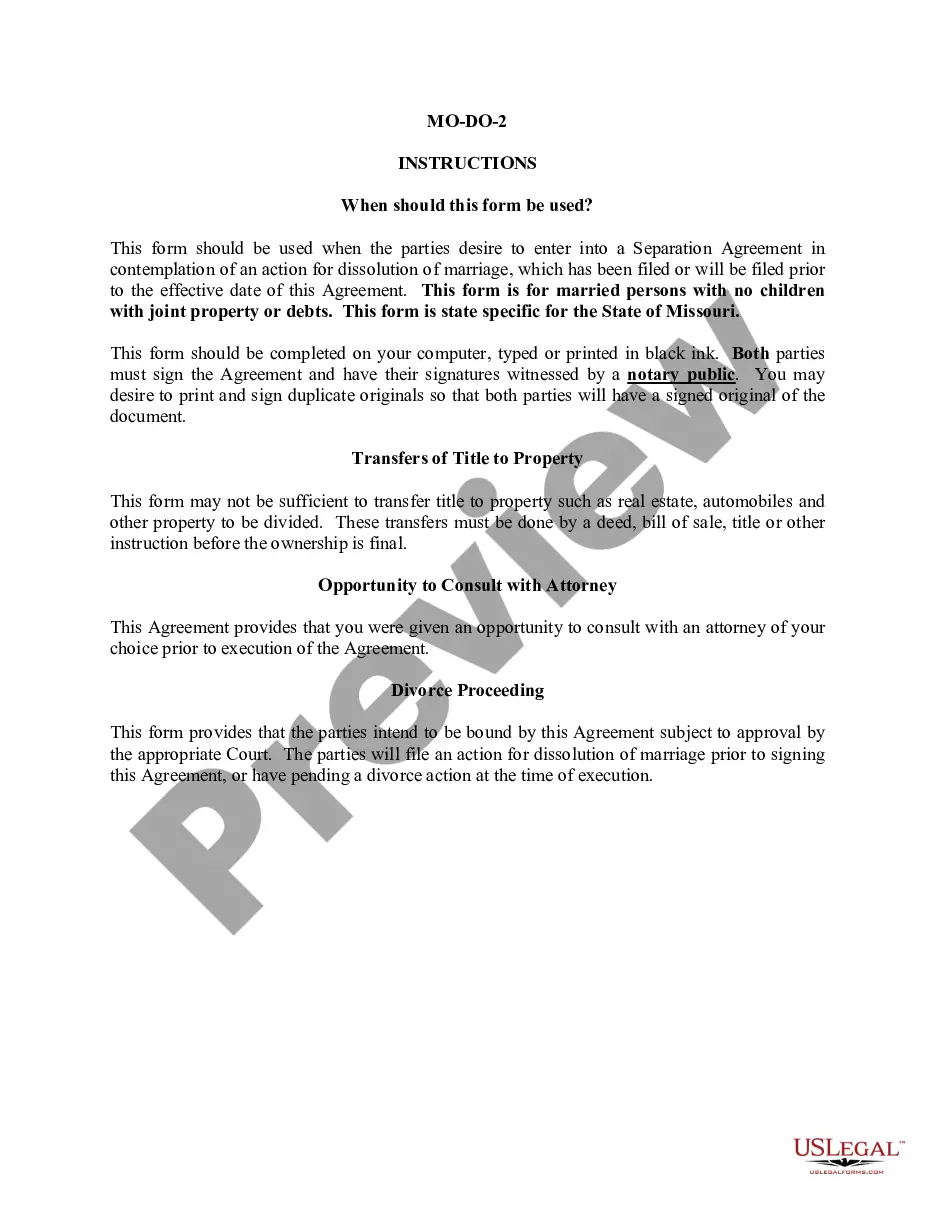
This form should be used when: - A couple has filed for divorce or will file for divorce soon. - The couple has no minor children. - The parties want to define the division of their joint assets and liabilities. - The parties are looking for a legally recognized agreement to resolve financial matters arising from their separation.
Intended users of this form
- Married couples without children who intend to separate.
- Couples who have joint property or debts that need to be addressed.
- Individuals who are seeking a formal agreement regarding their financial obligations and rights following separation.
Steps to complete this form
- Identify the full names and addresses of both parties involved in the agreement.
- Detail any joint property and debts, clearly describing each asset or liability.
- Specify the terms of asset division, including who will retain which assets.
- Obtain and include financial disclosures from both parties to ensure transparency.
- Have both parties sign the agreement in the presence of a notary public for validation.
Notarization guidance
This document requires notarization to meet legal standards. US Legal Forms provides secure online notarization powered by Notarize, allowing you to complete the process through a verified video call, available 24/7.
Get your form ready online
Our built-in tools help you complete, sign, share, and store your documents in one place.
Make edits, fill in missing information, and update formatting in US Legal Forms—just like you would in MS Word.
Download a copy, print it, send it by email, or mail it via USPS—whatever works best for your next step.
Sign and collect signatures with our SignNow integration. Send to multiple recipients, set reminders, and more. Go Premium to unlock E-Sign.
If this form requires notarization, complete it online through a secure video call—no need to meet a notary in person or wait for an appointment.
We protect your documents and personal data by following strict security and privacy standards.

Make edits, fill in missing information, and update formatting in US Legal Forms—just like you would in MS Word.

Download a copy, print it, send it by email, or mail it via USPS—whatever works best for your next step.

Sign and collect signatures with our SignNow integration. Send to multiple recipients, set reminders, and more. Go Premium to unlock E-Sign.

If this form requires notarization, complete it online through a secure video call—no need to meet a notary in person or wait for an appointment.

We protect your documents and personal data by following strict security and privacy standards.
Typical mistakes to avoid
- Failing to fully disclose all assets and liabilities.
- Not having the agreement notarized, if required.
- Leaving out specific details about asset value and ownership.
- Signing without understanding the implications of the agreement.
Why use this form online
- Convenience of completing the form from home without the need for in-person legal consultations.
- Editability allows users to customize the agreement to fit their specific needs.
- Access to legally vetted templates drafted by licensed attorneys, ensuring accuracy.
What to keep in mind
- This agreement is crucial for couples separating without children to manage their assets and debts legally.
- Ensure all financial disclosures are accurate and comprehensive.
- Remember to have the document notarized to enhance its enforceability.
- Consult with an attorney if there are any questions about the terms or implications of the agreement.
Looking for another form?

Form popularity
FAQ
When separating, avoid making impulsive decisions, such as selling joint property without agreement or incurring significant debts. It’s also important not to ignore communication with your spouse, as this can lead to misunderstandings and conflicts over your Missouri Marital Domestic Separation and Property Settlement Agreement no Children parties may have Joint Property or Debts where Divorce Action Filed. Lastly, refrain from discussing sensitive matters on social media, as this can affect your legal situation. Staying organized and respectful can lead to a smoother separation process.
Proof of separation in the context of a Missouri Marital Domestic Separation and Property Settlement Agreement no Children parties may have Joint Property or Debts where Divorce Action Filed typically includes documents that show you and your spouse have lived apart. This can include lease agreements, utility bills, or affidavits from neighbors or friends. These documents demonstrate your separate living arrangements and can be crucial if disputes arise regarding the separation. It’s essential to keep thorough records to support your case.
Creating a Missouri Marital Domestic Separation and Property Settlement Agreement no Children parties may have Joint Property or Debts where Divorce Action Filed begins with both parties outlining their financial responsibilities and property division. You should gather all relevant documents, including property titles and debt statements. Next, draft the agreement detailing how you will handle joint property and debts, ensuring clarity and fairness. Utilizing platforms like US Legal Forms can simplify this process, providing templates that guide you through every necessary clause.
Moving out during a divorce can complicate your situation significantly. When you leave the marital home, you may unintentionally give up your rights to joint property and debts. In the context of a Missouri Marital Domestic Separation and Property Settlement Agreement no Children parties may have Joint Property or Debts where Divorce Action Filed, maintaining your residency can help protect your interests. Instead of moving out, consider consulting with a legal expert or utilizing resources like US Legal Forms to ensure you understand your rights and obligations.
Marital property includes real estate and other property a couple buys together during their marriage, such as a home or investment property, cars, boats, furniture, or artwork, when not acquired by either as separate property.
Though the term non-marital property often refers to any personal or real property owned prior to, and brought into the marriage, it can also refer to things such as inheritances and gifts made to only one spouse.
Marital property includes all property either spouse bought during the marriage. It does not matter whose name is on the title. For example, if a couple bought a home, but only the husband's name was on the deed, the wife would still be entitled to some of the value of the home if they were to get a divorce.
Related Content. Property that is unlikely to be shared between the parties on the breakdown of the marriage or civil partnership unless it is required to meet needs. Generally non-matrimonial property is: Acquired by one party before the marriage.
Marital, or community property, is defined as assets and debt newly acquired during the marriage, either jointly or by one party, other than by a gift or inheritance to one spouse. Nonmarital, or separate property, are the assets and debts owned prior to the marriage that remain unchanged.
Missouri is an "equitable distribution" state, which means judges will divide marital property in a way they believe is equitable (fair), but not necessarily equal. A court doesn't have to give each spouse a 50% share of the marital assets.