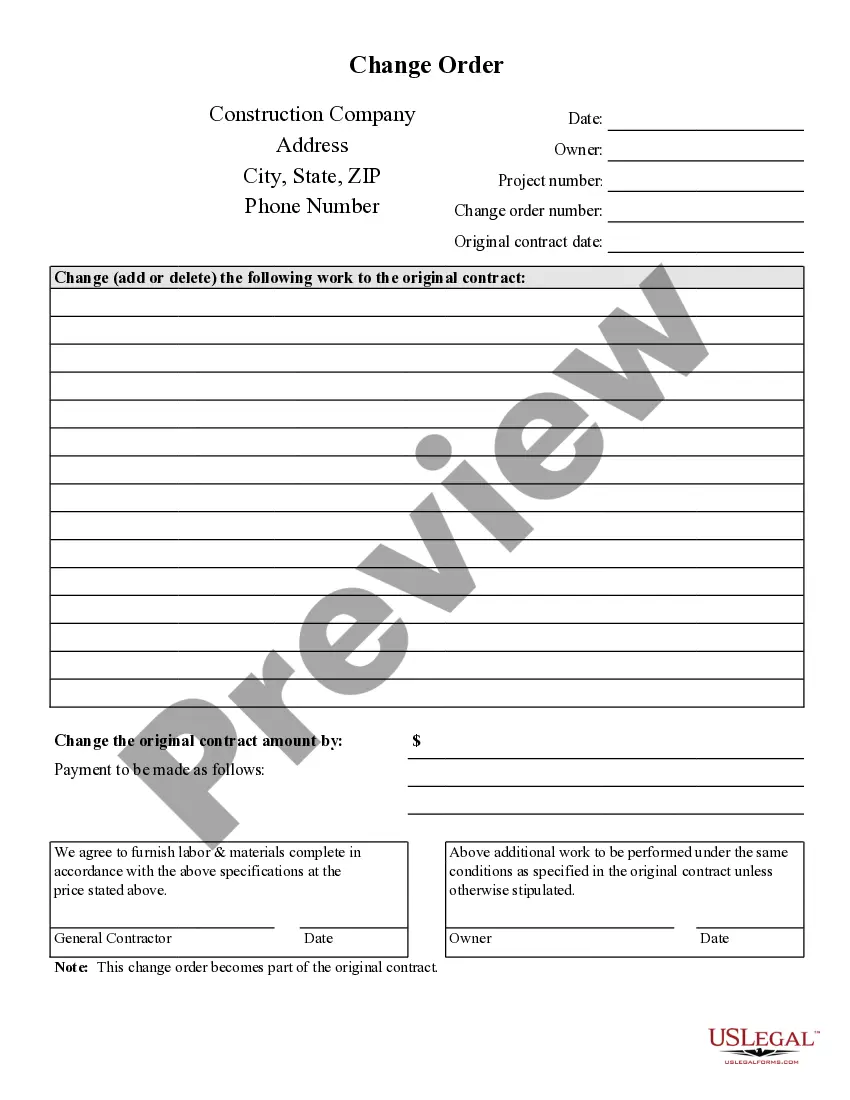
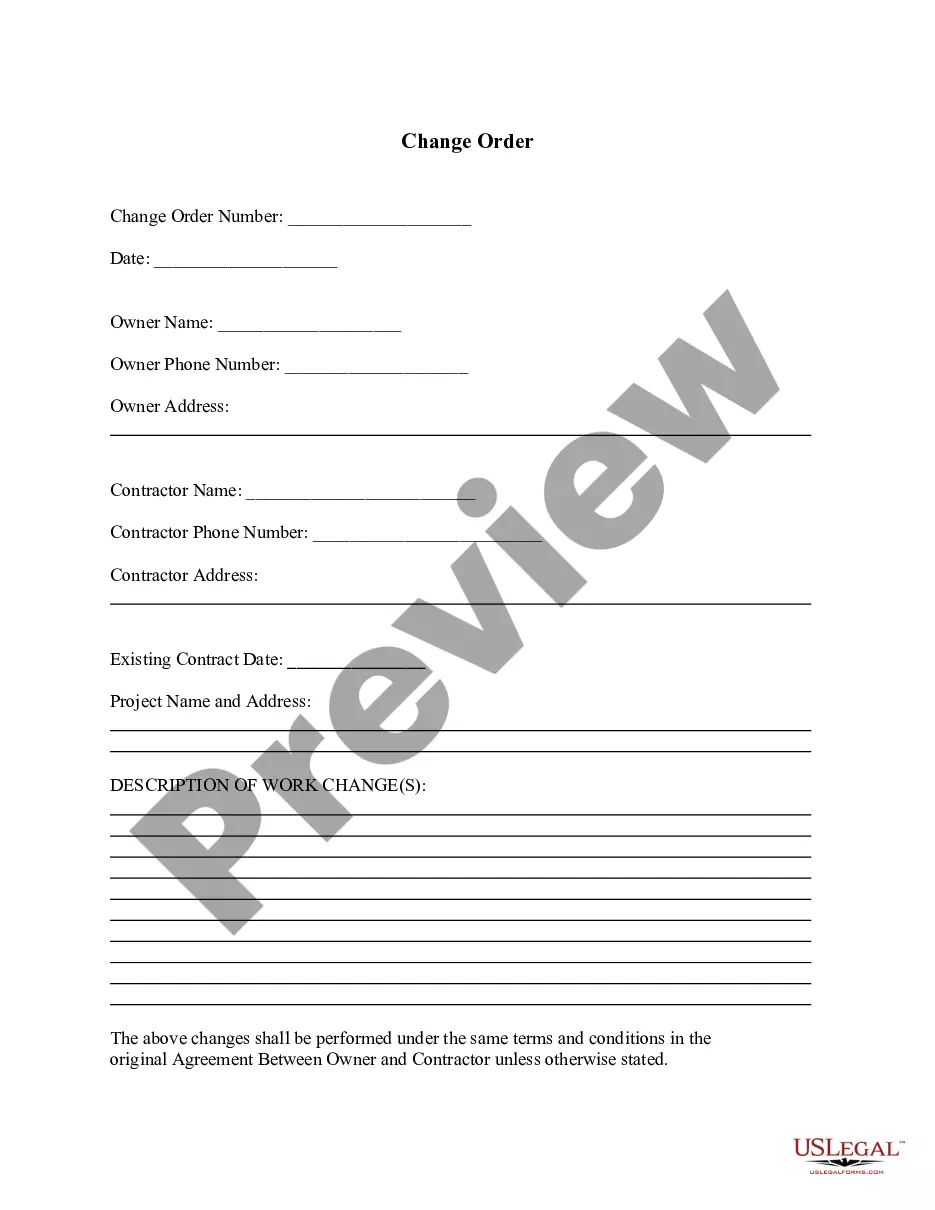
This change order becomes part of the original contract.
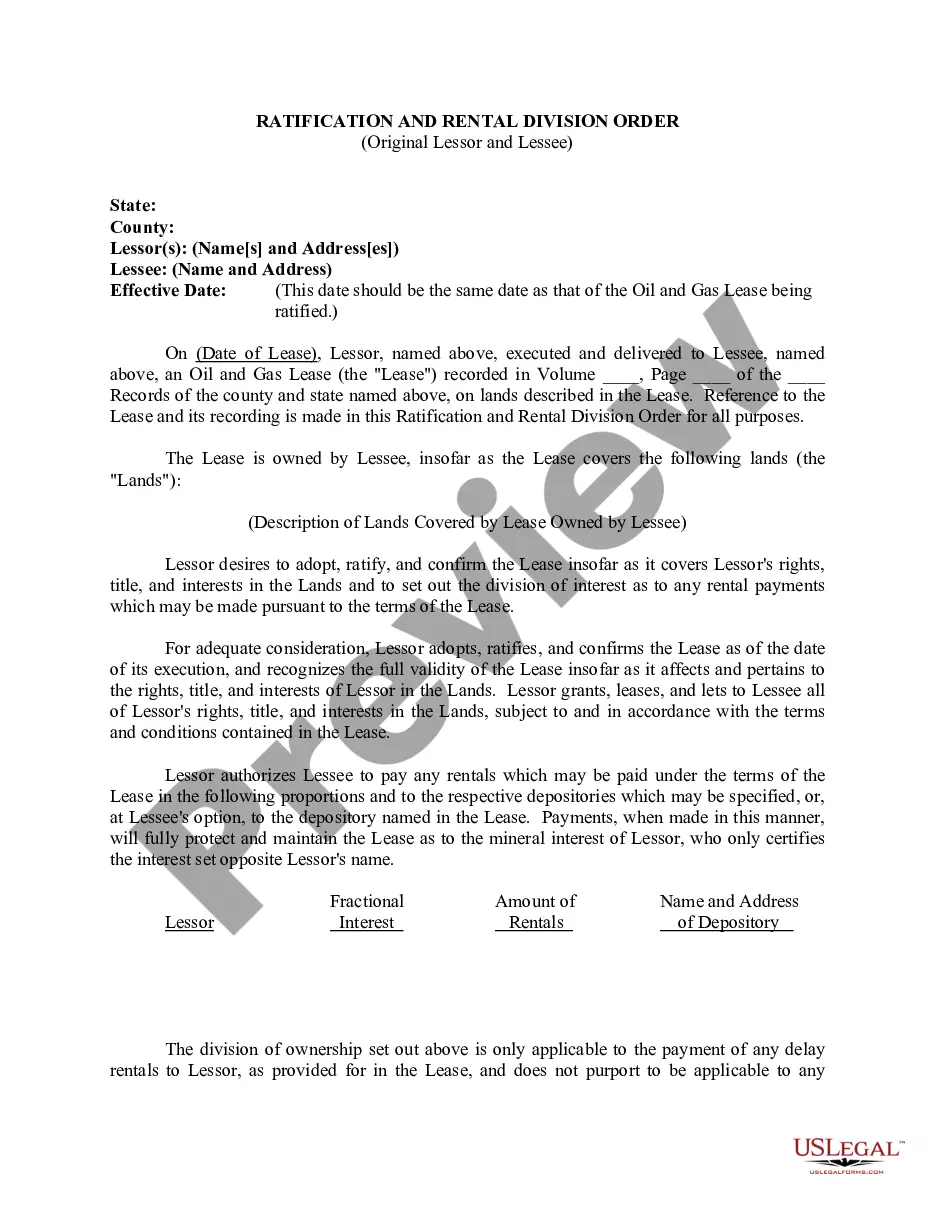
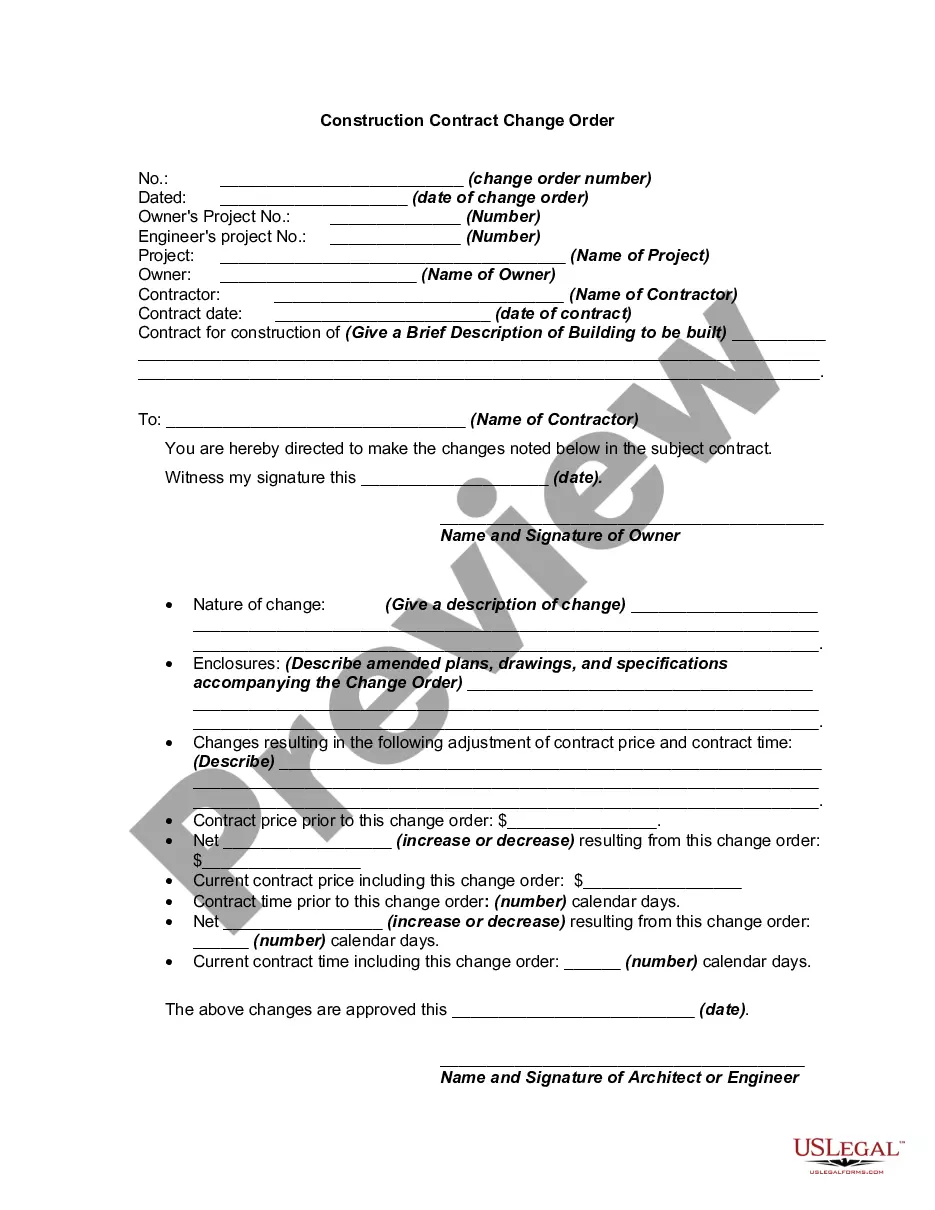
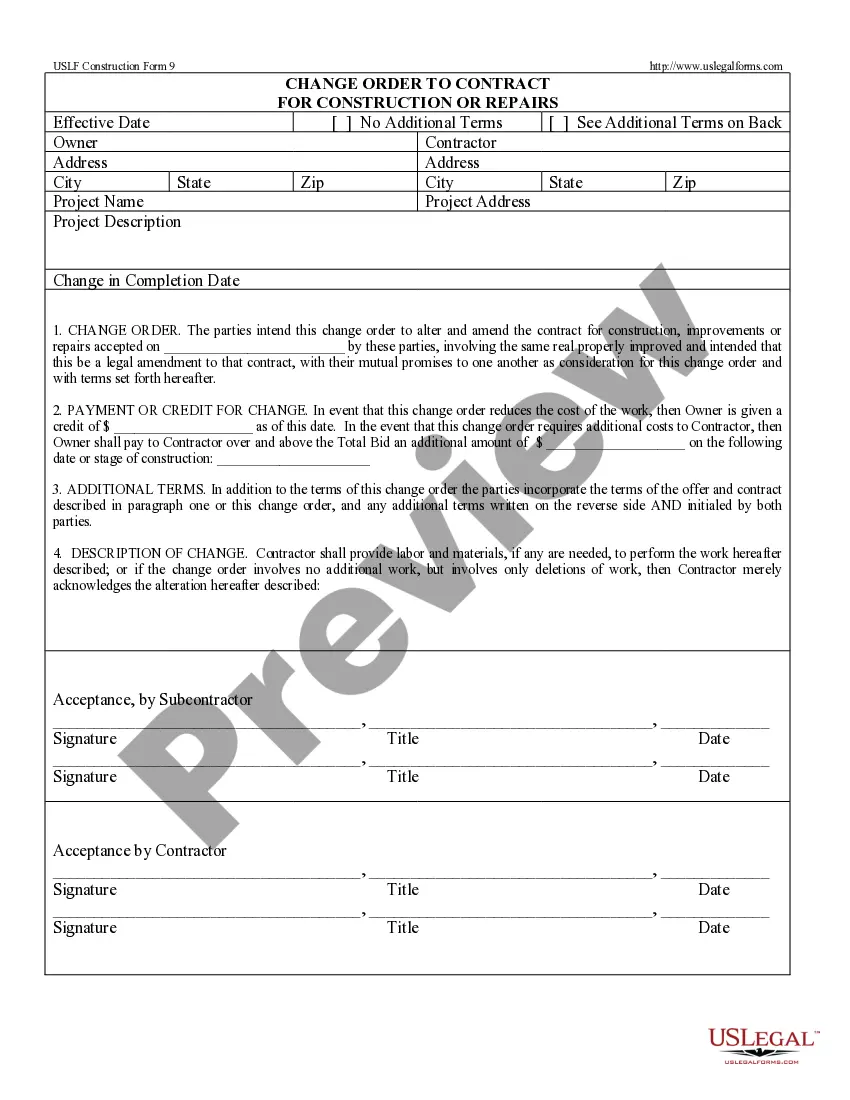
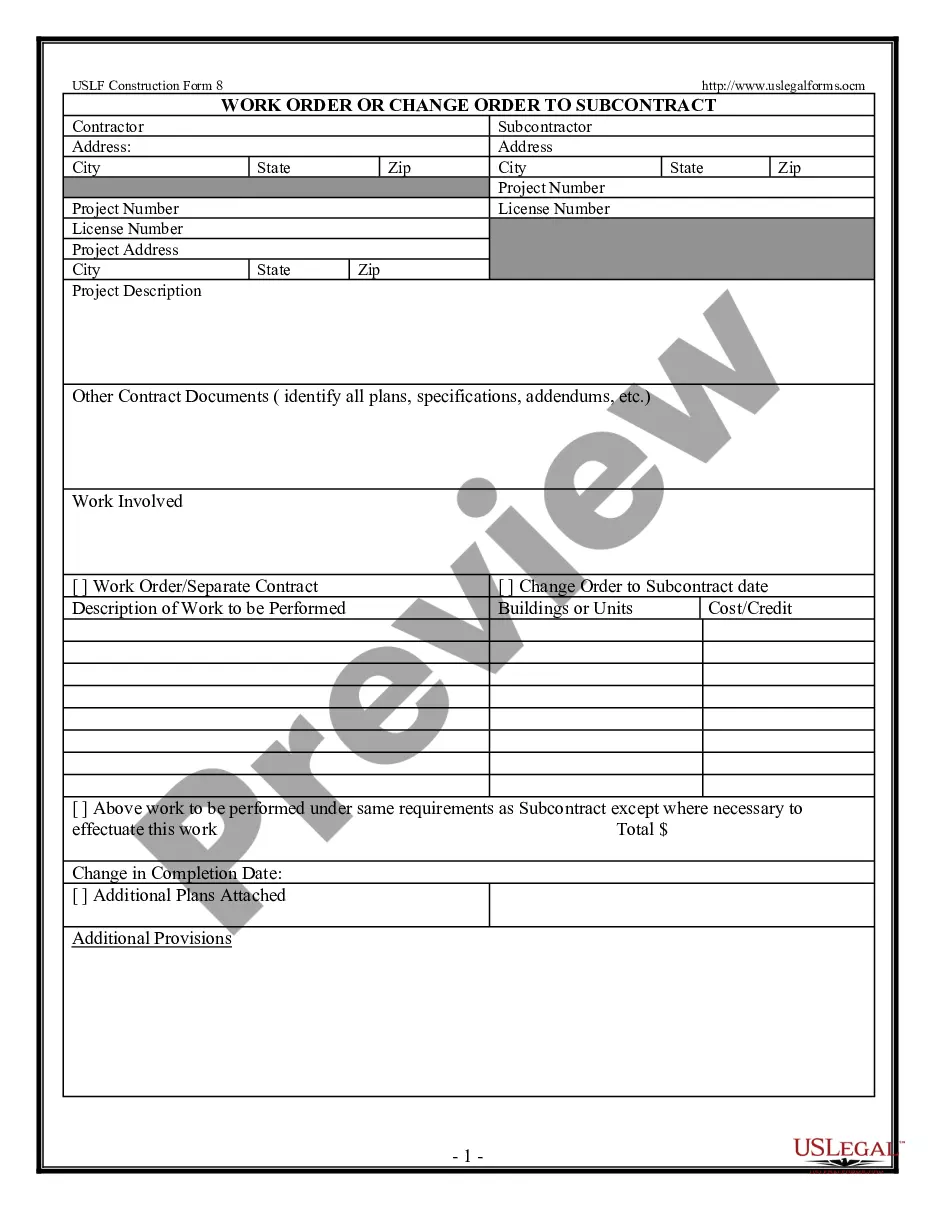
Minnesota Change Order
Instant download
Description
Get your form ready online
Our built-in tools help you complete, sign, share, and store your documents in one place.
Built-in online Word editor
Make edits, fill in missing information, and update formatting in US Legal Forms—just like you would in MS Word.
Export easily
Download a copy, print it, send it by email, or mail it via USPS—whatever works best for your next step.
E-sign your document
Sign and collect signatures with our SignNow integration. Send to multiple recipients, set reminders, and more. Go Premium to unlock E-Sign.
Notarize online 24/7
If this form requires notarization, complete it online through a secure video call—no need to meet a notary in person or wait for an appointment.
Store your document securely
We protect your documents and personal data by following strict security and privacy standards.

Make edits, fill in missing information, and update formatting in US Legal Forms—just like you would in MS Word.

Download a copy, print it, send it by email, or mail it via USPS—whatever works best for your next step.

Sign and collect signatures with our SignNow integration. Send to multiple recipients, set reminders, and more. Go Premium to unlock E-Sign.

If this form requires notarization, complete it online through a secure video call—no need to meet a notary in person or wait for an appointment.

We protect your documents and personal data by following strict security and privacy standards.
Looking for another form?







How to fill out Change Order?
Selecting the optimal legal document format can be challenging. Of course, there are numerous templates accessible online, but how do you locate the legal document you need? Utilize the US Legal Forms website. The service offers a vast array of templates, including the Minnesota Change Order, which can serve both business and personal purposes. All the forms are vetted by experts and comply with federal and state regulations.
If you are already a registered user, Log In to your account and then click the Download button to obtain the Minnesota Change Order. Use your account to review the legal documents you have previously acquired. Visit the My documents section of your account to retrieve another copy of the document you need.
If you are a new user of US Legal Forms, here are some simple guidelines to follow: First, ensure you have selected the correct form for your state/region. You can browse the form using the Preview option and read the form description to confirm it is the right one for you. If the form does not meet your requirements, use the Search field to find the appropriate form. Once you are confident the form is suitable, click on the Get now button to obtain the form. Choose the pricing plan you prefer and enter the necessary information. Create your account and purchase an order using your PayPal account or credit card. Select the file format and download the legal document format to your device. Finally, complete, edit, print, and sign the acquired Minnesota Change Order.
- US Legal Forms is the largest collection of legal documents where you can find various document templates.
- Utilize the service to download professionally-crafted documents that adhere to state requirements.
- The templates available cater to both personal and business needs.
- Each form has been reviewed by professionals for compliance.
- Access your account to manage and download your previously obtained forms.
- Follow straightforward steps to ensure you choose the correct format for your needs.
Form popularity
FAQ
Writing a Minnesota Change Order proposal involves clearly stating the changes you want to implement, including the reason behind them. Begin with a brief introduction, followed by a detailed description of the new work, materials, and any alterations to costs or deadlines. It’s crucial to format the proposal professionally to facilitate understanding. You can leverage USLegalForms for templates that guide you through the writing process, ensuring your proposal is thorough and legally sound.
To make a Minnesota Change Order, start by identifying the specific changes needed in your project. Clearly outline the scope of work, materials involved, and any adjustments to the timeline or budget. Once you have this information, prepare a formal document that both parties can review and sign. Using a platform like USLegalForms can simplify this process, providing templates and guidance to ensure your change order is compliant and effective.
To submit a Minnesota Change Order, start by gathering the necessary documents and information related to your project. You can create the change order online using the user-friendly tools available on the US Legal Forms platform. After filling out the required details, simply follow the submission guidelines provided. Remember, a well-structured change order ensures clarity and compliance.
In a Minnesota Change Order, both contractors and project owners have the authority to initiate changes. A contractor may propose modifications based on site conditions, unforeseen issues, or design adjustments. Similarly, project owners can request changes to better align with their vision or project goals. Using a platform like US Legal Forms can streamline the process, ensuring that all necessary documentation is correctly handled for any change order.
Some of the most common reasons for change orders include:Inaccurate specifications in the original designs or contract.Ambiguous or inaccurate drawings.Unforeseen conditions at the job site, such as obstructions that could not be planned for.Workers or materials that do not arrive or come late to the site.More items...?
In fact, it's not a contract amendment. As Construction Law Today explains, a Change Order is a bilateral agreement between parties to the contractan owner and prime contractor, prime contractor and subcontractor, two or more subcontractorsto change the contract.
The contractor prepares a "change order proposal" quoting a price for the extra work. Once the owner and contractor have agreed on scope, price, and schedule, a formal, written change order is prepared and signed by all parties. Then, the contractor proceeds to perform the changed work.
Classic examples of change orders include the owner's desire to move the location of a wall to accommodate some other design element, adding a window where there was none in the original plans, or changing the finish of the floors from tile to terrazzo.
A change order may be initiated by a project owner or contractor anytime during the construction process. The project's original contract will typically stipulate the use of a particular change order form; if not, one may be created in a document, spreadsheet or even be handwritten.
If your contract is silent as to whether written change orders are required as a condition of getting paid for your work, then a written change order isn't necessary, although it's still good practice to use written change orders to help avoid disagreements over scope, pricing and project completion.