Minnesota Storage Agreement for Household Goods
Description
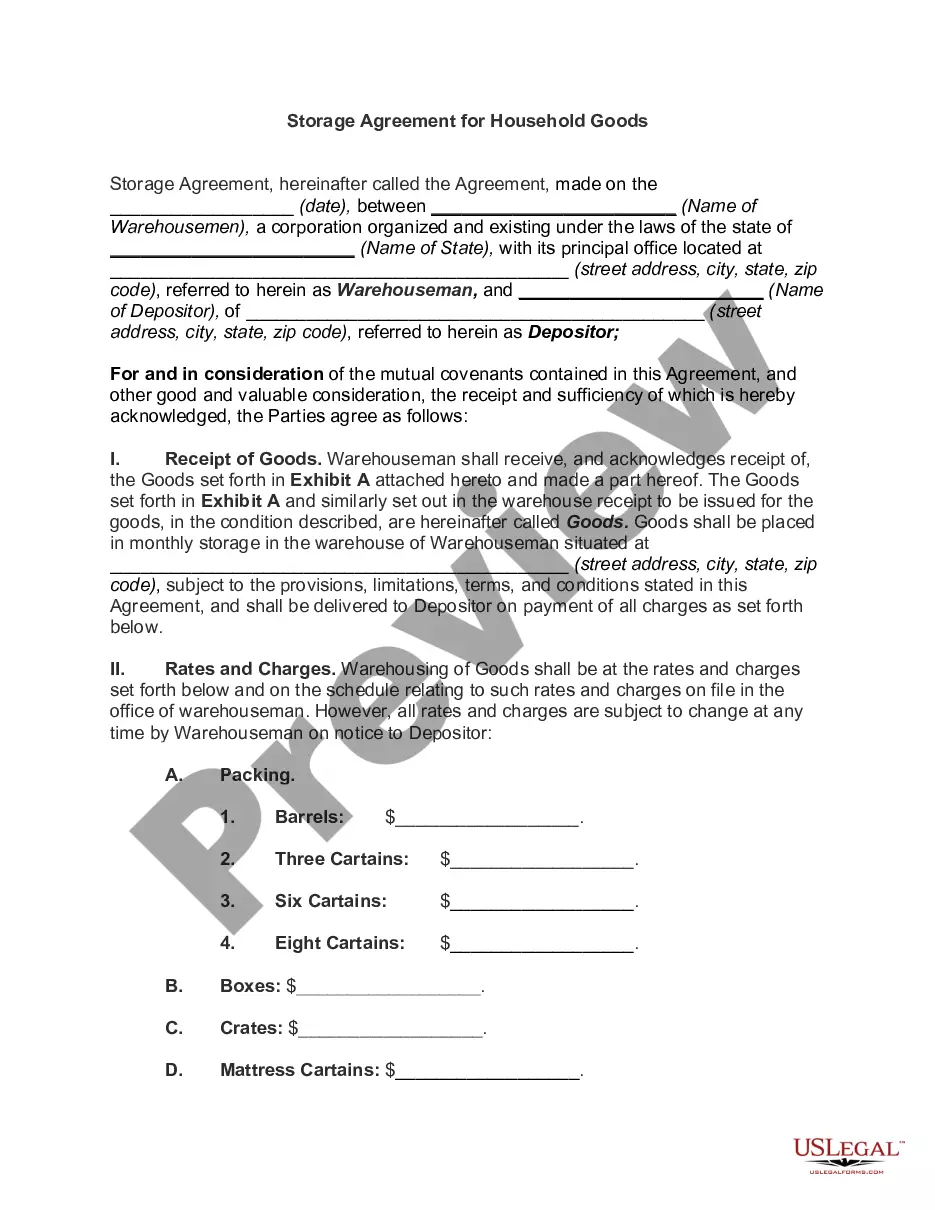
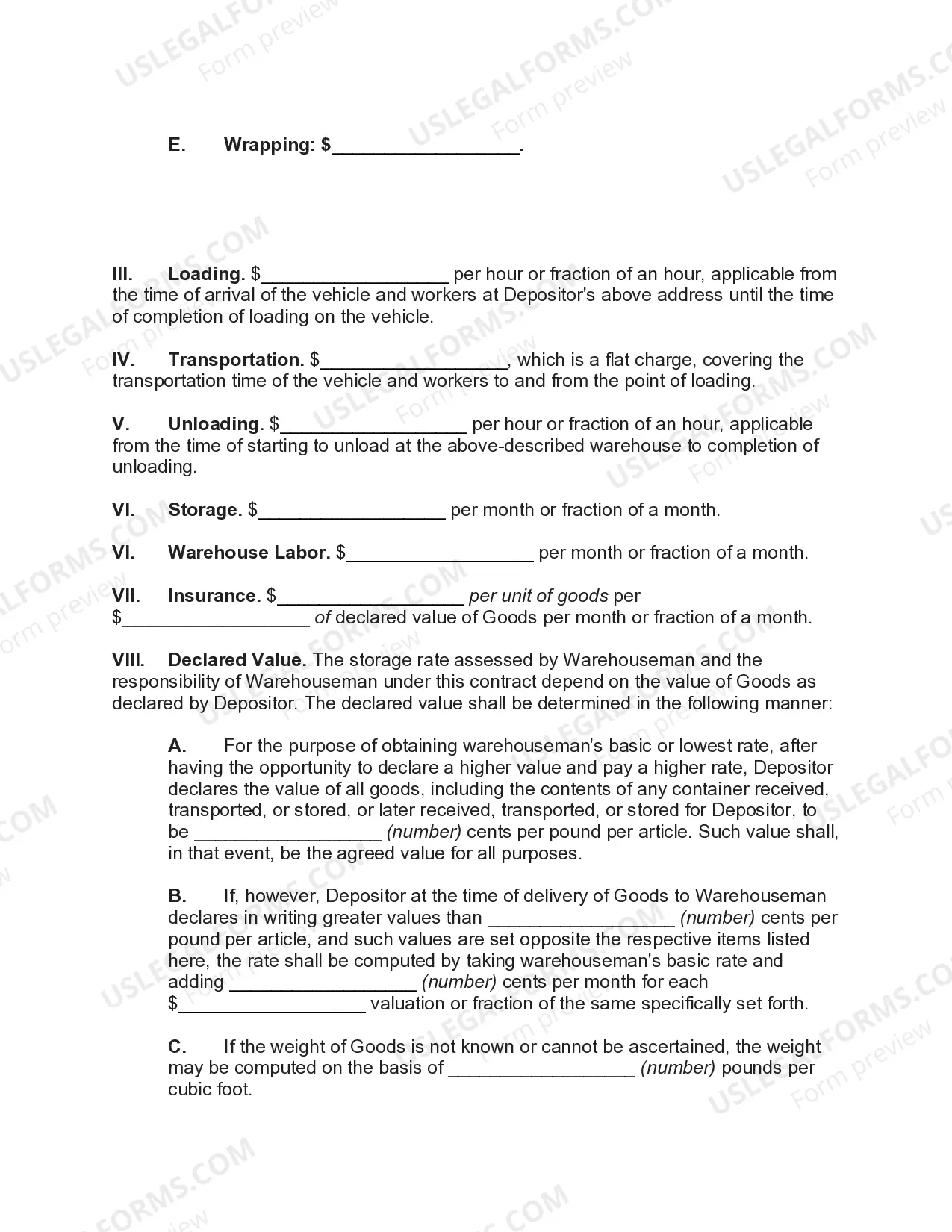
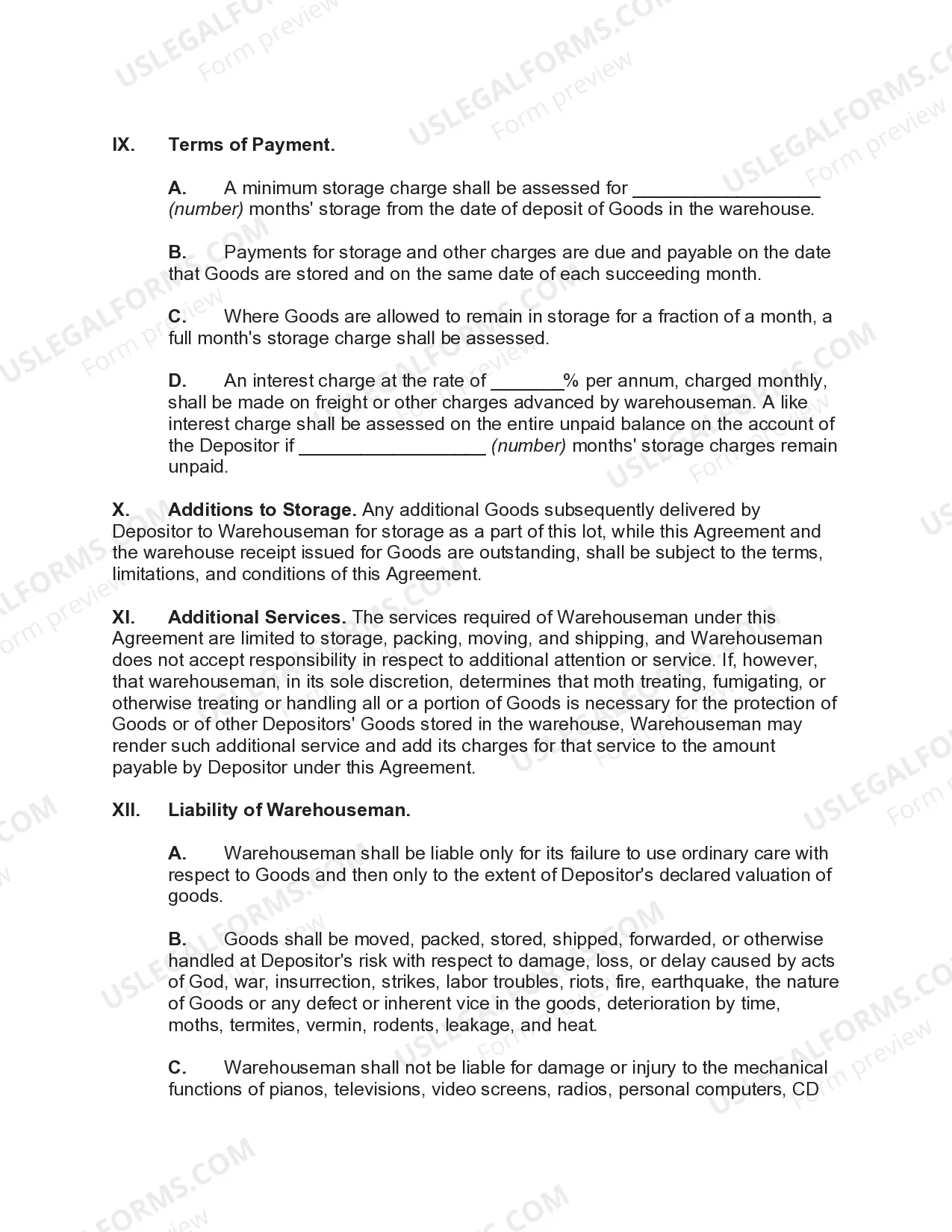
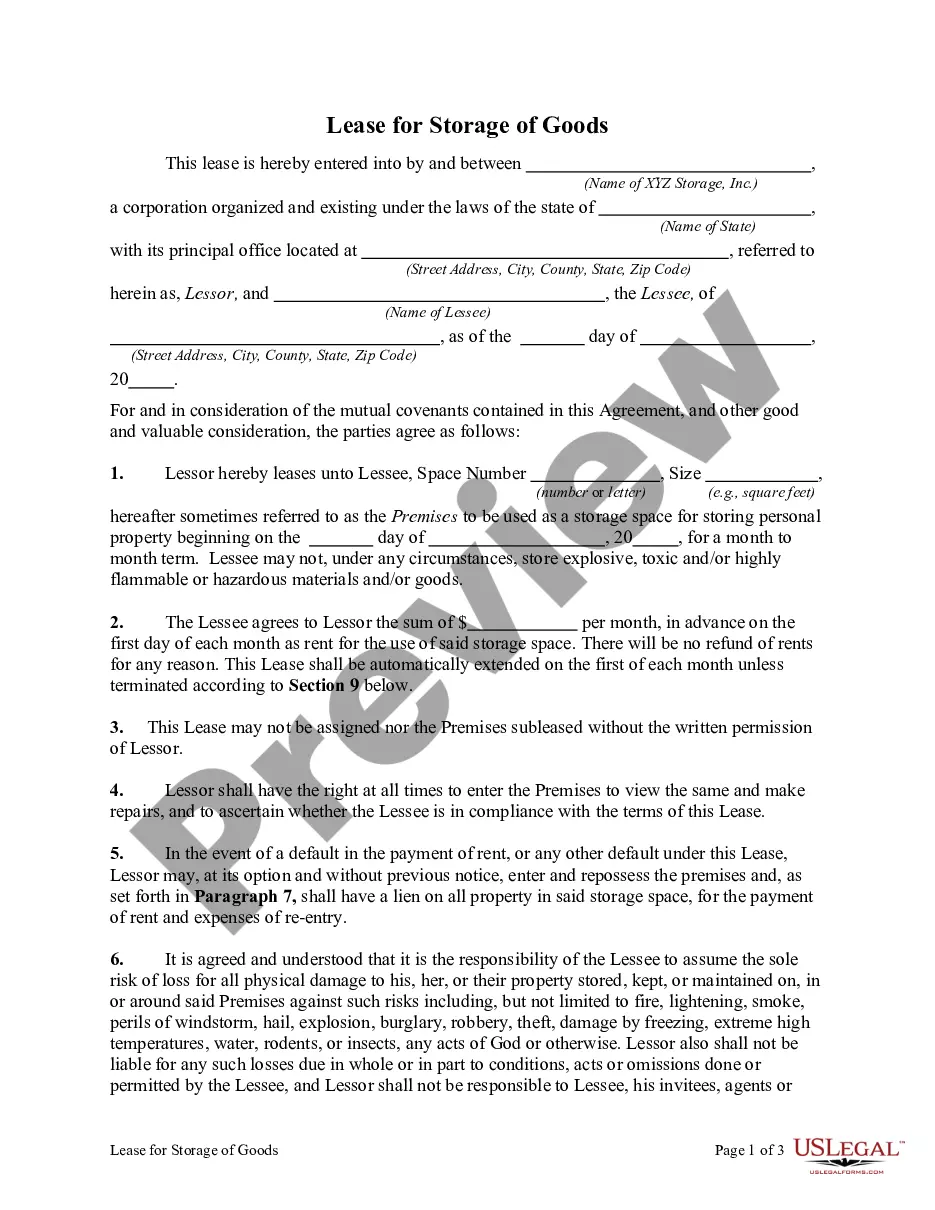
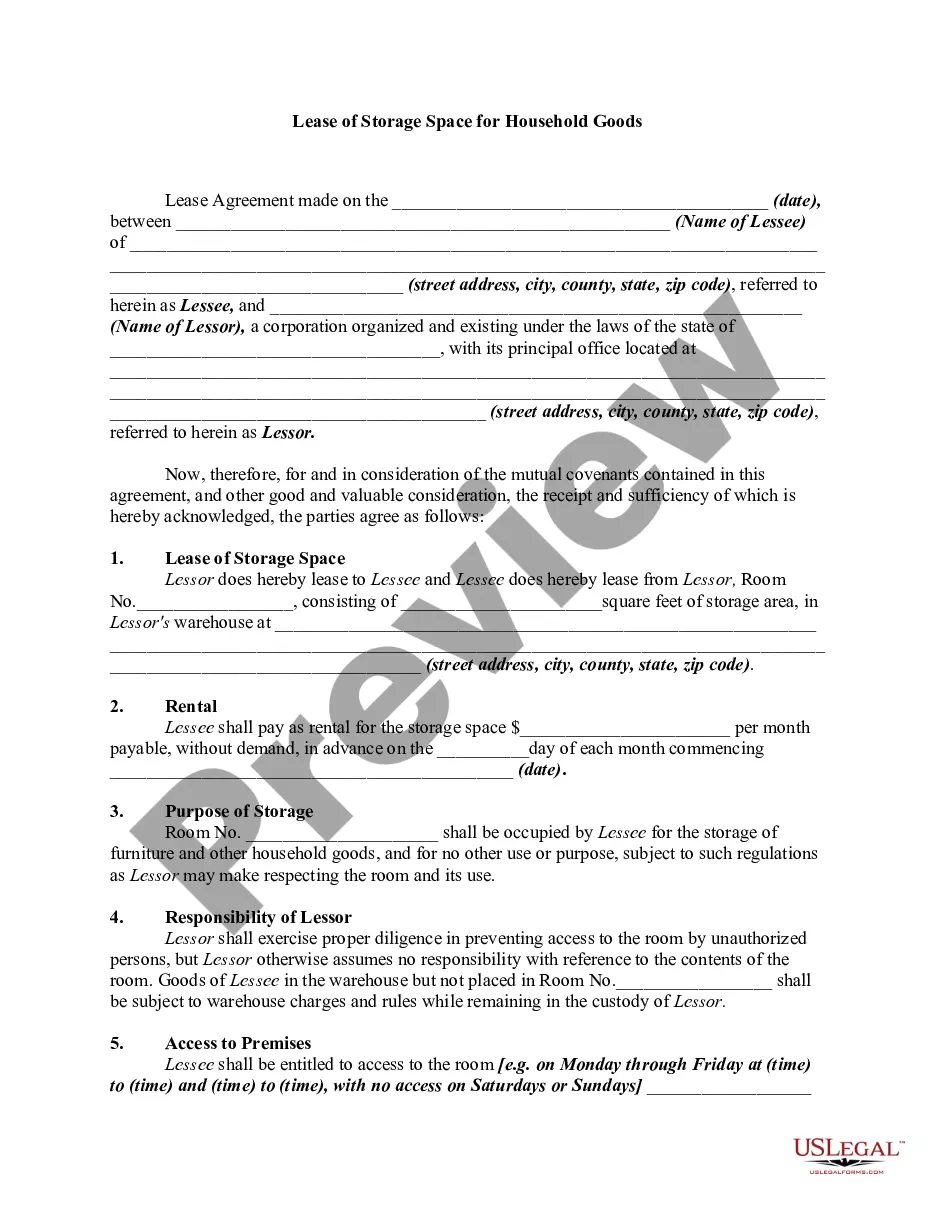
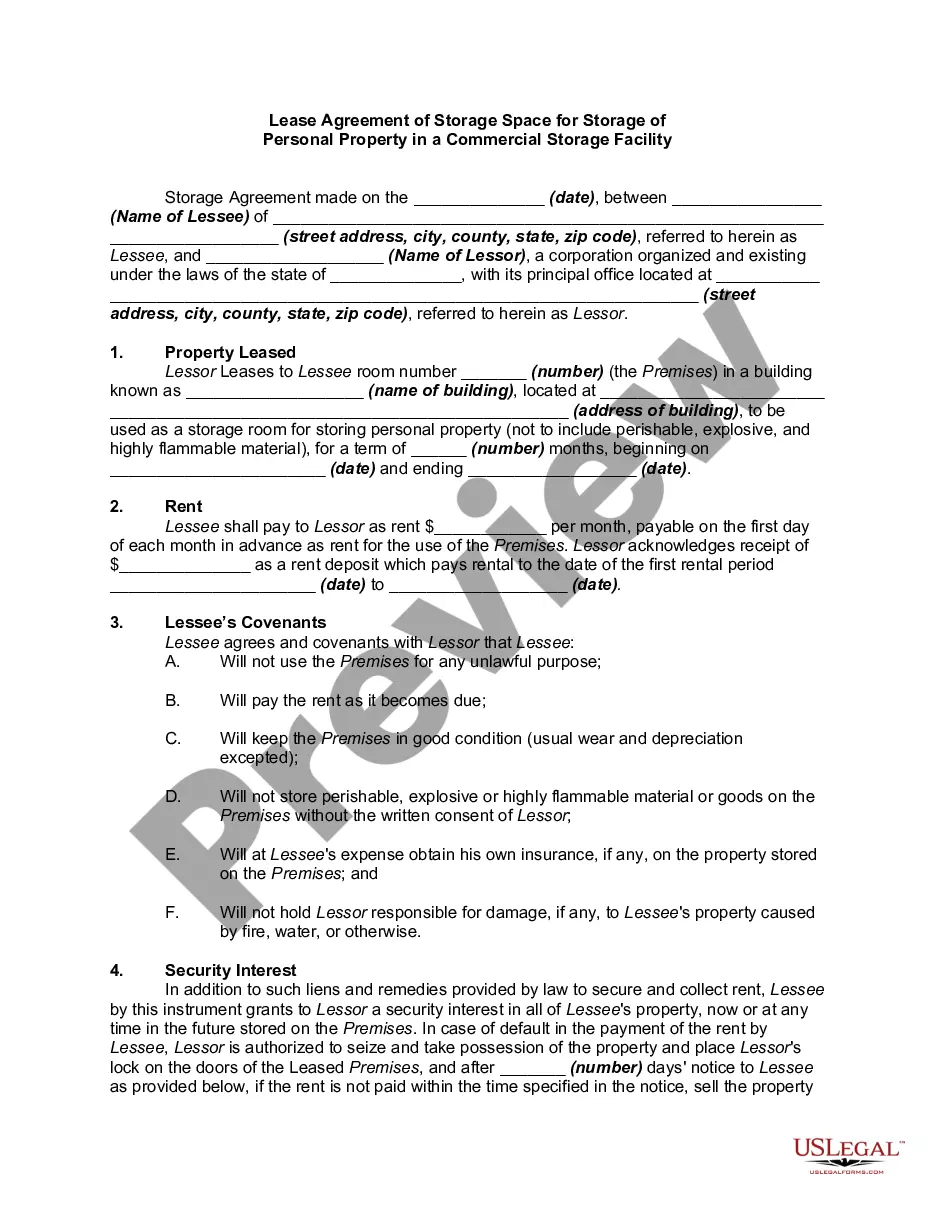
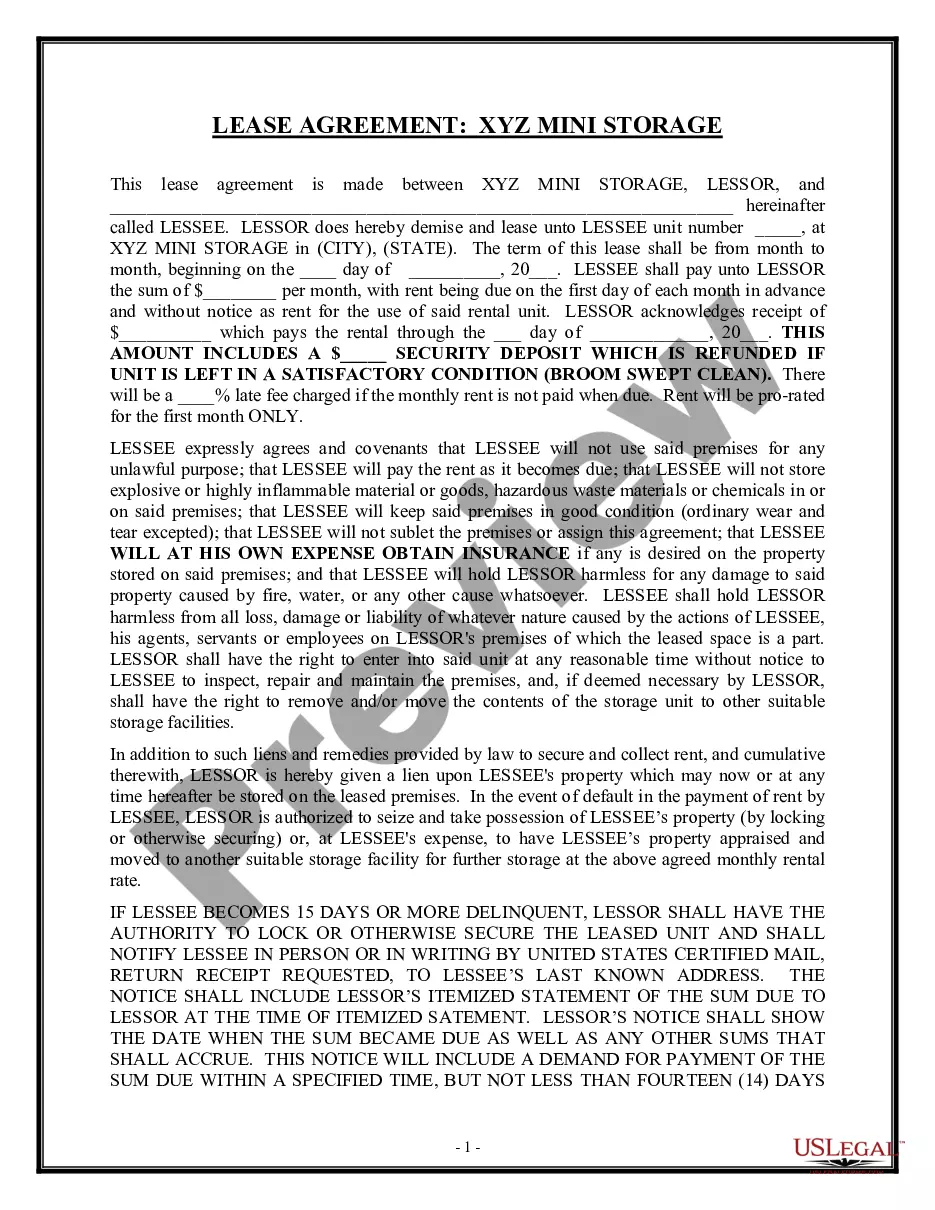
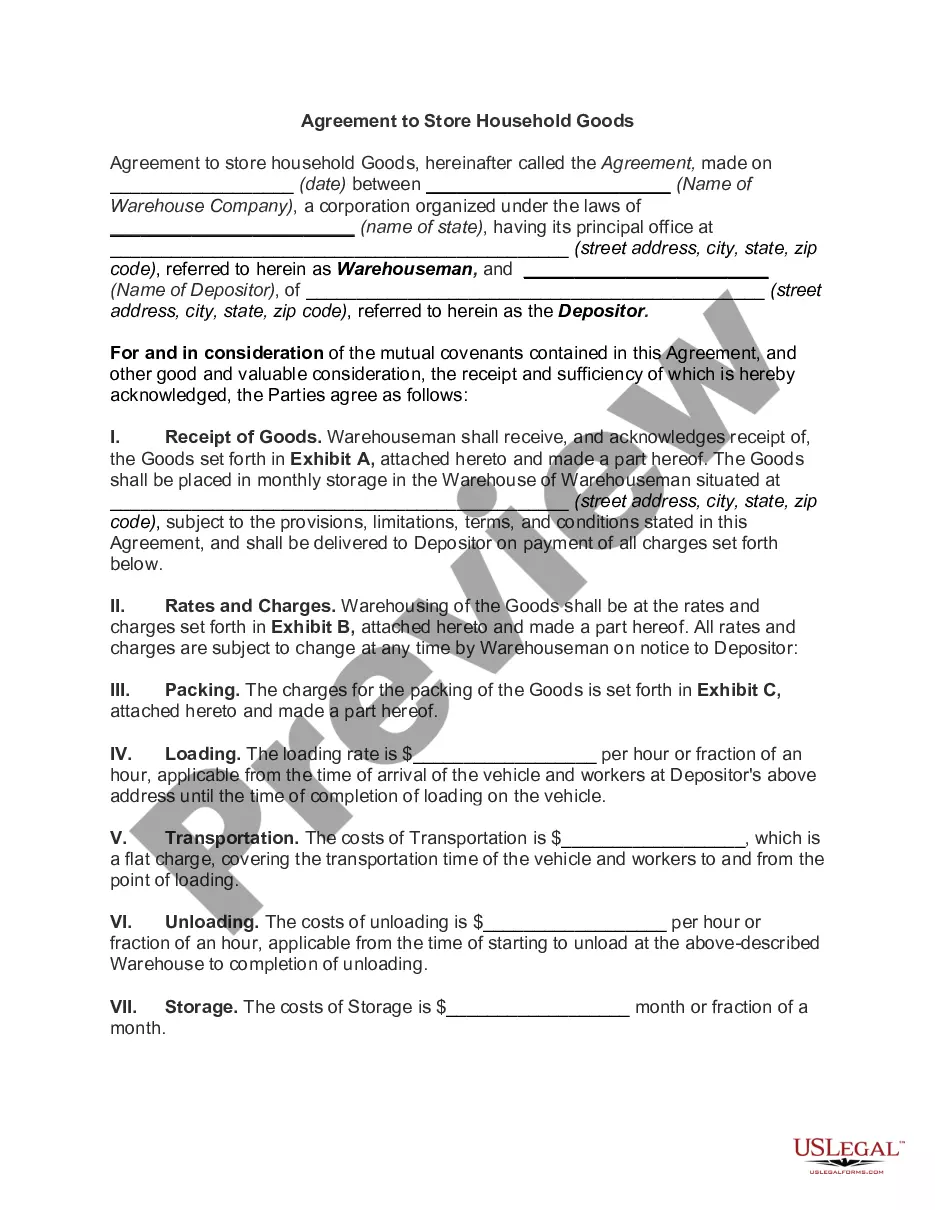
How to fill out Storage Agreement For Household Goods?
Are you currently in the position that you require documentation for sometimes organizational or individual reasons nearly every day.
There are numerous legal document templates available online, but finding ones you can trust isn't straightforward.
US Legal Forms provides a vast collection of form templates, such as the Minnesota Storage Agreement for Household Goods, which are crafted to comply with federal and state requirements.
Once you find the correct form, click on Purchase now.
Choose the pricing plan you prefer, fill in the necessary information to create your account, and complete the transaction using your PayPal or credit card.
- If you are already familiar with the US Legal Forms website and have an account, simply Log In.
- Then, you can download the Minnesota Storage Agreement for Household Goods template.
- If you do not possess an account and wish to start using US Legal Forms, follow these steps.
- Find the form you need and ensure it is for the correct city/state.
- Utilize the Preview feature to review the document.
- Check the description to confirm that you have selected the appropriate form.
- If the form isn’t what you’re looking for, use the Search option to find the form that meets your requirements.
Form popularity
FAQ
Sleeping in a self-storage unit is typically prohibited by most agreements and local laws. Such actions can pose safety hazards and violate the terms of your Minnesota Storage Agreement for Household Goods. Always consult your facility's rules to avoid any legal issues related to sleeping in a storage space.
Living in a rental storage unit is against the law in Minnesota and many other states. Even so, Minneapolis police and a spokesman for the rental storage-unit business association say it does happen. Fire's storage unit building had heat.
Storage units can range from $60 to $225 per month, depending on the size, location and other features. If you spent $100 each month on a storage unit, that's $1,200 a year.
If you're moving for your job and don't yet have a place to live, storage is a good option. Likewise, if you need to make your home more presentable while it's on the market, but don't want to get rid of your stuff, rent a storage unit.
Instead of just making due with the items and space that you already have, a storage unit can actually cause you to spend more money. This is because you will be hoarding more and more things, and then you'll just continue to put things in your storage unit because you have that extra space.
Because clothes can become permanently wrinkled if you store them folded for a long time. That would be a shame as it would ruin some items of clothing. That's why, if they're in long-term storage, going in and refolding them is a must. (Every six months would be our recommendation.)
It's usually about 30 days. Once you're in default, you'll be locked out of the property and out of your unit. Facility managers typically cut the lock on your unit and replace it with a special red lock.
Your Storage Unit Will Go Into Default To put it simply, this is the maximum amount of days that you can go without paying rent before things start to get real. It's usually about 30 days. Once you're in default, you'll be locked out of the property and out of your unit.
When a storage rental owner has not paid their bills multiple times, the storage facility now has the power to go into the unit. The belongings will be confiscated and will belong to the rental company. Most storage facilities will hold auctions for the belongings, or donate the items.
What you can't put in a storage unitFood.Hazardous materials.Stolen and illegal goods.Weapons and ammunition.Living items (and dead ones)Wet items.Priceless and irreplaceable items.Money.More items...?