Minnesota Telecommuting Agreement

State:
Multi-State
Control #:
US-0454BG
Format:
Word; 
Rich Text
Instant download

Description

Telecommuting is working from a remote location outside of a traditional office. The remote location can be from home, a coffee shop, or hotel room. The Internet, faxes, phones, webcams, and instant messaging are some of the technological advances that enable this type of work arrangement. Most telecommuters work in the financial, high-tech, and communications industries.


This form is a generic example that may be referred to when preparing such a form for your particular state. It is for illustrative purposes only. Local laws should be consulted to determine any specific requirements for such a form in a particular jurisdiction.
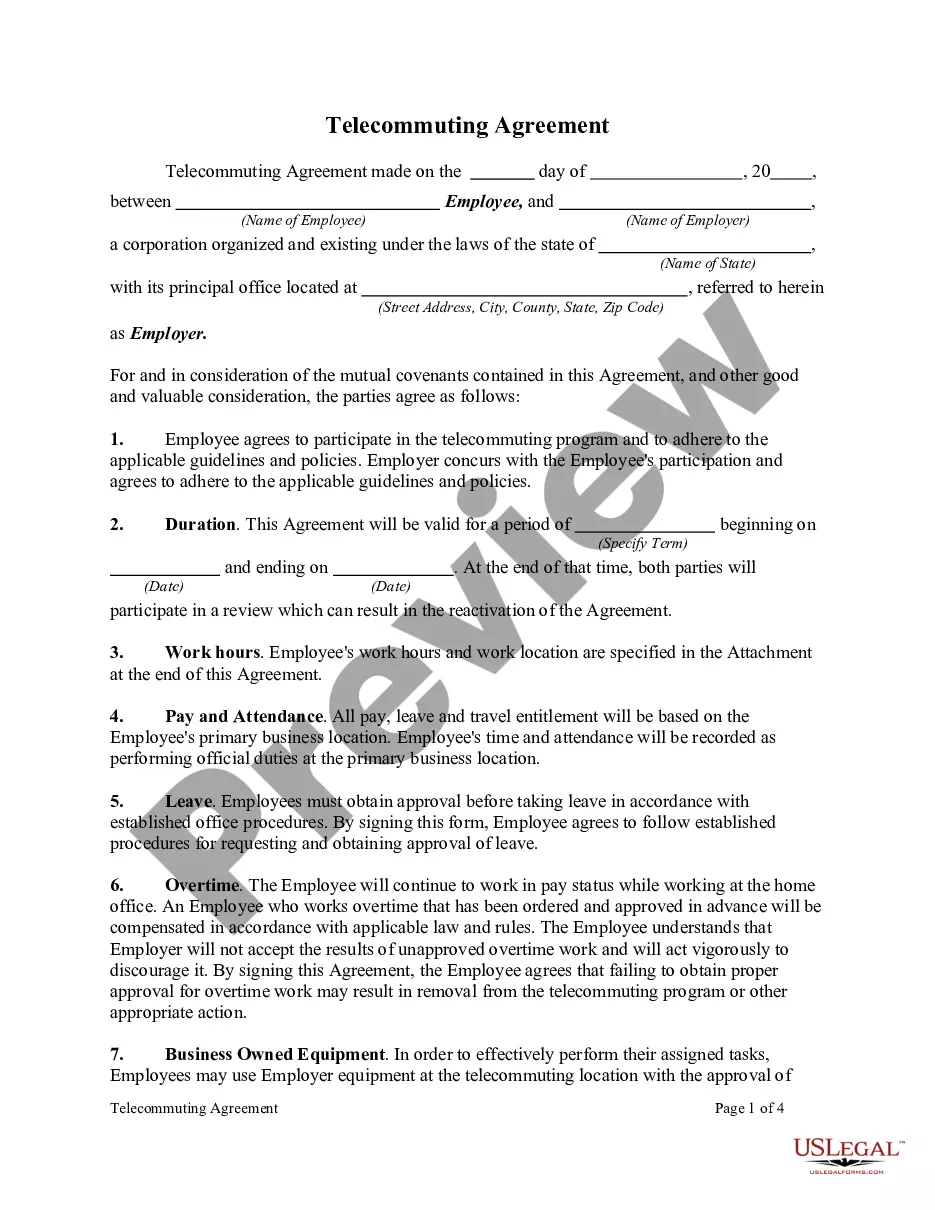
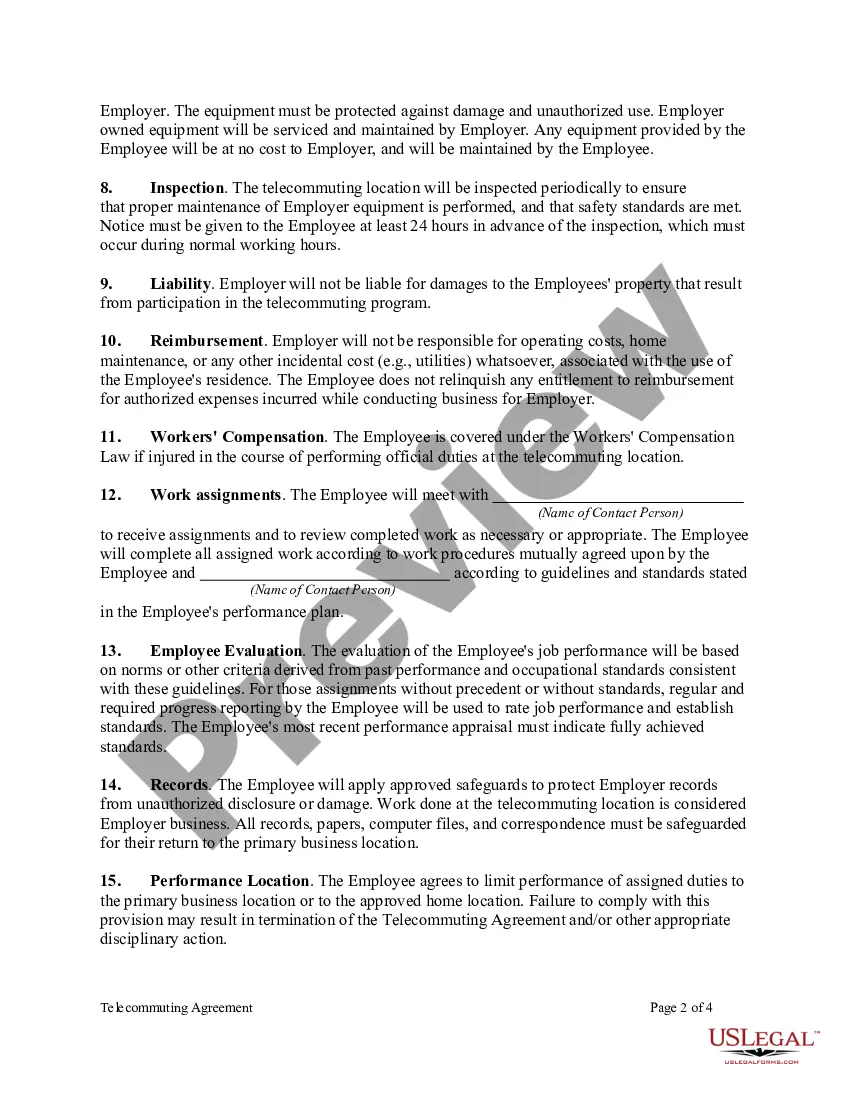
Free preview
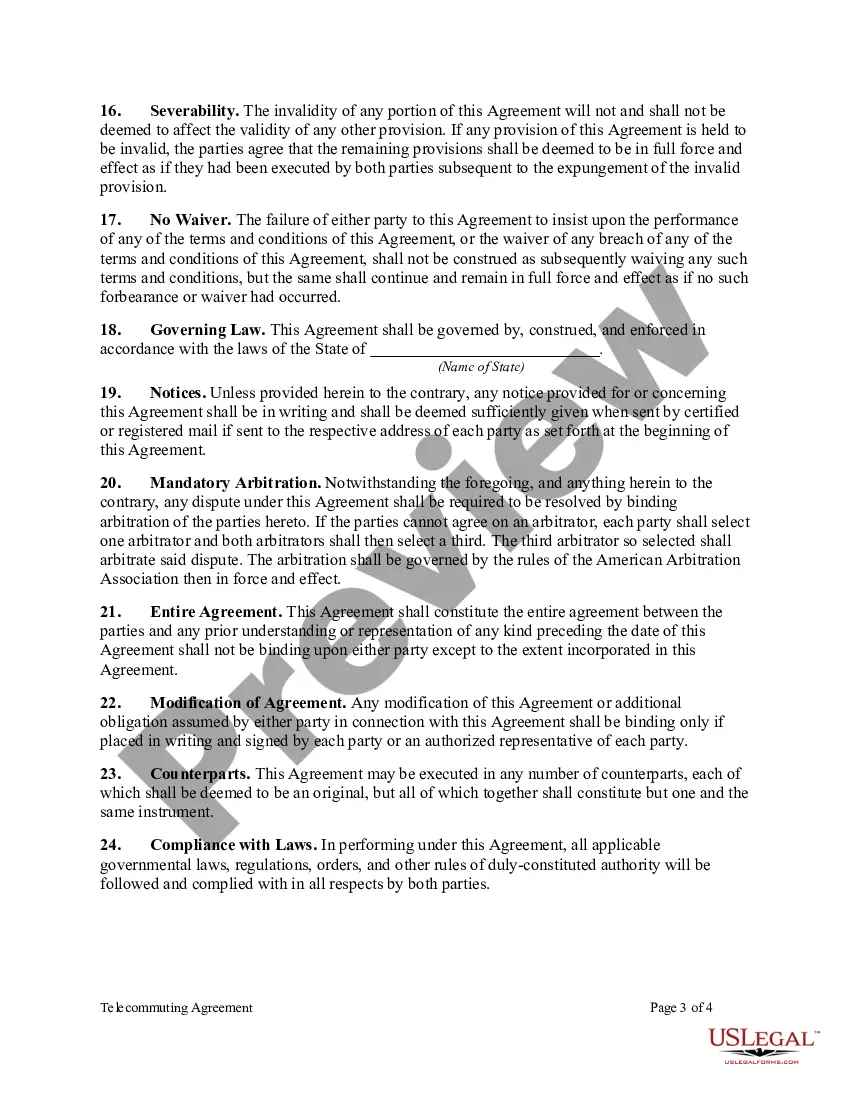
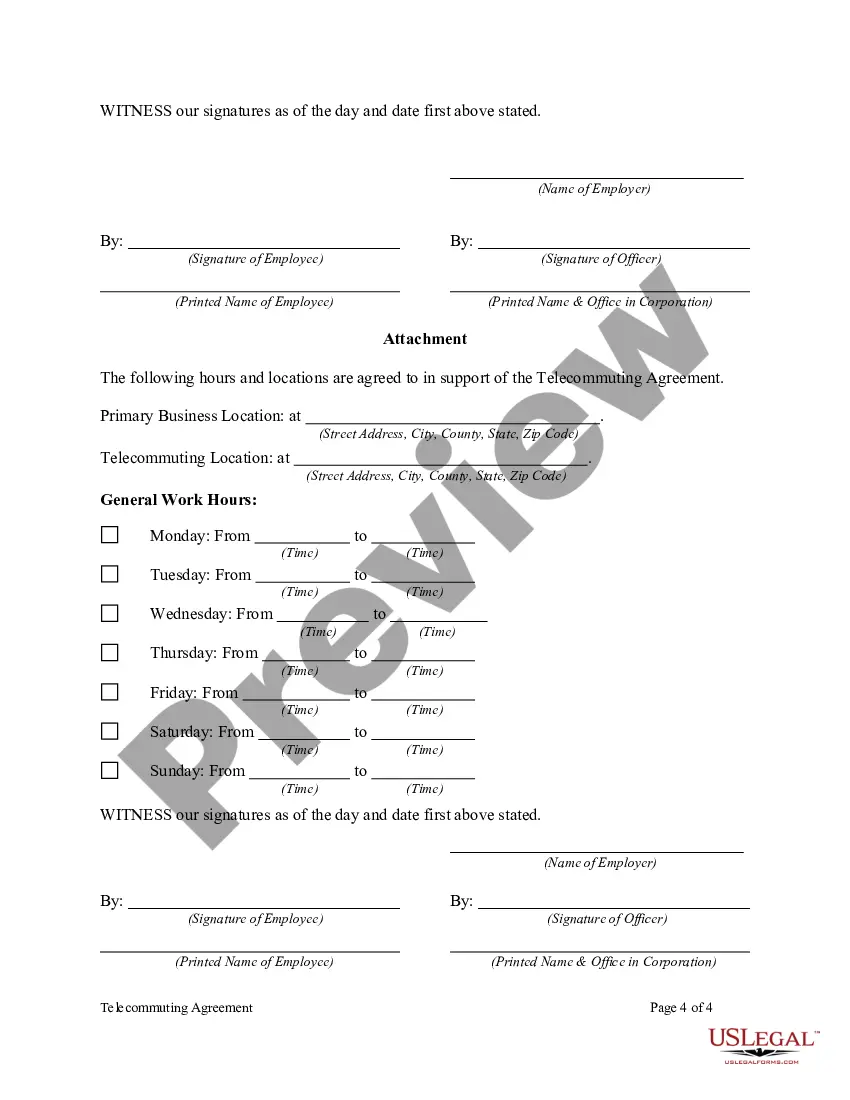
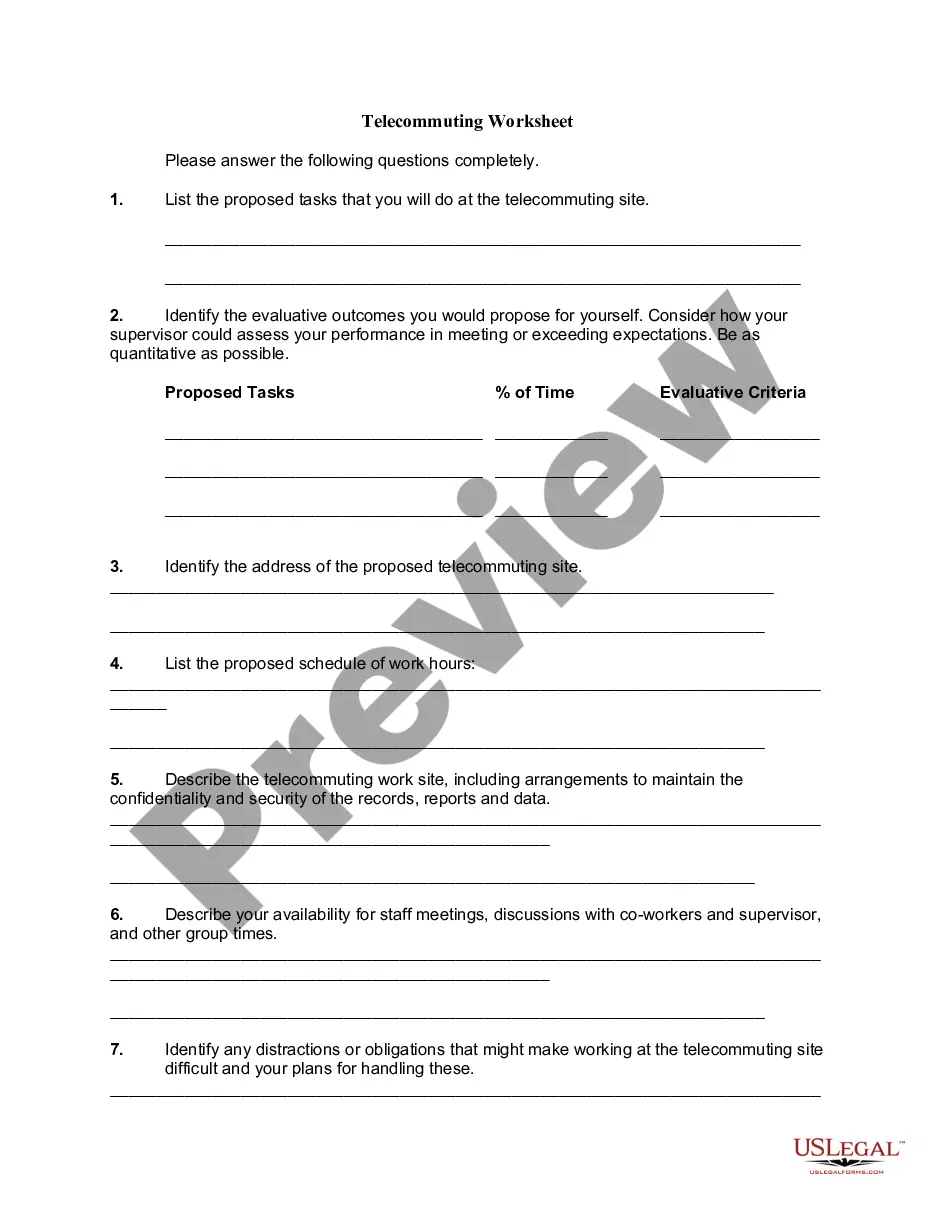
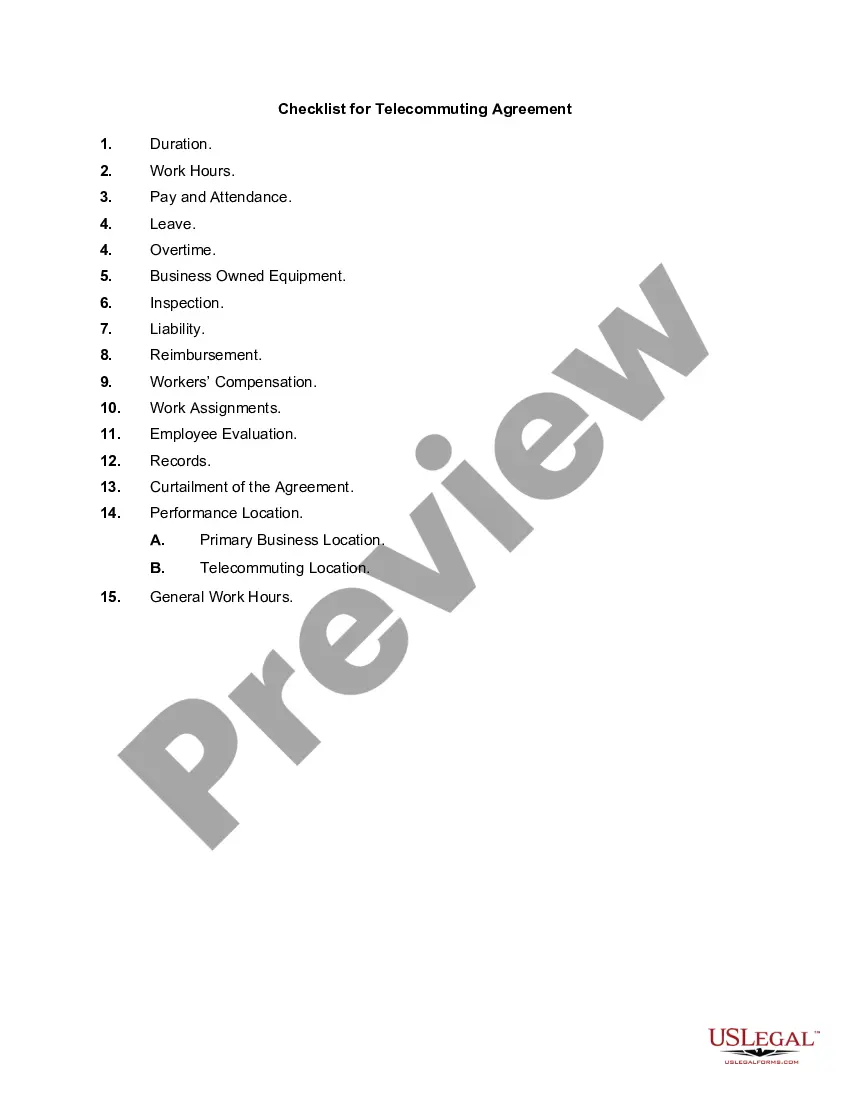
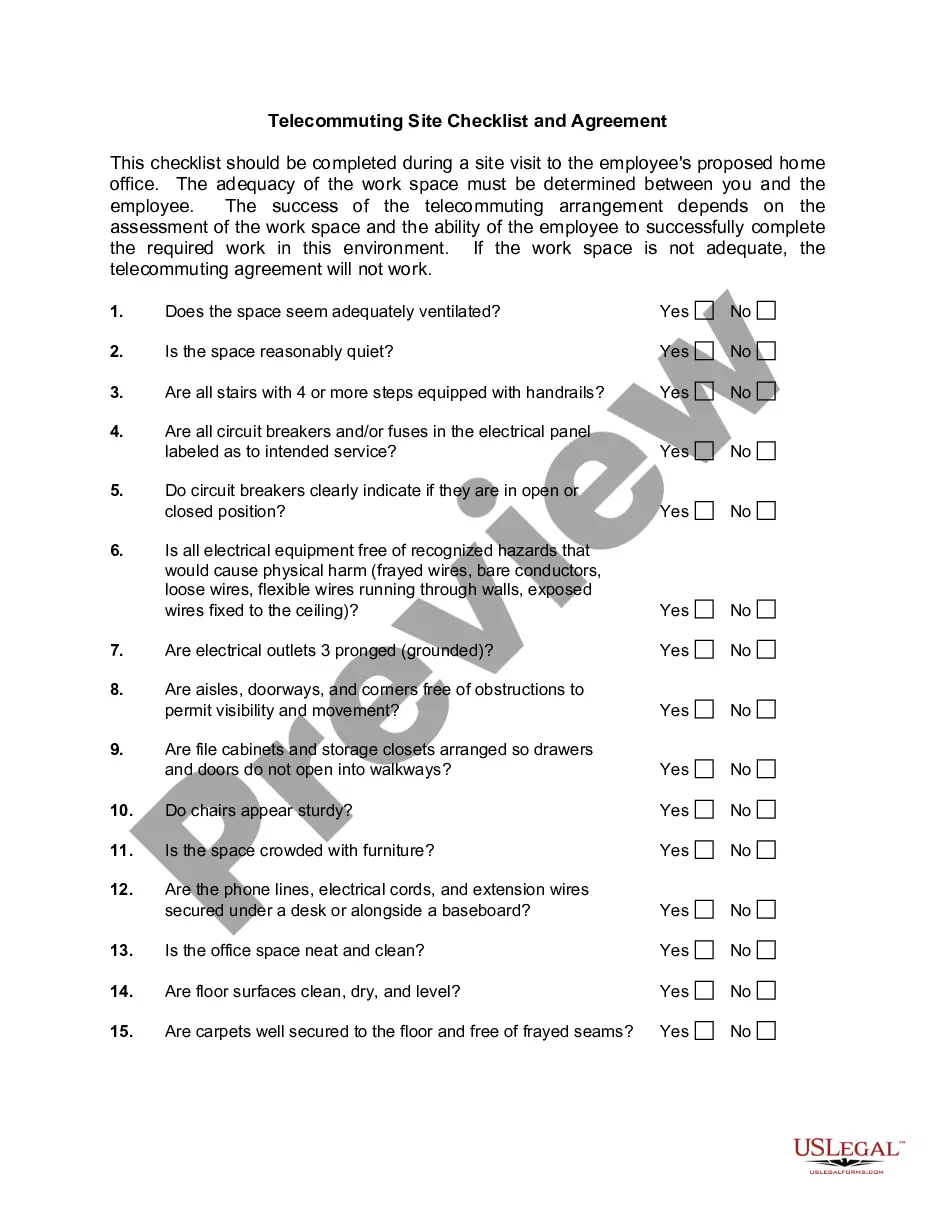
  • Preview Telecommuting Agreement
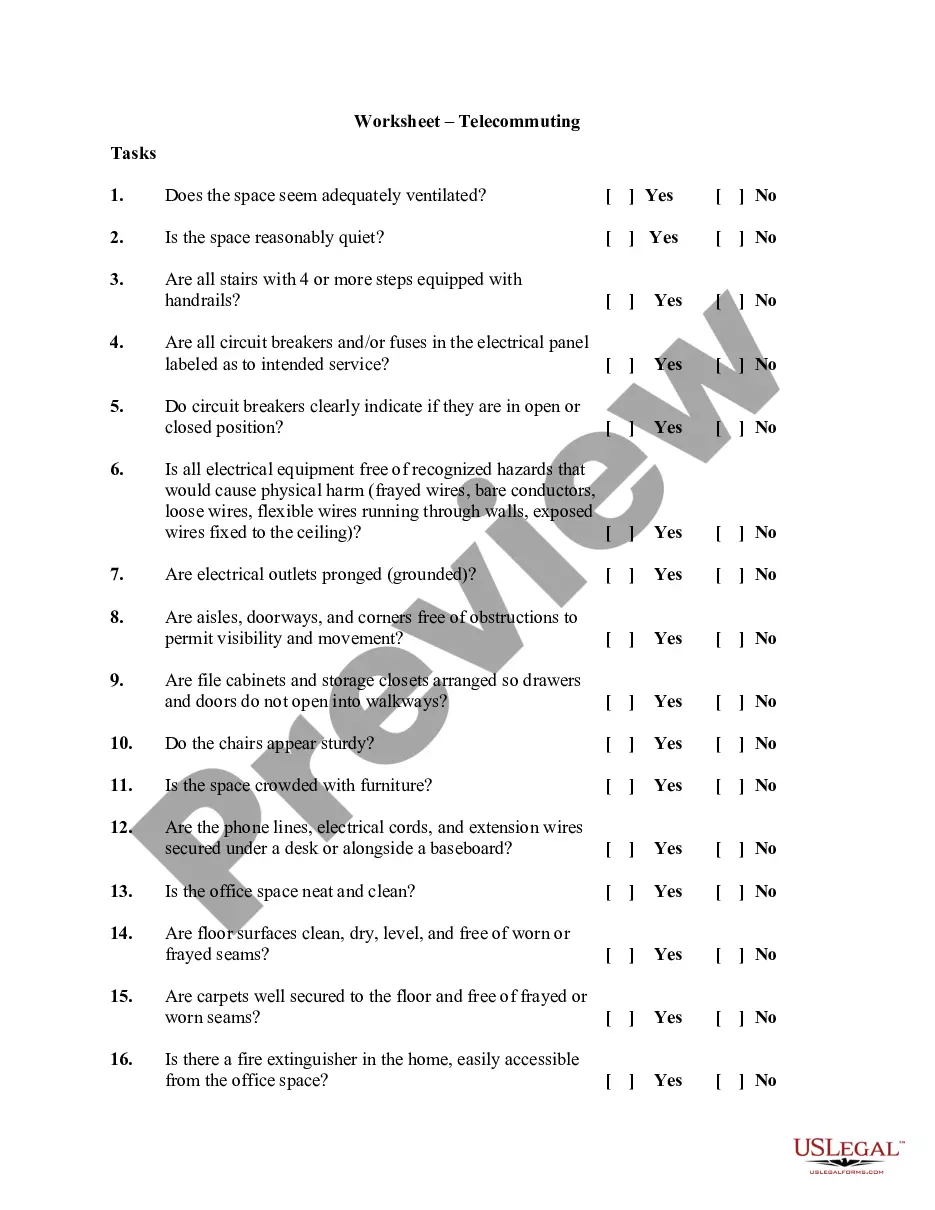
  • Preview Telecommuting Agreement
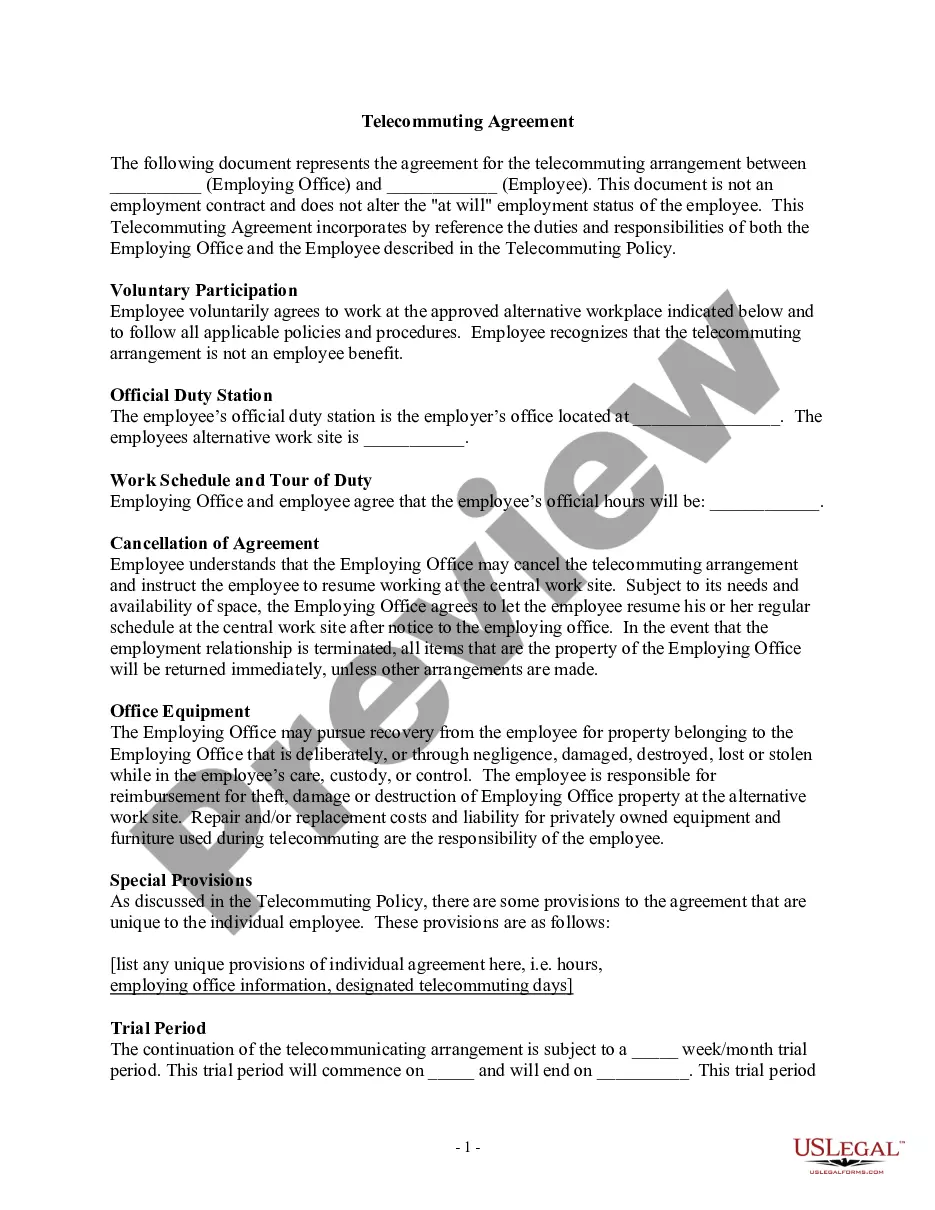
  • Preview Telecommuting Agreement
  • Preview Telecommuting Agreement

How to fill out Telecommuting Agreement?

Have you ever found yourself in a situation where you need documents for business or personal reasons nearly every day.

There are numerous legal document templates available online, but locating reliable versions can be challenging.

US Legal Forms offers thousands of form templates, including the Minnesota Telecommuting Agreement, designed to meet state and federal regulations.

Once you have the correct form, click Get now.

Select the pricing plan you want, complete the required information to create your account, and pay for your order using PayPal or a credit card.

  1. If you are already acquainted with the US Legal Forms website and have an account, simply Log In.
  2. Then, you can download the Minnesota Telecommuting Agreement template.
  3. If you do not have an account and want to start using US Legal Forms, follow these steps.
  4. Find the form you need and ensure it is for the correct state/area.
  5. Use the Review option to examine the form.
  6. Read the instructions to confirm you have selected the right form.
  7. If the form isn’t what you’re searching for, use the Search option to find the form that matches your needs and requirements.

Form popularity

FAQ

Yes, Minnesota is shortening the distance for return to office exemptions for state employees. This amendment to the Minnesota Telecommuting Agreement signifies a shift toward accommodating employees' needs in balancing office presence and remote work. Such changes enable employees to remain productive while minimizing unnecessary travel. To fully grasp how these adjustments affect you, exploring the specifics of the Minnesota Telecommuting Agreement is beneficial.

Indeed, Minnesota is loosening the distance requirement to qualify for remote work under the Minnesota Telecommuting Agreement. This flexibility opens doors for many state employees who may have faced limitations previously. By allowing a broader range of employees to telecommute, Minnesota aims to enhance work-life balance and optimize workforce distribution. Understanding the implications of this agreement can help you navigate your remote work options effectively.

They may work remotely on a temporary basis, such as while traveling, or they might be a permanent remote worker. Telecommuting, also called telework, can mean that the employee might be working on-site some of the time. However, they also might never come into the office.

Location of the telework office (e.g., home or another alternative workplace) Equipment inventory (e.g., what the employee is supplying, what the agency is providing, and who is responsible to maintain it) A general list of job tasks that will be performed while teleworking. The telework schedule.

The remote work policy outlines what's expected when working remotely. It should go into detail about all aspects of remote work. This includes expectations of working hours, legal rights, and cybersecurity requirements. Although this might sound challenging, with the right guidance, it won't be!

Telecommuting is the ability for an employee to complete work assignments from outside the traditional workplace by using telecommunications tools such as email, phone, chat and video apps.

Logging keystrokes is one way of monitoring remote workers. Since the pandemic and the rise in people working from home, employers' use of employee-monitoring programs has been growing rapidly. Employers say they're tracking workers' activity mainly for two reasons: to promote security and to boost productivity.

Telecommuting, also called telework, can mean that the employee might be working on-site some of the time. However, they also might never come into the office. Most positions considered telecommuting are usually filled by candidates that are geographically close to the business.

No. An employer cannot use a choice of law clause to oust the law of the jurisdiction where the worker is physically located and performing the work.

The telecommuter agrees to provide a secure location for EMPLOYER-owned equipment and materials, and will not use, or allow others to use, such equipment for purposes other than EMPLOYER business. All equipment, records, and materials provided by the EMPLOYER shall remain EMPLOYER property.

Trusted and secure by over 3 million people of the world’s leading companies

Minnesota Telecommuting Agreement