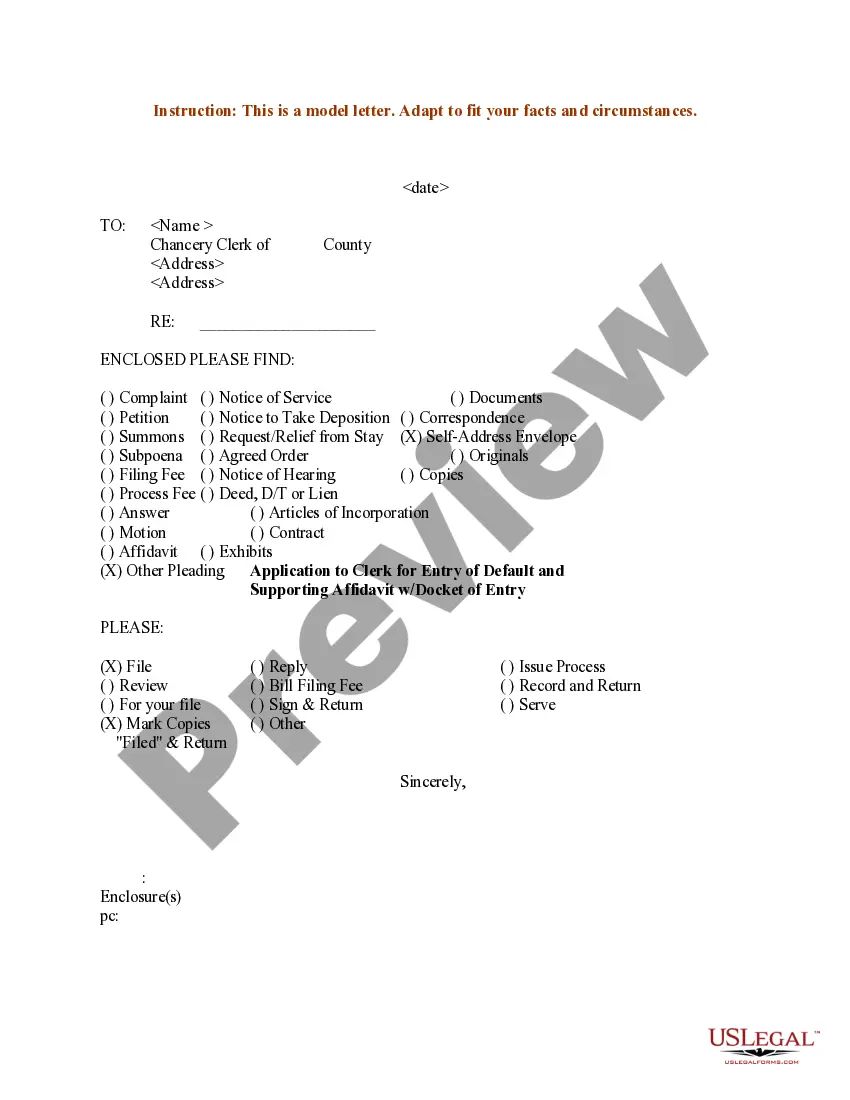
Minnesota Sample Letter to Chancery Clerk with Checklist for Enclosed Pleadings and Filing Instructions
Description
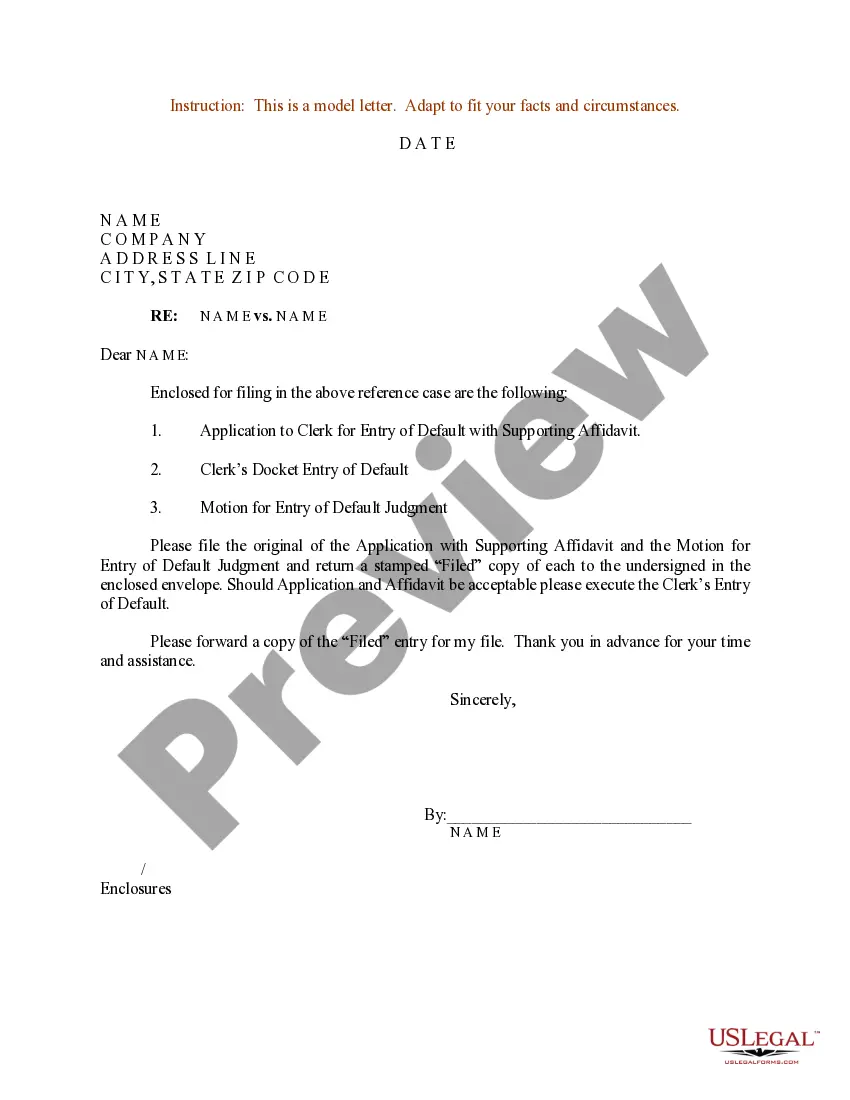
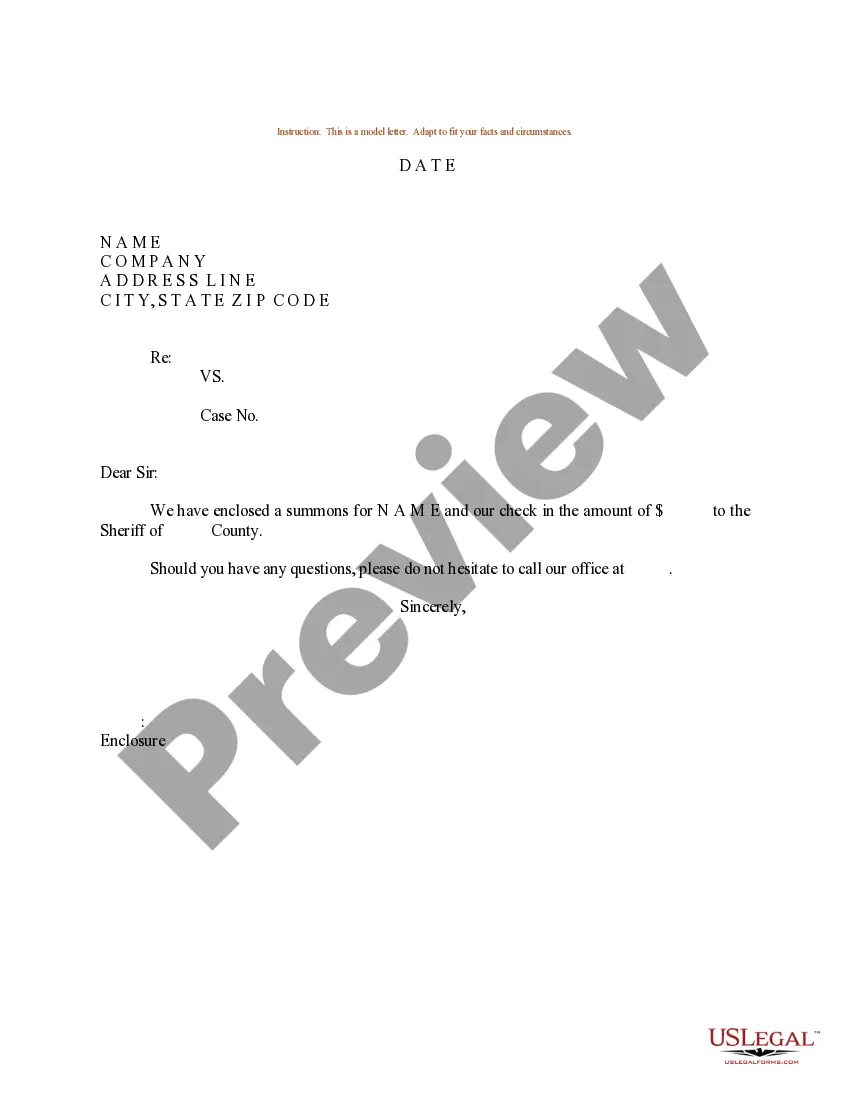
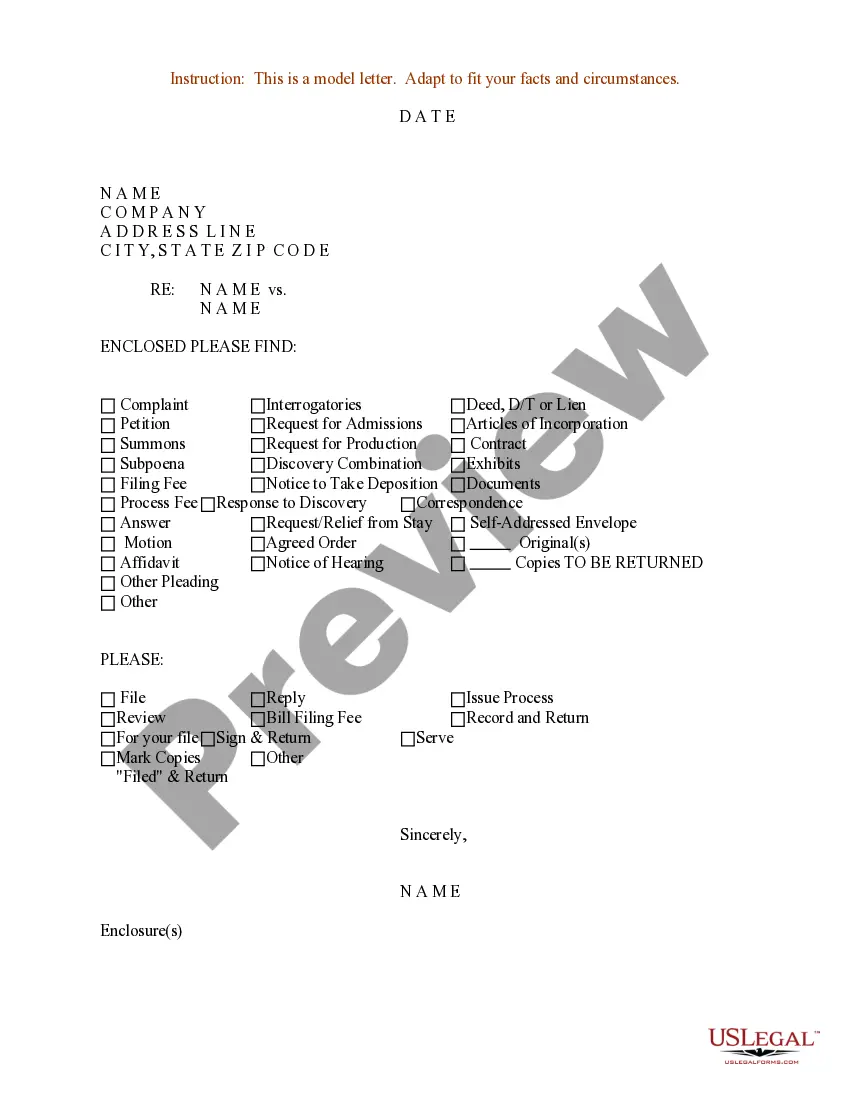
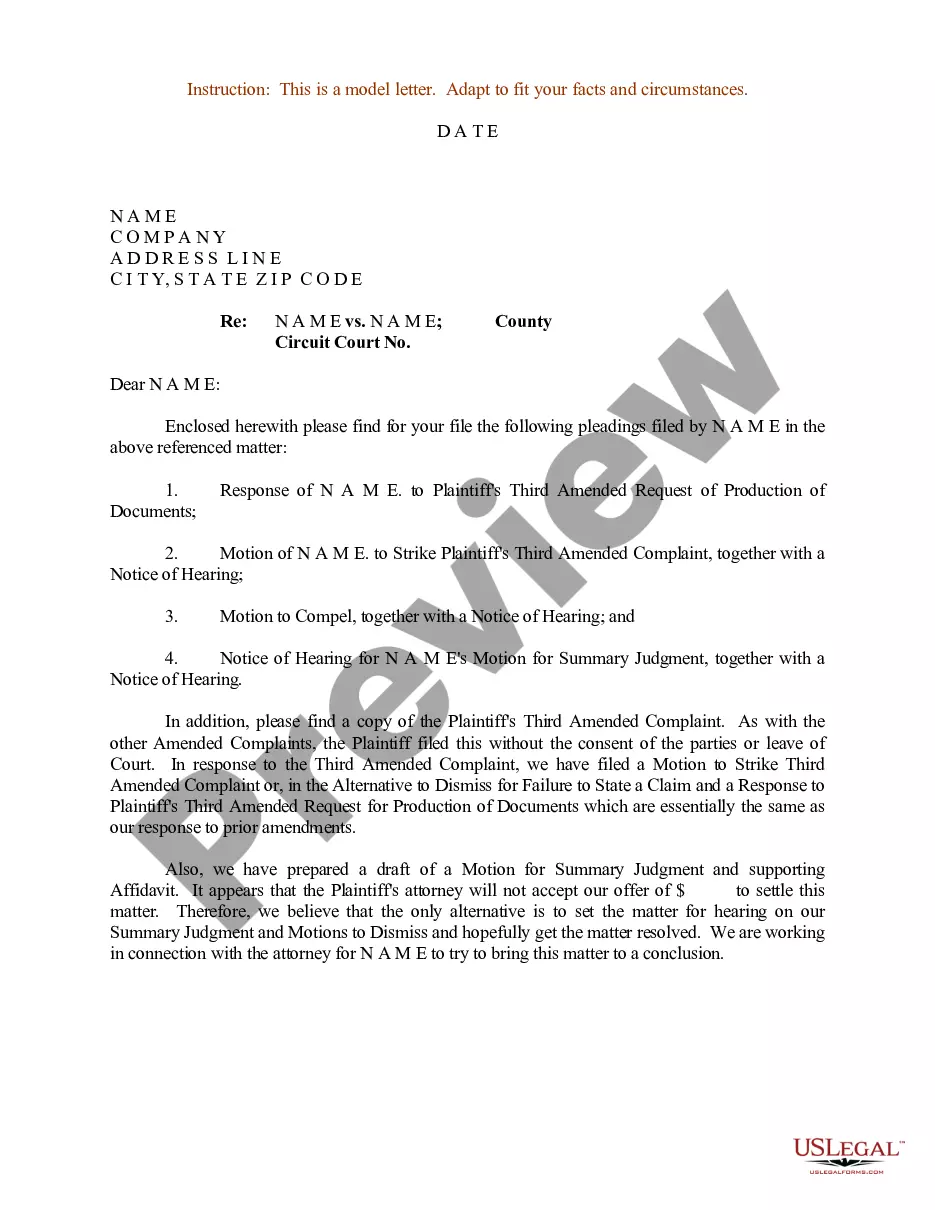
How to fill out Sample Letter To Chancery Clerk With Checklist For Enclosed Pleadings And Filing Instructions?
If you intend to total, download, or print legal document templates, utilize US Legal Forms, the largest selection of legal forms available online. Take advantage of the site’s simple and effective search to find the documents you require. Numerous templates for business and personal uses are organized by categories and states, or keywords. Use US Legal Forms to locate the Minnesota Sample Letter to Chancery Clerk with Checklist for Enclosed Pleadings and Filing Instructions in just a few clicks.
If you are already a US Legal Forms user, Log In to your account and click the Download button to obtain the Minnesota Sample Letter to Chancery Clerk with Checklist for Enclosed Pleadings and Filing Instructions. You can also access forms you have previously saved in the My documents tab of your account.
If you are using US Legal Forms for the first time, follow the instructions below: Step 1. Ensure you have selected the form for the correct city/state. Step 2. Utilize the Review option to examine the form’s content. Remember to read the description. Step 3. If you are dissatisfied with the form, use the Search field at the top of the screen to find alternative versions of the legal form template. Step 4. Once you have found the form you need, click on the Purchase now button. Choose the pricing plan you prefer and enter your details to register for the account. Step 5. Complete the transaction. You can use your credit card or PayPal account to finalize the transaction. Step 6. Select the format of the legal form and download it to your device. Step 7. Fill out, modify, and print or sign the Minnesota Sample Letter to Chancery Clerk with Checklist for Enclosed Pleadings and Filing Instructions.
- Every legal document template you acquire is yours permanently.
- You have access to every form you saved in your account.
- Visit the My documents section and select a form to print or download again.
- Stay competitive and download, and print the Minnesota Sample Letter to Chancery Clerk with Checklist for Enclosed Pleadings and Filing Instructions with US Legal Forms.
- There are thousands of professional and state-specific forms available for your business or personal needs.
Form popularity
FAQ
Writing a letter to the clerk of court requires a professional tone and clear content. Start with your address and the court's address, followed by the date. Clearly state your request or information you wish to convey, and include any relevant case numbers. For additional guidance, you can utilize the Minnesota Sample Letter to Chancery Clerk with Checklist for Enclosed Pleadings and Filing Instructions to ensure your letter meets all necessary requirements.
When addressing a letter to the local court, include the full name of the court, the address, and any department or division if applicable. Use a formal salutation such as 'Dear Clerk of Court' or 'To Whom It May Concern.' Providing a clear subject line can also help clarify the letter's purpose. The Minnesota Sample Letter to Chancery Clerk with Checklist for Enclosed Pleadings and Filing Instructions can offer a structured format for your letter.
To write a letter to the clerk of courts, start with your contact information and the court's address. Clearly state your purpose, whether it's to file documents or ask for information. Include any necessary case details and be polite throughout. For a comprehensive guide, consider using the Minnesota Sample Letter to Chancery Clerk with Checklist for Enclosed Pleadings and Filing Instructions as your template.
Yes, writing a letter to a judge can help if it presents clear and relevant information regarding your case. However, ensure your letter adheres to court rules and is respectful in tone. Keep in mind that judges receive many letters, so clarity is key. Using the Minnesota Sample Letter to Chancery Clerk with Checklist for Enclosed Pleadings and Filing Instructions can guide you in writing an effective letter.
Writing a letter to the courts involves addressing your concerns or requests clearly and respectfully. Start by including your contact information, the court's address, and the date. Be concise in your message and specify any relevant case numbers. For a more structured approach, you can refer to the Minnesota Sample Letter to Chancery Clerk with Checklist for Enclosed Pleadings and Filing Instructions.