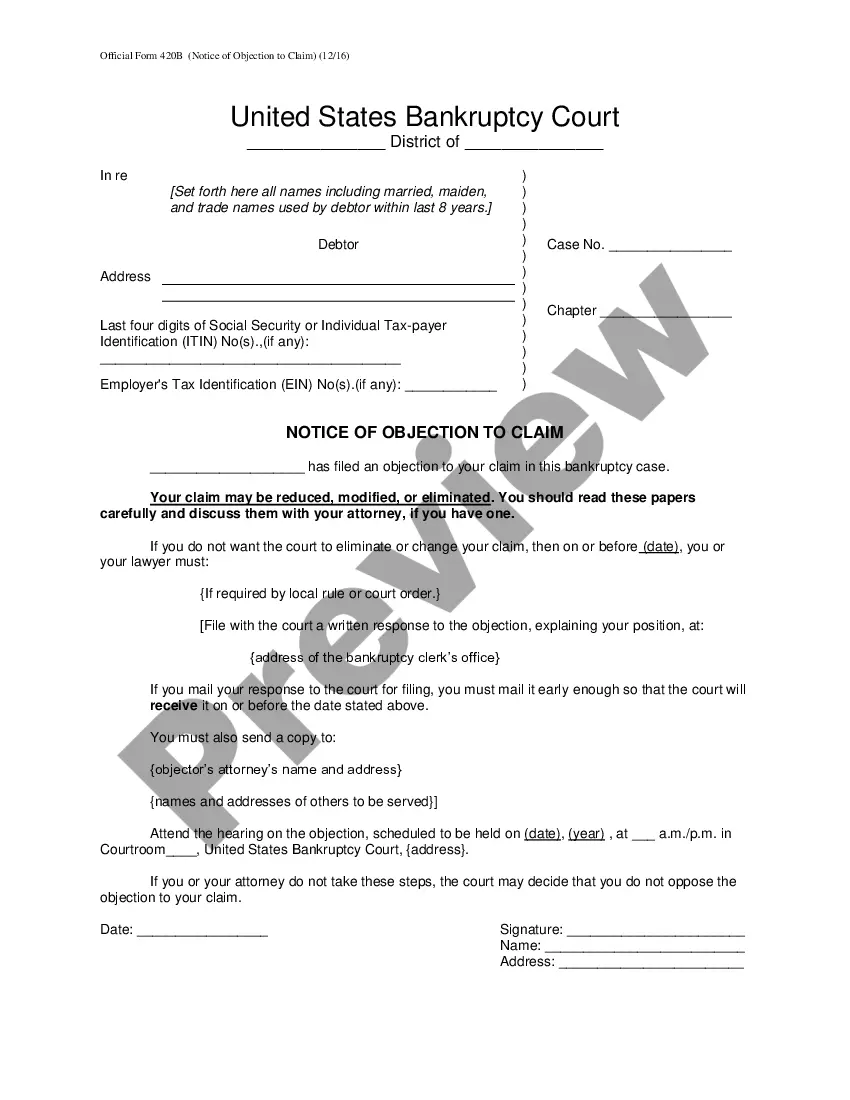
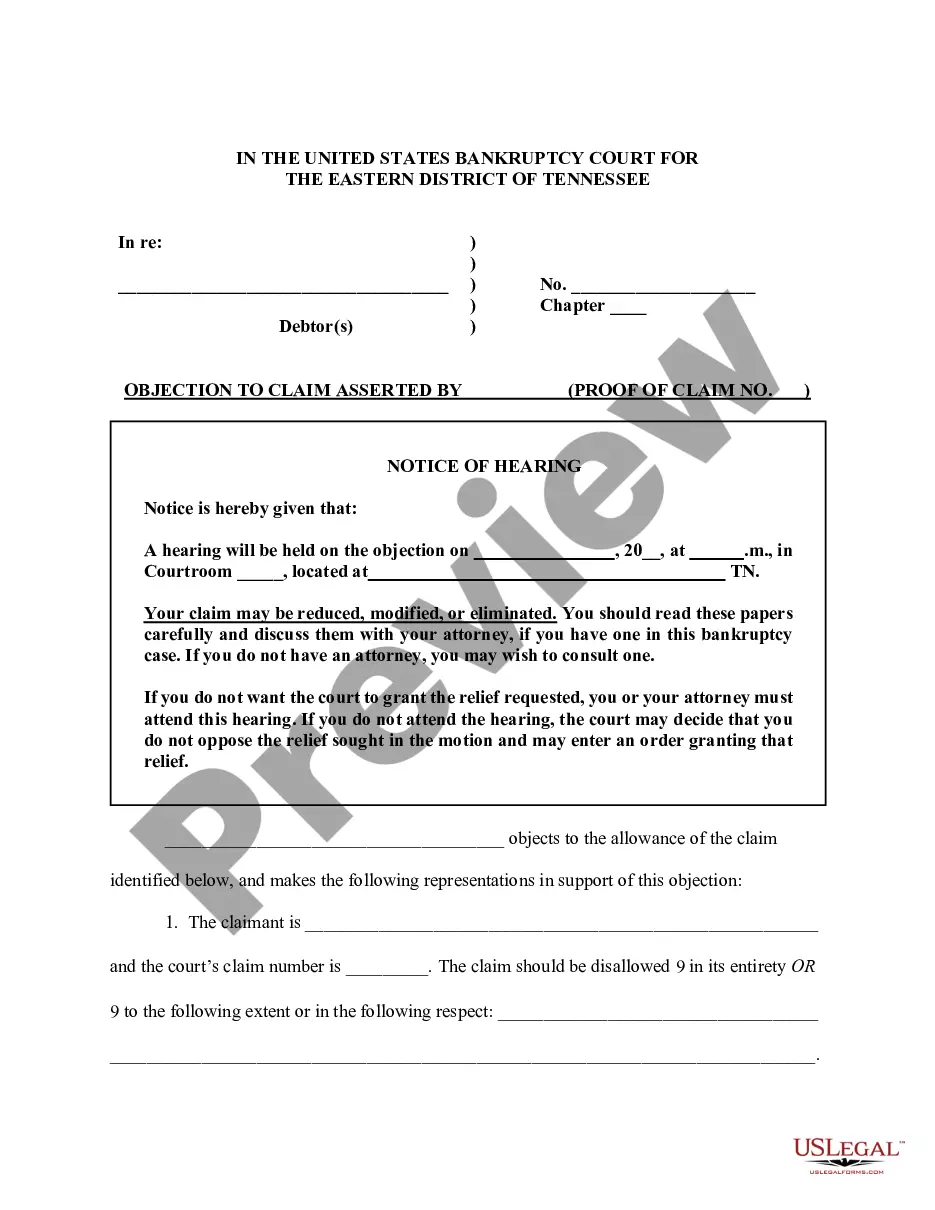
Minnesota Creditors Objection to Exemption Claim is an objection made by a creditor to a debtor's claim for bankruptcy exemption. When a debtor files for bankruptcy, they have the option to claim certain assets as exempt from creditors' claims. If a creditor believes that the debtor should not be allowed to exempt the asset in question, they can file a creditors' objection to the debtor's claim. The types of Minnesota Creditors Objection to Exemption Claim include objection to a debtor's homestead exemption, objection to a debtor's vehicle exemption, and objection to a debtor's wildcard exemption.
Minnesota Creditors Objection To Exemption Claim
State:
Minnesota
Control #:
MN-SKU-1680
Format:
PDF
Instant download
This website is not affiliated with any governmental entity
Public form
Description
Creditors Objection To Exemption Claim
Get your form ready online
Our built-in tools help you complete, sign, share, and store your documents in one place.
Built-in online Word editor
Make edits, fill in missing information, and update formatting in US Legal Forms—just like you would in MS Word.
Export easily
Download a copy, print it, send it by email, or mail it via USPS—whatever works best for your next step.
E-sign your document
Sign and collect signatures with our SignNow integration. Send to multiple recipients, set reminders, and more. Go Premium to unlock E-Sign.
Notarize online 24/7
If this form requires notarization, complete it online through a secure video call—no need to meet a notary in person or wait for an appointment.
Store your document securely
We protect your documents and personal data by following strict security and privacy standards.

Make edits, fill in missing information, and update formatting in US Legal Forms—just like you would in MS Word.

Download a copy, print it, send it by email, or mail it via USPS—whatever works best for your next step.

Sign and collect signatures with our SignNow integration. Send to multiple recipients, set reminders, and more. Go Premium to unlock E-Sign.

If this form requires notarization, complete it online through a secure video call—no need to meet a notary in person or wait for an appointment.

We protect your documents and personal data by following strict security and privacy standards.
Looking for another form?
How to fill out Minnesota Creditors Objection To Exemption Claim?
Managing formal documentation necessitates focus, precision, and utilizing well-prepared templates. US Legal Forms has been assisting individuals nationwide for 25 years, so when you select your Minnesota Creditors Objection To Exemption Claim template from our platform, you can be assured it adheres to federal and state laws.
Using our service is uncomplicated and rapid. To acquire the necessary documentation, all you will require is an account with an active subscription. Here’s a concise guideline for you to obtain your Minnesota Creditors Objection To Exemption Claim in just minutes.
All documents are designed for multiple uses, like the Minnesota Creditors Objection To Exemption Claim displayed on this page. If you need them again, you can complete them without additional payment - simply access the My documents tab in your profile and finalize your document whenever you require it. Try US Legal Forms and prepare your business and personal documentation swiftly and in full legal compliance!
- Ensure to thoroughly review the form's content and its alignment with general and legal standards by previewing it or reading its description.
- Search for an alternate formal template if the previously accessed one does not fit your circumstances or state regulations (the tab for that is located on the upper page corner).
- Log in to your account and download the Minnesota Creditors Objection To Exemption Claim in your preferred format. If it’s your first experience with our website, click Buy now to continue.
- Create an account, select your subscription option, and make a payment using your credit card or PayPal account.
- Choose the format in which you wish to save your document and click Download. Print the blank form or incorporate it into a professional PDF editor for a paperless preparation.
Form popularity
FAQ
Minnesota Statute 181.13 addresses the limitations on garnishment of wages, ensuring that employees retain a portion of their income to meet living expenses. This law plays a significant role in protecting workers from excessive garnishments, allowing them to support themselves and their families. If a creditor files a Minnesota creditors objection to exemption claim, they must consider the provisions of this law. Familiarizing yourself with this statute can help you understand your rights and obligations in financial matters.
In Minnesota, several exemptions protect a debtor's assets from garnishment, including specific amounts for wages, retirement accounts, and personal property. These exemptions are designed to ensure that individuals can maintain a basic standard of living while managing their debts. When a creditor files a Minnesota creditors objection to exemption claim, they might dispute these protections to access a debtor's assets. It’s essential to be aware of these exemptions to navigate financial difficulties effectively.
An objection to exemptions occurs when a creditor challenges a debtor's claim that certain assets should be protected from garnishment or seizure. In the context of a Minnesota creditors objection to exemption claim, creditors might argue that the claimed exemptions do not meet the legal requirements. This process allows creditors to seek payment of debts by contesting the debtor's protections. Understanding this process is crucial for both creditors and debtors in Minnesota.
An objection to exemption occurs when a creditor challenges a debtor's claim to protect certain assets from being seized in bankruptcy. In the context of a Minnesota Creditors Objection To Exemption Claim, creditors may argue that the exemption claimed by the debtor does not meet legal standards. This process allows creditors to seek recovery of debts by contesting the exemptions that shield the debtor's property. To navigate this complex process effectively, consider using US Legal Forms, which offers resources and templates tailored to help you address these objections confidently.
The statute of limitations for bringing a lawsuit for breach of contract under Minnesota law is six (6) years. This means that a creditor or debt collector can sue you anytime within six (6) years from the date of your last purchase or last payment, whichever was later.
Service of garnishment summons on debtor. A copy of the garnishment summons and copies of all other papers served on the garnishee must be served by mail at the last known mailing address of the debtor not later than five days after the service is made upon the garnishee.
Deadline in Years The statute of limitations for most debts in Minnesota is six years, including open accounts and written contracts. Creditors and debt collectors can file a lawsuit for breach of contract under Minnesota law within this period to hold you legally responsible for an unpaid debt.
There are 2 exemptions that are automatic. Your employer can't garnish money from your paycheck if you earn less than $380 a week ($1,520 a month). This is full-time pay at the state minimum wage. If you earn more than $380 a week, at least 75% of your earnings after taxes are automatically protected.
It's unlikely you'll get your medical debt forgiven, but there are ways to get some financial relief for those who qualify. Consider hospital forgiveness programs, assistance from specialized organizations and government assistance programs.
Debt Collectors A doctor or hospital may refer your bill to a third party debt collection agency if you do not pay. If you cannot afford to pay the entire bill at once, you may wish to try to negotiate a payment plan with the hospital or clinic.