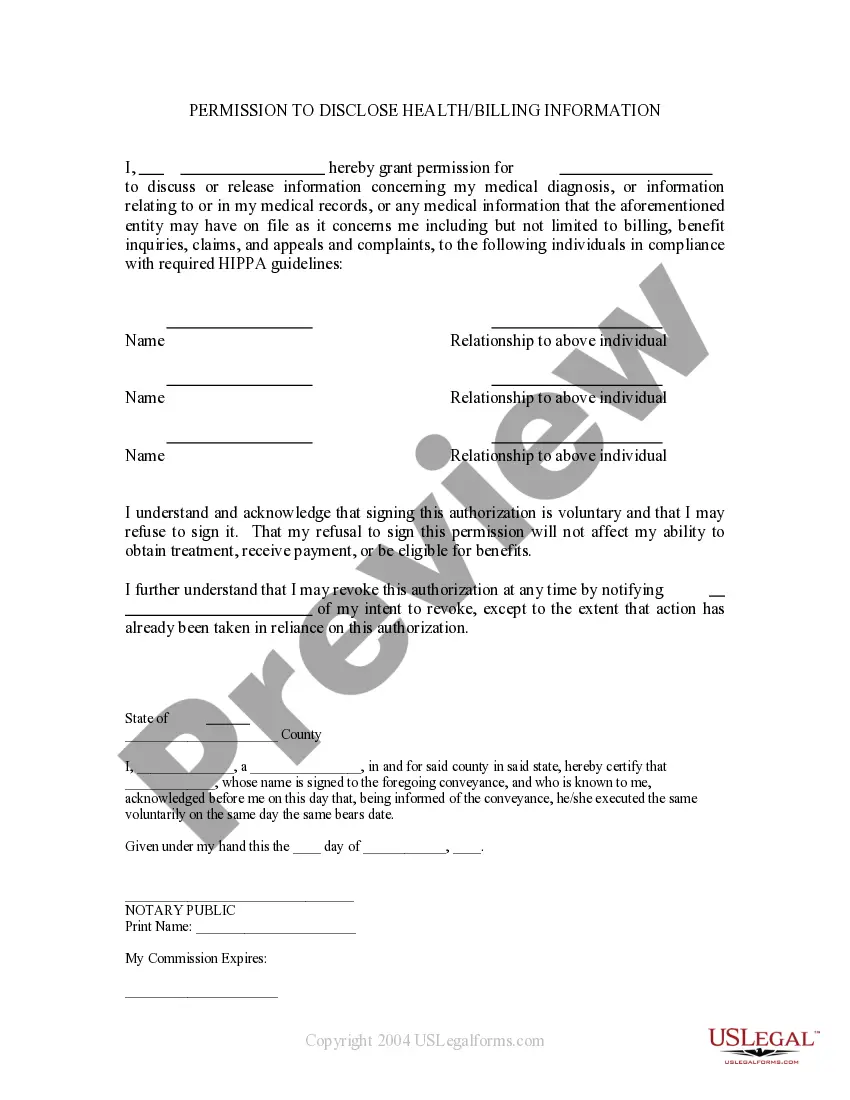
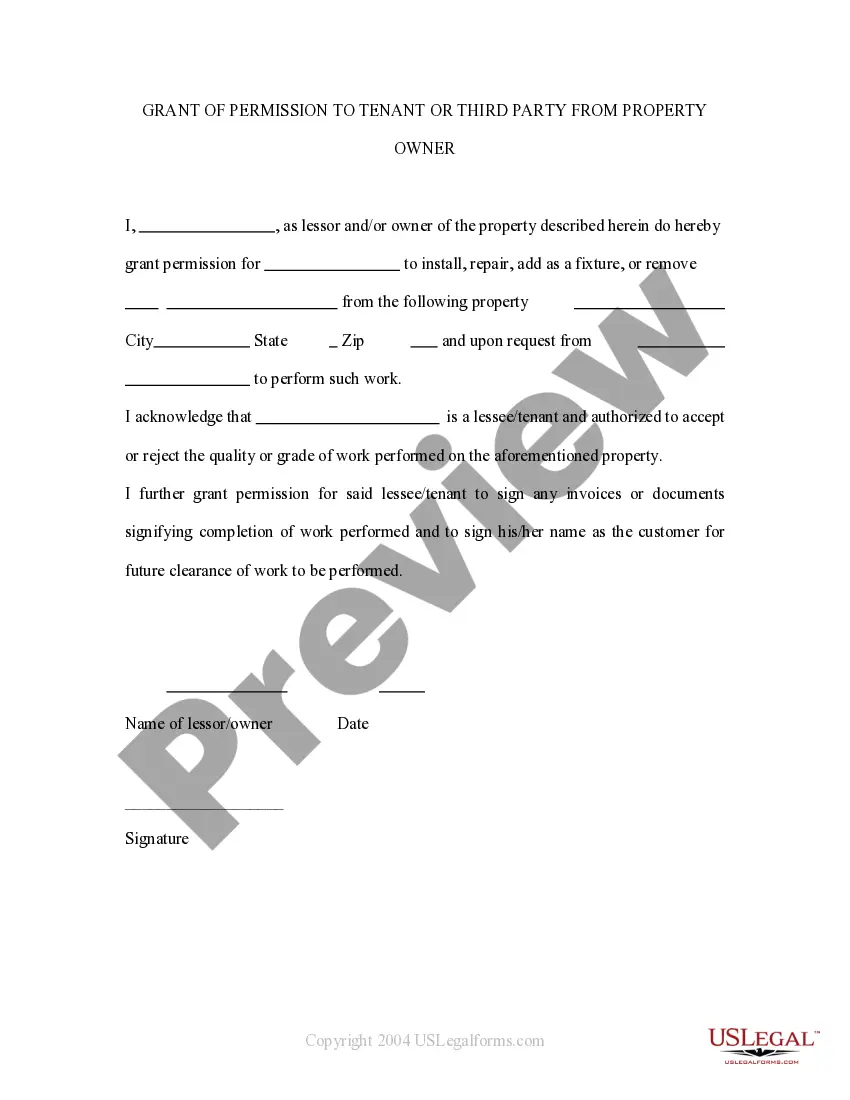
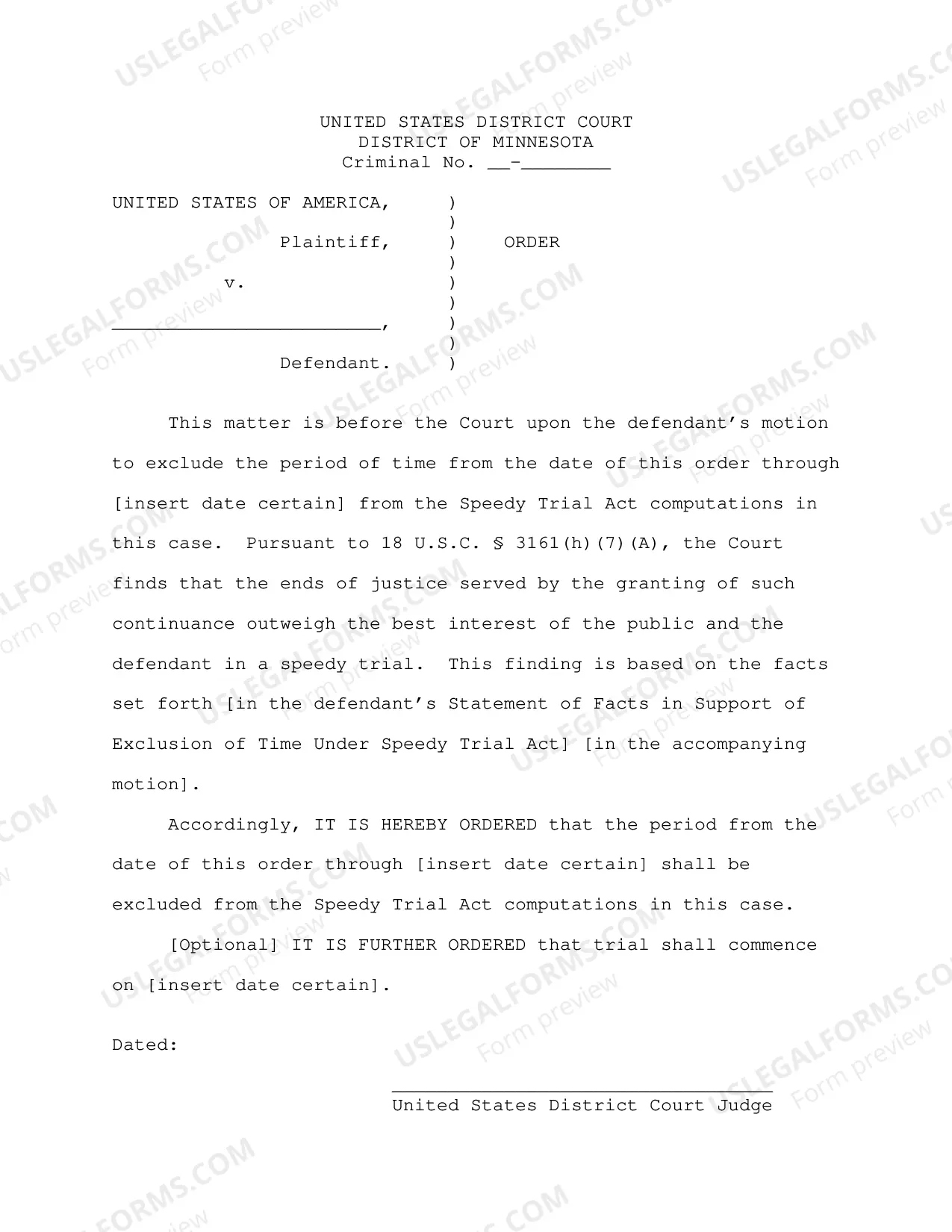
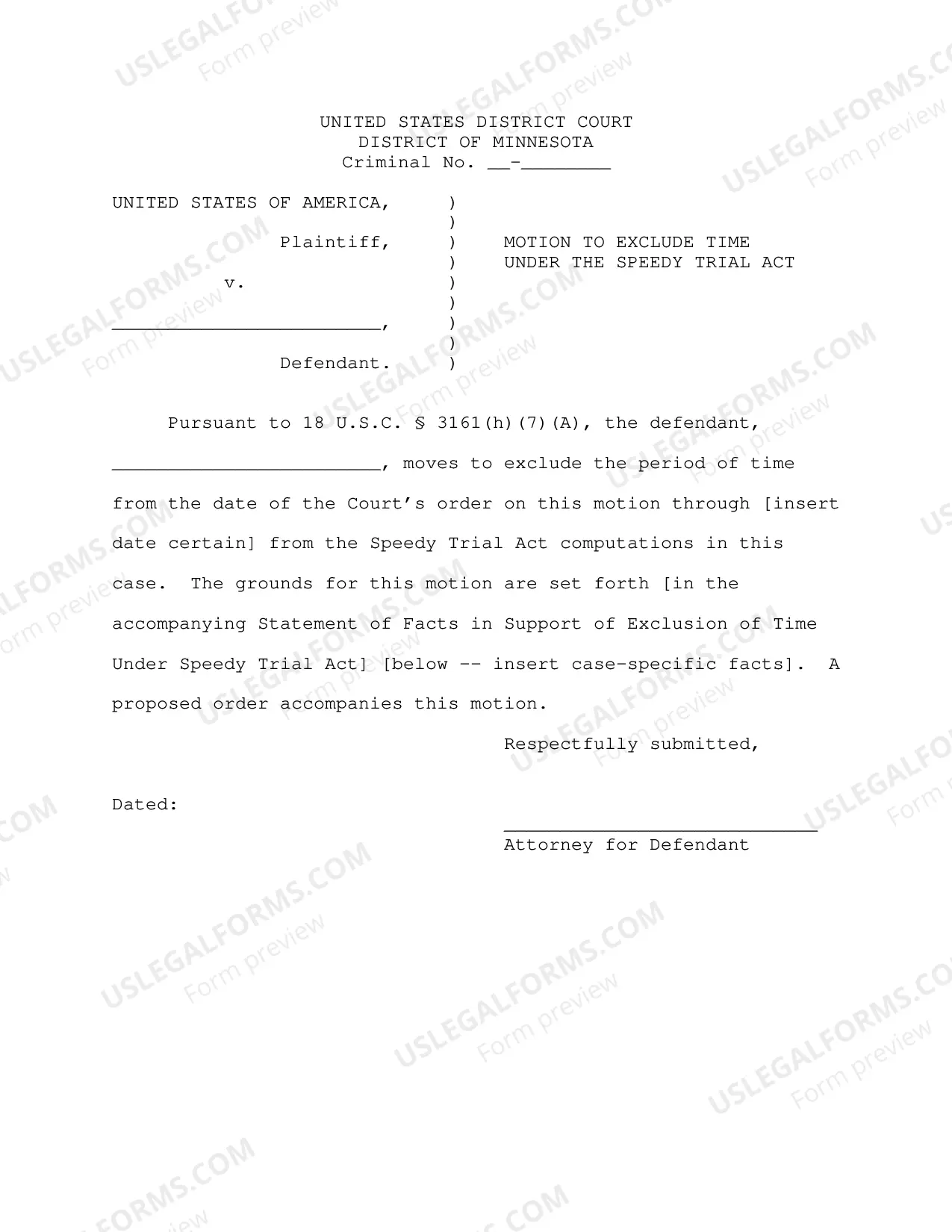
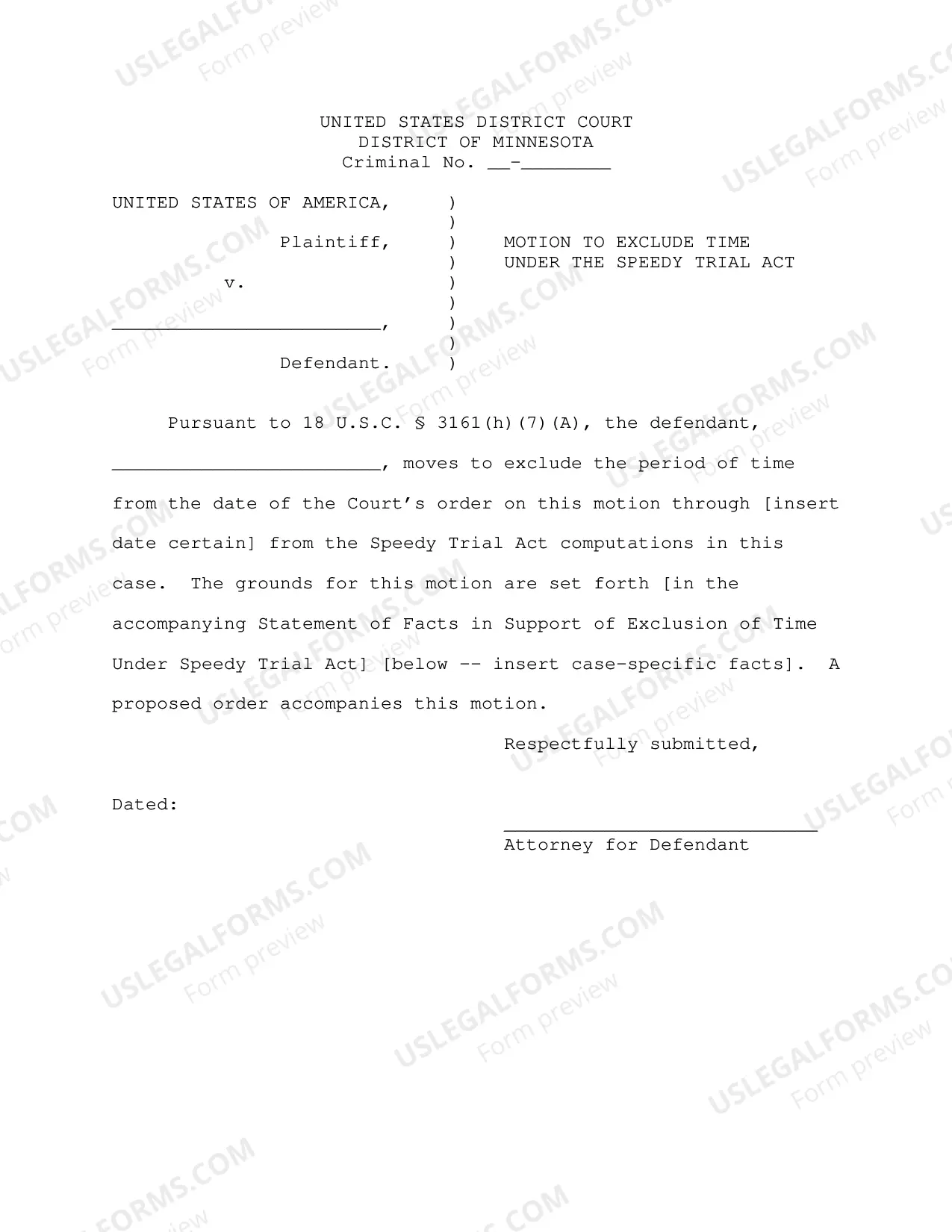
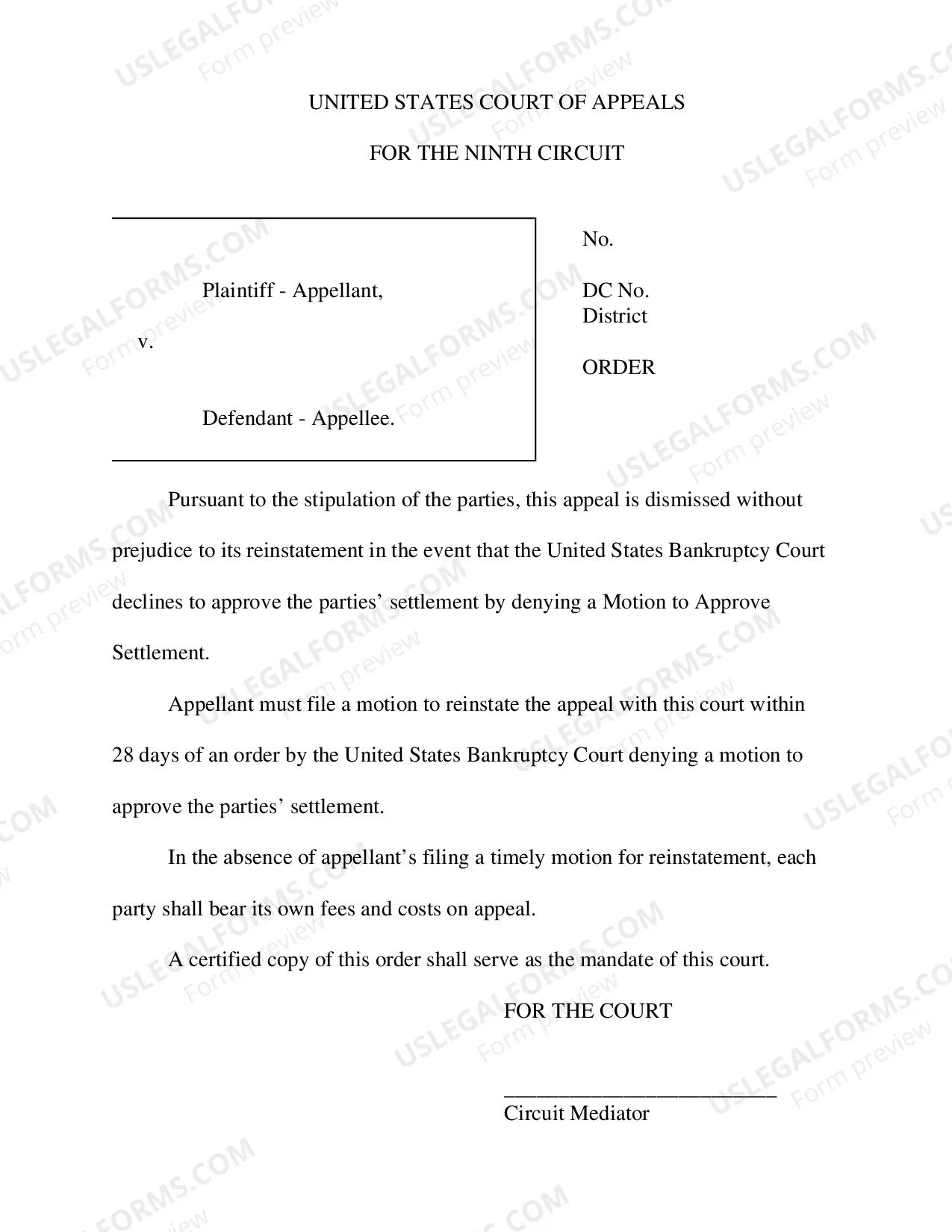
Minnesota Proposed Order-Exclusion of Time is a legal document used to suspend the statute of limitations in a Minnesota civil case. It is a proposed order submitted to the court by the plaintiff, defendant, or other parties in a case. The order requests that the court exclude a certain period of time from the statute of limitations so that the case can proceed. There are two types of Minnesota Proposed Order-Exclusion of Time: Temporary and Permanent. A Temporary Order is typically used when the parties have agreed to extend the statute of limitations for a specific amount of time, while a Permanent Order is typically used when the parties have agreed to suspend the statute of limitations indefinitely.
Minnesota Proposed Order-Exclusion of Time
Instant download
This website is not affiliated with any governmental entity
Public form
Description
Proposed Order-Exclusion of Time
Get your form ready online
Our built-in tools help you complete, sign, share, and store your documents in one place.
Built-in online Word editor
Make edits, fill in missing information, and update formatting in US Legal Forms—just like you would in MS Word.
Export easily
Download a copy, print it, send it by email, or mail it via USPS—whatever works best for your next step.
E-sign your document
Sign and collect signatures with our SignNow integration. Send to multiple recipients, set reminders, and more. Go Premium to unlock E-Sign.
Notarize online 24/7
If this form requires notarization, complete it online through a secure video call—no need to meet a notary in person or wait for an appointment.
Store your document securely
We protect your documents and personal data by following strict security and privacy standards.

Make edits, fill in missing information, and update formatting in US Legal Forms—just like you would in MS Word.

Download a copy, print it, send it by email, or mail it via USPS—whatever works best for your next step.

Sign and collect signatures with our SignNow integration. Send to multiple recipients, set reminders, and more. Go Premium to unlock E-Sign.

If this form requires notarization, complete it online through a secure video call—no need to meet a notary in person or wait for an appointment.

We protect your documents and personal data by following strict security and privacy standards.
Looking for another form?
How to fill out Minnesota Proposed Order-Exclusion Of Time?
How much duration and resources do you generally allocate to drafting official documents.
There’s a better alternative to obtaining such forms than employing legal professionals or wasting hours searching the internet for an appropriate template. US Legal Forms is the leading online repository that provides expertly crafted and validated state-specific legal paperwork for any intention, such as the Minnesota Proposed Order-Exclusion of Time.
Another benefit of our service is that you can access previously downloaded documents that you securely store in your profile under the My documents tab. Retrieve them at any time and revise your paperwork as often as necessary.
Save time and energy preparing official documents with US Legal Forms, one of the most dependable online services. Join us today!
- Review the form content to ensure it adheres to your state laws. To do this, read the form description or utilize the Preview option.
- If your legal template doesn’t align with your requirements, find another one using the search bar at the top of the page.
- If you are already registered with our service, Log In and download the Minnesota Proposed Order-Exclusion of Time. If not, continue to the next steps.
- Click Buy now once you identify the correct document. Select the subscription plan that best fits your needs to access the full capabilities of our library.
- Create an account and pay for your subscription. You can complete the transaction with your credit card or via PayPal - our service is entirely secure for that.
- Download your Minnesota Proposed Order-Exclusion of Time onto your device and fill it out on a printed hard copy or electronically.
Form popularity
FAQ
Yes, in Minnesota, you can be served by mail under specific conditions. The rules allow for service via mail as long as the recipient acknowledges receipt. If you are involved in a case where a Minnesota Proposed Order-Exclusion of Time is relevant, understanding how service by mail works can be beneficial. USLegalForms can provide you with the necessary forms to ensure proper service is achieved.
General Practice Rule 115.10 outlines specific requirements for motions and orders in Minnesota courts. It serves to streamline the legal process by ensuring that all parties adhere to established procedures. When preparing a Minnesota Proposed Order-Exclusion of Time, it is essential to follow this rule to avoid delays. Utilizing services like USLegalForms can help you produce the correct documents efficiently.
The Minnesota general rules of practice are a set of guidelines that govern the conduct of legal proceedings in the state. These rules cover a wide array of topics, including filing procedures, court appearances, and motions. Familiarizing yourself with these rules, especially when drafting a Minnesota Proposed Order-Exclusion of Time, can enhance your understanding of court protocols. USLegalForms offers the necessary resources to help you comply with these regulations.
In Minnesota, the statute of limitations for enforcing a judgment is typically ten years from the date of the judgment. This means that if you have a judgment, you need to act within this timeframe to enforce it. If you are preparing a Minnesota Proposed Order-Exclusion of Time related to your judgment, being aware of this limitation is vital. Consider using USLegalForms to create necessary documents to protect your interests.
Rule of Practice 115.10 in Minnesota governs the procedures for filing motions and obtaining orders in civil cases. This rule is essential for ensuring that parties follow proper protocols during litigation. When you need to file a Minnesota Proposed Order-Exclusion of Time, keeping this rule in mind can help ensure your documents are accepted without issue. Utilizing USLegalForms can help you create compliant documents efficiently.
The summary judgment rule in Minnesota allows a party to seek a ruling from the court when there are no genuine disputes regarding material facts. Essentially, it enables the court to resolve a case without going to trial. If you are dealing with complex legal matters, understanding how to navigate the Minnesota Proposed Order-Exclusion of Time can be crucial. Resources like USLegalForms provide templates that can simplify this process.
A motion for default judgment is a request asking the court to provide a default judgment when the defendant has not responded to a complaint within the court-allotted time-frame. The following are examples of forms used for a default judgment motion in Minnesota court.
You must file the original motion and supporting documents (attachments) and affidavit of service at the court location in which your case was initiated. You must pay a motion fee when filing these documents with the court. Please note that you must also pay the filing fee if it has not been previously paid.
Rule 11.09Trial Date (b) A defendant must be tried as soon as possible after entry of a plea other than guilty. On demand of any party after entry of such plea, the trial must start within 60 days unless the court finds good cause for a later trial date.
The 90 day requirement stems from Minnesota Statute § 546.27, which states: Subdivision 1.