Minnesota Living Trust Property Record
What is this form?
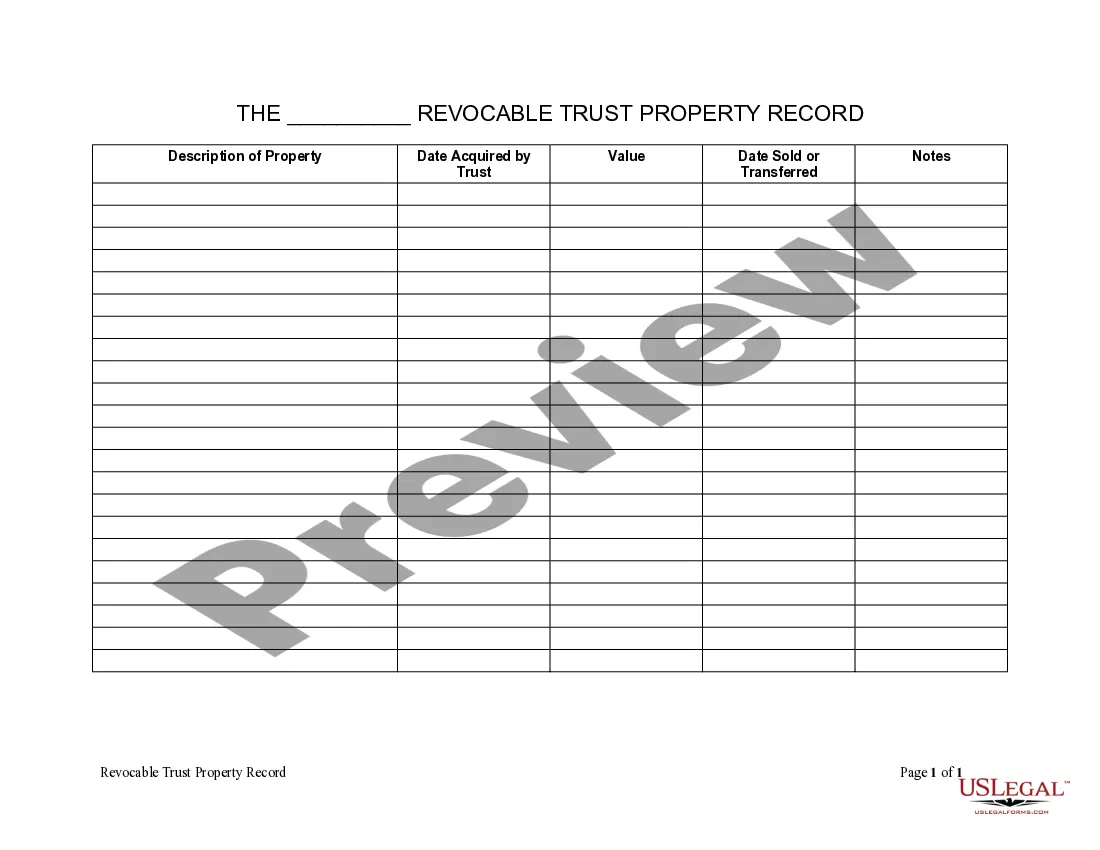
The Living Trust Property Record is a legal document used to inventory the assets held within a living trust. Unlike a will, which takes effect after death, a living trust allows individuals to manage their property during their lifetime. This form is essential for trustees to maintain a clear record of trust assets, ensuring proper management and distribution according to the trustâs terms.
Form components explained
- Description of property: List each asset held in the trust.
- Date acquired: Record when each property was transferred into the trust.
- Value: Indicate the current value of each asset.
- Date sold or transferred: Document when any property was sold or removed from the trust.

When to use this form
This form is needed when creating or updating a living trust to ensure that all property held within the trust is documented. It is especially useful when adding new assets, selling existing assets, or when a trustee needs to provide transparency about trust property to beneficiaries or tax authorities.
Who this form is for
This form is intended for:
- Individuals establishing a living trust.
- Trustees managing a living trust on behalf of the beneficiaries.
- Estate planners assisting clients with trust documentation.
How to prepare this document
To complete the Living Trust Property Record, follow these steps:
- Identify the property description for each asset.
- Enter the date when the property was acquired by the trust.
- Specify the current value of each asset included in the trust.
- Document any dates when property has been sold or transferred out of the trust.
- Review the form to ensure all information is accurate and complete.
Does this document require notarization?
This form does not typically require notarization unless specified by local law. It is advisable to check specific state requirements regarding notarization of trust-related documents.
Get your form ready online
Our built-in tools help you complete, sign, share, and store your documents in one place.
Make edits, fill in missing information, and update formatting in US Legal Forms—just like you would in MS Word.
Download a copy, print it, send it by email, or mail it via USPS—whatever works best for your next step.
Sign and collect signatures with our SignNow integration. Send to multiple recipients, set reminders, and more. Go Premium to unlock E-Sign.
If this form requires notarization, complete it online through a secure video call—no need to meet a notary in person or wait for an appointment.
We protect your documents and personal data by following strict security and privacy standards.

Make edits, fill in missing information, and update formatting in US Legal Forms—just like you would in MS Word.

Download a copy, print it, send it by email, or mail it via USPS—whatever works best for your next step.

Sign and collect signatures with our SignNow integration. Send to multiple recipients, set reminders, and more. Go Premium to unlock E-Sign.

If this form requires notarization, complete it online through a secure video call—no need to meet a notary in person or wait for an appointment.

We protect your documents and personal data by following strict security and privacy standards.
Typical mistakes to avoid
- Failing to update the inventory when assets are added or removed.
- Not accurately recording the current value of assets.
- Missing essential details, such as the date acquired or sold.
Benefits of completing this form online
- Convenience: Easily accessible for download and modification at any time.
- Editability: Customize to fit specific needs without legal jargon.
- Reliability: Form is drafted by licensed attorneys to ensure legal accuracy.
What to keep in mind
- The Living Trust Property Record is crucial for managing trust assets effectively.
- Keeping an updated inventory helps avoid disputes among beneficiaries.
- Trustees must ensure accurate documentation to comply with legal and tax obligations.
Looking for another form?

Form popularity
FAQ
Yes, you can file a living trust yourself, but completing the process correctly is crucial. You will need to prepare the trust document, transfer your property into the trust, and keep all records organized. Consider using USLegalForms to access easy-to-follow templates and resources to streamline the creation of your Minnesota Living Trust Property Record.
You do not need to record a living trust with the county, as it is a private document. However, you should keep it in a safe place and inform your successor trustee of its location. For real estate owned by the trust, you must record the deed in the county where the property is located to update the Minnesota Living Trust Property Record. This step ensures that your trust’s intentions are honored.
Yes, you can write your own trust in Minnesota, but it is crucial to follow state-specific laws to ensure its validity. Utilize resources, such as templates or guides, to help you draft the document correctly. However, seeking legal advice can provide peace of mind and ensure your Minnesota Living Trust Property Record is accurate and enforceable.
Listing property in a trust involves transferring ownership from your name to the trust's name. You will need to prepare a deed for real estate and possibly other documents for personal property, ensuring they reflect the trust's name appropriately. Additionally, maintaining a comprehensive Minnesota Living Trust Property Record is essential for clarity and future reference. Consulting with a legal professional can simplify this process.
To fill out a living trust, begin by gathering essential information about your assets, beneficiaries, and any specific instructions you want to include. Next, use a reliable template or consult an experienced professional to ensure compliance with Minnesota laws. After completing the document, review it thoroughly and sign it in front of a notary. This process helps create a solid Minnesota Living Trust Property Record.
The purpose of a certificate of trust is to summarize the essential details of the trust without revealing the entire document. This allows trustees to prove their authority to manage the trust without compromising sensitive information. It is particularly useful when dealing with financial institutions or other parties. For assistance in creating a certificate that meets Minnesota requirements, consider using US Legal Forms.
In Minnesota, a living trust does not need to be filed with any government office. You simply retain the trust document in a safe location. It is essential to inform your trustee and beneficiaries about where they can find it. This ensures your Minnesota Living Trust Property Record is accessible when needed, simplifying the management of your assets.
Generally, a certificate of trust does not need to be recorded. Its purpose is to provide a summary of the trust without disclosing the entire document. This allows you to maintain privacy while fulfilling legal requirements. Utilizing a platform like US Legal Forms can guide you in preparing a certificate that aligns with your specific needs.
No, a certificate of trust does not need to be recorded in Minnesota. This document acts as a verification of the trust's existence and essential information, while keeping sensitive details private. You can present it to banks or other institutions when managing your Minnesota Living Trust Property Record. Consider using US Legal Forms to ensure your certificate meets all legal standards.
A certificate of trust does not need to be recorded in Minnesota. Instead, it serves as a summary of the trust's key details without revealing the entire document. This approach protects your privacy while providing necessary information when dealing with third parties. Using a service like US Legal Forms can help you create a certificate that satisfies Minnesota requirements.