Minnesota Letter to Debt Collector Re Fair Debt Collection and Practices Act
What is this form?
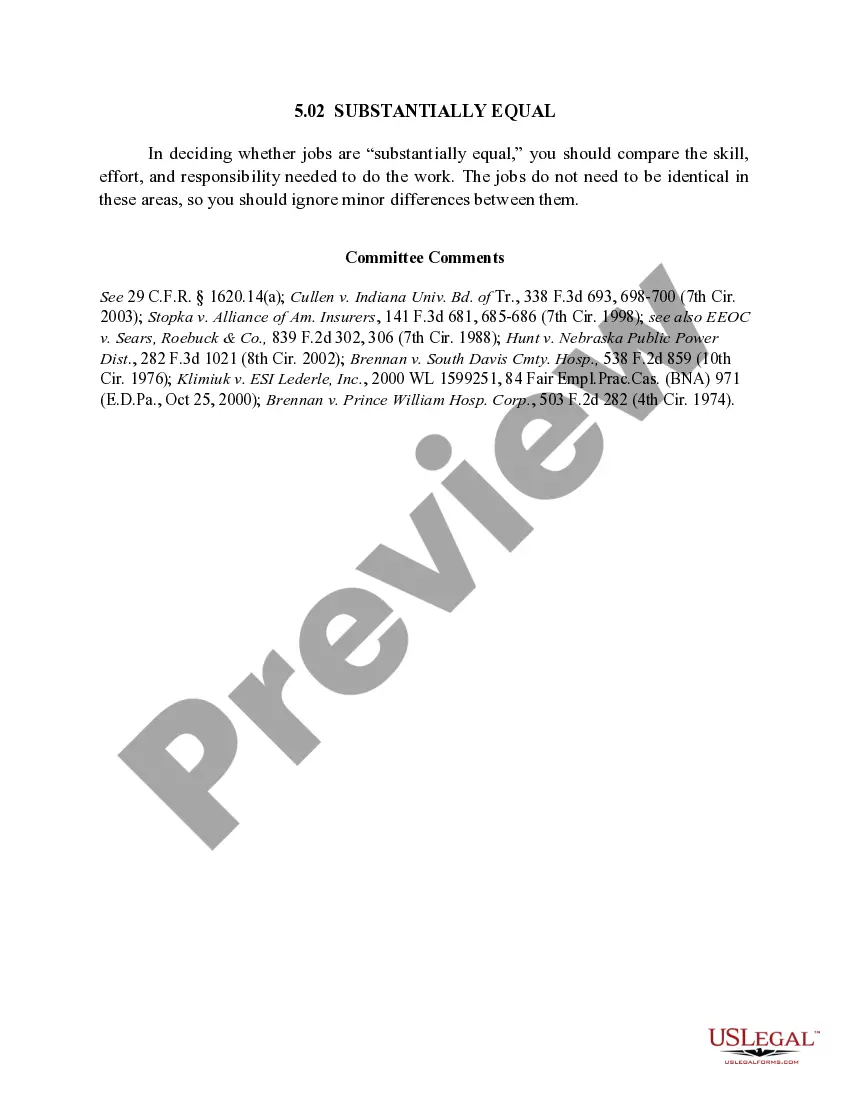
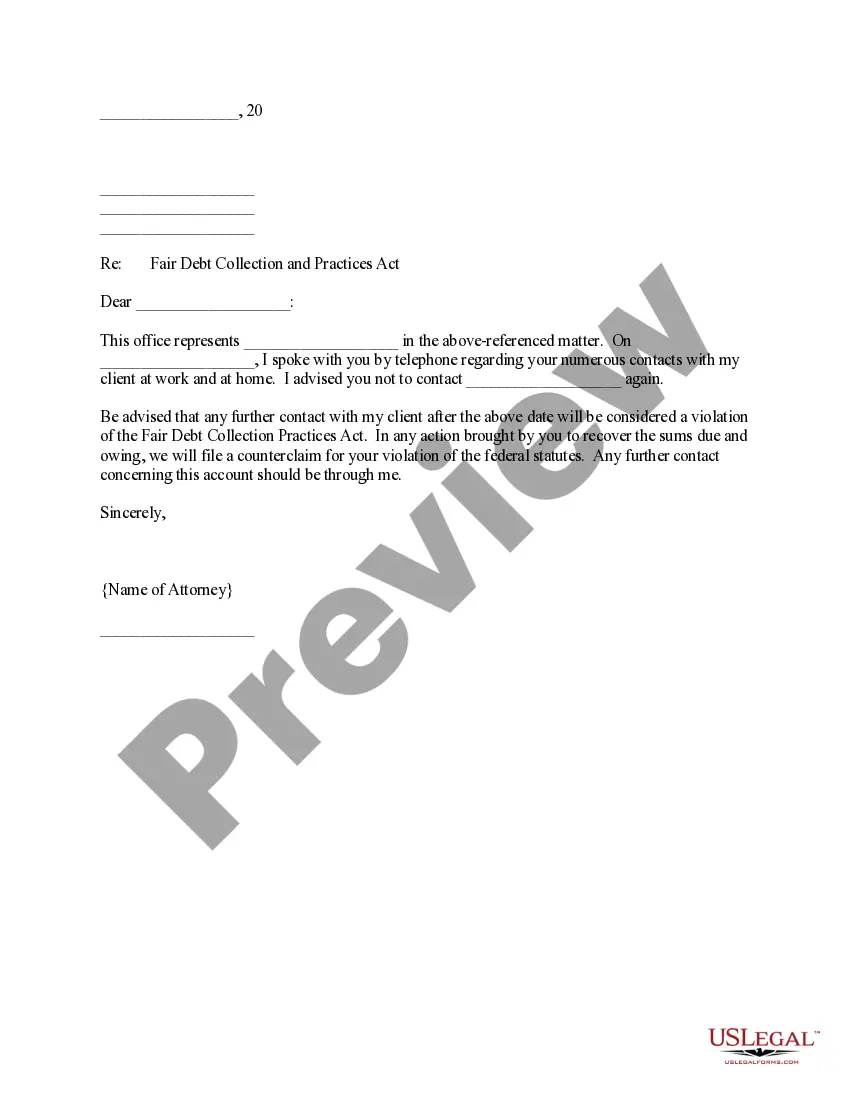
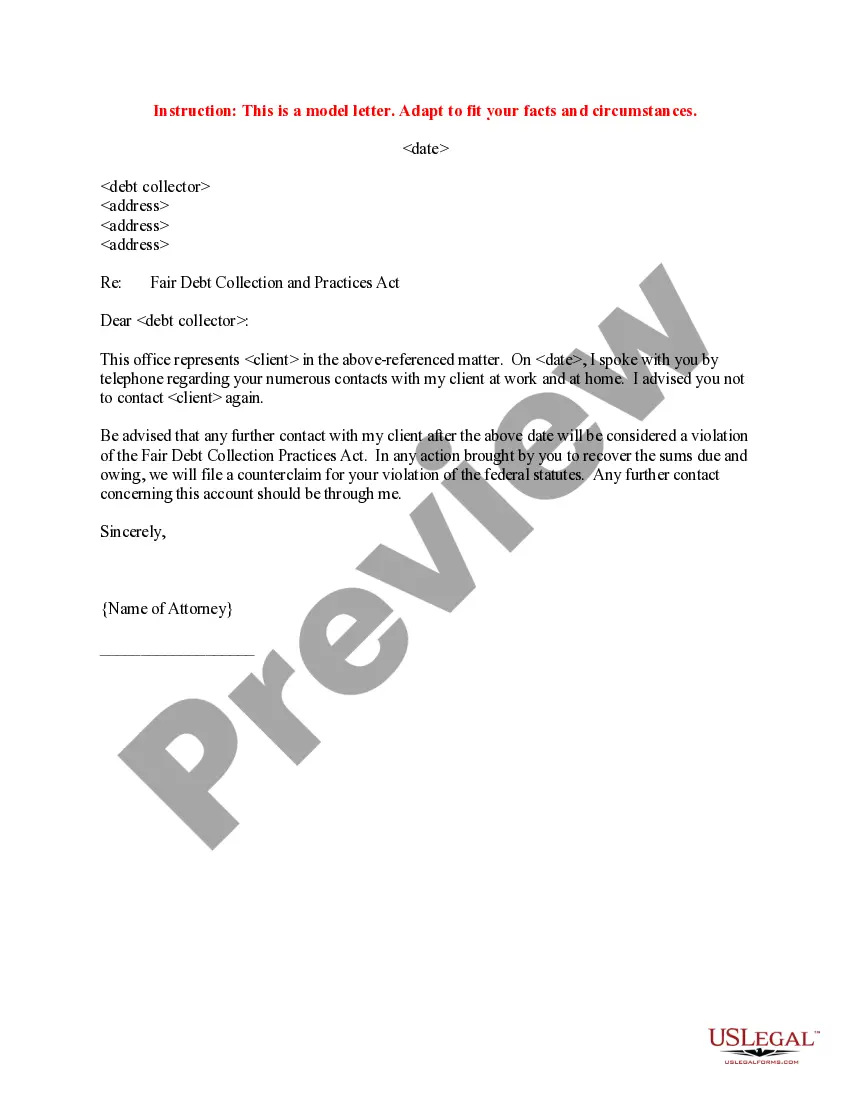
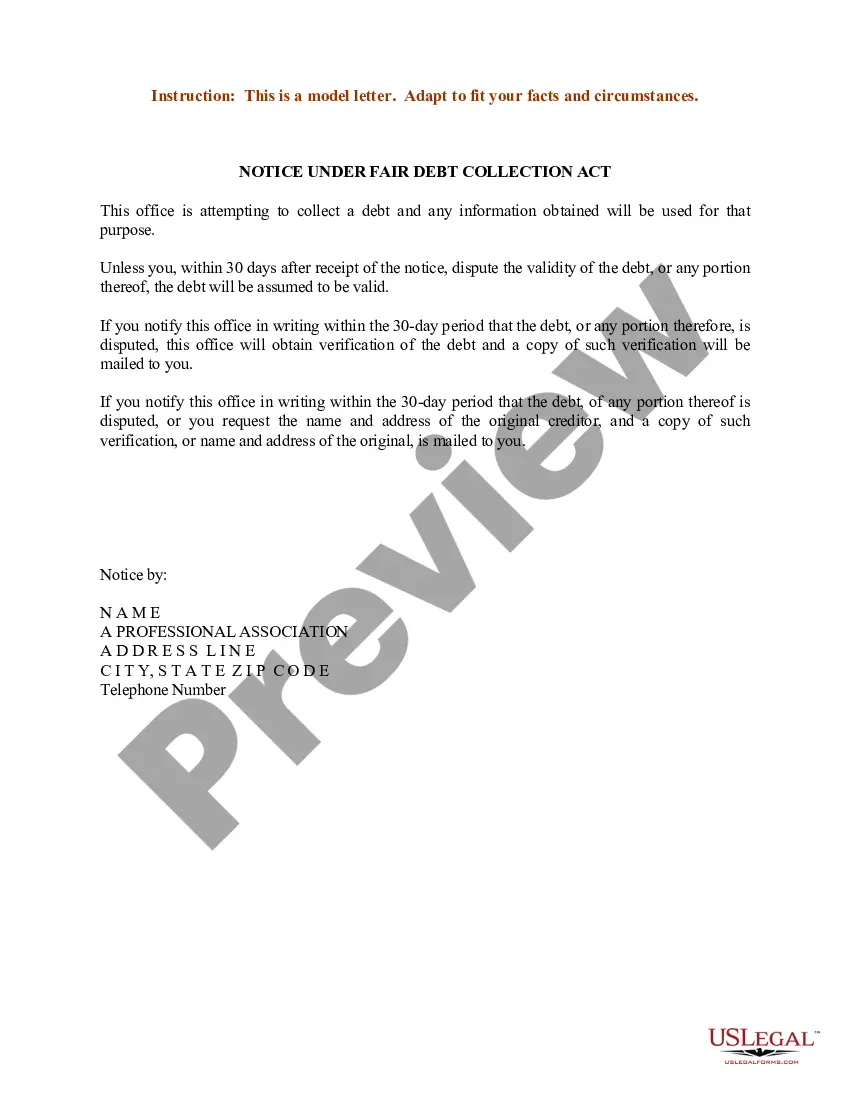
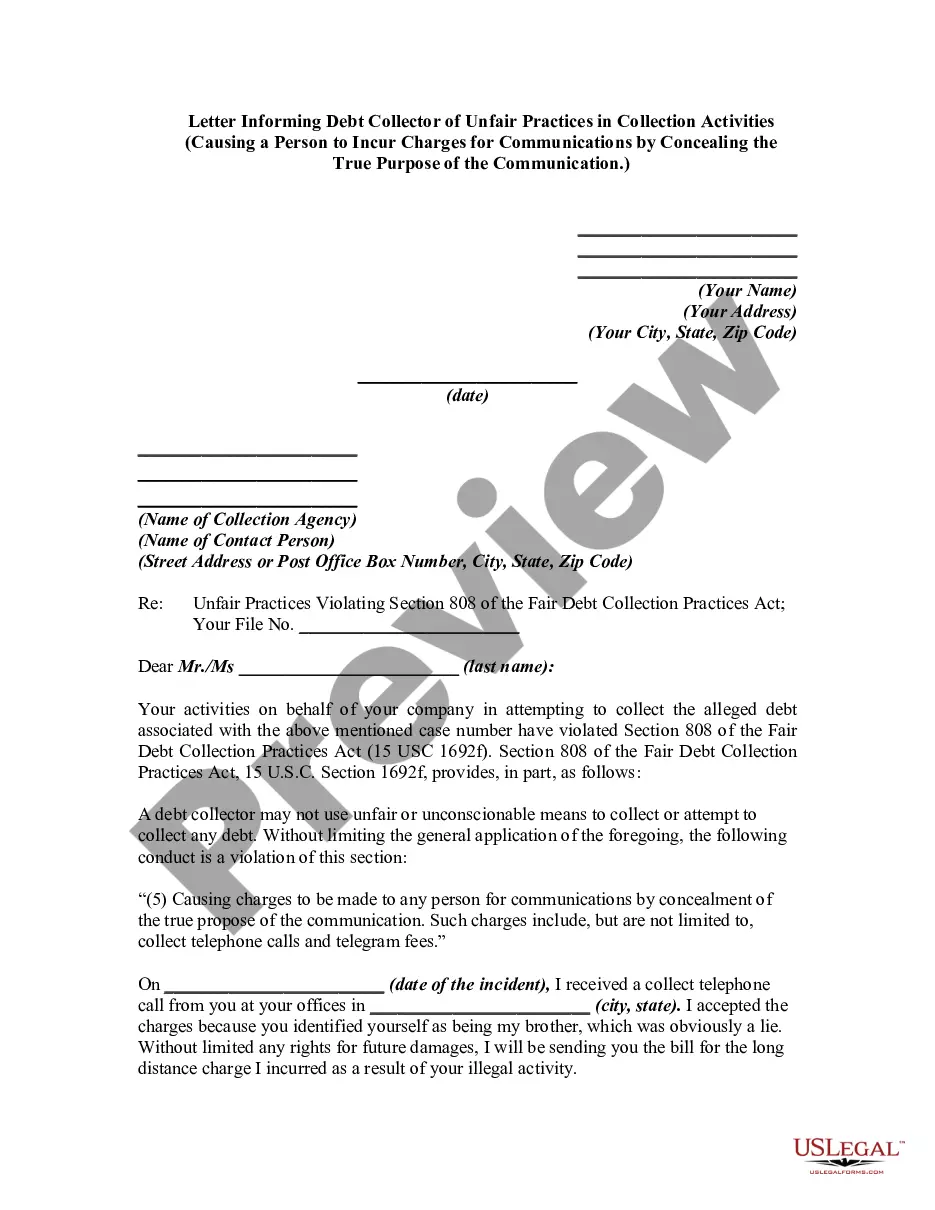
The Letter to Debt Collector Re Fair Debt Collection Practices Act is a formal document that instructs a creditor to cease any harassment toward a debtor. This form specifically highlights that any further contact by the creditor could be considered a violation of the Fair Debt Collection Practices Act. Unlike other debt-related forms, this letter directly addresses abusive practices in debt collection.
What’s included in this form
- Introduction stating the client's name and account context.
- A request for the creditor to stop any further contact.
- A warning that further contact may lead to legal action.
- Instructions for the creditor on how to communicate going forward.
- Signature line for the attorney representing the client.
Common use cases
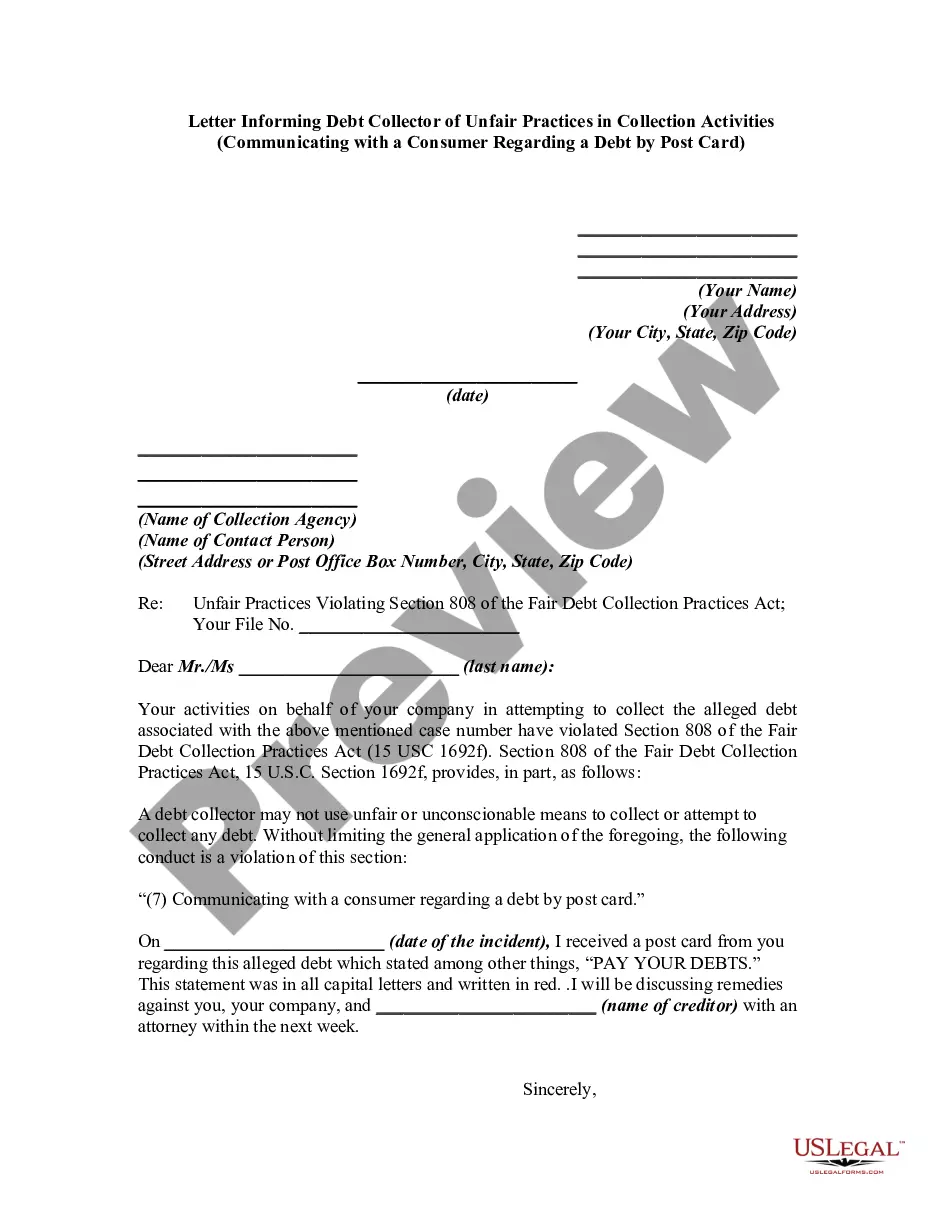
This form is used when a client is receiving unwanted and harassing communication from a debt collector. It is an essential tool to formally notify the creditor of the abusive practices and to assert the client's right to privacy under the Fair Debt Collection Practices Act.
Who needs this form
- Individuals who have outstanding debts that are being pursued through aggressive collection tactics.
- Consumers who wish to assert their rights under the Fair Debt Collection Practices Act.
- Attorneys representing clients facing harassment from debt collectors.
Steps to complete this form
- Identify the client (debtor) and the creditor involved.
- Clearly state the date of the last communication from the creditor.
- Include a request for the creditor to cease contact with the client.
- Add a warning about potential legal action for further breaches.
- Provide the signature and name of the attorney representing the debtor.
Does this form need to be notarized?
This form does not typically require notarization unless specified by local law. Ensure you check any local regulations that may apply to the completion and submission of this document.
Get your form ready online
Our built-in tools help you complete, sign, share, and store your documents in one place.
Make edits, fill in missing information, and update formatting in US Legal Forms—just like you would in MS Word.
Download a copy, print it, send it by email, or mail it via USPS—whatever works best for your next step.
Sign and collect signatures with our SignNow integration. Send to multiple recipients, set reminders, and more. Go Premium to unlock E-Sign.
If this form requires notarization, complete it online through a secure video call—no need to meet a notary in person or wait for an appointment.
We protect your documents and personal data by following strict security and privacy standards.

Make edits, fill in missing information, and update formatting in US Legal Forms—just like you would in MS Word.

Download a copy, print it, send it by email, or mail it via USPS—whatever works best for your next step.

Sign and collect signatures with our SignNow integration. Send to multiple recipients, set reminders, and more. Go Premium to unlock E-Sign.

If this form requires notarization, complete it online through a secure video call—no need to meet a notary in person or wait for an appointment.

We protect your documents and personal data by following strict security and privacy standards.
Mistakes to watch out for
- Failing to include the date of the last communication with the creditor.
- Not clearly stating the expectation for communication through the attorney.
- Using informal language instead of a professional tone.
Benefits of completing this form online
- Convenience of downloading the form instantly from any device.
- Editable fields allow users to customize the document easily.
- Access to professionally drafted content ensures legal compliance.
Legal use & context
- This letter serves to protect the consumer's rights under federal law.
- Failure to comply with the provisions in this letter may lead to legal consequences for the creditor.
- Documentation of harassment can be critical in potential legal disputes.
Main things to remember
- The form is essential for clients experiencing harassment from debt collectors.
- It notifies the creditor of their obligation to cease further contact.
- Using this form can be a vital step toward protecting consumer rights under the Fair Debt Collection Practices Act.
Looking for another form?
Form popularity
FAQ
To write a debt collection dispute letter, start by clearly stating your intent to dispute the debt. Include your personal information, the account details, and the reason for the dispute. Be concise and factual in your explanation. Using a Minnesota Letter to Debt Collector Re Fair Debt Collection and Practices Act template can simplify this process and ensure you communicate your position clearly.
The primary purpose of the Fair Debt Collection Practices Act is to eliminate abusive debt collection practices and promote fair treatment of consumers. This law gives you rights and sets standards for how debt collectors can operate. Understanding these protections can help you navigate debt issues more effectively. A Minnesota Letter to Debt Collector Re Fair Debt Collection and Practices Act can support your efforts in addressing unfair practices.
The Debt Fairness Act in Minnesota seeks to protect consumers from unfair debt collection practices. It enhances transparency and ensures that debt collectors provide necessary information about the debt. This act complements the federal Fair Debt Collection Practices Act, giving consumers more tools to manage their debt. Incorporating a Minnesota Letter to Debt Collector Re Fair Debt Collection and Practices Act can be beneficial when addressing any concerns.
The Fair Debt Collection Practices Act is a federal law that regulates how debt collectors can conduct their business in Minnesota and across the United States. It aims to prevent abusive practices and provides consumers with rights when dealing with debt collection. Knowing this law can help you take control of your situation. Utilize a Minnesota Letter to Debt Collector Re Fair Debt Collection and Practices Act to assert your rights effectively.
Under the Fair Debt Collection Practices Act, debt collectors must send you a written notice within five days of their initial contact. This notice should include the amount of debt, the name of the creditor, and your right to dispute the debt. Understanding these requirements is crucial for your protection. A Minnesota Letter to Debt Collector Re Fair Debt Collection and Practices Act can serve as a formal response if you wish to dispute the debt.
Debt collectors in Minnesota must follow strict guidelines, ensuring they treat consumers fairly. They can contact you regarding your debt, but they cannot harass or threaten you. Additionally, they must provide written verification of the debt if you request it. Familiarizing yourself with these rights can empower you, especially when using a Minnesota Letter to Debt Collector Re Fair Debt Collection and Practices Act.
In Minnesota, the statute of limitations for most debts is typically six years. After this period, a debt is considered uncollectible, meaning creditors can no longer legally enforce the debt through court. It's important to understand this time frame to protect your rights. For assistance, consider using a Minnesota Letter to Debt Collector Re Fair Debt Collection and Practices Act to clarify your situation.