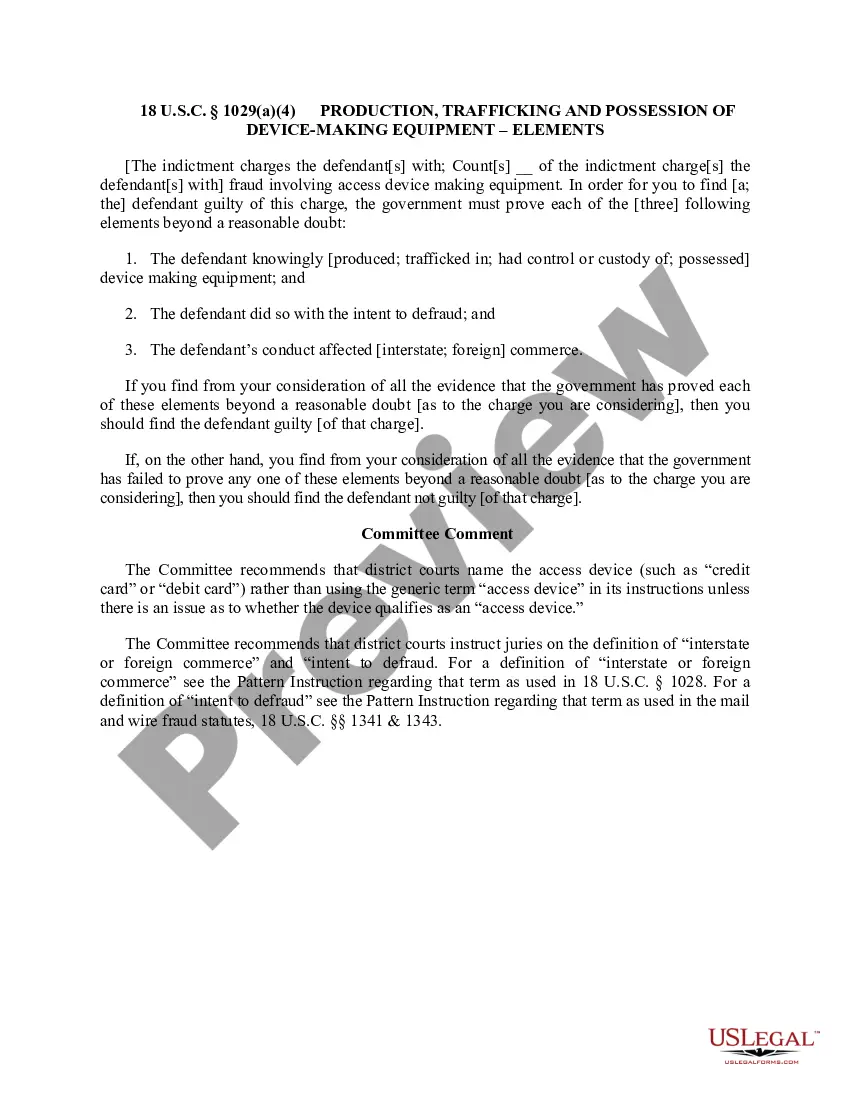
Minnesota Prenuptial Property Agreement
About this form
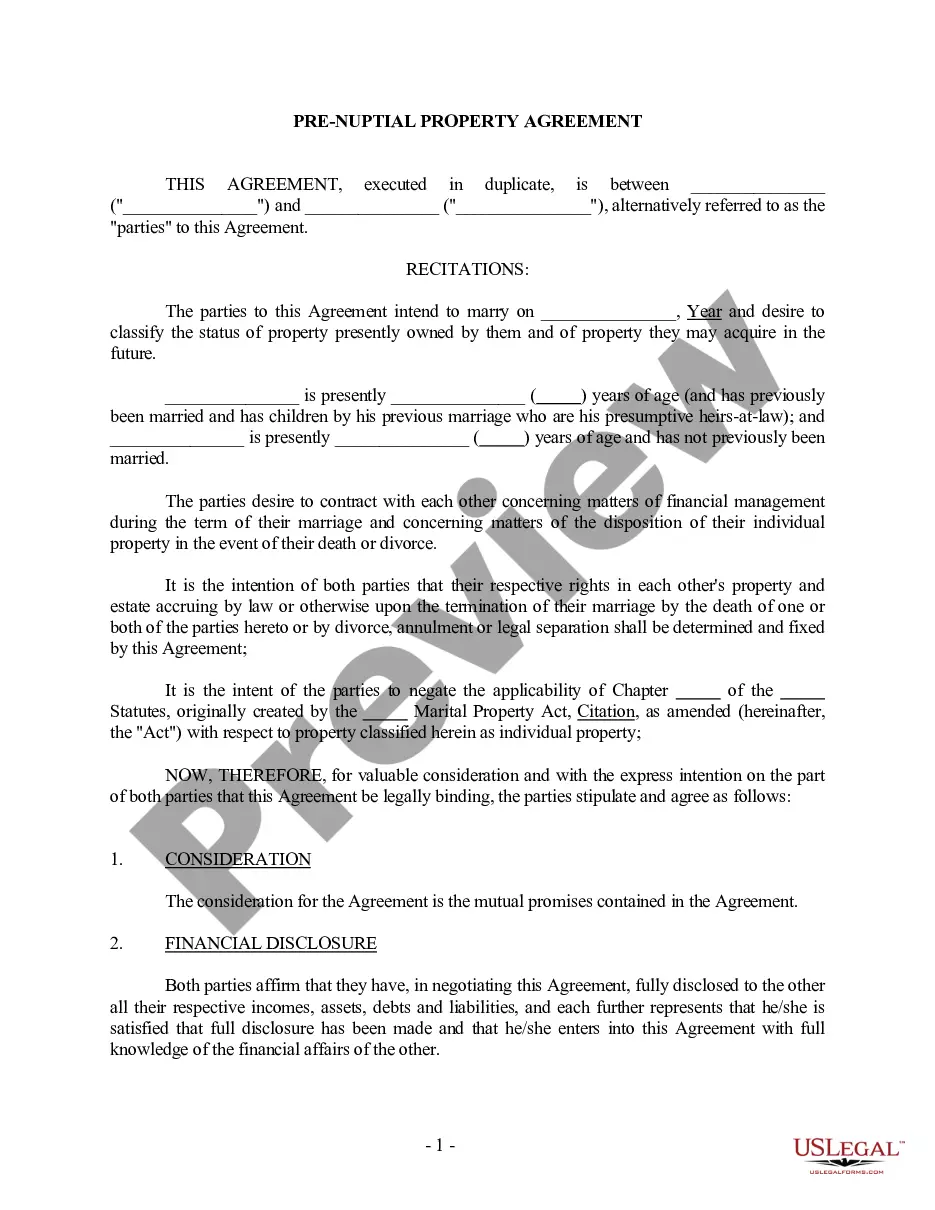
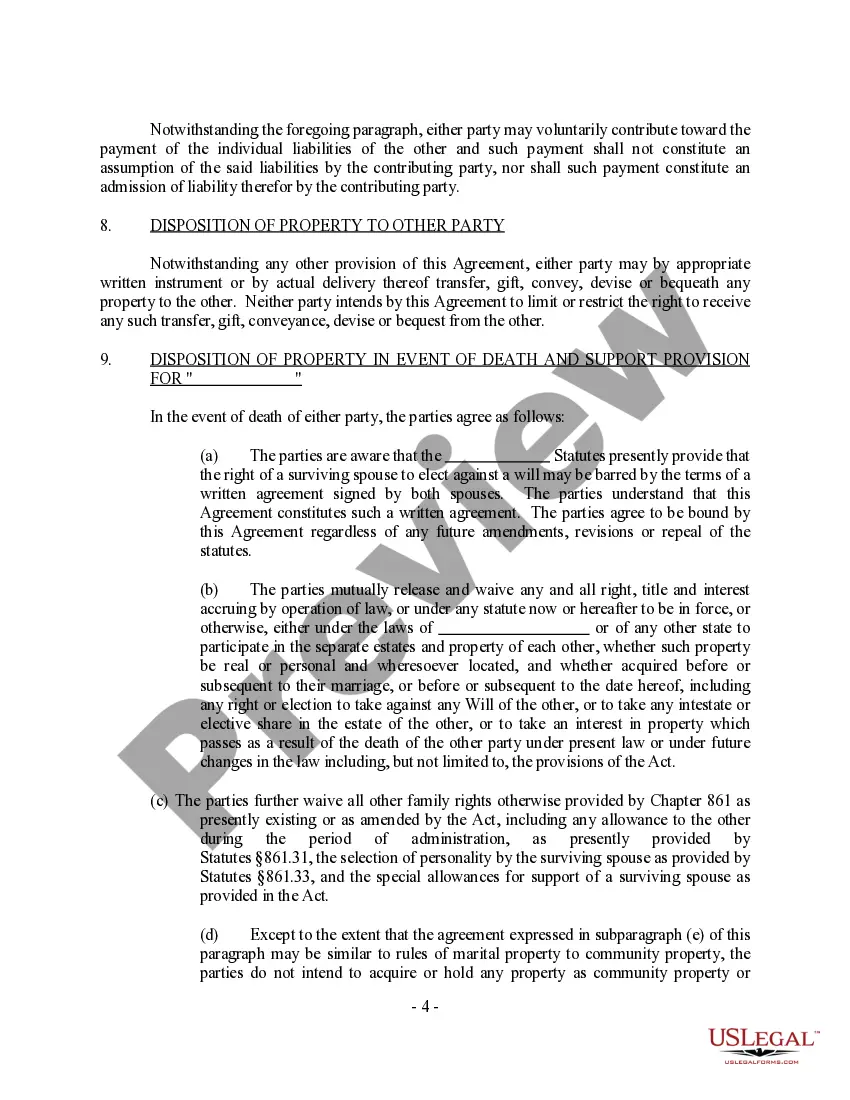
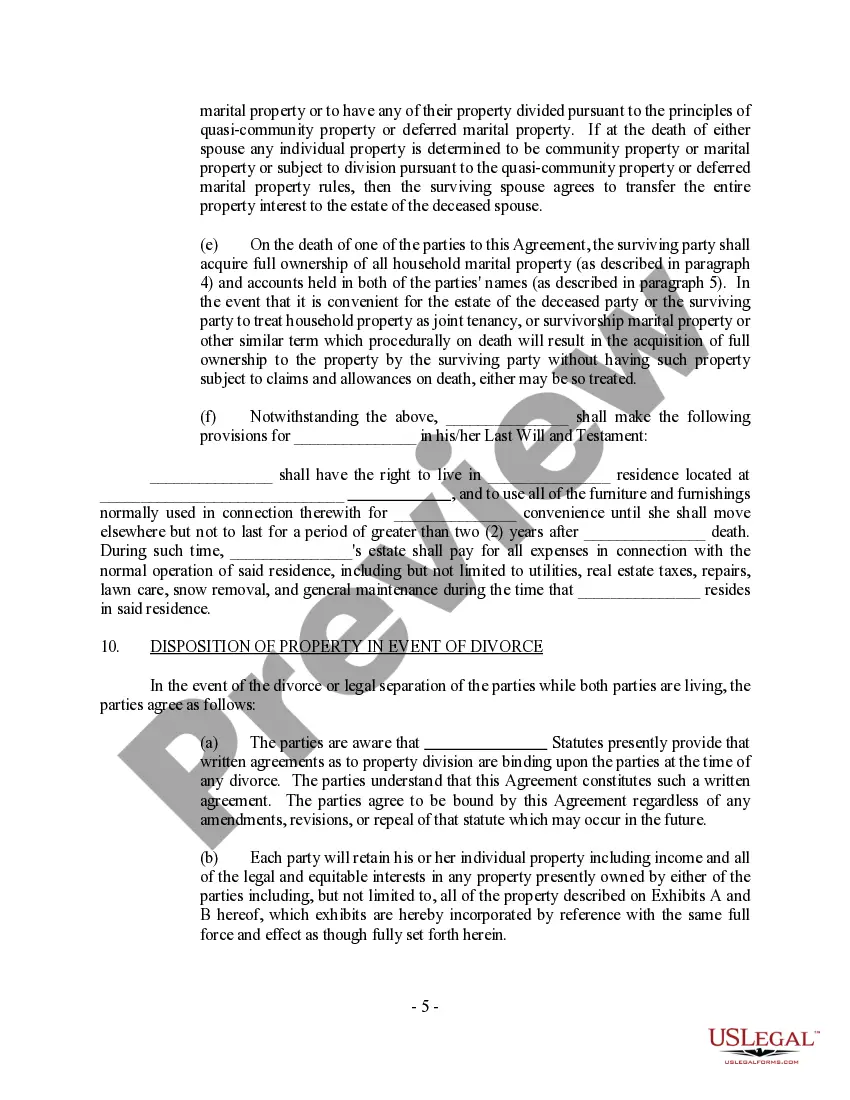
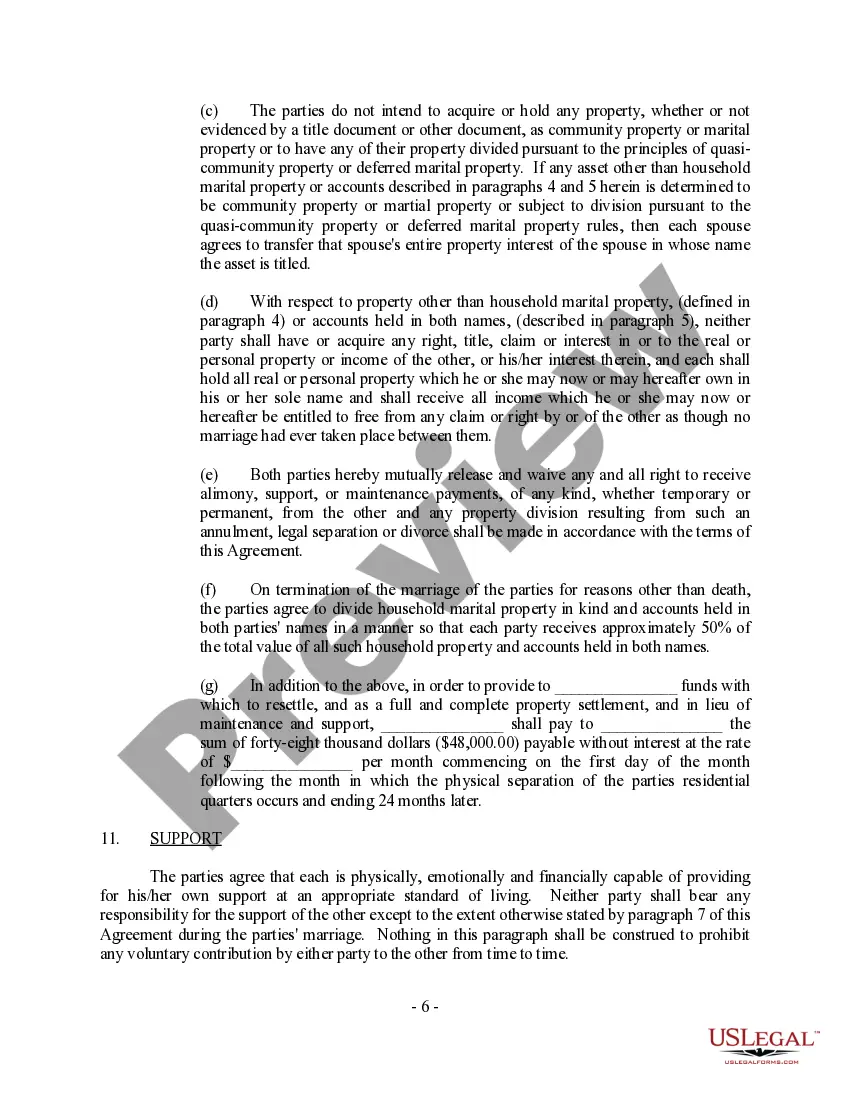
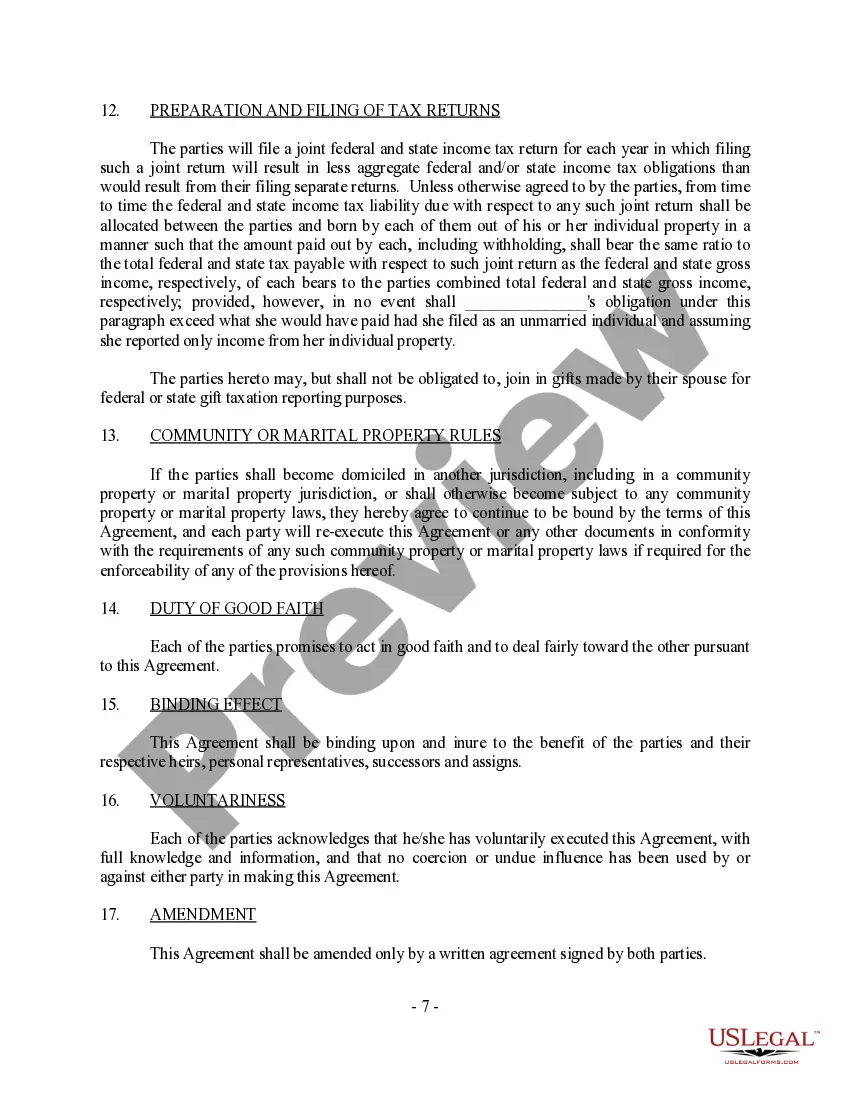
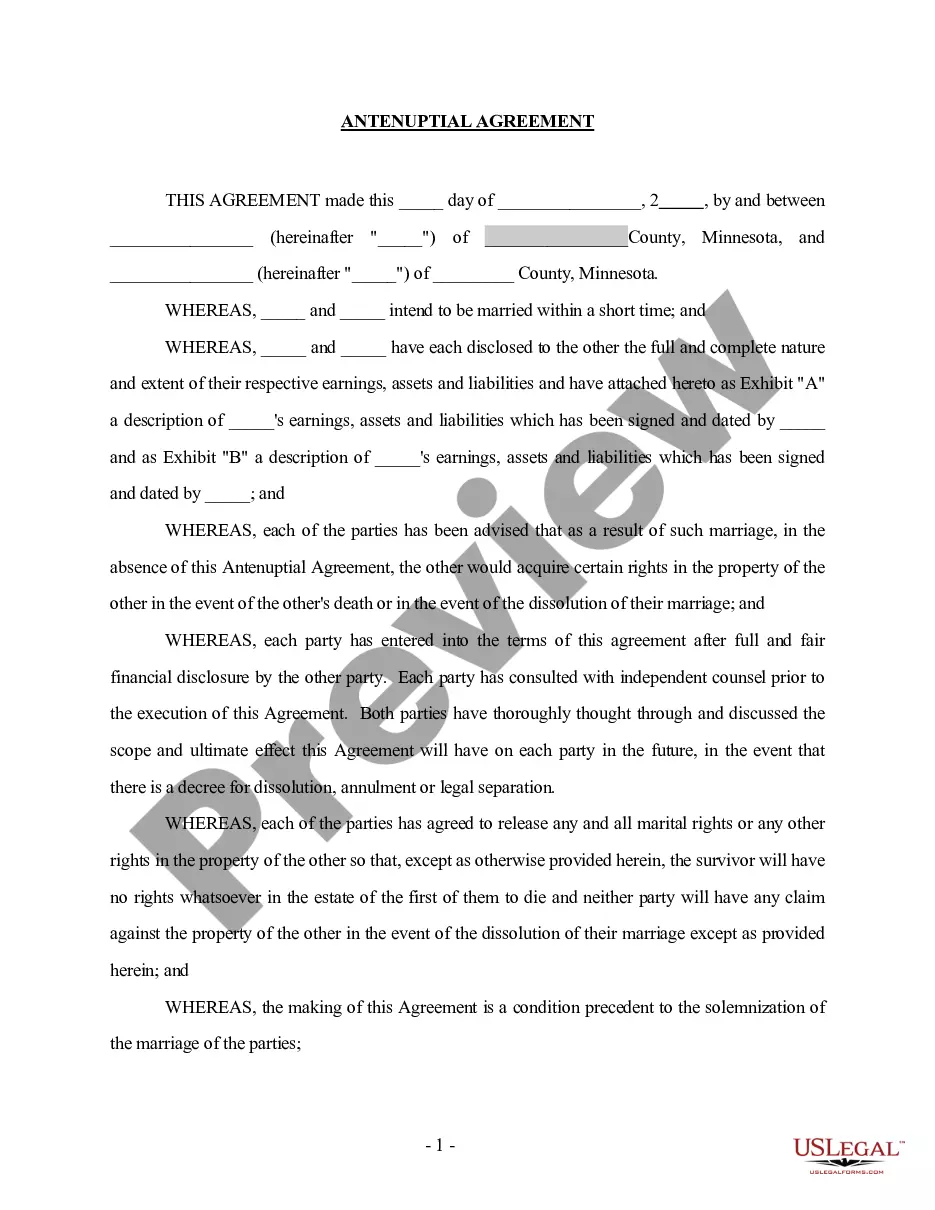
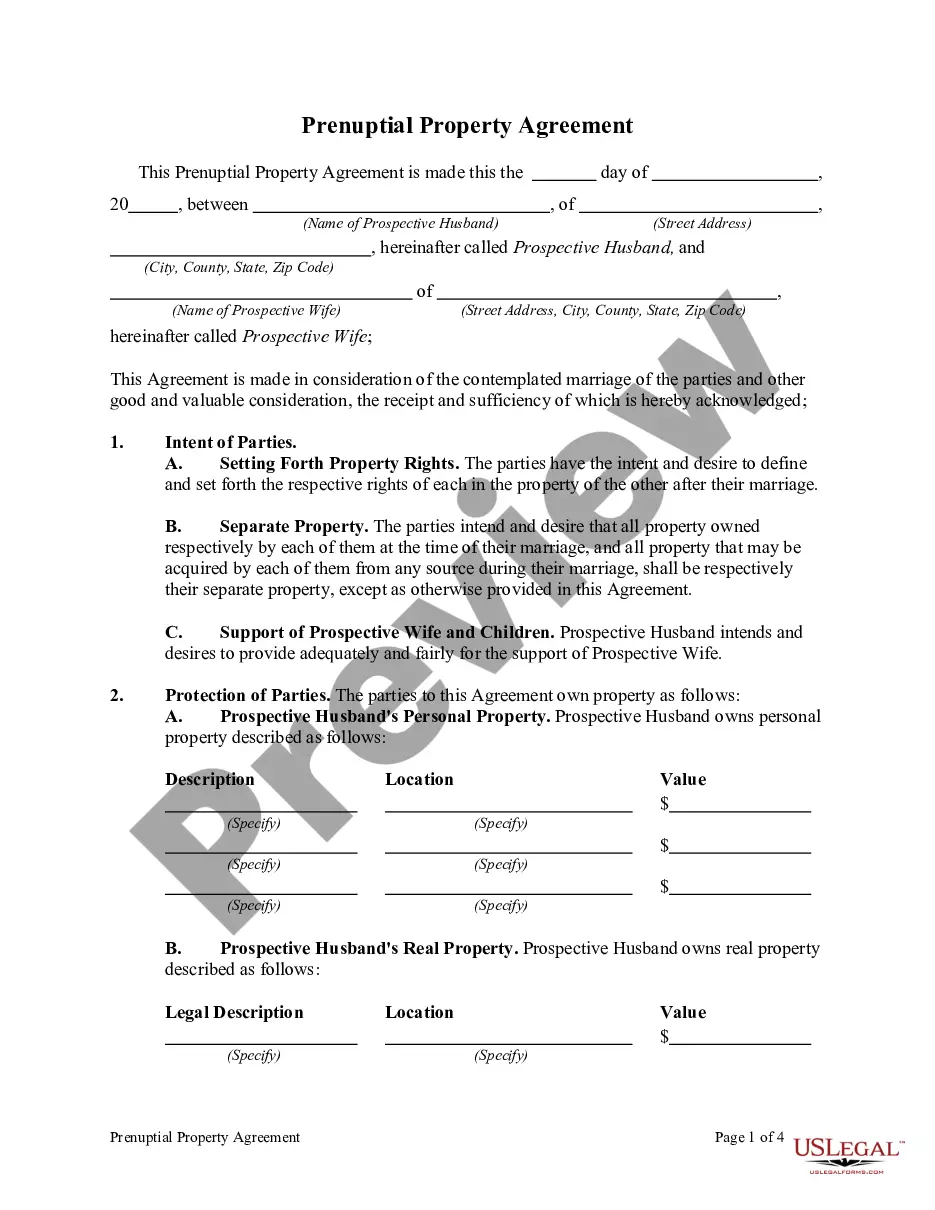
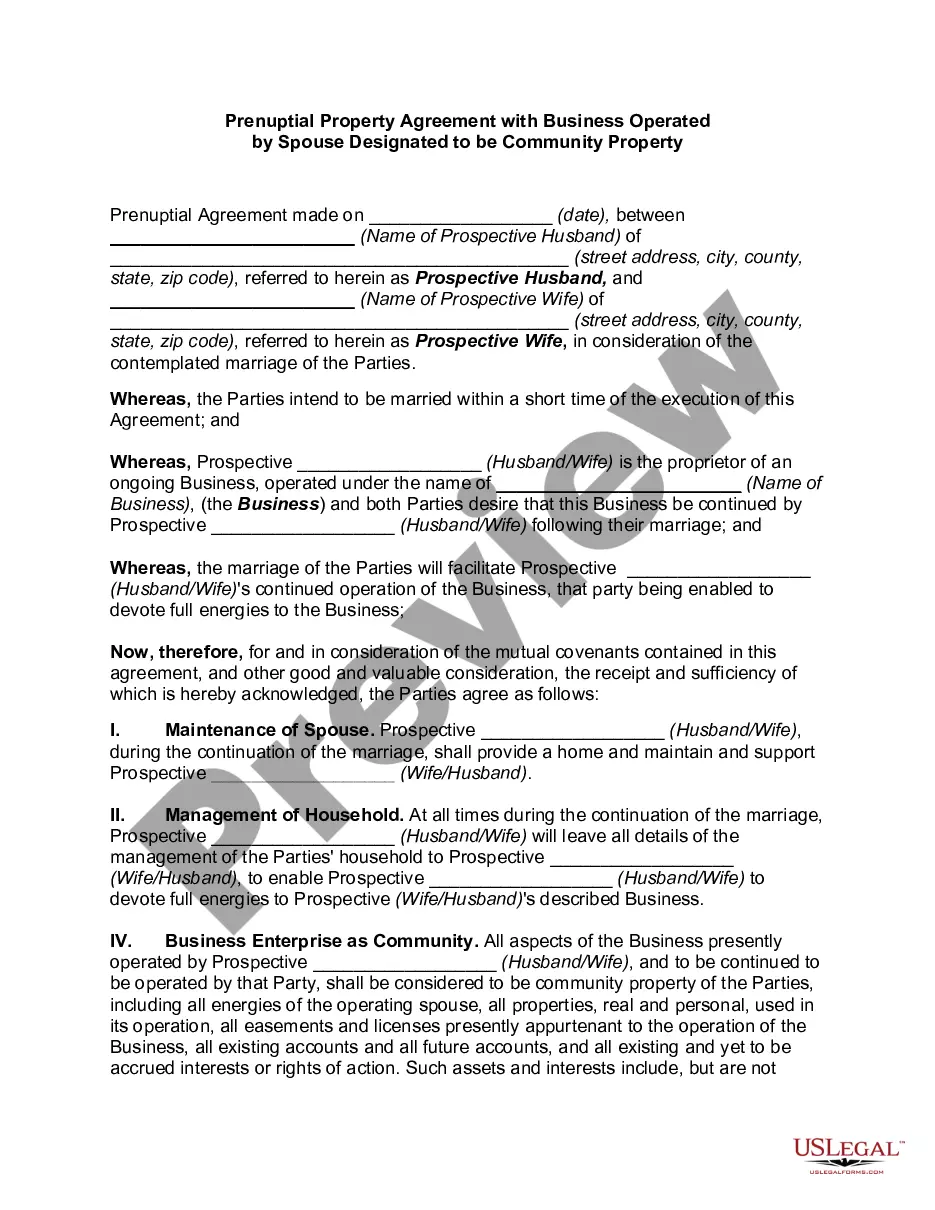
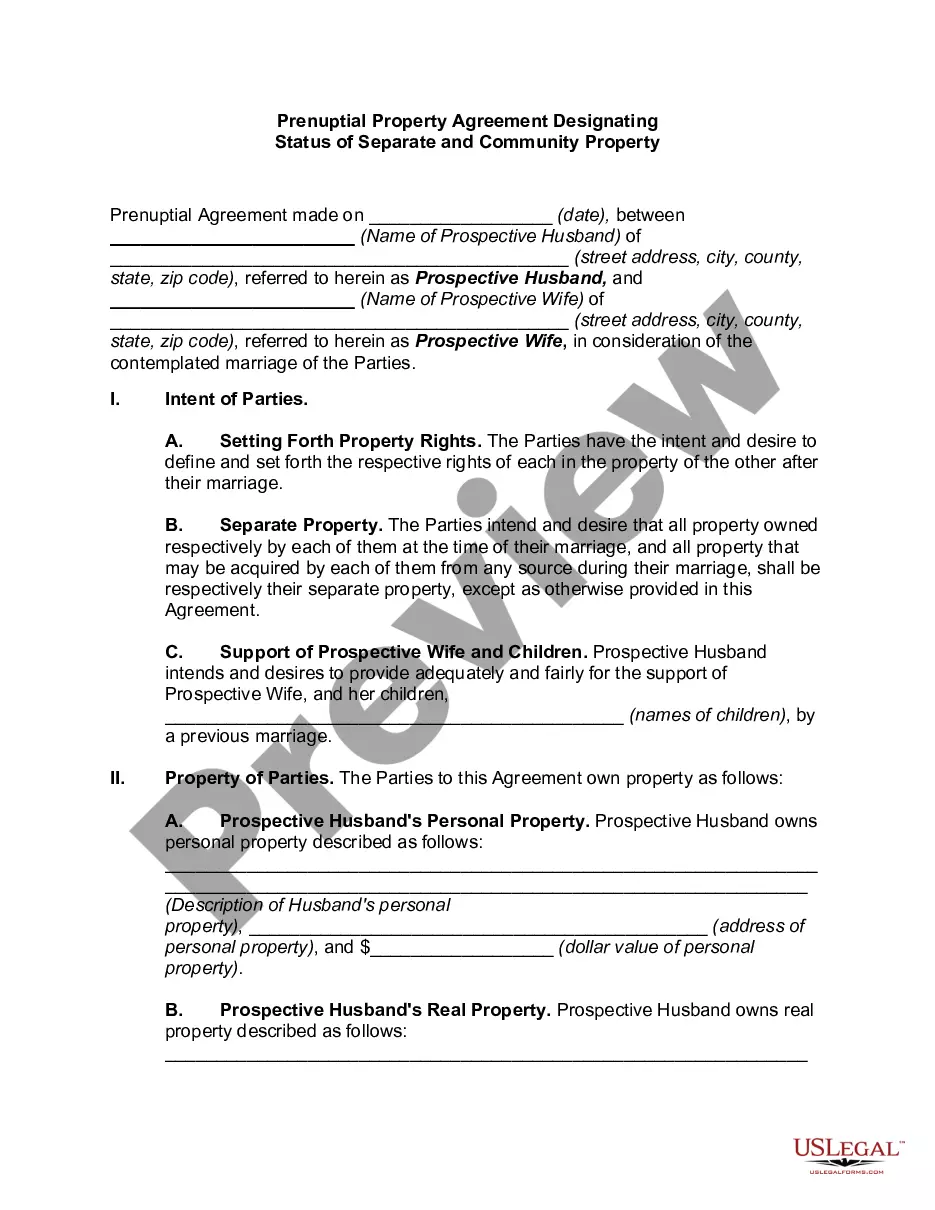
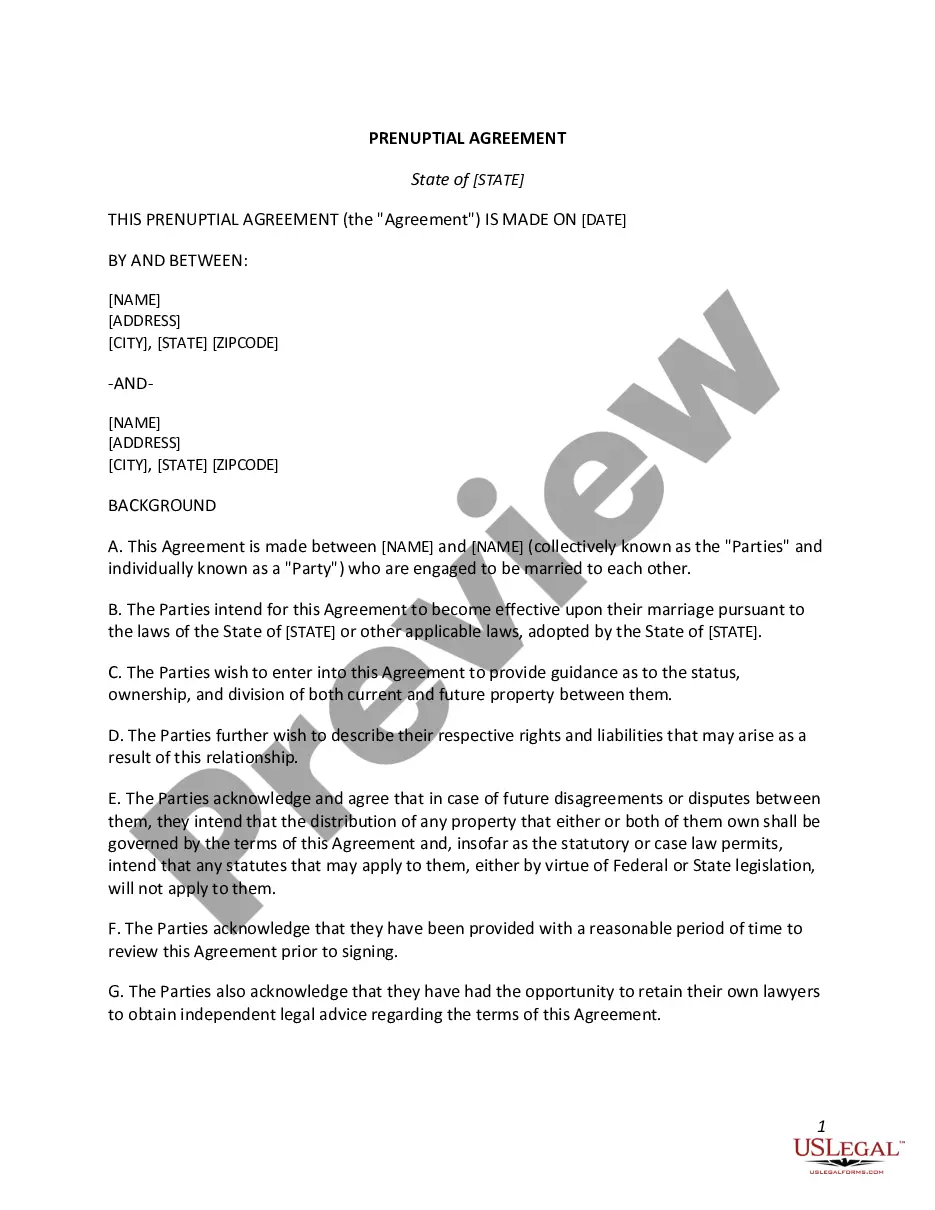
The Prenuptial Property Agreement is a legal document executed by parties before marriage to outline how their assets will be managed and disposed of in the event of divorce, annulment, or death. This agreement serves to clarify individual property rights and responsibilities during the marriage and helps to prevent disputes over asset division later on. Unlike a standard marriage contract, this agreement explicitly details financial disclosures and individual property definitions, providing a clear framework for both parties.
Main sections of this form
- Consideration: Mutual promises made between both parties.
- Financial Disclosure: Full disclosure of assets and liabilities by each party.
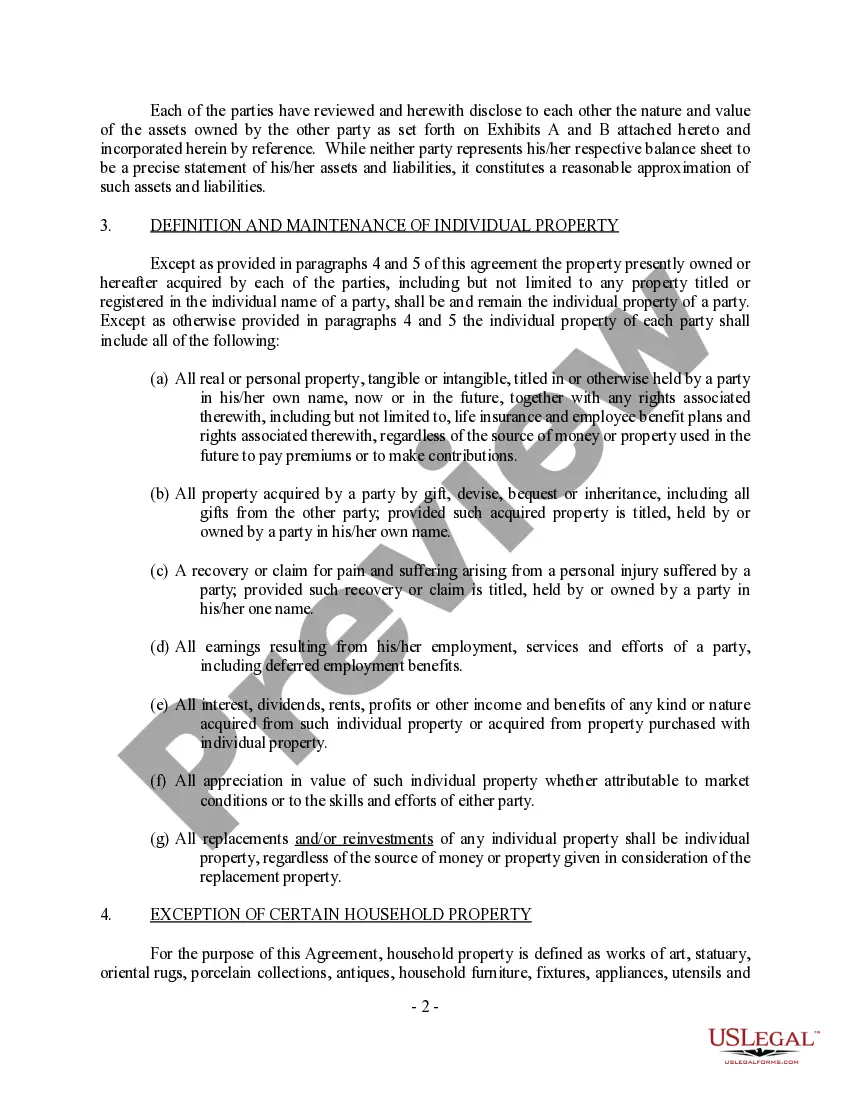
- Individual Property: Definitions and protections concerning each party's separate property.
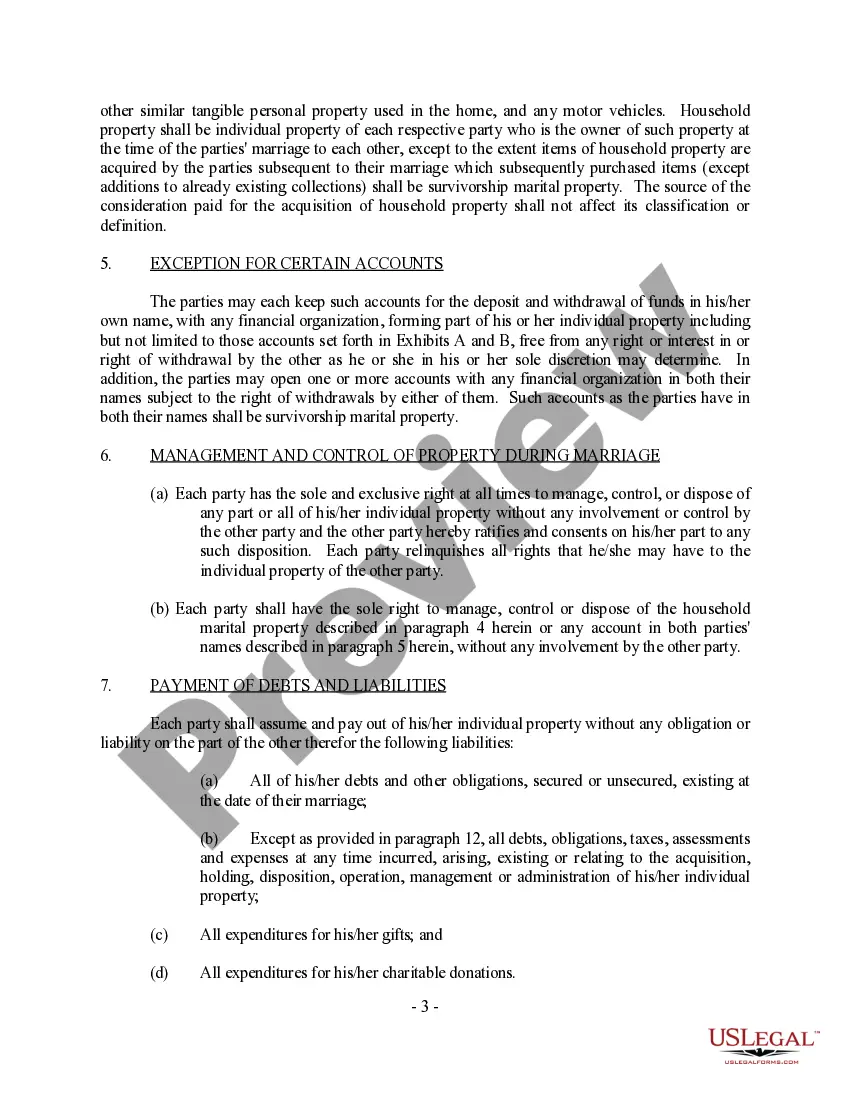
- Household Property: Guidelines on the treatment of shared household items.
- Debt Responsibility: Each party's obligation regarding debts incurred before and during the marriage.
- Disposition of Property: Instructions on how property is to be divided in case of divorce or death.
Common use cases
This form should be used when a couple is preparing to marry and wishes to set clear expectations regarding their individual assets and financial responsibilities. It is particularly important if either party has significant personal property, business interests, or substantial debt. Additionally, this agreement is useful for couples marrying later in life, those with children from previous relationships, or anyone wanting to protect their assets in the event of divorce or death.
Intended users of this form
- Engaged couples planning to marry.
- Individuals with significant personal assets or business ownership.
- Parents who wish to protect their children's inheritance.
- Those with substantial debt that they want to keep separate.
- Couples seeking to settle financial matters before marriage.
Instructions for completing this form
- Identify the parties involved in the agreement.
- Provide a detailed financial disclosure from each party, listing all assets, debts, and income.
- Define what constitutes individual and household property in the agreement.
- Specify any stipulations regarding the division of assets in case of divorce or death.
- Ensure both parties sign the agreement in the presence of a notary, if applicable.
Does this form need to be notarized?
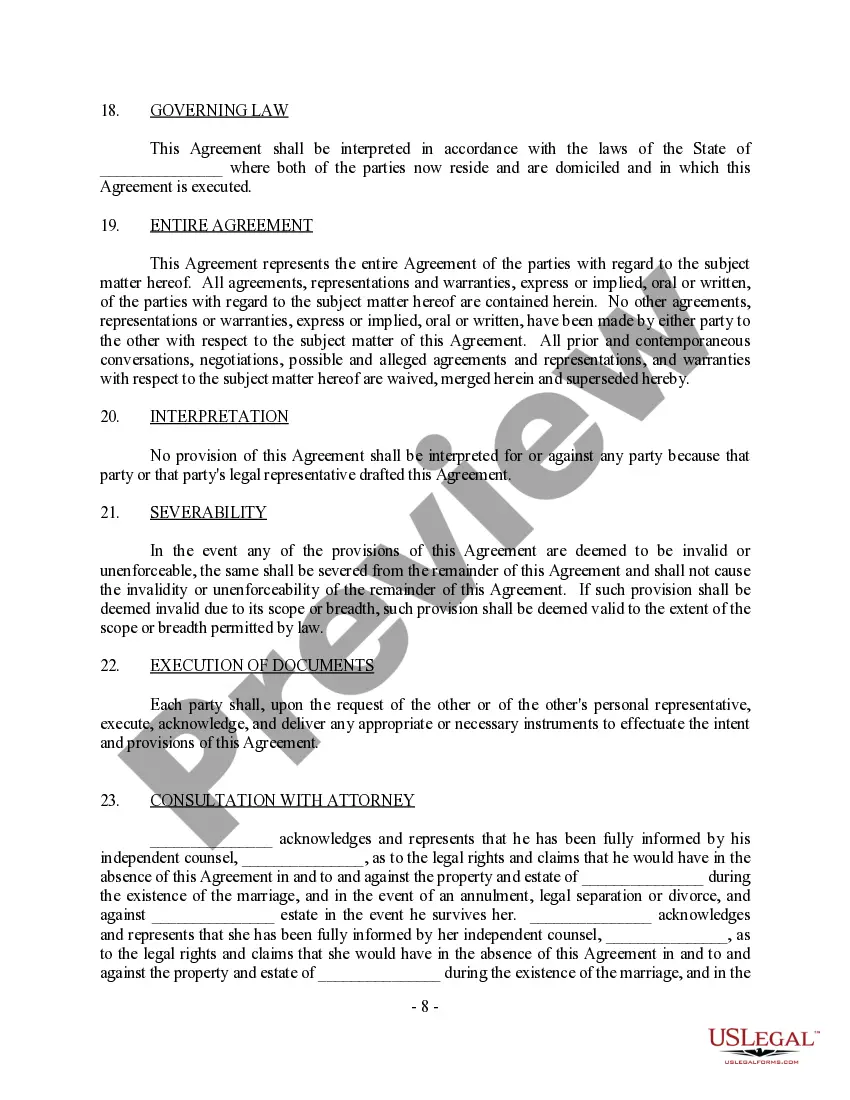
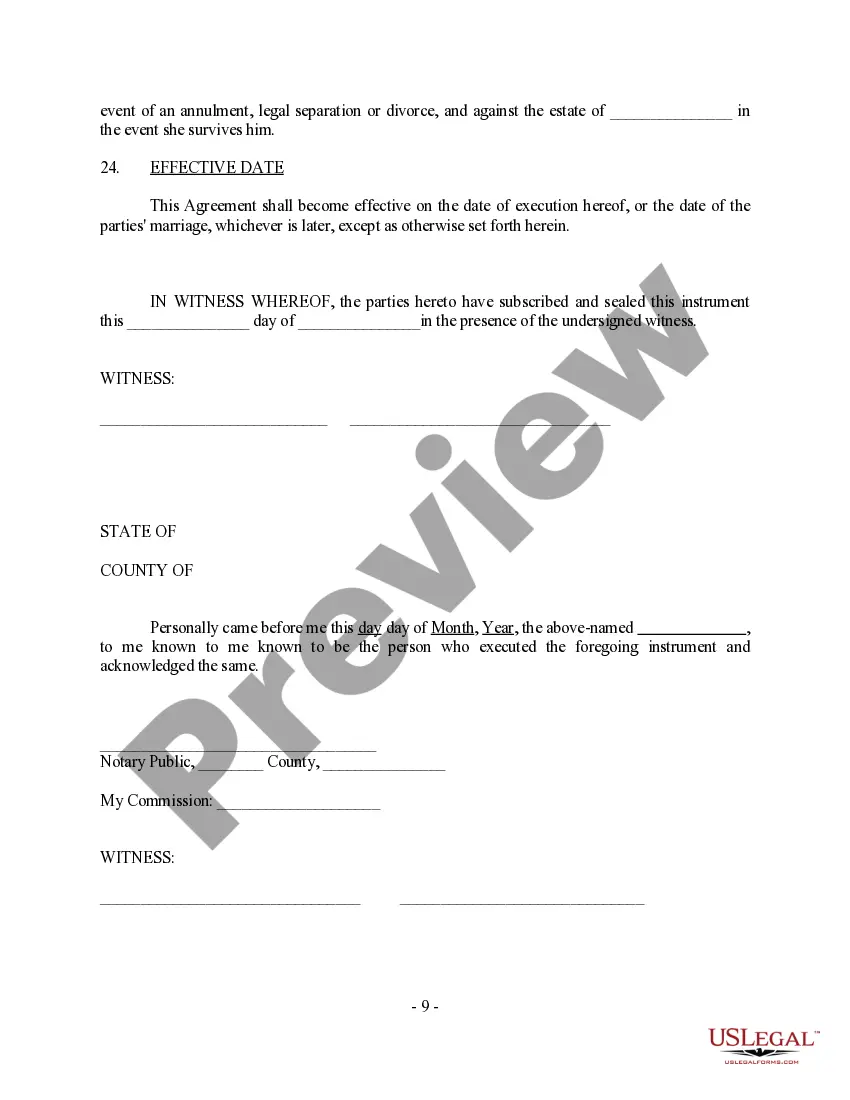
Yes, this form must be notarized to be legally valid. A notary public should witness the signing of the agreement to ensure its authenticity and compliance with legal requirements. US Legal Forms offers integrated online notarization services that allow you to securely complete this process via a video call, making it easy and convenient.
Get your form ready online
Our built-in tools help you complete, sign, share, and store your documents in one place.
Make edits, fill in missing information, and update formatting in US Legal Forms—just like you would in MS Word.
Download a copy, print it, send it by email, or mail it via USPS—whatever works best for your next step.
Sign and collect signatures with our SignNow integration. Send to multiple recipients, set reminders, and more. Go Premium to unlock E-Sign.
If this form requires notarization, complete it online through a secure video call—no need to meet a notary in person or wait for an appointment.
We protect your documents and personal data by following strict security and privacy standards.

Make edits, fill in missing information, and update formatting in US Legal Forms—just like you would in MS Word.

Download a copy, print it, send it by email, or mail it via USPS—whatever works best for your next step.

Sign and collect signatures with our SignNow integration. Send to multiple recipients, set reminders, and more. Go Premium to unlock E-Sign.

If this form requires notarization, complete it online through a secure video call—no need to meet a notary in person or wait for an appointment.

We protect your documents and personal data by following strict security and privacy standards.
Common mistakes
- Failing to fully disclose all assets and debts, leading to potential disputes.
- Not reviewing the agreement with an attorney familiar with local laws.
- Overlooking specific terms that define individual versus shared property.
- Signing the agreement without proper notarization or witness, if required by state law.
Advantages of online completion
- Convenience of downloading forms anytime and anywhere.
- Editable templates that can be customized to meet specific needs.
- Access to resources and legal support for questions and clarifications.
- Time-saving process compared to traditional legal consultations for creating a prenup.
Key takeaways
- This prenuptial property agreement clearly outlines asset management and division terms.
- It protects the financial interests of both parties during and after the marriage.
- Full disclosure of financial information is crucial for legality and transparency.
- It requires notarization for validity, emphasizing the importance of formality in agreements.
Looking for another form?
Form popularity
FAQ
2. Prenups make you think less of your spouse. And at their root, prenups show a lack of commitment to the marriage and a lack of faith in the partnership.Ironically, the marriage becomes more concerned with money after a prenup than it would have been without the prenup.
Pitfall 1: Negotiating a prenuptial agreement may irrevocably damage your relationship and make divorce more likely.Generally speaking, both fiance's should hire attorneys to negotiate and draft a prenup on their own behalf, because the agreement may not be enforceable without involvement of separate legal counsel.
Yes, but it is not advisable. Prenuptial agreements are more enforceable than ever as a result of recent amendments to the law in 2006 and 2013, but there remain strict statutory requirements for enforceability.
In the event of divorce, a prenup can protect a spouse from being liable for any debt the other spouse brought into the marriage.A prenup can also protect any income or assets you earn during the marriage, as well as unearned income from a bequest or a trust distribution.
A prenup can cost $1,500 and up, and "up" can get pretty high for people with large estates.
The average cost of a prenup ranges from about $1,200 for low-cost, simple agreements to $10,000 for more complicated situations.
As a general matter, in Minnesota, a prenuptial agreement must be in writing and signed by both future spouses. Additionally, the agreement must be executed in the presence of two witnesses and a notary. Finally, the prenuptial agreement should be signed before the couple marries to be enforceable.