Minnesota Order Amending Judgment and Decree
What this document covers
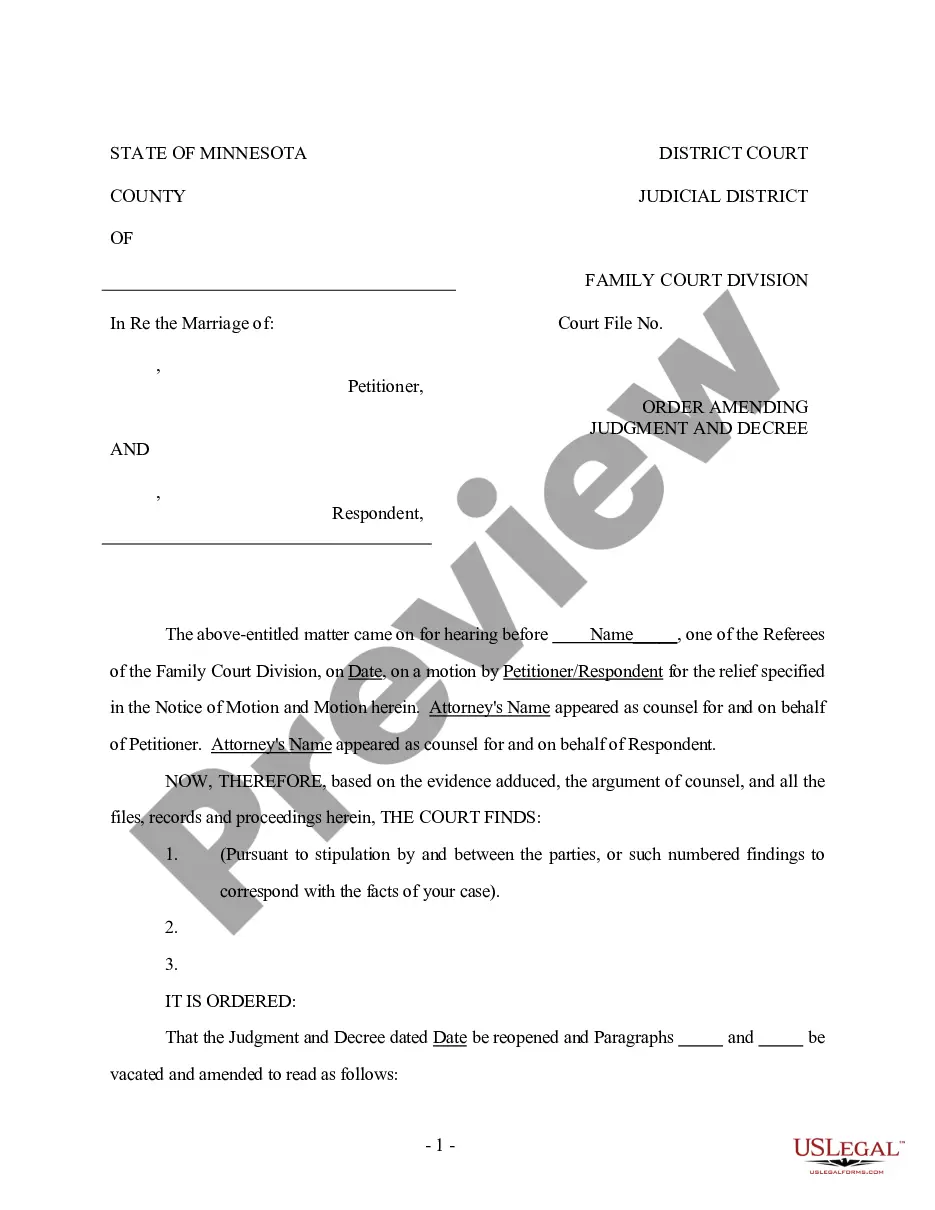
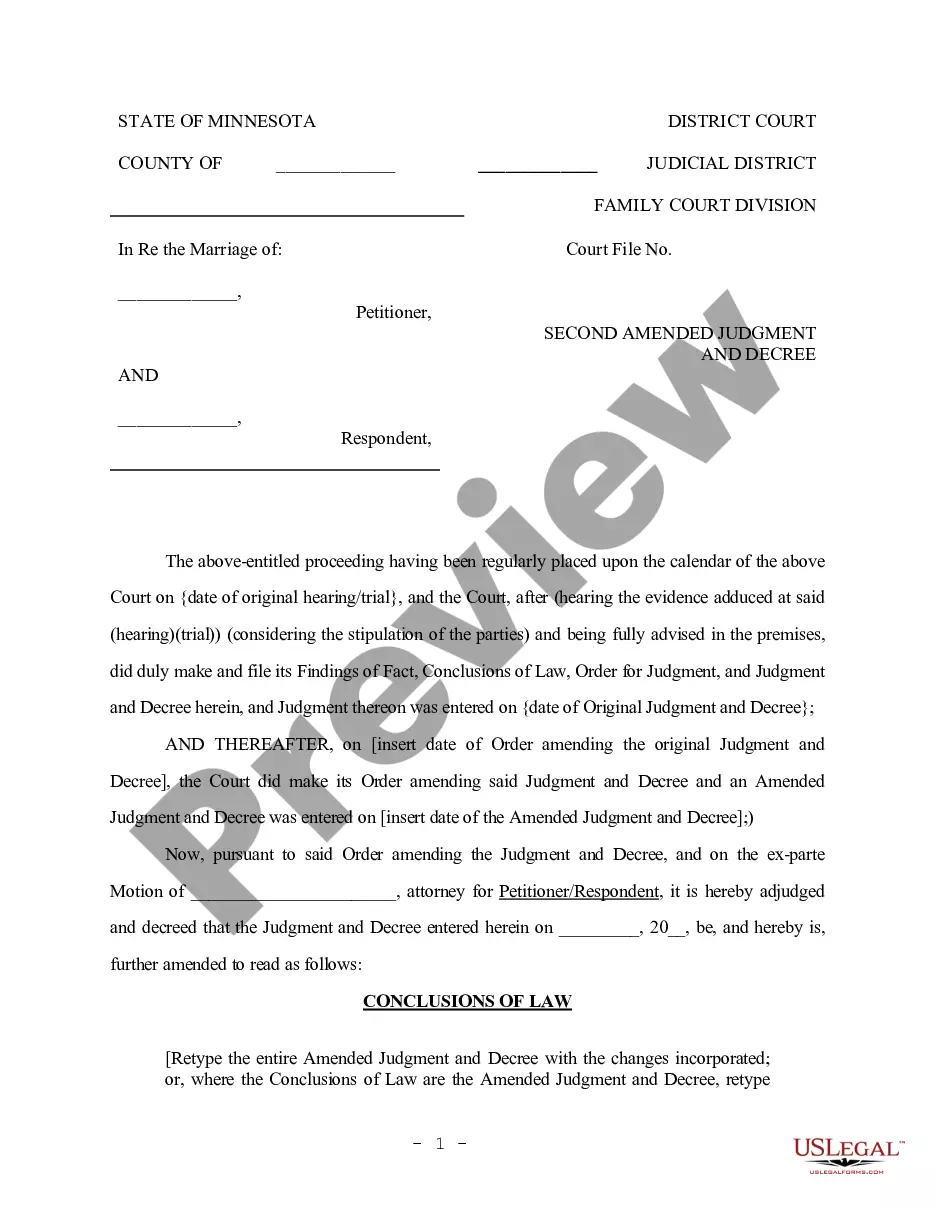
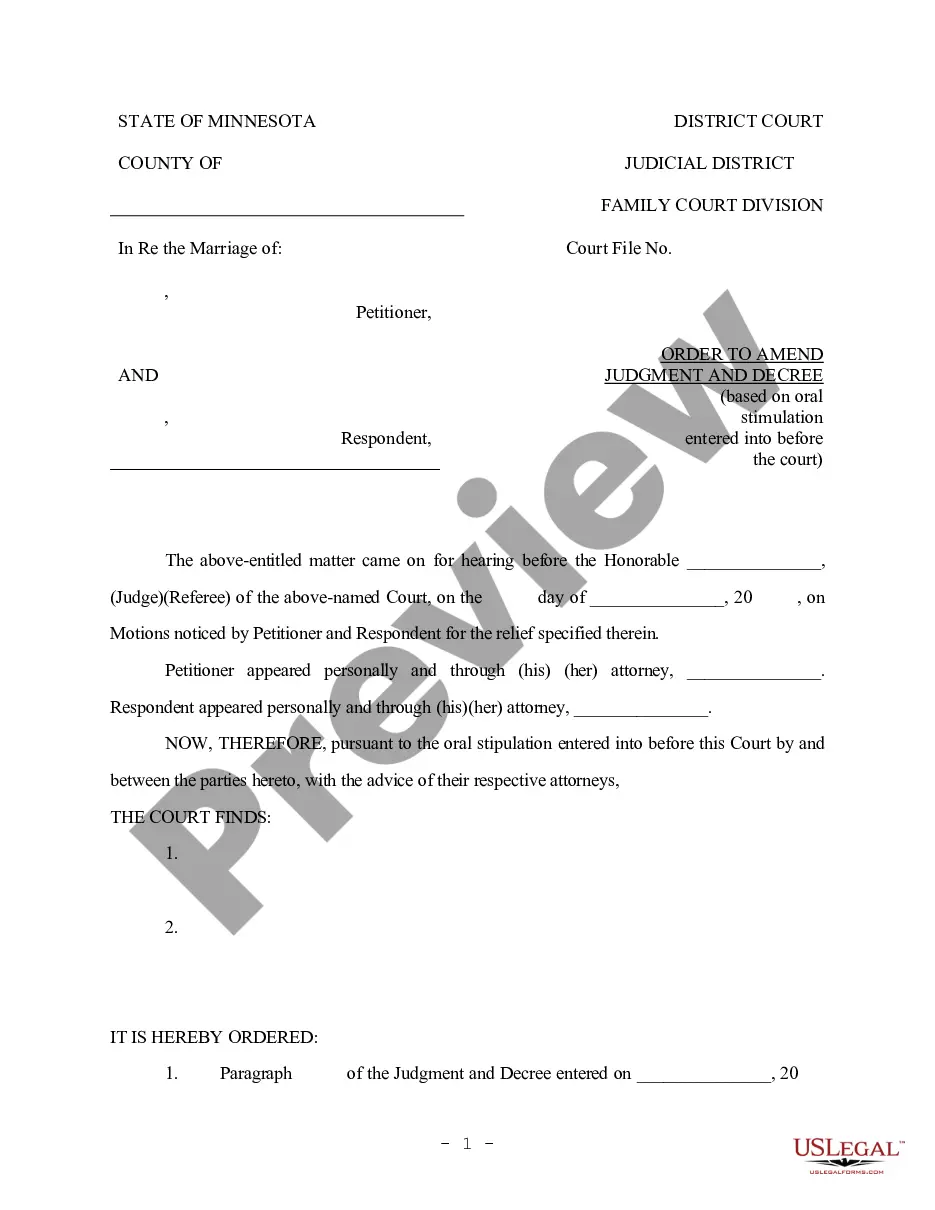
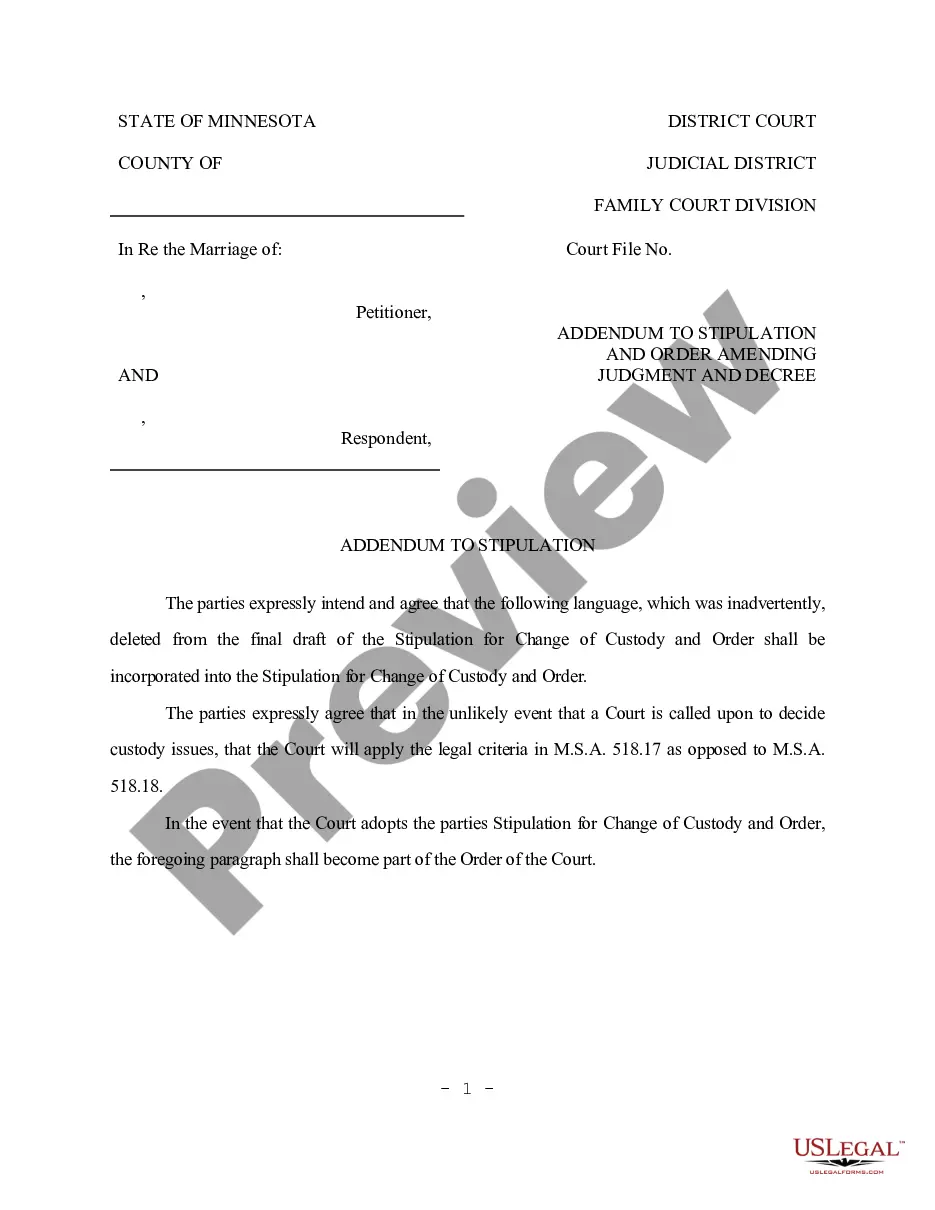
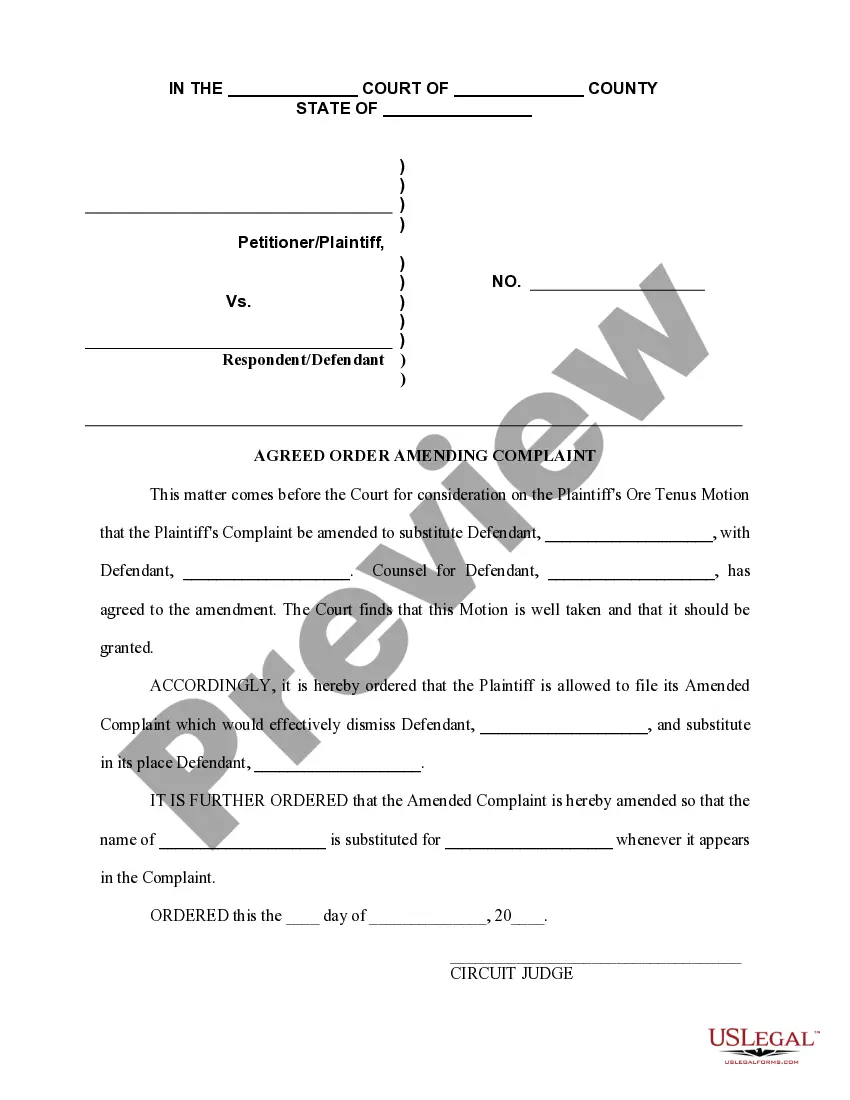
The Order Amending Judgment and Decree is a legal document used to modify a previous judgment and decree issued by a court in a family law matter. This form is crucial in situations where changes to custody arrangements, child support, or other family law considerations are necessary. It differs from other family law forms by addressing the specific need to amend an existing court order rather than establishing a new one.
Key parts of this document
- Identification of the court issuing the judgment
- Details of the previous judgment being amended
- Findings and conclusions based on evidence and arguments presented
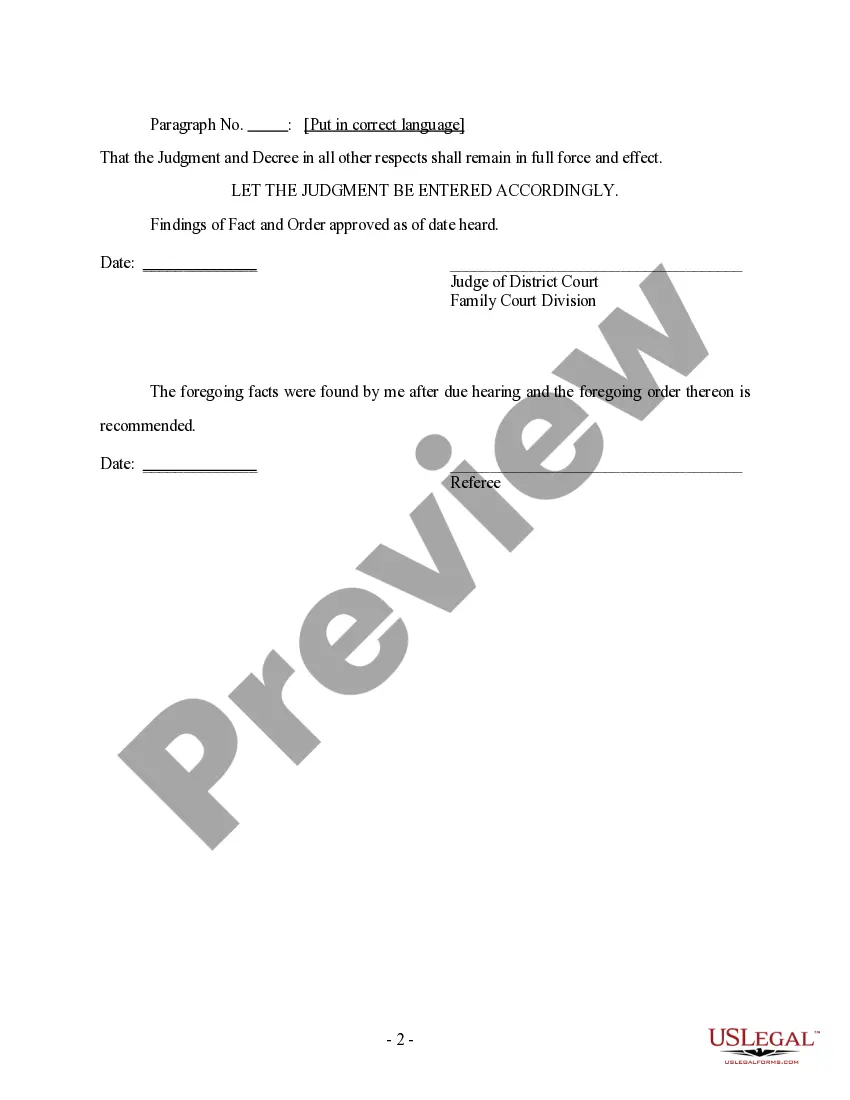
- Signature of the judge overseeing the case
- Date of the order
When to use this document
This form is used when a party involved in a family law case seeks to formally alter the terms of an existing court judgment. Scenarios may include changes in child custody, modifications of spousal support, or adjustments to visitation rights. Utilizing this form ensures that the modifications are legally recognized and enforced by the court.
Who should use this form
- Individuals seeking to modify an existing family court judgment
- Parents looking for changes in custody or support arrangements
- Partners needing to adjust terms of a previous decree due to changed circumstances
How to complete this form
- Identify the court that issued the original decree.
- Provide details about the previous judgment that needs to be amended.
- Outline the specific changes being requested in the order.
- Include any supporting evidence or documentation relevant to the changes.
- Ensure the judge or referee signs and dates the order to validate it.
Notarization guidance
Notarization is generally not required for this form. However, certain states or situations might demand it. You can complete notarization online through US Legal Forms, powered by Notarize, using a verified video call available anytime.
Get your form ready online
Our built-in tools help you complete, sign, share, and store your documents in one place.
Make edits, fill in missing information, and update formatting in US Legal Forms—just like you would in MS Word.
Download a copy, print it, send it by email, or mail it via USPS—whatever works best for your next step.
Sign and collect signatures with our SignNow integration. Send to multiple recipients, set reminders, and more. Go Premium to unlock E-Sign.
If this form requires notarization, complete it online through a secure video call—no need to meet a notary in person or wait for an appointment.
We protect your documents and personal data by following strict security and privacy standards.

Make edits, fill in missing information, and update formatting in US Legal Forms—just like you would in MS Word.

Download a copy, print it, send it by email, or mail it via USPS—whatever works best for your next step.

Sign and collect signatures with our SignNow integration. Send to multiple recipients, set reminders, and more. Go Premium to unlock E-Sign.

If this form requires notarization, complete it online through a secure video call—no need to meet a notary in person or wait for an appointment.

We protect your documents and personal data by following strict security and privacy standards.
Common mistakes to avoid
- Failing to provide adequate evidence to support the requested changes.
- Not properly identifying the court that issued the previous judgment.
- Neglecting to include all necessary signatures before submission.
Advantages of online completion
- Convenience of accessing and completing the form at your own pace.
- Editable digital format allows for easy updates and corrections.
- Reliable templates drafted by licensed attorneys ensure legal soundness.
Looking for another form?
Form popularity
FAQ
Rule of Practice 521 in Minnesota outlines the procedures for amending judgments and decrees. This rule provides specific guidelines on how to file motions, the necessary documentation, and the timelines involved. Familiarizing yourself with Rule 521 will enhance your understanding of the Minnesota Order Amending Judgment and Decree process and help you navigate your legal situation more effectively.
The amendment of a judgment and decree involves altering the original court decision to reflect new information or correct mistakes. This procedure ensures that the judgment aligns with the current facts and circumstances. The Minnesota Order Amending Judgment and Decree offers guidance on how to effectively initiate this amendment process.
To amend a judgment means to make changes or corrections to the original court ruling. This process often addresses errors, omissions, or changes in circumstances that warrant an adjustment to the judgment. The Minnesota Order Amending Judgment and Decree provides essential resources to help you understand and execute this process properly.
Amending your divorce decree in Minnesota involves filing a motion with the court that finalized the decree. You must outline the specific changes you seek and provide justifications for those changes. Utilizing the Minnesota Order Amending Judgment and Decree can help ensure that you complete this process correctly and efficiently.
Yes, a judgment can be modified under certain circumstances in Minnesota. Common reasons include changes in circumstances or new evidence that affects the original judgment. It is essential to follow the proper procedures, such as filing a motion, and the Minnesota Order Amending Judgment and Decree can assist you in navigating these requirements.
To amend a judgment in Minnesota, you typically need to file a motion with the court that issued the original judgment. This motion should specify the changes you wish to make and provide valid reasons for these amendments. Using the Minnesota Order Amending Judgment and Decree can simplify this process by offering clear guidelines and templates for your needs.
Yes, a decree can be amended through a Minnesota Order Amending Judgment and Decree. This legal process allows you to alter various aspects of your original decree, ensuring it reflects your current situation. You will need to submit a formal request to the court, demonstrating the need for the change. For guidance and to simplify the legal process, consider using US Legal Forms, which provides templates and support for your amendment needs.
Modifying a divorce decree may involve some complexity, depending on the reasons for the change. Generally, the court requires a substantial change in circumstances to justify a Minnesota Order Amending Judgment and Decree. It’s essential to gather the necessary documentation and possibly attend a court hearing. Platforms like US Legal Forms can assist you in preparing the required forms efficiently.
Yes, you can amend a divorce decree through a Minnesota Order Amending Judgment and Decree. This process allows you to modify specific terms of the original decree, such as child custody or support arrangements. To initiate this change, you must file a motion with the court and provide valid reasons for the amendment. Utilizing resources like US Legal Forms can streamline your paperwork and ensure compliance with state laws.