Minnesota Motion Requesting Case be Placed on Active Docket
What is this form?
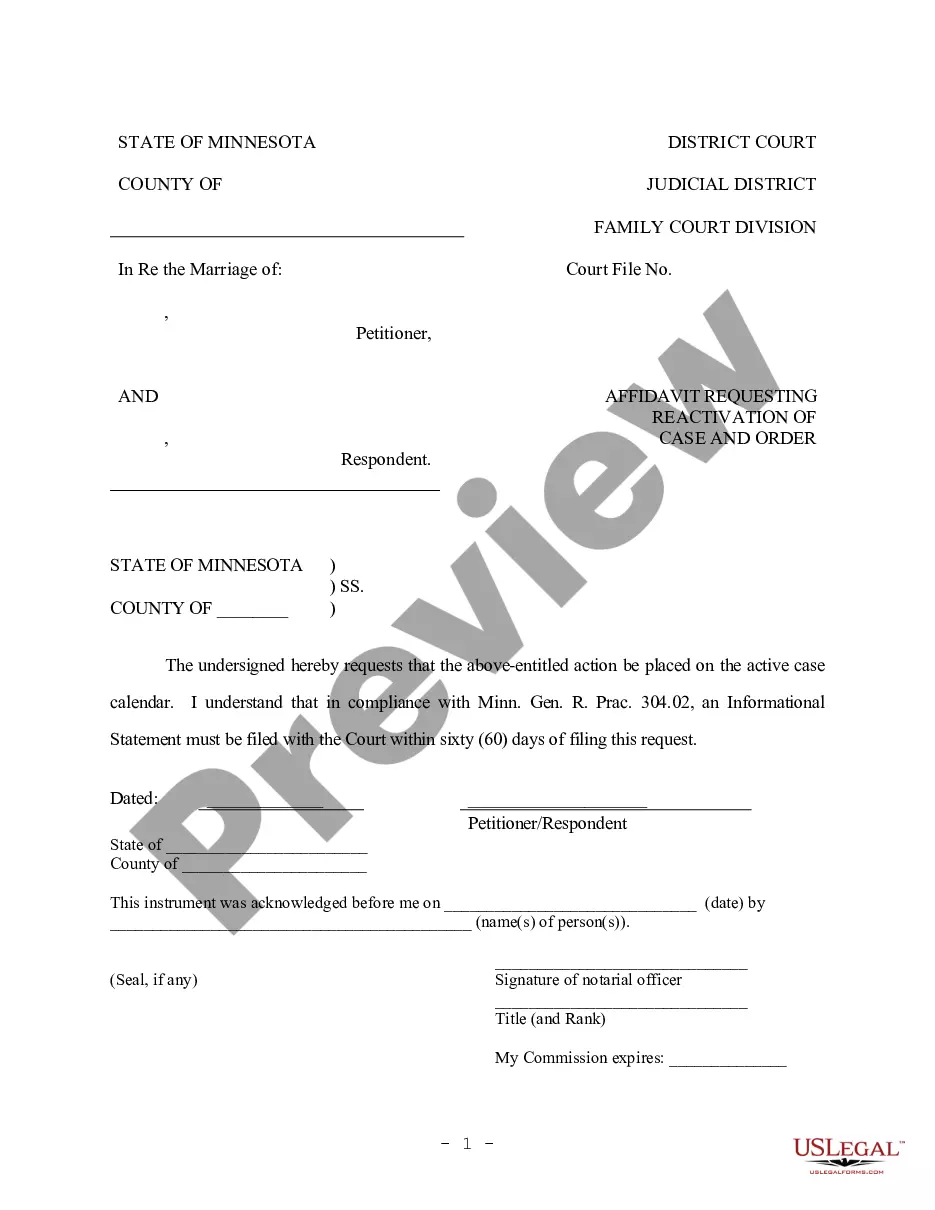
The Motion Requesting Case be Placed on Active Docket is a legal document used to request the reactivation of a case previously inactive in court. This form serves a different purpose from other motions by specifically addressing the reactivation process and ensuring compliance with Minn. Gen. R. Prac. 304.02. It requires the filing of an Informational Statement within a set timeframe, making it crucial for parties needing their case back on the court's active calendar.
Form components explained
- Date section for filing the motion.
- Signature fields for the Petitioner/Respondent.
- Affidavit section requiring notarization.
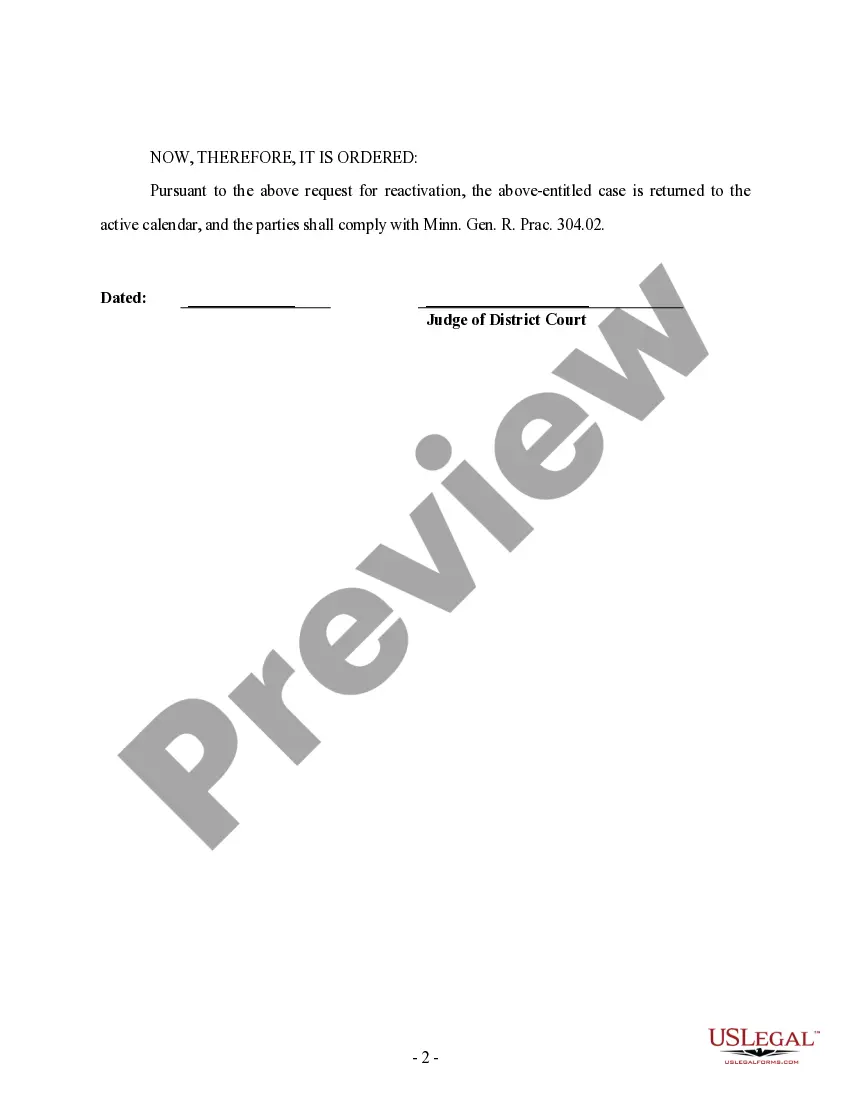
- Order section where the Judge affirms the reactivation of the case.
Situations where this form applies
This form is used when a party involved in a court case needs to reactivate a matter that has been inactive for a significant period. Situations may include changes in circumstances that warrant a review of the case, or when a party realizes that the case should proceed after previously being sidelined. It ensures that the court is informed and able to schedule further proceedings.
Who can use this document
- Petitioners or respondents who have a case that is currently inactive.
- Individuals seeking to reactivate their legal matters in court.
- Parties complying with specific court rules regarding case inactivity.
Instructions for completing this form
- Enter the date of filing in the designated area.
- Provide the name of the Petitioner/Respondent in the appropriate section.
- Sign the form in the presence of a notary public to authenticate your affidavit.
- Fill out the Judge's order section after submitting the motion for approval.
- Ensure that you file an Informational Statement with the court within sixty (60) days of this request.
Notarization requirements for this form
This document requires notarization to meet legal standards. US Legal Forms provides secure online notarization powered by Notarize, allowing you to complete the process through a verified video call, available 24/7.
Get your form ready online
Our built-in tools help you complete, sign, share, and store your documents in one place.
Make edits, fill in missing information, and update formatting in US Legal Forms—just like you would in MS Word.
Download a copy, print it, send it by email, or mail it via USPS—whatever works best for your next step.
Sign and collect signatures with our SignNow integration. Send to multiple recipients, set reminders, and more. Go Premium to unlock E-Sign.
If this form requires notarization, complete it online through a secure video call—no need to meet a notary in person or wait for an appointment.
We protect your documents and personal data by following strict security and privacy standards.

Make edits, fill in missing information, and update formatting in US Legal Forms—just like you would in MS Word.

Download a copy, print it, send it by email, or mail it via USPS—whatever works best for your next step.

Sign and collect signatures with our SignNow integration. Send to multiple recipients, set reminders, and more. Go Premium to unlock E-Sign.

If this form requires notarization, complete it online through a secure video call—no need to meet a notary in person or wait for an appointment.

We protect your documents and personal data by following strict security and privacy standards.
Typical mistakes to avoid
- Failing to file the Informational Statement within the required timeframe.
- Not having the affidavit notarized, which is crucial for validating the motion.
- Missing signatures or incorrect dates that may delay processing.
Advantages of online completion
- Convenience of accessing the form from anywhere at any time.
- Editability allows for easy customization to meet your specific needs.
- Trustworthy legal templates drafted by licensed attorneys ensure compliance with state laws.
Summary of main points
- The Motion Requesting Case be Placed on Active Docket is essential for reactivating inactive cases.
- Completing the form correctly ensures compliance with court rules and timely processing.
- Notarization is necessary for legal validity, which can be easily arranged through online services.
Looking for another form?


Form popularity
FAQ
In Minnesota, failing to disclose an STD can lead to serious legal consequences. While there is no specific law that states it is illegal not to disclose your status outright, knowingly transmitting an STD to another person without their knowledge can result in criminal charges. If you find yourself in a situation where you need to address this issue, consider seeking guidance through a Minnesota Motion Requesting Case be Placed on Active Docket to handle any related legal matters effectively. It's essential to understand your rights and responsibilities in these situations.
Rule 12.03 in Minnesota deals with motions regarding inactive cases. If you need to reactivate your case, you may file a Minnesota Motion Requesting Case be Placed on Active Docket. This rule outlines the procedures and requirements necessary to bring your case back to the forefront of the court's agenda. Understanding this rule is crucial for ensuring your legal matters proceed without unnecessary delays.
Rule 115.10 in Minnesota deals with the procedures for appeals in civil cases. It outlines the requirements for filing an appeal, including deadlines and necessary documentation. Understanding this rule is important, especially if you are considering a Minnesota Motion Requesting Case be Placed on Active Docket to ensure your case is properly positioned for appeal.
A Rule 60 motion in Minnesota allows a party to seek relief from a judgment or order under certain circumstances. This motion can be used to correct mistakes, relieve a party from a judgment due to excusable neglect, or address other significant issues. If you believe your case requires re-evaluation, a Minnesota Motion Requesting Case be Placed on Active Docket might be the right step.
Rule 69 in Minnesota specifically addresses the execution of judgments and the procedures that must be followed. It serves as a guide for creditors on how to legally pursue the collection of debts. If you are navigating complex enforcement issues, filing a Minnesota Motion Requesting Case be Placed on Active Docket could help streamline the process.
The rule of civil procedure 69 outlines the enforcement of judgments in Minnesota civil cases. It provides mechanisms for creditors to collect debts owed by debtors, including the ability to levy bank accounts or garnish wages. If you find yourself in a situation where enforcement is necessary, consider a Minnesota Motion Requesting Case be Placed on Active Docket for timely resolution.
Rule 68 in Minnesota relates to offers of judgment, allowing a party to make a formal offer to settle a case before trial. If the offer is rejected and the final judgment is less favorable than the offer, the rejecting party may be responsible for certain costs. Utilizing this rule strategically can complement your Minnesota Motion Requesting Case be Placed on Active Docket.
Rule of Practice 521 in Minnesota pertains to the procedures for handling certain types of cases in district courts. This rule emphasizes the importance of timely filings and clear communication between parties to ensure fair proceedings. When dealing with these cases, a Minnesota Motion Requesting Case be Placed on Active Docket can help keep your case moving forward.
The rule 69 law outlines the procedures for executing a judgment in civil cases. It provides specific guidelines on how creditors can collect debts through various means, including garnishments and levies. If you're facing issues related to enforcement, exploring a Minnesota Motion Requesting Case be Placed on Active Docket may be beneficial.
In Minnesota, Rule 60 provides a mechanism for parties to seek relief from a judgment or order under certain circumstances. This rule is significant for litigants who wish to challenge or modify decisions that may have been made in error or under duress. By understanding Rule 60, you can better navigate your options, including how to effectively file a Minnesota Motion Requesting Case be Placed on Active Docket through platforms like uslegalforms, which can simplify the process.