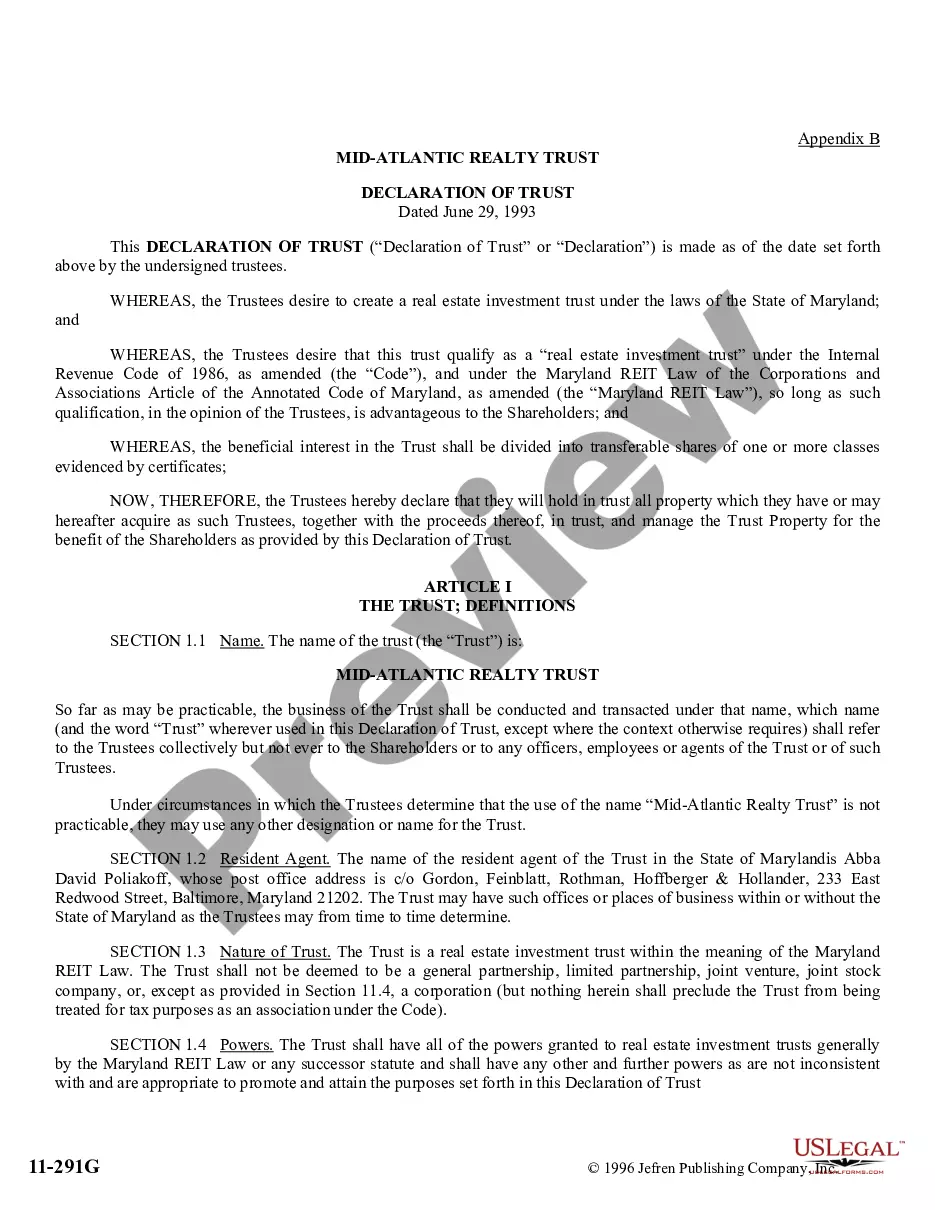
Minnesota Notice of Default in Payment of Rent as Warning Prior to Demand to Pay or Terminate for Nonresidential or Commercial Property
Description
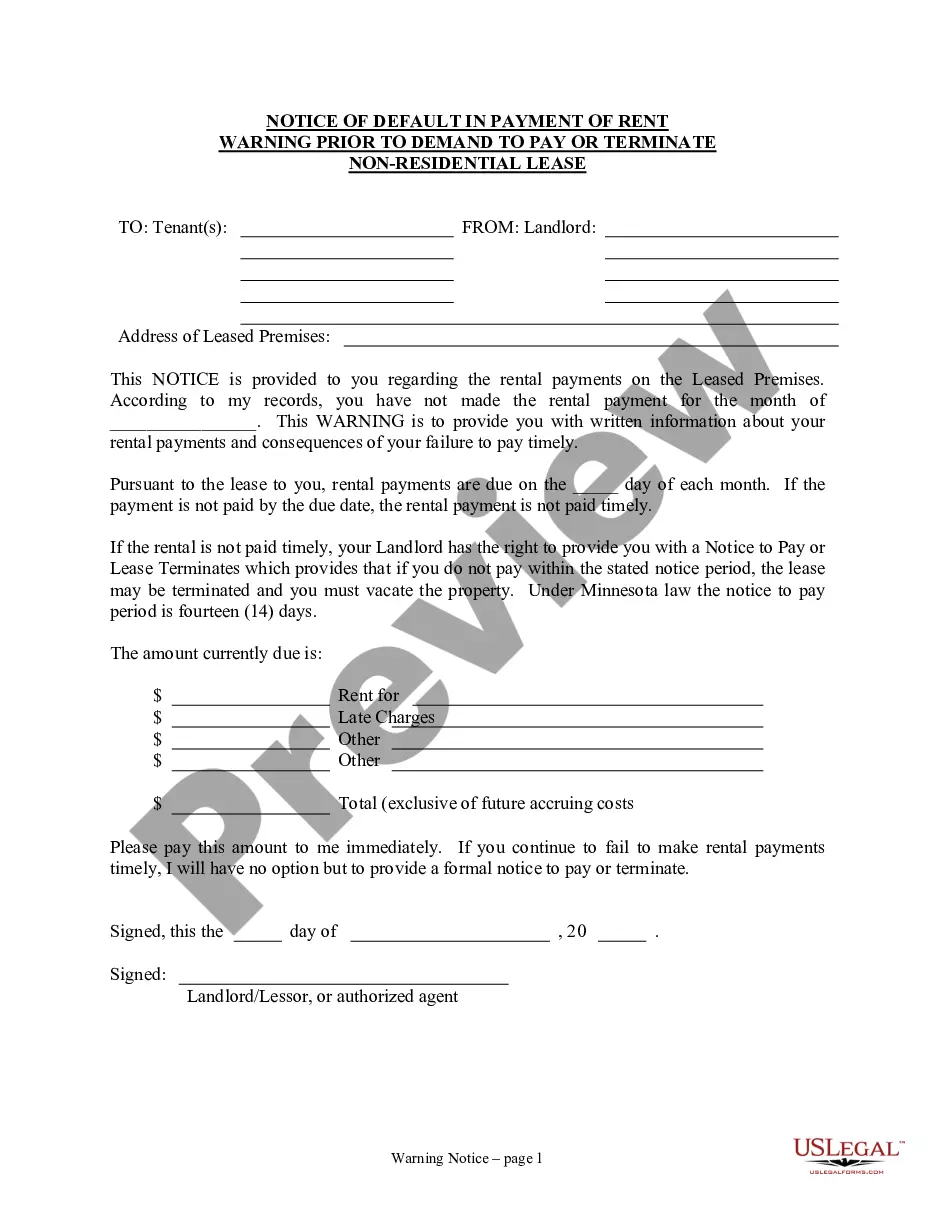

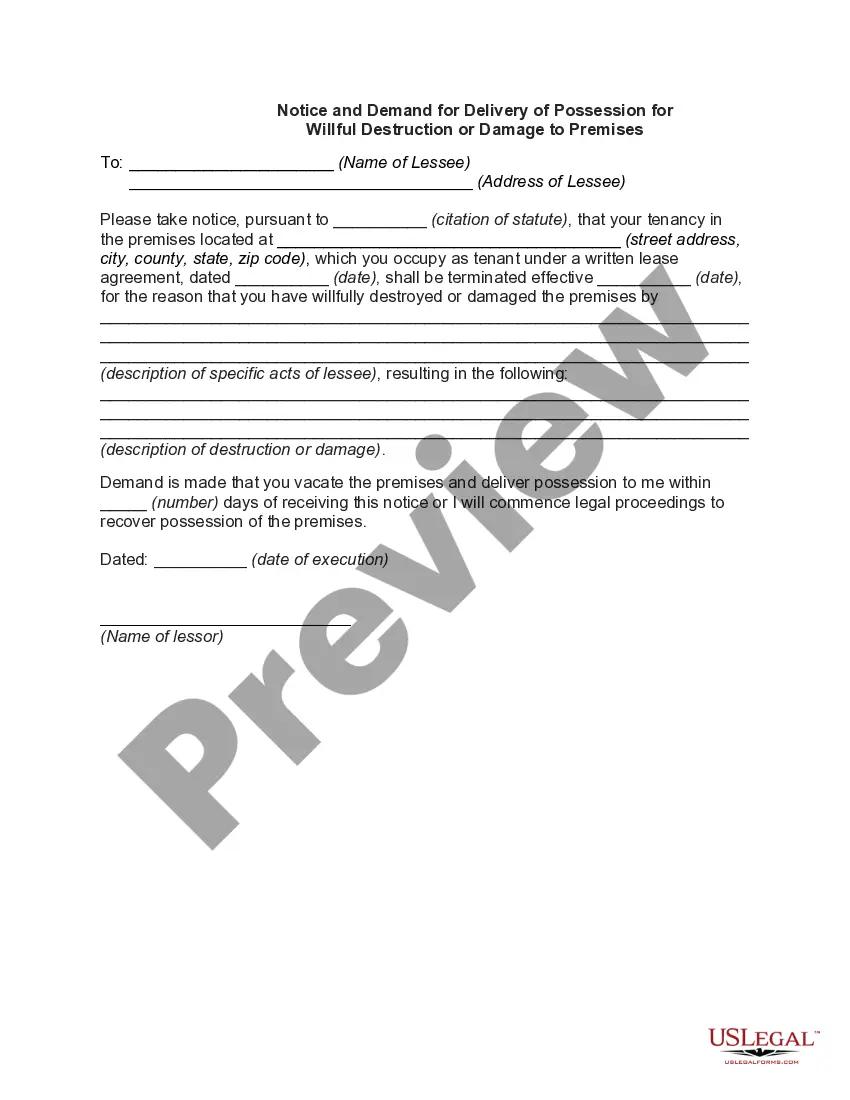
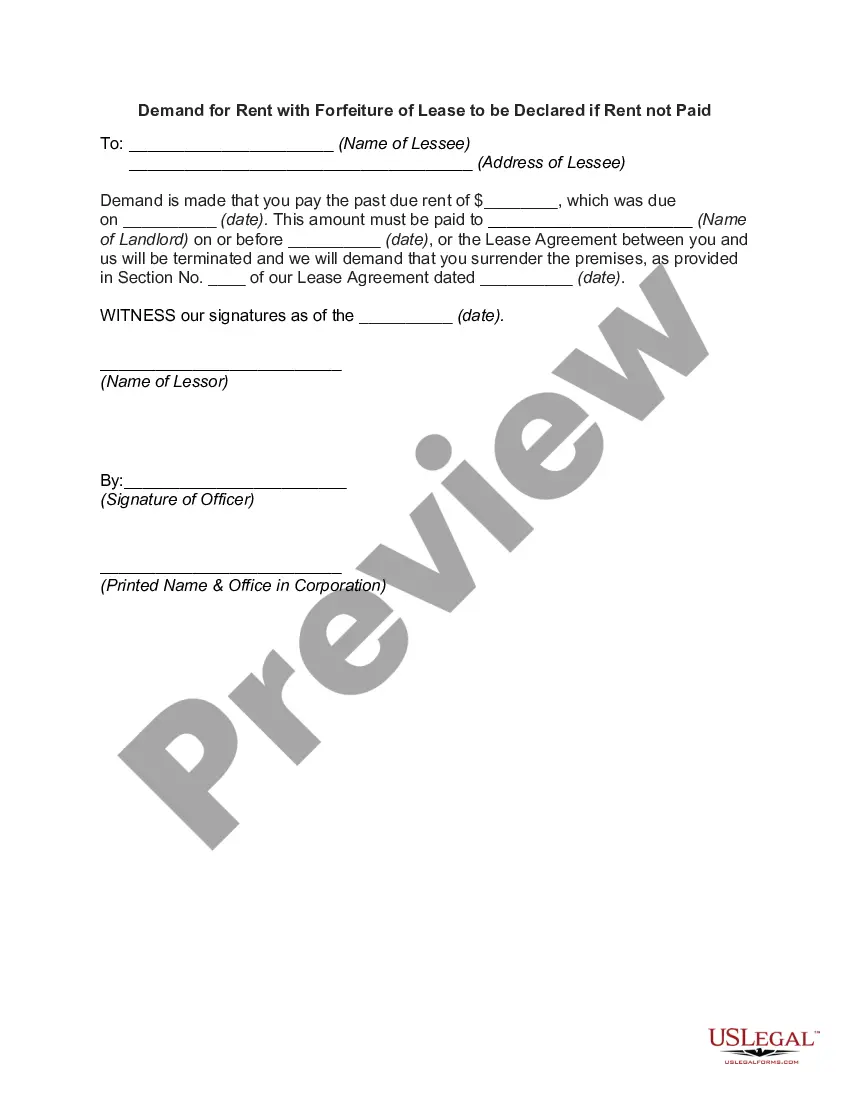
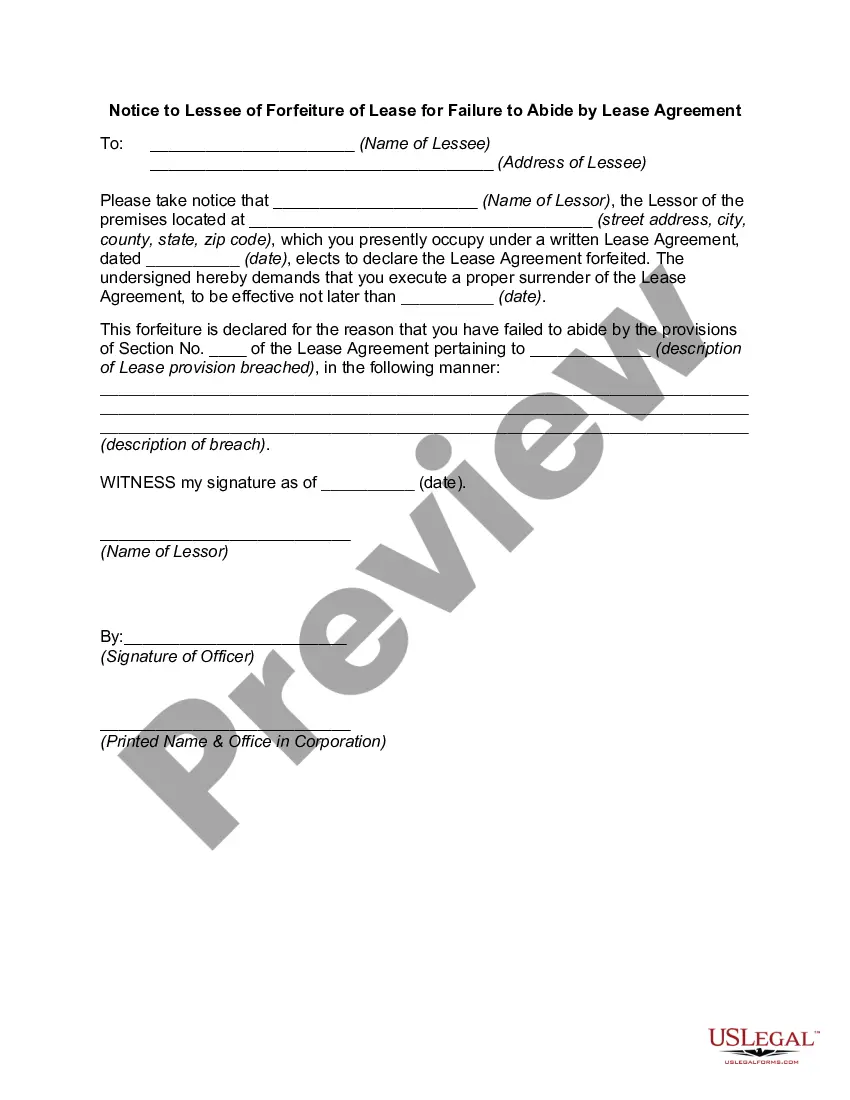
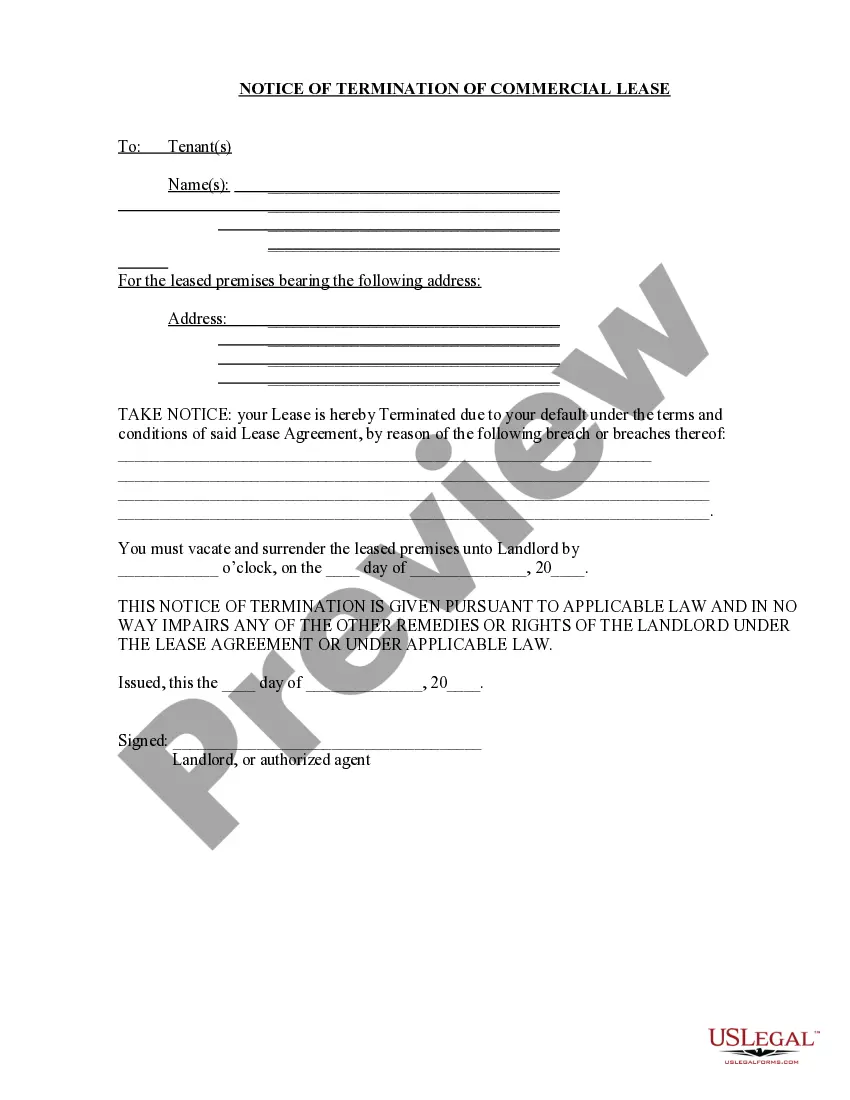
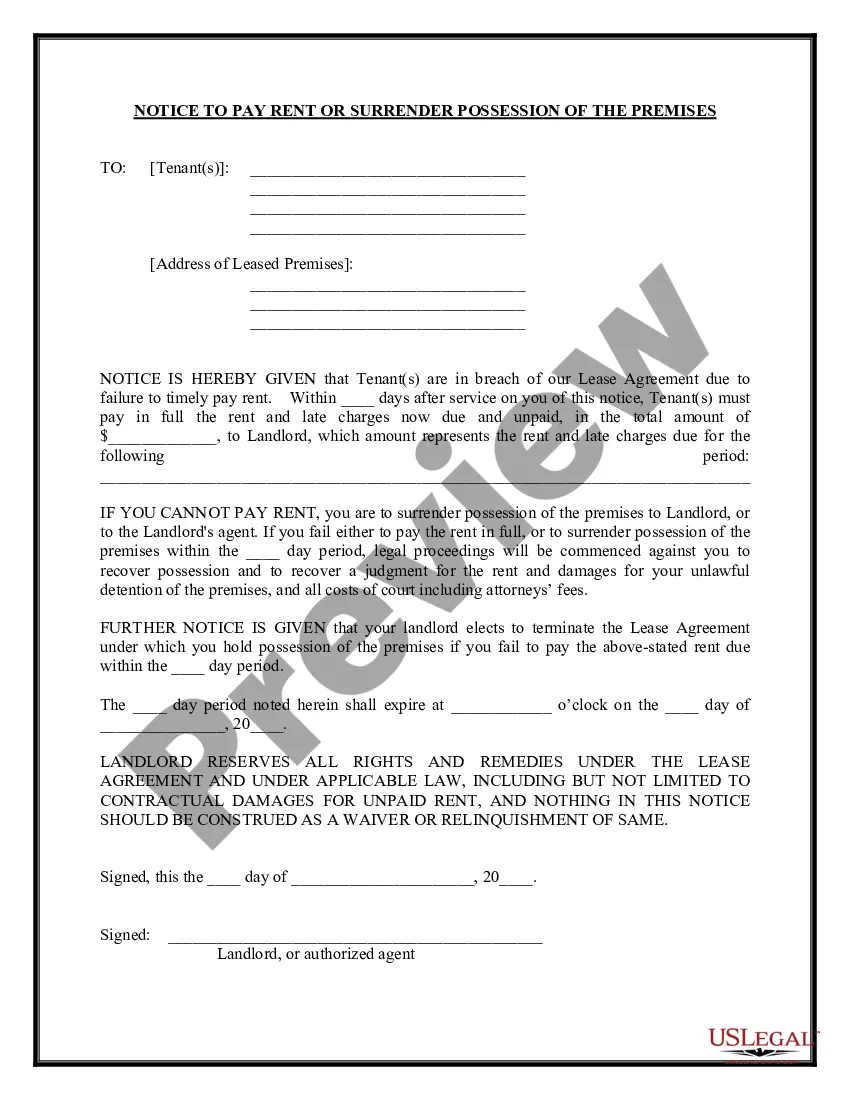


How to fill out Minnesota Notice Of Default In Payment Of Rent As Warning Prior To Demand To Pay Or Terminate For Nonresidential Or Commercial Property?
Obtain any template from 85,000 legal documents including Minnesota Notice of Default in Payment of Rent as Alert Before Request to Pay or Terminate for Nonresidential or Commercial Property online with US Legal Forms. Each template is composed and refreshed by state-certified attorneys.
If you possess a subscription, Log In. After you’re on the form’s page, click the Download button and proceed to My documents to gain access to it.
If you haven’t subscribed yet, follow the instructions outlined below: Check the state-specific prerequisites for the Minnesota Notice of Default in Payment of Rent as Alert Before Request to Pay or Terminate for Nonresidential or Commercial Property you wish to utilize. Review the description and preview the template. Once you are confident the template is what you require, click on Buy Now. Choose a subscription plan that fits your budget. Create a personal account. Pay using one of two convenient methods: by credit card or through PayPal. Select a format to download the document in; two options are available (PDF or Word). Download the document to the My documents section. When your reusable form is downloaded, print it out or save it to your device.
- With US Legal Forms, you will consistently have immediate access to the appropriate downloadable template.
- The service provides you access to forms and categorizes them to facilitate your search.
- Utilize US Legal Forms to acquire your Minnesota Notice of Default in Payment of Rent as Alert Before Request to Pay or Terminate for Nonresidential or Commercial Property swiftly and effortlessly.
Form popularity
FAQ
The purpose of a notice of default is to formally inform a tenant that they are behind on rent payments. In Minnesota, this notice, known as the Minnesota Notice of Default in Payment of Rent as Warning Prior to Demand to Pay or Terminate for Nonresidential or Commercial Property, serves as a critical communication tool. It outlines the tenant's obligations and warns that failure to address the issue may lead to eviction. Using resources like uslegalforms can simplify the process of drafting and delivering this important document.
A default in rent payment occurs when a tenant does not fulfill their financial obligation as outlined in their lease. This concept is critical for landlords, especially when issuing the Minnesota Notice of Default in Payment of Rent as Warning Prior to Demand to Pay or Terminate for Nonresidential or Commercial Property. The notice acts as a formal alert that action may be taken if the tenant fails to rectify the situation. Understanding the implications of a default helps both parties manage expectations and responsibilities.
The timeline for eviction after non-payment of rent varies by state, but typically, a landlord must provide a notice before proceeding. In Minnesota, the Minnesota Notice of Default in Payment of Rent as Warning Prior to Demand to Pay or Terminate for Nonresidential or Commercial Property allows landlords to inform tenants about their delinquency. After the notice period, landlords may file for eviction if the tenant does not pay. It is advisable to consult legal resources to ensure compliance with state laws.
In Arkansas, a landlord can begin the eviction process after a tenant has failed to pay rent for a period specified in their lease. Typically, this involves a grace period followed by a formal notice, similar to the Minnesota Notice of Default in Payment of Rent as Warning Prior to Demand to Pay or Terminate for Nonresidential or Commercial Property. It is essential to check local laws, as regulations may vary. Utilizing platforms like uslegalforms can help clarify the steps involved in the eviction process.
Being in default on rent payments means that a tenant has failed to pay rent according to their lease agreement. In the context of the Minnesota Notice of Default in Payment of Rent as Warning Prior to Demand to Pay or Terminate for Nonresidential or Commercial Property, this notice serves as an official warning. It indicates that the tenant is behind on payments and may face eviction if the situation is not resolved promptly. Understanding this concept is crucial for both tenants and landlords to navigate potential disputes.
Tenant's default of rent refers to a situation where a tenant fails to adhere to the payment schedule outlined in their lease agreement. This default can lead to various consequences, including legal action from the landlord. Knowing the implications of a tenant's default is crucial, especially in the framework of the Minnesota Notice of Default in Payment of Rent as Warning Prior to Demand to Pay or Terminate for Nonresidential or Commercial Property.
A notice of default is typically triggered when a tenant fails to pay their rent by the agreed-upon deadline. This can happen due to various circumstances, such as financial difficulties or misunderstandings about payment terms. Understanding what triggers this notice is vital for both landlords and tenants in navigating the complexities of the Minnesota Notice of Default in Payment of Rent as Warning Prior to Demand to Pay or Terminate for Nonresidential or Commercial Property.
A letter of default for rent is a written communication from a landlord to a tenant, indicating that the tenant has not fulfilled their rental payment obligations. This letter serves as a warning and may outline the next steps the landlord intends to take, such as initiating eviction procedures. It is an essential document in the context of a Minnesota Notice of Default in Payment of Rent as Warning Prior to Demand to Pay or Terminate for Nonresidential or Commercial Property.
Defaulting on rent occurs when a tenant fails to make their rent payment by the due date as outlined in their lease agreement. This action can lead to serious consequences, including eviction proceedings initiated by the landlord. Being aware of the ramifications of defaulting is essential, particularly in relation to the Minnesota Notice of Default in Payment of Rent as Warning Prior to Demand to Pay or Terminate for Nonresidential or Commercial Property.
A notice to pay or quit demand for rent is a legal document that instructs a tenant to either pay their overdue rent or vacate the property. This notice is typically issued after a tenant has defaulted on their rental payments. It plays a crucial role in the eviction process, especially in connection with the Minnesota Notice of Default in Payment of Rent as Warning Prior to Demand to Pay or Terminate for Nonresidential or Commercial Property.