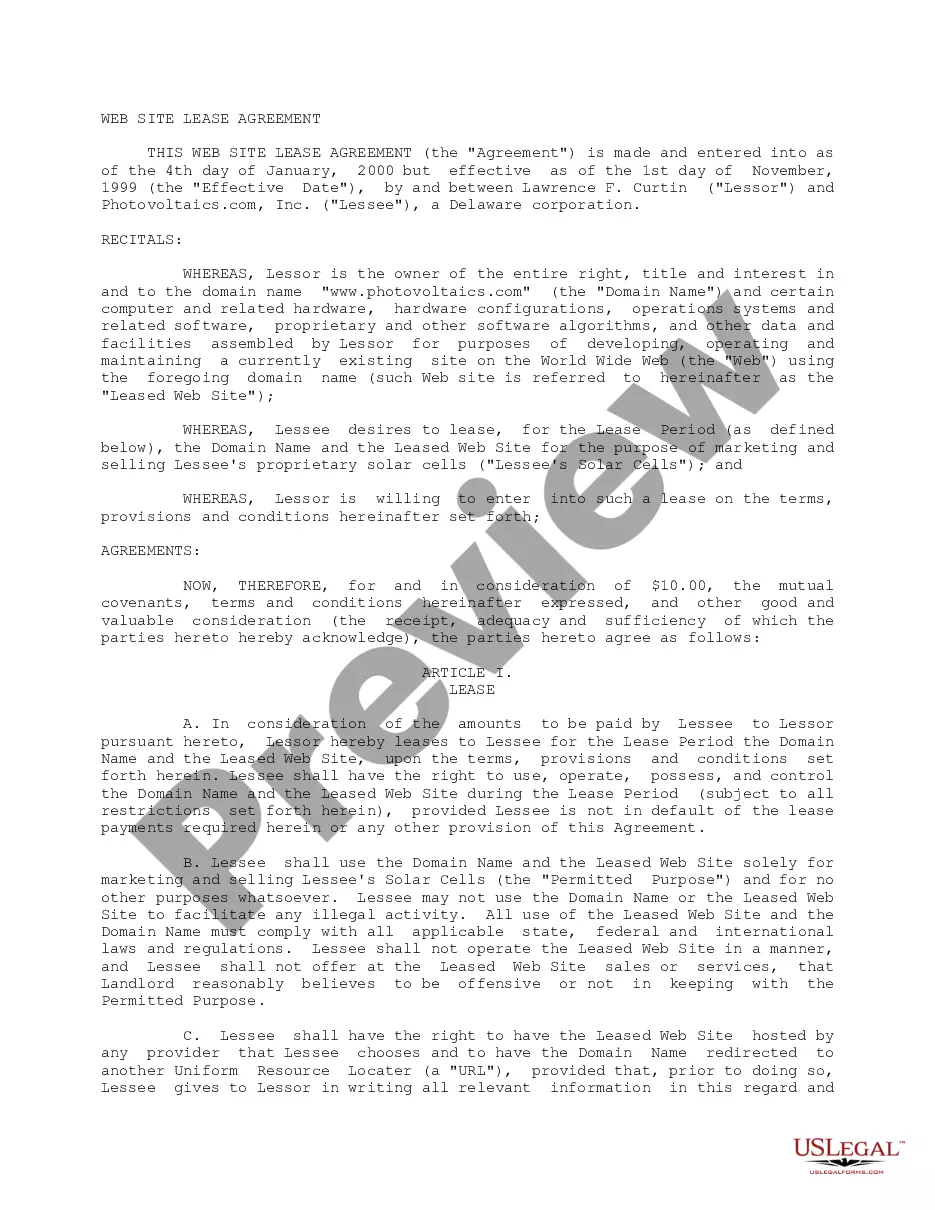
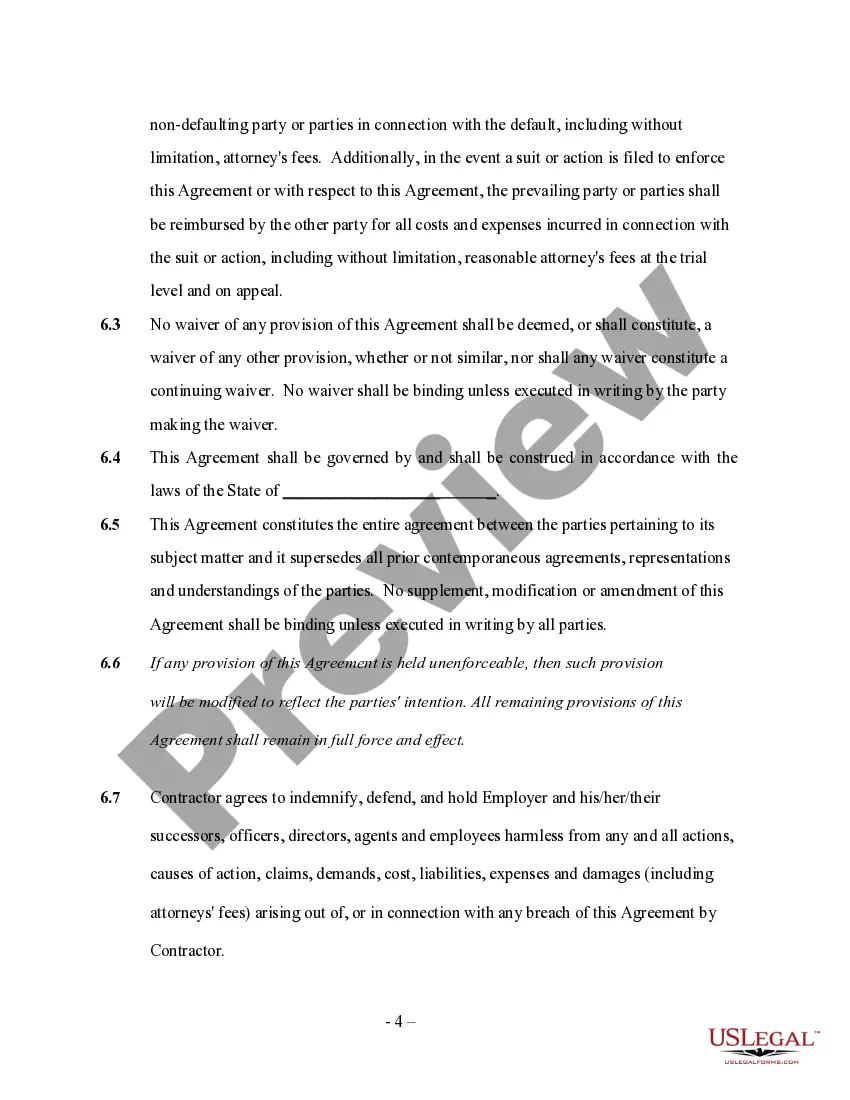
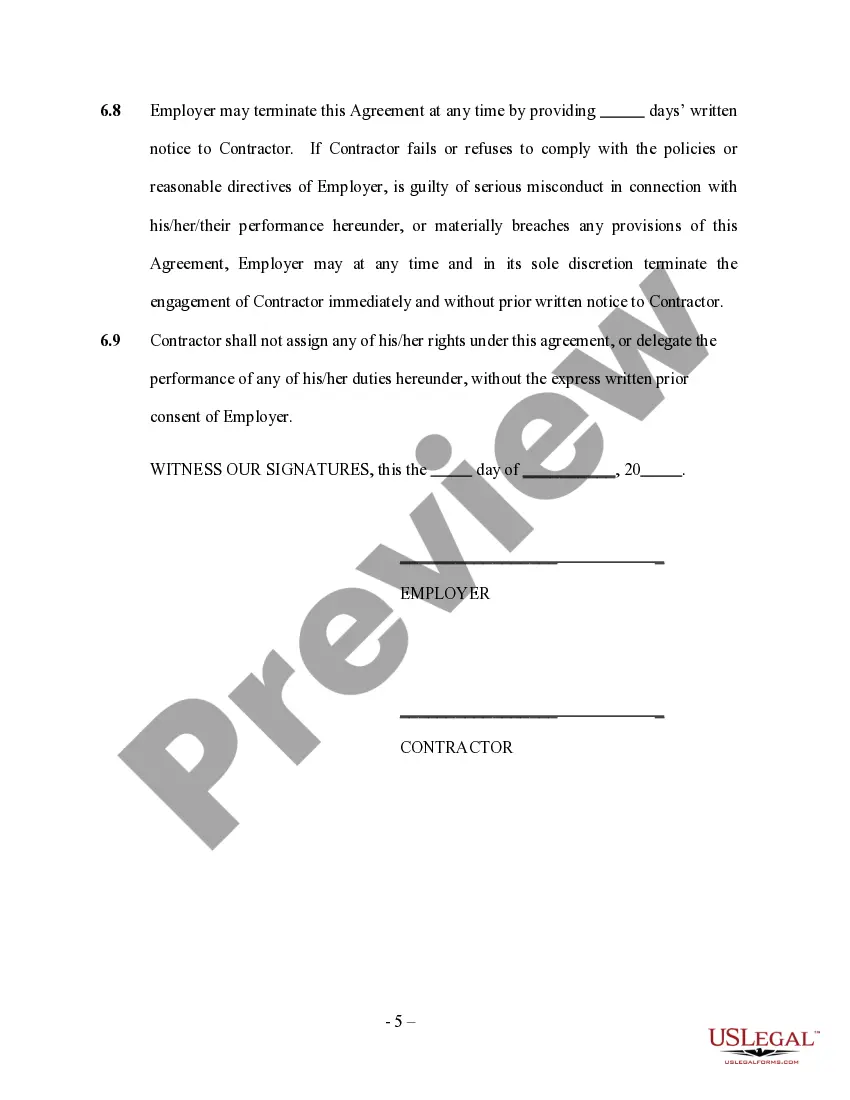
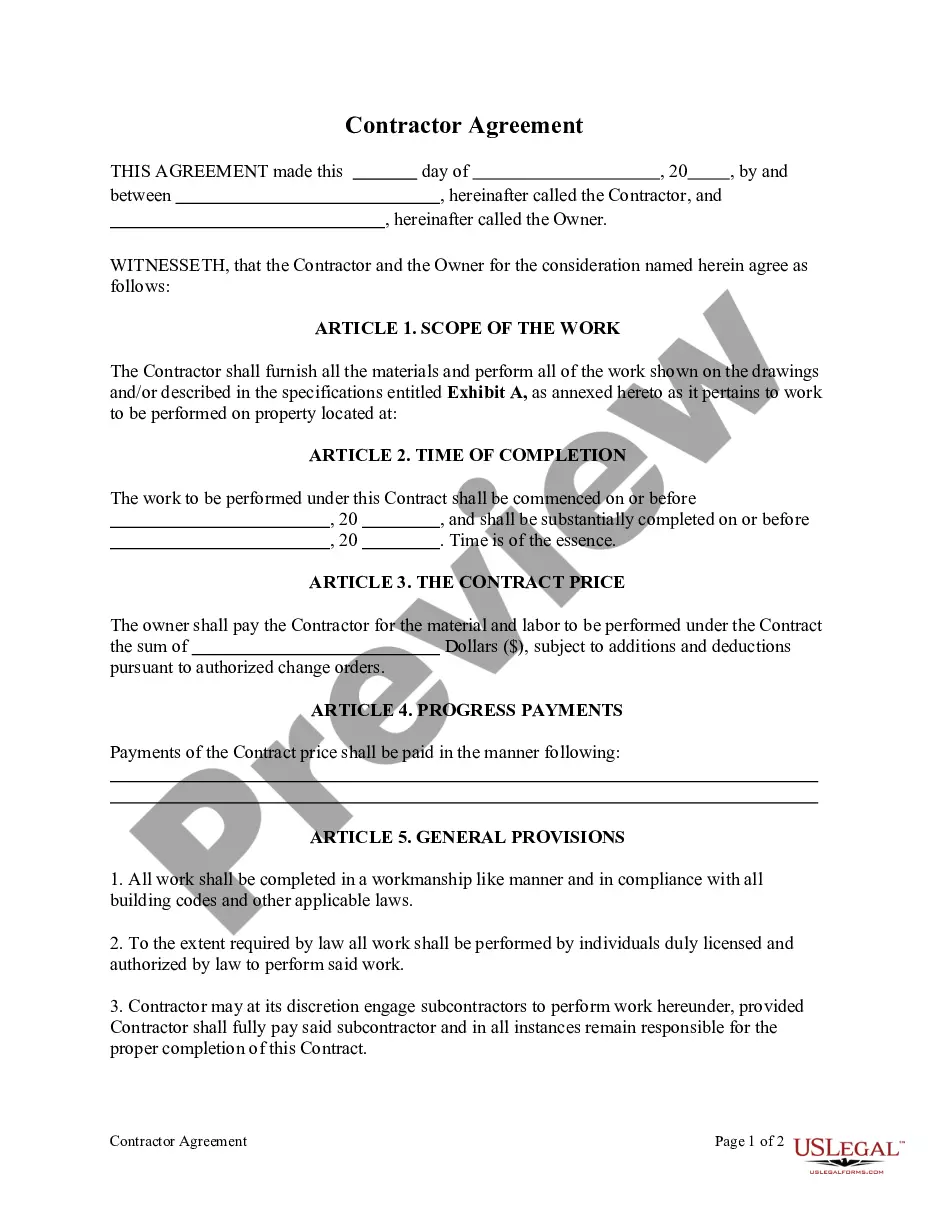
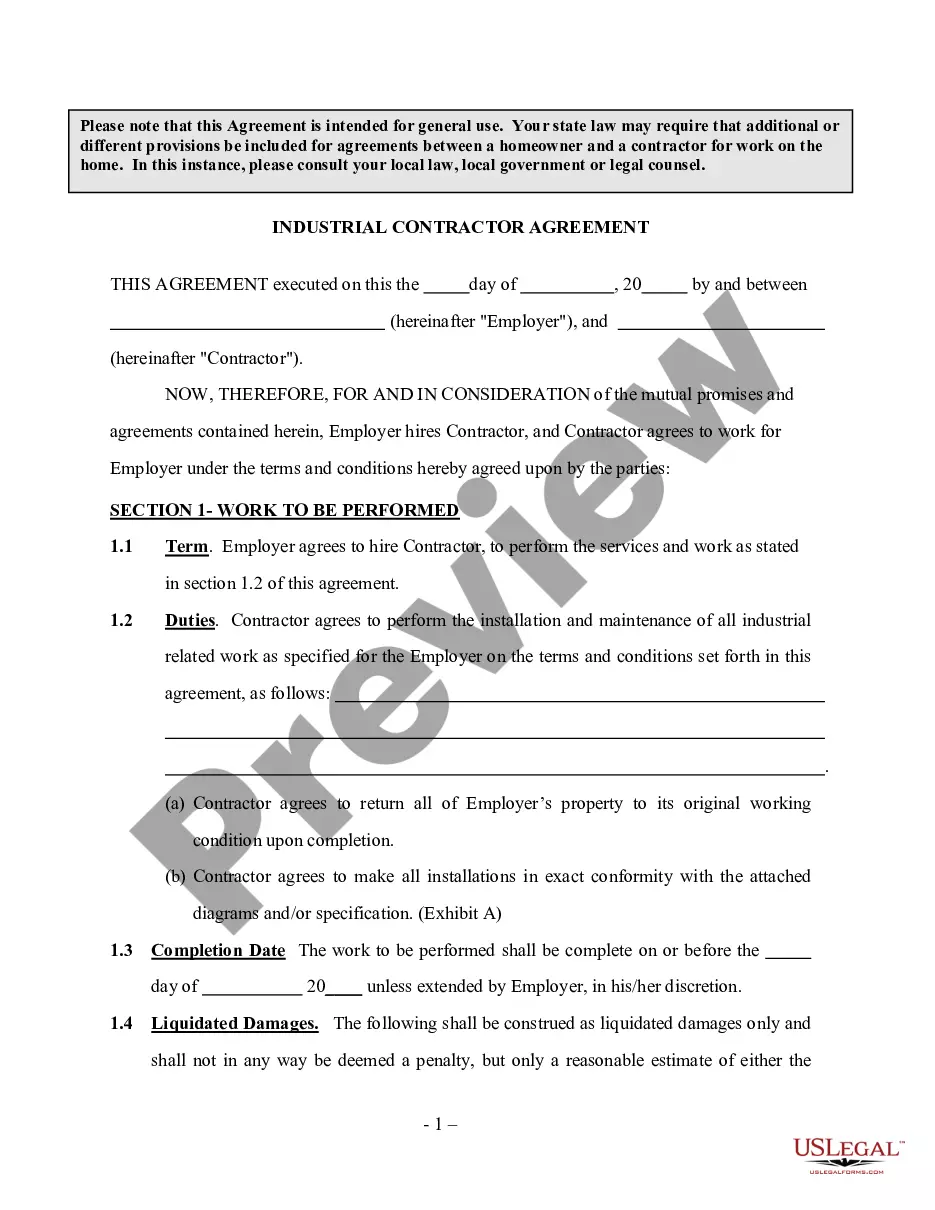
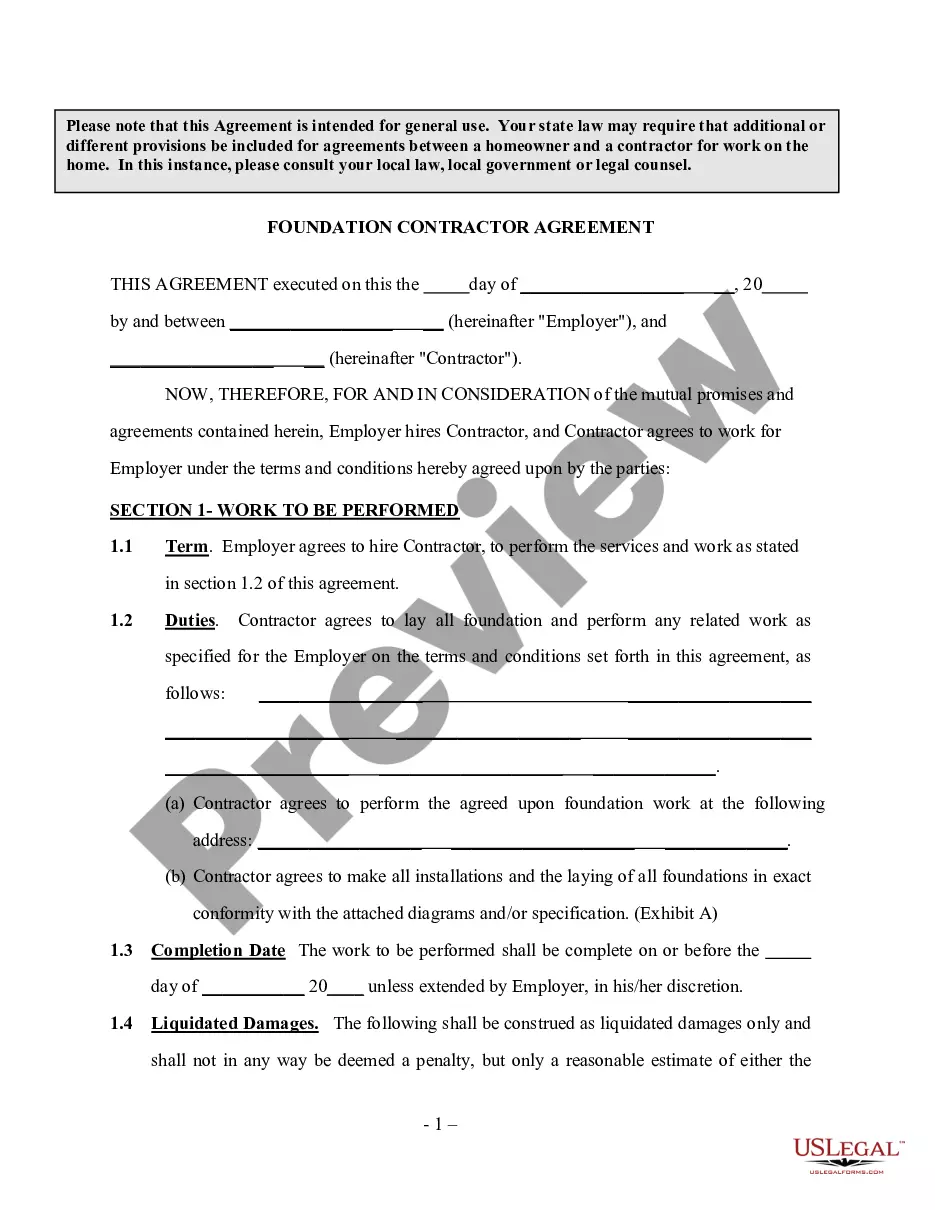
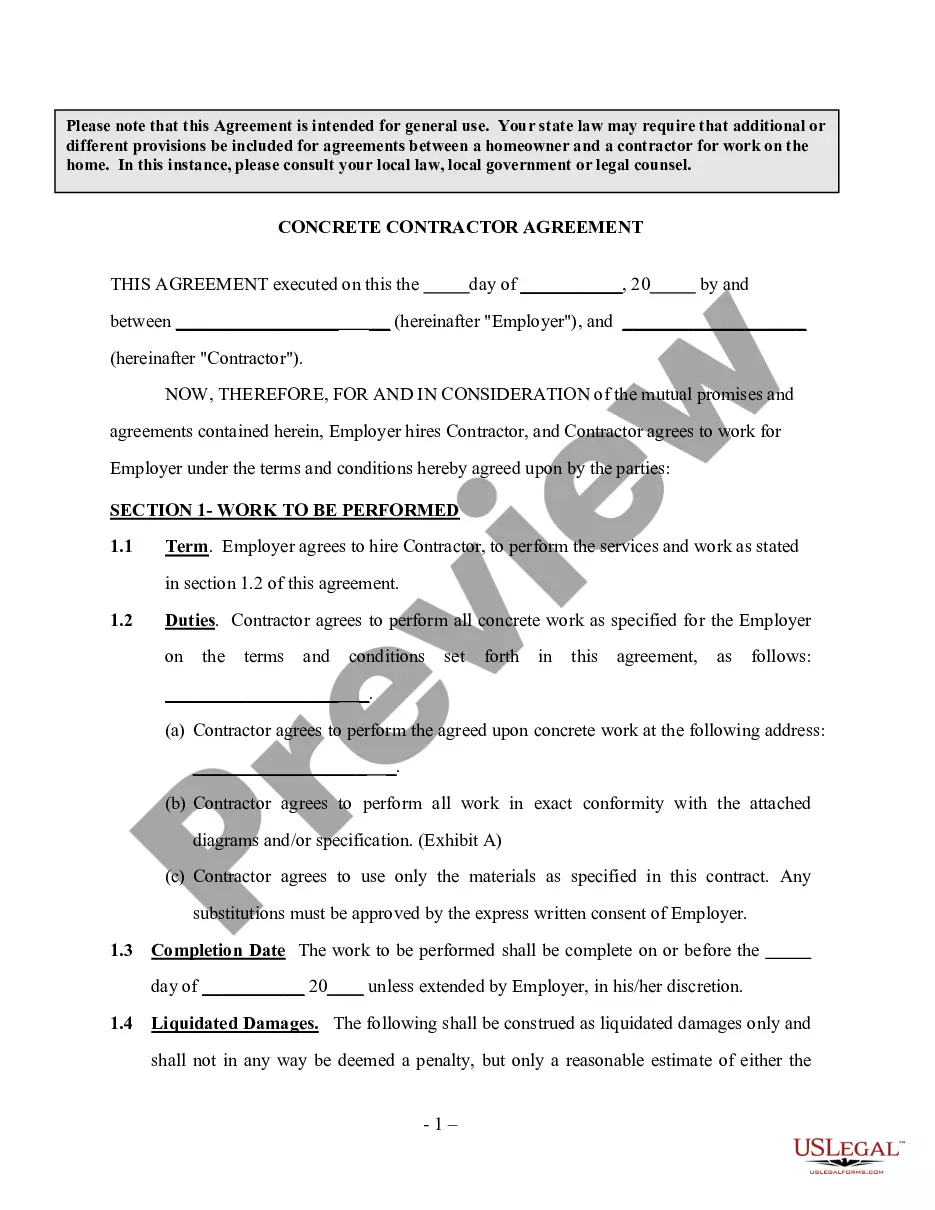
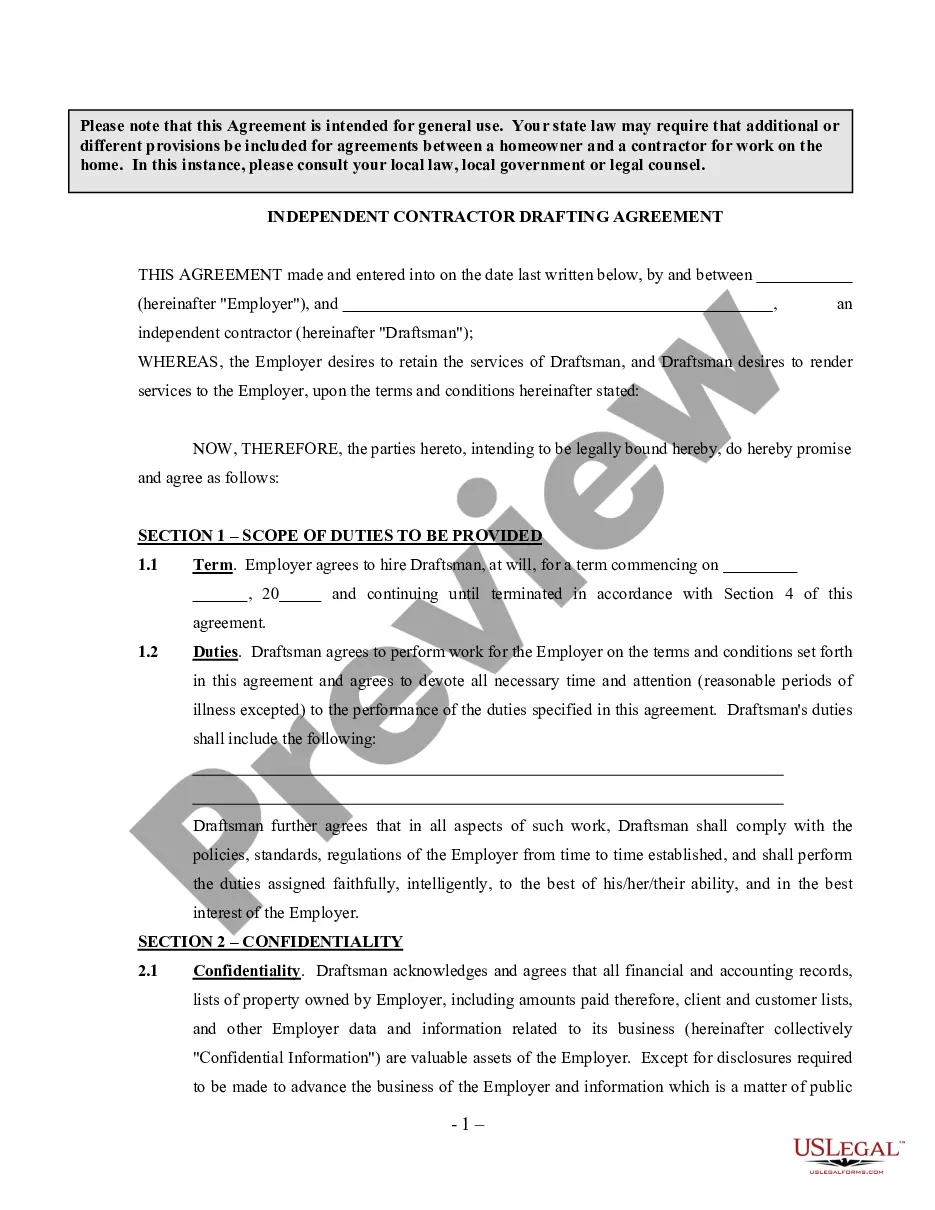
Employer contracts with an independent contractor to provide framework for a project as specified and agreed upon in the contract. Please note that this Agreement is intended for general use. Your state law may require that additional or different provisions be included for agreements between a homeowner and a contractor for work on the home. In this instance, please consult your local law, local government or legal counsel.
Michigan Framework Contractor Agreement - Self-Employed
State:
Multi-State
Control #:
US-INDC-121
Format:
Word;
Rich Text
Instant download
Description
Free preview
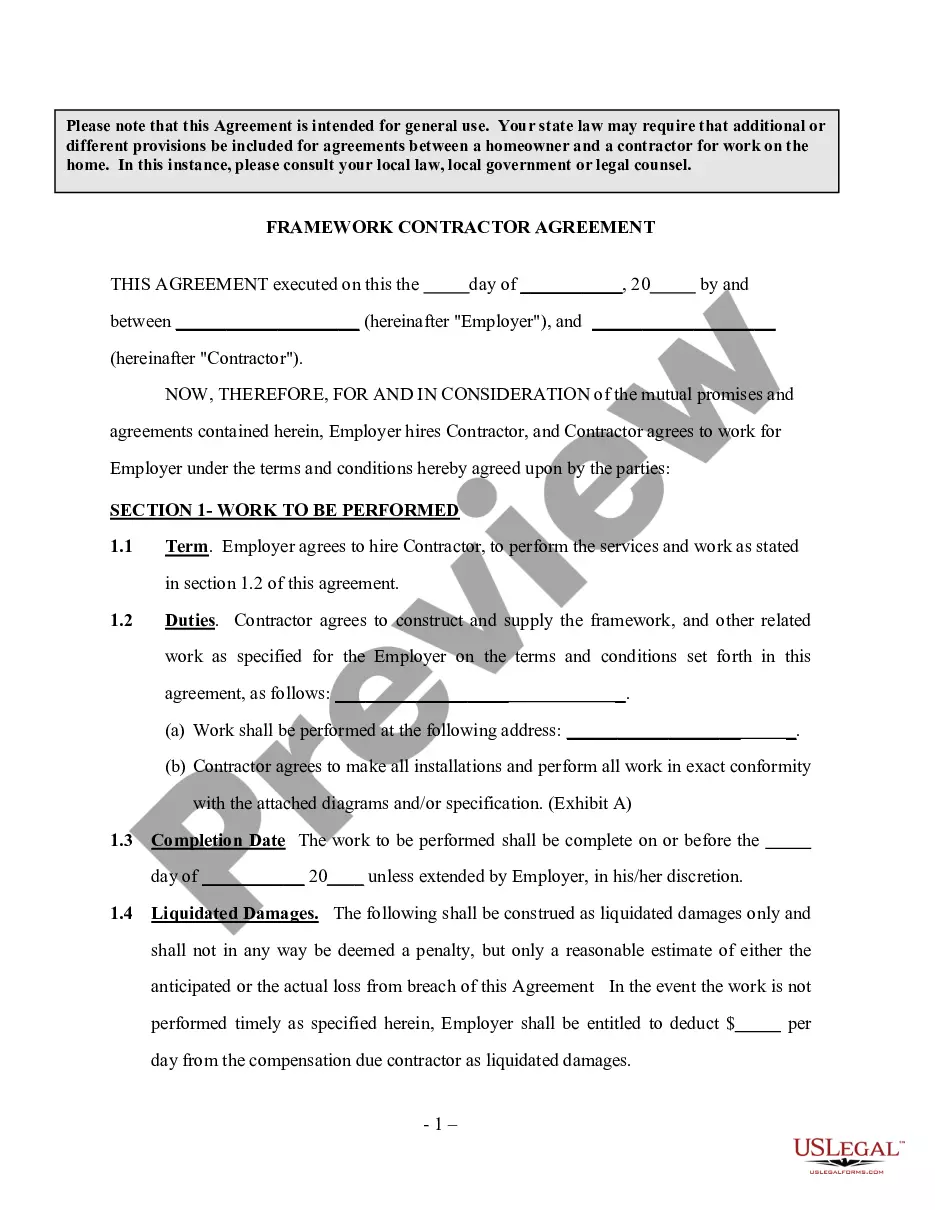
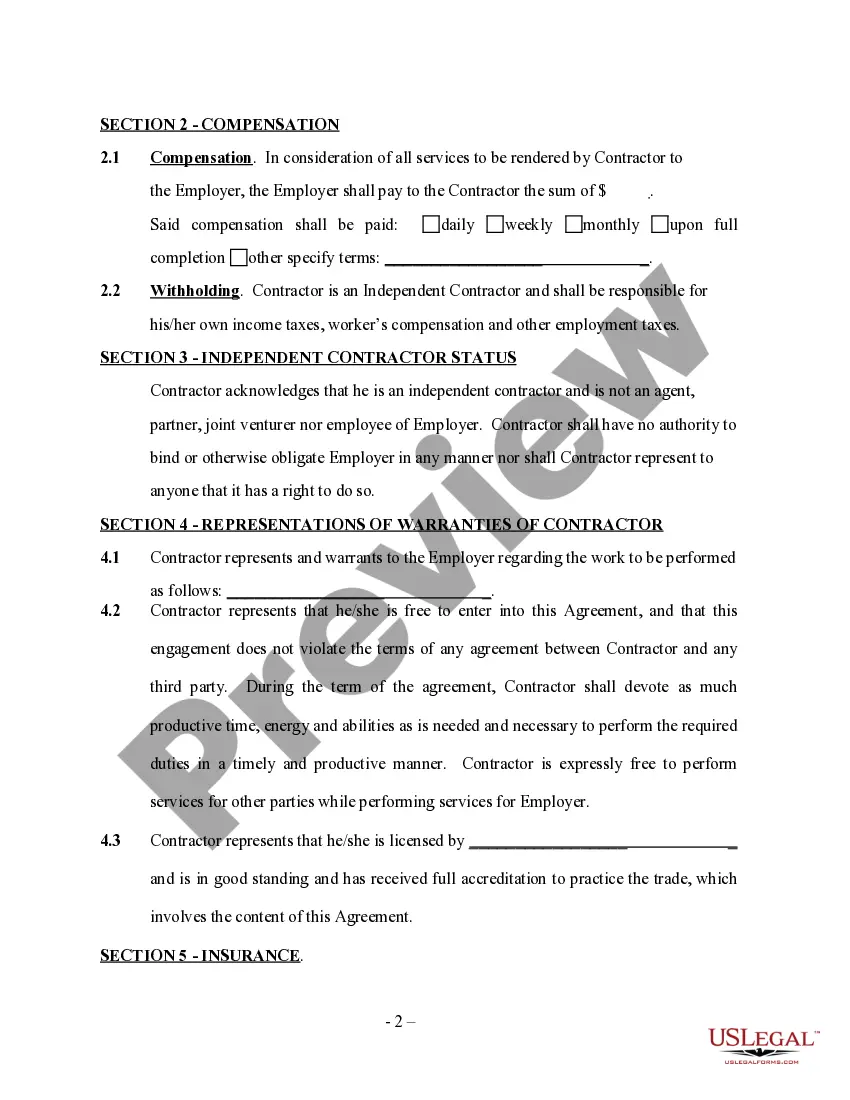
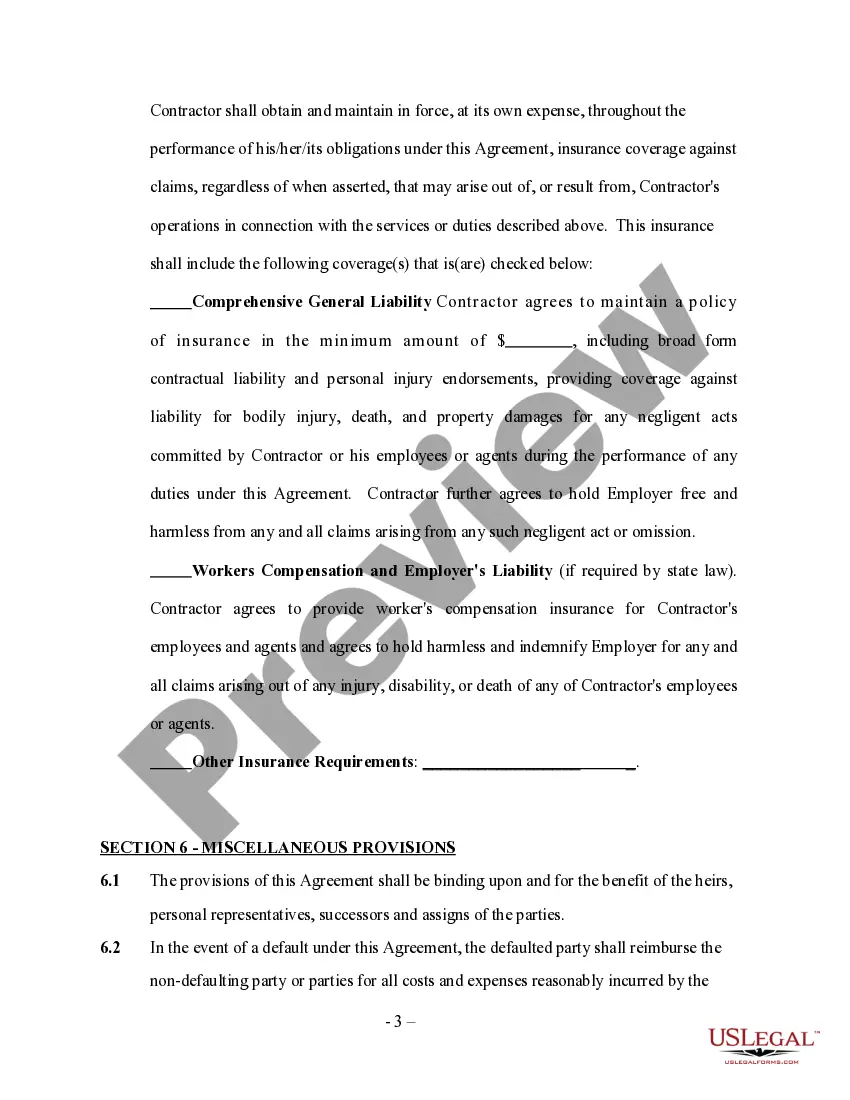
Get your form ready online
Our built-in tools help you complete, sign, share, and store your documents in one place.
Built-in online Word editor
Make edits, fill in missing information, and update formatting in US Legal Forms—just like you would in MS Word.
Export easily
Download a copy, print it, send it by email, or mail it via USPS—whatever works best for your next step.
E-sign your document
Sign and collect signatures with our SignNow integration. Send to multiple recipients, set reminders, and more. Go Premium to unlock E-Sign.
Notarize online 24/7
If this form requires notarization, complete it online through a secure video call—no need to meet a notary in person or wait for an appointment.
Store your document securely
We protect your documents and personal data by following strict security and privacy standards.

Make edits, fill in missing information, and update formatting in US Legal Forms—just like you would in MS Word.

Download a copy, print it, send it by email, or mail it via USPS—whatever works best for your next step.

Sign and collect signatures with our SignNow integration. Send to multiple recipients, set reminders, and more. Go Premium to unlock E-Sign.

If this form requires notarization, complete it online through a secure video call—no need to meet a notary in person or wait for an appointment.

We protect your documents and personal data by following strict security and privacy standards.
Looking for another form?


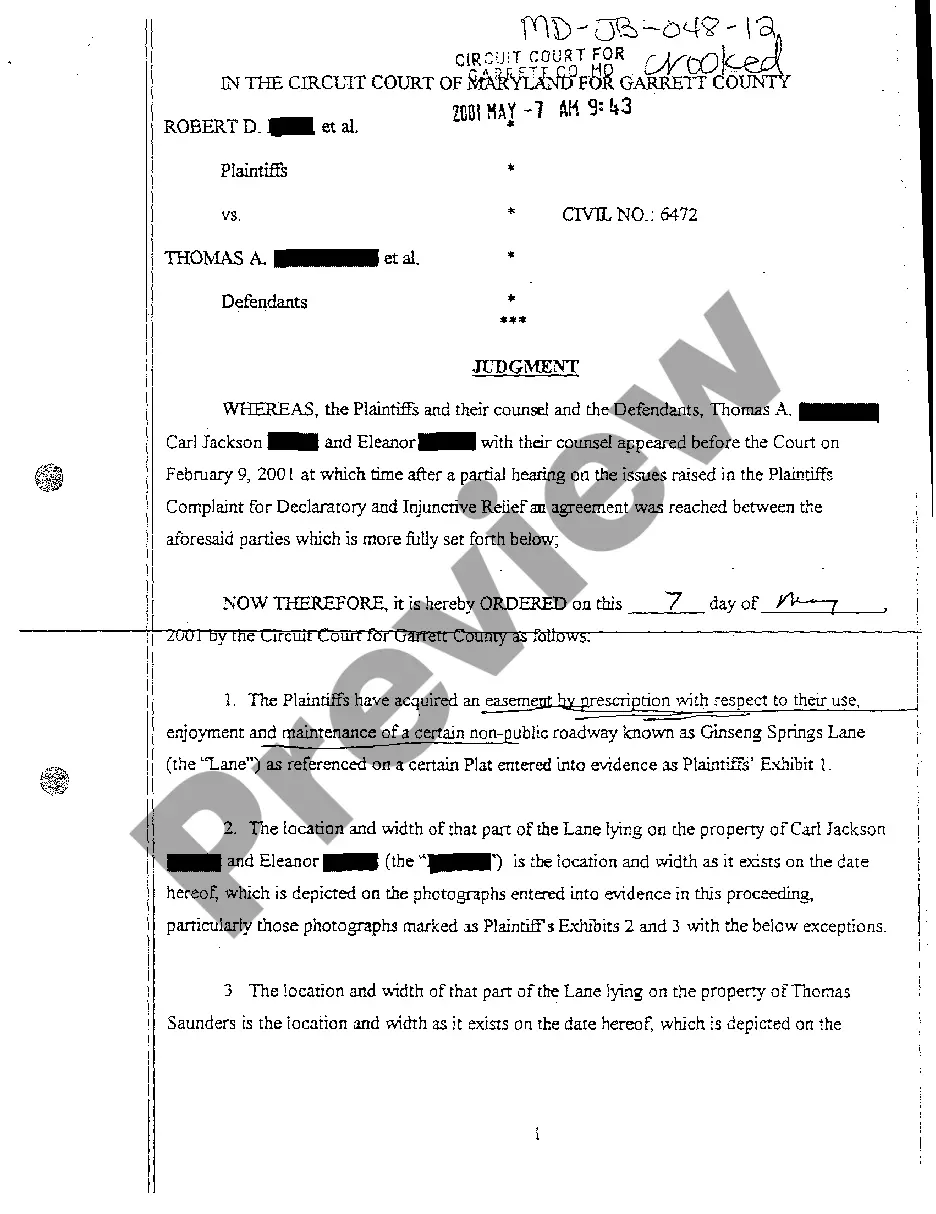
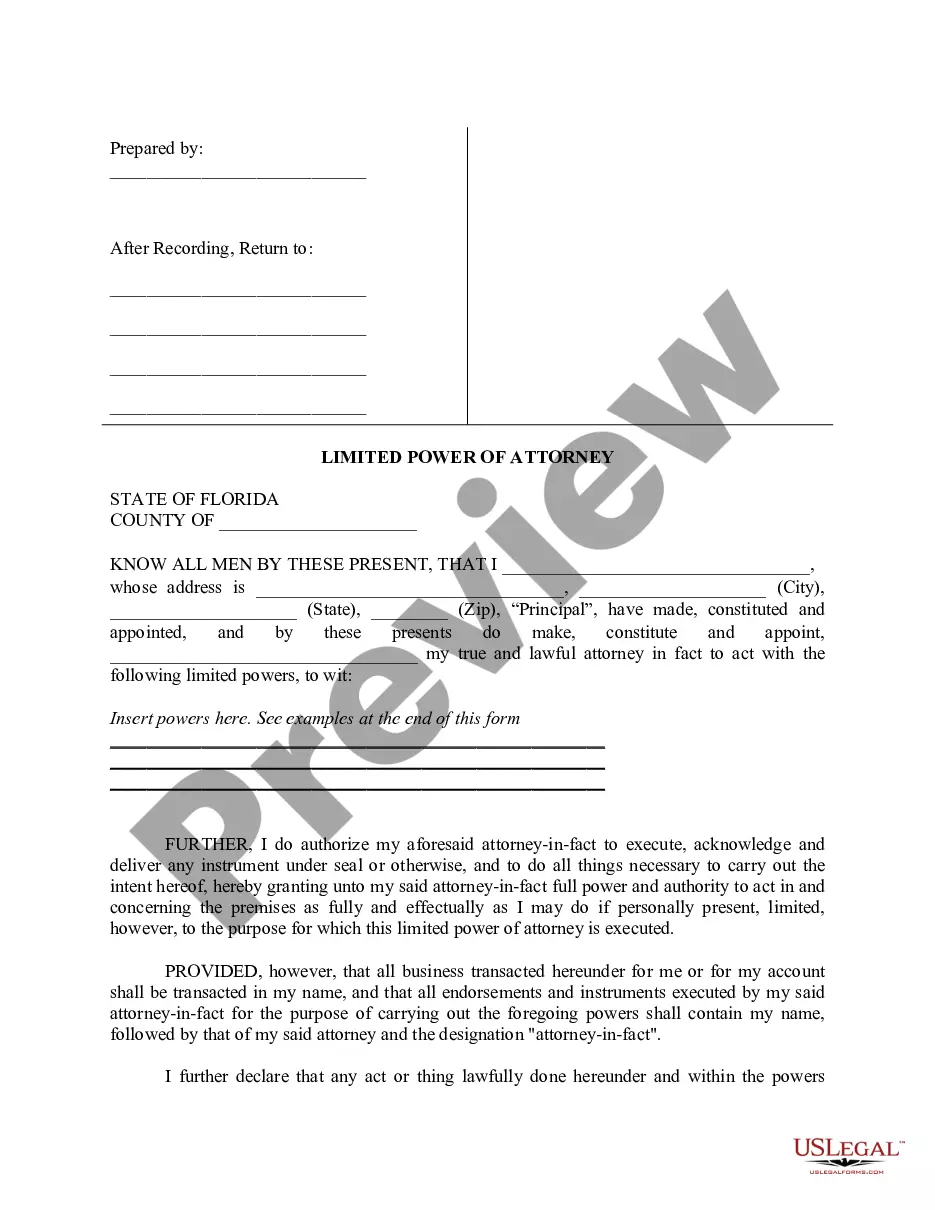

How to fill out Framework Contractor Agreement - Self-Employed?
US Legal Forms - one of the largest collections of authentic forms in the USA - offers a vast array of legitimate document templates that you can download or print.
By utilizing the website, you can discover thousands of forms for commercial and personal purposes, organized by categories, states, or keywords. You can access the latest versions of forms like the Michigan Framework Contractor Agreement - Self-Employed in just moments.
If you already have a membership, Log In and retrieve the Michigan Framework Contractor Agreement - Self-Employed from the US Legal Forms library. The Download button will be visible on every form you access. You can view all previously downloaded forms from the My documents section of your account.
Choose the format and download the form onto your device.
Make modifications. Fill out, edit, print, and sign the downloaded Michigan Framework Contractor Agreement - Self-Employed. Each template you add to your account has no expiration date and belongs to you indefinitely. Therefore, if you wish to download or print another version, simply navigate to the My documents section and click on the form you need. Access the Michigan Framework Contractor Agreement - Self-Employed with US Legal Forms, the most extensive collection of authentic document templates. Utilize thousands of professional and state-specific templates that meet your business or personal needs and requirements.
- If you are using US Legal Forms for the first time, here are simple steps to help you get started.
- Ensure you have chosen the correct form for your location/region.
- Click the Review button to examine the contents of the form.
- Read the form description to confirm you have selected the correct form.
- If the form does not meet your requirements, use the Search field at the top of the screen to find one that does.
- If you are satisfied with the form, confirm your choice by clicking the Get now button. Then, select the pricing plan you prefer and provide your details to create an account.
- Complete the transaction. Use a credit card or PayPal account to finalize the purchase.
Form popularity
FAQ
To set up as a self-employed contractor, start by choosing a suitable business structure, such as a sole proprietorship or LLC. Next, you should obtain any necessary licenses or permits required in Michigan. Additionally, consider using the Michigan Framework Contractor Agreement - Self-Employed to formalize your business relationships and protect your interests. Finally, keep track of your income and expenses to ensure you meet tax obligations and maintain proper financial records.
To write a self-employed contract, begin by identifying the contracting parties and the nature of the work. Be sure to include payment terms and the duration of the contract. It's also wise to highlight any obligations or liabilities. For a well-structured approach, reference the Michigan Framework Contractor Agreement - Self-Employed provided by uslegalforms.
Filling out an independent contractor form involves providing key information such as the contractor's name, tax identification number, and a description of the services offered. It is essential to specify the compensation structure and any tax withholding details. Using the Michigan Framework Contractor Agreement - Self-Employed can guide you through this process effectively.
Writing an independent contractor agreement involves drafting a document that outlines the relationship between the contractor and the client. Begin with the agreement's title, then define the services the contractor will provide, the payment details, and any additional terms. For accuracy and legal compliance, consider using the Michigan Framework Contractor Agreement - Self-Employed format offered by uslegalforms.
To fill out an independent contractor agreement, start by clearly stating the parties involved, including names and addresses. Next, specify the scope of work, payment terms, and deadlines. Importantly, include clauses related to confidentiality and termination. Utilizing the Michigan Framework Contractor Agreement - Self-Employed template can help streamline this process.
An independent contractor must earn at least $600 from a client in a calendar year to receive a 1099 form for tax reporting. This form documents the income received and helps in reporting to the IRS. If you are working under the Michigan Framework Contractor Agreement - Self-Employed, ensure that your clients understand these requirements to avoid tax complications. Knowledge of these thresholds can aid in managing your finances effectively.
The new federal rule on independent contractors emphasizes stricter criteria for determining who qualifies as an independent contractor versus an employee. This distinction impacts tax obligations and benefits eligibility. For individuals working under the Michigan Framework Contractor Agreement - Self-Employed, being informed about these changes is vital for proper classification. Utilizing a reputable resource can guide you through this evolving landscape.
The new federal rule for independent contractors centers around providing more clarity regarding classification and benefits. This rule aims to ensure fair treatment and appropriate benefits for workers. Understanding the implications of the Michigan Framework Contractor Agreement - Self-Employed can help you navigate these changes effectively. Staying aware of this new legislation ensures that you meet compliance requirements and protect your rights.
employed contract should include essential details such as project scope, payment terms, deadlines, and confidentiality clauses. It's crucial to define the expectations and responsibilities clearly to avoid disputes. Incorporating a Michigan Framework Contractor Agreement SelfEmployed can simplify this process, ensuring that you cover all necessary points while adhering to Michigan legal standards. A wellstructured contract helps foster a positive working relationship.
In Michigan, an independent contractor agreement specifies the rights and obligations of the contractor and the hiring party. This contract is essential for clarifying the working relationship and acknowledging that the contractor is not an employee. The Michigan Framework Contractor Agreement - Self-Employed provides a comprehensive framework for creating this essential document. Utilizing this agreement ensures compliance with Michigan laws and safeguards both parties involved.