Michigan Commercial Lease Agreement
Description
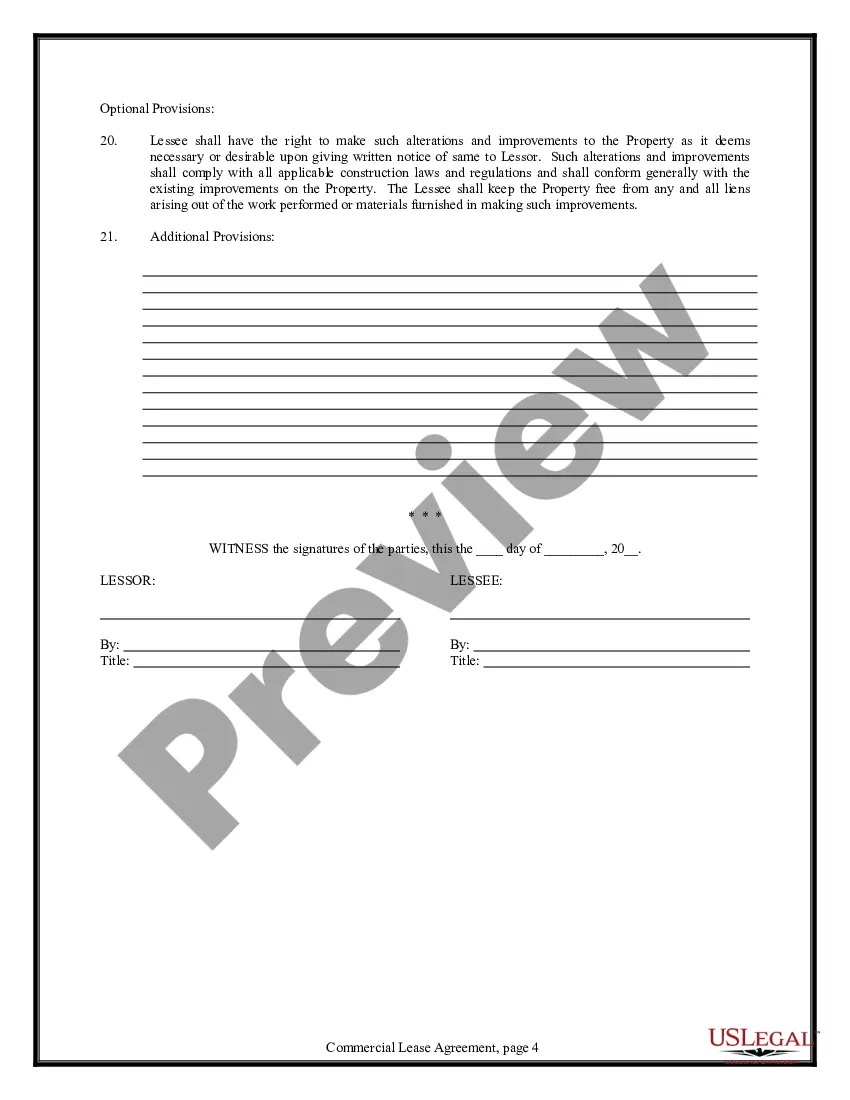
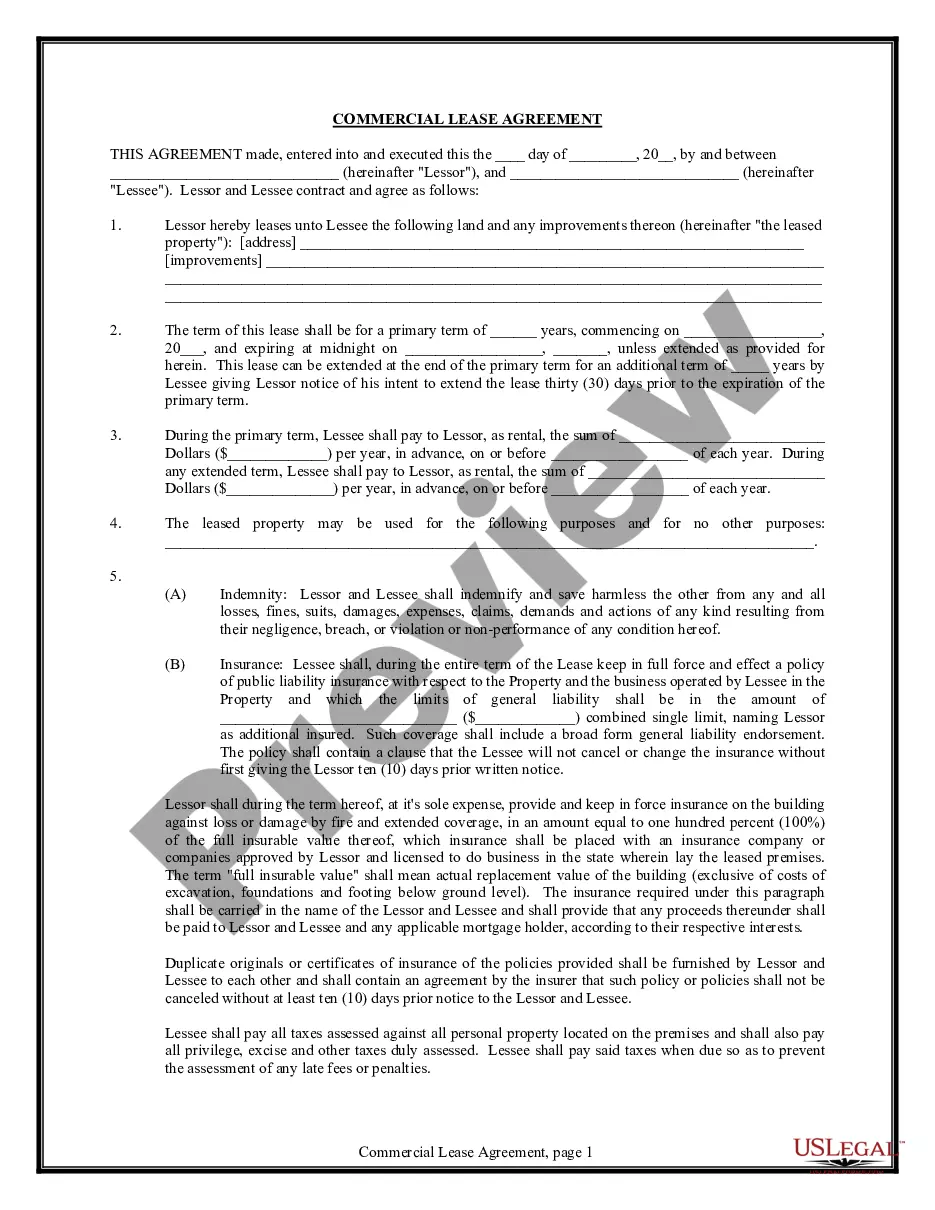
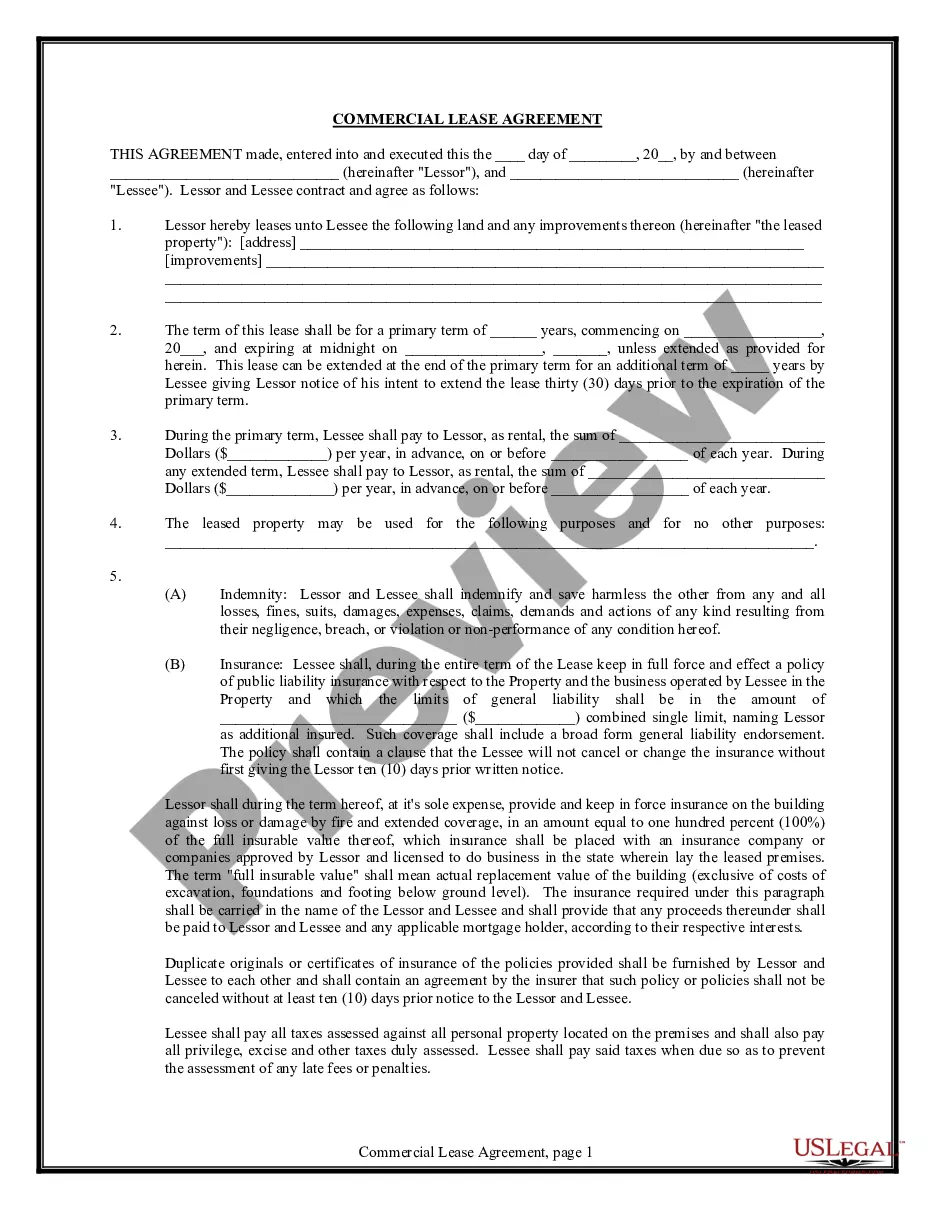
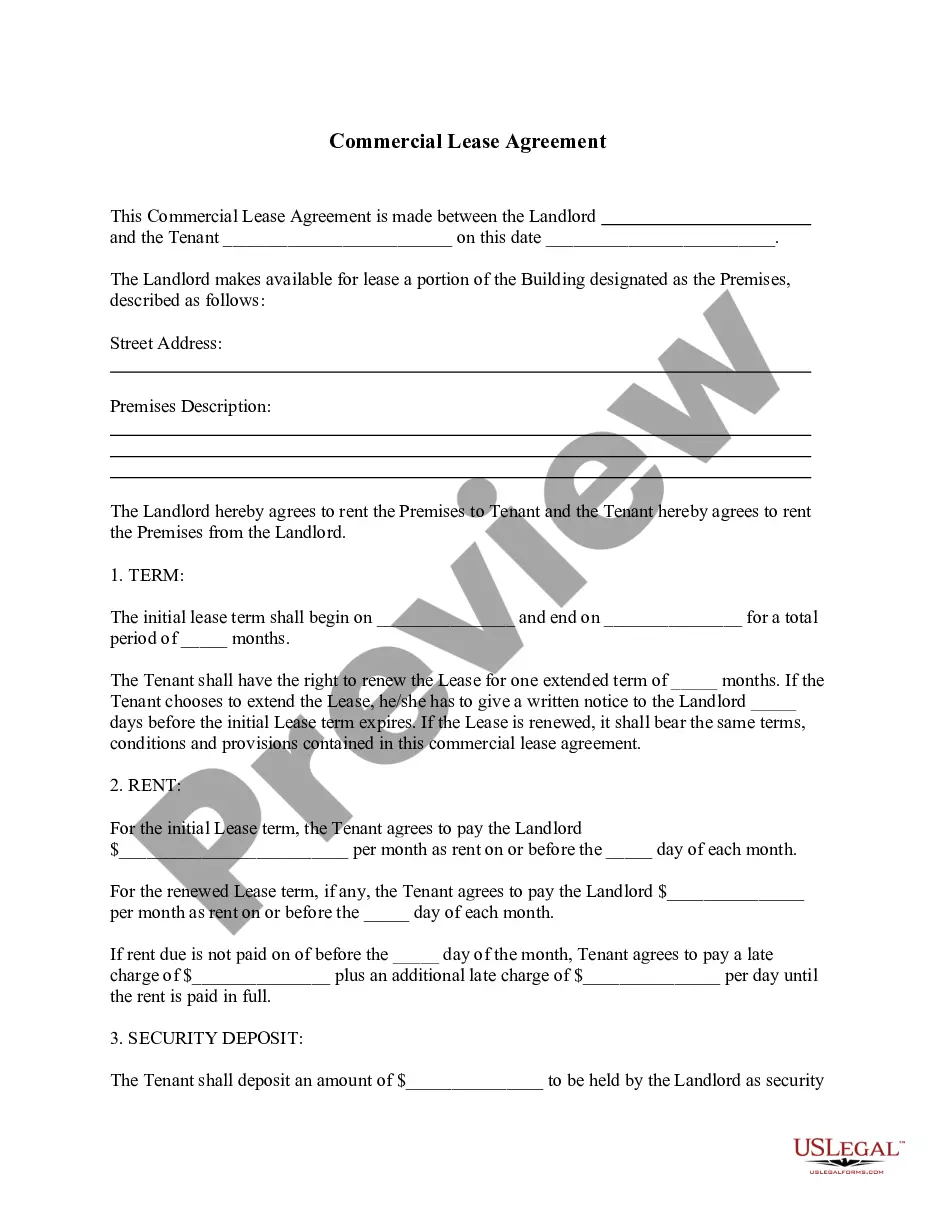
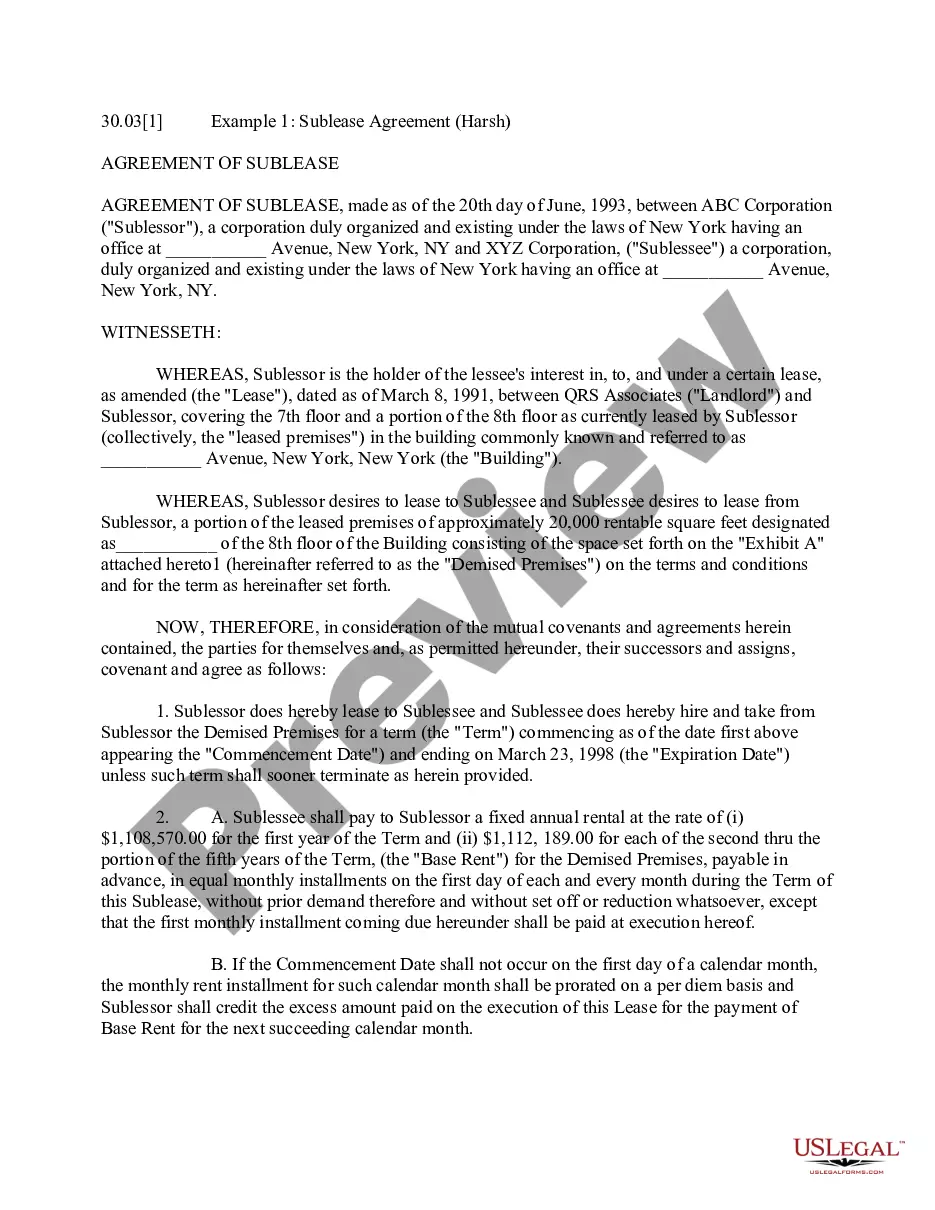
Get your form ready online
Our built-in tools help you complete, sign, share, and store your documents in one place.
Make edits, fill in missing information, and update formatting in US Legal Forms—just like you would in MS Word.
Download a copy, print it, send it by email, or mail it via USPS—whatever works best for your next step.
Sign and collect signatures with our SignNow integration. Send to multiple recipients, set reminders, and more. Go Premium to unlock E-Sign.
If this form requires notarization, complete it online through a secure video call—no need to meet a notary in person or wait for an appointment.
We protect your documents and personal data by following strict security and privacy standards.

Make edits, fill in missing information, and update formatting in US Legal Forms—just like you would in MS Word.

Download a copy, print it, send it by email, or mail it via USPS—whatever works best for your next step.

Sign and collect signatures with our SignNow integration. Send to multiple recipients, set reminders, and more. Go Premium to unlock E-Sign.

If this form requires notarization, complete it online through a secure video call—no need to meet a notary in person or wait for an appointment.

We protect your documents and personal data by following strict security and privacy standards.
Looking for another form?
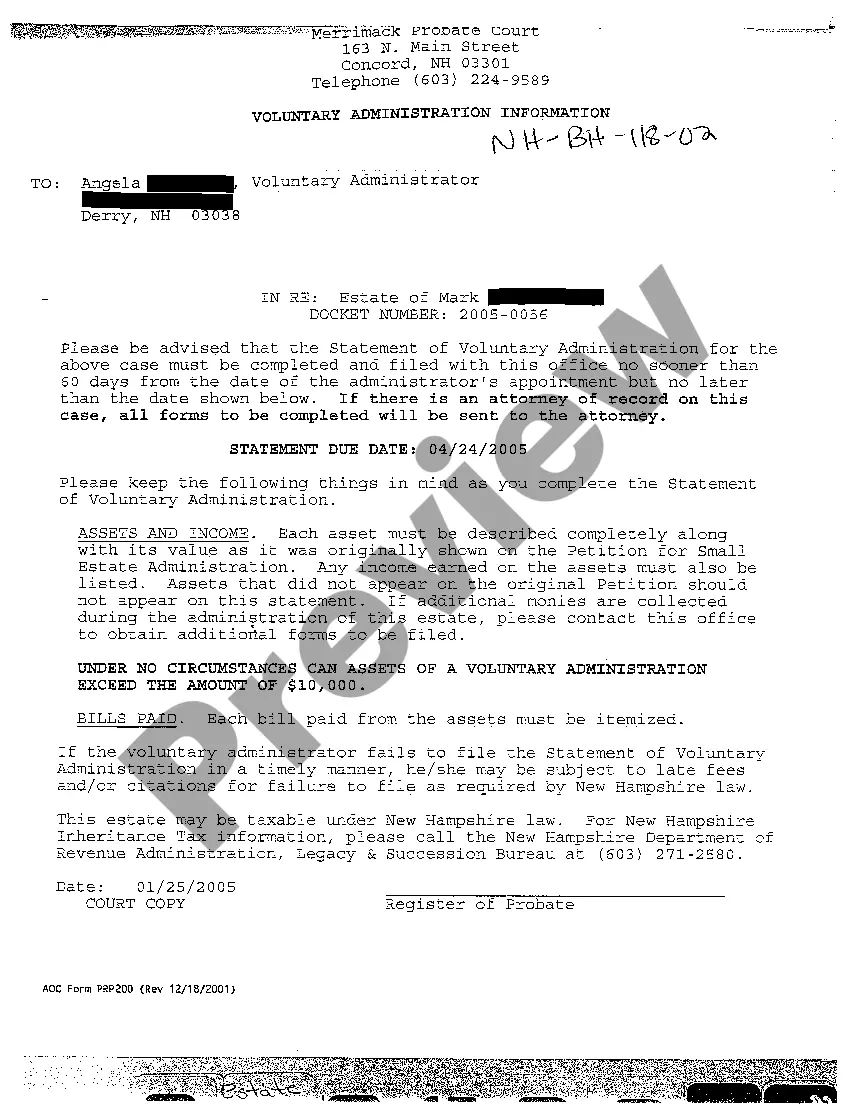
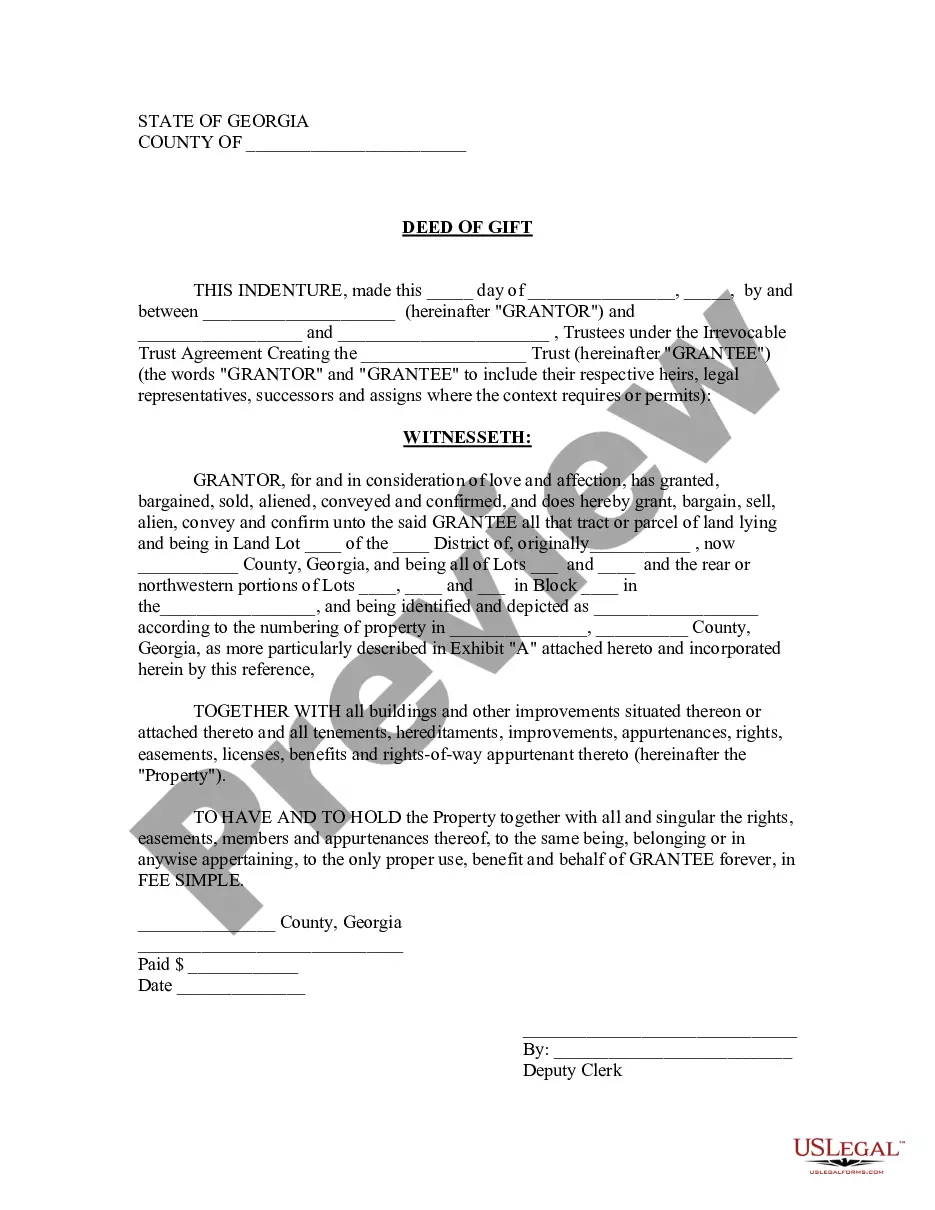
How to fill out Commercial Lease Agreement?
If you are looking to finalize, acquire, or print authorized document templates, utilize US Legal Forms, the leading collection of legal forms available online.
Take advantage of the site's straightforward and user-friendly search feature to find the documents you require.
Various templates for commercial and personal uses are organized by categories and states, or by keywords.
Step 4. Once you have found the form you need, select the Get now button. Choose your preferred pricing plan and provide your information to register for an account.
Step 5. Complete the transaction. You may use your credit card or PayPal account to finalize the payment.
- Utilize US Legal Forms to find the Michigan Commercial Lease Agreement in just a few clicks.
- If you are already a US Legal Forms client, Log In to your account and click the Download button to get the Michigan Commercial Lease Agreement.
- You can also access forms you have previously downloaded from the My documents section of your account.
- If this is your first time using US Legal Forms, follow the instructions listed below.
- Step 1. Make sure you have selected the appropriate form for your specific area/location.
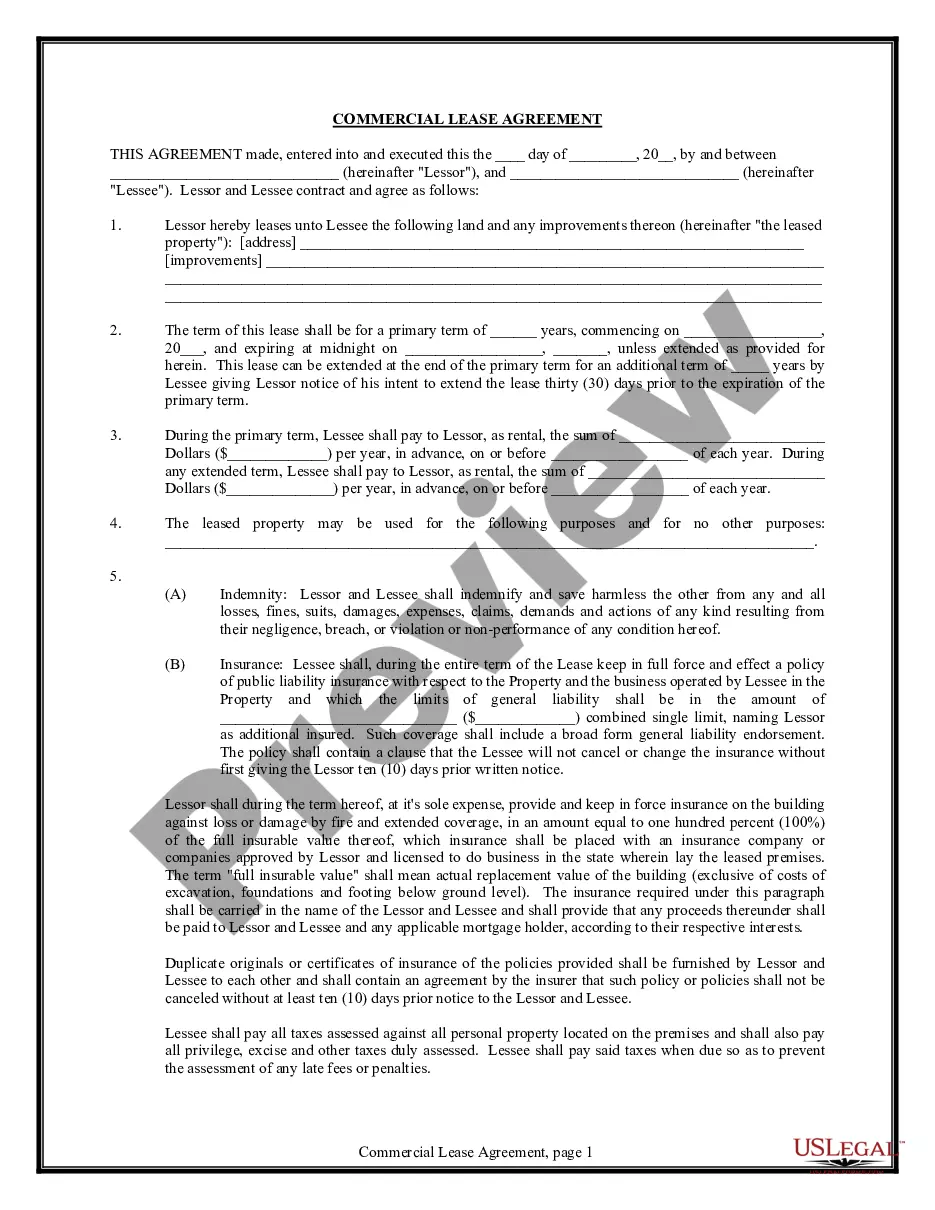
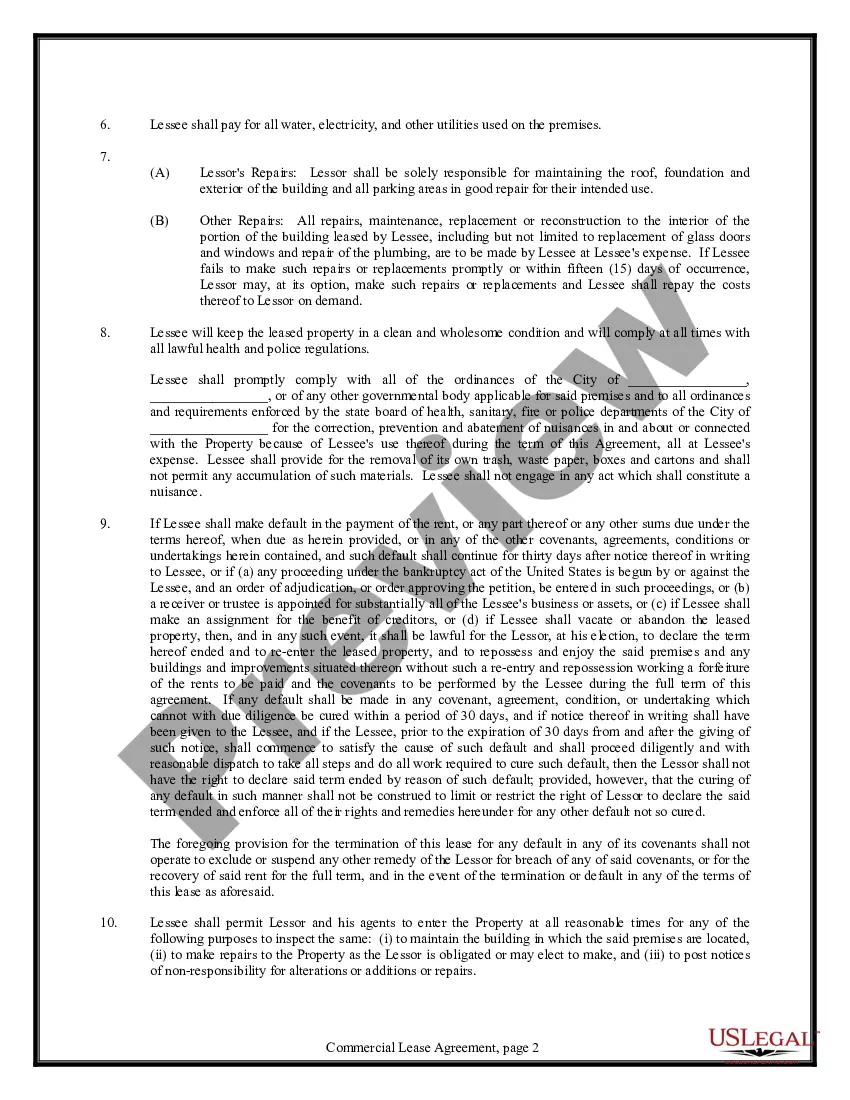
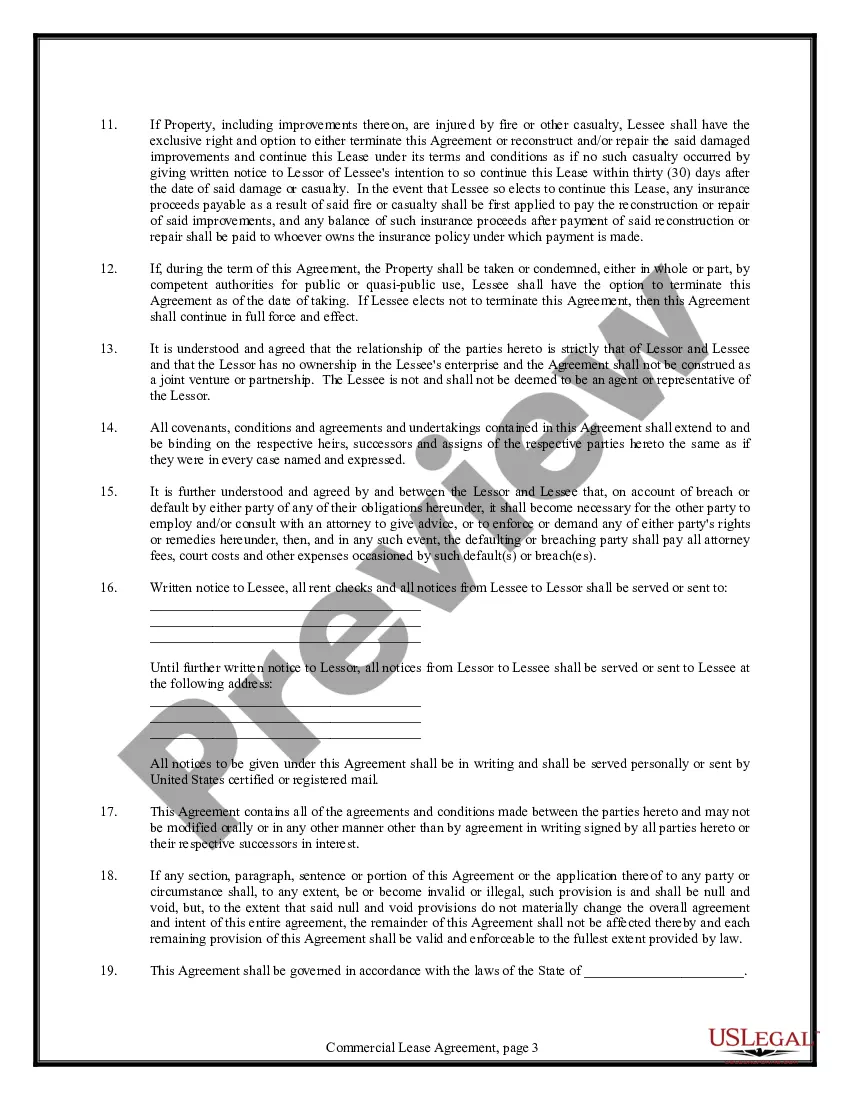
- Step 2. Use the Preview option to check the form's details. Be sure to read through the summary.
- Step 3. If you are not content with the form, utilize the Search field at the top of the page to find other versions of the legal form template.
Form popularity
FAQ
Both parties shared an assumption, fundamental to the contract, which was wrong at the point in time the contract was entered into; the wrong assumption would cause the contract to be radically different from that which the parties believed to be the case at the point in time it was entered into; and.
There are three categories of leases when it comes to commercial real estate: Gross Lease (also known as Full Service Lease), Net Lease, and Modified Gross Lease. The main similarity among these leases is that they all provide a base rent with variations around who pays for which operational expense.
A Commercial Tenancy Agreement, also known as a Business Lease or a Commercial Lease, is used when the owner of a business property wishes to rent space to another business owner. Both parties may either be individuals or corporations.
No, lease agreements do not need to be notarized in Michigan. The lease agreement is legally binding whether it is notarized or not. Landlords and tenants can choose to have the lease notarized if they wish, but it is not required.
The responsibilities of landlord and tenant will be clearly set out in the lease. Normally commercial landlords are responsible for any structural repairs such as foundations, flooring, roof and exterior walls, and tenants are responsible for non-structural repairs such as air conditioning or plumbing.
The Michigan Truth in Renting Act regulates residential leases prohibiting certain clauses or provisions and prescribing penalties. A provision or clause in a lease that violates the Truth in Renting Act is void.
Commercial tenants may have the protection of the Landlord and Tenant Act 1954. The Act grants Security of Tenure to tenants who occupy premises for business purposes. The tenancy will continue after the contractual termination date until it is ended in one of the ways specified by the Act.
Commercial Tenants:Tenants must pay their rent on the due date agreed on in the lease with the landlord. Tenants cannot hold back rent because a landlord has failed to fulfill their obligations as outlined in the lease. Tenants must fulfill their obligations as outlined by the lease agreement.
Landlords are normally responsible for any structural repairs needed to maintain commercial properties. This includes exterior walls, foundations, flooring structure and the roof.
Your landlord is responsible for any aspects of health and safety written in the lease (eg in communal areas). You must take reasonable steps to make sure your landlord fulfils these responsibilities. If you get into a dispute with your landlord, you need to keep paying rent - otherwise you may be evicted.