Scrivener's Error in Deed
About this form
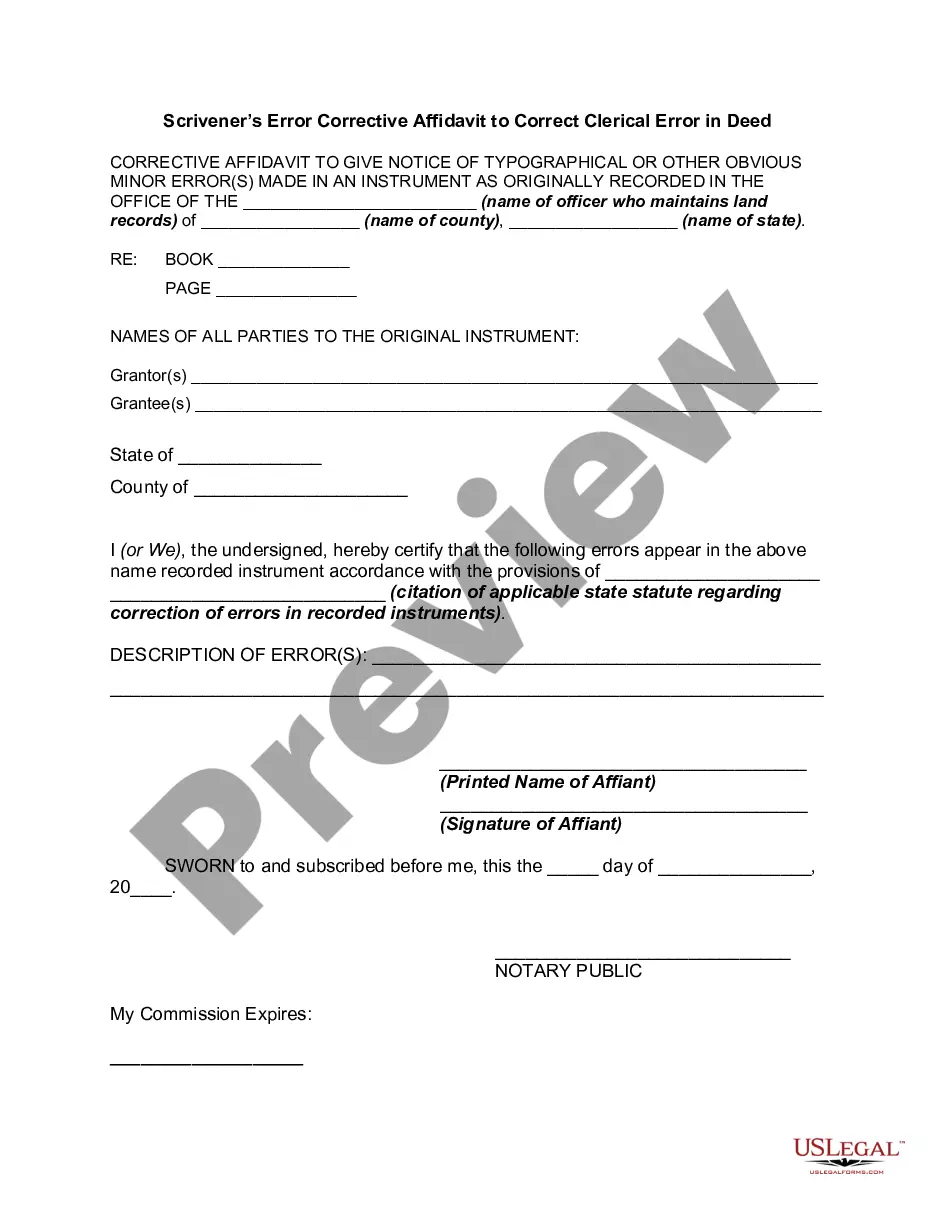
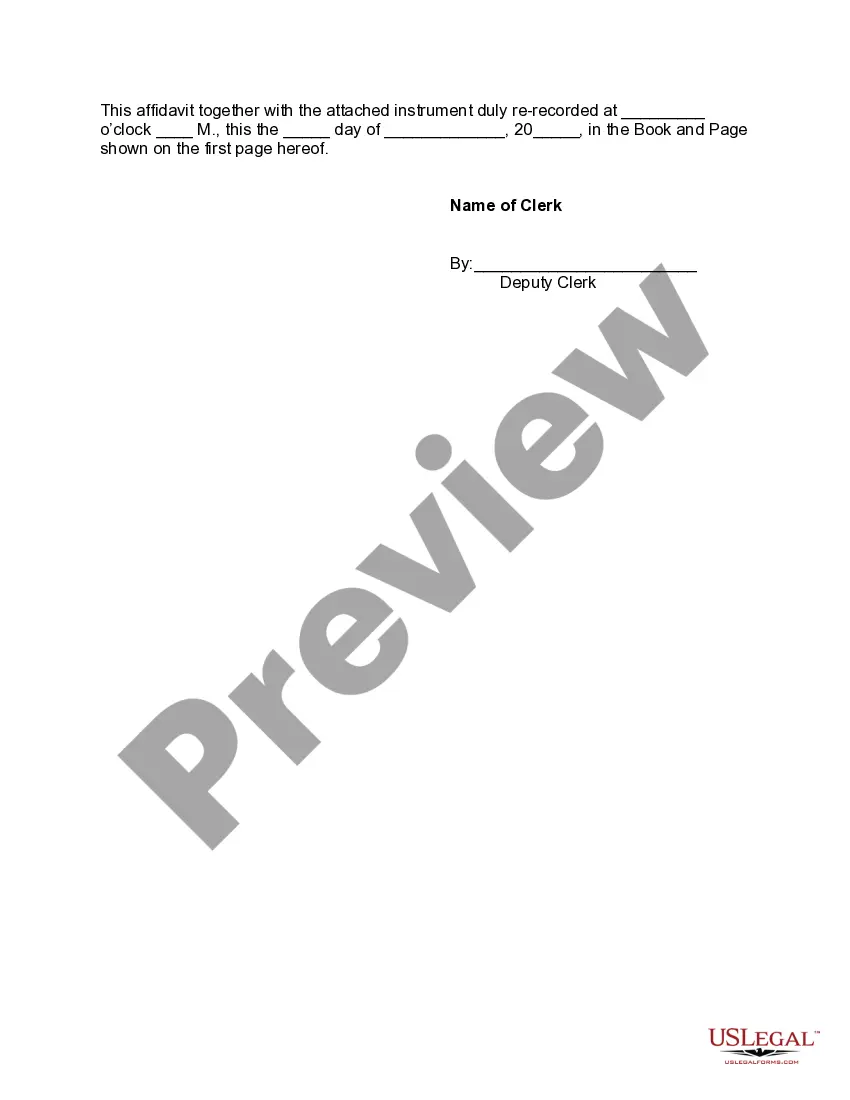
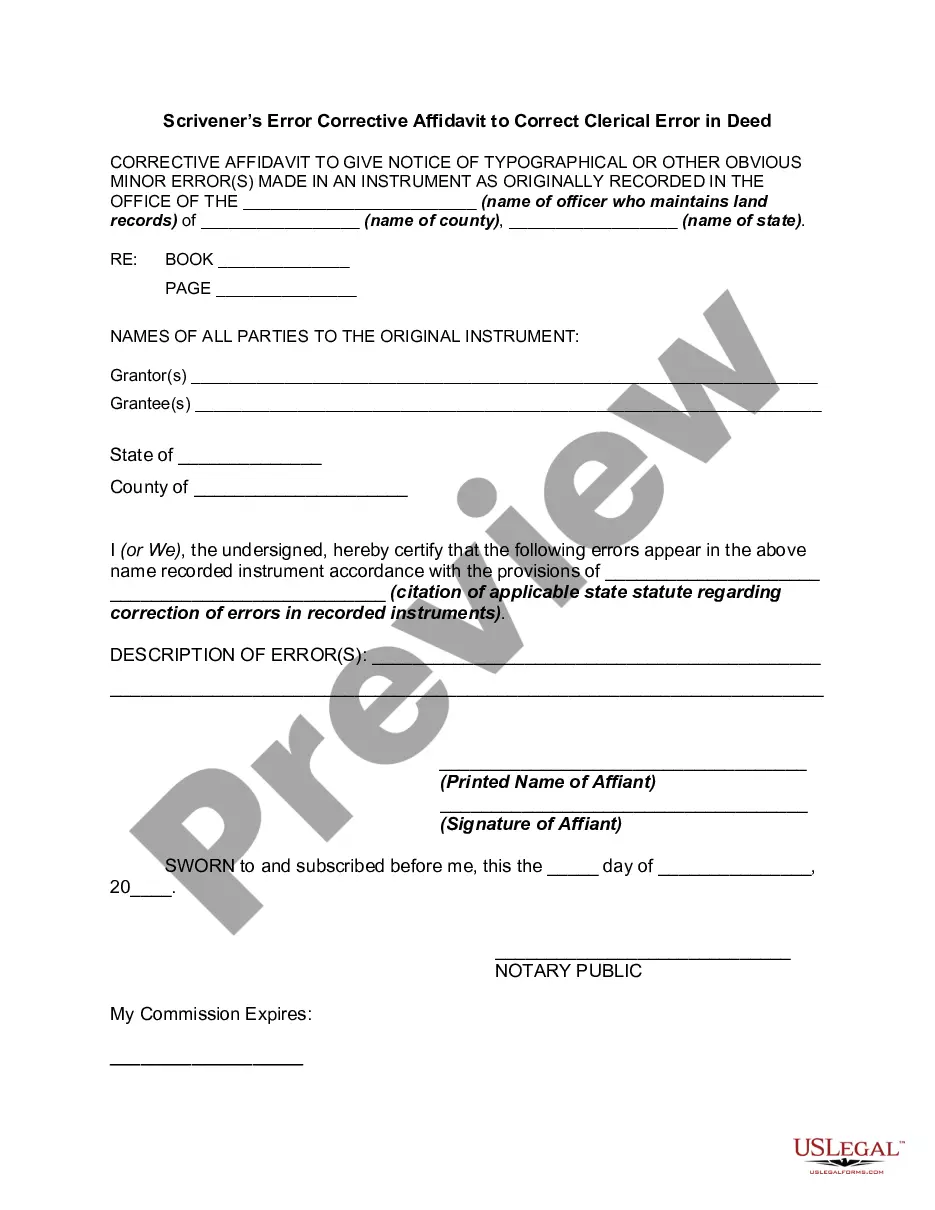
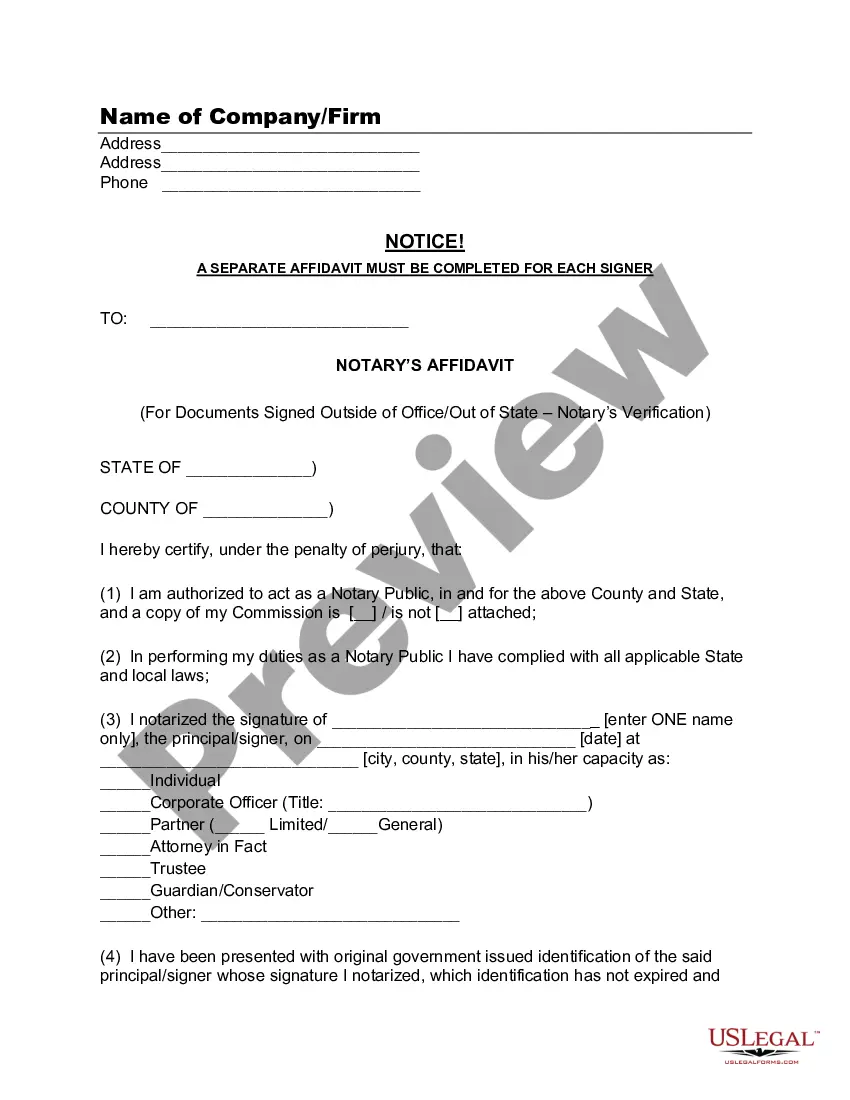
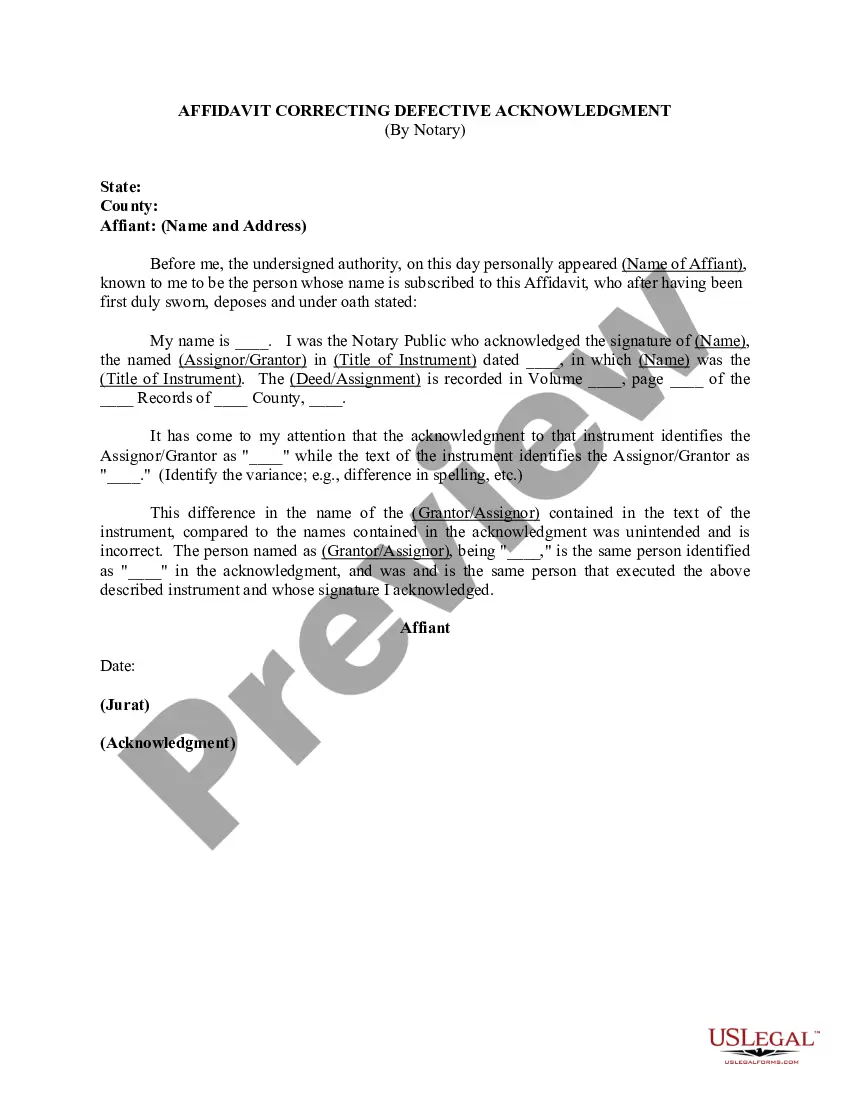
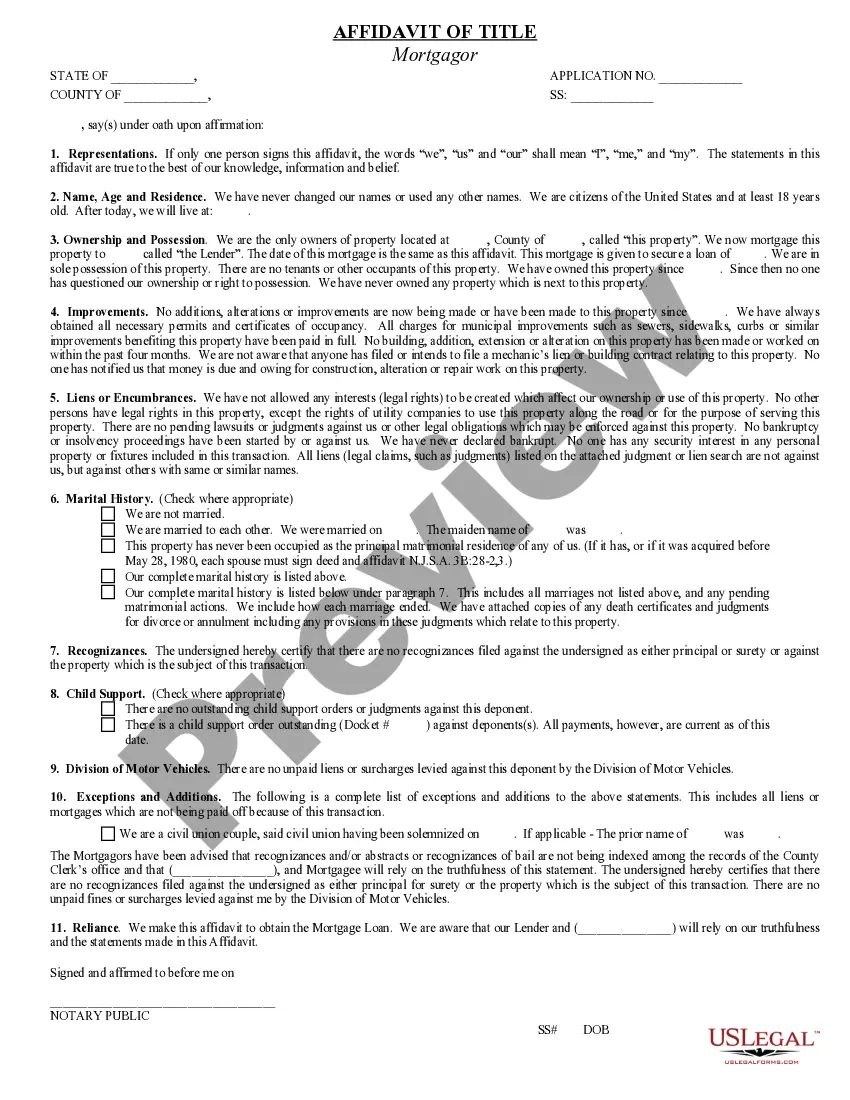
A Scrivener's Error in Deed form is a legal affidavit that corrects typographical or minor errors in documents regarding property transactions. This form serves to provide notice of such errors in an instrument as originally recorded, differentiating it from other correction forms by specifically addressing clear mistakes due to oversight. A properly executed scrivener's affidavit ensures the correct information is officially recognized, which helps avoid potential legal disputes regarding property ownership.
Form components explained
- Name of the officer maintaining land records.
- Name of the county and state where the original instrument was recorded.
- Book and page number of the recorded document.
- Details of all parties involved, including grantors and grantees.
- Description of the identified errors in the recorded instrument.
- Printed name and signature of the affiant.
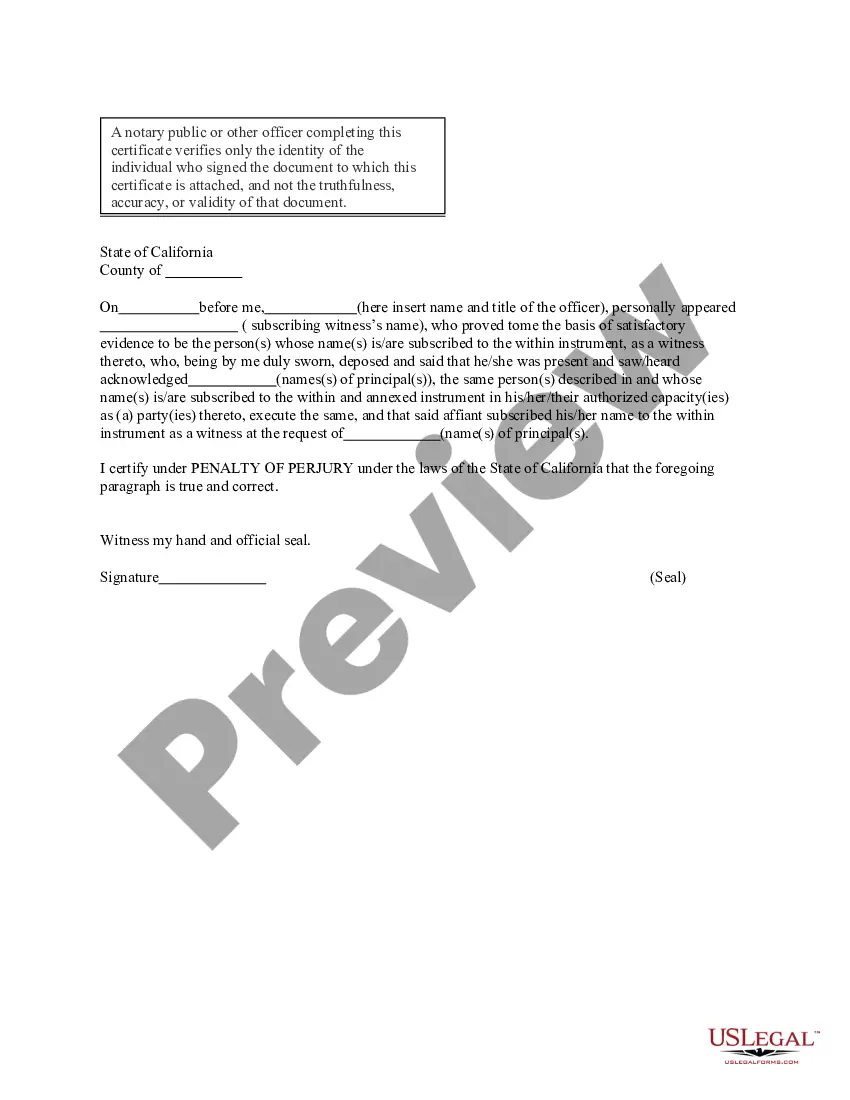
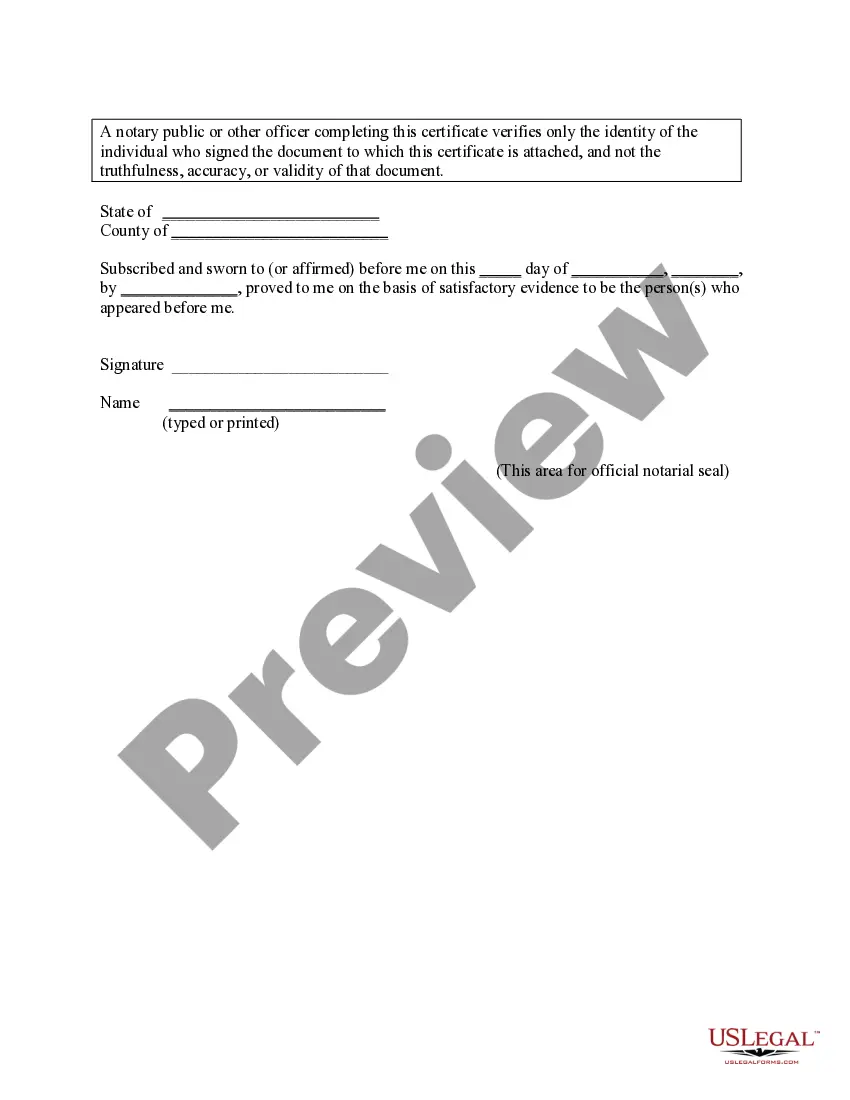
- Notary public acknowledgment and commission expiration date.

Common use cases
This form should be used when a party discovers typographical or minor errors after a deed has been recorded, such as misspelled names, incorrect property descriptions, or other obvious inaccuracies. It is essential to address these errors to ensure that the records accurately reflect the legal rights to the property. Using this form can prevent complications when future transactions or legal actions arise regarding the property.
Who this form is for
This form is intended for:
- Property owners who have discovered errors in their recorded deeds.
- Grantors or grantees involved in property transactions.
- Attorneys representing clients in real estate matters.
- Individuals seeking to correct minor, obvious errors in land records.
Completing this form step by step
- Identify the officer who maintains land records and fill in their name.
- Provide the county and state where the original document was recorded.
- Enter the book and page number for easy reference to the original instrument.
- List all the names of the parties involved, including grantor(s) and grantee(s).
- Clearly describe the errors found in the recorded document.
- Sign and print your name as the affiant, and ensure it is notarized accordingly.
Notarization requirements for this form
Yes, this form must be notarized to be legally valid. A notary public must witness the signature of the affiant, which adds an extra layer of authenticity to the document. US Legal Forms offers integrated online notarization services that are available 24/7 through secure video calls, ensuring a convenient and legal method to notarize your affidavit without needing to travel.
Get your form ready online
Our built-in tools help you complete, sign, share, and store your documents in one place.
Make edits, fill in missing information, and update formatting in US Legal Forms—just like you would in MS Word.
Download a copy, print it, send it by email, or mail it via USPS—whatever works best for your next step.
Sign and collect signatures with our SignNow integration. Send to multiple recipients, set reminders, and more. Go Premium to unlock E-Sign.
If this form requires notarization, complete it online through a secure video call—no need to meet a notary in person or wait for an appointment.
We protect your documents and personal data by following strict security and privacy standards.

Make edits, fill in missing information, and update formatting in US Legal Forms—just like you would in MS Word.

Download a copy, print it, send it by email, or mail it via USPS—whatever works best for your next step.

Sign and collect signatures with our SignNow integration. Send to multiple recipients, set reminders, and more. Go Premium to unlock E-Sign.

If this form requires notarization, complete it online through a secure video call—no need to meet a notary in person or wait for an appointment.

We protect your documents and personal data by following strict security and privacy standards.
Mistakes to watch out for
- Failing to provide a complete description of the errors.
- Not including the correct book and page number for reference.
- Omitting signatures or failing to have the form notarized.
- Incorrectly identifying the officer maintaining land records.
Advantages of online completion
- Convenience of downloading and completing the form at your own pace.
- Editability to customize the form before finalizing it.
- Access to reliable templates reviewed by licensed attorneys.
- Easy integration with electronic notarization services for added security.
Looking for another form?
Form popularity
FAQ
Draw line through entry (thin pen line). Make sure that the inaccurate information is still legible. Initial and date the entry. State the reason for the error (i.e. in the margin or above the note if room). Document the correct information.
The doctrine of a "scrivener's error" is the legal principle that a map-drafting or typographical error in a written contract may be corrected by oral evidence if the evidence is clear, convincing, and precise.
1 : a professional or public copyist or writer : scribe.
Determine if the error is harmless or fatal to the transfer of title. Decide what instrument is best suited to the error. Draft a corrective deed, affidavit, or new deed. Obtain the original signature(s) of the Grantor(s). Re-execute the deed with proper notarization and witnessing.
You can correct an error on a California deed through a Correction Deed or Corrective Deed. Usually deed errors are as a result of someone attempting to prepare a deed without proper knowledge or professional help.
If a deed is to have any validity, it must be made voluntarily.If FRAUD is committed by either the grantor or grantee, a deed can be declared invalid. For example, a deed that is a forgery is completely ineffective. The exercise of UNDUE INFLUENCE also ordinarily serves to invalidate a deed.
One who drafts legal instruments such as contracts and wills. noun. 2. 0. A professional copyist; a scribe.
A clerical error is an error on the part of an office worker, often a secretary or personal assistant. It is a phrase which can also be used as an excuse to deflect blame away from specific individuals, such as high-powered executives, and instead redirect it to the more anonymous clerical staff.