Michigan Agreement between Certified Disability Advocate and Client

State:
Multi-State
Control #:
US-01812BG
Format:
Word
Instant download

Description

A Disability Advocate, also known as a Disability Consultant or non-attorney Representative, is a specially trained individual who assists others who are applying for Social Security disability benefits.


The duties of a Disability Advocate involve the execution of both formal and informal procedures on behalf of an applicant for Social Security disability benefits. These actions include, but are not limited to, the assessment of a case to determine the approximate percent chance of winning, and the development of a case by requesting copies of the client's medical records. By law, Social Security must consider the advocate's argument before making a final decision. If the advocate's argument is properly structured and supported by the evidence, it can greatly enhance the client's chances of winning benefits.
Free preview
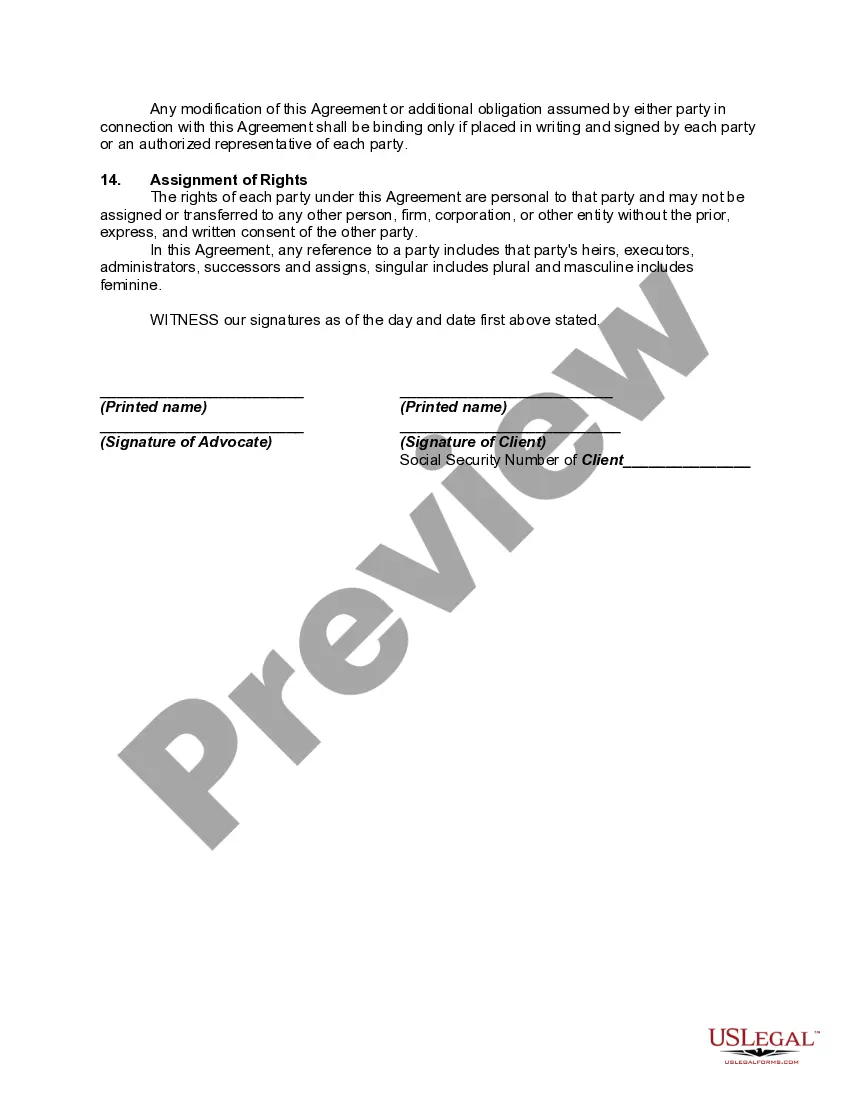
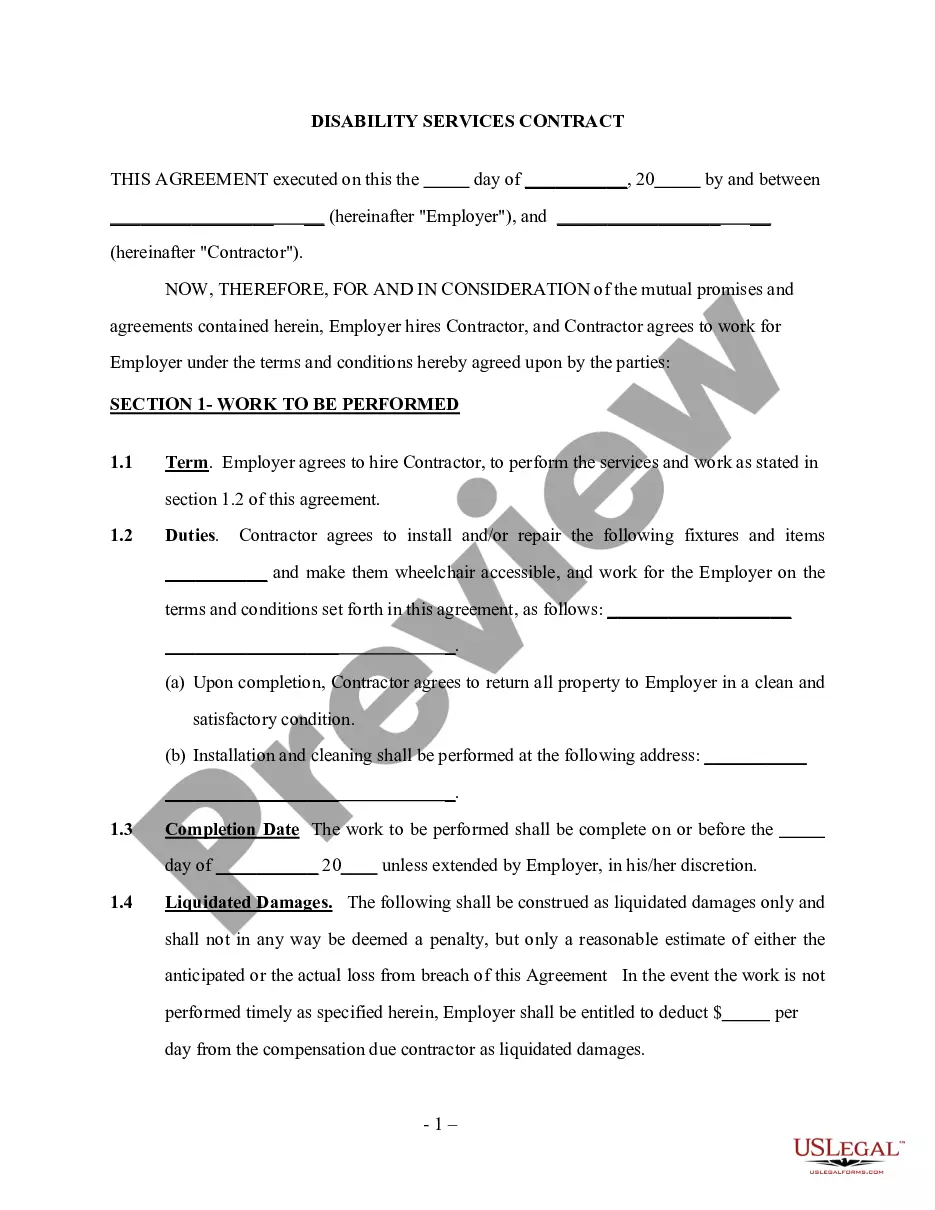
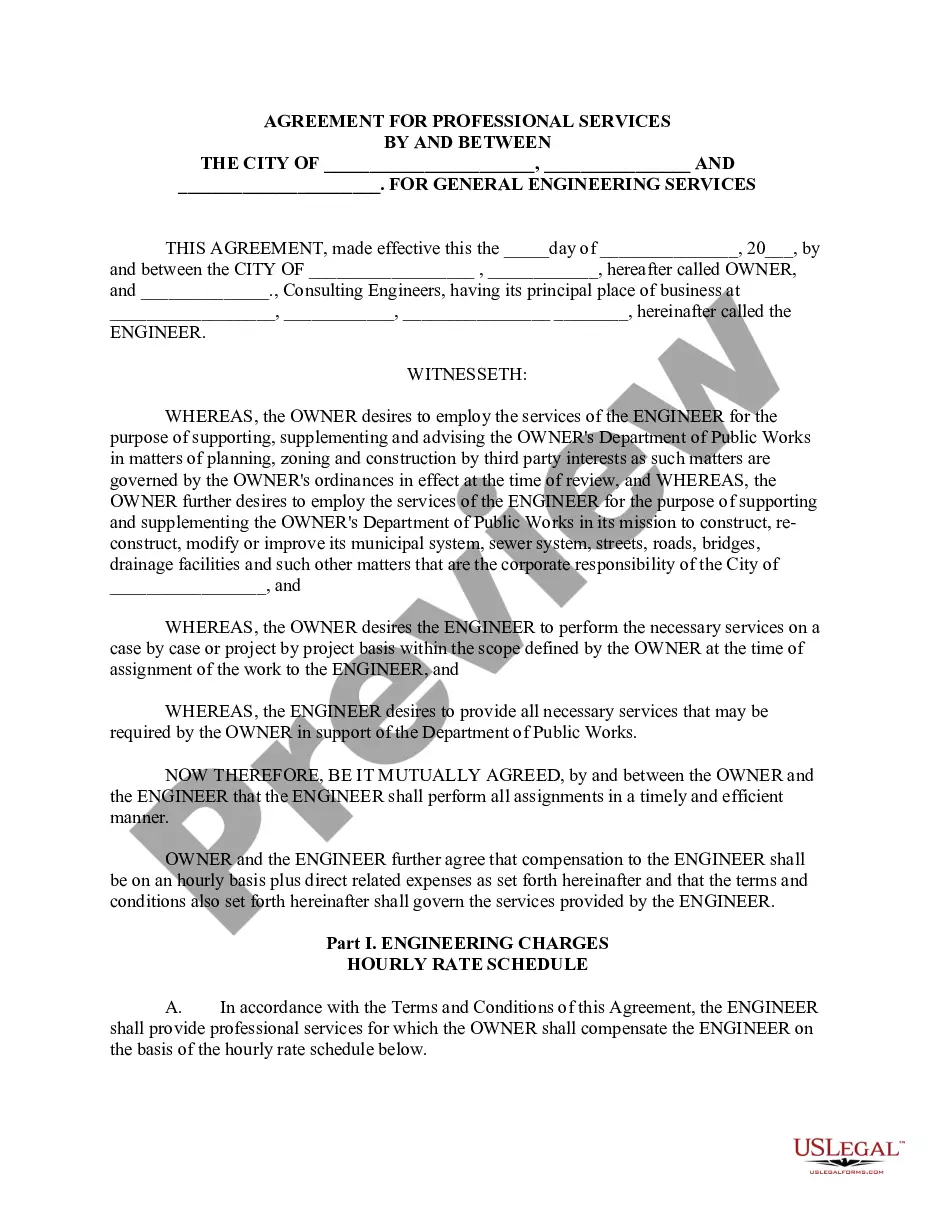
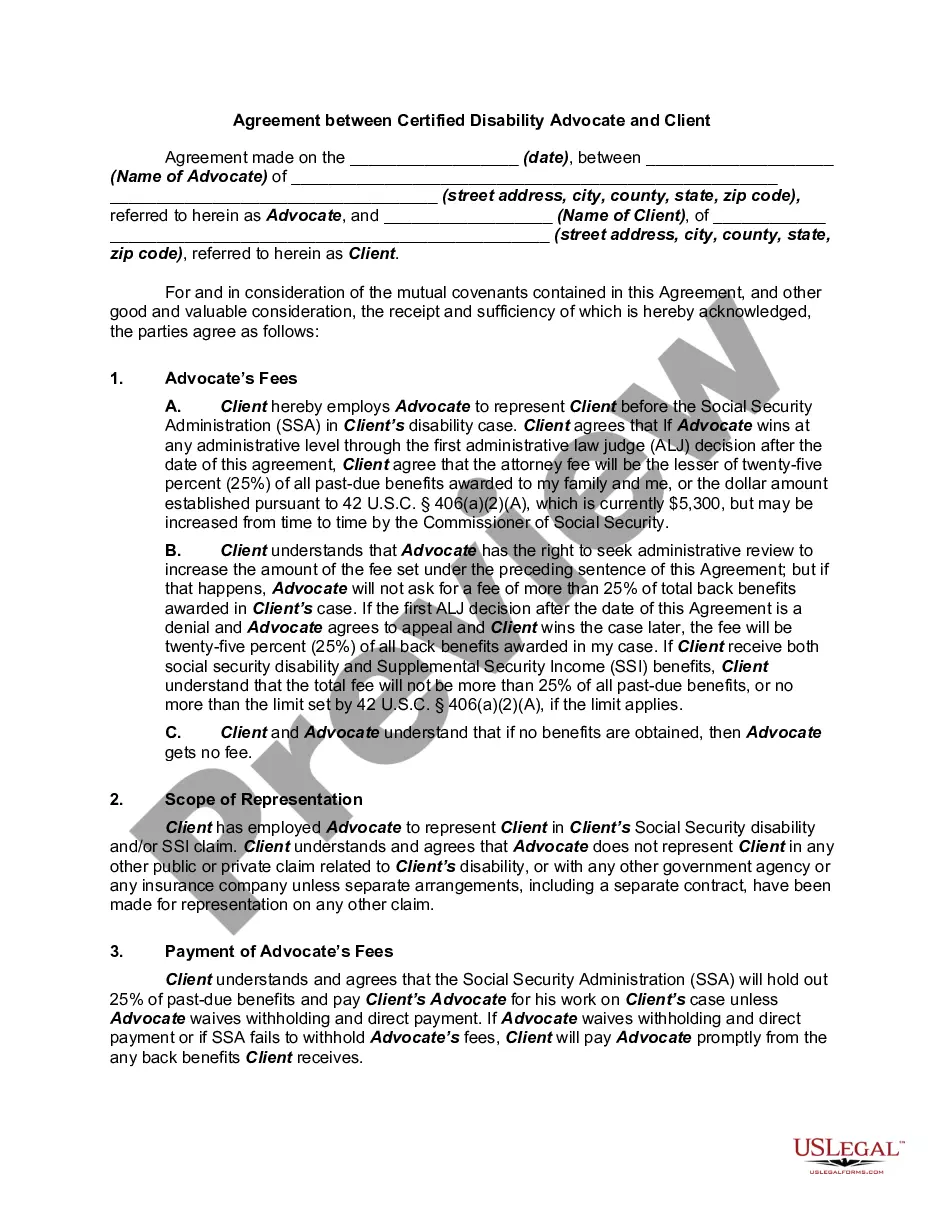
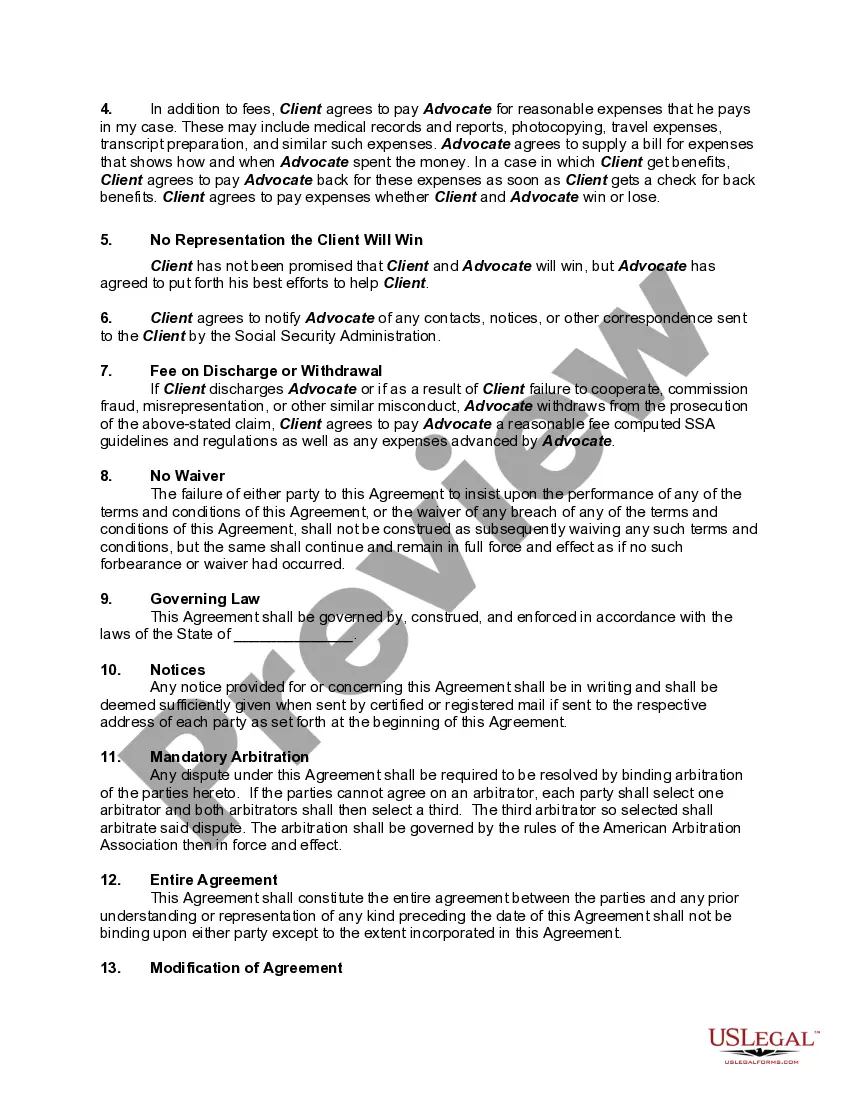
  • Preview Agreement between Certified Disability Advocate and Client
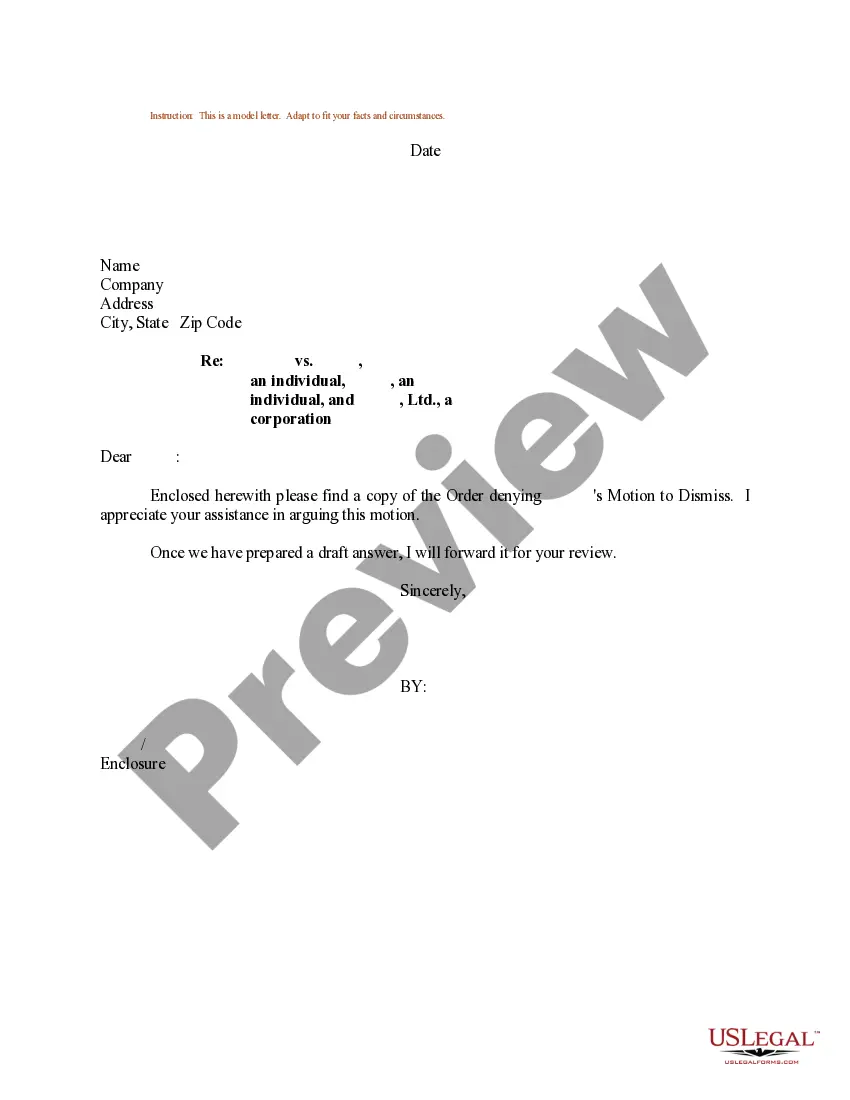
  • Preview Agreement between Certified Disability Advocate and Client
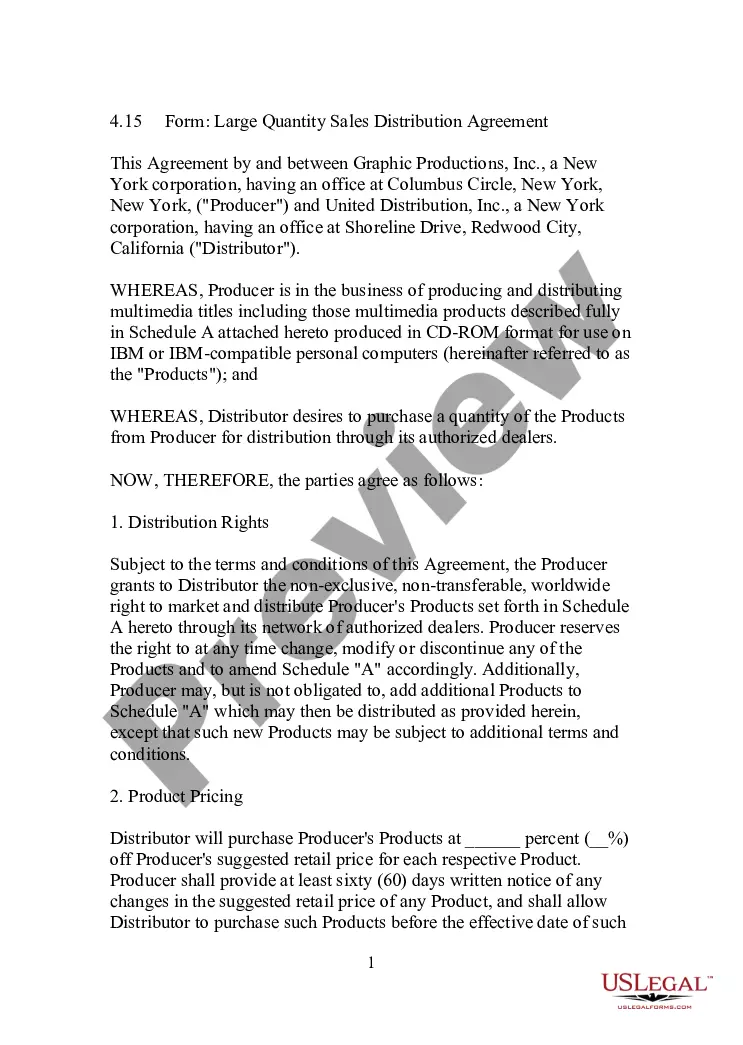
  • Preview Agreement between Certified Disability Advocate and Client

How to fill out Agreement Between Certified Disability Advocate And Client?

You can spend hours online searching for the legal document template that meets the state and federal standards you require.

US Legal Forms offers thousands of legal documents that are reviewed by experts.

It is easy to access or print the Michigan Agreement between Certified Disability Advocate and Client through my service.

If available, use the Preview button to view the document template as well.

  1. If you have a US Legal Forms account, you can sign in and press the Obtain button.
  2. After that, you can fill out, modify, print, or sign the Michigan Agreement between Certified Disability Advocate and Client.
  3. Every legal document template you purchase is yours permanently.
  4. To obtain another copy of any purchased form, go to the My documents section and click the corresponding button.
  5. If you're using the US Legal Forms site for the first time, follow these simple guidelines below.
  6. First, ensure that you have selected the correct document template for the area/town of your choice.
  7. Review the form description to confirm that you have selected the right form.

Form popularity

FAQ

The 5 C's of the attorney-client privilege are communication, confidentiality, counsel, capacity, and consent. These elements work together to protect the correspondence between a client and their attorney. When securing a Michigan Agreement between Certified Disability Advocate and Client, it's essential to understand these principles to foster a trusting relationship built on confidentiality and respect.

The four key elements of the attorney-client privilege include a communication, intended to be confidential, between a client and their attorney, made for the purpose of obtaining legal advice. This privilege helps maintain the trust necessary for effective representation. The Michigan Agreement between Certified Disability Advocate and Client reinforces the importance of this privilege, ensuring that discussions remain private for the client's benefit.

Rule 3.7 in Michigan addresses conflicts of interest when an attorney serves as a witness in their client's case. This rule generally prohibits attorneys from representing clients if they will need to testify in the case. However, under the Michigan Agreement between Certified Disability Advocate and Client, a certified advocate can help clients navigate these complexities, ensuring their rights are protected and their cases are managed effectively.

Rule 5.5 in Michigan pertains to the unauthorized practice of law, which underscores the importance of regulated legal services. This rule ensures that only licensed professionals provide legal representation in specific matters, including disability claims. Adhering to the Michigan Agreement between Certified Disability Advocate and Client helps protect your rights while navigating the complex processes of disability advocacy. Engaging with certified advocates ensures compliance with legal standards and effective representation.

The top amount for disability benefits can vary based on several factors, including your work history and the type of disability you have. Generally, individuals may receive a maximum monthly benefit depending on their earnings prior to the disability. It's essential to understand the Michigan Agreement between Certified Disability Advocate and Client to navigate these benefits efficiently. Consulting with a certified advocate can provide you with personalized insights to maximize your eligibility.

Attorney-client privilege in Michigan protects confidential communications between a lawyer and their client. This rule encourages open and honest conversations, allowing clients to share sensitive information without fear of disclosure. When entering a Michigan Agreement between Certified Disability Advocate and Client, both parties must understand the importance of this privilege. Upholding confidentiality ensures that clients receive personalized guidance while feeling secure in their advocacy relationship.

Rule 7.1 of the Michigan Rules of Professional Conduct concerns advertising and solicitation practices by lawyers. This rule prohibits false or misleading statements about a lawyer's services, ensuring clients receive accurate information. The Michigan Agreement between Certified Disability Advocate and Client must align with these guidelines, as advocates need to represent their services honestly. By doing so, they build trust and credibility with their clients.

Rule 5.5 in Michigan prohibits lawyers from practicing law in a jurisdiction where they are not licensed. This rule ensures that clients receive representation from qualified professionals who understand local laws and regulations. In relation to the Michigan Agreement between Certified Disability Advocate and Client, advocates must be properly credentialed to provide effective support. This rule safeguards clients by guaranteeing they receive reliable, knowledgeable assistance.

One of the most common complaints against lawyers involves inadequate communication with clients. Clients often feel frustrated when they do not receive timely updates about their cases or feel ignored. The Michigan Agreement between Certified Disability Advocate and Client emphasizes effective communication, making it a vital component of the advocate-client relationship. By ensuring consistent interaction, advocates can enhance client satisfaction and prevent potential grievances.

Rule 8.3 of the Michigan Rules of Professional Conduct requires lawyers to report any misconduct by another lawyer that raises substantial questions about their honesty or fitness to practice law. This framework ensures that the legal community actively participates in maintaining ethical standards. When working under the Michigan Agreement between Certified Disability Advocate and Client, both advocates and clients benefit from a culture of transparency and accountability. This rule helps uphold the integrity of the legal system.

Trusted and secure by over 3 million people of the world’s leading companies

Michigan Agreement between Certified Disability Advocate and Client