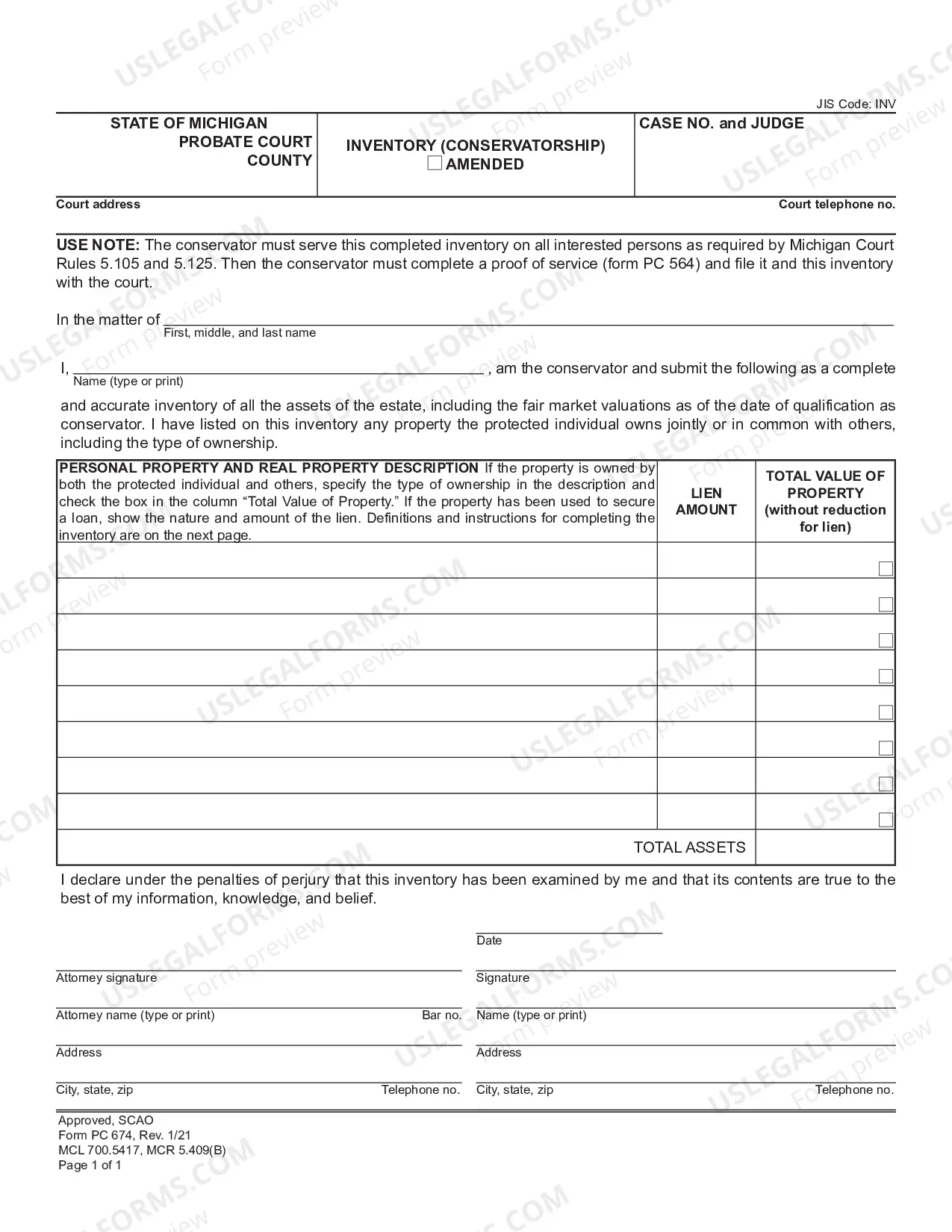
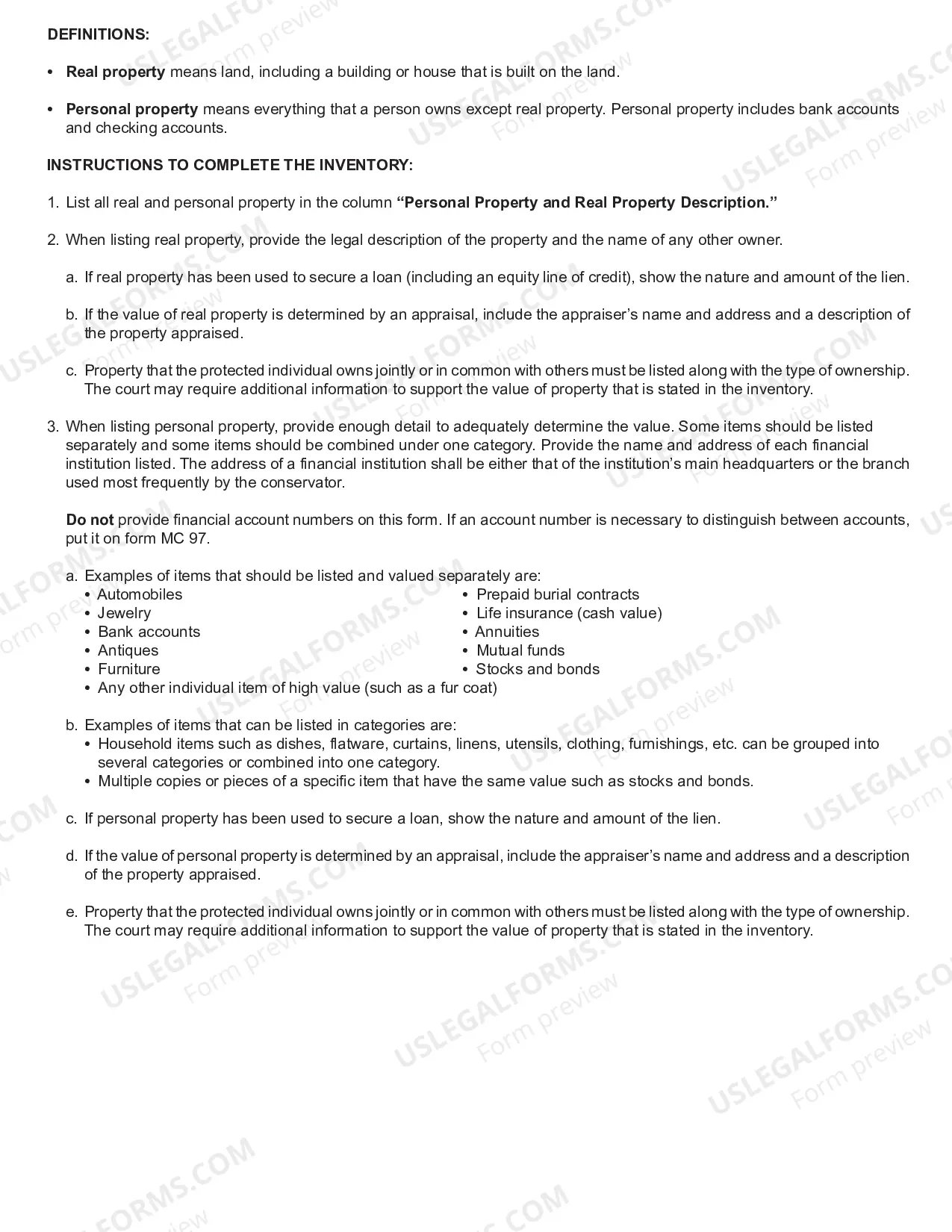
Michigan Inventory (Conservatorship) is a legal process in which a conservator is appointed by a court to manage the financial and/or personal affairs of someone who is unable to do so due to physical or mental incapacity. The conservator is responsible for the oversight of the individual's assets, investments, and annual income, as well as providing care and protection to ensure the individual's wellbeing. There are two types of Michigan Inventory (Conservatorship): General Conservatorship and Limited Conservatorship. General Conservatorship grants the conservator broad authority over the individual's financial and personal affairs and allows them to make decisions on behalf of the individual. Limited Conservatorship limits the conservator's powers to specific areas such as medical care and housing.
Michigan Inventory (Conservatorship)
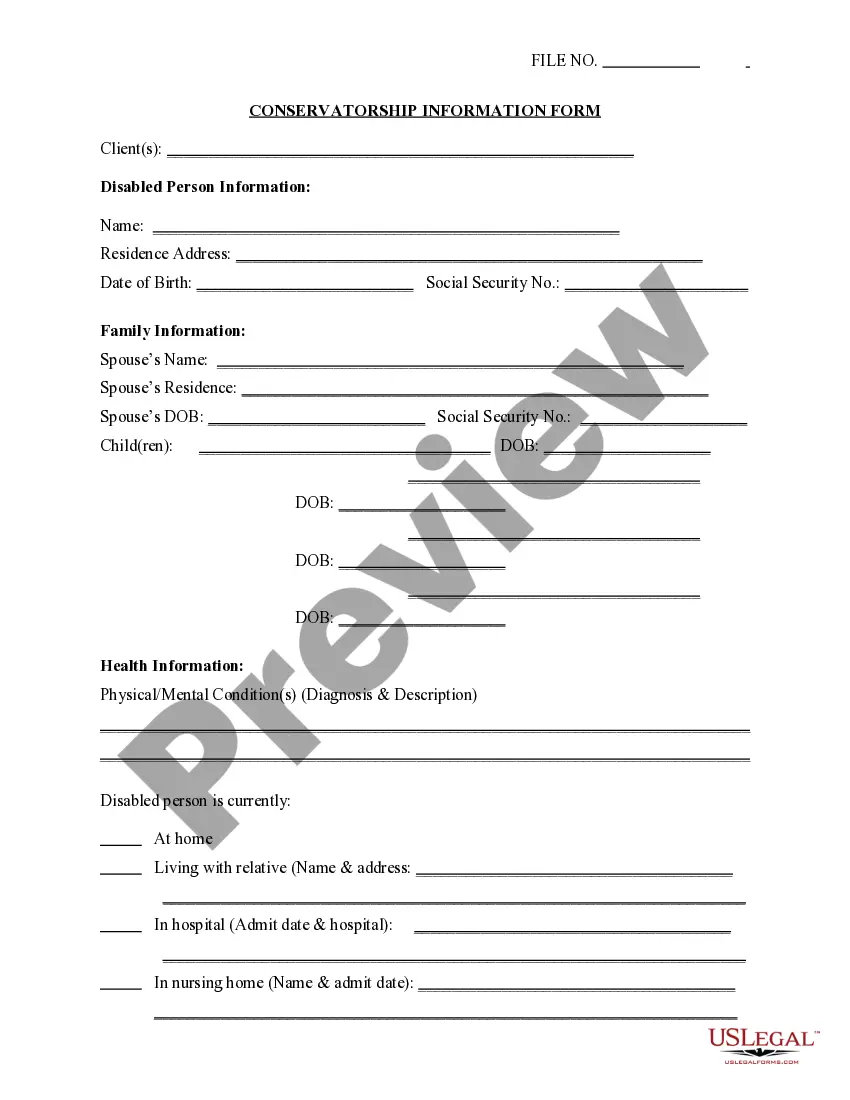
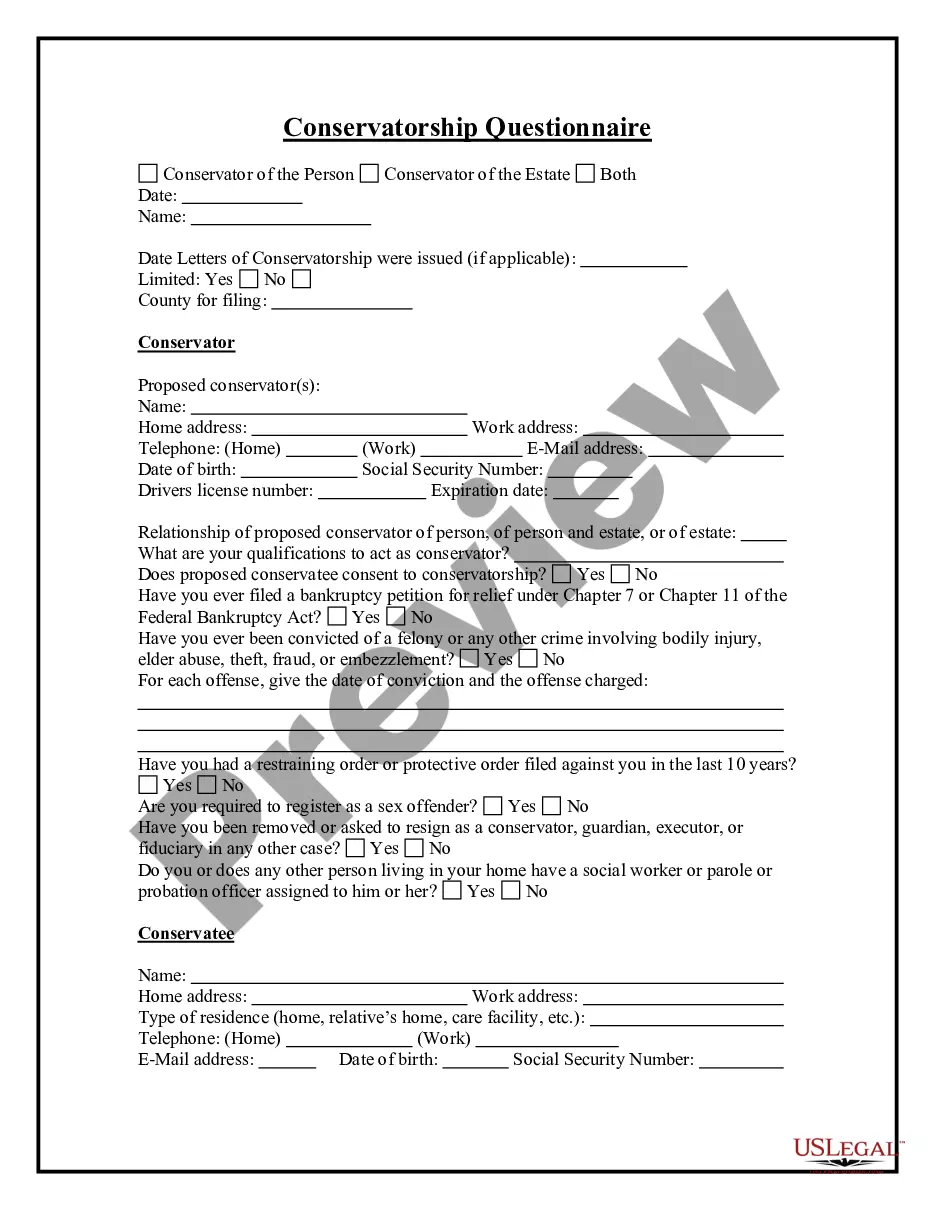
Description
Get your form ready online
Our built-in tools help you complete, sign, share, and store your documents in one place.
Make edits, fill in missing information, and update formatting in US Legal Forms—just like you would in MS Word.
Download a copy, print it, send it by email, or mail it via USPS—whatever works best for your next step.
Sign and collect signatures with our SignNow integration. Send to multiple recipients, set reminders, and more. Go Premium to unlock E-Sign.
If this form requires notarization, complete it online through a secure video call—no need to meet a notary in person or wait for an appointment.
We protect your documents and personal data by following strict security and privacy standards.

Make edits, fill in missing information, and update formatting in US Legal Forms—just like you would in MS Word.

Download a copy, print it, send it by email, or mail it via USPS—whatever works best for your next step.

Sign and collect signatures with our SignNow integration. Send to multiple recipients, set reminders, and more. Go Premium to unlock E-Sign.

If this form requires notarization, complete it online through a secure video call—no need to meet a notary in person or wait for an appointment.

We protect your documents and personal data by following strict security and privacy standards.
Looking for another form?



How to fill out Michigan Inventory (Conservatorship)?
If you’re looking for a method to effectively prepare the Michigan Inventory (Conservatorship) without employing a legal professional, then you’re in the perfect place.
US Legal Forms has established itself as the most comprehensive and dependable repository of formal templates for every personal and business scenario. Each document you discover on our online platform is crafted in accordance with federal and state laws, so you can be assured that your records are in order.
Another fantastic aspect of US Legal Forms is that you never misplace the documents you obtained - you can access any of your downloaded forms in the My documents tab of your profile whenever you require it.
- Verify that the document displayed on the page aligns with your legal circumstances and state regulations by reviewing its text description or exploring the Preview mode.
- Input the form name in the Search tab located at the top of the page and select your state from the dropdown to locate an alternative template in case of any discrepancies.
- Repeat the content validation and click Buy now when you are assured of the paperwork's compliance with all the requirements.
- Log in to your account and click Download. Register for the service and select the subscription plan if you have not done so yet.
- Utilize your credit card or the PayPal option to purchase your US Legal Forms subscription. The blank will be available for download immediately after.
- Select the format in which you wish to save your Michigan Inventory (Conservatorship) and download it by clicking the appropriate button.
- Import your template into an online editor to fill out and sign it quickly or print it out to prepare your physical copy manually.
Form popularity
FAQ
Yes, a conservator in Michigan can sell property, but they must do so in the best interest of the individual under their care. This typically requires court approval to ensure that the sale aligns with the financial well-being of the person involved. If you have questions about navigating the process or potential legal complexities, US Legal Forms can help streamline your understanding of Michigan Inventory (Conservatorship) matters.
A standard conservatorship in Michigan involves managing someone's financial matters, while an LPS conservatorship specifically applies to individuals deemed mentally ill under the Lanterman-Petris-Short Act. The latter provides a broader range of protections, including mental health treatment, as part of its oversight. If you're exploring options regarding Michigan Inventory (Conservatorship), recognizing these distinctions can be extremely valuable.
In Michigan, a conservator manages the financial affairs of an individual who cannot do so due to age or disability, focusing primarily on their assets and income. On the other hand, a guardian is responsible for the overall well-being of a person, including healthcare and daily living needs. Both roles serve important functions but address different aspects of an individual's life. For those navigating the complexities of Michigan Inventory (Conservatorship), understanding this difference is key.
While conservatorship can protect individuals, it may also come with downsides. It often restricts the person's freedom to make financial and personal decisions. Additionally, becoming a conservator can involve ongoing court oversight, which may require additional time and resources. Understanding these aspects, and preparing a well-planned Michigan Inventory (Conservatorship), can help manage expectations and streamline the process.
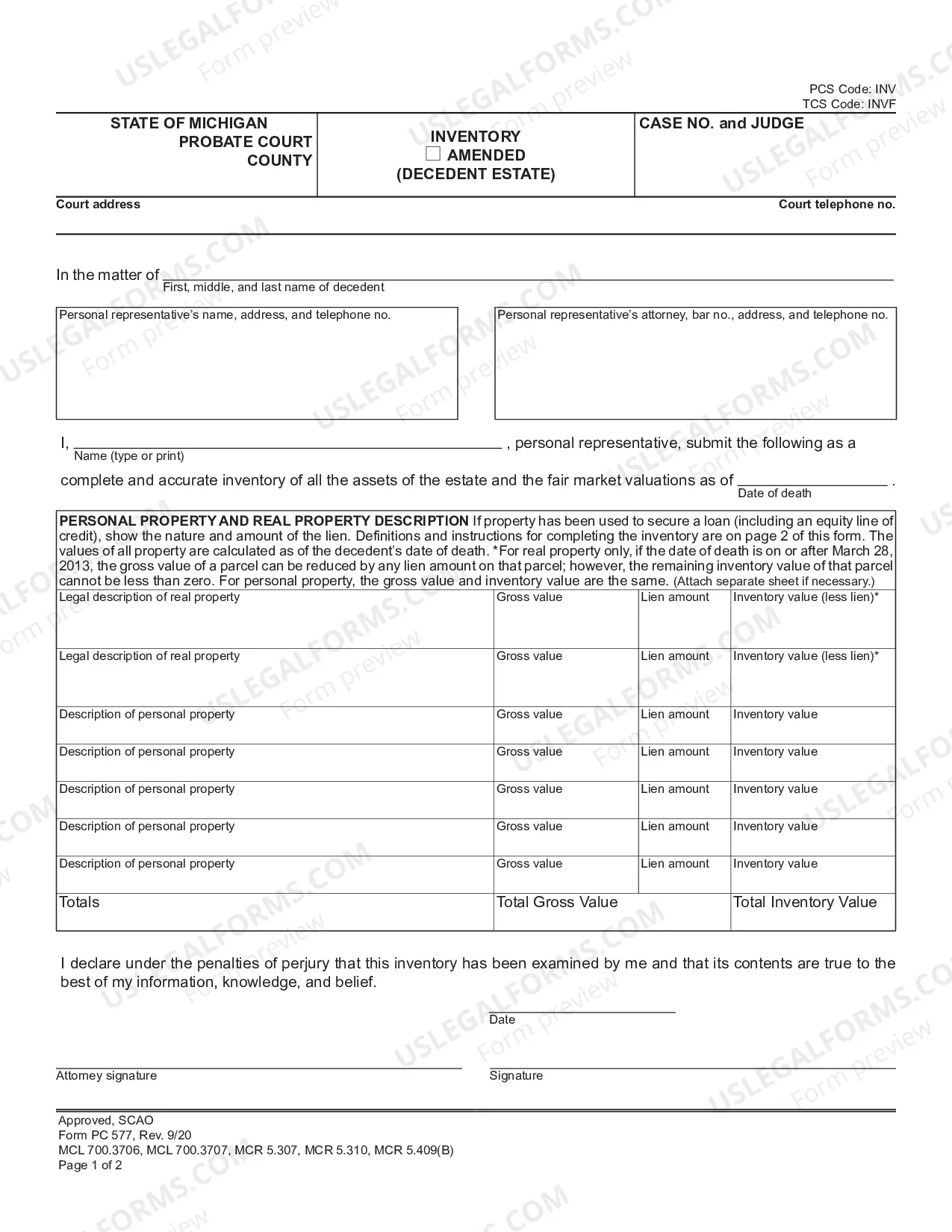
An estate inventory for probate in Michigan should be detailed enough to provide a clear understanding of the deceased’s assets and their values. Each item must be listed with a description and estimated worth to ensure fair distribution among heirs. While it may seem daunting, a comprehensive Michigan Inventory (Conservatorship) can save time and reduce potential conflicts later. Platforms like US Legal Forms can help you create a detailed and organized inventory.
Household items included in a probate inventory typically consist of furniture, appliances, electronics, and personal effects like clothing and jewelry. It is crucial to assess the value of these items, even if they seem minor, as they can contribute to the overall estate. A thorough Michigan Inventory (Conservatorship) should accurately reflect all household contents to facilitate smooth probate proceedings. Consider using tools from US Legal Forms to effectively compile this list.
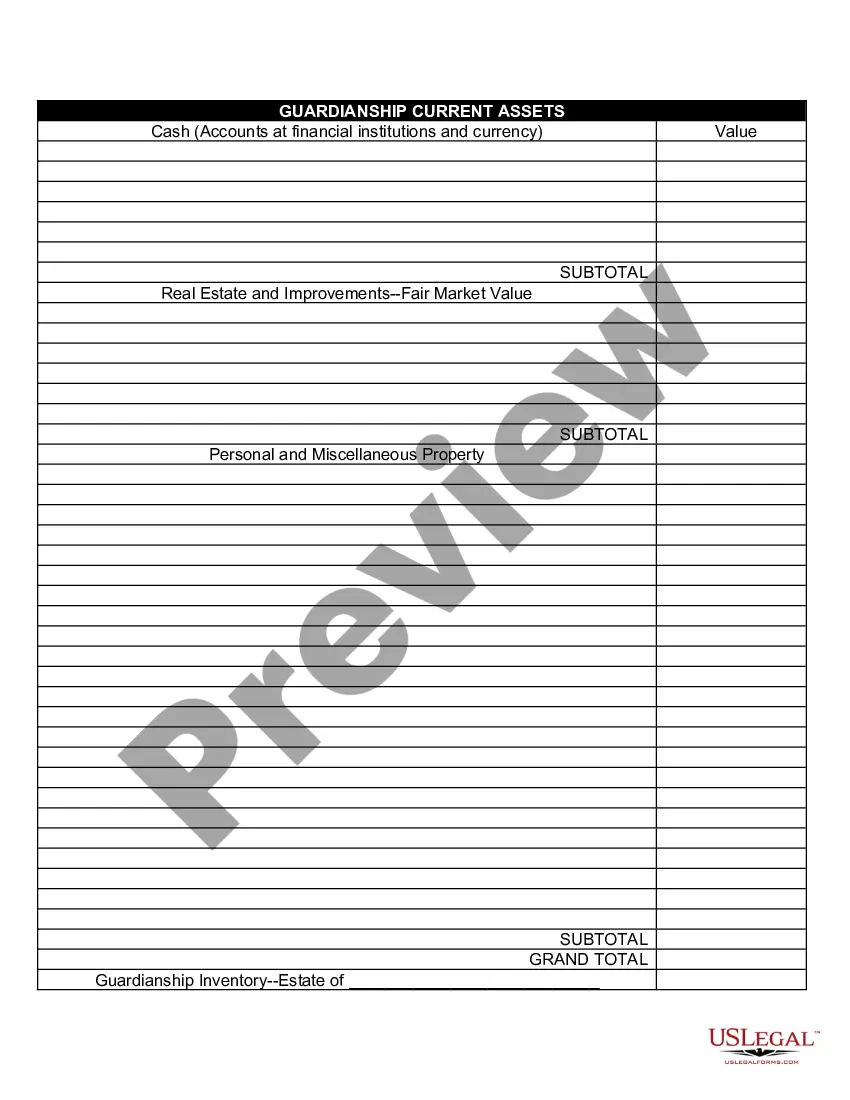
To create a simple inventory list for probate, begin by gathering all relevant documents regarding assets. List each item with a brief description and an estimated value. Organize the assets into categories to make the list easier to review. Services like US Legal Forms offer templates that can help you format your Michigan Inventory (Conservatorship) efficiently.
Dementia can indeed be a valid reason for seeking conservatorship in Michigan. If an individual is unable to make sound decisions due to cognitive impairments, a conservatorship can be established to protect their interests. It is essential to provide medical evidence and show that the person needs assistance with managing their financial and personal affairs. A well-documented Michigan Inventory (Conservatorship) can also be helpful in this situation by outlining the individual’s assets.
An example of an inventory for probate might include a detailed list of assets such as a family home, savings and checking accounts, vehicles, jewelry, and collectibles. Each item should have an estimated value and be categorized properly to ease the probate process. Having a well-structured Michigan Inventory (Conservatorship) can minimize confusion and expedite the handling of your loved one's estate. Numerous resources, including US Legal Forms, can assist you in crafting this inventory.
In Michigan, assets that must go through probate include those solely owned by the deceased, which do not have designated beneficiaries. Common probate assets include real estate, bank accounts, and personal property valued over a specific amount. If property ownership is shared or if assets have beneficiary designations, they may not require probate. Understanding these distinctions is crucial when preparing a Michigan Inventory (Conservatorship).