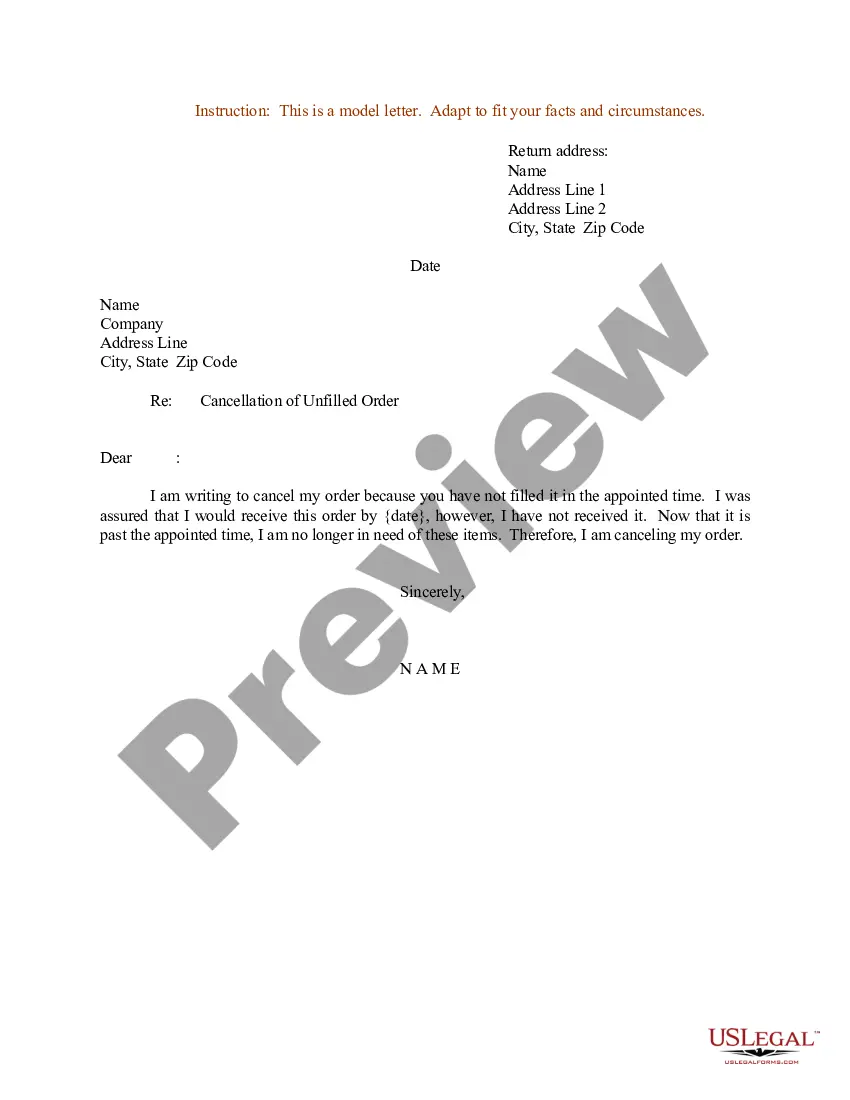
Michigan Notice of Lis Pendens
About this form
The Notice of Lis Pendens is a legal document that informs interested parties about a pending lawsuit that affects the title or ownership of real property. This notice serves as a public declaration that a property is involved in litigation, typically related to foreclosure or real estate disputes. Unlike other legal notices, a Lis Pendens specifically pertains to potential claims that may impact the property's title, providing crucial information to buyers and lenders about the risks involved before any transaction.
What’s included in this form
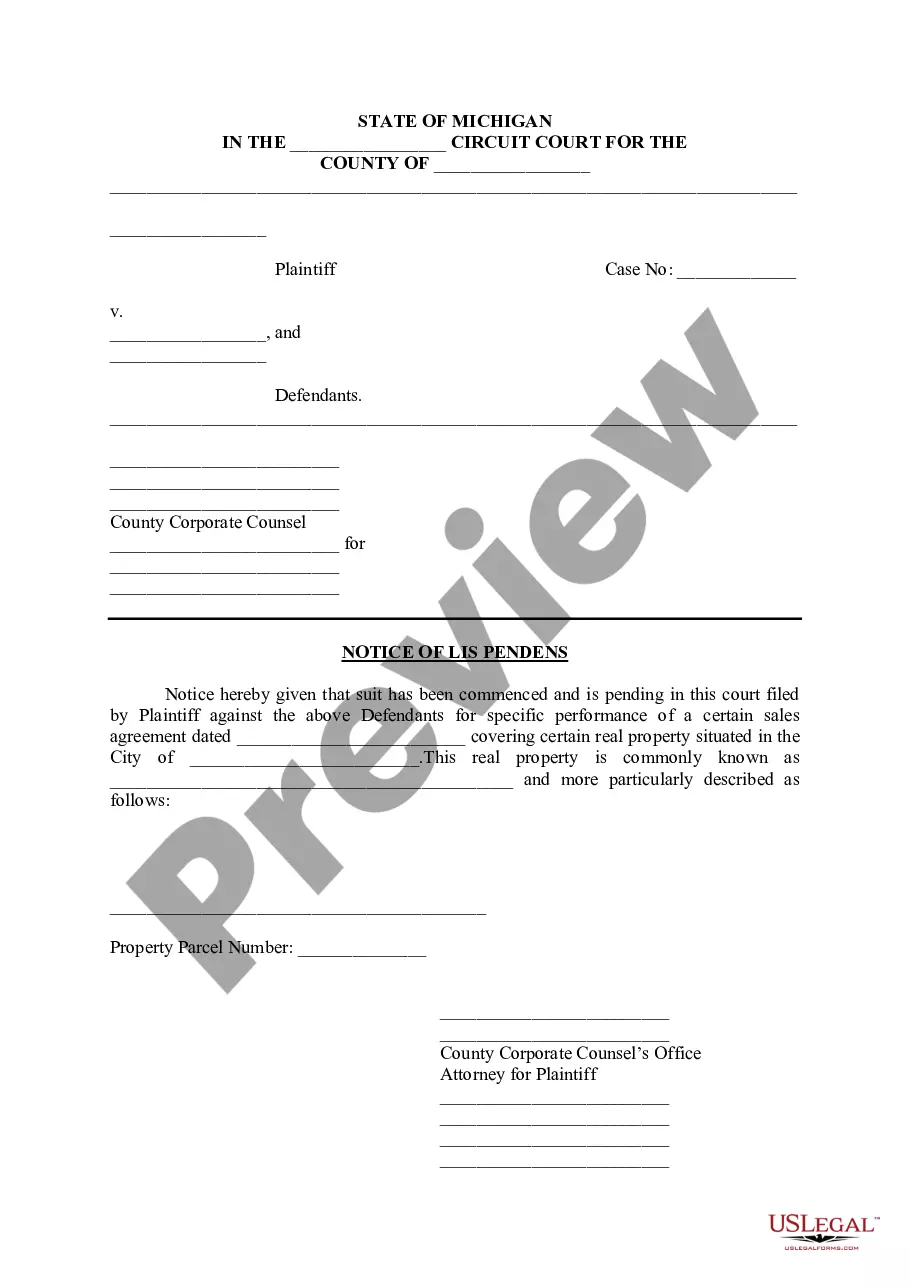
- Case information: Includes names of the plaintiff and defendants along with the case number.
- Details of the lawsuit: Summarizes the nature of the suit and its implications for the property.
- Property description: Provides a detailed description of the property in question, including its common name and legal description.
- Corporate Counsel contact: Identifies the attorney representing the plaintiff.
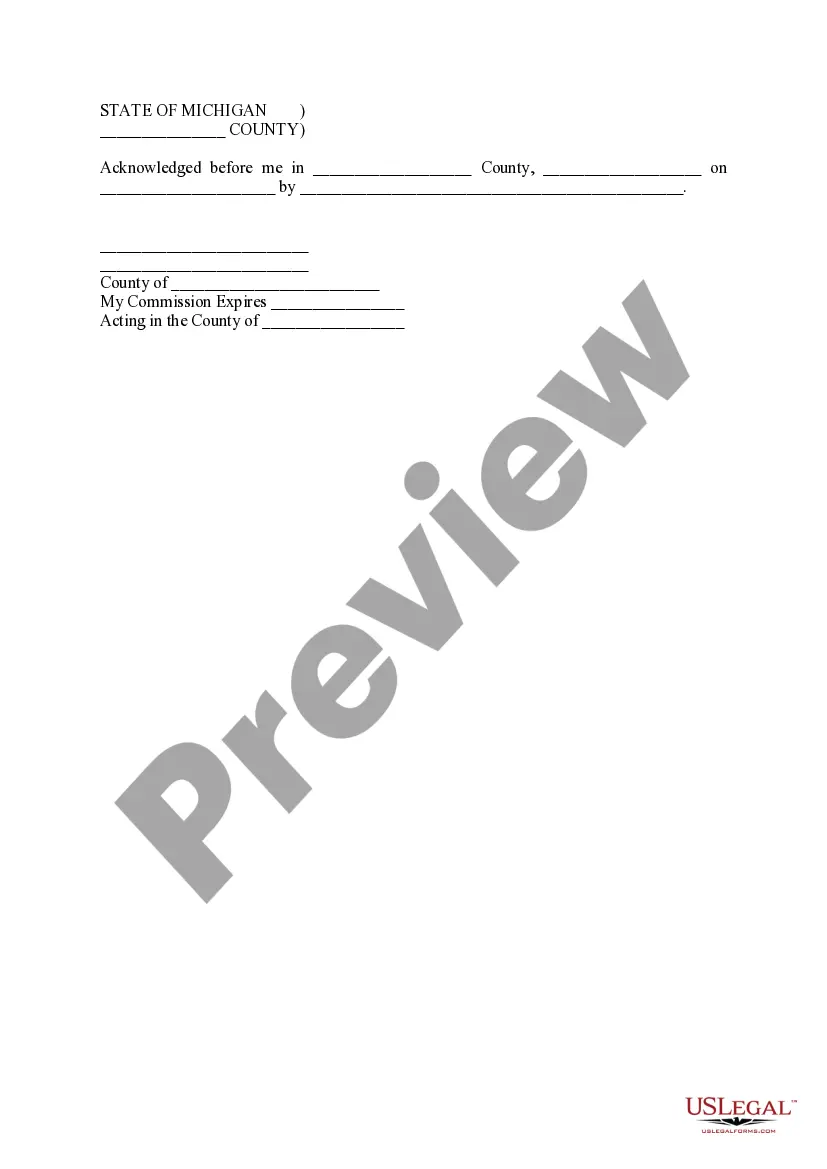
- Notary acknowledgement: Contains a section for notarization to validate the document.
Situations where this form applies
This form should be used when a lawsuit is filed that involves a real property. It is particularly necessary in cases where the property is subject to foreclosure or claims concerning sales agreements. By filing a Notice of Lis Pendens, the party initiating the action protects their interest and informs potential buyers or investors about the legal proceedings that may affect the ownership or sale of the property.
Who needs this form
- Property owners who are defendants in a lawsuit affecting their property.
- Creditors or lenders seeking to secure their interests against pending litigation.
- Real estate attorneys handling cases involving disputes over property titles.
- Anyone involved in a lawsuit that may affect the ownership or sale of real property.
Completing this form step by step
- Identify the parties involved by entering the names of the plaintiff and defendants.
- Specify the case number and court information accurately.
- Describe the property by providing its common name and complete legal description.
- Include the property parcel number for precise identification.
- Have the document signed and notarized, ensuring legal validity.
Is notarization required?
Yes, this form must be notarized to be legally valid. Having it notarized confirms the authenticity of the signatures and the identity of the parties involved. US Legal Forms provides an integrated online notarization service that is available 24/7, ensuring a secure video call experience that meets legal requirements without the need for physical travel.
Get your form ready online
Our built-in tools help you complete, sign, share, and store your documents in one place.
Make edits, fill in missing information, and update formatting in US Legal Forms—just like you would in MS Word.
Download a copy, print it, send it by email, or mail it via USPS—whatever works best for your next step.
Sign and collect signatures with our SignNow integration. Send to multiple recipients, set reminders, and more. Go Premium to unlock E-Sign.
If this form requires notarization, complete it online through a secure video call—no need to meet a notary in person or wait for an appointment.
We protect your documents and personal data by following strict security and privacy standards.

Make edits, fill in missing information, and update formatting in US Legal Forms—just like you would in MS Word.

Download a copy, print it, send it by email, or mail it via USPS—whatever works best for your next step.

Sign and collect signatures with our SignNow integration. Send to multiple recipients, set reminders, and more. Go Premium to unlock E-Sign.

If this form requires notarization, complete it online through a secure video call—no need to meet a notary in person or wait for an appointment.

We protect your documents and personal data by following strict security and privacy standards.
Typical mistakes to avoid
- Failing to include accurate property descriptions, which can lead to confusion.
- Not providing complete party information, including names and case numbers.
- Skipping the notarization process, which is essential for legal validity.
Benefits of using this form online
- Convenience of completing and downloading the form from anywhere.
- Editability of the document to meet specific needs quickly.
- Access to legally-reviewed templates drafted by licensed attorneys.
Summary of main points
- The Notice of Lis Pendens protects against potential claims on real property during legal disputes.
- Proper completion and notarization of the form are essential for its effectiveness.
- Understanding when and how to use this form can prevent future legal complications.
Looking for another form?


Form popularity
FAQ
To fill out a notice to quit in Michigan, you must include essential details such as the tenant's name, the property address, and the specific grounds for eviction. Be sure to clearly state the time frame for the tenant to vacate the property, typically seven days for non-payment of rent. Completing this process accurately is essential to ensure legal compliance and avoid future disputes. Utilizing resources on the US Legal Forms platform can simplify this task and ensure your Michigan Notice of Lis Pendens is done correctly.
The 554.613 law in Michigan refers to the legal guidelines surrounding the notice of lis pendens. This law allows parties involved in a legal dispute to file a notice to inform others about pending litigation affecting property. Understanding this law is crucial for anyone dealing with property matters in Michigan, as it helps establish priority in claims. For assistance with filing a Michigan Notice of Lis Pendens, consider using the US Legal Forms platform.
In Michigan, a notice of lis pendens remains effective for a period of one year from the date of filing. However, if the related lawsuit is not resolved within that time, the notice can be renewed for additional periods. It's important to track the deadlines associated with your Michigan Notice of Lis Pendens to effectively manage your legal interests regarding the property.
In Michigan, a notice of lis pendens functions similarly to that in other states, but it has specific legal implications tailored to Michigan laws. This document must be filed with the county register of deeds and reflects that there is an ongoing legal dispute regarding a property. Filing a Michigan Notice of Lis Pendens is crucial for safeguarding your legal interests when pursuing property-related claims or disputes.
A notice of lis pendens is a legal document that alerts potential buyers and lenders about a pending lawsuit concerning a property. This document serves as a public notice, indicating that there is legal action that may affect the title or ownership of the property. By filing a Michigan Notice of Lis Pendens, you ensure that interested parties are aware of any claims or disputes associated with the property in question.
Lenders are usually unwilling to finance a mortgage until the lis pendens has been removed from the title. In addition, while a property can still be sold while there is a lis pendens, title companies will not insure the property, and that alone should be a deterrent to purchasing.
Lis pendens is nothing more or less than an official public notice that a lawsuit has been filed that involves a claim on a property.One party is using lis pendens as a way to protect its claim, and in the process, create hurdles for selling the property. It won't prevent the sale, but most buyers will steer clear.
The lis pendens can be removed once the lawsuit is settled and the court has ruled on an outcome. It might also be resolved on its own if an agreement is reached between the title owner and whoever filed the complaint. If the claim was wrongfully filed, the lis pendens will be expunged.
Lis pendens and foreclosure The lis pendens is essentially your written notice that the lender is taking legal action, and you home is being foreclosed. Once you receive the lis pendens, it will likely take several months if not longer for your home to foreclose.
Lis pendens provides constructive notice, or a warning, to prospective homebuyers that the ownership of a property is in dispute and there is litigation pending. Lis pendens can only be filed if a claim is related specifically to the property.