Michigan Letters of Conservatorship
Understanding this form
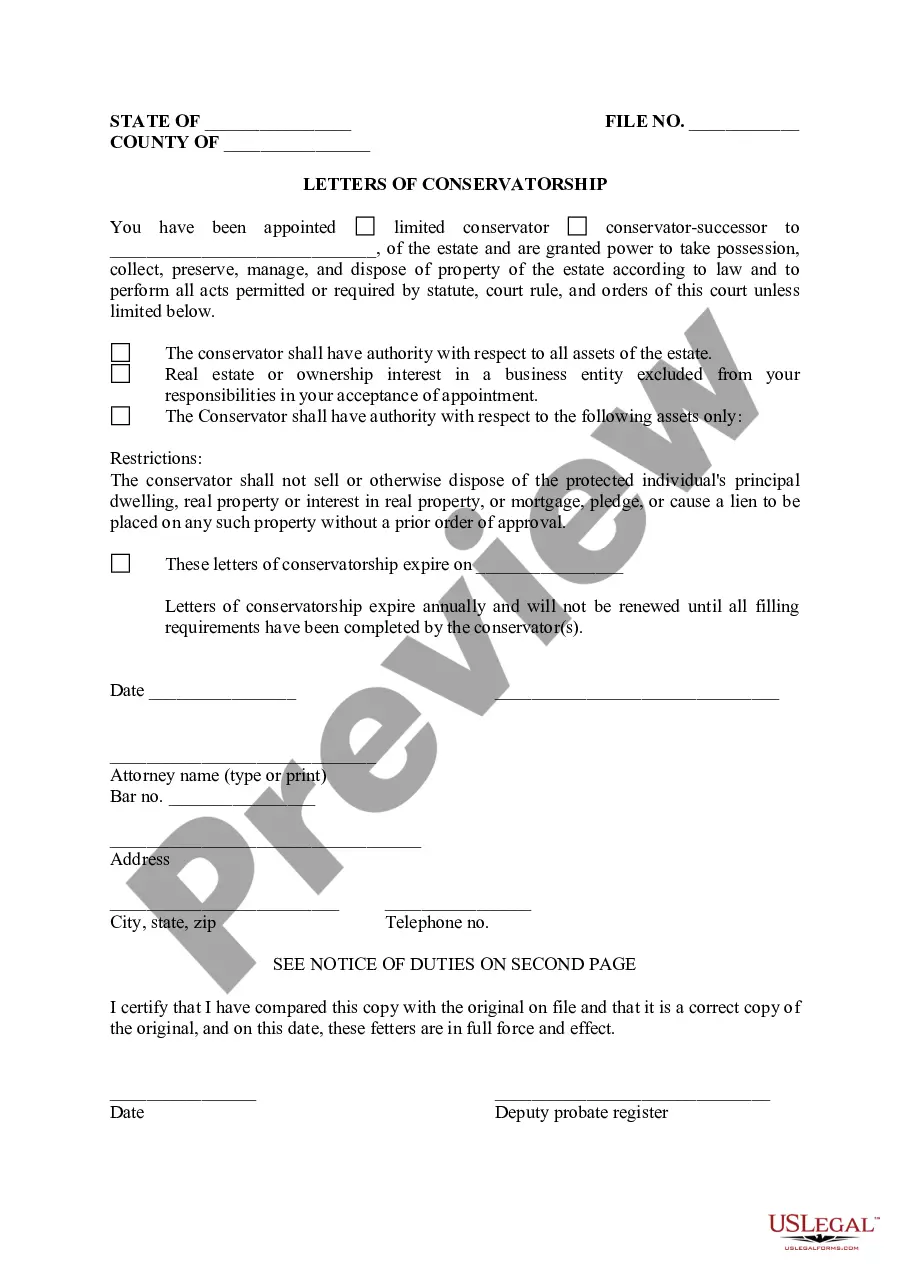
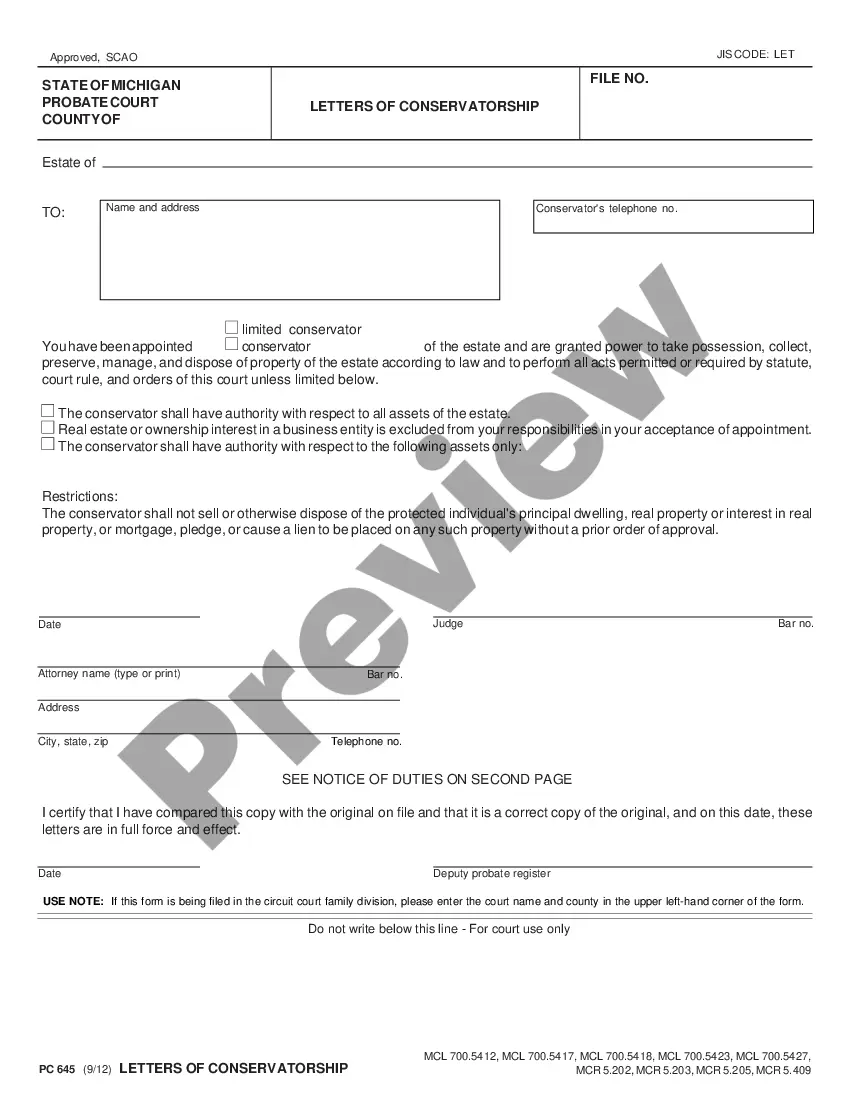
Letters of Conservatorship are legal documents that designate a conservator appointed by a judge to manage the financial affairs of another individual, often referred to as the protected person. This form grants the conservator specific powers to control, preserve, and manage the protected person's assets according to the law. These letters are valid for one year and must be refiled annually to remain in effect, distinguishing them from other legal documents related to guardianship or power of attorney.
Form components explained
- Identification of the conservator and the protected individual.
- Definition of the conservator's powers and limitations regarding asset management.
- Expiration date indicating when the letters of conservatorship will need to be renewed.
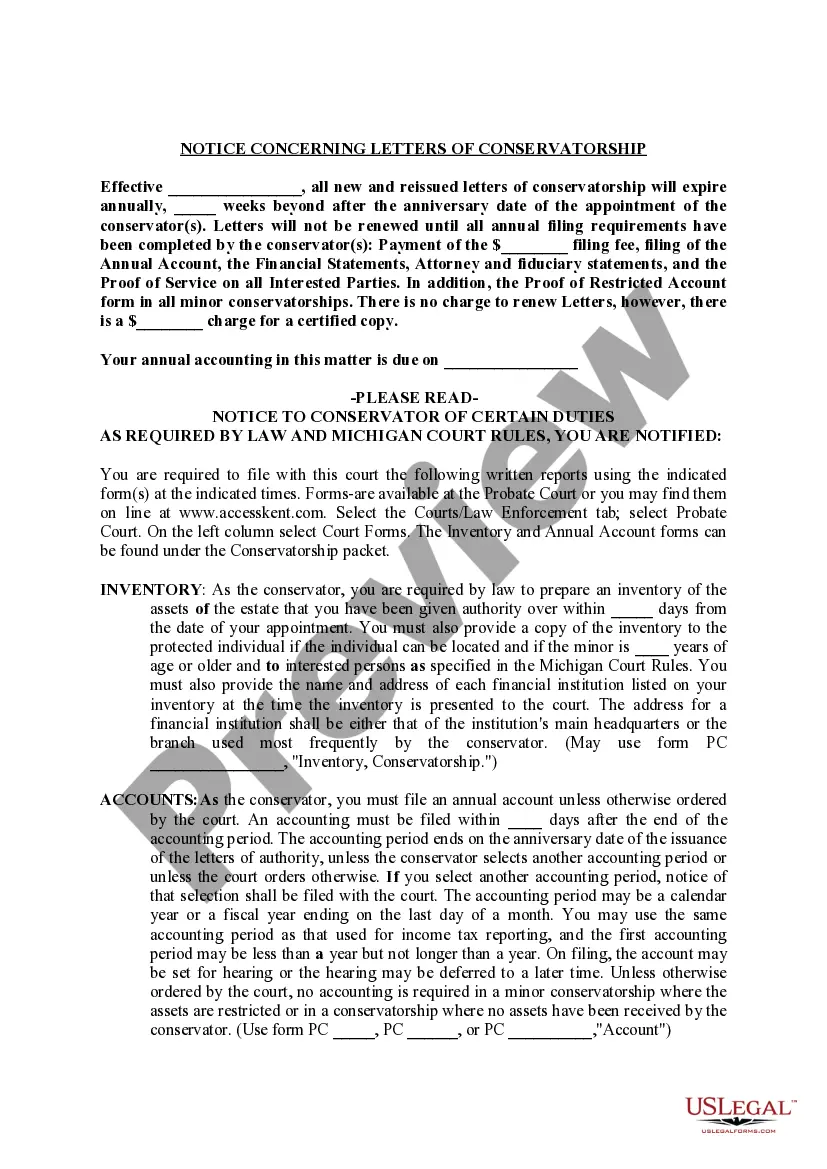
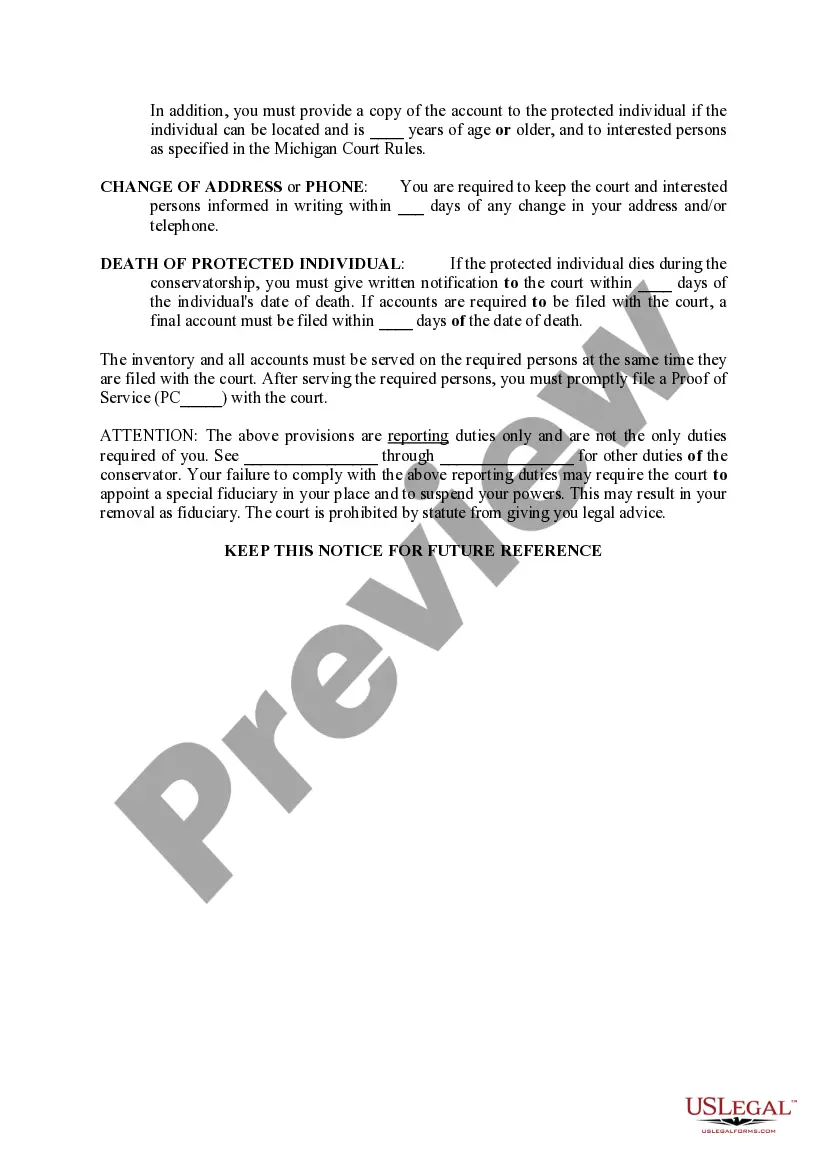
- Notice of duties outlining the legal responsibilities of the conservator.
- Instructions for filing reports, such as inventory and annual accounts.

Common use cases
This form is used when an individual requires assistance in managing their financial affairs due to incapacity or other reasons. It is needed when a court appoints a conservator to oversee the protected person's estate, ensuring that their assets are handled properly. The Letters of Conservatorship are fundamental in formalizing this arrangement and providing legal authority to the conservator.
Who this form is for
Individuals who should use this form include:
- The appointed conservator responsible for managing the protected person's affairs.
- Family members or loved ones seeking court intervention for someone unable to manage their own finances.
- Attorneys assisting clients with the conservatorship process.
Completing this form step by step
- Identify the parties involved: the conservator and the protected individual.
- Specify the powers granted to the conservator in managing the assets.
- Enter the expiration date for the Letters of Conservatorship.
- Provide the attorney's details, including name and bar number, if represented.
- Ensure to sign and date the form where indicated.
Is notarization required?
This form does not typically require notarization unless specified by local law. However, some jurisdictions may have additional requirements regarding witness signatures or specific acknowledgments. Always check local regulations to ensure compliance.
Get your form ready online
Our built-in tools help you complete, sign, share, and store your documents in one place.
Make edits, fill in missing information, and update formatting in US Legal Forms—just like you would in MS Word.
Download a copy, print it, send it by email, or mail it via USPS—whatever works best for your next step.
Sign and collect signatures with our SignNow integration. Send to multiple recipients, set reminders, and more. Go Premium to unlock E-Sign.
If this form requires notarization, complete it online through a secure video call—no need to meet a notary in person or wait for an appointment.
We protect your documents and personal data by following strict security and privacy standards.

Make edits, fill in missing information, and update formatting in US Legal Forms—just like you would in MS Word.

Download a copy, print it, send it by email, or mail it via USPS—whatever works best for your next step.

Sign and collect signatures with our SignNow integration. Send to multiple recipients, set reminders, and more. Go Premium to unlock E-Sign.

If this form requires notarization, complete it online through a secure video call—no need to meet a notary in person or wait for an appointment.

We protect your documents and personal data by following strict security and privacy standards.
Common mistakes to avoid
- Failing to file annual reports on time, which can lead to lapses in conservatorship.
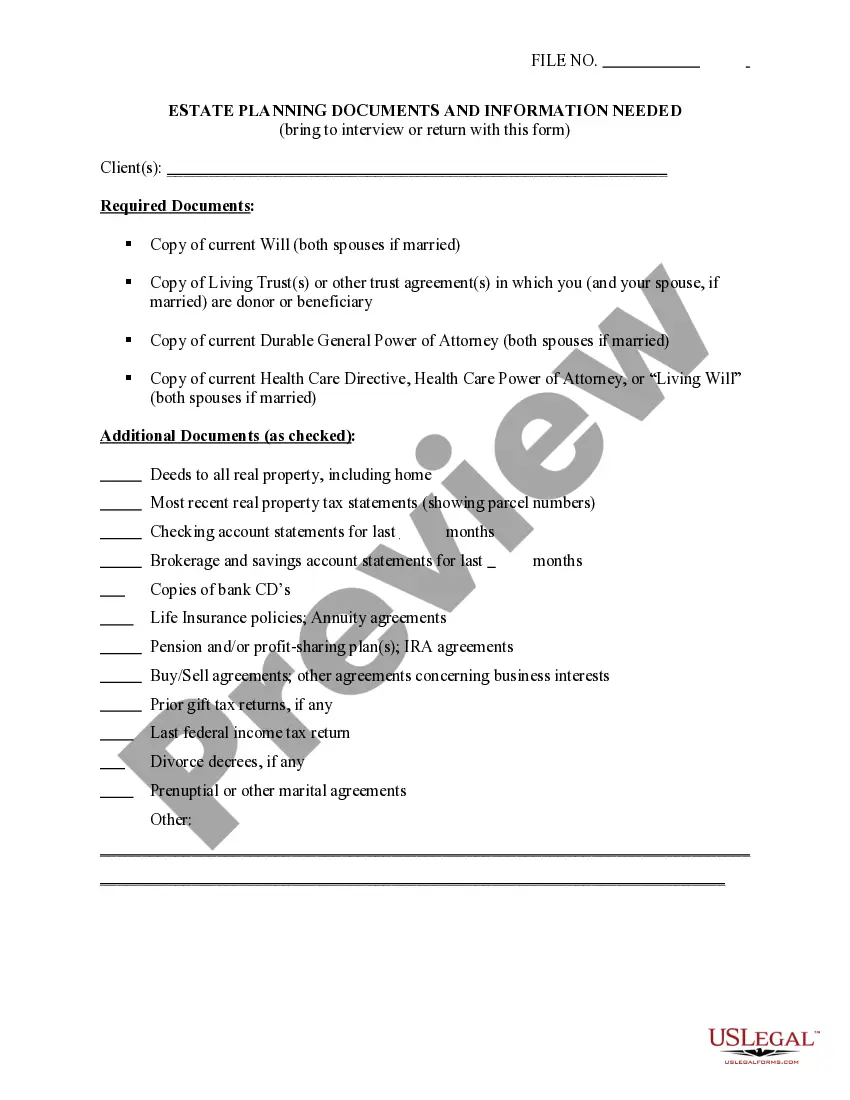
- Not providing complete information about the protected person's assets.
- Ignoring local court rules regarding notice and service to interested parties.
- Neglecting to keep the court informed of any changes in the conservator's address or contact information.
Why use this form online
- Convenience of completing the form from home without the need for travel.
- Editable templates that allow users to customize information easily.
- Reliable access to legal forms drafted by licensed attorneys.
- Immediate availability, offering a time-saving solution for urgent matters.
Looking for another form?
Form popularity
FAQ
Michigan Letters of Conservatorship are legal documents issued by the court, granting a designated person the authority to act on behalf of another adult who is unable to manage their own affairs. These letters empower the conservator to make critical decisions about health care, finances, and daily living activities. Obtaining these letters typically involves a court process where the individual's capacity to manage their affairs is assessed. US Legal Forms provides user-friendly templates and guidance to help you navigate through obtaining your Michigan Letters of Conservatorship.
Dementia may indeed qualify as a reason for establishing a conservatorship in Michigan. If the individual with dementia is unable to make responsible decisions regarding their health or finances, a court may grant Michigan Letters of Conservatorship. This legal document allows a designated person, known as the conservator, to manage the affairs of the individual affected by dementia. Consulting legal resources, like US Legal Forms, can guide you through this important process.
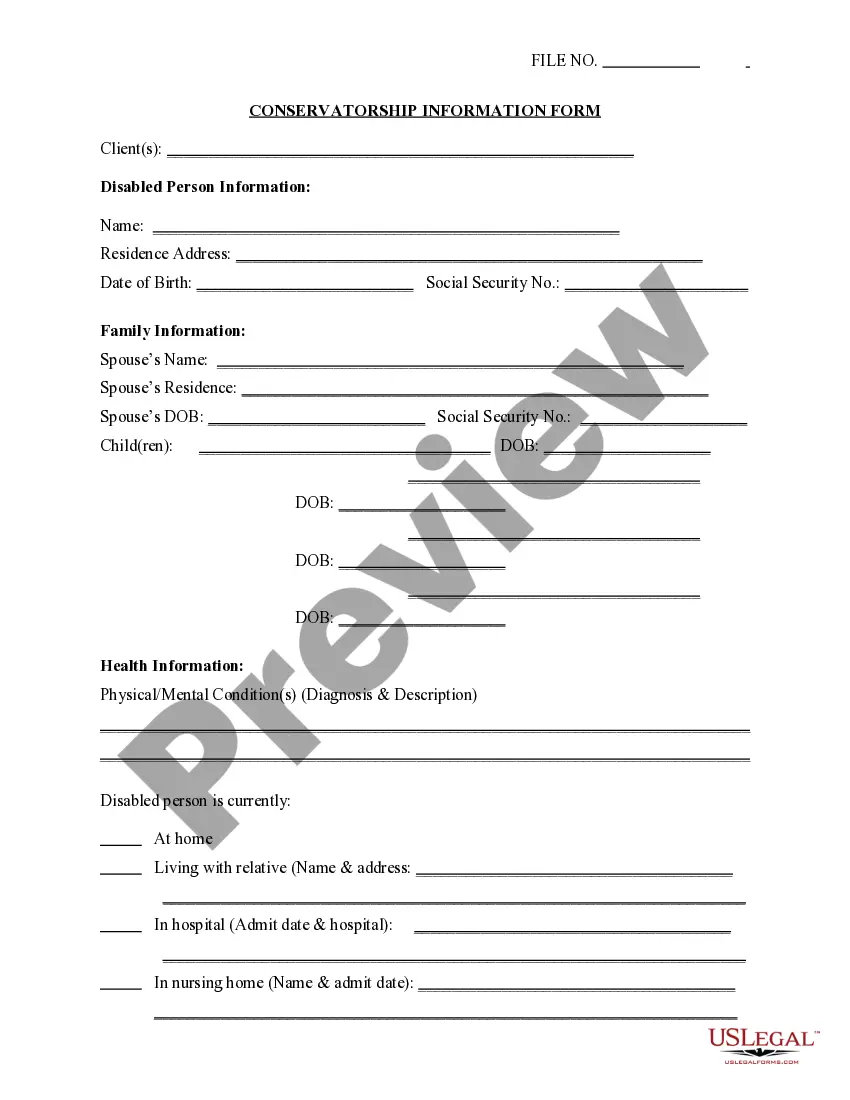
Filing for conservatorship in Michigan involves several key steps. First, you need to gather required documents, including a petition for conservatorship, a medical evaluation, and Michigan Letters of Conservatorship forms. After completing these documents, you will submit them to the probate court in your county. Finally, you may need to attend a hearing where you will explain why a conservatorship is necessary for your loved one.
To obtain conservatorship in Michigan, start by filing a petition with the probate court, outlining why conservatorship is necessary. You will need to provide evidence of the individual's incapacity and demonstrate that you are suitable to serve as a conservator. Once the petition is filed, the court will schedule a hearing, and if approved, you will receive Michigan Letters of Conservatorship, granting you legal authority.
In Michigan, the difference between guardianship and conservatorship lies in the areas of responsibility. Guardianship addresses the personal needs of an individual, including healthcare and living arrangements, while conservatorship focuses on financial matters. Both options often require Michigan Letters of Conservatorship to administer the respective duties effectively.
While it is possible to pursue conservatorship without a lawyer in Michigan, it can be complex. The legal procedures, paperwork, and court hearings may prove challenging for someone without legal experience. Utilizing a platform like US Legal Forms can simplify the process and provide you with the necessary documents to successfully obtain Michigan Letters of Conservatorship.
To obtain letters of authority in Michigan, you must first file a petition with the probate court in the county where the individual is located. After submitting the petition, the court will hold a hearing to evaluate your request. If the judge approves your petition, you will receive the Michigan Letters of Conservatorship, granting you the authority to manage the individual's financial and personal affairs.