Michigan Dry Well Agreement
What is this form?
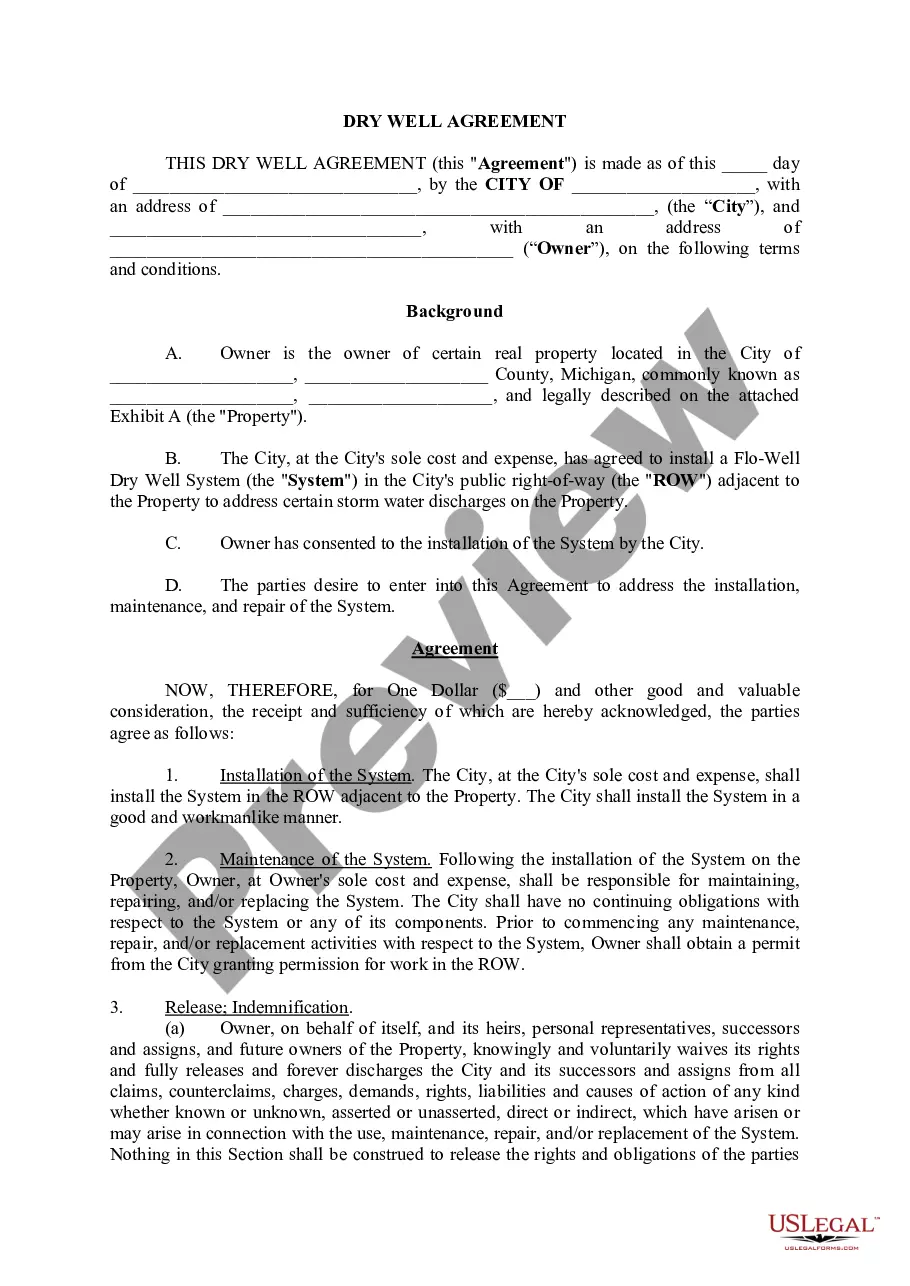
The Dry Well Agreement is a legal document that outlines the terms under which a city can drill and install a dry well system on a property owner's land. This agreement formalizes the relationship between the city and the property owner, ensuring clarity on installation, maintenance, and repair responsibilities. Unlike other property agreements, the Dry Well Agreement specifically addresses stormwater management systems and their installation in public rights-of-way, making it essential for property owners dealing with such municipal projects.
Key parts of this document
- Installation of the System: Details the city's responsibility for installing the dry well system at its expense in the designated area.
- Maintenance of the System: Outlines the owner's obligations to maintain and repair the system post-installation.
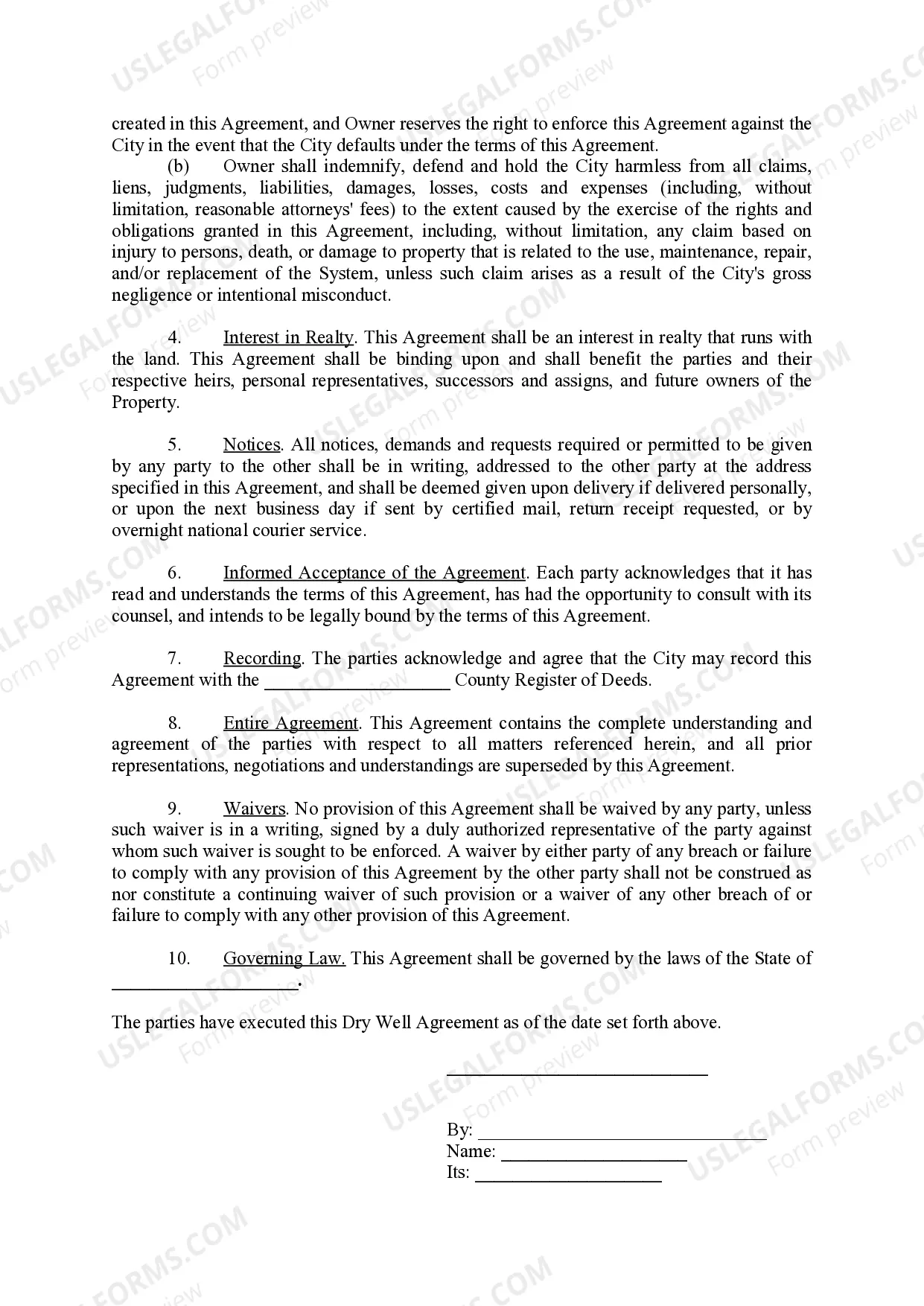
- Release and Indemnification: Includes provisions for liability and claims related to the system, protecting both parties.
- Interest in Realty: Clarifies that the agreement runs with the land, binding future owners of the property.
- Notices: Describes how parties will communicate regarding the agreement.
Common use cases
This form should be used when a city plans to install a dry well system on private property and requires the owner's consent. It is applicable in scenarios where stormwater management systems are necessary to handle drainage issues, particularly in urban settings where managing excess water from rain is critical. Property owners will find this agreement useful to ensure they understand their rights and responsibilities concerning the installation and upkeep of the system.
Who needs this form
This form is intended for:
- Property owners whose land is adjacent to city public rights-of-way and requires a dry well installation.
- City officials responsible for managing municipal water discharge and needing to formalize agreements with property owners.
- Developers or contractors involved in urban development projects that may involve city-managed stormwater systems.
How to prepare this document
- Identify the parties: Fill in the names and addresses of the City and the Property Owner.
- Specify the property: Clearly describe the property location and attach the legal description as Exhibit A.
- Enter the installation details: Provide specific terms regarding the location and maintenance of the system.
- Review liability clauses: Ensure that the Owner understands the indemnification and release clauses outlined in the agreement.
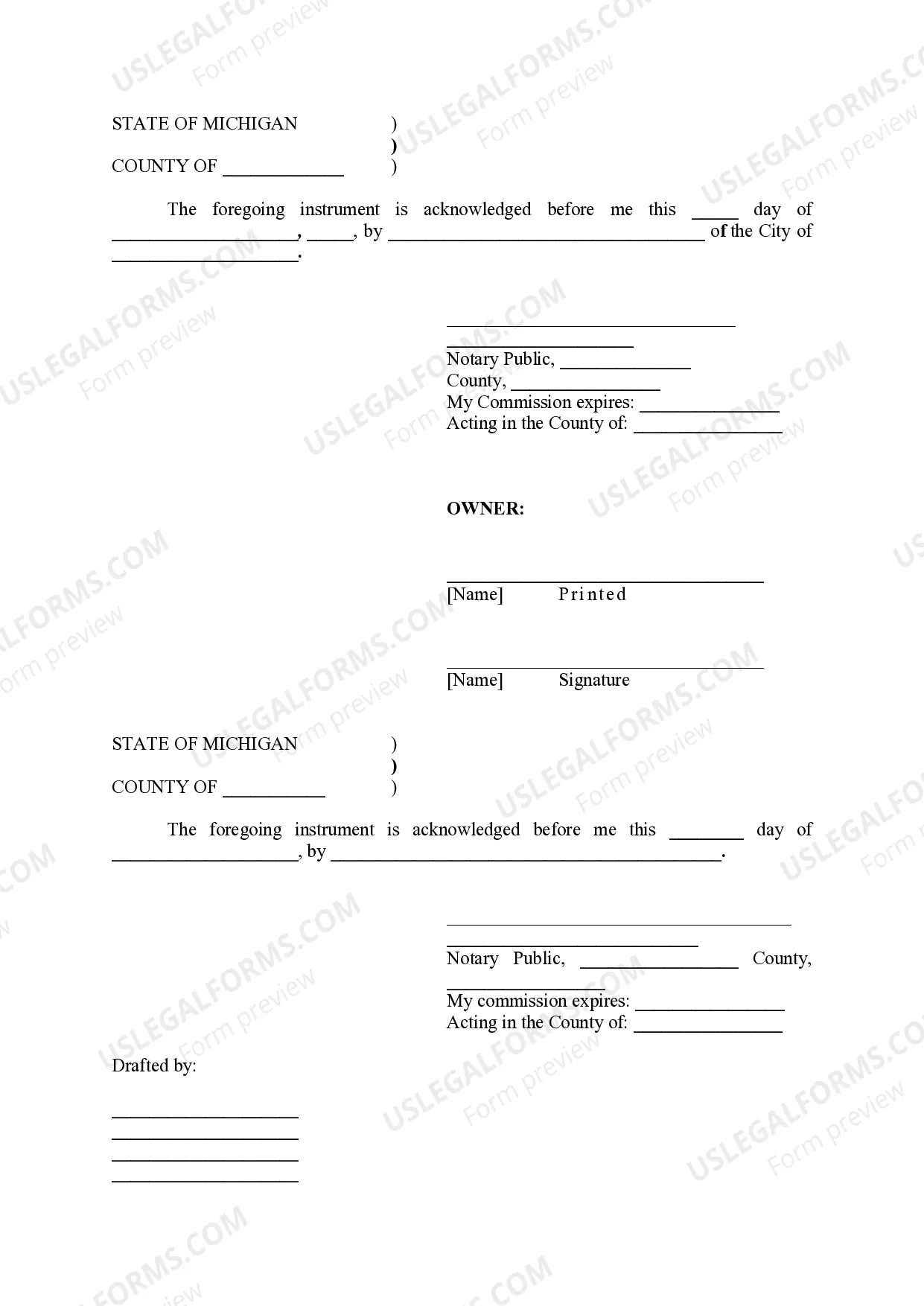
- Obtain signatures: Both parties should sign and date the agreement in the designated areas, ensuring compliance with any required notarization.
Notarization guidance
Yes, this form must be notarized to be legally valid. Ensuring proper notarization helps protect all parties involved and confirms the authenticity of signatures. US Legal Forms offers integrated online notarization services available 24/7 for secure video calls, maintaining legal equivalence without the need to travel.
Get your form ready online
Our built-in tools help you complete, sign, share, and store your documents in one place.
Make edits, fill in missing information, and update formatting in US Legal Forms—just like you would in MS Word.
Download a copy, print it, send it by email, or mail it via USPS—whatever works best for your next step.
Sign and collect signatures with our SignNow integration. Send to multiple recipients, set reminders, and more. Go Premium to unlock E-Sign.
If this form requires notarization, complete it online through a secure video call—no need to meet a notary in person or wait for an appointment.
We protect your documents and personal data by following strict security and privacy standards.

Make edits, fill in missing information, and update formatting in US Legal Forms—just like you would in MS Word.

Download a copy, print it, send it by email, or mail it via USPS—whatever works best for your next step.

Sign and collect signatures with our SignNow integration. Send to multiple recipients, set reminders, and more. Go Premium to unlock E-Sign.

If this form requires notarization, complete it online through a secure video call—no need to meet a notary in person or wait for an appointment.

We protect your documents and personal data by following strict security and privacy standards.
Common mistakes
- Failing to include complete and accurate property descriptions.
- Not understanding the implications of the release and indemnification clauses.
- Neglecting to obtain necessary permits before maintenance or repair work.
- Not having the agreement notarized when required by local law.
Benefits of completing this form online
- Convenience: Easily download the form and complete it at your own pace.
- Editability: Modify the document to fit unique circumstances without needing a lawyer.
- Reliability: Access forms drafted by licensed attorneys to ensure legal soundness.
Legal use & context
- Establishes legal rights for both the city and property owner regarding the dry well system.
- Helps prevent future disputes over responsibilities for maintenance and liability.
- Legally binding once signed and notarized, making it enforceable in court if needed.
Quick recap
- The Dry Well Agreement is crucial for clear communication between property owners and city officials regarding stormwater management.
- Property owners hold maintenance responsibilities once the system is installed.
- Proper completion and notarization of the agreement ensure its legal enforceability and protect against potential disputes.
Looking for another form?

Form popularity
FAQ
Driving your own well in Michigan is possible, but it comes with specific guidelines. The Michigan Dry Well Agreement outlines requirements for well construction to protect both the environment and public health. You may need permits and should follow state regulations to ensure your well is safe and legal. Engaging with experienced professionals can help navigate these requirements.
In Michigan, you cannot simply dig a well anywhere and expect to find water. Local laws and regulations, including the Michigan Dry Well Agreement, determine where wells can be located. Additionally, the availability of water sources varies based on geological conditions. It's essential to consult with professionals to ensure compliance with state regulations.
Abandoning a well in Michigan requires following specific procedures to ensure safety and environmental protection. You must notify the appropriate local authorities and hire a licensed professional to properly seal the well. A Michigan Dry Well Agreement can help guide you through this process to comply with all necessary regulations.
The minimum depth for a well in Michigan is usually set at 25 feet, although local conditions can influence this requirement. Sticking to this depth helps ensure a reliable water supply and reduces contamination risks. Following a Michigan Dry Well Agreement can provide clarity on what you need for safe and effective well construction.
The shallowest a well can be in Michigan is typically around 10 to 15 feet, depending on local regulations and water quality. Shallow wells may be more prone to contamination from surface water. Always refer to a Michigan Dry Well Agreement to ensure compliance with state standards and protect your water source.
In Michigan, the required depth of a well varies by location and the water table. Generally, wells should be at least 25 feet deep to reach adequate water supplies. Consulting a Michigan Dry Well Agreement can provide you with the necessary depth requirements based on your specific region.
The lifespan of a well in Michigan typically ranges from 20 to 50 years, depending on maintenance and water quality. Regular inspection and adherence to a Michigan Dry Well Agreement can extend your well’s life. Investing in proper care can also prevent significant issues down the road that may require costly repairs.
Drilling your own well in Michigan is legal, but there are regulations you must follow. To comply with state law, you need a permit, and your well must meet specific construction guidelines. A Michigan Dry Well Agreement can help you understand these requirements and ensure your well is safe and compliant.