Michigan Letter to Lienholder to Notify of Trust
Overview of this form
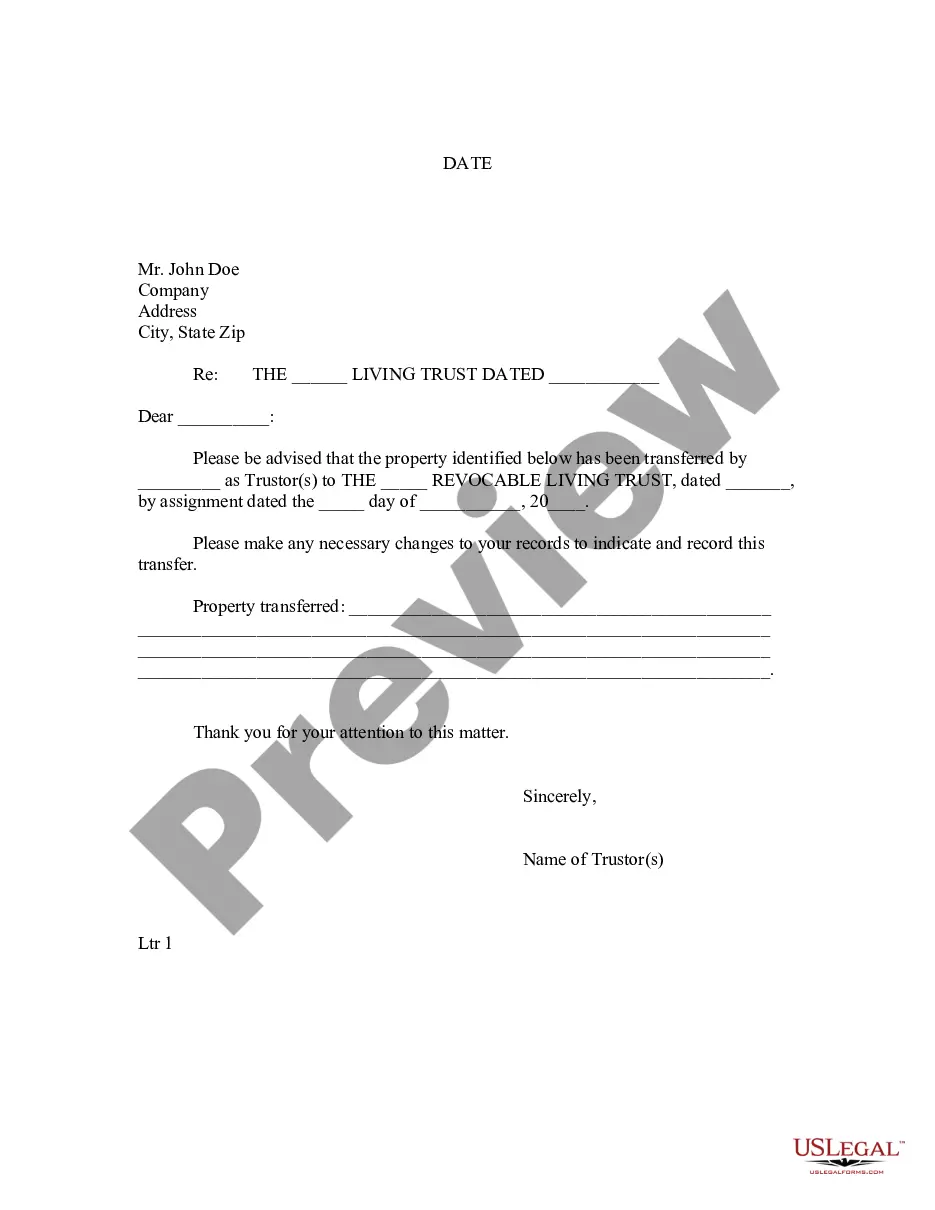
The Letter to Lienholder to Notify of Trust is a formal notification letter informing a lienholder that property has been transferred to a living trust. This form is essential for estate planning, as it helps clarify ownership transfer to avoid potential disputes or misunderstandings regarding property rights. Unlike generic transfer letters, this document specifically addresses the transfer of assets into a living trust, emphasizing the trustor's intent.
Main sections of this form
- Date of the notification
- Details of the lienholder, including name and address
- Identification of the living trust and its creation date
- Specific property that has been transferred
- Trustor's name and signature
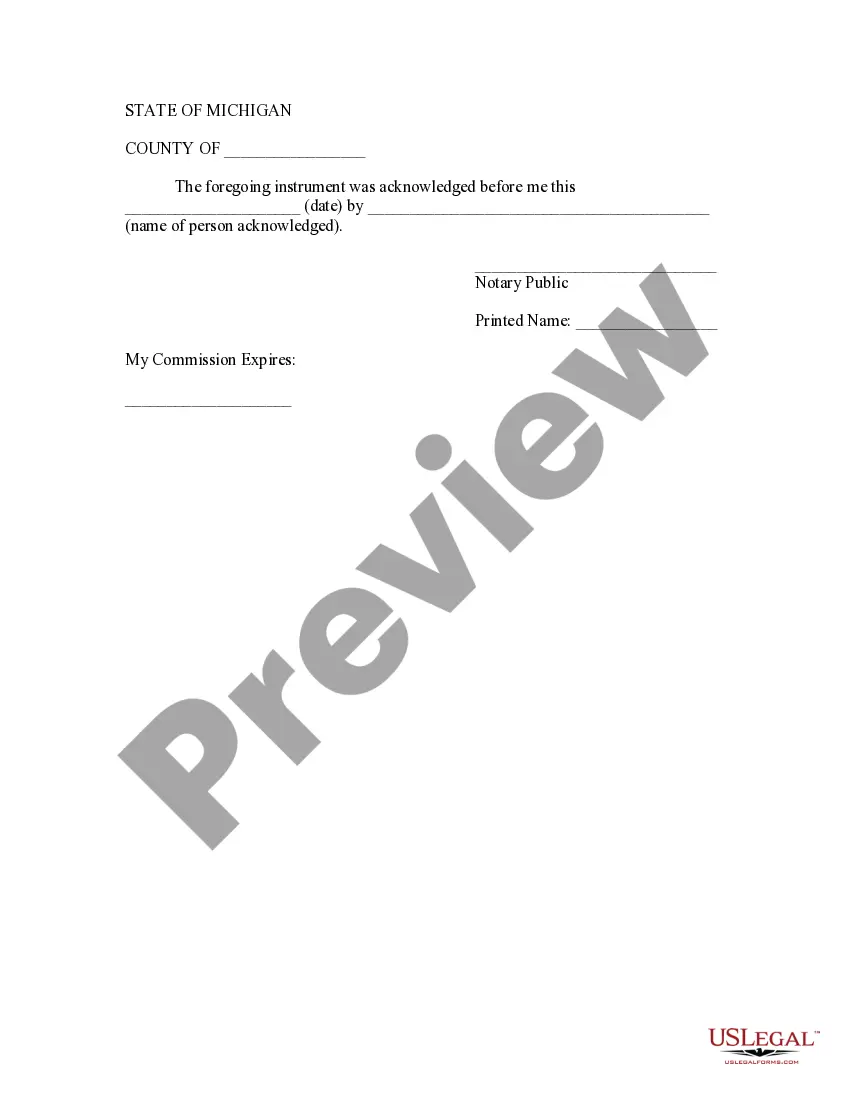
- Notary acknowledgment section
When to use this form
This form should be used when a property owner transfers their property into a living trust, and the lienholder needs to be made aware of this change. It is crucial in situations involving estate planning, especially if the lienholder has a financial interest in the property, such as a mortgage or other loan. Sending this notification ensures that all parties are informed about the trust holding the property, which can help streamline future transactions or claims.
Who can use this document
- Trustors establishing a living trust
- Individuals who have secured loans or mortgages with lienholders on property being transferred
- Estate planners assisting clients with property transfers
- Individuals seeking to clarify property ownership for lienholders
How to complete this form
- Enter the current date at the top of the letter.
- Provide the lienholder's name and address in the appropriate fields.
- Specify the name of the living trust and its creation date.
- Describe the property being transferred clearly.
- Sign the letter as the Trustor and include the date of the signature.
- Arrange for notarization if necessary.
Notarization guidance
To make this form legally binding, it must be notarized. Our online notarization service, powered by Notarize, lets you verify and sign documents remotely through an encrypted video session.
Get your form ready online
Our built-in tools help you complete, sign, share, and store your documents in one place.
Make edits, fill in missing information, and update formatting in US Legal Forms—just like you would in MS Word.
Download a copy, print it, send it by email, or mail it via USPS—whatever works best for your next step.
Sign and collect signatures with our SignNow integration. Send to multiple recipients, set reminders, and more. Go Premium to unlock E-Sign.
If this form requires notarization, complete it online through a secure video call—no need to meet a notary in person or wait for an appointment.
We protect your documents and personal data by following strict security and privacy standards.

Make edits, fill in missing information, and update formatting in US Legal Forms—just like you would in MS Word.

Download a copy, print it, send it by email, or mail it via USPS—whatever works best for your next step.

Sign and collect signatures with our SignNow integration. Send to multiple recipients, set reminders, and more. Go Premium to unlock E-Sign.

If this form requires notarization, complete it online through a secure video call—no need to meet a notary in person or wait for an appointment.

We protect your documents and personal data by following strict security and privacy standards.
Typical mistakes to avoid
- Failing to specify the exact property details in the letter.
- Not updating lienholder records promptly after the trust is created.
- Neglecting to include the creation date of the living trust.
- Omitting the Trustor's signature or date.
Advantages of online completion
- Quick access to a professionally drafted document tailored for your needs.
- Easy customization to fit your specific property details.
- Convenient downloading and printing options for immediate use.
- Confidence in the legal reliability, drawn from templates created by licensed attorneys.
Looking for another form?
Form popularity
FAQ
Writing a trust distribution letter requires clarity and precision. Start by outlining the trust's details, including the Michigan Letter to Lienholder to Notify of Trust, and specify how assets will be distributed. Be sure to include recipient information and a clear breakdown of the distribution. Utilizing platforms like US Legal Forms can streamline this process, providing templates that ensure your letter meets all necessary legal standards.
A trust notification is a formal communication that informs relevant parties about the existence of a trust. When you send a Michigan Letter to Lienholder to Notify of Trust, it helps prevent any misunderstandings regarding property or financial transactions. This notification ensures that the lienholder is aware of the trust's terms and the trustee's authority. By doing so, you protect the interests of both the trust and its beneficiaries.
To publish a notice to creditors in Michigan, you must place the notice in a local newspaper that circulates in the area where the trust was established. This publication alerts potential creditors of the trust's existence and their opportunity to claim debts. For a concise process, consider using a Michigan Letter to Lienholder to Notify of Trust as a template to inform creditors proactively.
A certificate of trust in Michigan typically must include essential information such as the trust's name, date, and the names of the trustees. Moreover, it should outline the powers of the trustees and any limitations. When interacting with lienholders, a Michigan Letter to Lienholder to Notify of Trust can effectively convey this information.
A notice of intent to lien in Michigan is a formal declaration by a creditor indicating their intention to place a lien on a property. This notice provides specific details about the debt owed and serves as a precursor to taking legal action. If you are managing a trust, you might consider using a Michigan Letter to Lienholder to Notify of Trust to address any liens affecting the trust's assets.
No, a trust does not have to be recorded in Michigan. The trust operates privately unless you decide to record certain documents, like a deed. However, to properly notify lienholders, using a Michigan Letter to Lienholder to Notify of Trust can help clarify the trust's provisions to interested parties.
In Michigan, a certificate of trust typically does not need to be recorded unless you are transferring real estate or other specific assets. Instead, this document serves as proof of the trust's existence and details its terms when necessary. When dealing with lienholders through a Michigan Letter to Lienholder to Notify of Trust, including your certificate may facilitate clearer communication.
In Michigan, a trust does not generally need to be filed with the court. This means you can create and manage your trust without court involvement. However, depending on your unique circumstances, such as disputes or specific asset management, legal advice can be beneficial. For those leveraging a Michigan Letter to Lienholder to Notify of Trust, understanding this process is crucial.