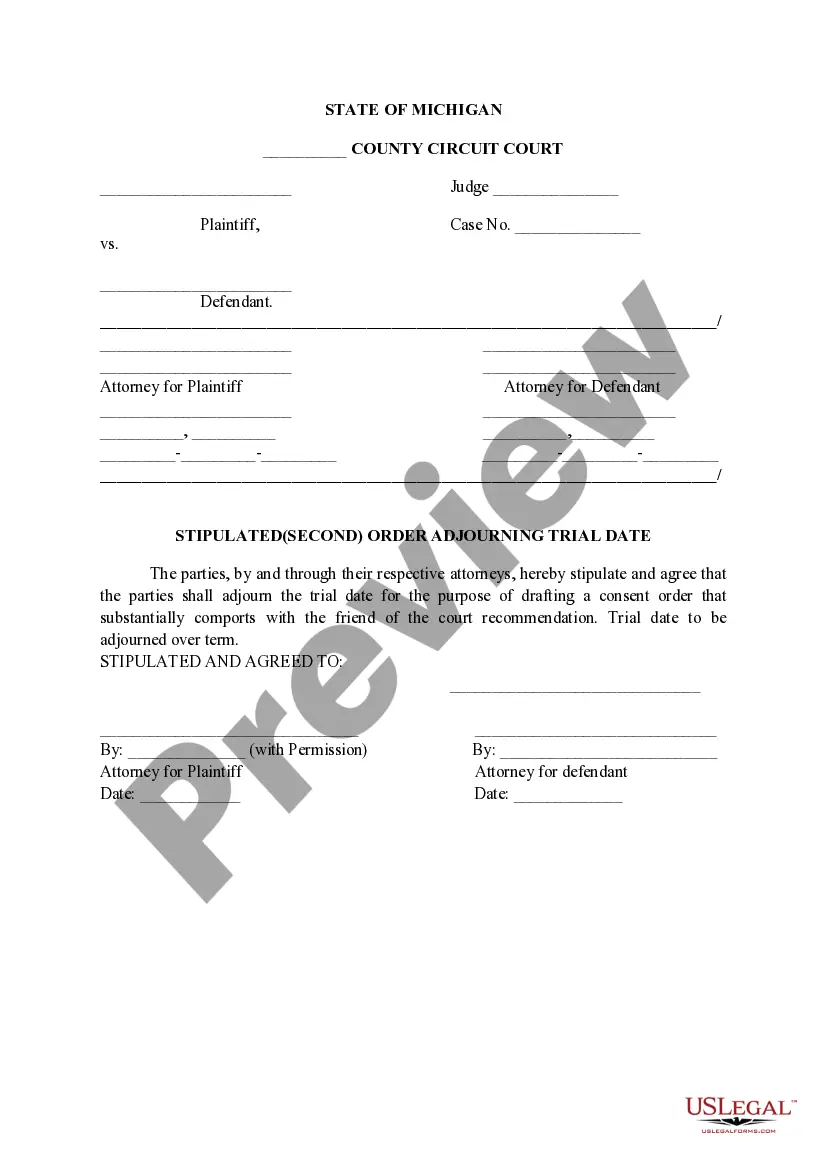
Michigan Stipulated (Second) Order to Adjourn Trial
What this document covers
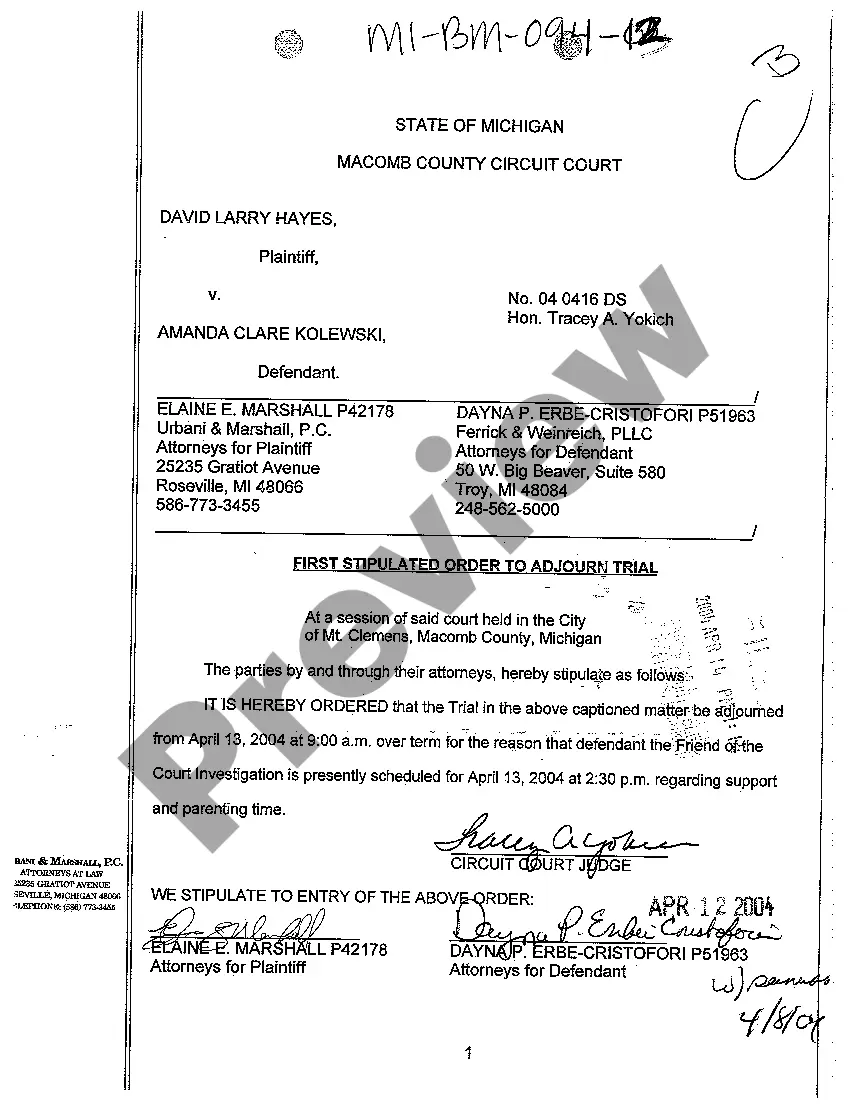
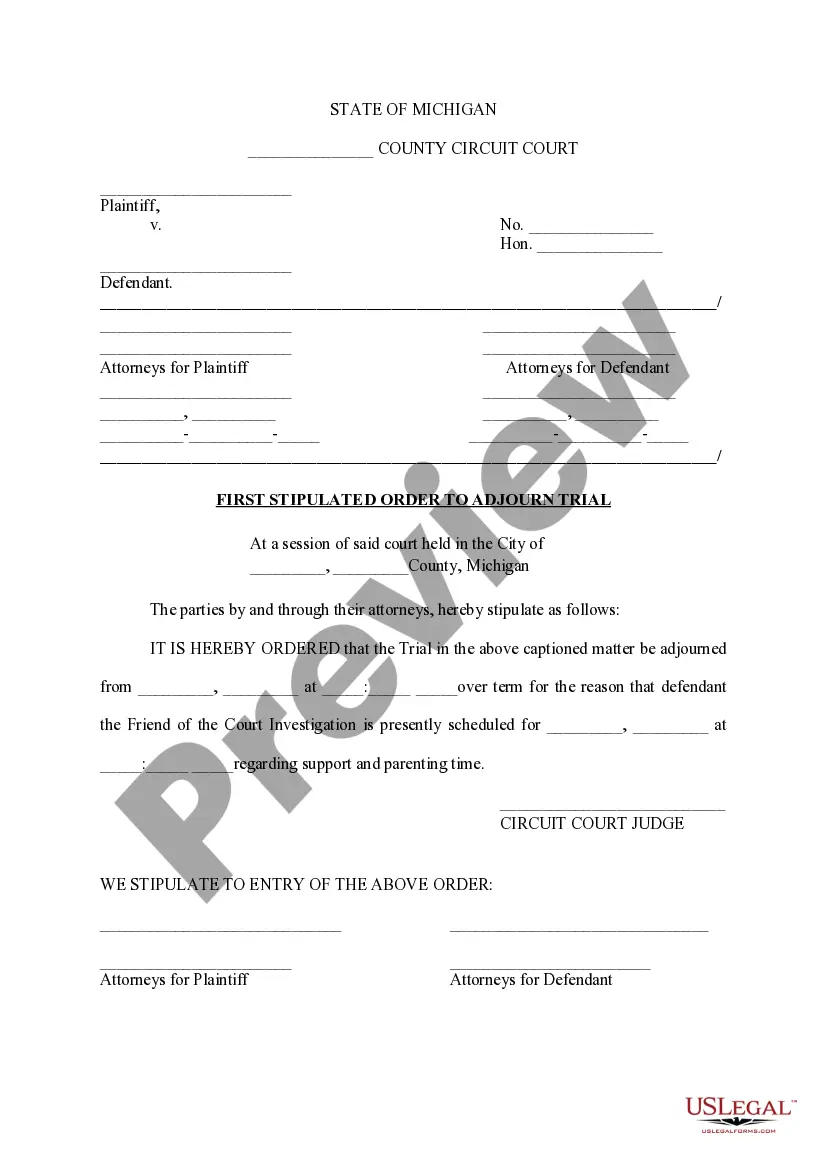
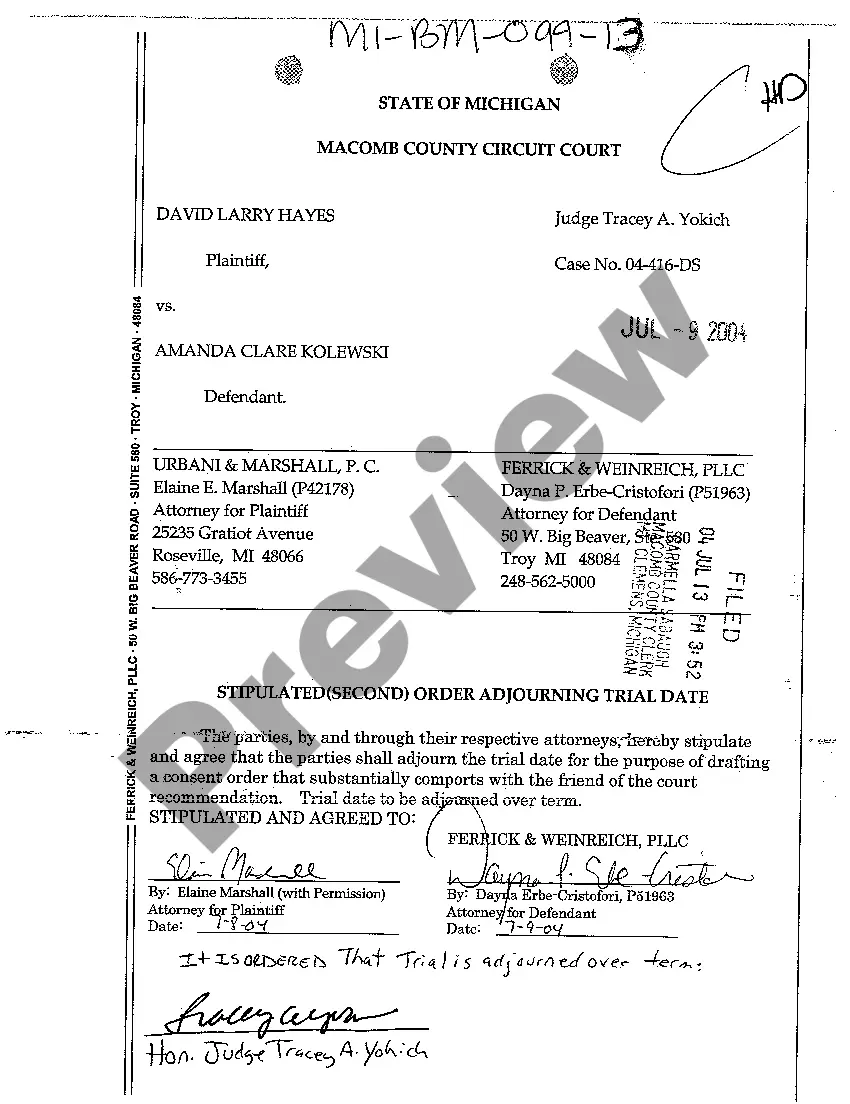
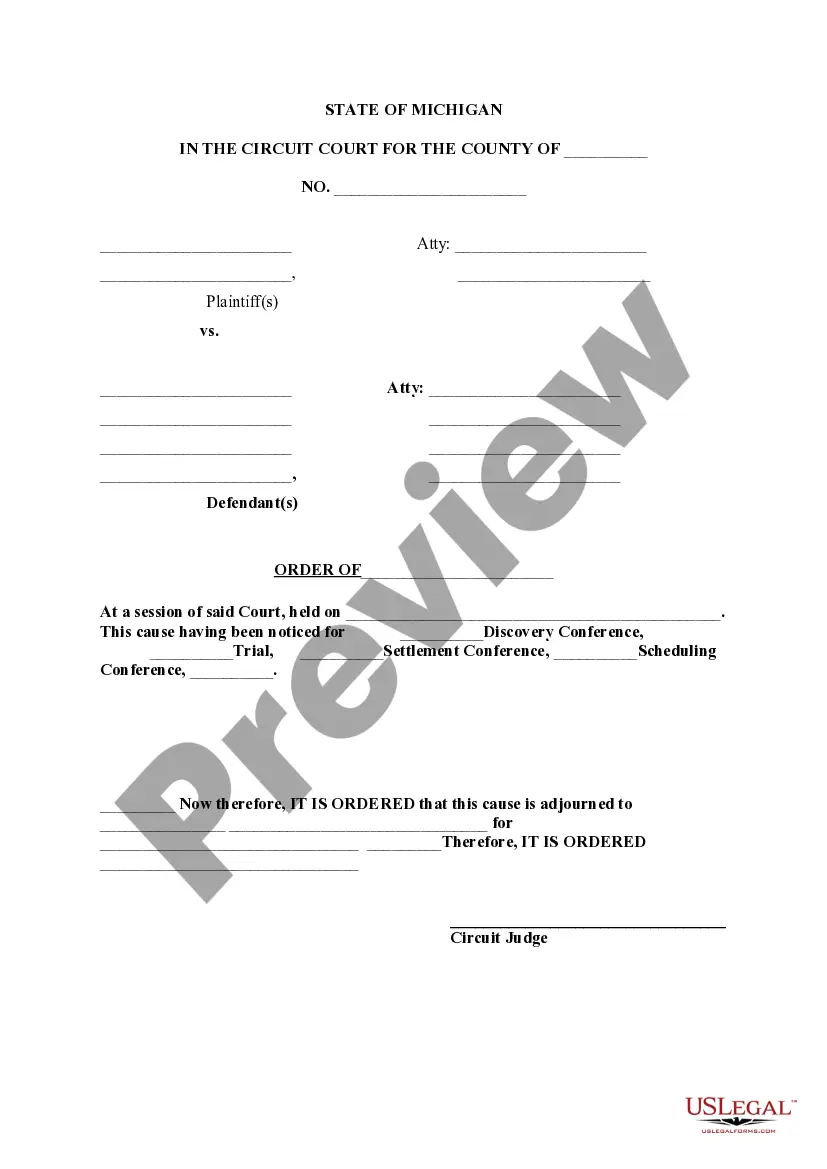
The Stipulated (Second) Order to Adjourn Trial is a legal document that allows parties in a court case to request a second extension for postponing the trial date. This form is essential for providing additional time necessary for parties to receive and review evidence, conduct investigations, and engage in plea negotiations. It differs from other trial adjournment requests by specifically noting that both parties have agreed to the postponement for collaborative purposes, often tied to a consent order that aligns with court recommendations.
Form components explained
- Case caption with court name, parties, and case number.
- Section for attorneys' names and contact information for both the plaintiff and defendant.
- Agreement clause stating the purpose of the adjournment and the willingness of both parties.
- Signature lines for both attorneys, along with dates to indicate agreement.
When to use this form
This form should be used when both parties in a court case need additional time to prepare for trial. Circumstances can include awaiting discovery materials, conducting further investigation, preparing legal motions, or negotiating plea deals. It is particularly useful in situations where the parties seek a deferred trial date and have mutual consent regarding the adjournment.
Intended users of this form
- Litigants involved in a civil or criminal court case who need to postpone their trial.
- Attorneys representing plaintiffs or defendants who agree on the adjournment.
- Parties seeking more time for evidence gathering and preparation in court.
Steps to complete this form
- Fill in the case caption with the appropriate court name, parties involved, and the case number.
- Enter the names and contact information for both attorneys representing the plaintiff and the defendant.
- Clearly state the reason for the adjournment in the agreement clause.
- Both attorneys should sign and date the form to indicate their agreement.
- Ensure all details are accurate before submitting the form to the court.
Notarization guidance
This form does not typically require notarization unless specified by local law. Ensure compliance with any additional requirements based on jurisdiction.
Get your form ready online
Our built-in tools help you complete, sign, share, and store your documents in one place.
Make edits, fill in missing information, and update formatting in US Legal Forms—just like you would in MS Word.
Download a copy, print it, send it by email, or mail it via USPS—whatever works best for your next step.
Sign and collect signatures with our SignNow integration. Send to multiple recipients, set reminders, and more. Go Premium to unlock E-Sign.
If this form requires notarization, complete it online through a secure video call—no need to meet a notary in person or wait for an appointment.
We protect your documents and personal data by following strict security and privacy standards.

Make edits, fill in missing information, and update formatting in US Legal Forms—just like you would in MS Word.

Download a copy, print it, send it by email, or mail it via USPS—whatever works best for your next step.

Sign and collect signatures with our SignNow integration. Send to multiple recipients, set reminders, and more. Go Premium to unlock E-Sign.

If this form requires notarization, complete it online through a secure video call—no need to meet a notary in person or wait for an appointment.

We protect your documents and personal data by following strict security and privacy standards.
Common mistakes
- Failing to provide the correct case number or court information.
- Not obtaining both attorneys' signatures before submission.
- Leaving out the reason for the adjournment, which may lead to a rejected request.
Benefits of using this form online
- Convenience of downloading the form instantly from any device.
- Editability allows for quick adjustments to tailor the form to specific needs.
- Access to reliable templates drafted by licensed attorneys ensures legal compliance.
Looking for another form?
Form popularity
FAQ
The procedure for adjournment typically involves submitting a request to the court along with a proposed Michigan Stipulated (Second) Order to Adjourn Trial. This order outlines the reasons for the adjournment and the new requested date. After submission, the court will review your request and either approve or deny the adjournment. Utilizing services like uslegalforms can simplify this process and ensure you have the necessary documentation to support your request.
To write an adjournment petition, start by clearly stating the reason for your request. Make sure to include relevant information, such as the case number and the specific trial date you wish to adjourn. By using a Michigan Stipulated (Second) Order to Adjourn Trial, you can streamline the process and ensure that your petition meets legal standards. Additionally, consider using resources from uslegalforms to guide you in crafting a thorough and effective petition.
Adjourned by stipulation means that the postponement of a court date has been mutually agreed upon by both parties involved in the case. This formal agreement is crucial in fostering cooperation and preventing unnecessary delays. A Michigan Stipulated (Second) Order to Adjourn Trial captures this agreement, providing a clear, legal basis for the postponement. This process simplifies scheduling and helps maintain a respectful and communicative relationship between parties in the legal arena.
In legal terminology, a stipulation is an agreement made by parties in a case about certain facts or procedures. This can expedite court processes and reduce confusion, as both sides acknowledge specific elements of the case. In the context of a Michigan Stipulated (Second) Order to Adjourn Trial, stipulations help ensure that all parties are aligned on adjournment terms. Using stipulations effectively can be advantageous in negotiating trial dates and reducing court appearance stress.
Rule 2.313 in Michigan governs the discovery process during litigation, particularly focusing on the powers of the court to enforce compliance. This rule allows courts to compel disclosure of evidence and information relevant to a case. Understanding Rule 2.313 is valuable, especially when preparing for a Michigan Stipulated (Second) Order to Adjourn Trial, as it emphasizes the importance of mutual transparency in legal matters. Recognizing these rules can enhance your approach to trial preparation.
A stipulation to adjourn refers to an agreement between parties involved in a legal matter to postpone a scheduled court event. This mutual consent is essential for avoiding delays caused by unilateral requests, as it strengthens the rationale for a Michigan Stipulated (Second) Order to Adjourn Trial. By stipulating to adjourn, both parties signify their willingness to cooperate for a more favorable schedule. This cooperative approach can be beneficial for maintaining a positive relationship during legal proceedings.
The number of times a court date can be adjourned in Michigan generally depends on the specific circumstances of each case. The court typically allows multiple adjournments if both parties consent and proper procedures are followed. A Michigan Stipulated (Second) Order to Adjourn Trial can streamline this process by formalizing agreements on adjournments. It is important to communicate effectively with the court to understand potential limitations.
In Michigan, Rule 2.119 pertains to the scheduling and adjournment of trials and hearings. This rule outlines the procedures that parties must follow to request a trial adjournment, including the requirement for a stipulated order when both parties agree. Understanding Rule 2.119 is crucial when filing a Michigan Stipulated (Second) Order to Adjourn Trial. This procedure helps ensure that your case moves forward smoothly while respecting all legal guidelines.
Rules for adjournment motions typically require clear communication and proper documentation. When filing a Michigan Stipulated (Second) Order to Adjourn Trial, it's essential to adhere to court deadlines and procedural guidelines. Being thorough and organized in your approach not only fosters a smoother process but also aids in obtaining timely decisions from the court.
Conditions for a motion to adjourn often include valid justifications like scheduling conflicts, the need for additional evidence, or unforeseen circumstances. In reference to a Michigan Stipulated (Second) Order to Adjourn Trial, creating a clear record of these conditions is crucial. This helps all parties align on the new trial timeline, minimizing potential disruptions.