Michigan Lease Subordination Agreement
Understanding this form
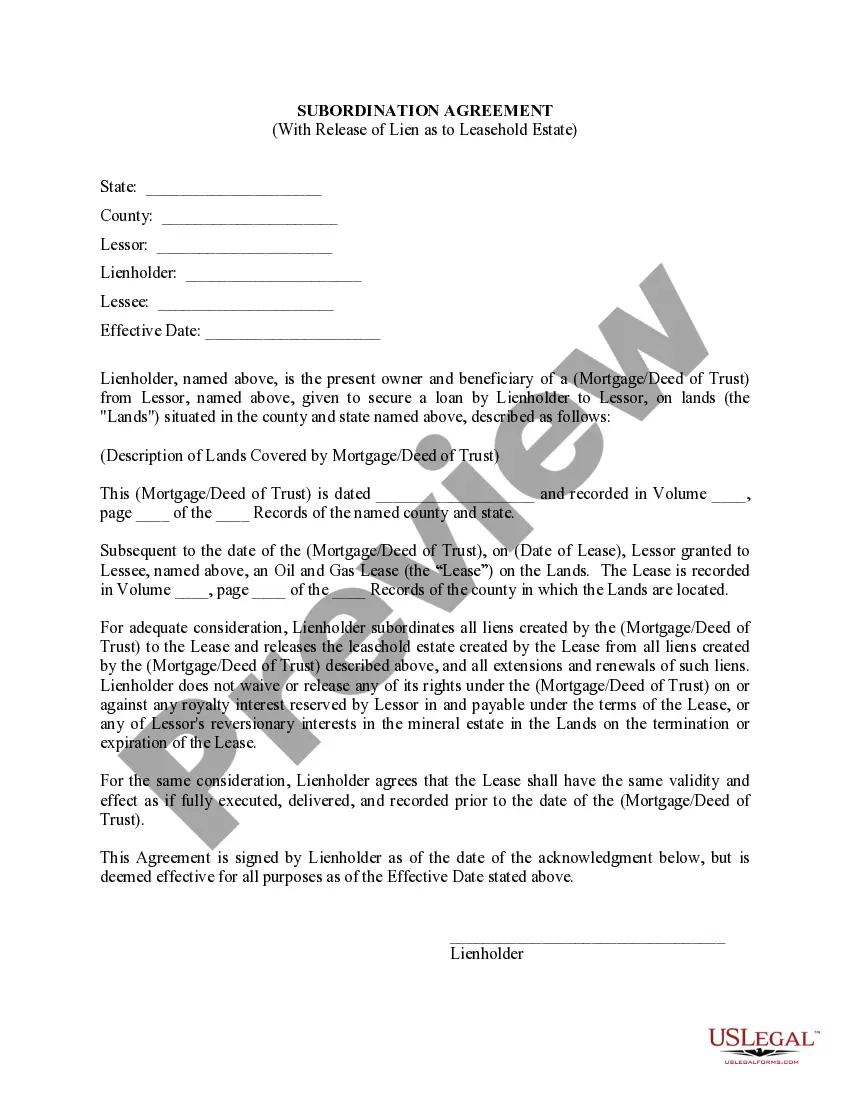
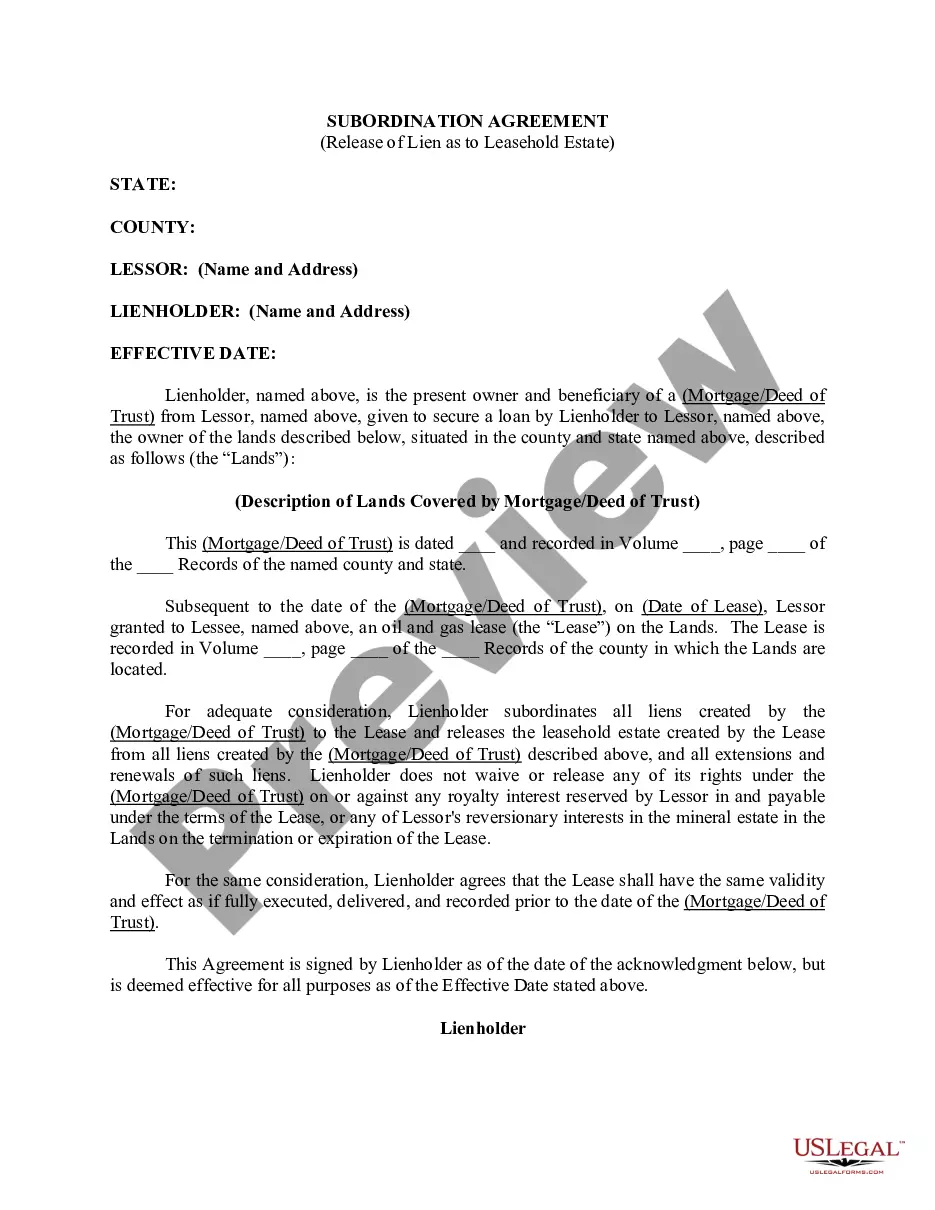
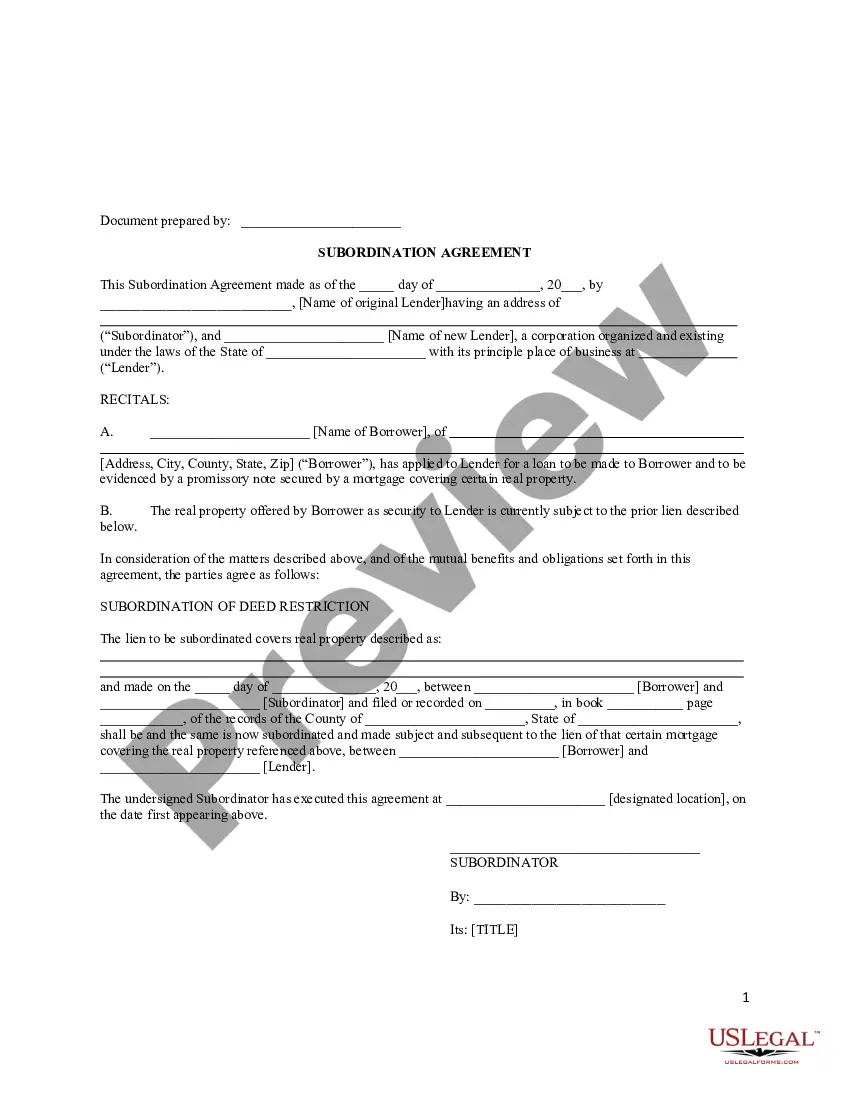
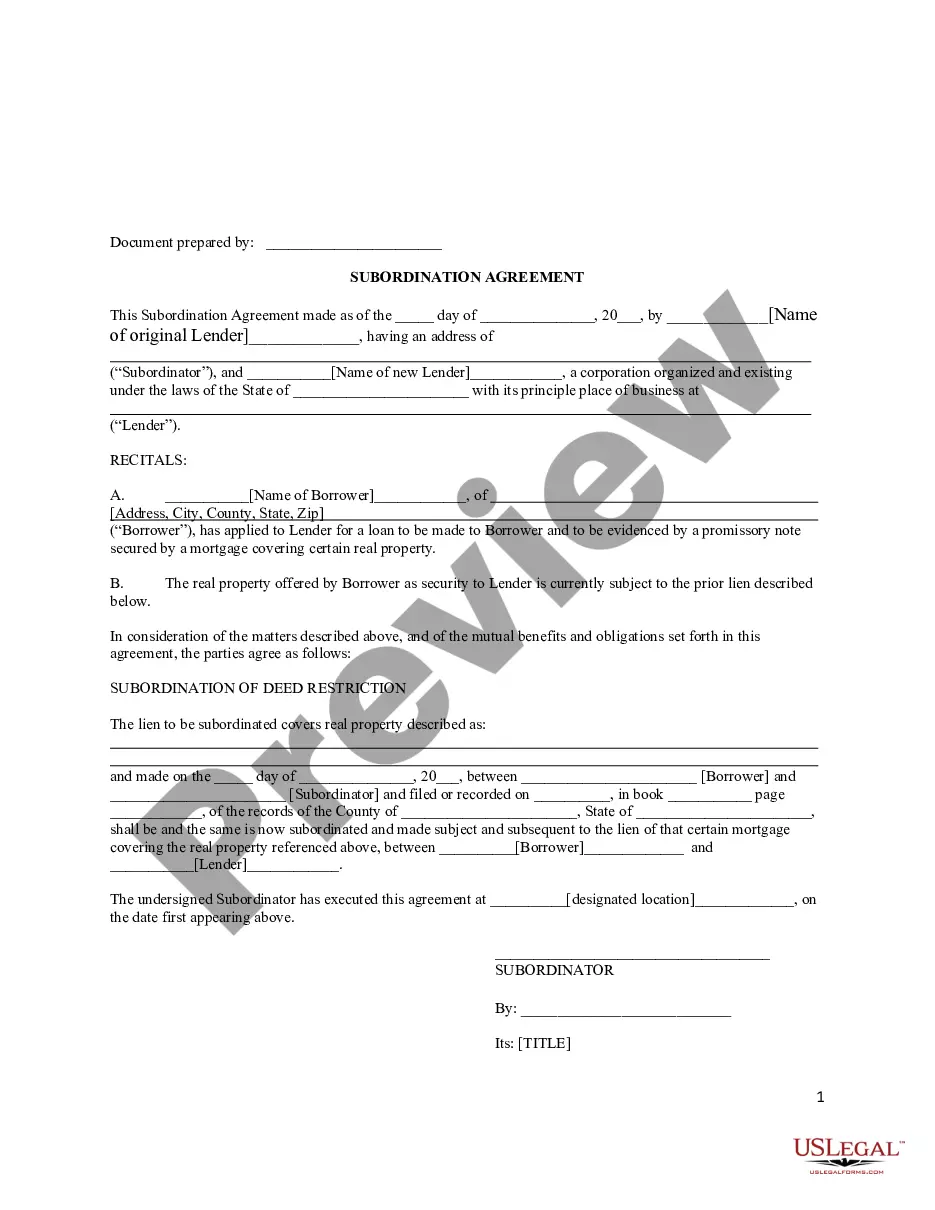
The Lease Subordination Agreement is a legal document that establishes the order of priority among liens on a property. Specifically, this agreement subordinates a mortgage or deed of trust to an oil, gas, or mineral lease. This means that the lien created by the mortgage or deed of trust will be placed behind the lease, allowing the lessee (tenant) to maintain their rights under the lease agreement without interference from the lienholder.
Key parts of this document
- Identification of parties: Lessor, Lessee, and Lienholder.
- Effective date for the agreement.
- Details of the mortgage or deed of trust involved.
- Description of the property subject to the leases and liens.
- Release of the leasehold estate from the existing liens.
- Preservation of lienholder's rights against royalty interests.
When this form is needed
This form is typically used when a property owner, who has an existing mortgage or deed of trust, wishes to enter into a mineral, oil, or gas lease. This agreement allows the new lease to take priority over the existing loan, ensuring that any proceeds from the lease are protected from the mortgage lien. It is crucial in scenarios where financing for property investments or improvements is necessary and the property owner seeks to maintain lease rights.
Who this form is for
- Property owners (Lessors) entering into mineral, oil, or gas leases.
- Lessee or tenants who require priority rights under a lease agreement.
- Lienholders looking to establish the terms of subordination with respect to existing mortgages or deeds of trust.
- Legal professionals assisting clients with property financing and leasing agreements.
Instructions for completing this form
- Identify all parties involved: Lessor, Lessee, and Lienholder.
- Specify the effective date of the agreement.
- Provide details of the existing mortgage or deed of trust, including recording information.
- Describe the property covered by the lease and mortgage.
- Ensure all parties sign and date the agreement where indicated.
Is notarization required?
This form does not typically require notarization unless specified by local law. Always check local requirements to ensure compliance with any applicable regulations.
Get your form ready online
Our built-in tools help you complete, sign, share, and store your documents in one place.
Make edits, fill in missing information, and update formatting in US Legal Forms—just like you would in MS Word.
Download a copy, print it, send it by email, or mail it via USPS—whatever works best for your next step.
Sign and collect signatures with our SignNow integration. Send to multiple recipients, set reminders, and more. Go Premium to unlock E-Sign.
If this form requires notarization, complete it online through a secure video call—no need to meet a notary in person or wait for an appointment.
We protect your documents and personal data by following strict security and privacy standards.

Make edits, fill in missing information, and update formatting in US Legal Forms—just like you would in MS Word.

Download a copy, print it, send it by email, or mail it via USPS—whatever works best for your next step.

Sign and collect signatures with our SignNow integration. Send to multiple recipients, set reminders, and more. Go Premium to unlock E-Sign.

If this form requires notarization, complete it online through a secure video call—no need to meet a notary in person or wait for an appointment.

We protect your documents and personal data by following strict security and privacy standards.
Mistakes to watch out for
- Failing to accurately identify all parties involved.
- Omitting to provide complete property descriptions.
- Not including the effective date or misdating the agreement.
- Neglecting to secure all necessary signatures before submission.
Benefits of using this form online
- Easy access to professionally drafted legal templates.
- Convenient downloading and printing options.
- Ability to fill out the form at your own pace.
- Reliable resources to help you understand each step.
Looking for another form?


Form popularity
FAQ
Yes, a Michigan Lease Subordination Agreement typically needs to be recorded with the county clerk's office to be legally binding on subsequent purchasers or lenders. Recording the agreement ensures that all parties involved are aware of the subordination terms, thus protecting everyone’s interests. It's best to check local regulations or consult a legal professional for specific recording requirements. Uslegalforms offers resources and templates to help you navigate these legal processes effectively.
To fill out a Michigan Lease Subordination Agreement, start by gathering essential information like the names of the parties involved, property details, and the terms of the agreement. Make sure to clearly define the priority of debts to avoid any confusion. After completing the document, both parties should sign it in the presence of a notary. You can use platforms like uslegalforms to access templates that simplify this process for you.
You can obtain a copy of a lease agreement through various online legal document providers. One excellent option is the US Legal Forms platform, where you can find specific forms, including the Michigan Lease Subordination Agreement. This resource simplifies the process, ensuring you have a valid and legally sound document that meets Michigan laws. Remember, having the right lease agreement is crucial for protecting your rental rights and establishing clear terms.
Yes, you can sub-lease in Michigan, but it depends on the terms outlined in your primary lease. Typically, a tenant must obtain the landlord’s approval before entering into a sublease to ensure compliance with the original lease agreement. By incorporating a Michigan Lease Subordination Agreement, you can better understand the implications of sub-leasing your space and maintain your lease's validity during this process.
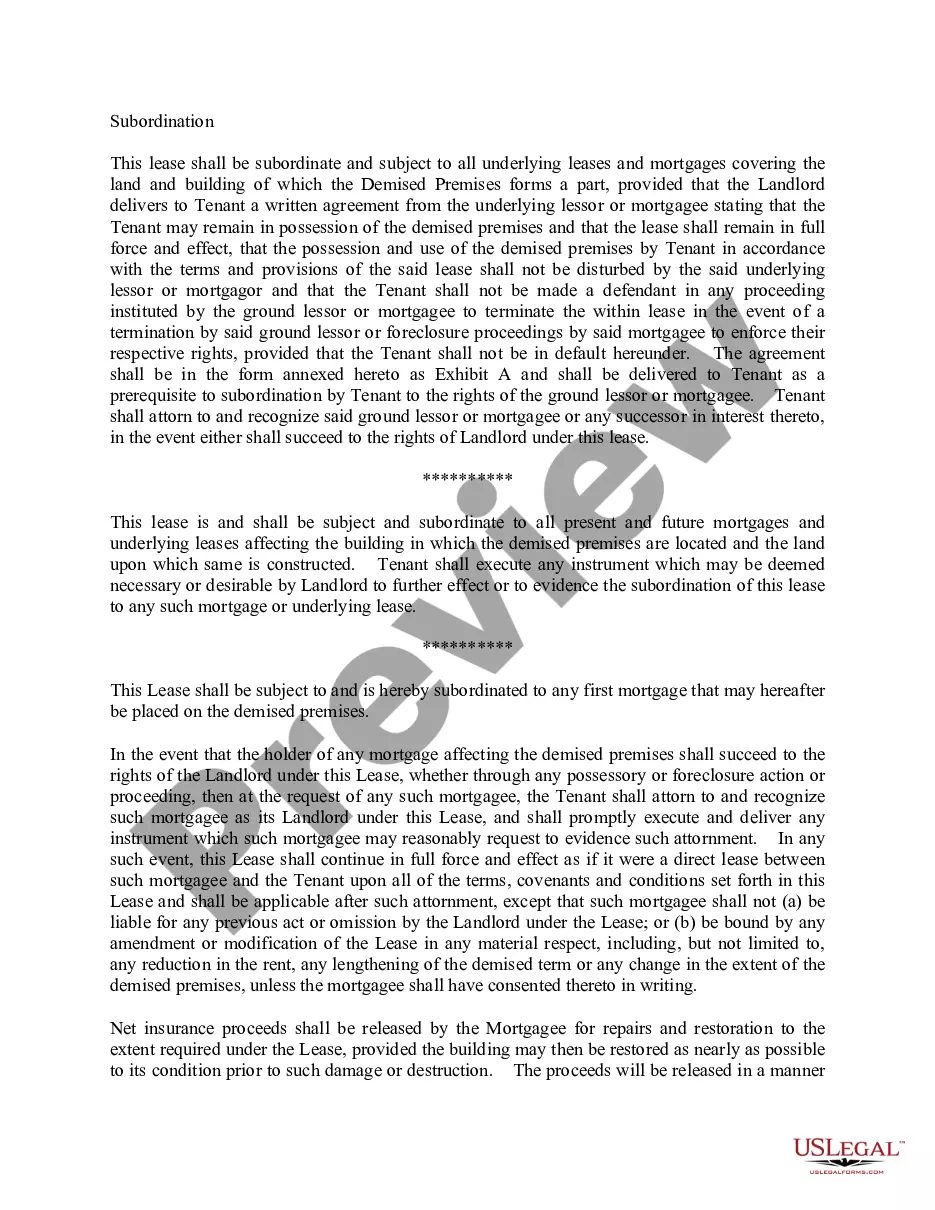
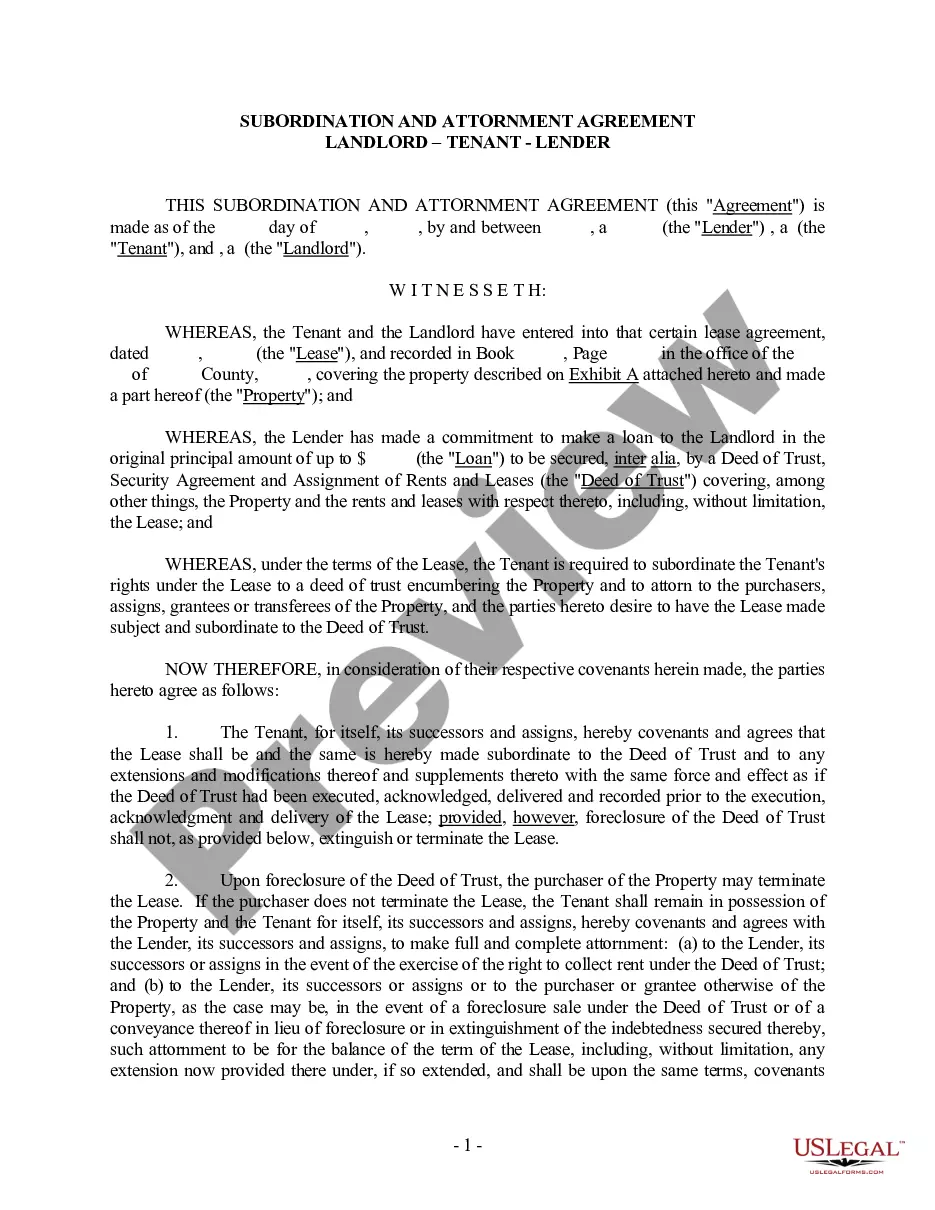
A subordination agreement in a lease is a legal document that establishes the priority of the lease in relation to other claims on the property. Essentially, it allows a tenant's lease to be subordinate, or secondary, to a mortgage. This Michigan Lease Subordination Agreement is vital as it clarifies the tenant's position should the property undergo foreclosure or change of ownership.
The 554.613 law in Michigan addresses lease agreements and subordination clauses. This law allows a landlord and tenant to define the terms under which a lease will remain valid, even if the property is sold or mortgaged. A proper understanding of this law is crucial when drafting a Michigan Lease Subordination Agreement, as it underscores the importance of these agreements in protecting tenant rights while ensuring property value.
Filling in a lease agreement requires careful attention to detail, especially in a Michigan Lease Subordination Agreement. Start by entering the names of the parties involved, the property details, and the length of the lease. Next, clearly outline the terms of subordination, including any specific conditions or requirements. To make the process smoother, consider using an online platform like US Legal Forms, which provides templates and guided instructions to assist you.
A subordination clause in a lease establishes the relationship between the lease and other agreements, such as a mortgage. For instance, a Michigan Lease Subordination Agreement might state that the lease becomes subordinate to a future mortgage on the property. This means that if the property owner defaults on the mortgage, the lender can take precedence over the lease. Holding a subordination clause protects the lender's interests and ensures clarity in ownership.