Michigan Commercial Sublease
About this form
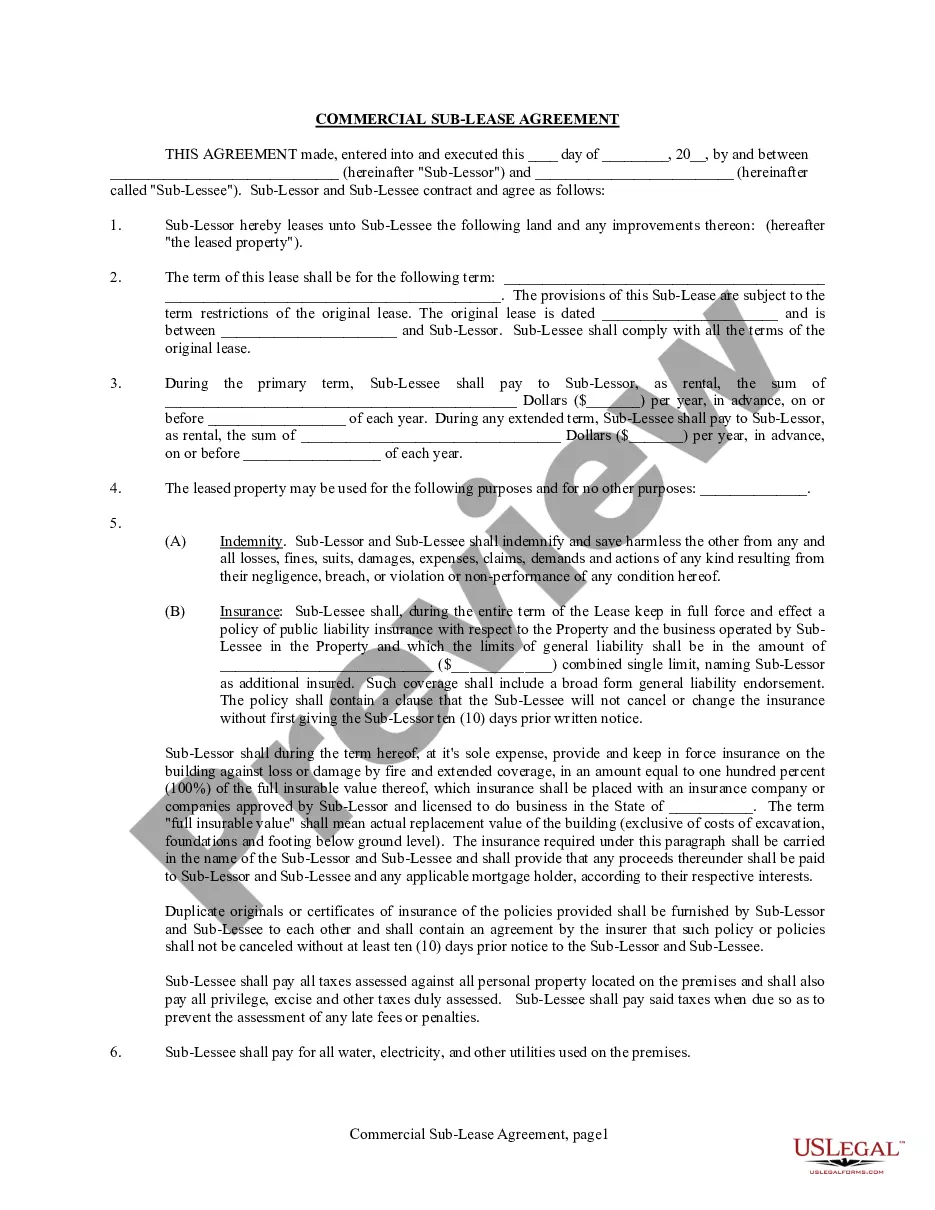
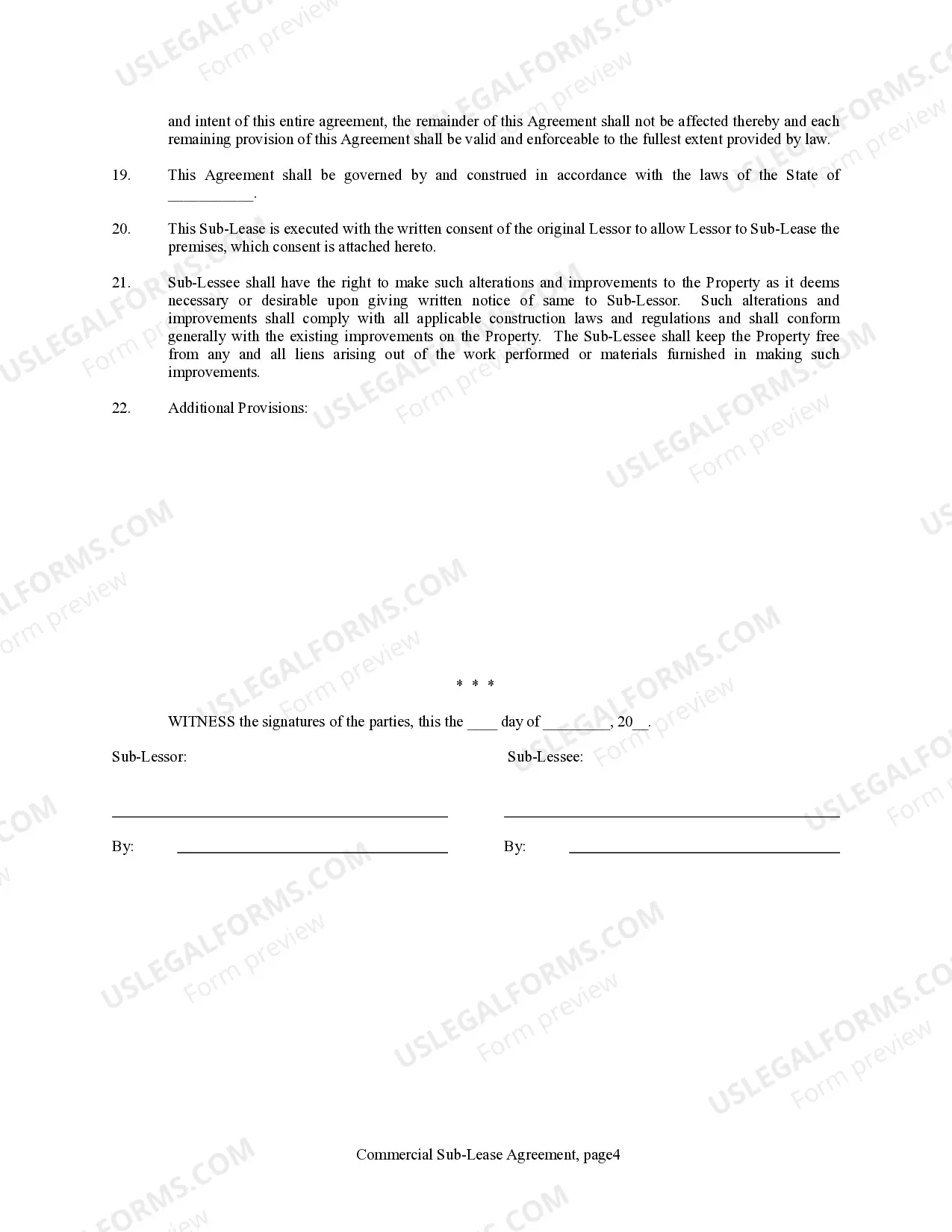
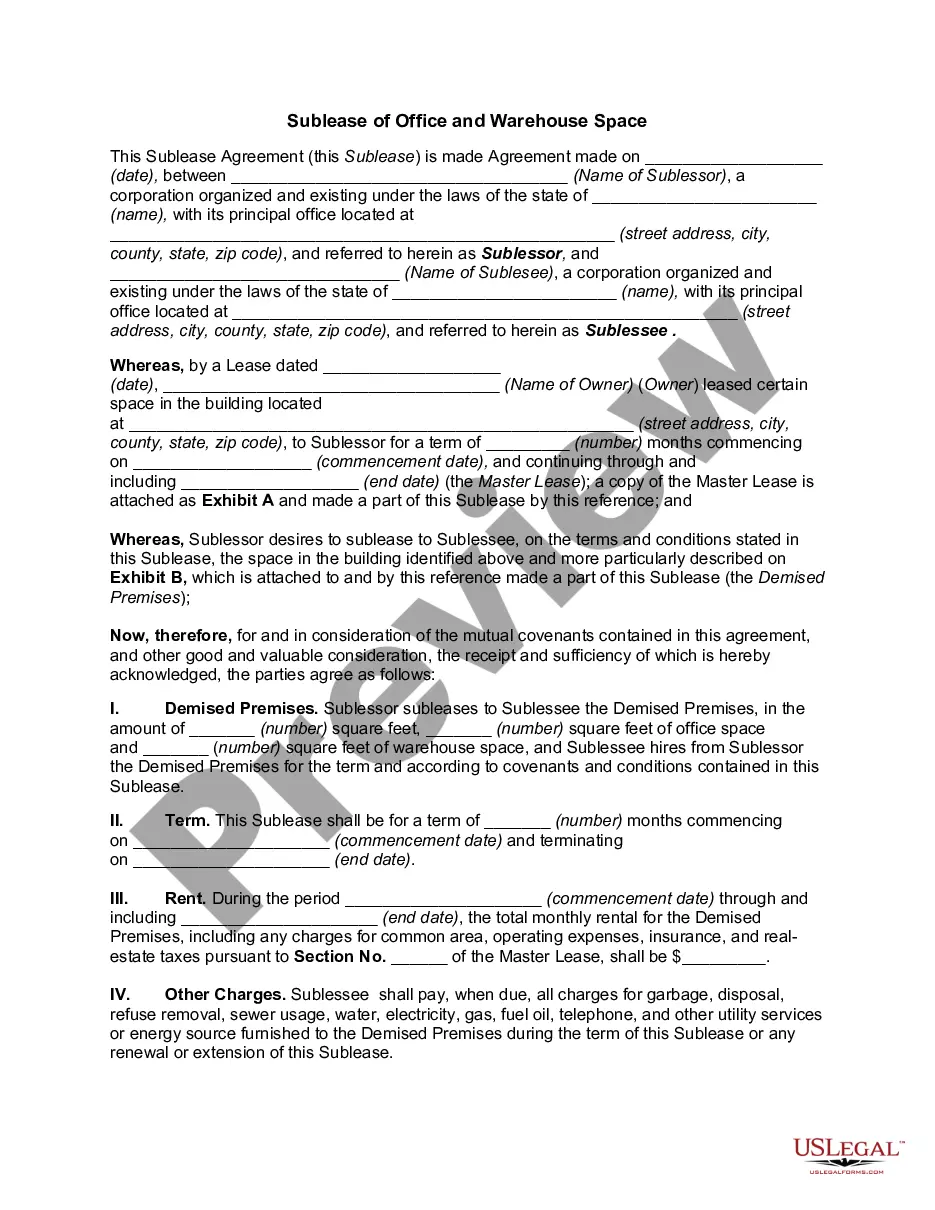
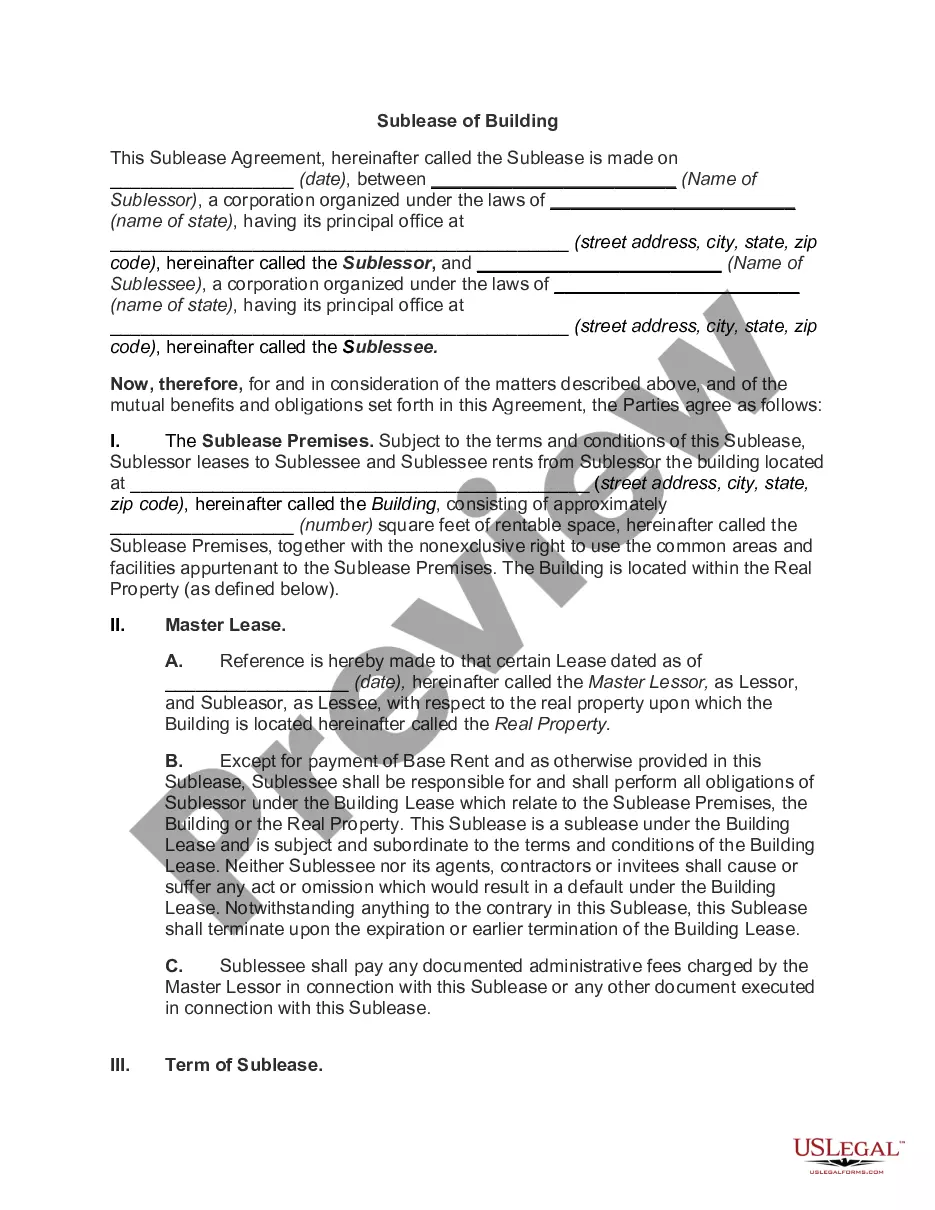
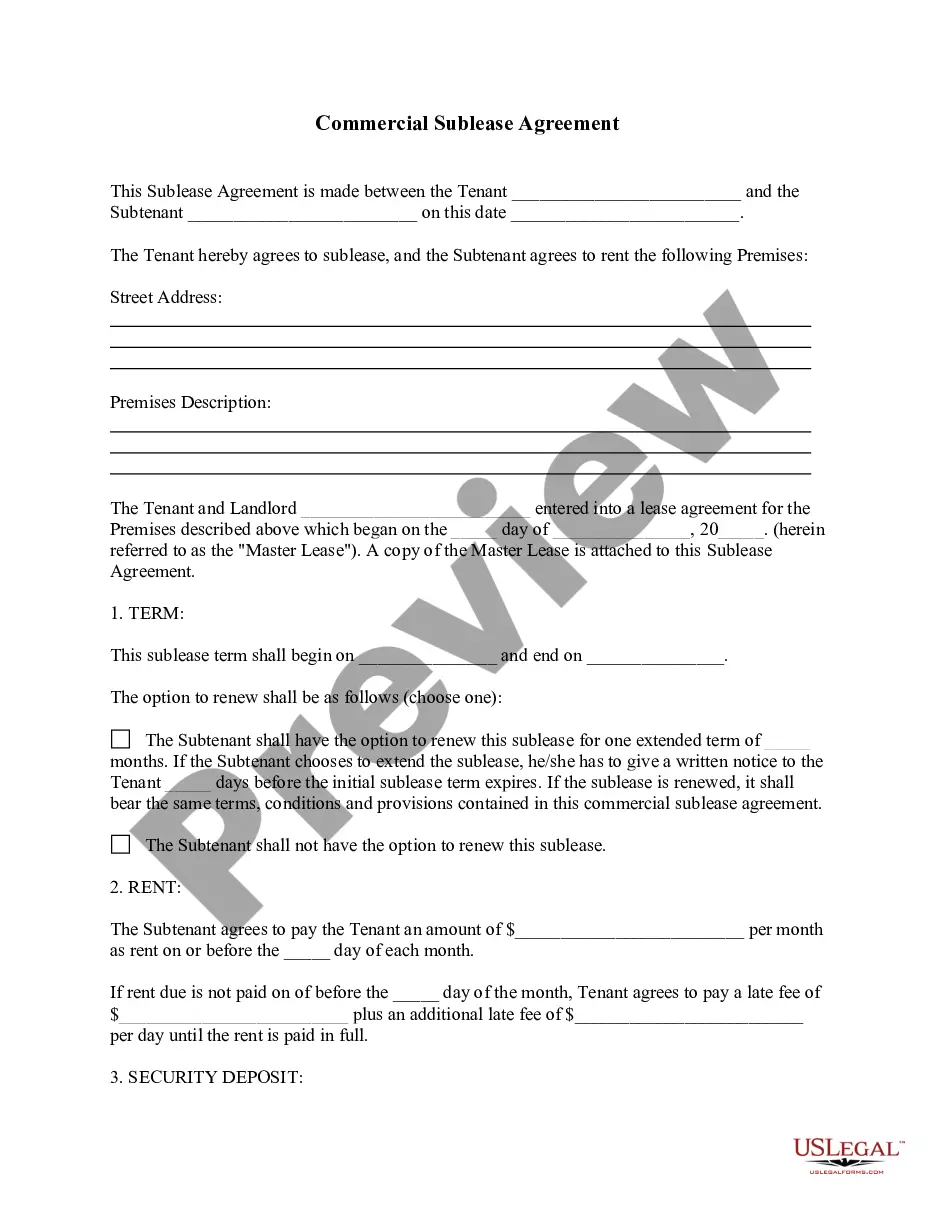
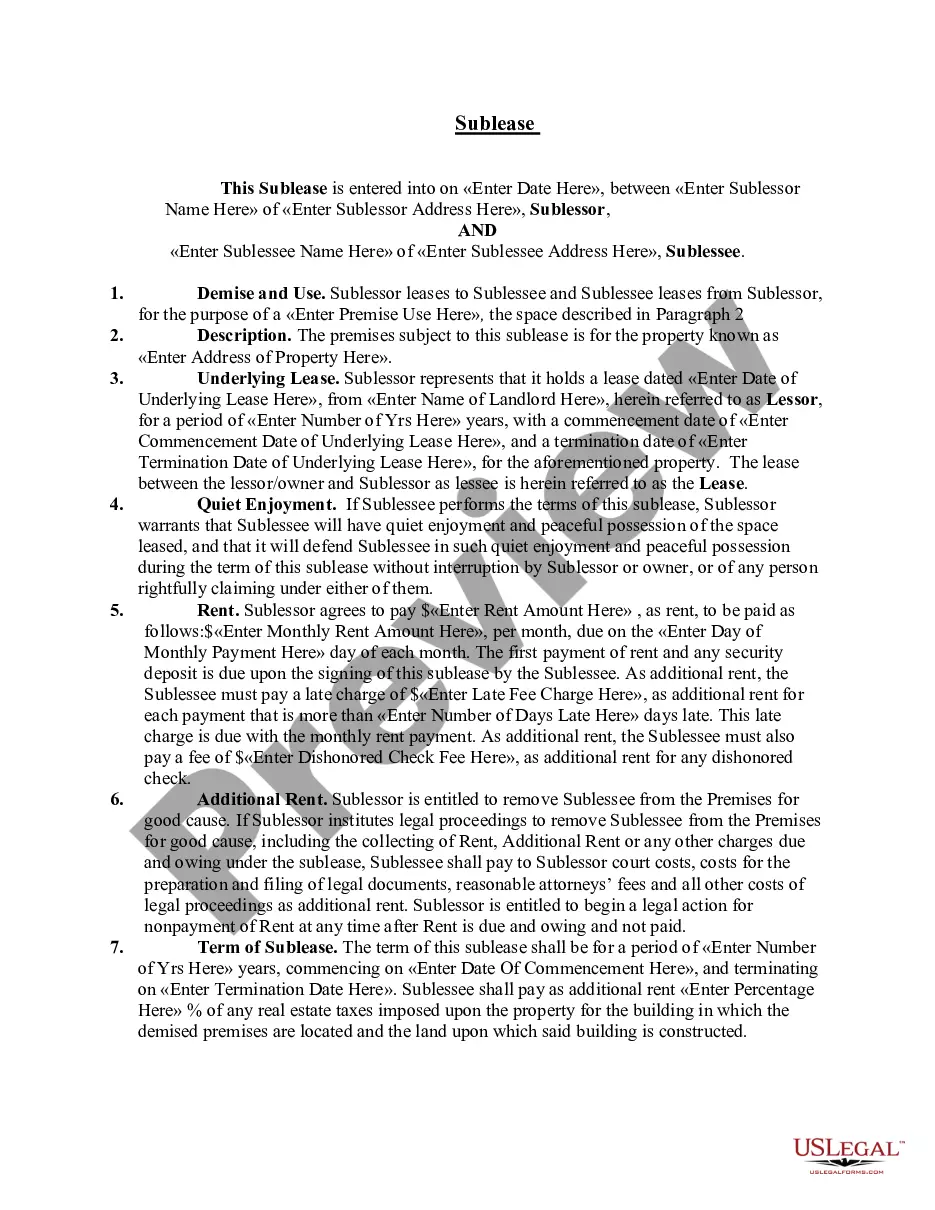
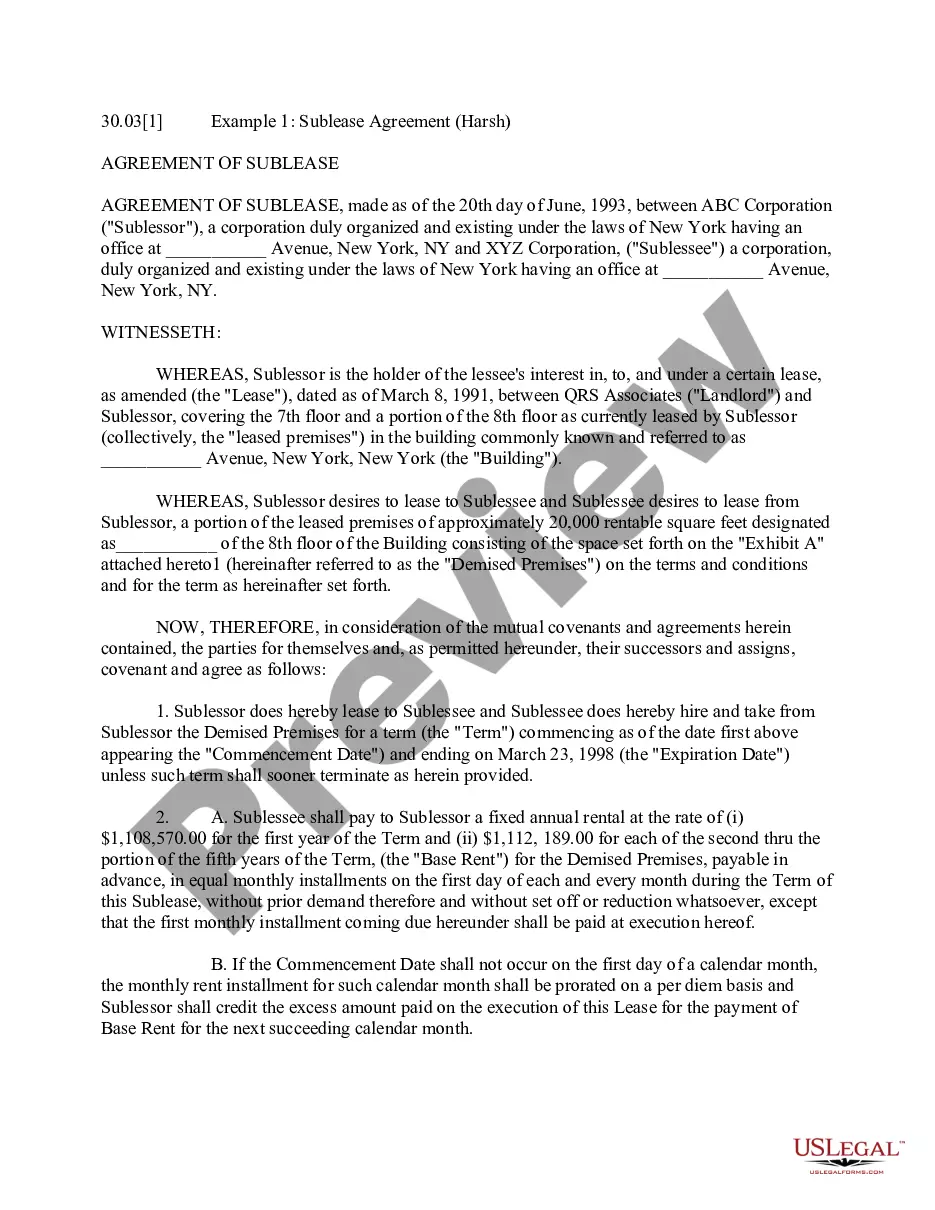
The Commercial Sublease form is a legally binding agreement that allows a current tenant (the Sub-Lessor) to lease out their rented commercial property to another party (the Sub-Lessee). This sublease maintains the terms and conditions established in the original lease, ensuring that the new tenant adheres to the same obligations and restrictions. Unlike a direct lease, this form is specifically for situations where an existing tenant wishes to sublet their space while still maintaining responsibilities to the original landlord.
Key parts of this document
- Identification of the Sub-Lessor and Sub-Lessee.
- Description of the leased property, including boundaries and any improvements.
- Term of the lease specifying the duration of the sublease.
- Rental payment details, including amounts and payment schedules.
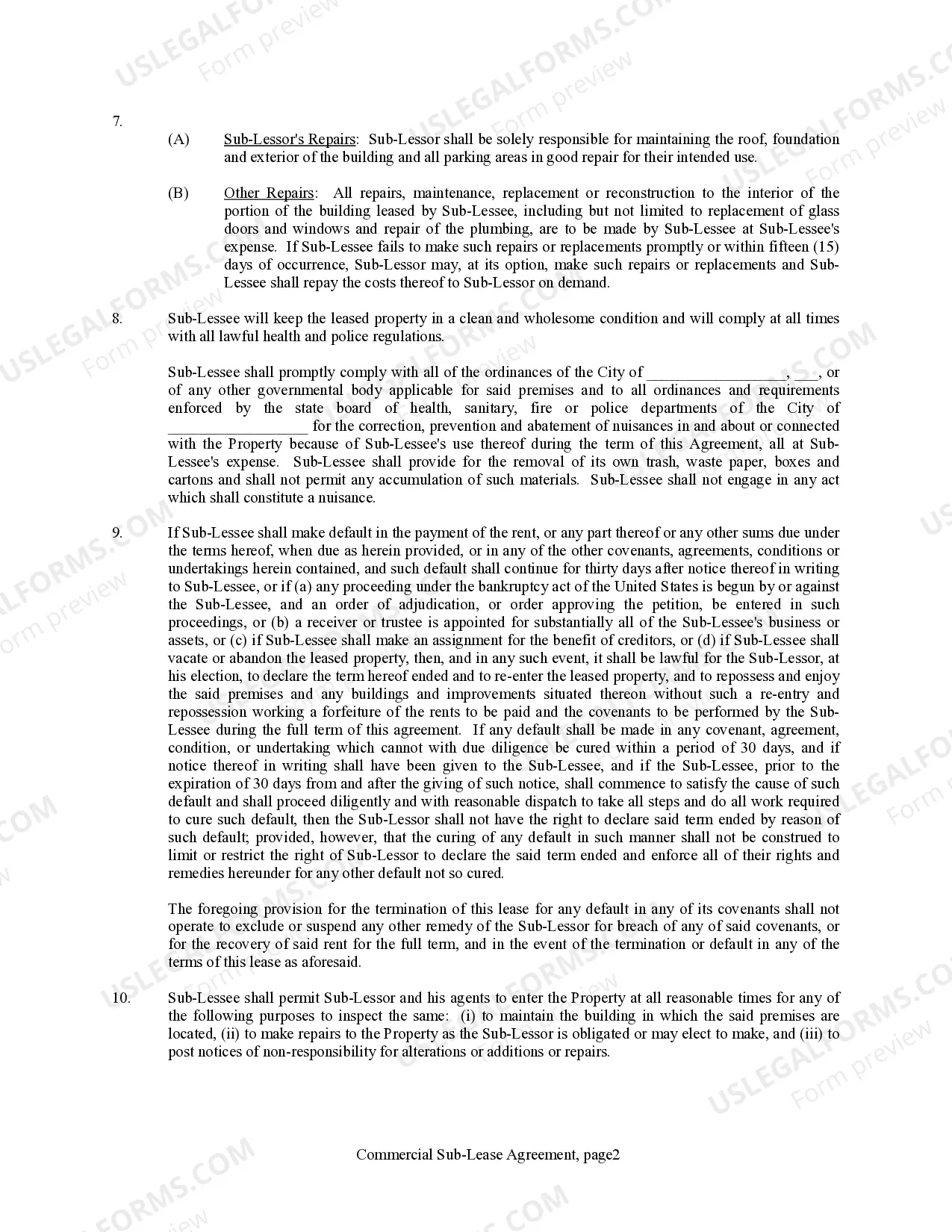
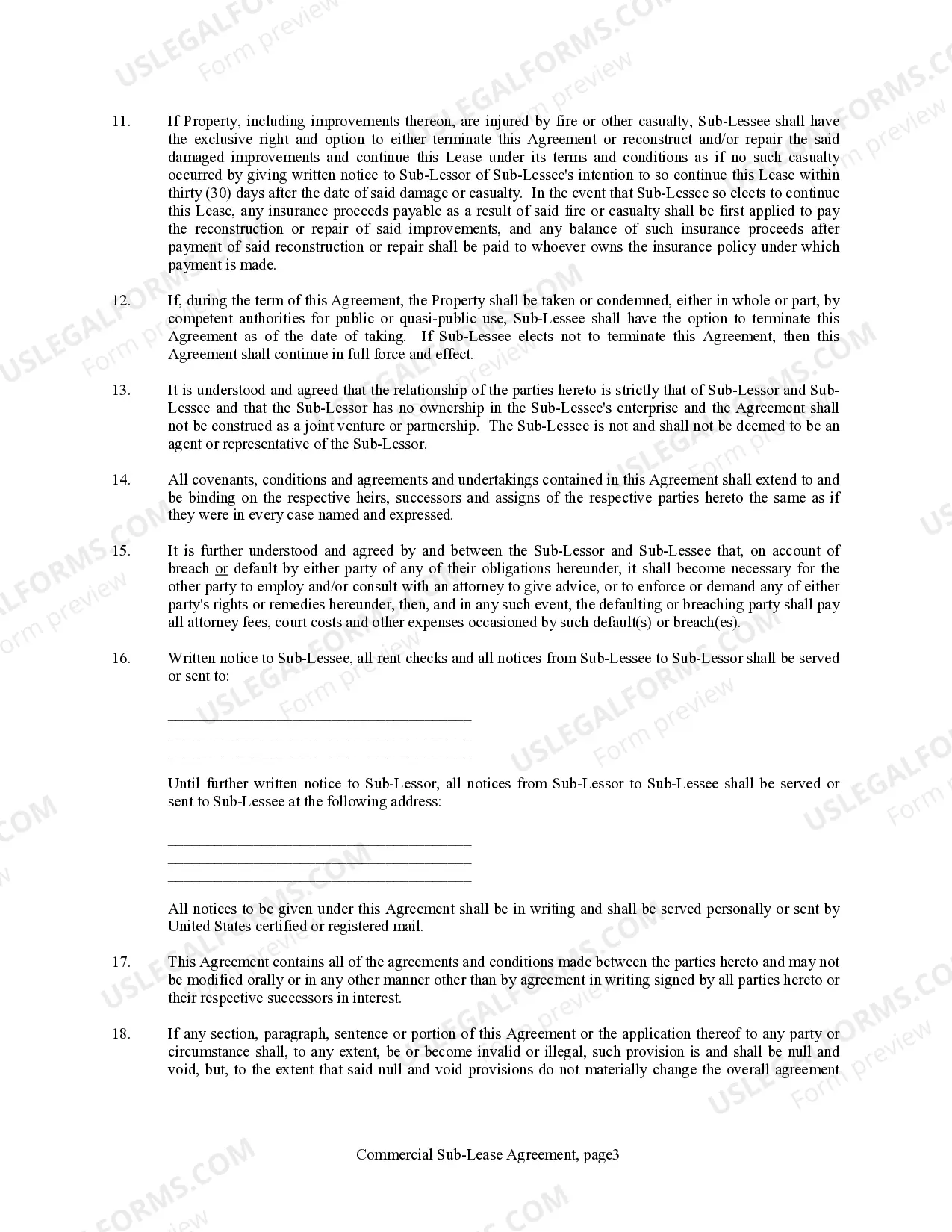
- Conditions for indemnity and insurance responsibilities.
- Provisions for maintenance and repairs of the property.
Situations where this form applies
This form is ideal for any business tenant looking to temporarily lease their commercial space to another party while they retain the original lease. It's commonly used when a tenant is relocating, downsizing, or unable to occupy the space for a period of time but does not want to breach their contract with the original landlord.
Who should use this form
- Current tenants of commercial properties who wish to sublease their space.
- Business owners needing flexibility in their lease commitments.
- Individuals or entities looking for temporary business space without the full leasing process.
How to complete this form
- Identify and list the names and addresses of both the Sub-Lessor and the Sub-Lessee.
- Provide a detailed description of the property being leased, including any relevant improvements.
- Specify the term of the lease, including start and end dates.
- Enter the agreed rental amount and payment schedule.
- Ensure both parties understand their responsibilities regarding maintenance and insurance.
- Have both parties sign and date the agreement to finalize the sublease.
Notarization guidance
This form does not typically require notarization unless specified by local law. It is always recommended to check state requirements for subleasing agreements to ensure compliance.
Get your form ready online
Our built-in tools help you complete, sign, share, and store your documents in one place.
Make edits, fill in missing information, and update formatting in US Legal Forms—just like you would in MS Word.
Download a copy, print it, send it by email, or mail it via USPS—whatever works best for your next step.
Sign and collect signatures with our SignNow integration. Send to multiple recipients, set reminders, and more. Go Premium to unlock E-Sign.
If this form requires notarization, complete it online through a secure video call—no need to meet a notary in person or wait for an appointment.
We protect your documents and personal data by following strict security and privacy standards.

Make edits, fill in missing information, and update formatting in US Legal Forms—just like you would in MS Word.

Download a copy, print it, send it by email, or mail it via USPS—whatever works best for your next step.

Sign and collect signatures with our SignNow integration. Send to multiple recipients, set reminders, and more. Go Premium to unlock E-Sign.

If this form requires notarization, complete it online through a secure video call—no need to meet a notary in person or wait for an appointment.

We protect your documents and personal data by following strict security and privacy standards.
Common mistakes to avoid
- Failing to obtain consent from the original landlord before subleasing.
- Not clearly defining the property boundaries or improvements in the lease.
- Neglecting to specify payment terms and dates, leading to confusion.
- Overlooking the necessity of adhering to the original lease terms.
Why complete this form online
- Easy access to professionally drafted templates ensures a legally sound agreement.
- Convenient downloading allows for immediate use and editing.
- Versatile format adaptable to multiple jurisdictions increases usability.
What to keep in mind
- Use the Commercial Sublease form to legally transfer rental obligations to another party.
- Ensure compliance with the original lease agreement to avoid disputes.
- Complete all sections thoroughly to protect both partiesâ interests.
Looking for another form?
Form popularity
FAQ
The Bottom Line: According to the Michigan law you should obtain written approval from your landlord prior to subletting. However, if your lease says no sublets, then that means no sublets.
Landlords can try and forfeit a lease if a tenant is in breach of their obligations (this assumes that the lease document includes a right to forfeit).If a commercial lease contains a break clause, either or both parties to the agreement may seek to terminate the lease before its fixed period has ended.
Evaluate the Length of the Lease. Research Comparable Rents. Look for Hidden Costs. Ask for Favorable Clauses. Check the Termination Clause Closely.
Under California law, a lease does have to be in writing to be enforceable, but only when the lease is for a period of more than a year.There is, however, an additional legal doctrine called partial performance which does make oral contracts enforceable even if they are covered by the Statute of Frauds.
A commercial sublease is an agreement between a tenant currently leasing a property, a new tenant looking for space, and the property owner. When you sublease your space you are the sublessor (or sublandlord) and your new tenant is the sublessee (or subtenant).
Commercial landlords with multiple properties, or developments with more than one tenant, are generally loath to disclose to potential tenants the terms of leases into which they have previously entered.
Can the landlord refuse consent to an Assignment? Most leases will say that the Landlord cannot unreasonably withhold consent. According to section 19 (1A) of the Landlord and Tenant Act 1927 the landlord can insert conditions in the lease, which need to be met in the case of an assignment.
Leases with an initial term not exceeding seven years are not required to be recorded so long as each renewal term under the lease (a) is for seven years or fewer, and (b) may be effected or prevented by a party to the lease or its assigns.
Recording a lease means that it (or a Notice of Lease) is submitted to the public record, usually at the local Registry of Deeds following the signing of it by both parties. Generally, recording of the lease protects the tenant against subsequent claims to the property.