Michigan Earnest Money Deposit Agreement
Overview of this form
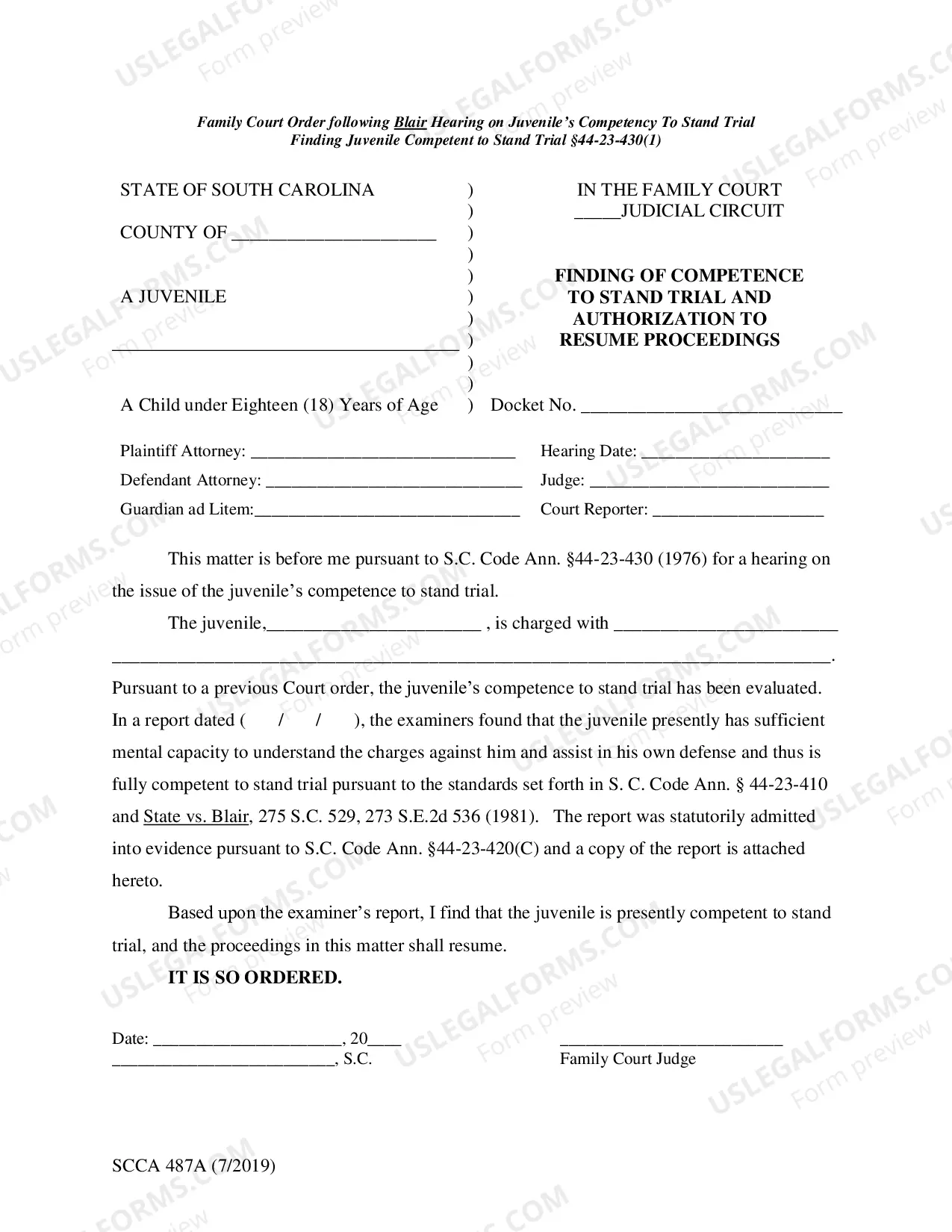
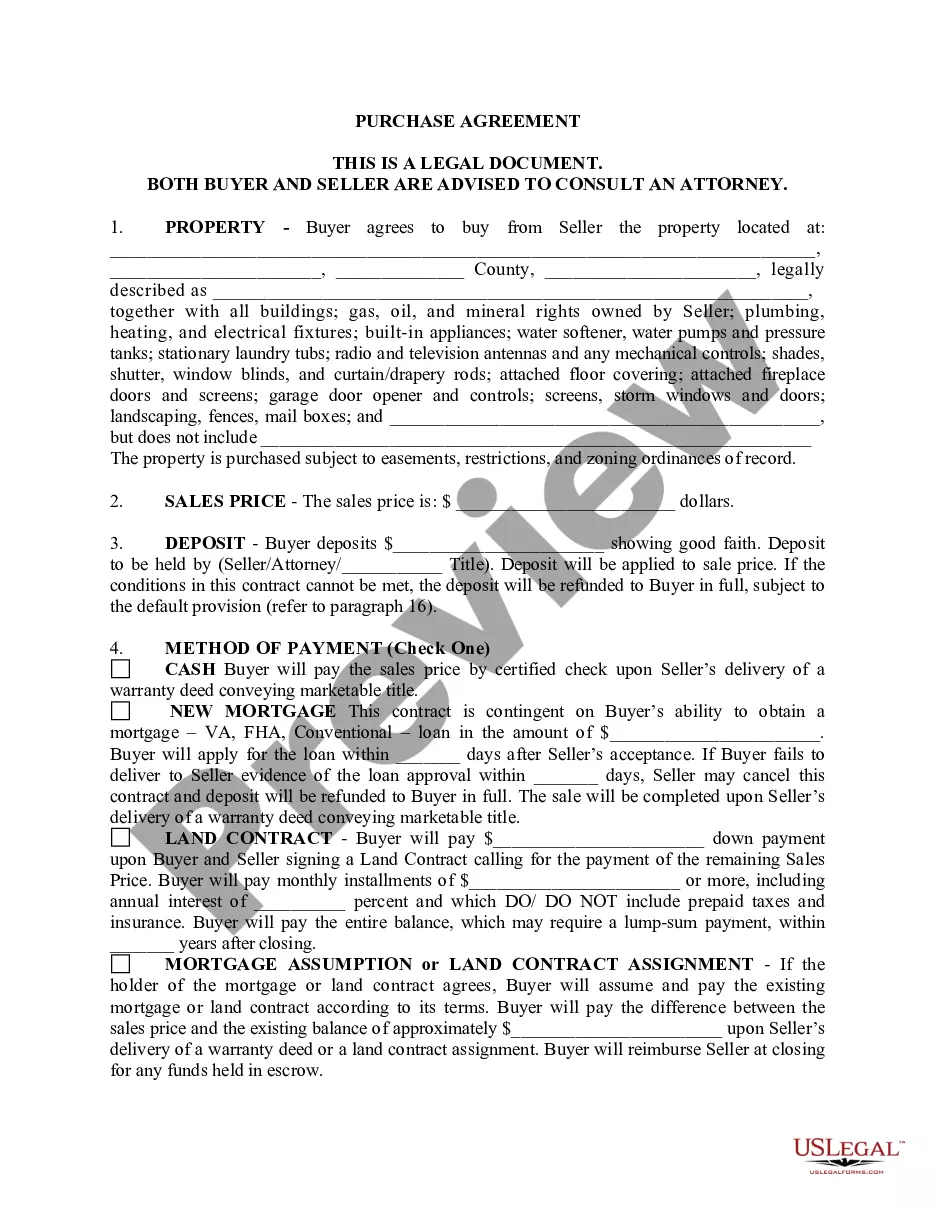
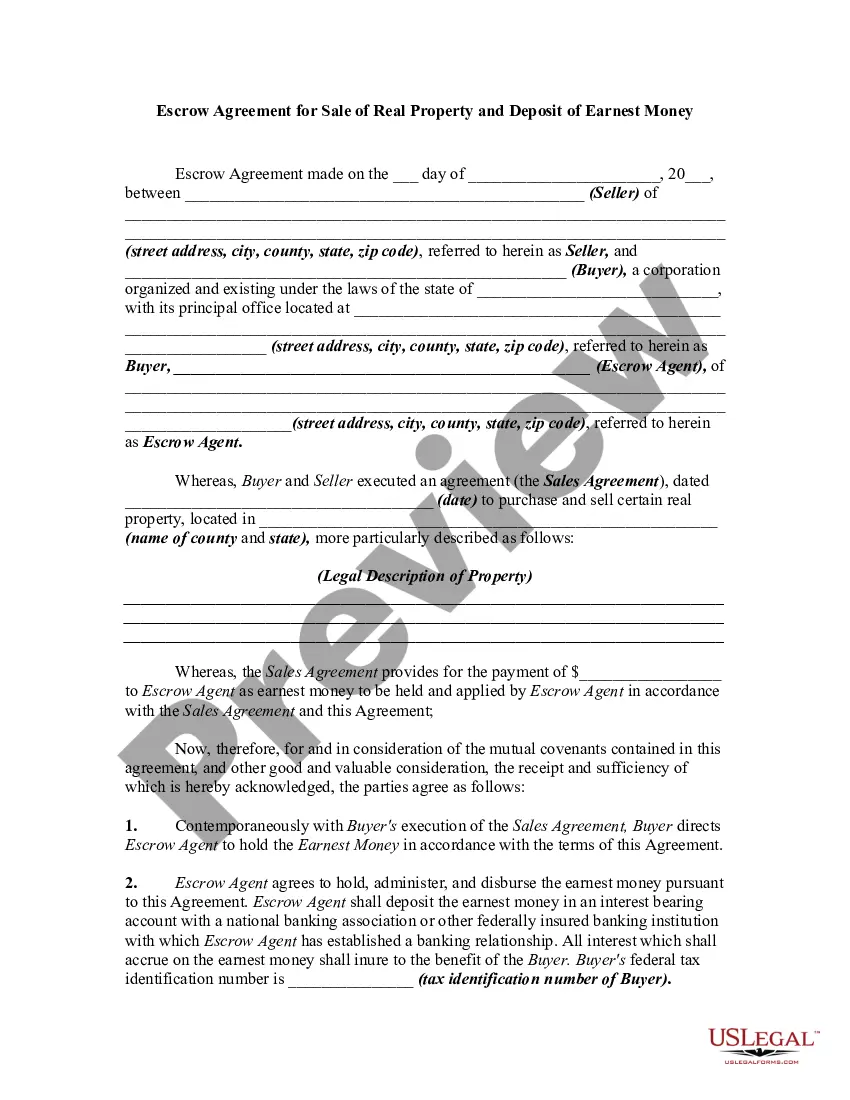
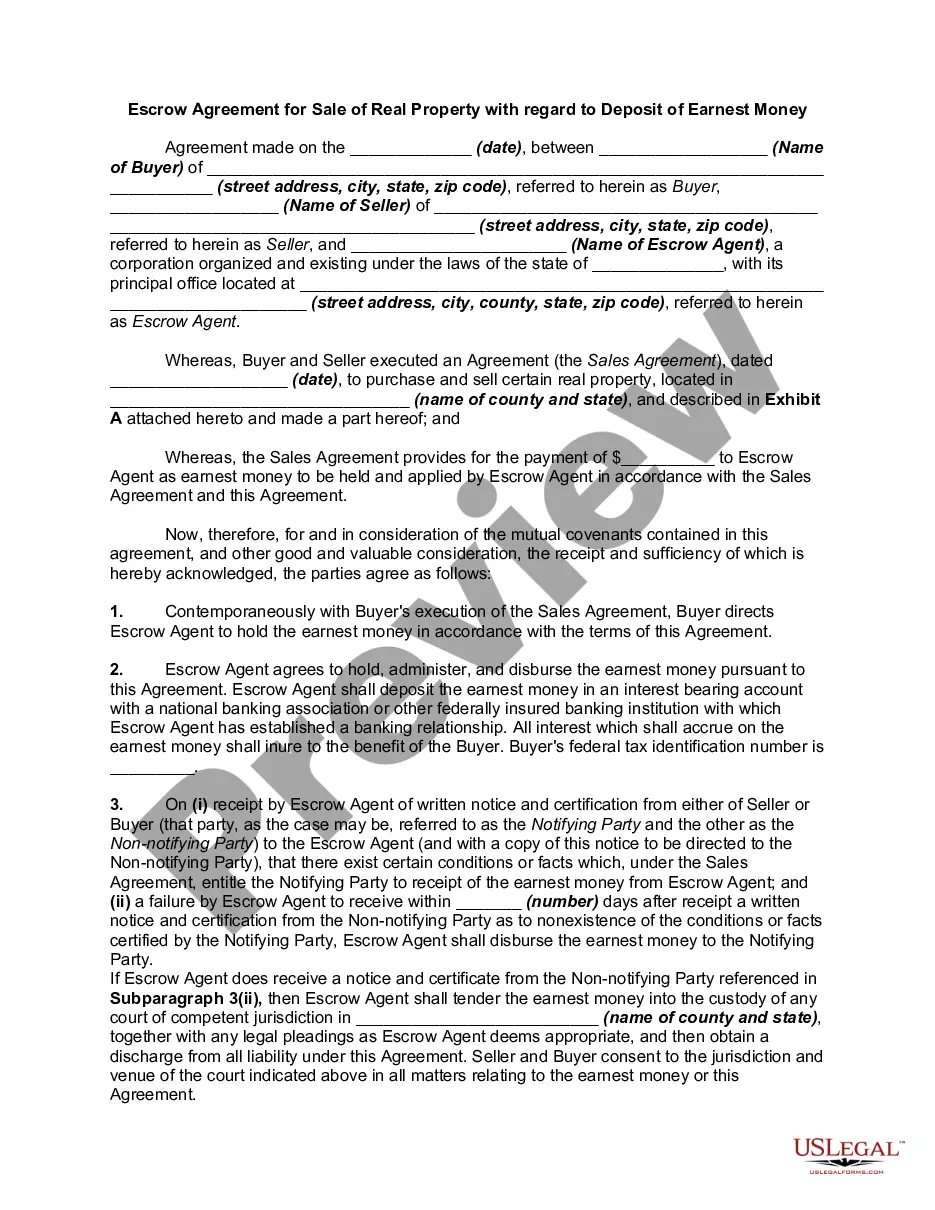
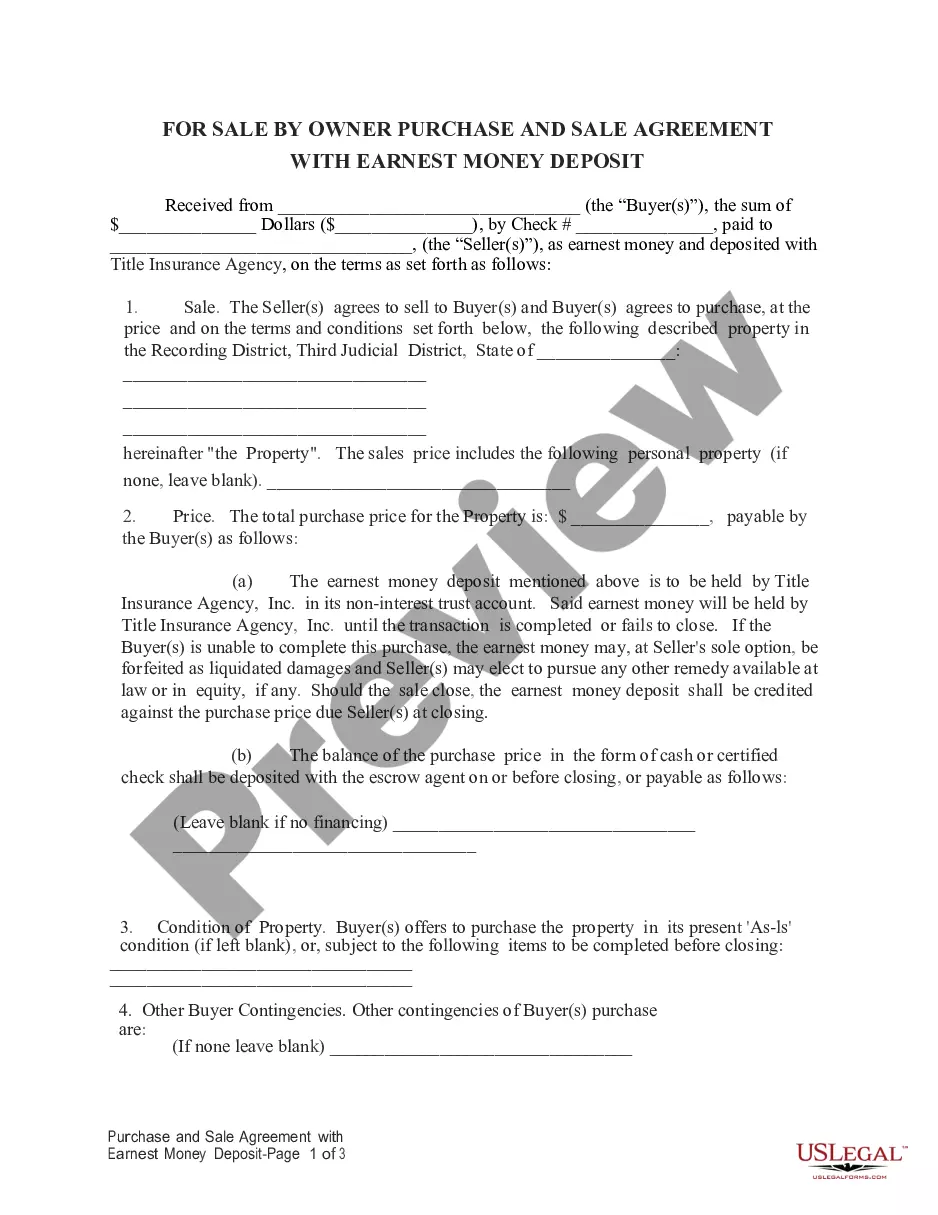
An earnest money deposit agreement is a legal document used in real estate transactions. It establishes the terms under which a buyer deposits money to demonstrate their serious intent to purchase a property. The earnest money is typically held by a title insurance agency until closing, where it is applied to the purchase price. This agreement helps protect both parties by clearly outlining the handling of the deposit, particularly if the sale does not conclude as planned. Unlike other real estate contracts, this form specifically focuses on the earnest money aspect of the transaction.
What’s included in this form
- Date of the agreement.
- Property address being purchased.
- Deposit amount and check number for the earnest money.
- Name of the title insurance agency holding the earnest money.
- Conditions for releasing the funds if the transaction does not close.
- Signatures of the seller(s) and purchaser(s) to validate the agreement.
When this form is needed
This form is used when a buyer wants to demonstrate their commitment to purchasing a property by providing an earnest money deposit. It is typically employed after an accepted offer on a home and before closing. If the transaction falls through due to circumstances defined in the purchase agreement, the terms outlined in this form dictate how the earnest money will be handled. Utilizing this form is essential in safeguarding the interests of both the seller and buyer during the sale process.
Who should use this form
The following individuals should use this form:
- Home buyers who want to secure a property with a monetary deposit.
- Sellers who require assurance of the buyer's intent.
- Real estate agents or brokers assisting in the transaction.
- Title insurance agencies involved in managing the earnest money deposit.
Completing this form step by step
- Identify the parties involved in the transaction (seller and buyer).
- Specify the property by entering the complete address.
- Enter the deposit amount and the check number for the earnest money.
- Name the title insurance agency that will hold the earnest money.
- Include signatures from all parties to finalize the agreement.
Does this form need to be notarized?
This form does not typically require notarization unless specified by local law. It is advisable to check local regulations or consult with a legal expert to confirm whether notarization is necessary for validity in your jurisdiction.
Get your form ready online
Our built-in tools help you complete, sign, share, and store your documents in one place.
Make edits, fill in missing information, and update formatting in US Legal Forms—just like you would in MS Word.
Download a copy, print it, send it by email, or mail it via USPS—whatever works best for your next step.
Sign and collect signatures with our SignNow integration. Send to multiple recipients, set reminders, and more. Go Premium to unlock E-Sign.
If this form requires notarization, complete it online through a secure video call—no need to meet a notary in person or wait for an appointment.
We protect your documents and personal data by following strict security and privacy standards.

Make edits, fill in missing information, and update formatting in US Legal Forms—just like you would in MS Word.

Download a copy, print it, send it by email, or mail it via USPS—whatever works best for your next step.

Sign and collect signatures with our SignNow integration. Send to multiple recipients, set reminders, and more. Go Premium to unlock E-Sign.

If this form requires notarization, complete it online through a secure video call—no need to meet a notary in person or wait for an appointment.

We protect your documents and personal data by following strict security and privacy standards.
Common mistakes to avoid
- Failing to specify the correct property address.
- Omitting signatures from one or more parties involved.
- Not entering the accurate deposit amount.
- Using an incorrect or invalid check number.
- Not understanding the release conditions for the earnest money.
Why complete this form online
- Convenient access for quick and easy completion.
- Editable templates allow for personalized information insertion.
- Reliable legal framework ensures that essential terms are included.
- Instant download capabilities for immediate use.
- Guidance available for filling out all necessary sections.
Main things to remember
- An earnest money deposit agreement secures a buyer's commitment to purchase a property.
- It outlines how the deposit is handled and under what conditions it may be released.
- Completing the form correctly helps prevent disputes between parties.
- This form is essential for both buyers and sellers in a real estate transaction.
Looking for another form?

Form popularity
FAQ
A Michigan Earnest Money Deposit Agreement outlines how earnest money functions in real estate transactions. When you make an offer on a property, you typically submit a deposit to show your serious intent to buy. This deposit is held in escrow until the sale closes, ensuring both the buyer's and seller's interests are protected. If the deal goes through, the earnest money usually goes toward your down payment, making it a crucial part of the buying process.
In Michigan, an Earnest Money Deposit (EMD) is not legally required, but it is a common practice in real estate transactions. A Michigan Earnest Money Deposit Agreement helps demonstrate the buyer's commitment to purchasing the property, which can strengthen their offer. Many sellers expect this deposit as it signifies the buyer's serious intent. To ensure a smooth transaction, using a reliable platform like US Legal Forms can help you draft a proper Michigan Earnest Money Deposit Agreement.
FirstNameBuyer. LastName at this moment agrees to pay a sum of $(Total Purchase Price of the Property) for the property as outlined above or a cash equivalent. The buyer agrees to settle or discharge all previous debts and obligations of any nature within the county in which the said property is located. Buyer.
Most importantly, in the ?note? section at the bottom left corner of the check, write ?Earnest Money? or ?EM? and the address of the property you are buying. Please get at least a copy of your check (dated and with a signature of who received it) when you drop off your check.
If you use someone else's check as your earnest money deposit for a sales contract, you'll need to document at least the following: A copy of the initial earnest money deposit check from your alternative source. Evidence that the check cleared the original account.
Earnest Money. in the form of a certified check or cashier's check made payable to the State of Michigan in the amount of Ten percent (10%) of the purchase price (the ?Earnest Money?). The Earnest Money shall be credited to the Purchase Price at Closing.
Earnest money is put down before closing on a house to show you're serious about purchasing. It's also known as a good faith deposit. When a buyer and seller enter into a purchase agreement, the seller takes the home off the market while the transaction moves through the entire process to closing.
Contracts need to involve an exchange of something valuable, referred to in legal terms as ?consideration.? In the case of a real estate contract, that consideration would be the title (from the seller) and an earnest money deposit (from the buyer). Without that consideration, the contract is unenforceable.
Escrow companies will accept a cashier's check or wire, or a personal check for the earnest money deposit.
The escrow company holds your money until the seller delivers a clear and marketable title. You sign for the title and the money is then given to the seller. Request a receipt for any money that you hand over to a realtor, broker, or title company.