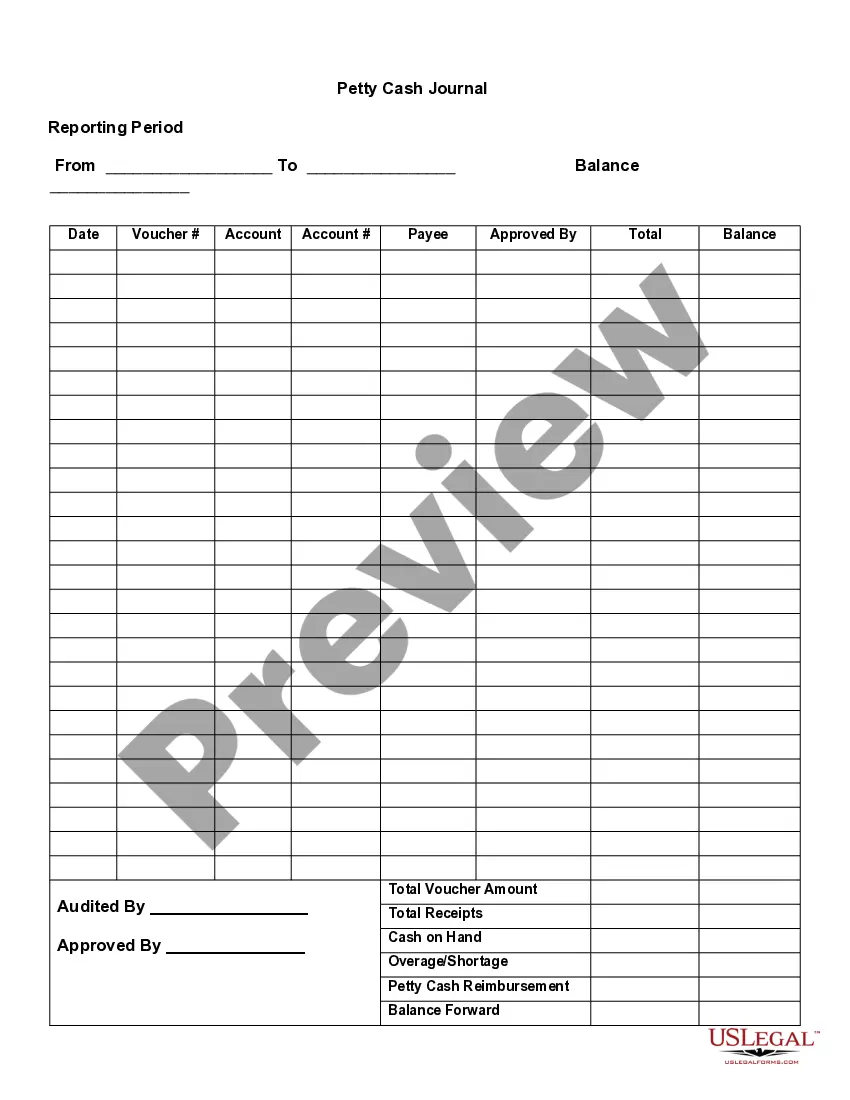
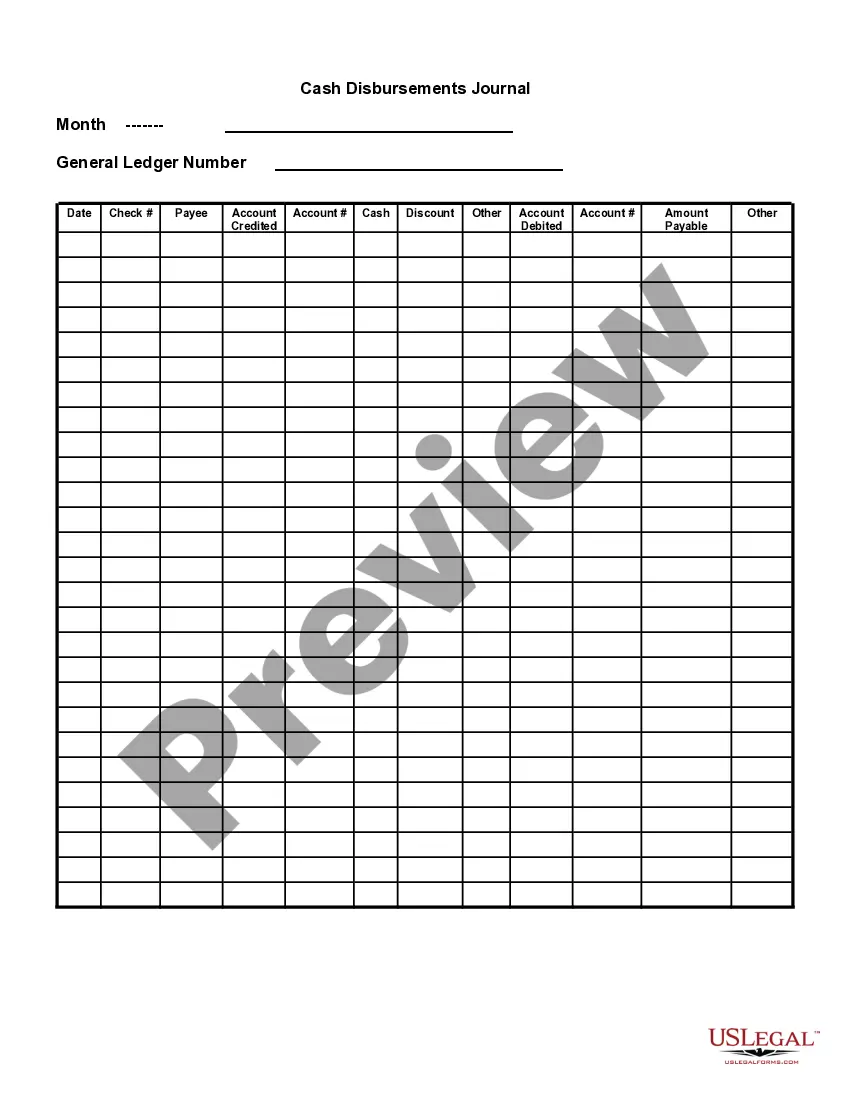
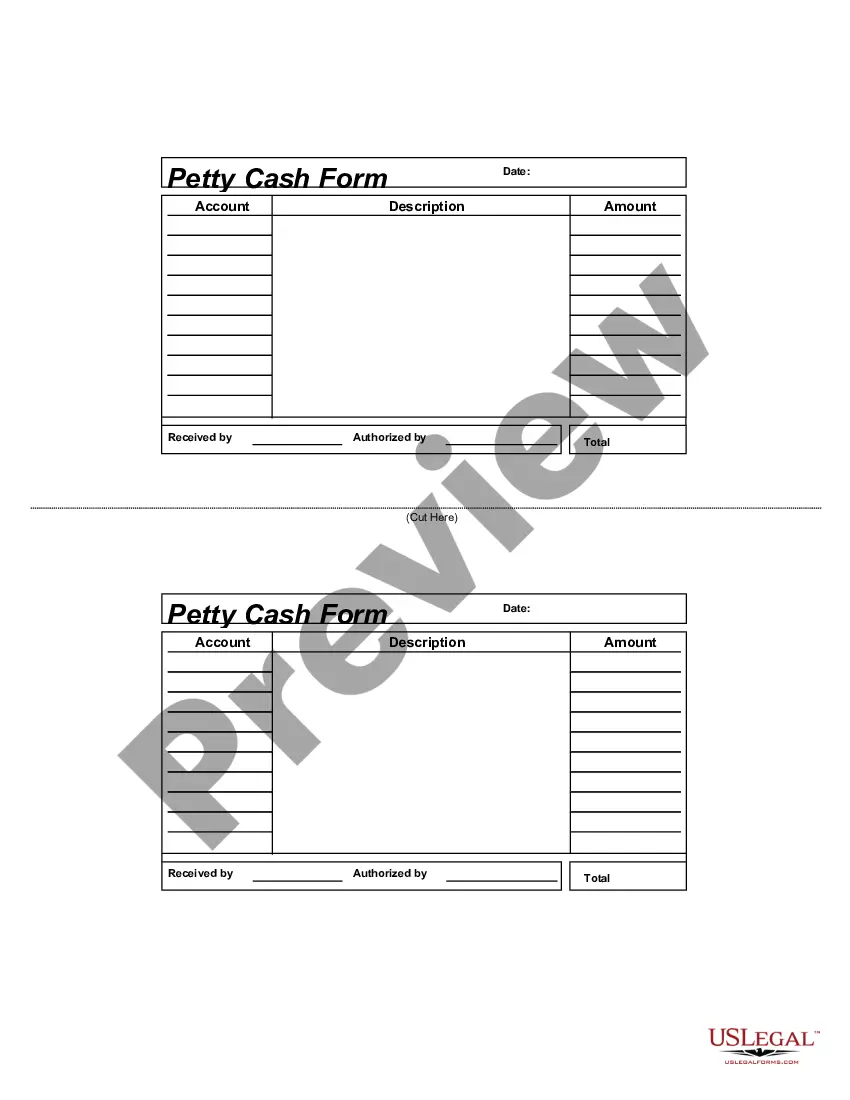
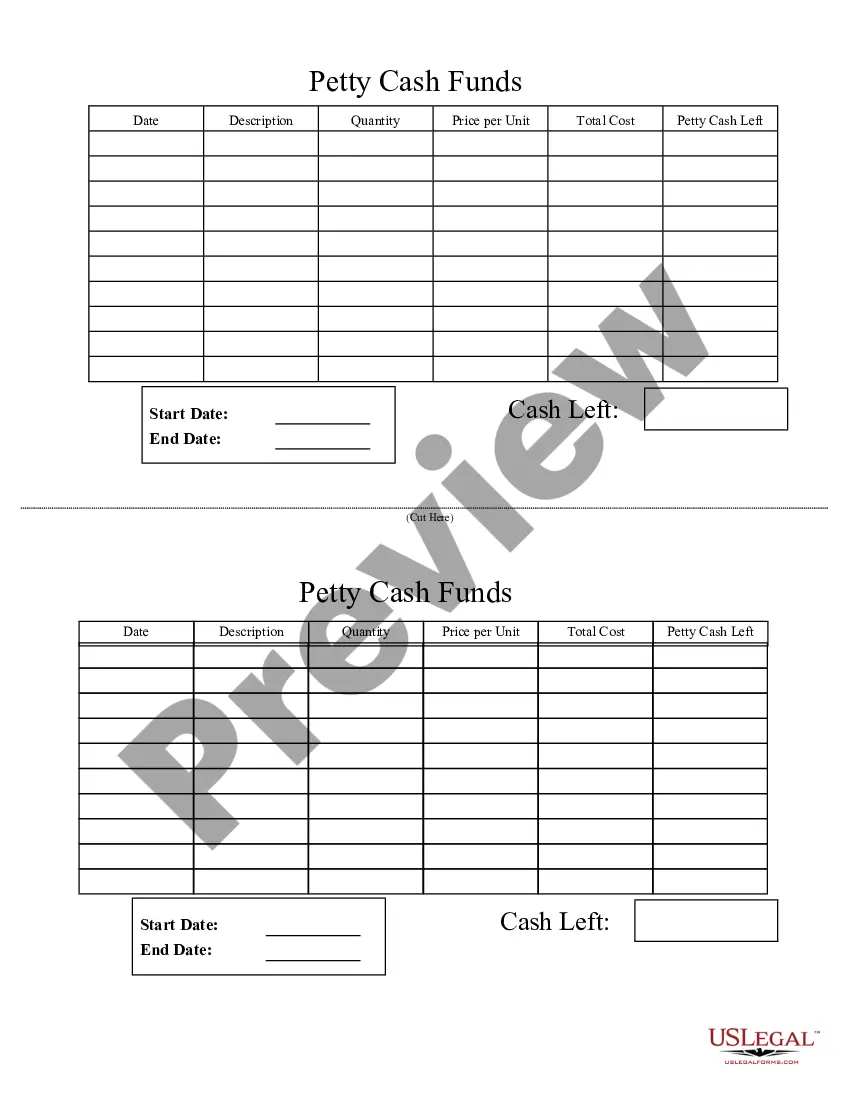
Maine Petty Cash Journal
Description
Get your form ready online
Our built-in tools help you complete, sign, share, and store your documents in one place.
Make edits, fill in missing information, and update formatting in US Legal Forms—just like you would in MS Word.
Download a copy, print it, send it by email, or mail it via USPS—whatever works best for your next step.
Sign and collect signatures with our SignNow integration. Send to multiple recipients, set reminders, and more. Go Premium to unlock E-Sign.
If this form requires notarization, complete it online through a secure video call—no need to meet a notary in person or wait for an appointment.
We protect your documents and personal data by following strict security and privacy standards.

Make edits, fill in missing information, and update formatting in US Legal Forms—just like you would in MS Word.

Download a copy, print it, send it by email, or mail it via USPS—whatever works best for your next step.

Sign and collect signatures with our SignNow integration. Send to multiple recipients, set reminders, and more. Go Premium to unlock E-Sign.

If this form requires notarization, complete it online through a secure video call—no need to meet a notary in person or wait for an appointment.

We protect your documents and personal data by following strict security and privacy standards.
Looking for another form?



How to fill out Petty Cash Journal?
US Legal Forms - one of the most prominent collections of legal documents in the United States - offers a variety of legal document templates that you can download or print.
By utilizing the website, you will gain access to thousands of forms for both business and personal needs, organized by categories, states, or keywords. You can find the most recent forms like the Maine Petty Cash Journal in just a few minutes.
If you already have an account, Log In and download the Maine Petty Cash Journal from the US Legal Forms library. The Download button will be visible for each form you view. You can access all your previously downloaded forms in the My documents section of your account.
Complete the transaction. Use your credit card or PayPal account to finalize the purchase.
Choose the format and download the form to your device. Edit. Fill out, modify, print, and sign the downloaded Maine Petty Cash Journal. Every template you save to your account has no expiration date and is yours indefinitely. Thus, if you want to download or print another copy, simply navigate to the My documents section and click on the form you desire. Access the Maine Petty Cash Journal with US Legal Forms, the largest collection of legal document templates. Utilize thousands of professional and state-specific templates that cater to your business or personal needs and requirements.
- Ensure you have selected the correct form for your city/state.
- Click the Preview button to review the form's content.
- Check the form description to confirm you've selected the right one.
- If the form does not meet your requirements, utilize the Search field at the top of the screen to find the appropriate one.
- Once satisfied with the form, confirm your selection by clicking the Get now button.
- Next, choose your payment plan and enter your information to register for an account.
Form popularity
FAQ
Petty cash is a current asset and should be listed as a debit on the company balance sheet. To initially fund a petty cash account, the accountant should write a check made out to "Petty Cash" for the desired amount of cash to keep on hand and then cash the check at the company's bank.
Example of Petty Cash Affecting Expenses Assume that the petty cash money is used to pay postage of $10. While the company incurs this cost at the time of payment, it will be recorded in the general ledger account Postage Expense when the petty cash fund is replenished.
The petty cash account is a current asset and is recorded as a debit in the balance sheet.
In QuickBooks, record taking cash from petty cash as an Expense with petty cash as the payment account. At all times, the amounts on the slips of paper and the cash you have left should add up to the amount you deposited in the box.
A petty cash account is an imprest account, so it is only debited when the fund is initially established or increased in amount. Transactions to replenish the account involve a debit to the expenses and a credit to the cash account (e.g., bank account).
When a petty cash fund is in use, petty cash transactions are still recorded on financial statements. No accounting journal entries are made when purchases are made using petty cash, it's only when the custodian needs more cashand in exchange for the receipts, receives new fundsthat the journal entries are recorded.
Petty cash isn't usually a significant expense for your business. However, failing to hold employees accountable for petty cash may encourage theft or inappropriate use of company resources. Require that employees maintain a running petty cash log for every transaction, including receipts.
The petty cash journal entry is a debit to the petty cash account and a credit to the cash account. The petty cash custodian refills the petty cash drawer or box, which should now contain the original amount of cash that was designated for the fund. The cashier creates a journal entry to record the petty cash receipts.
Journal entry for putting money into the petty cash fund The entry must show an increase in your Petty Cash account and a decrease in your Cash account. To show this, debit your Petty Cash account and credit your Cash account. When the petty cash fund gets too low, you must refill it to its set amount.
Petty cash is simply any physical cash your business keeps on hand to pay for small, unplanned expenses. Most businesses won't keep more than a few hundred dollars in petty cash around. They'll usually keep it in a lockbox or a cash register, and will have some kind of system in place to make sure none of it gets lost.