Maine Protecting Deceased Persons from Identity Theft
About this form package
The Maine Protecting Deceased Persons from Identity Theft form package is designed to help individuals manage the complexities of identity theft affecting deceased persons. This package includes essential forms that assist in notifying creditors, government agencies, and other organizations of an individual's death while addressing any instances of identity theft involving that person. It is distinct from other identity theft packages as it specifically targets issues related to deceased individuals and ensures their identifying information is safeguarded effectively.
What’s included in this form package
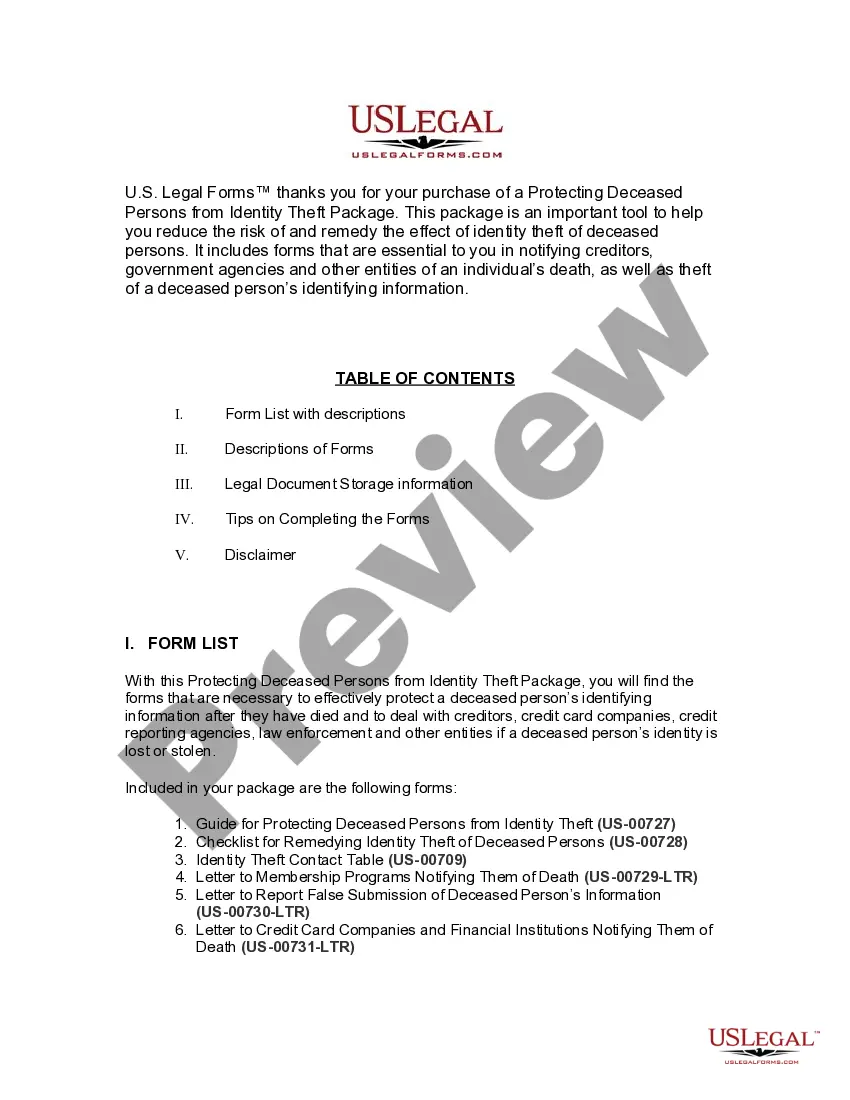
- Identity Theft Contact Table
- Guide for Protecting Deceased Persons from Identity Theft
- Checklist for Remedying Identity Theft of Deceased Persons
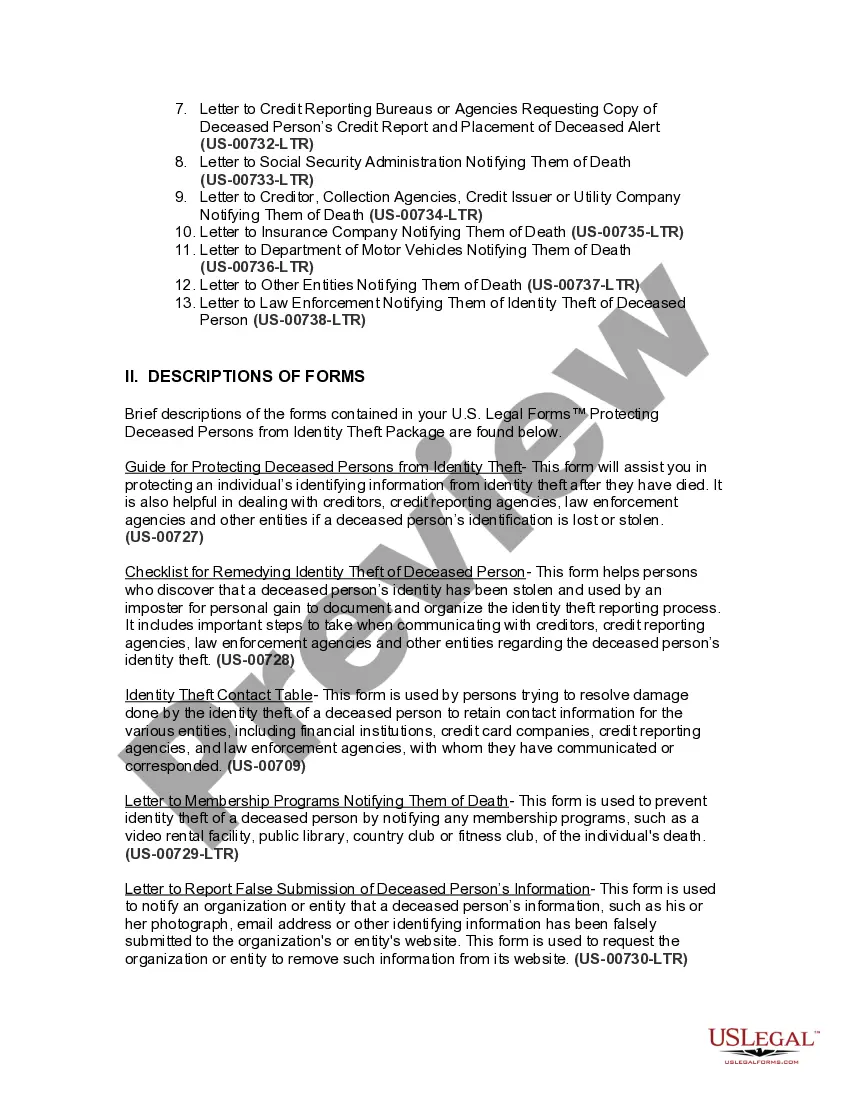
- Letter to Membership Programs Notifying Them of Death
- Letter to Report False Submission of Deceased Person's Information
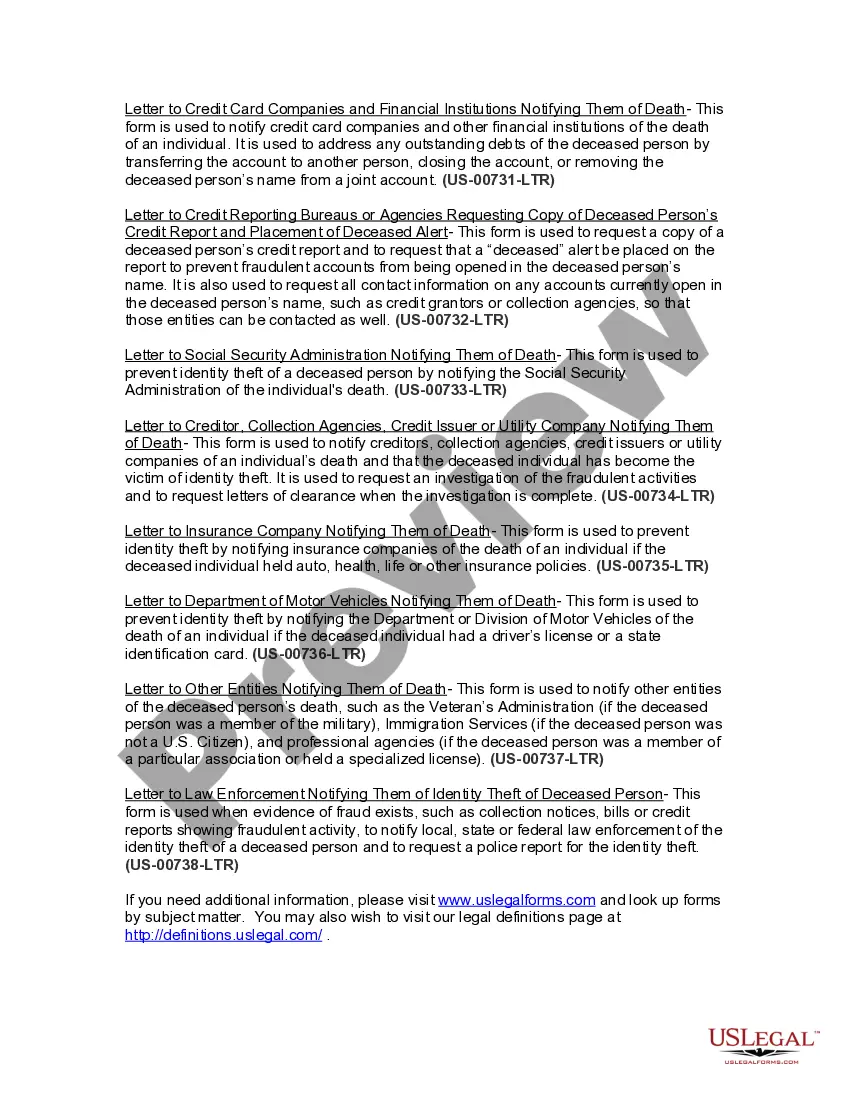
- Letter to Credit Card Companies and Financial Institutions Notifying Them of Death
- Letter to Credit Reporting Bureaus or Agencies Requesting Copy of Deceased Person's Credit Report and Placement of Deceased Alert
- Letter to Social Security Administration Notifying Them of Death
- Letter to Creditor, Collection Agencies, Credit Issuer or Utility Company Notifying Them of Death
- Letter to Insurance Company Notifying Them of Death
- Letter to Department of Motor Vehicles Notifying Them of Death
- Letter to Other Entities Notifying Them of Death
- Letter to Law Enforcement Notifying Them of Identity Theft of Deceased Person
When to use this form package
This form package is particularly useful in the following scenarios:
- When you need to notify various entities of the death of a loved one.
- If you suspect that the identity of a deceased person has been compromised.
- When you need to prevent unauthorized use of the deceased individual's personal information.
- If you're dealing with creditors or financial institutions regarding the deceased's accounts.
Intended users of this form package
- Family members or executors of the deceased.
- Individuals responsible for managing the estate of a deceased person.
- Anyone who suspects identity theft related to a deceased individual.
How to complete these forms
- Review the included forms carefully to understand their purpose.
- Gather necessary personal information about the deceased and relevant account details.
- Complete the forms, entering the needed information in the specified fields.
- Ensure all notifications are sent to the appropriate entities listed in the forms.
- Keep copies of all correspondence for your records.
Do documents in this package require notarization?
Notarization is not commonly needed for forms in this package. However, if your state’s laws require it, our notarization service, powered by Notarize, allows you to finalize documents online 24/7 without in-person visits.
Get your form ready online
Our built-in tools help you complete, sign, share, and store your documents in one place.
Make edits, fill in missing information, and update formatting in US Legal Forms—just like you would in MS Word.
Download a copy, print it, send it by email, or mail it via USPS—whatever works best for your next step.
Sign and collect signatures with our SignNow integration. Send to multiple recipients, set reminders, and more. Go Premium to unlock E-Sign.
If this form requires notarization, complete it online through a secure video call—no need to meet a notary in person or wait for an appointment.
We protect your documents and personal data by following strict security and privacy standards.

Make edits, fill in missing information, and update formatting in US Legal Forms—just like you would in MS Word.

Download a copy, print it, send it by email, or mail it via USPS—whatever works best for your next step.

Sign and collect signatures with our SignNow integration. Send to multiple recipients, set reminders, and more. Go Premium to unlock E-Sign.

If this form requires notarization, complete it online through a secure video call—no need to meet a notary in person or wait for an appointment.

We protect your documents and personal data by following strict security and privacy standards.
Avoid these common issues
- Failing to notify all relevant financial institutions and agencies.
- Not keeping copies of sent notifications.
- Waiting too long to address identity theft concerns.
Benefits of completing this package online
- Convenience of accessing and downloading the forms from anywhere at any time.
- Editability allows you to complete forms electronically, saving time.
- Reliability of forms created by licensed attorneys based on current legal standards.
Looking for another form?
Form popularity
FAQ
A deceased person's Social Security number can be misused for various fraudulent activities, including opening bank accounts or applying for credit. This can create financial havoc for the deceased's estate and loved ones. To mitigate these risks, consider using platforms like uslegalforms, which provide guidance on Maine Protecting Deceased Persons from Identity Theft.
Using a deceased person's Social Security number can lead to serious legal consequences, including identity theft charges. It is a crime that can cause significant emotional and financial distress to surviving family members. Therefore, understanding the steps for Maine Protecting Deceased Persons from Identity Theft is essential.
When someone dies, their Social Security benefits typically stop. Family members may be eligible for survivor benefits, but the deceased's Social Security number becomes inactive. This is an important aspect of Maine Protecting Deceased Persons from Identity Theft, as it helps prevent unauthorized use of their identity.
After a person passes away, avoid making hasty decisions regarding their estate or finances. It is crucial to refrain from accessing their bank accounts or credit cards without proper authorization. Moreover, do not neglect to report the death to relevant authorities, as this is vital for Maine Protecting Deceased Persons from Identity Theft.
Yes, a dead person's identity can be stolen, as their personal information may still hold value for identity thieves. Such criminals can access social security numbers, banking details, or other sensitive information to carry out financial fraud. The best defense against this type of identity theft involves promptly reporting a death to authorities, monitoring accounts, and securing personal information. Using US Legal Forms can provide tailored solutions for effectively protecting deceased persons from identity theft.
A deceased person's social security number can be misused to commit fraud, such as opening credit accounts or applying for loans. Unscrupulous individuals may use this information to access benefits or file false tax returns. To combat this risk, it's crucial to handle the deceased's personal information diligently. Consider using resources like US Legal Forms to help you protect against identity theft when managing a deceased person's social security number.
To safeguard your elderly parents from identity theft, educate them about potential scams and the importance of safeguarding personal information. Encourage them to use strong, unique passwords for online accounts and review their credit reports regularly. Communicate the need to alert you of any suspicious activity they encounter. Leveraging US Legal Forms can assist you with preventative measures, ensuring your parents remain protected while navigating their financial matters.
To protect a deceased person from identity theft, start by notifying financial institutions and credit bureaus about their passing. This step helps prevent new accounts from being opened in their name. Additionally, you should monitor their financial statements for any unauthorized activity. Utilizing resources like US Legal Forms can help guide you through the process of protecting a deceased person's identity and ensuring that their information remains secure.
Preventing identity theft of a deceased person requires vigilance and action. Start by notifying financial institutions and various agencies about the death, which can help block any fraudulent transactions. Furthermore, using services like US Legal Forms can help you navigate the necessary legal processes, ensuring you take all precautions in Maine Protecting Deceased Persons from Identity Theft effectively. Taking these steps minimizes the risk of misuse of the deceased's identity.
Protecting a deceased person from identity theft involves several proactive steps. First, ensure you secure sensitive documents like social security numbers and bank account information. Additionally, you can place a fraud alert with credit bureaus and monitor any credit report related to the deceased. These actions are part of Maine Protecting Deceased Persons from Identity Theft, ensuring that identities remain safeguarded even after death.