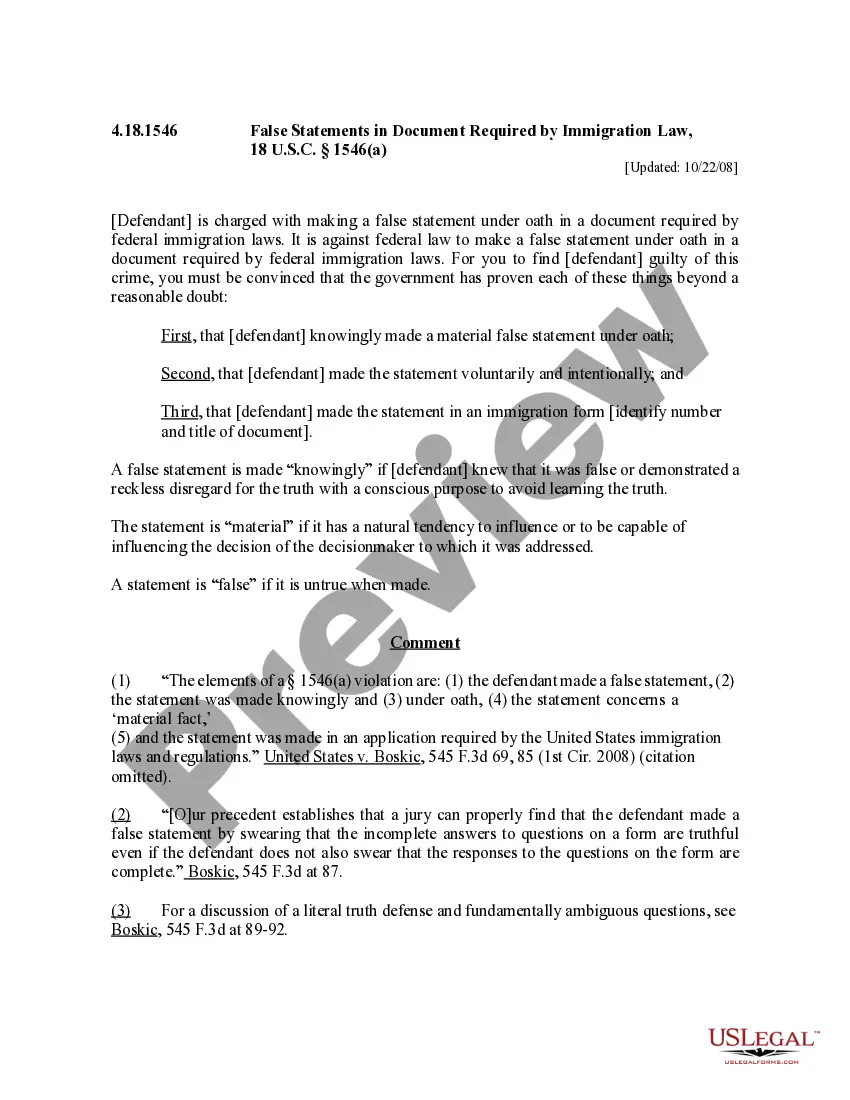
Maine 4.18.1546 False Statement in Document Required by Immigration Law, 18 U.S.C. Sec. 1546(a)
What this document covers
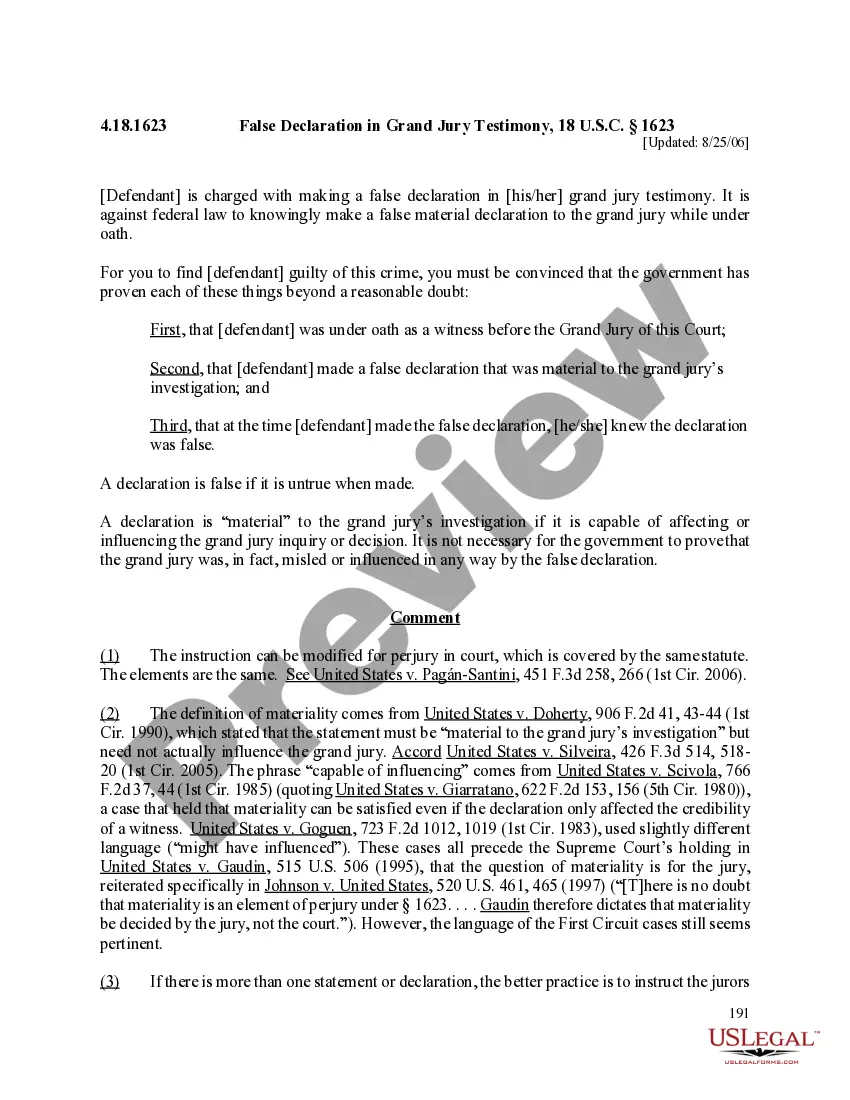
This form is related to the charge of making a false statement in a document required by immigration law. Specifically, it addresses violations under 18 U.S.C. § 1546(a), which prohibits false statements made under oath in immigration-related documents. This form serves as an official pattern jury instruction, providing guidance to jurors on the elements that must be proven for a conviction. It is essential for ensuring that jurors understand the legal implications of such false statements and the standards for determining guilt in these cases.
Key components of this form
- Definition of "knowingly" making a false statement under oath.
- Clarification of what constitutes a âmaterialâ statement.
- Specification of the immigration form related to the charge.
- Explanation of the legal standards required for conviction.
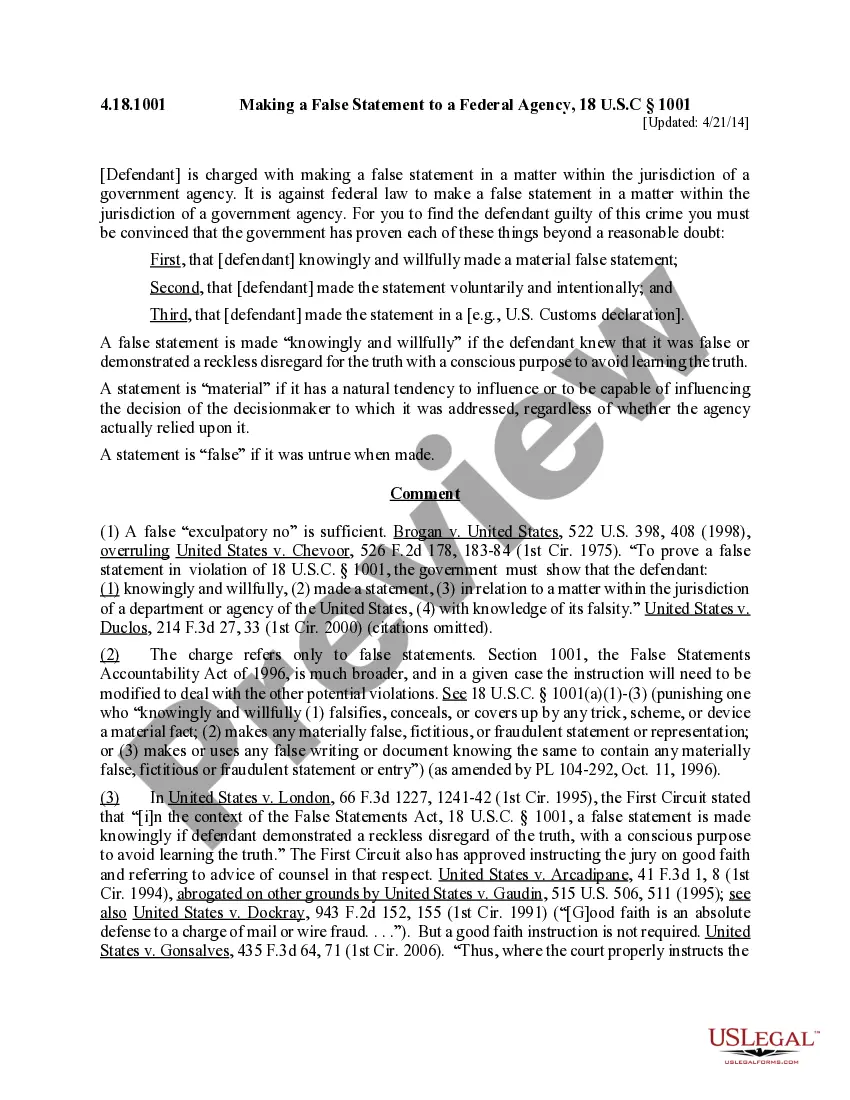
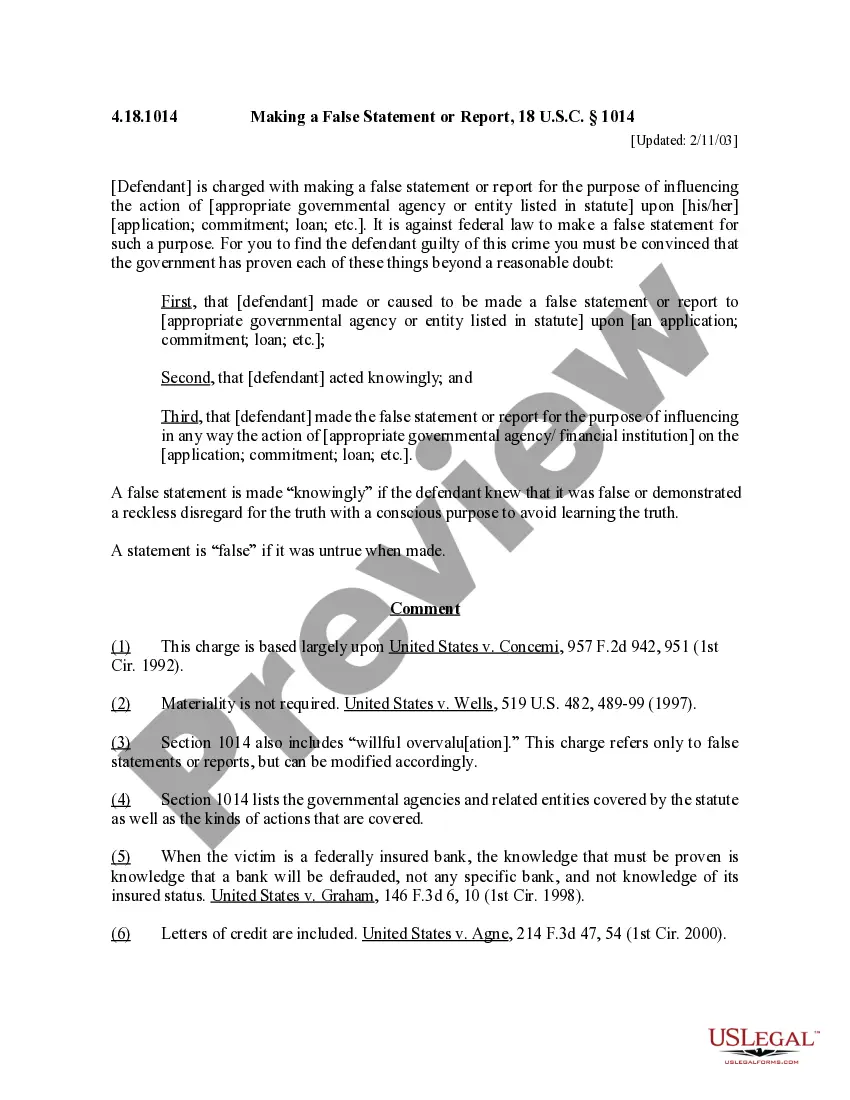
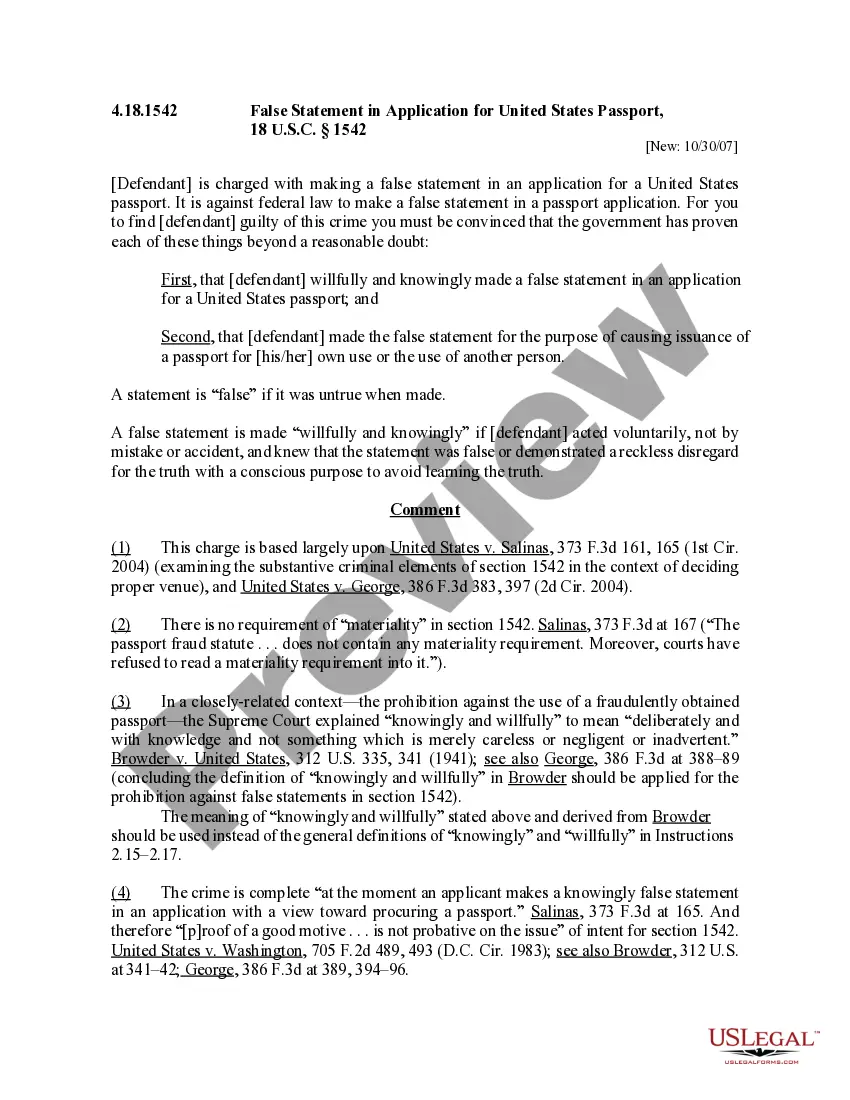
When to use this form
This form is used in federal criminal cases where an individual is charged with making false statements in immigration documents. It is applicable during jury trials to instruct jurors on the legal criteria that must be met for a conviction, specifically in cases involving immigration law violations. Situations include when defendants are accused of providing inaccurate information on visa applications, green card applications, or other federal immigration forms.
Who should use this form
- Legal professionals involved in federal criminal cases relating to immigration.
- Judges presiding over cases involving immigration-related false statements.
- Jurors needing guidance on evaluating the evidence presented in such cases.
How to complete this form
- Review and understand the definitions of key terms such as "knowingly" and "material" as defined in the instruction.
- Identify the specific immigration document in which the false statement was made.
- Assess the evidence presented to determine if each element of the charge is met beyond a reasonable doubt.
Notarization requirements for this form
This form does not typically require notarization unless specified by local law. The focus here is on legal instructions for jurors, not a statement that requires notarization.
Get your form ready online
Our built-in tools help you complete, sign, share, and store your documents in one place.
Make edits, fill in missing information, and update formatting in US Legal Forms—just like you would in MS Word.
Download a copy, print it, send it by email, or mail it via USPS—whatever works best for your next step.
Sign and collect signatures with our SignNow integration. Send to multiple recipients, set reminders, and more. Go Premium to unlock E-Sign.
If this form requires notarization, complete it online through a secure video call—no need to meet a notary in person or wait for an appointment.
We protect your documents and personal data by following strict security and privacy standards.

Make edits, fill in missing information, and update formatting in US Legal Forms—just like you would in MS Word.

Download a copy, print it, send it by email, or mail it via USPS—whatever works best for your next step.

Sign and collect signatures with our SignNow integration. Send to multiple recipients, set reminders, and more. Go Premium to unlock E-Sign.

If this form requires notarization, complete it online through a secure video call—no need to meet a notary in person or wait for an appointment.

We protect your documents and personal data by following strict security and privacy standards.
Mistakes to watch out for
- Failing to distinguish between what constitutes a false statement and a mere mistake.
- Misunderstanding the importance of "materiality" in a false statement.
- Overlooking the requirement that the statement must have been made under oath.
Benefits of completing this form online
- Access to the form at any time from anywhere, allowing for quick reference.
- Editable format suitable for individual case requirements.
- Reliability, as the form is drafted by licensed attorneys specializing in federal law.
Legal use & context
- Understanding the severity of false statements in federal immigration law is crucial.
- Recognizing the potential legal consequences, including prosecution.
- Insights into how false statements can influence immigration decisions and outcomes.
Looking for another form?
Form popularity
FAQ
If a student comes to the USA and submits documents that contain false statements, they may face serious consequences under the Maine 4.18.1546 False Statement in Document Required by Immigration Law, 18 U.S.C. Sec. 1546(a). Authorities could initiate an investigation, leading to potential immigration penalties, including deportation. Moreover, legal repercussions might involve fines or even prison time. It is essential to provide accurate information on all documents to protect one's immigration status and avoid these severe outcomes.
18 USC 1546 A addresses the offense of knowingly providing false information in documents required by immigration laws. If you are involved in immigration processes, familiarity with Maine 4.18.1546 False Statement in Document Required by Immigration Law, 18 U.S.C. Sec. 1546(a) is essential. Violating this statute can lead to serious legal consequences, emphasizing the importance of truthful documentation.