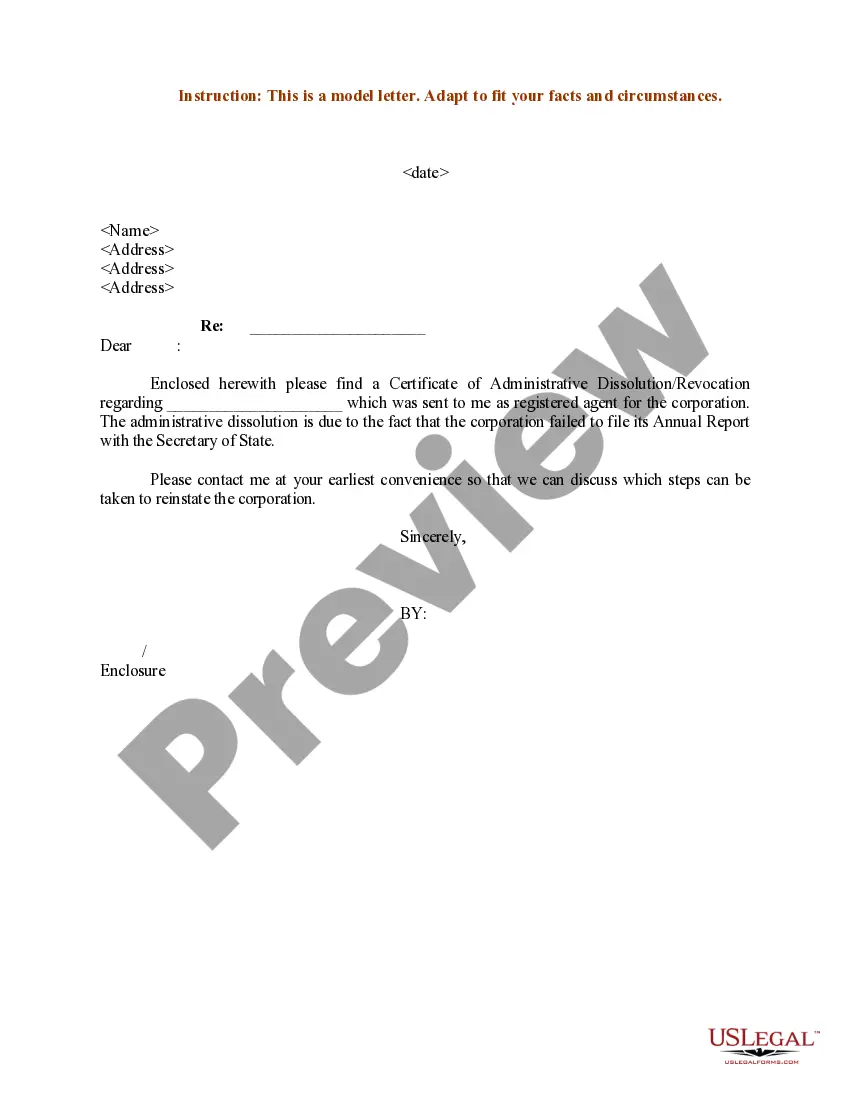
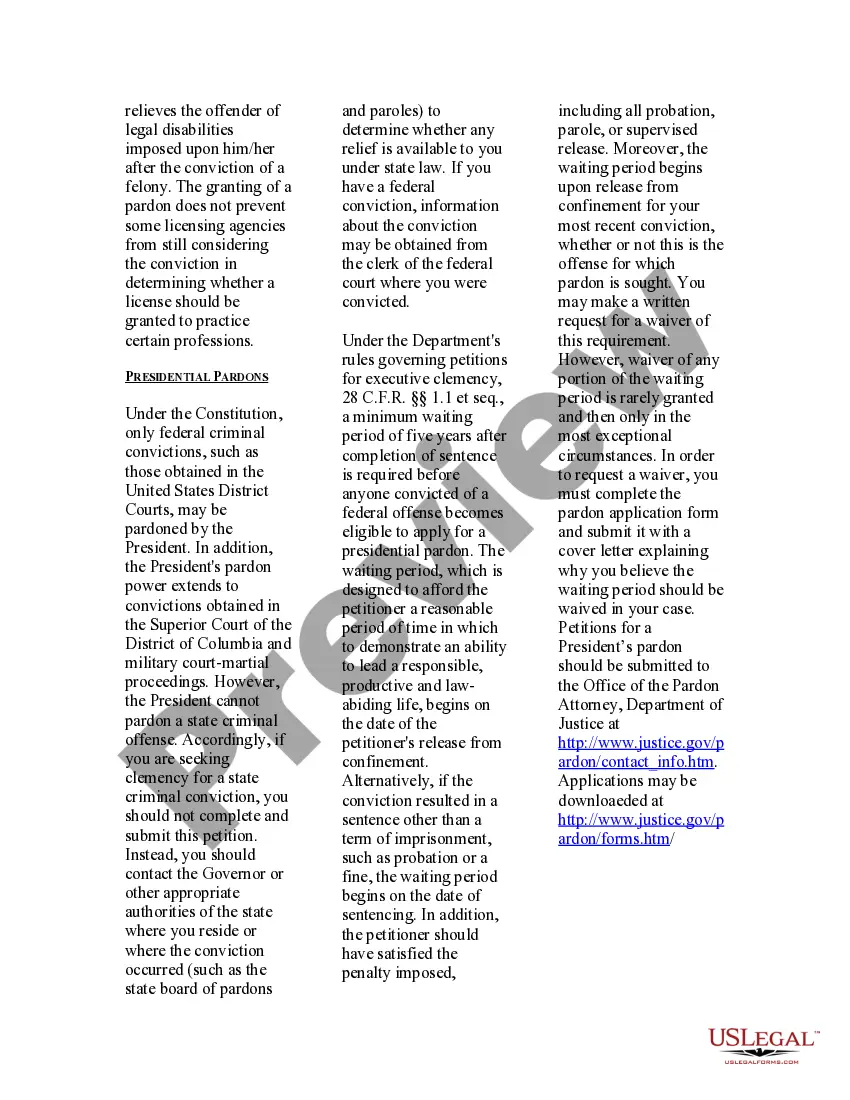
This pamphlet provides an overview on pardons. Topics covered include types of pardons, the effect of a pardon, and presidential pardons for federal crimes.
Maryland USLegal Pamphlet on Pardons or Clemency
Instant download
Description
Free preview
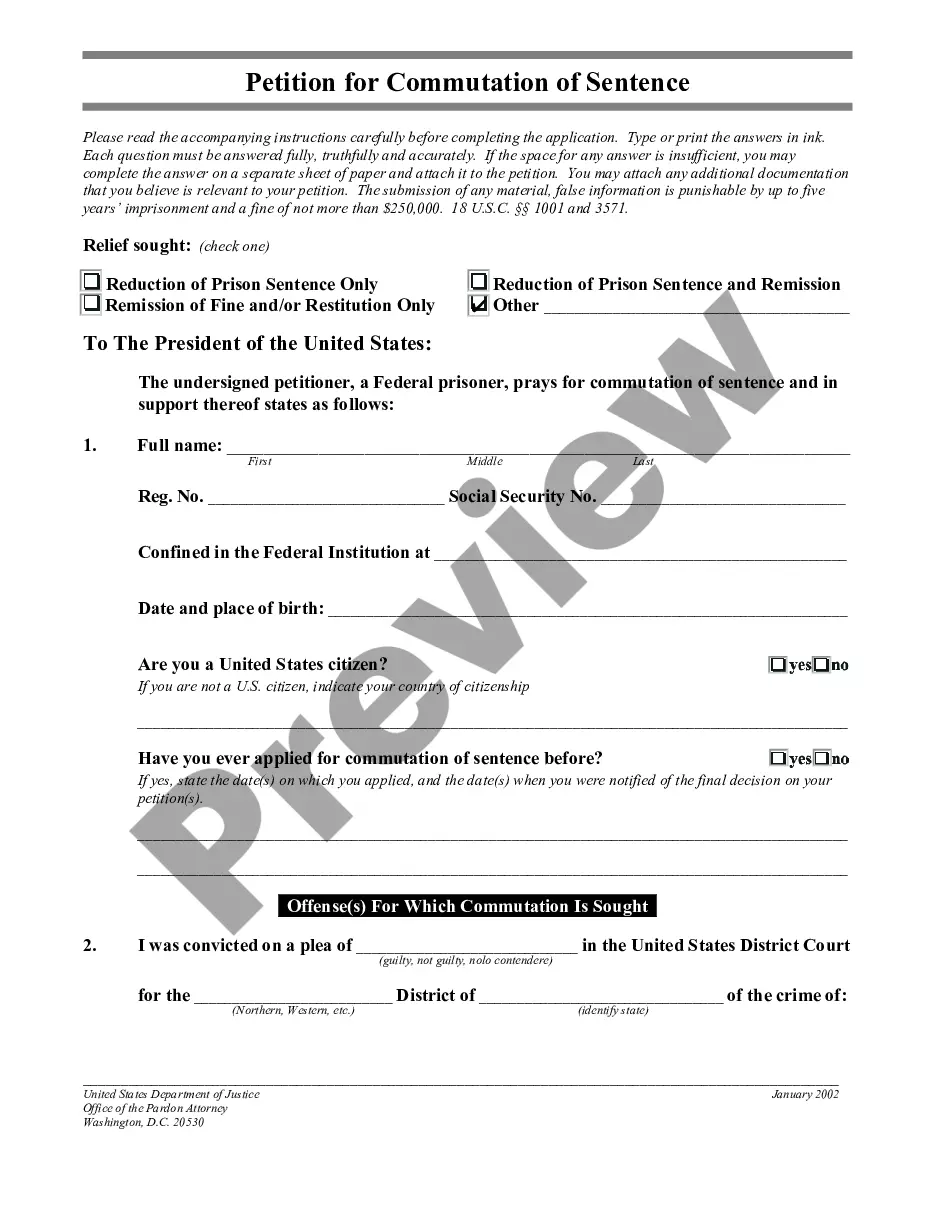
Get your form ready online
Our built-in tools help you complete, sign, share, and store your documents in one place.
Built-in online Word editor
Make edits, fill in missing information, and update formatting in US Legal Forms—just like you would in MS Word.
Export easily
Download a copy, print it, send it by email, or mail it via USPS—whatever works best for your next step.
E-sign your document
Sign and collect signatures with our SignNow integration. Send to multiple recipients, set reminders, and more. Go Premium to unlock E-Sign.
Notarize online 24/7
If this form requires notarization, complete it online through a secure video call—no need to meet a notary in person or wait for an appointment.
Store your document securely
We protect your documents and personal data by following strict security and privacy standards.

Make edits, fill in missing information, and update formatting in US Legal Forms—just like you would in MS Word.

Download a copy, print it, send it by email, or mail it via USPS—whatever works best for your next step.

Sign and collect signatures with our SignNow integration. Send to multiple recipients, set reminders, and more. Go Premium to unlock E-Sign.

If this form requires notarization, complete it online through a secure video call—no need to meet a notary in person or wait for an appointment.

We protect your documents and personal data by following strict security and privacy standards.
Looking for another form?




How to fill out USLegal Pamphlet On Pardons Or Clemency?
US Legal Forms - among the biggest libraries of authorized varieties in the USA - gives a variety of authorized file web templates you are able to obtain or produce. Using the internet site, you can get 1000s of varieties for business and person functions, sorted by classes, suggests, or keywords.You can find the most recent types of varieties just like the Maryland USLegal Pamphlet on Pardons or Clemency within minutes.
If you already have a monthly subscription, log in and obtain Maryland USLegal Pamphlet on Pardons or Clemency from your US Legal Forms library. The Obtain option will appear on every develop you see. You have access to all formerly saved varieties within the My Forms tab of the accounts.
If you would like use US Legal Forms initially, listed here are simple guidelines to obtain started out:
- Ensure you have chosen the proper develop for the metropolis/region. Select the Preview option to analyze the form`s content. See the develop outline to actually have chosen the correct develop.
- In the event the develop doesn`t suit your requirements, make use of the Lookup industry near the top of the display screen to get the the one that does.
- In case you are satisfied with the form, confirm your decision by visiting the Acquire now option. Then, pick the rates plan you favor and supply your qualifications to sign up for the accounts.
- Method the financial transaction. Use your bank card or PayPal accounts to perform the financial transaction.
- Pick the structure and obtain the form on the system.
- Make alterations. Fill out, edit and produce and indicator the saved Maryland USLegal Pamphlet on Pardons or Clemency.
Each web template you included with your bank account lacks an expiration time and is your own for a long time. So, if you want to obtain or produce yet another copy, just proceed to the My Forms segment and then click in the develop you require.
Obtain access to the Maryland USLegal Pamphlet on Pardons or Clemency with US Legal Forms, the most comprehensive library of authorized file web templates. Use 1000s of skilled and state-particular web templates that satisfy your organization or person requirements and requirements.
Form popularity
FAQ
Clemency is a general term used for the act of reducing the penalties of a crime, similar to a commutation. Also, pardons are actually considered a form of clemency. If you receive a pardon, you are always receiving clemency, but if you receive clemency, you are not always receiving a pardon.
1. You cannot apply for a pardon if you are currently incarcerated. 2. If you were convicted of a misdemeanor, you must have been crime-free for a period of five (5) years from the date of sentence, release from incarceration, or release from parole or probation, whichever last occurred.
An expunged record cannot be seen by the public, employers or background check agencies.
If you were found guilty of a crime, Maryland law allows certain criminal convictions to be expunged after satisfactory completion of the sentence, including parole, probation or mandatory supervision. When you can file for expungement varies based on the crime for which you were convicted.
The only method to restore firearm rights is by obtaining a pardon. A pardon is an official act of forgiveness granted by the Governor of Maryland, which restores some civil liberties, including the right to possess firearms, to people who have been convicted of a felony.
In Maryland, once a certain amount of time has passed you can file to have your record expunged. These timeframes are usually 3, 4, 5, 10 or 15 year increments. The more serious the crime the longer the time it takes until it can be expunged. And again, ideally you will have stayed out of trouble the entire time.
The REDEEM Act of 2023 will allow anyone convicted of a qualifying misdemeanor offense to expunge their record five years after completing their sentence terms. Similarly, those convicted of nonviolent felonies could qualify to request an expungement in only seven years.