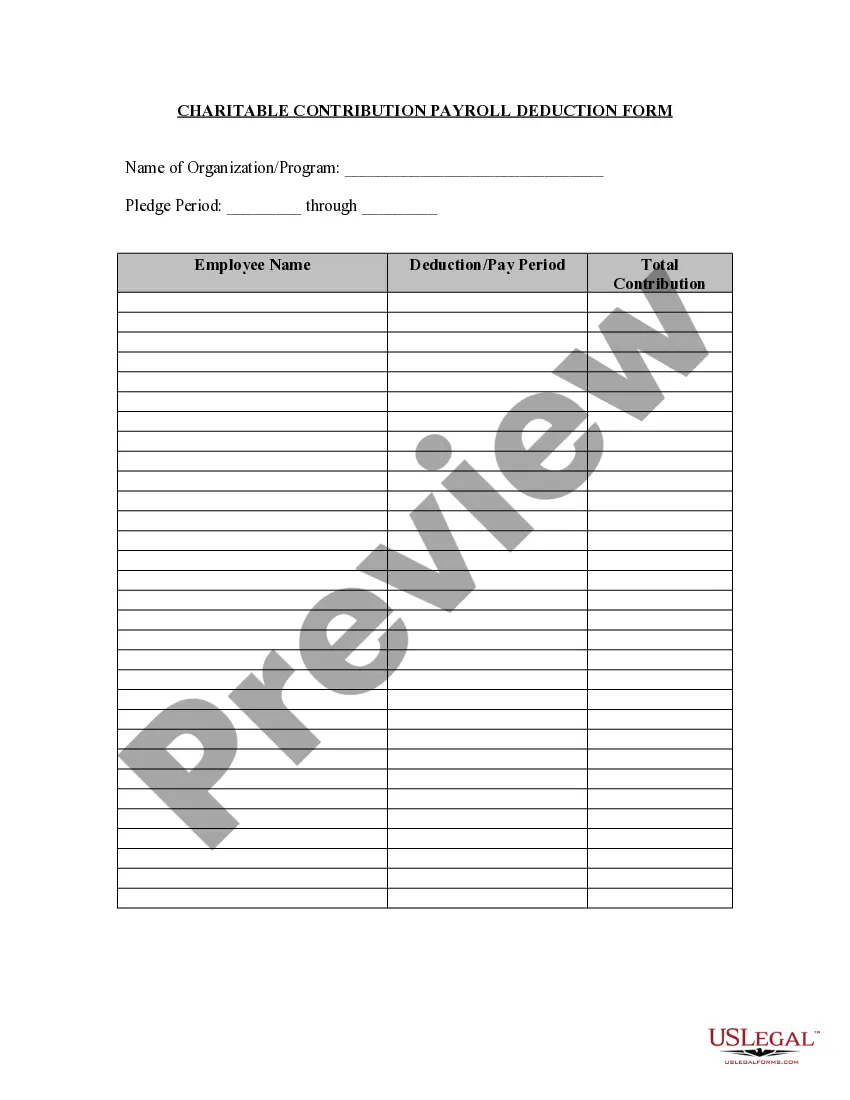
Maryland Charitable Contribution Payroll Deduction Form
Description
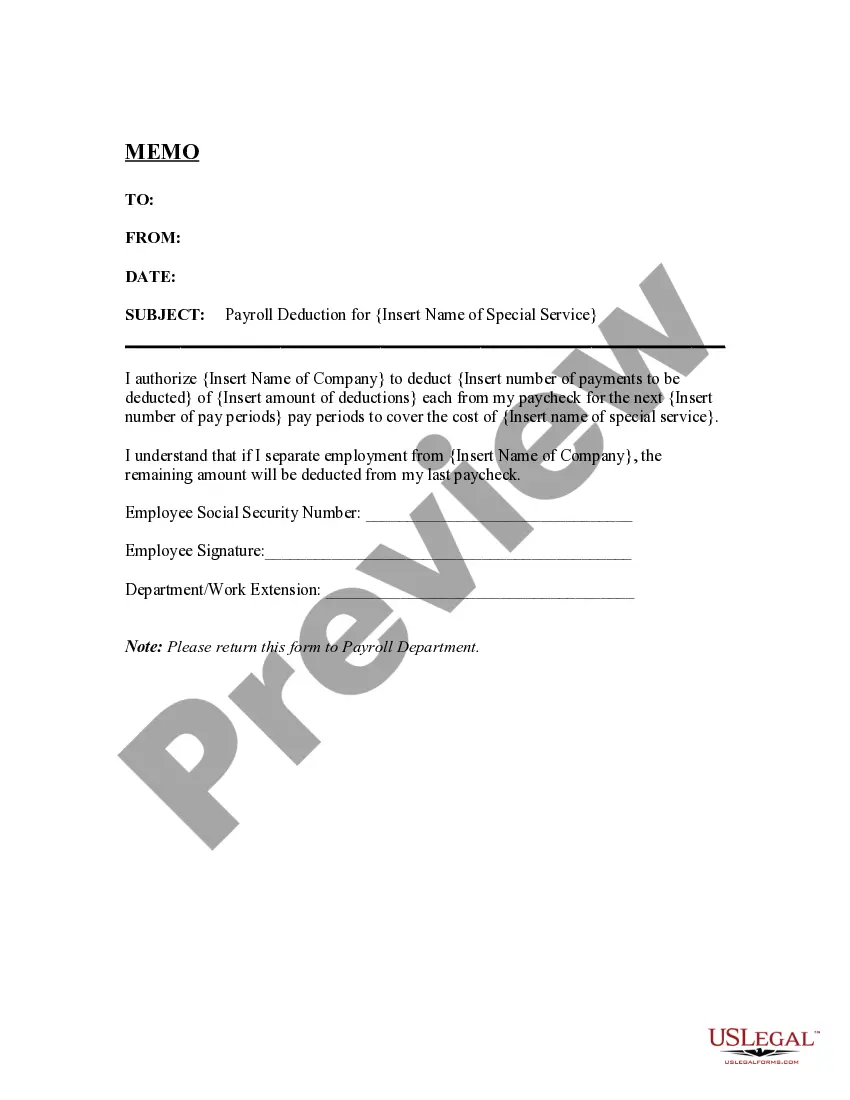
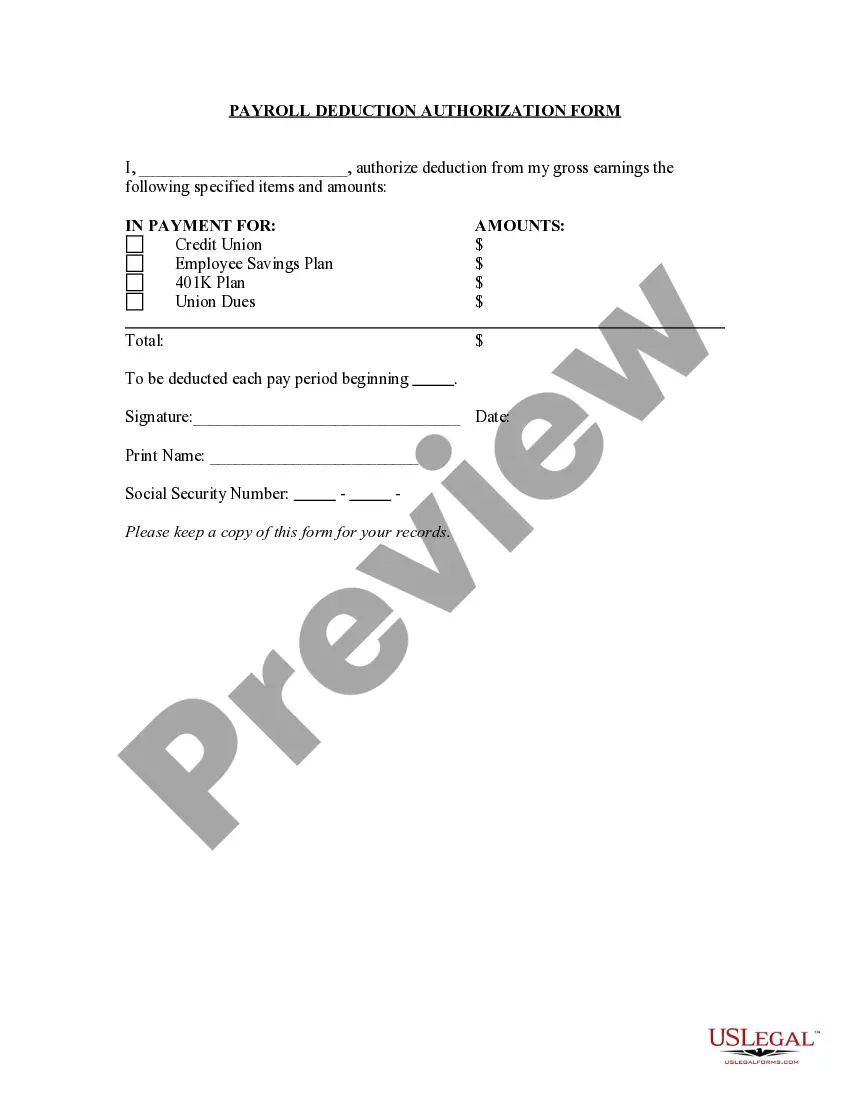
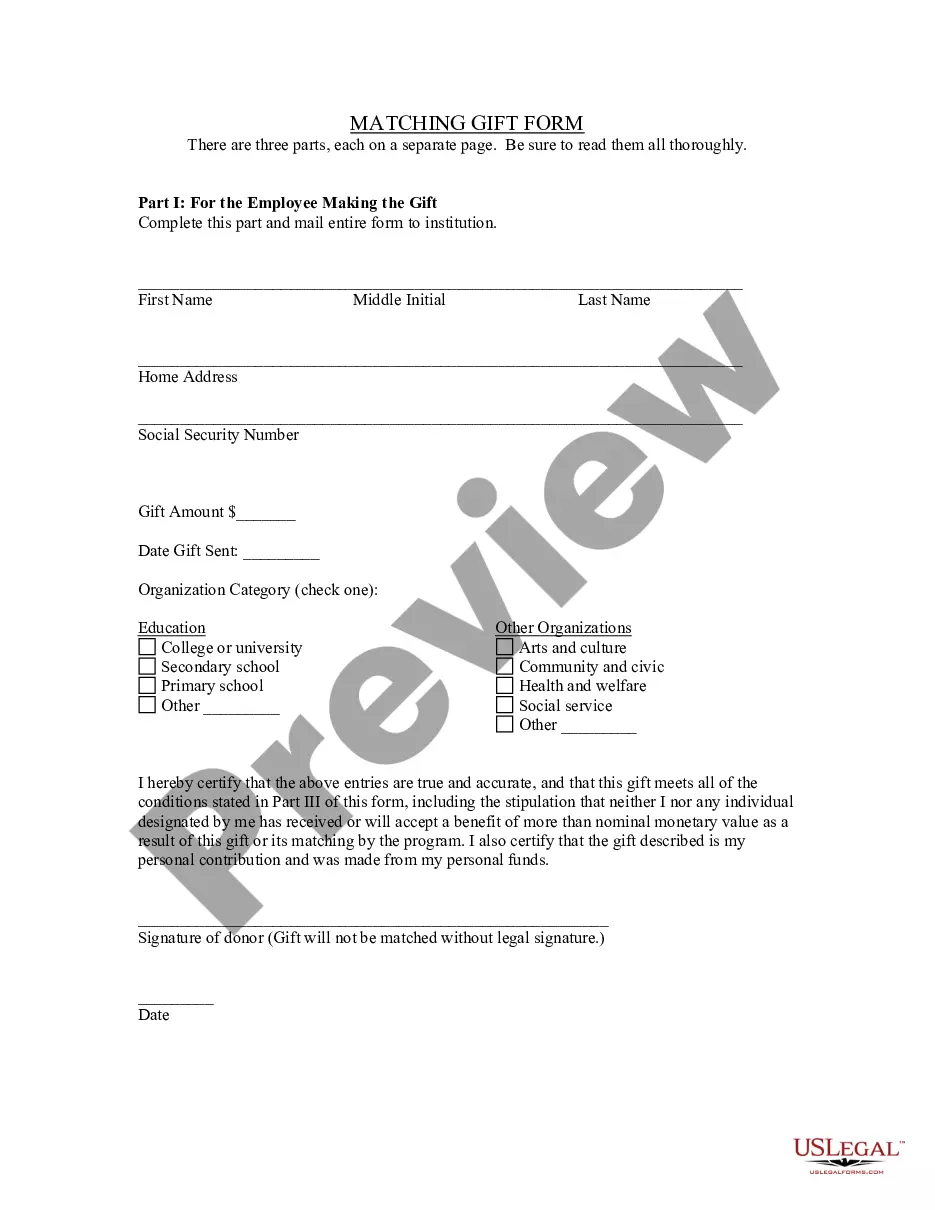
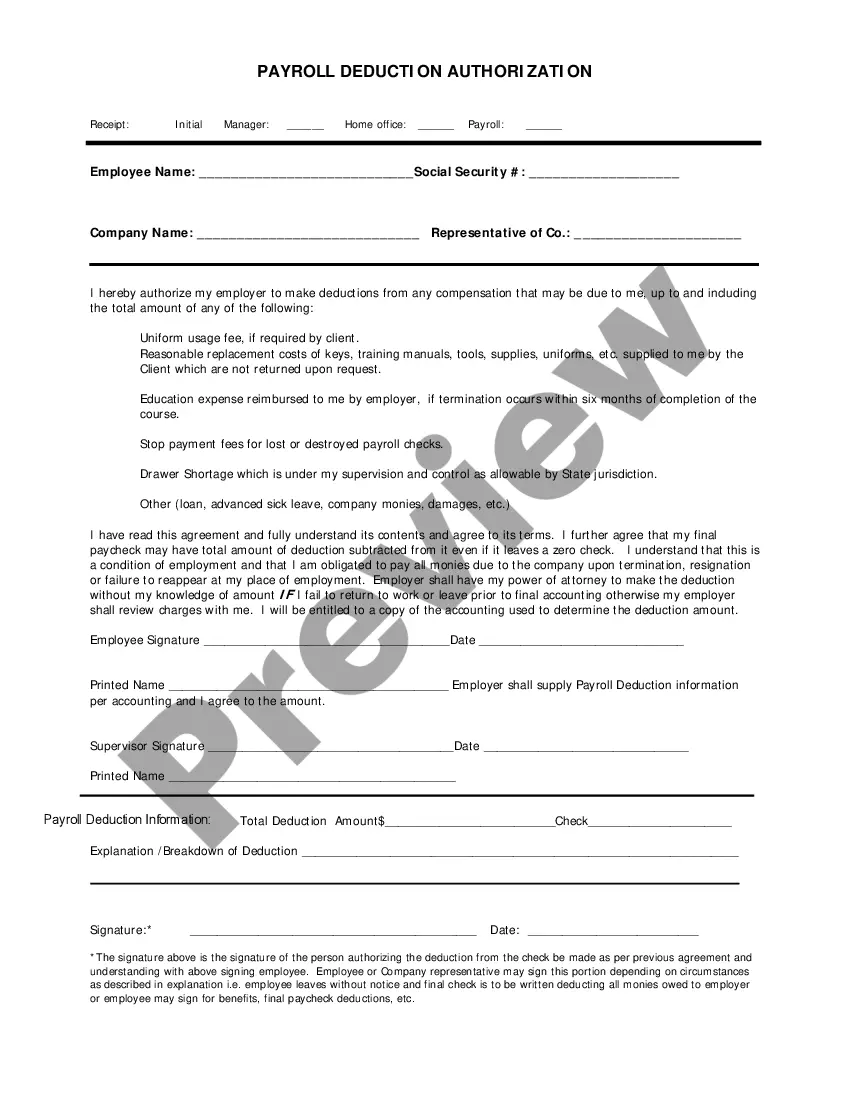
Get your form ready online
Our built-in tools help you complete, sign, share, and store your documents in one place.
Make edits, fill in missing information, and update formatting in US Legal Forms—just like you would in MS Word.
Download a copy, print it, send it by email, or mail it via USPS—whatever works best for your next step.
Sign and collect signatures with our SignNow integration. Send to multiple recipients, set reminders, and more. Go Premium to unlock E-Sign.
If this form requires notarization, complete it online through a secure video call—no need to meet a notary in person or wait for an appointment.
We protect your documents and personal data by following strict security and privacy standards.

Make edits, fill in missing information, and update formatting in US Legal Forms—just like you would in MS Word.

Download a copy, print it, send it by email, or mail it via USPS—whatever works best for your next step.

Sign and collect signatures with our SignNow integration. Send to multiple recipients, set reminders, and more. Go Premium to unlock E-Sign.

If this form requires notarization, complete it online through a secure video call—no need to meet a notary in person or wait for an appointment.

We protect your documents and personal data by following strict security and privacy standards.
Looking for another form?





How to fill out Charitable Contribution Payroll Deduction Form?
It is feasible to spend hours online trying to locate the legal document template that satisfies the requirements imposed by state and federal regulations that you need.
US Legal Forms offers a vast array of legal forms that have been reviewed by experts.
You can easily download or print the Maryland Charitable Contribution Payroll Deduction Form from the services.
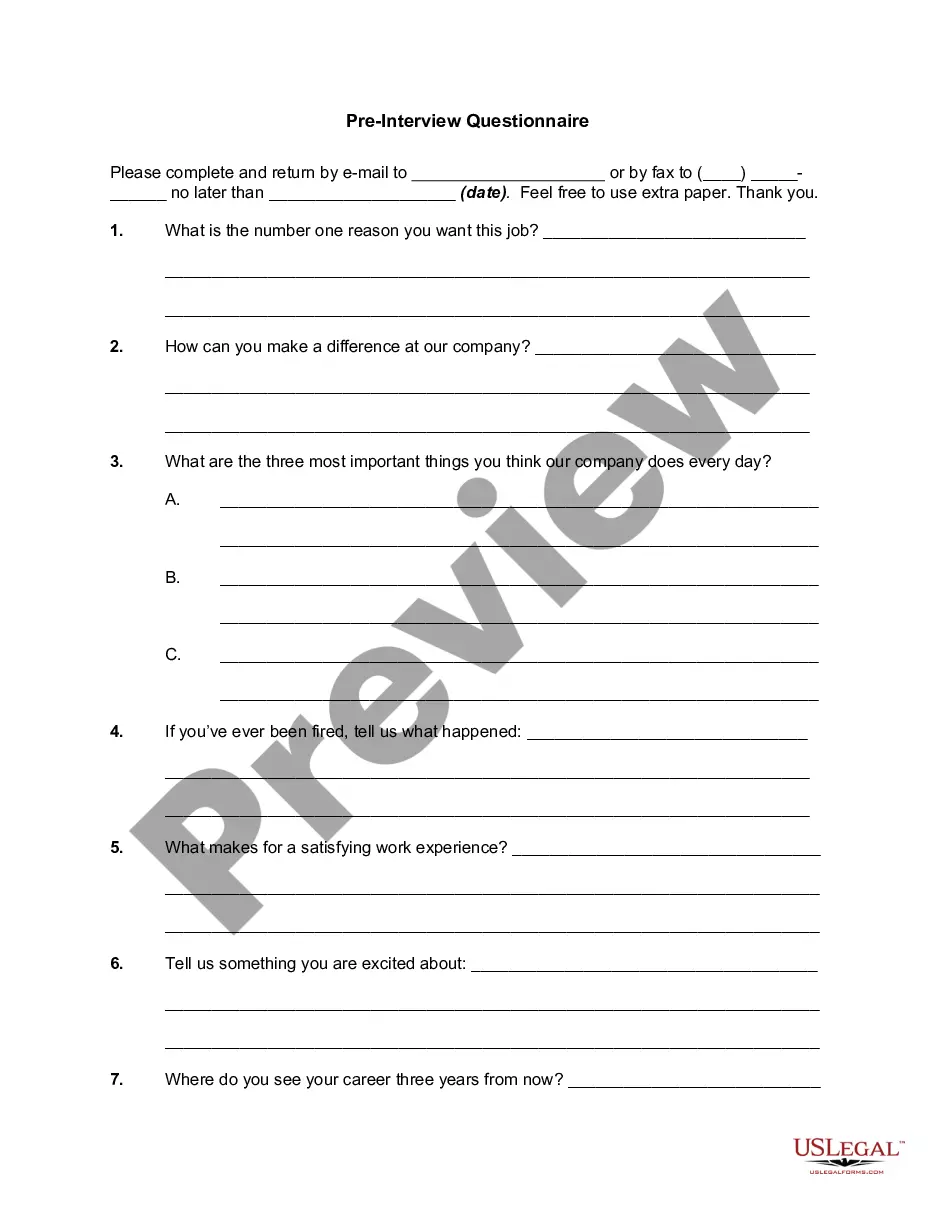
First, verify that you have selected the appropriate document template for the state/city of your choice. Review the form description to ensure you have picked the correct document. If available, use the Preview option to review the document template as well.
- If you already possess a US Legal Forms account, you can Log In and select the Obtain option.
- After that, you can fill out, modify, print, or sign the Maryland Charitable Contribution Payroll Deduction Form.
- Every legal document template you obtain is yours to keep indefinitely.
- To acquire an additional copy of a previously obtained form, navigate to the My documents tab and click on the relevant option.
- If you are visiting the US Legal Forms website for the first time, follow the simple instructions below.
Form popularity
FAQ
Churches and other religious organizations are recognized by the IRS, meaning that charitable contributions made to qualified religious organizations can be claimed.
Tithing is currently defined by the church as payment of one-tenth of one's annual income. Many church leaders have made statements in support of tithing.
Overview. Donations to 501(c)(3) nonprofits are tax-deductible. This means that when you make a contribution to an organization that has been designated as a 501(c)(3) by the IRS and you have not received anything in return for your gift, you are eligible for a deduction when you file your taxes.
A charity is an organization with philanthropic goals that aims to improve the quality of life for the community and beyond. Charities come in two general types: public charities and private foundations.
Businesses and individuals that donate to qualified organization's approved project(s) can earn tax credits equal to 50% of the value of the money, goods or real property contribution. These tax credits are in addition to the deductions on both Federal and State taxes as a result of the charitable contribution.
The availability of charitable and other allowable itemized deductions is limited to resident taxpayers who itemize their federal income tax deductions in DC, GA, ID, KS, LA, ME, MD, MO, NE, NM, ND, OK, SC and VA; other states permit resident taxpayers to itemize state income tax deductions and deduct qualified
In general, you can deduct up to 60% of your adjusted gross income via charitable donations, but you may be limited to 20%, 30% or 50% depending on the type of contribution and the organization (contributions to certain private foundations, veterans organizations, fraternal societies, and cemetery organizations come
You may deduct charitable contributions of money or property made to qualified organizations if you itemize your deductions. Generally, you may deduct up to 50 percent of your adjusted gross income, but 20 percent and 30 percent limitations apply in some cases.
The law allows an above-the-line income tax charitable deduction up to $300 ($600 for a married couple) even if you don't itemize your 2020 income tax return.
The IRS automatically recognizes churches as 501(c) (3) charitable organizations if they meet the IRS requirements.