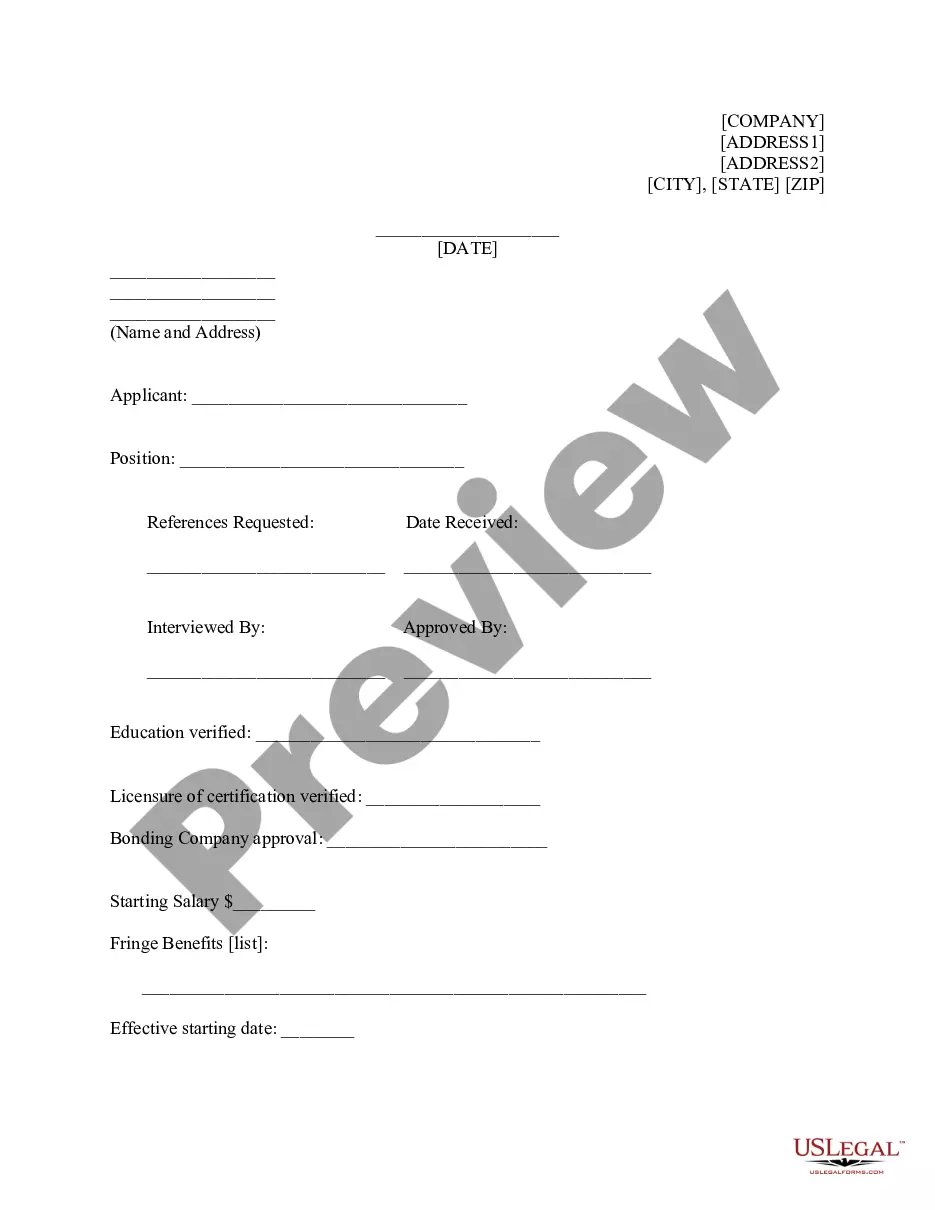
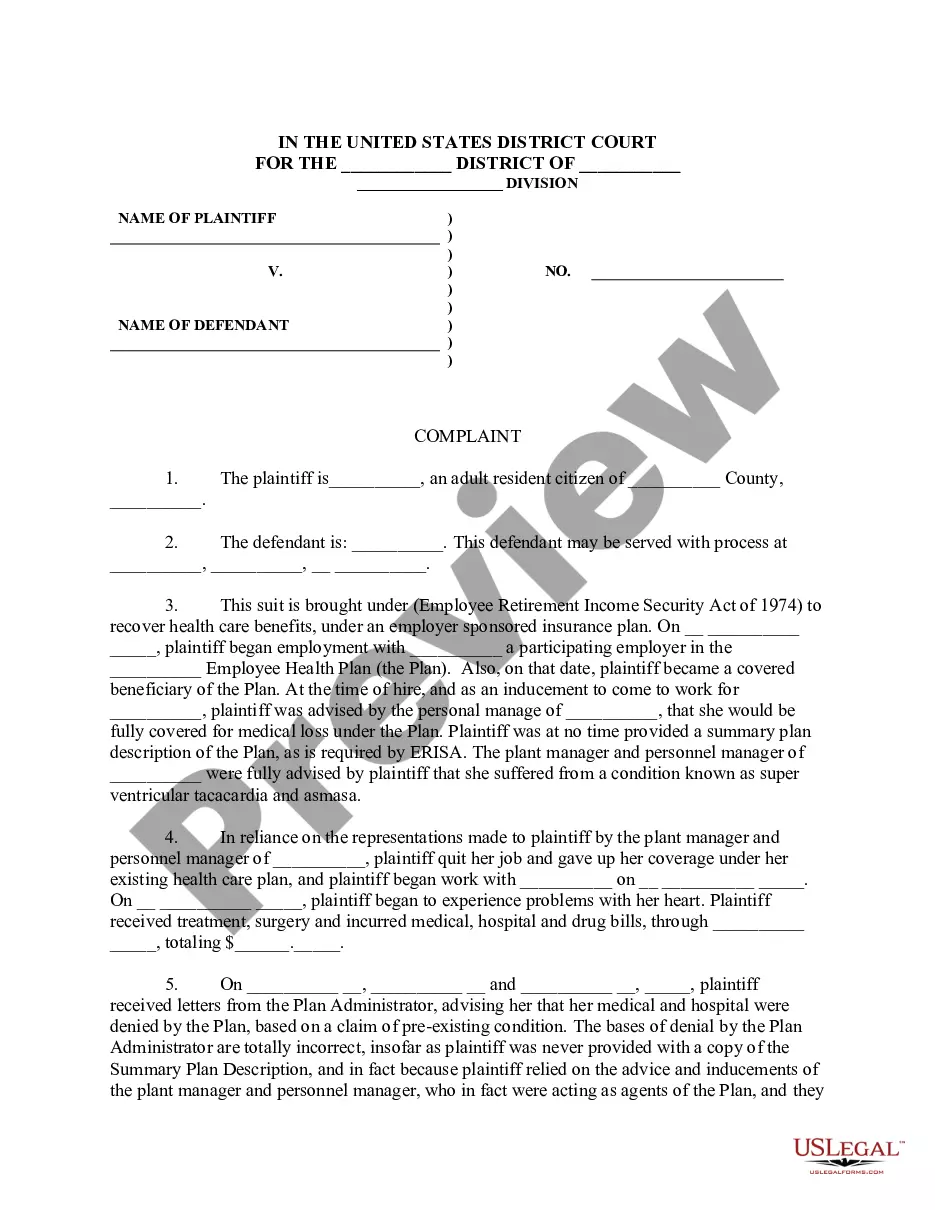
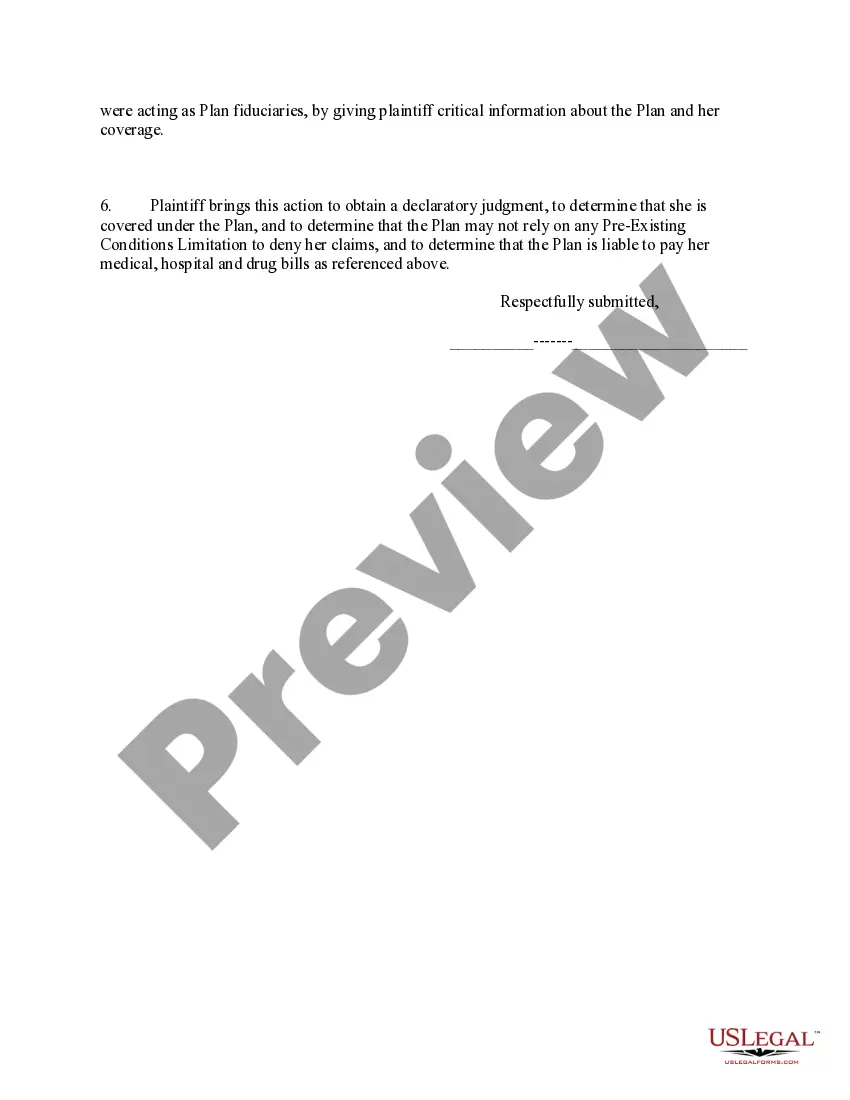
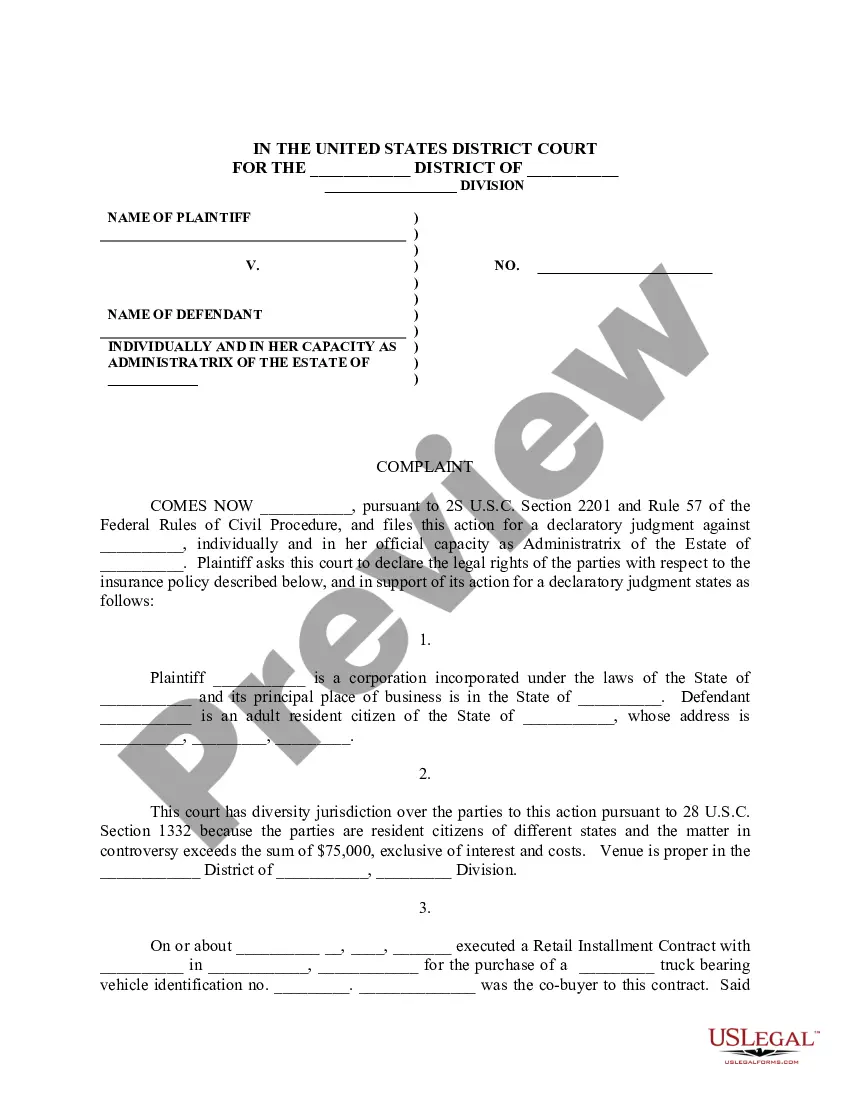
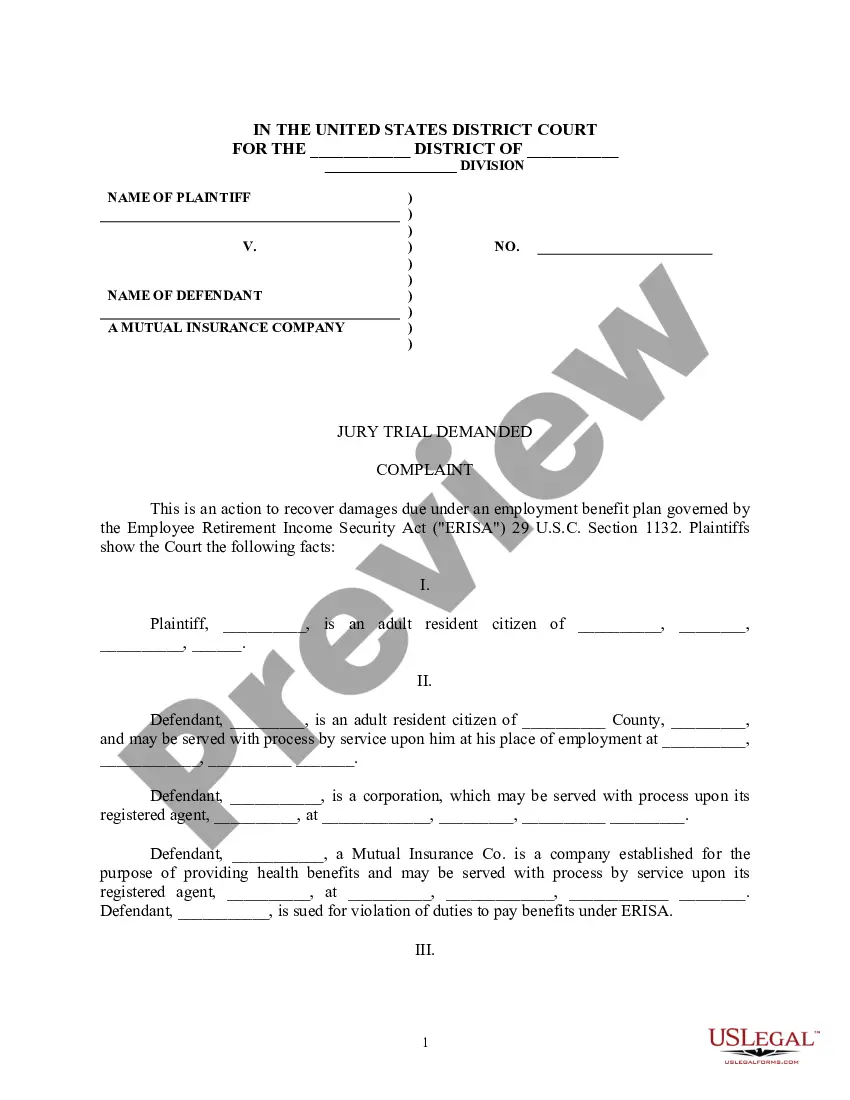
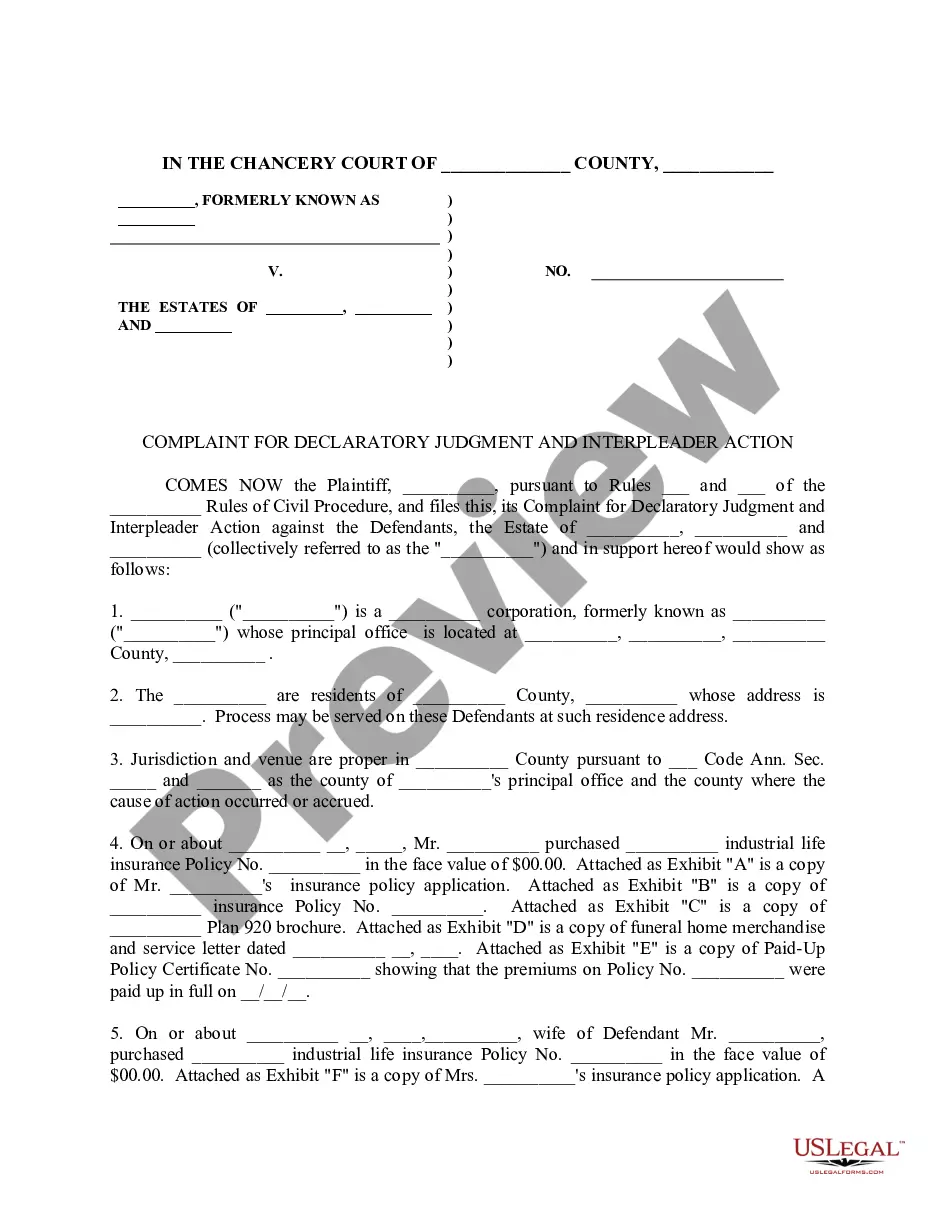
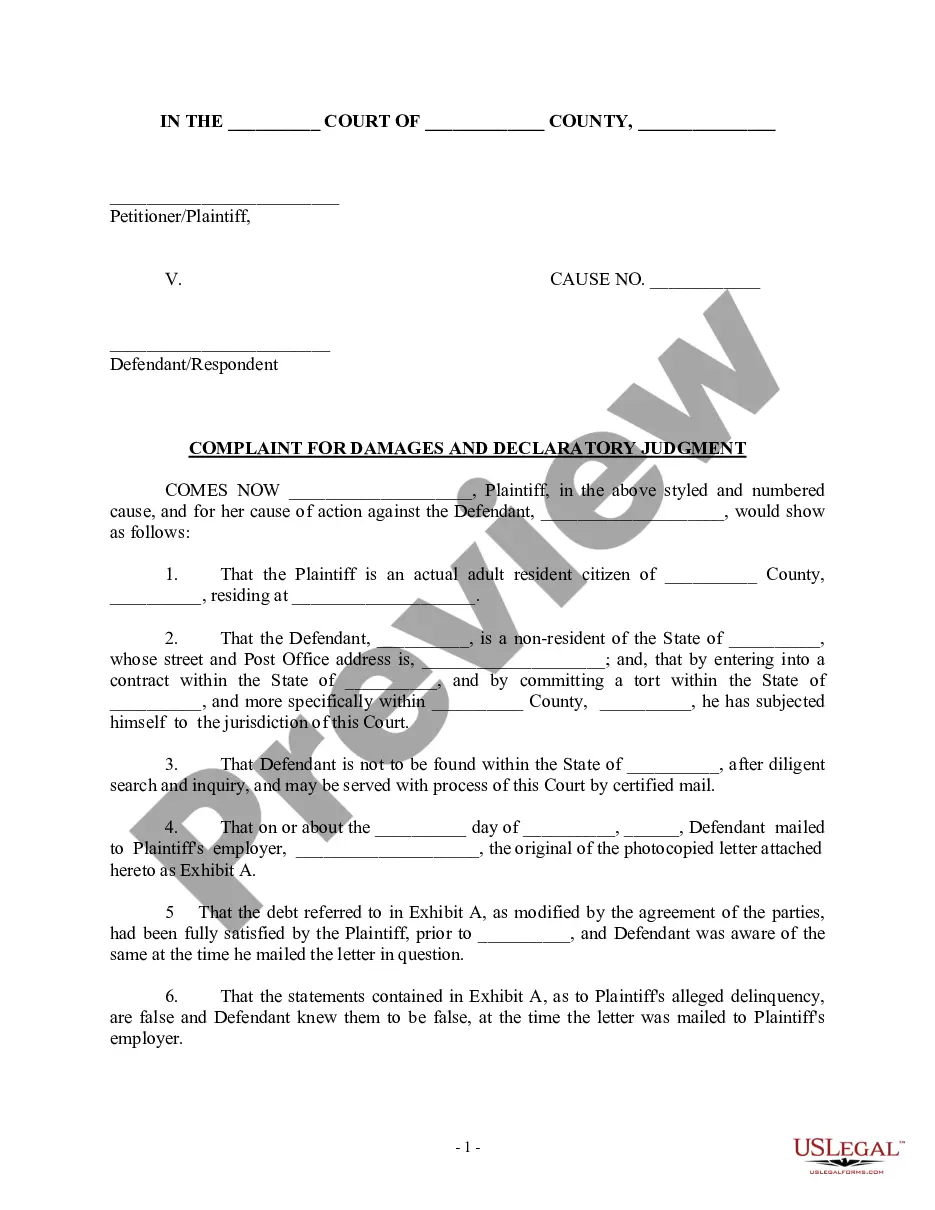
This form is a Complaint For Declaratory Judgment To Determine ERISA Coverage. Adapt to your specific circumstances. Don't reinvent the wheel, save time and money.
Maryland Complaint For Declaratory Judgment To Determine ERISA Coverage
Instant download
Description
Free preview
Get your form ready online
Our built-in tools help you complete, sign, share, and store your documents in one place.
Built-in online Word editor
Make edits, fill in missing information, and update formatting in US Legal Forms—just like you would in MS Word.
Export easily
Download a copy, print it, send it by email, or mail it via USPS—whatever works best for your next step.
E-sign your document
Sign and collect signatures with our SignNow integration. Send to multiple recipients, set reminders, and more. Go Premium to unlock E-Sign.
Notarize online 24/7
If this form requires notarization, complete it online through a secure video call—no need to meet a notary in person or wait for an appointment.
Store your document securely
We protect your documents and personal data by following strict security and privacy standards.

Make edits, fill in missing information, and update formatting in US Legal Forms—just like you would in MS Word.

Download a copy, print it, send it by email, or mail it via USPS—whatever works best for your next step.

Sign and collect signatures with our SignNow integration. Send to multiple recipients, set reminders, and more. Go Premium to unlock E-Sign.

If this form requires notarization, complete it online through a secure video call—no need to meet a notary in person or wait for an appointment.

We protect your documents and personal data by following strict security and privacy standards.
Looking for another form?



How to fill out Complaint For Declaratory Judgment To Determine ERISA Coverage?
It is feasible to spend hours online attempting to locate the legal document template that fulfills the state and federal requirements you require. US Legal Forms offers thousands of legal forms that are reviewed by experts.
You can easily download or print the Maryland Complaint For Declaratory Judgment To Determine ERISA Coverage from their service.
If you already possess a US Legal Forms account, you can Log In and click the Acquire button. Subsequently, you can fill out, modify, print, or sign the Maryland Complaint For Declaratory Judgment To Determine ERISA Coverage. Every legal document template you obtain is yours permanently. To acquire another version of a purchased form, visit the My documents tab and click on the corresponding button.
Select the file format of the document and download it to your device. Make adjustments to your document if necessary. You can fill out, modify, sign, and print the Maryland Complaint For Declaratory Judgment To Determine ERISA Coverage. Obtain and print thousands of document templates using the US Legal Forms website, which offers the largest selection of legal forms. Utilize professional and state-specific templates to address your business or personal needs.
- If you are using the US Legal Forms website for the first time, follow the simple instructions below.
- First, ensure that you have selected the correct document template for the county/region of your choice. Review the form summary to confirm you have chosen the appropriate form.
- If available, utilize the Preview button to check the document template as well.
- If you wish to obtain another version of the form, use the Search field to find the template that meets your needs and requirements.
- Once you have located the template you want, click Buy now to proceed.
- Choose the pricing plan you prefer, enter your details, and register for your account on US Legal Forms.
- Complete the transaction. You may use your credit card or PayPal account to pay for the legal form.
Form popularity
FAQ
Filing a complaint with the Maryland Insurance Administration involves a few straightforward steps. First, gather all your policy details and documents related to the issue at hand. Then, you can submit your complaint online or by mail, ensuring you include a Maryland Complaint For Declaratory Judgment To Determine ERISA Coverage if applicable. This formal approach can facilitate resolution and ensure your concerns are addressed promptly.
To dispute an insurance claim, start by reviewing your policy to understand your coverage. Gather all relevant documentation, including the denial letter and any supporting evidence. Next, you can file a Maryland Complaint For Declaratory Judgment To Determine ERISA Coverage if you believe the insurer misapplied the policy terms. Utilizing platforms like USLegalForms can streamline the process and help you effectively communicate your dispute.
An insurance company may seek a declaratory judgment when there is uncertainty regarding the coverage of a policy or the obligations under it. For example, if a dispute arises over whether a claim falls under ERISA coverage, the insurer may request judicial clarification. If you find yourself in this situation, filing a Maryland Complaint For Declaratory Judgment To Determine ERISA Coverage can help clarify your rights and responsibilities under the policy.
In Maryland, the statute of limitations for insurance claims varies depending on the nature of the claim. Generally, it is three years from the date of the incident or the date you became aware of the issue. If you need to file a Maryland Complaint For Declaratory Judgment To Determine ERISA Coverage, understanding these time constraints can significantly affect your case, so be sure to act promptly.
In a declaratory judgment case, the burden of proof generally rests on the party seeking the declaration. This means you must provide sufficient evidence to support your claim regarding ERISA coverage. When pursuing a Maryland Complaint For Declaratory Judgment To Determine ERISA Coverage, it is crucial to gather relevant documentation and information that clearly supports your position.
Rule 3 535 B in Maryland outlines the procedures for filing a complaint for declaratory judgment, particularly under circumstances involving ERISA coverage. This rule helps parties understand how to seek a judicial determination regarding their rights under a specific insurance policy. If you are considering a Maryland Complaint For Declaratory Judgment To Determine ERISA Coverage, it is essential to follow these guidelines to ensure your case is properly presented.
A declaratory judgment, also called a declaration, is the legal determination of a court that resolves legal uncertainty for the litigants.
issued declaratory judgment outlines the rights and responsibilities of each involved party. This judgment does not require action or award damages. It helps to resolve disputes and prevent lawsuits.
A declaratory judgment is a binding judgment from a court defining the legal relationship between parties and their rights in a matter before the court. When there is uncertainty as to the legal obligations or rights between two parties, a declaratory judgment offers an immediate means to resolve this uncertainty.
For example, one party may claim that it performed under a commission agreement and is entitled to payment of his or her commission. The other party may file a declaratory judgment action seeking a declaration that there has not been performance under the agreement and that no commission is owed.