Maryland Protecting Deceased Persons from Identity Theft
What is this form package?
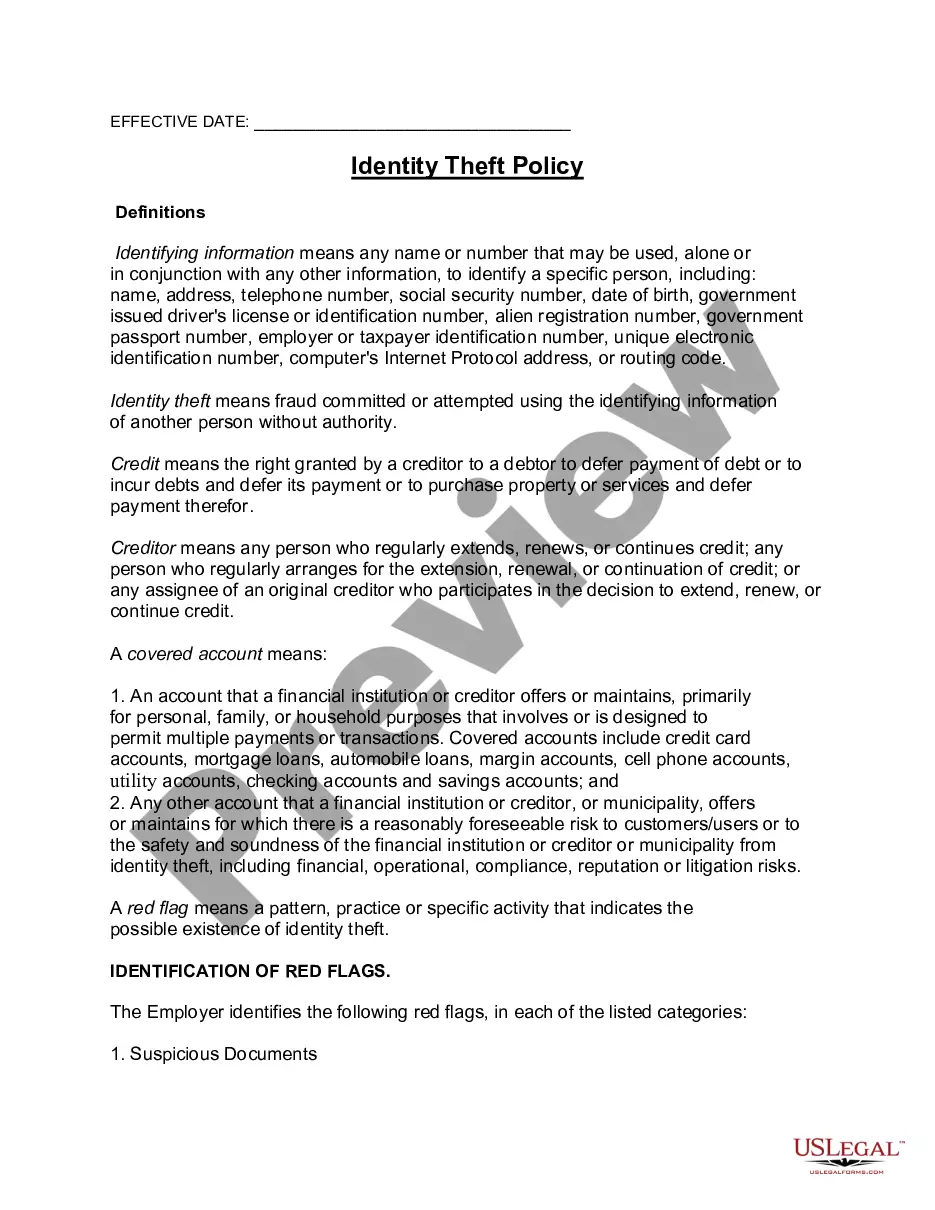
The Maryland Protecting Deceased Persons from Identity Theft form package is designed to help you manage the sensitive issues surrounding the identity of a deceased individual. This package includes essential forms aimed at reducing the risk of identity theft after death and addressing any instances where a deceased person's information is misused. It provides clear guidance and documentation to notify relevant agencies, creditors, and organizations about the individual's death, and to report any identity theft that has occurred.
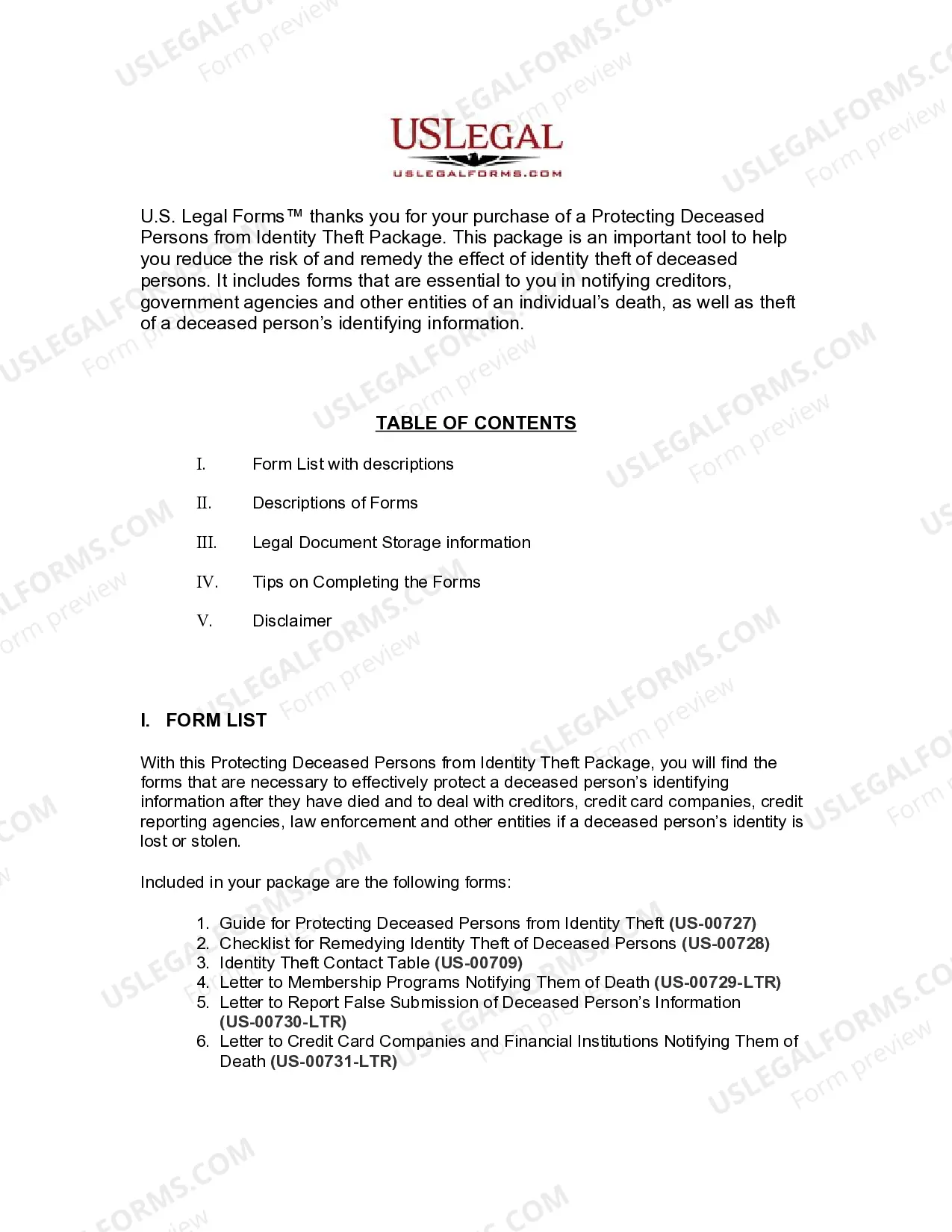
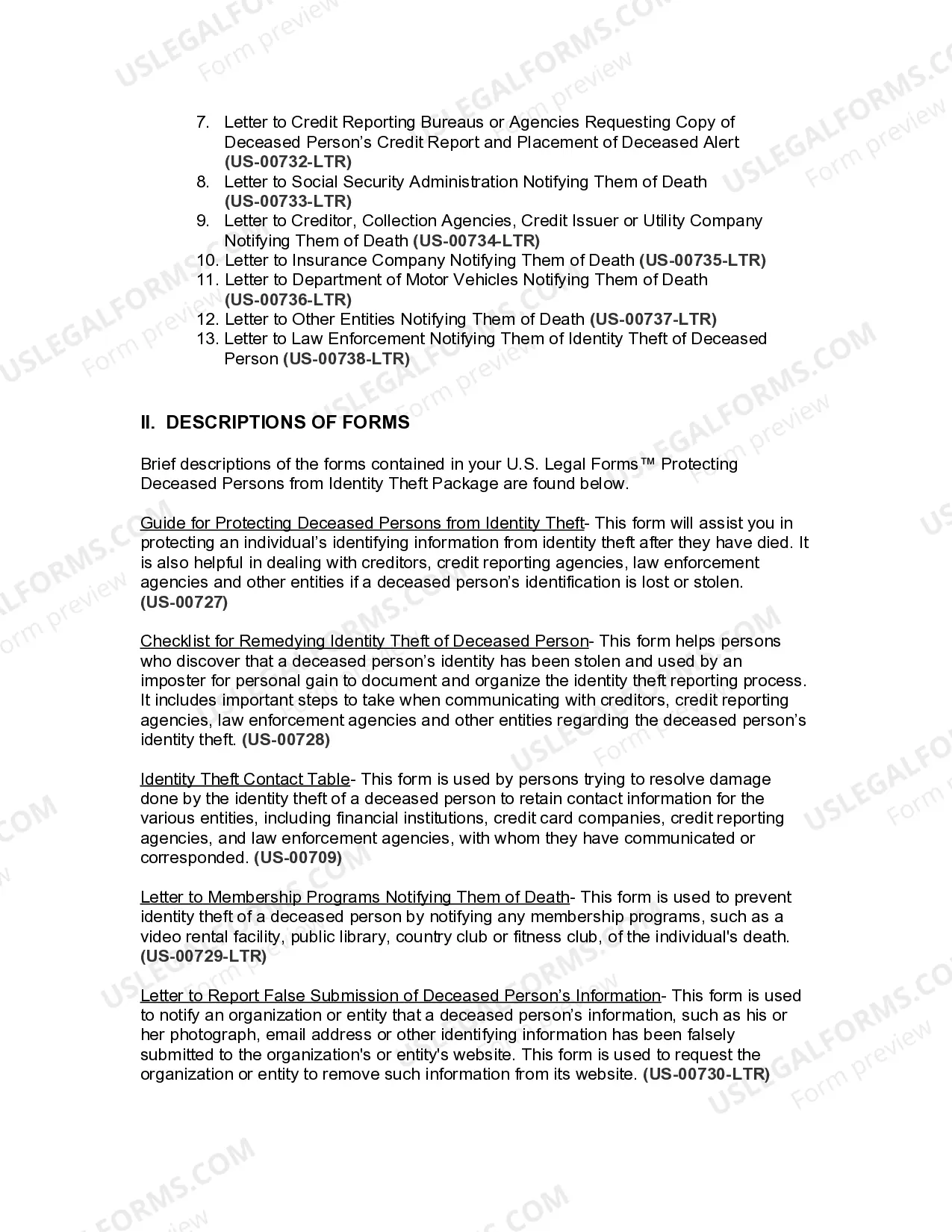
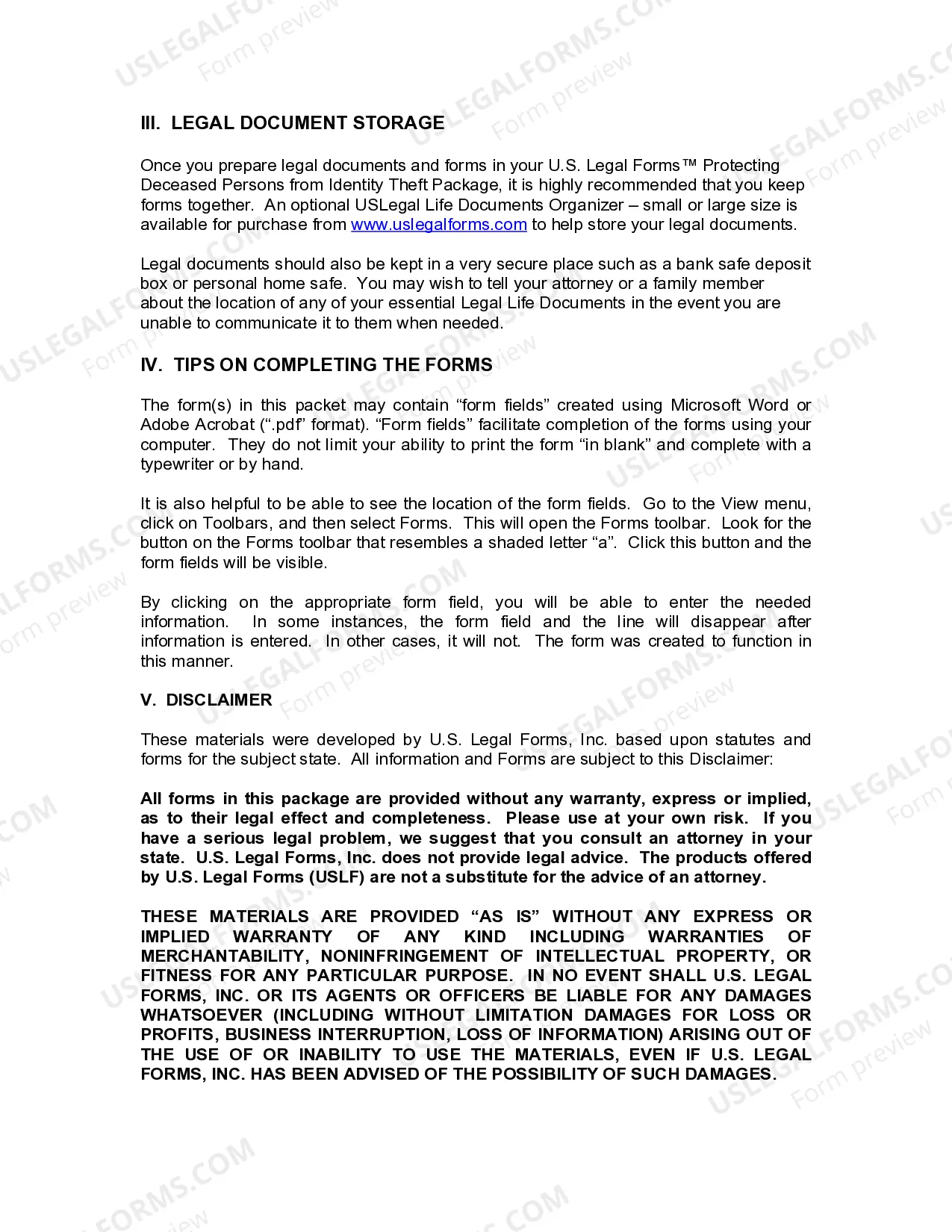
Documents contained in this package
- Identity Theft Contact Table
- Guide for Protecting Deceased Persons from Identity Theft
- Checklist for Remedying Identity Theft of Deceased Persons
- Letter to Membership Programs Notifying Them of Death
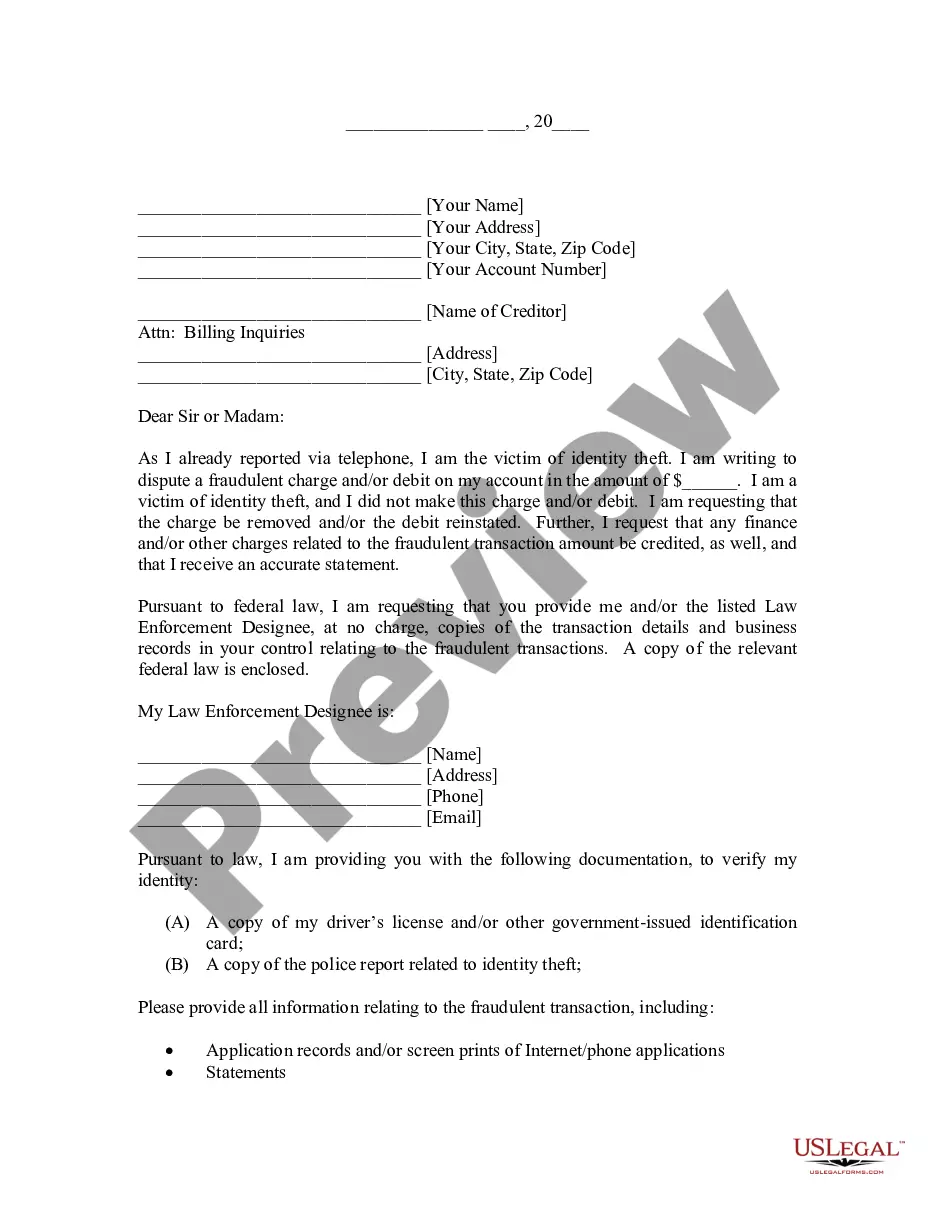
- Letter to Report False Submission of Deceased Person's Information
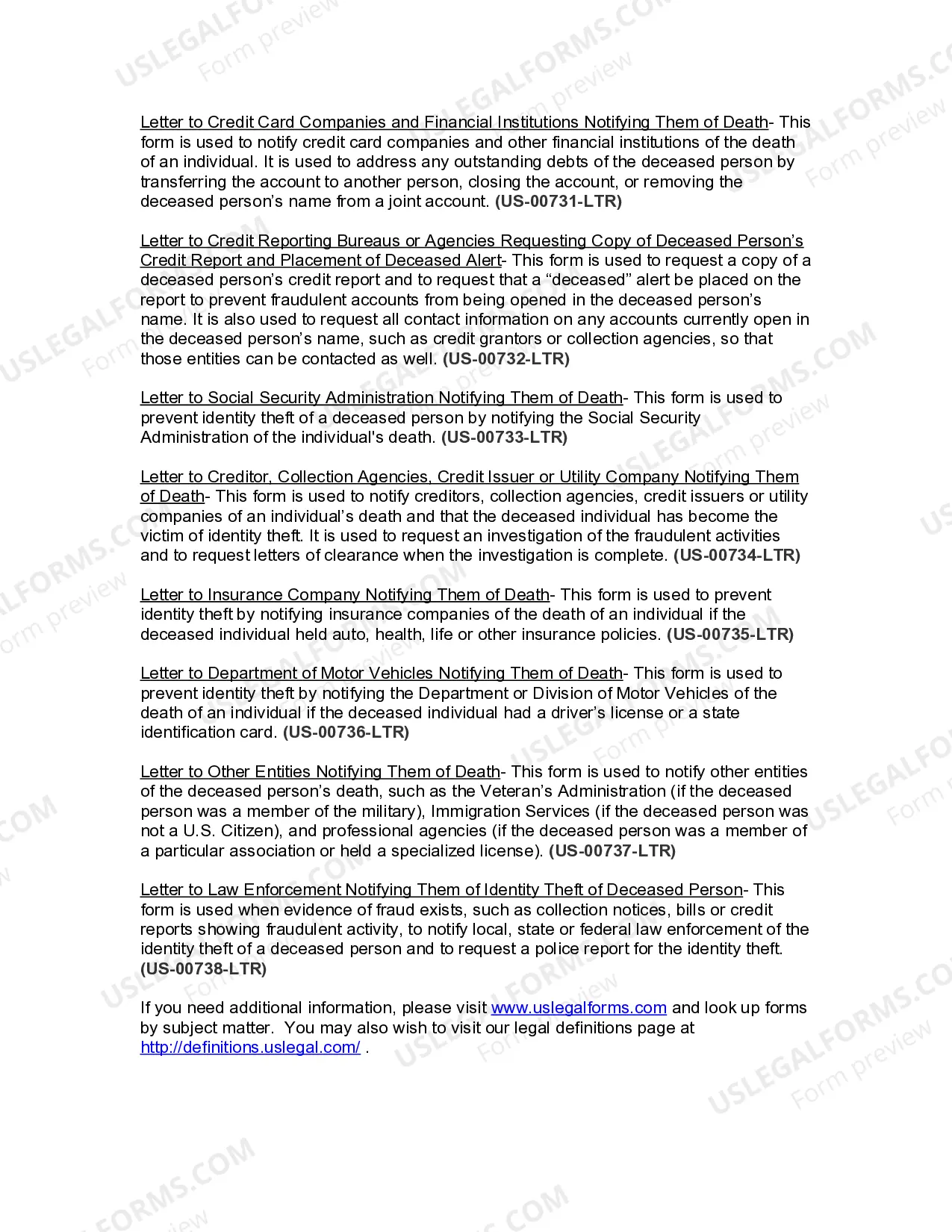
- Letter to Credit Card Companies and Financial Institutions Notifying Them of Death
- Letter to Credit Reporting Bureaus or Agencies Requesting Copy of Deceased Person's Credit Report and Placement of Deceased Alert
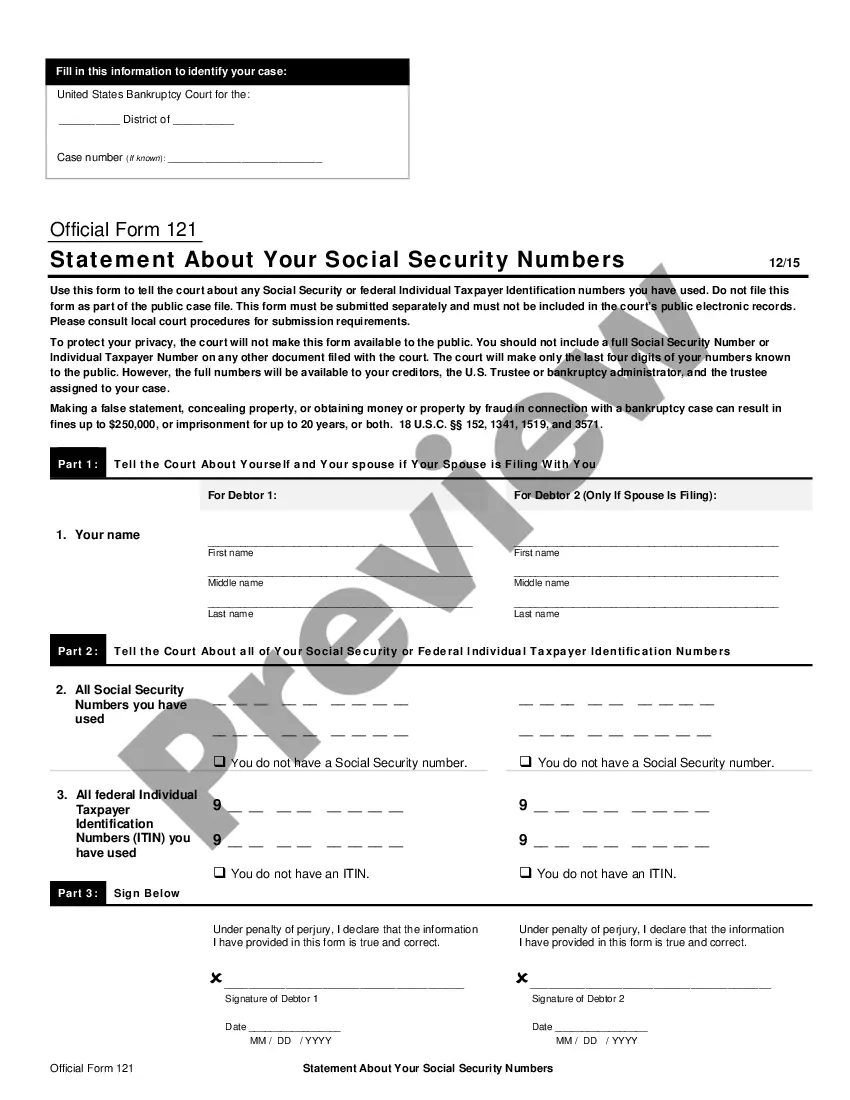
- Letter to Social Security Administration Notifying Them of Death
- Letter to Creditor, Collection Agencies, Credit Issuer or Utility Company Notifying Them of Death
- Letter to Insurance Company Notifying Them of Death
- Letter to Department of Motor Vehicles Notifying Them of Death
- Letter to Other Entities Notifying Them of Death
- Letter to Law Enforcement Notifying Them of Identity Theft of Deceased Person
Situations where these forms applies
This package is useful in various scenarios, including:
- When a loved one passes away and you suspect their identity may be at risk of theft.
- When needing to notify financial institutions, creditors, and government agencies of the deceased's passing.
- If you encounter issues with unauthorized use of the deceased person's identifying information after their death.
- When filing claims or addressing matters related to the deceasedâs estate.
Who needs this form package
- Family members or personal representatives managing the estate of a deceased individual.
- Executors or administrators of an estate who need to prevent identity theft.
- Individuals who have discovered that a deceased person's identity has been stolen.
- Anyone responsible for handling financial matters tied to a deceased individual's affairs.
Instructions for completing these forms
- Review all included forms carefully to understand their purpose.
- Gather necessary information related to the deceased, including identification numbers and account details.
- Complete each form accurately, ensuring all required fields are filled in.
- Send the forms to the appropriate institutions, such as banks, creditors, and government agencies.
- Retain copies of all correspondence and completed forms for your records.
Notarization details for included forms
Notarization is generally not required for forms in this package. However, specific circumstances or local laws may require it. You can complete notarization remotely through US Legal Forms, powered by Notarize, with 24/7 availability.
Get your form ready online
Our built-in tools help you complete, sign, share, and store your documents in one place.
Make edits, fill in missing information, and update formatting in US Legal Forms—just like you would in MS Word.
Download a copy, print it, send it by email, or mail it via USPS—whatever works best for your next step.
Sign and collect signatures with our SignNow integration. Send to multiple recipients, set reminders, and more. Go Premium to unlock E-Sign.
If this form requires notarization, complete it online through a secure video call—no need to meet a notary in person or wait for an appointment.
We protect your documents and personal data by following strict security and privacy standards.

Make edits, fill in missing information, and update formatting in US Legal Forms—just like you would in MS Word.

Download a copy, print it, send it by email, or mail it via USPS—whatever works best for your next step.

Sign and collect signatures with our SignNow integration. Send to multiple recipients, set reminders, and more. Go Premium to unlock E-Sign.

If this form requires notarization, complete it online through a secure video call—no need to meet a notary in person or wait for an appointment.

We protect your documents and personal data by following strict security and privacy standards.
Mistakes to watch out for
- Failing to notify all relevant agencies and creditors, which can prolong the identity theft issue.
- Not keeping copies of submitted forms and correspondence.
- Overlooking to check for ongoing fraudulent activity after notifying agencies.
- Forgetting to follow up with organizations to ensure actions were taken on your notifications.
Benefits of using this package online
- Convenience of downloading and accessing forms anytime without the need to visit a lawyer.
- Editable documents allow you to fill in information at your own pace.
- Reliable forms drafted by licensed attorneys to ensure legal compliance.
- Cost savings by purchasing the complete package instead of individual forms.
Key takeaways
- This package provides essential forms to protect deceased individuals from identity theft.
- It includes specific letters for notifying creditors, agencies, and organizations about a death.
- Use this package to effectively manage identity theft and related concerns after a loved oneâs passing.
- Ensure all filled forms are submitted to the relevant institutions promptly for best results.
Looking for another form?
Form popularity
FAQ
If you suspect identity theft of a deceased person, you should report it to the Federal Trade Commission (FTC) and local authorities. Gather any evidence of the unauthorized use of their information and submit it along with your report. Utilizing platforms like US Legal Forms can guide you through the steps of Maryland Protecting Deceased Persons from Identity Theft, making the reporting process simpler and clearer.
To protect a deceased person from identity theft, it is essential to secure their personal information immediately. This includes canceling credit cards, closing bank accounts, and monitoring any ongoing financial activities. Using tools such as US Legal Forms can help you navigate the process of Maryland Protecting Deceased Persons from Identity Theft effectively and efficiently.
Preventing identity theft of a deceased person starts with notifying relevant institutions about the death. You should contact credit bureaus to place a fraud alert and request a credit freeze. Additionally, consider using services like US Legal Forms, which provide resources for Maryland Protecting Deceased Persons from Identity Theft, ensuring that sensitive information remains secure.
Yes, data protection does apply to deceased individuals to a certain extent. Laws vary by state, but Maryland Protecting Deceased Persons from Identity Theft highlights the need for careful handling of personal information even after death. Family members and executors can take steps to secure the deceased's data, ensuring it does not fall into the wrong hands. Using resources like US Legal Forms can assist in navigating these legal protections.
Using a deceased person's Social Security number can lead to identity theft and financial fraud. Criminals may open new accounts, apply for loans, or even commit tax fraud using this information. To combat this, Maryland Protecting Deceased Persons from Identity Theft emphasizes the importance of safeguarding sensitive data. You can utilize platforms like US Legal Forms to help manage and protect such information effectively.
While it may seem straightforward, notifying the bank after someone's death can sometimes lead to complications. Some institutions may freeze accounts or take actions that complicate estate transactions. It's crucial to approach these matters delicately and with full understanding. Utilizing resources like Maryland Protecting Deceased Persons from Identity Theft can help families navigate these challenges and handle the deceased's affairs smoothly.
If a deceased person's identity is stolen, it can lead to fraudulent activities that strain the family left behind. Identity thieves may open accounts, make purchases, or engage in other unlawful activities using the deceased's information. Maryland Protecting Deceased Persons from Identity Theft focuses on preventing such situations by providing resources and legal measures. It's essential for families to act quickly to report any suspicious activities related to the deceased's identity.
When a person dies, their Social Security Number (SSN) becomes less useful but does not disappear. It is important for families to safeguard this information to prevent identity theft. Maryland Protecting Deceased Persons from Identity Theft helps keep this sensitive information secure. Families should limit access to the deceased's SSN to prevent any misuse, especially in financial transactions.
The identity theft law in Maryland aims to protect residents from the unauthorized use of their personal information. Under this law, victims can seek restitution and pursue legal action against those who commit identity theft. Additionally, Maryland Protecting Deceased Persons from Identity Theft reinforces these protections specifically for deceased individuals. This law emphasizes the importance of keeping sensitive information secure, even after someone has passed.
If someone experiences identity theft, they should first report the theft to the Federal Trade Commission (FTC) to create a record. Next, they should place a fraud alert on their credit report to prevent further damage. Finally, contacting their financial institutions and creditors to dispute fraudulent charges is crucial. Maryland Protecting Deceased Persons from Identity Theft can offer guidance for these actions.