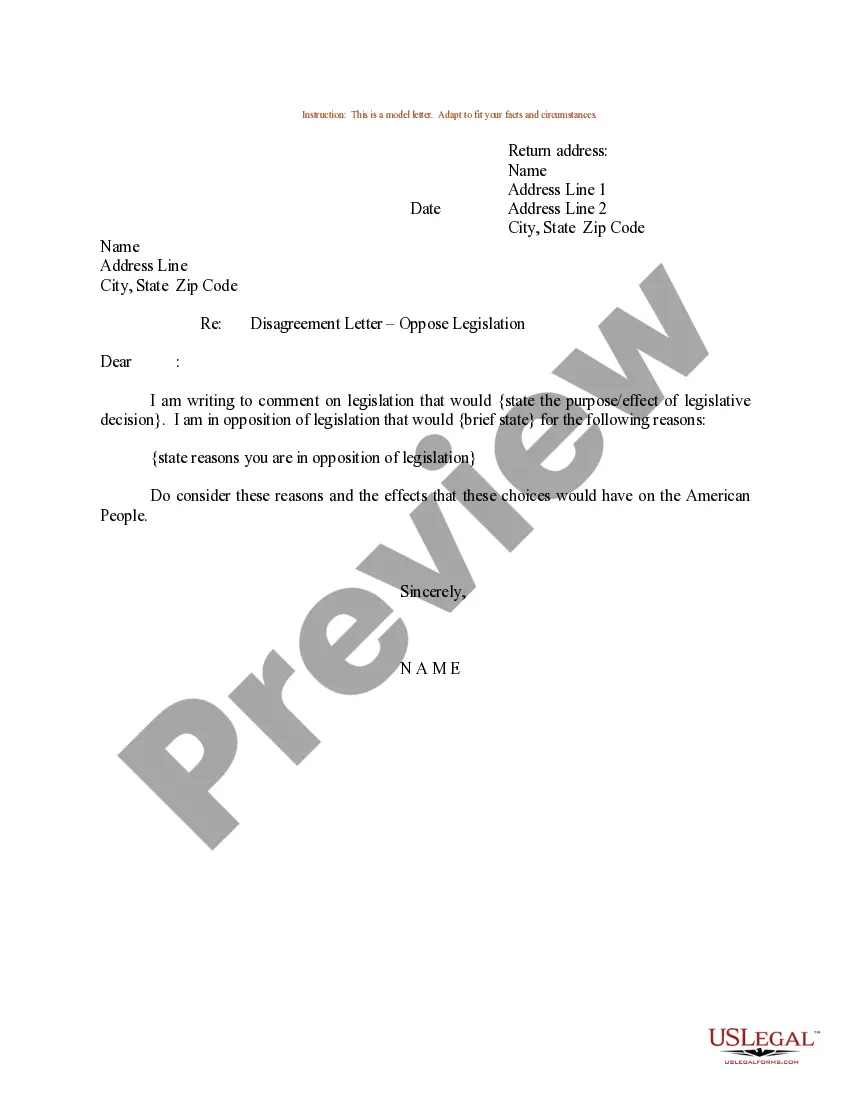
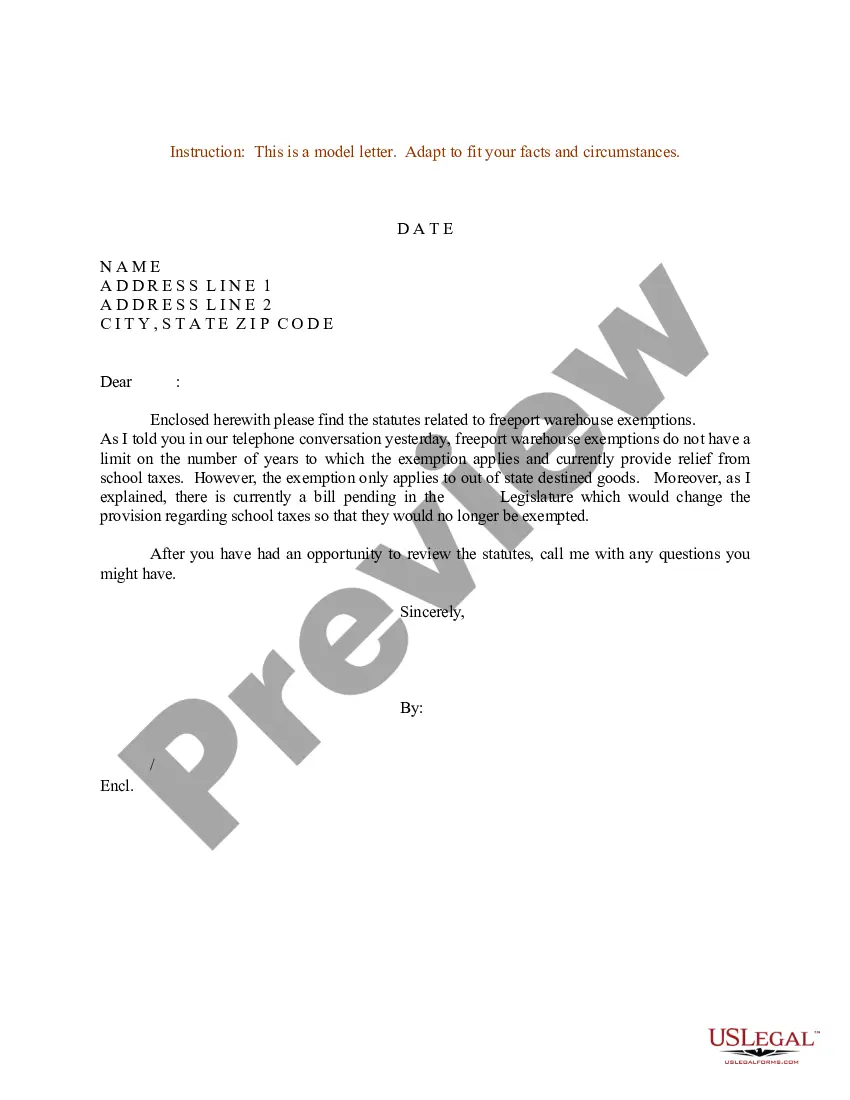
Massachusetts Sample Letter for Opposition to Legislation
Description
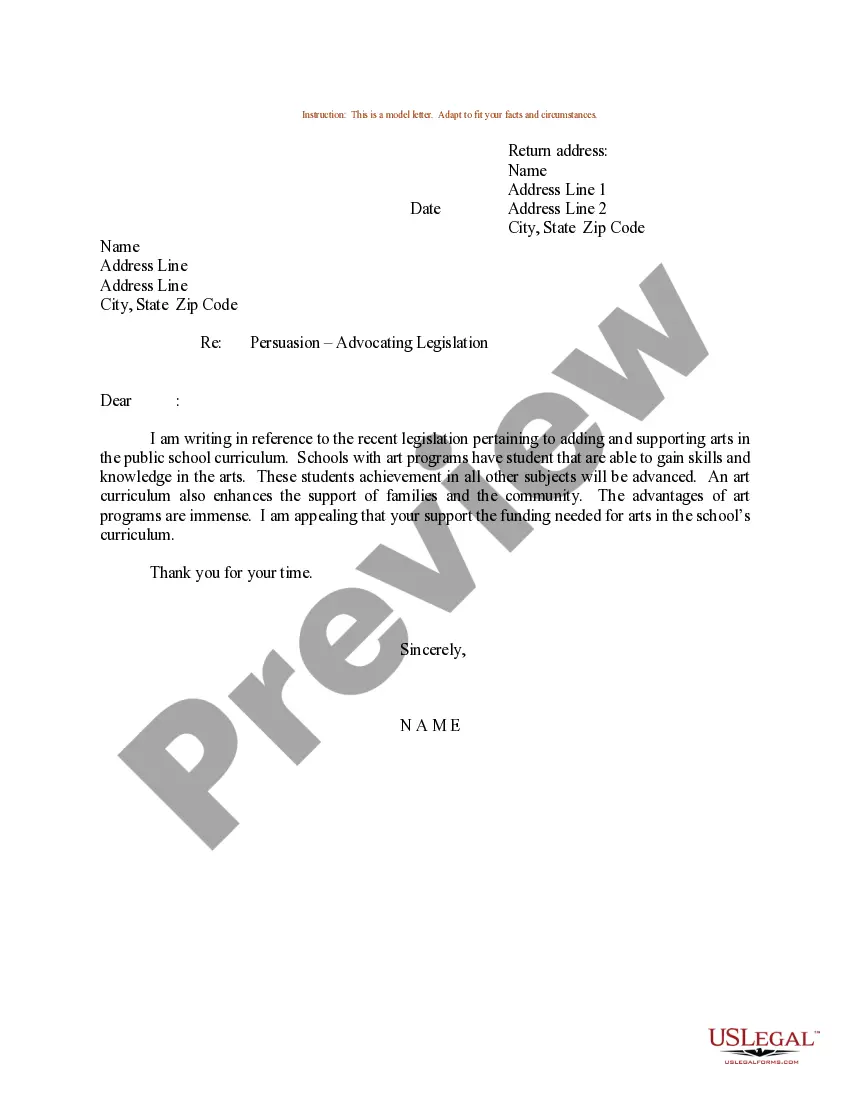
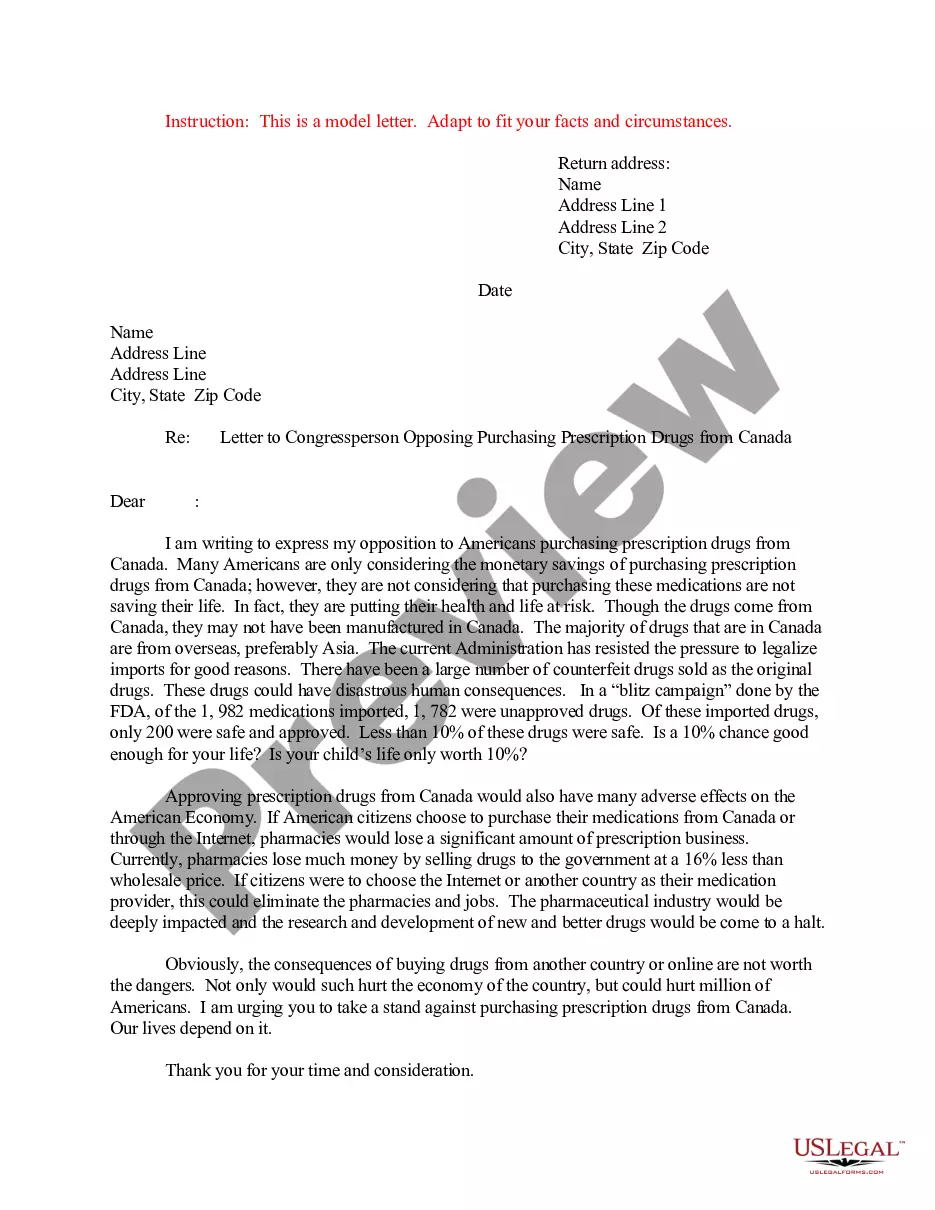
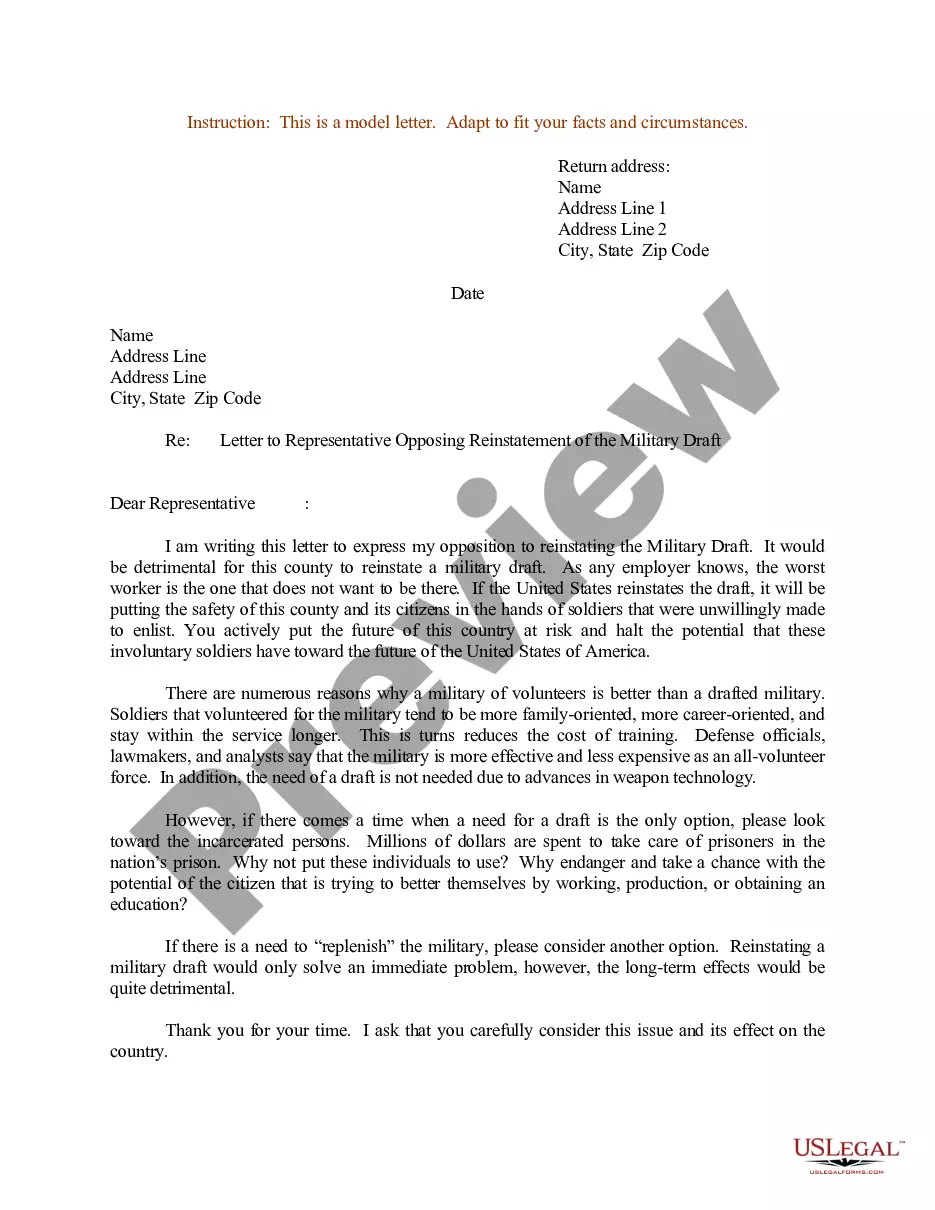


How to fill out Sample Letter For Opposition To Legislation?
US Legal Forms - one of the largest collections of legal documents in the United States - provides a selection of legal document templates that you can download or print.
By using the website, you can access thousands of templates for professional and personal use, categorized by types, states, or keywords.
You can find the latest versions of documents such as the Massachusetts Sample Letter for Opposition to Legislation in just minutes.
If the document does not meet your needs, utilize the Search field at the top of the screen to find one that does.
Once you are satisfied with the document, confirm your choice by clicking the Purchase now button. Select the payment option you prefer and provide your information to create your account.
- If you already have a monthly subscription, Log In to download the Massachusetts Sample Letter for Opposition to Legislation from your US Legal Forms library.
- The Download button will be available on every document you view.
- You can access all previously downloaded documents from the My documents tab of your account.
- If you are using US Legal Forms for the first time, here are easy steps to get started.
- Ensure you have selected the correct document for your city/county.
- Click the Preview button to review the content of the document.
Form popularity
FAQ
Use your personal or. business address.Address your. legislator properly.State your. relafionship to the.Be factual. Be personal.Request a response. Include your fitle.Concentrate on a. single issue.Be specific about. what you want.Keep your letter. to one page.
State your subject clearly in the email subject line or first sentence of the letter. Stick to just one issue in the letter. Identify yourself as a constituent. State your views, support them with your expert knowledge and, when appropriate, cite the bill number of relevant legislation (e.g., H.R.
Here are some important tips for your letter:Use letterhead.Verify the correct spelling of the legislator's name.Verify the correct title to use when addressing the legislator.Keep it short (one page maximum).Identify the issue.If the issue is a particular bill, verify the full name and bill number.More items...
Use Proper Salutation. The salutation should be "Dear Representative Smith" or Dear Senator Smith" or "Dear Assemblyman Smith" depending on the office held. The address should read: Honorable Jim Smith, Address, City, State, Zip.
How do you write letters to public officials?Open the letter in an official manner.Explain the purpose for your letter.Summarize your understanding of the issue/decision being considered.Explain your position on this issue.Describe what any changes will mean to you, and to others.More items...
Date.Representative's Address.Salutation.Introduce yourself: your name, address and school to identify that you are a constituent.Why are you writing your Representative?Ask for a response.Thank your Representative for his/her time.Closing with your name.
Explore this articleWriting Your Legislator.Address your legislator by his or her official title.Identify your issue.Make a compelling argument.Anticipate opposition.Ask your legislature to take action.
First Paragraph: My name is Your Name and I'm writing to ask that you Action.Establish the relationship. Introduce yourself and how you're related to the recipient.State your what and your why. Limit yourself to one specific action so as to not draw attention away from the issues you may find more important!
Here are some important tips for your letter:Use letterhead.Verify the correct spelling of the legislator's name.Verify the correct title to use when addressing the legislator.Keep it short (one page maximum).Identify the issue.If the issue is a particular bill, verify the full name and bill number.More items...
Here are some important tips for your letter:Use letterhead.Verify the correct spelling of the legislator's name.Verify the correct title to use when addressing the legislator.Keep it short (one page maximum).Identify the issue.If the issue is a particular bill, verify the full name and bill number.More items...