Pro-Se Appellant's Brief
Understanding this form
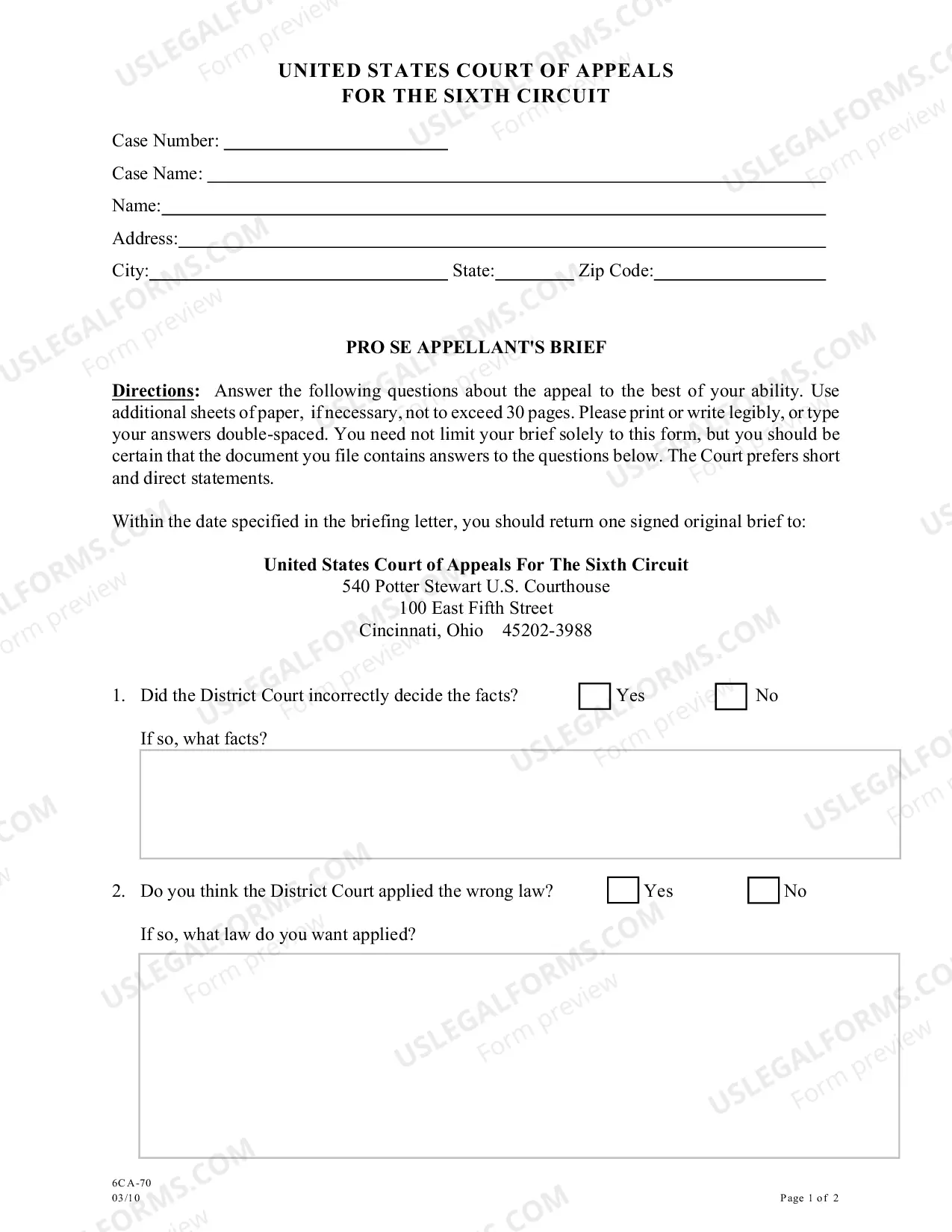
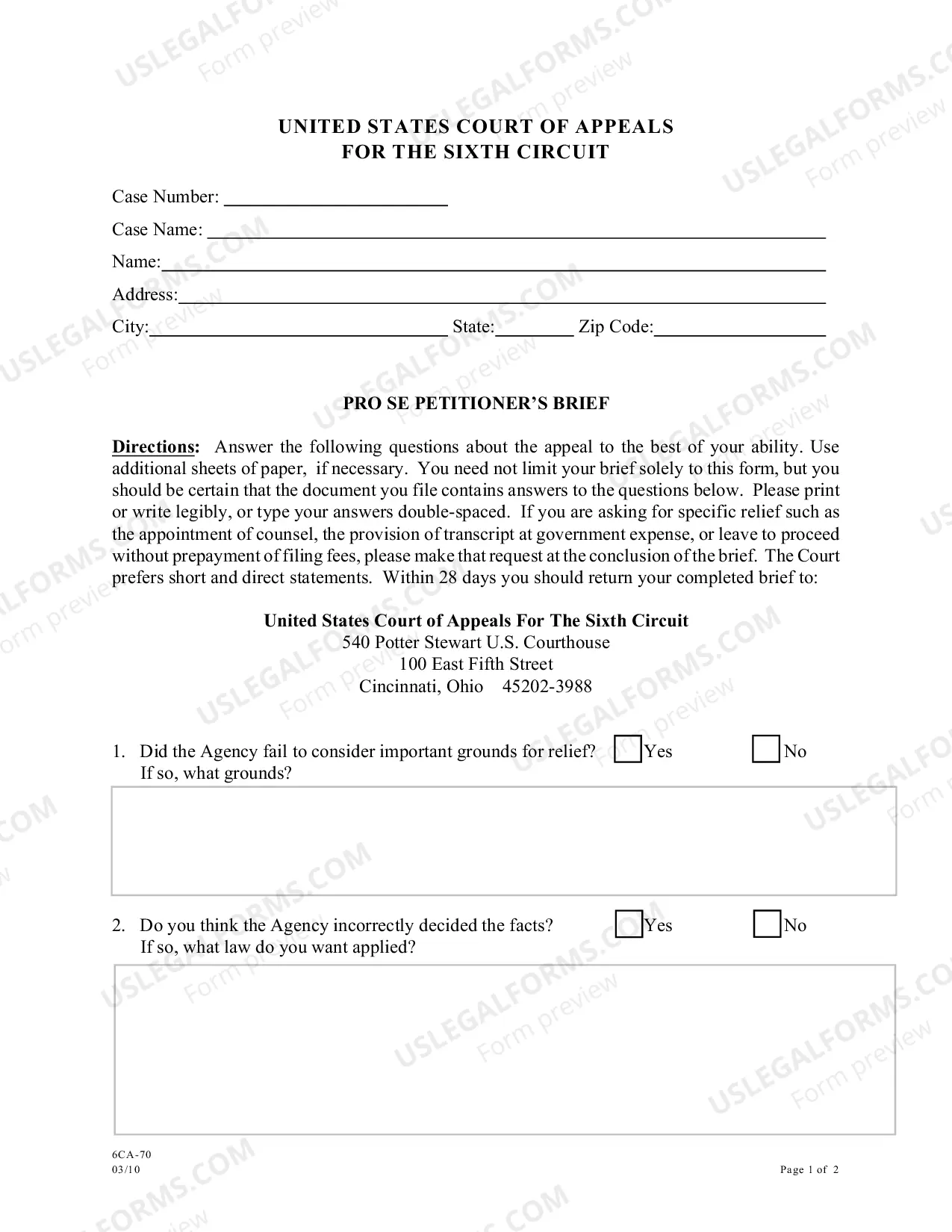
The Pro-Se Appellant's Brief is a legal document used by individuals representing themselves in appeals to the United States Court of Appeals for the Sixth Circuit. This form allows appellants to outline the reasons for their appeal, including any alleged errors made by the District Court. It is crucial for articulating your challenges to the prior decision and should be completed thoroughly to ensure clarity and compliance with the court's standards.
Key components of this form
- Case number and case name identification
- Personal information fields, including your name and address
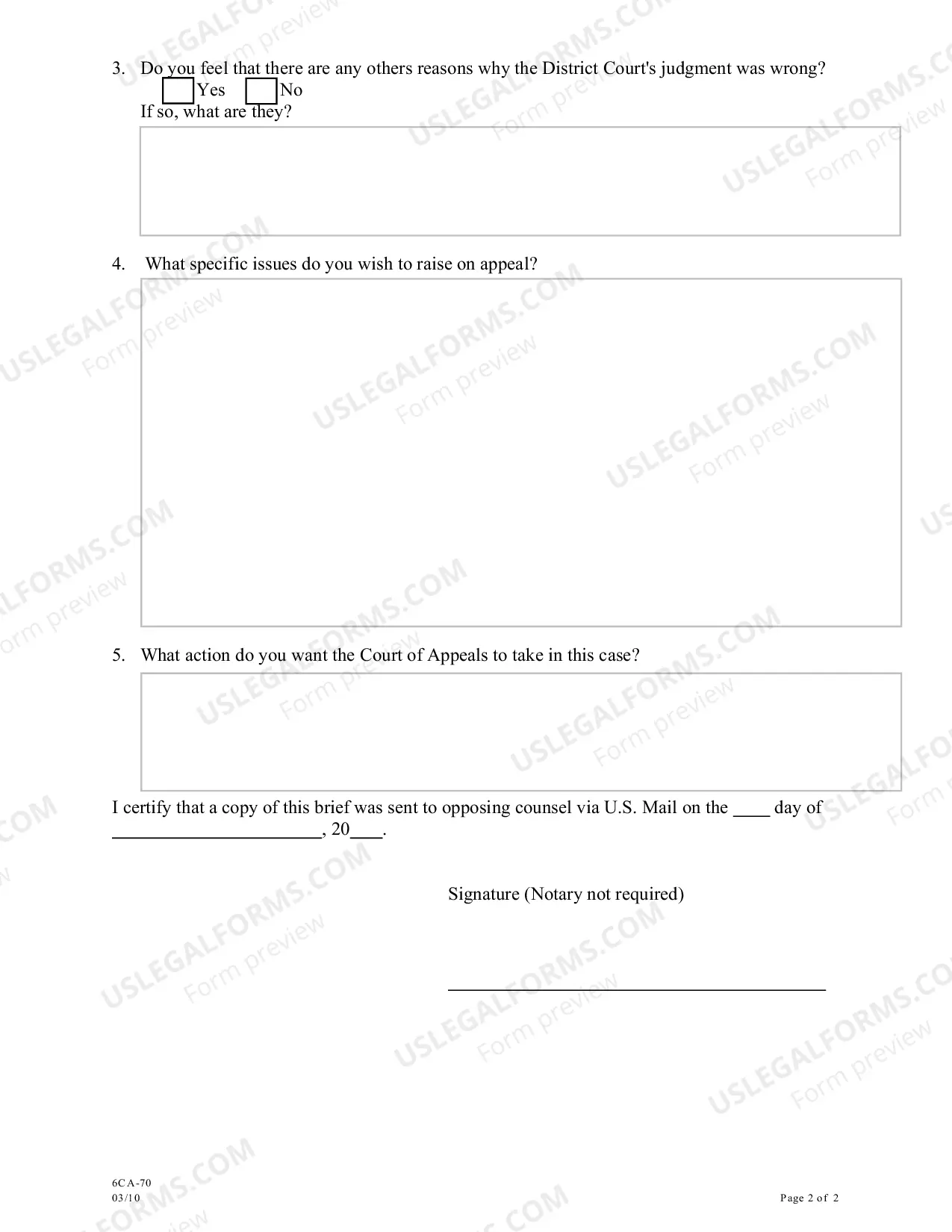
- Questions regarding factual inaccuracies or misapplication of law by the District Court
- Sections to specify issues for appeal and desired actions from the Court of Appeals
- Certification of service to opposing counsel
When to use this document
This form is used when you wish to appeal a decision made by a District Court within the jurisdiction of the Sixth Circuit. It is appropriate for situations where you believe there were factual errors, legal misapplications, or additional reasons that justify the appeal. It is essential to file this brief within the timeframe specified in the court's briefing letter.
Who this form is for
- Individuals appealing a decision and representing themselves, known as pro-se appellants
- Anyone who believes that the District Court made errors regarding facts or law
- Litigants in civil or criminal cases within the Sixth Circuit jurisdiction
How to complete this form
- Fill in the case number and case name at the top of the form.
- Provide your personal information, including your name and contact details.
- Answer the questions regarding the inaccuracies of the District Court's decision and specify any laws you believe were misapplied.
- List any additional reasons supporting your appeal, along with the issues you wish to raise.
- Indicate what action you want the Court of Appeals to take and certify the mailing to opposing counsel.
Is notarization required?
This form does not typically require notarization unless specified by local law. It is crucial to check local rules that may impose additional requirements for your appeal brief.
Get your form ready online
Our built-in tools help you complete, sign, share, and store your documents in one place.
Make edits, fill in missing information, and update formatting in US Legal Forms—just like you would in MS Word.
Download a copy, print it, send it by email, or mail it via USPS—whatever works best for your next step.
Sign and collect signatures with our SignNow integration. Send to multiple recipients, set reminders, and more. Go Premium to unlock E-Sign.
If this form requires notarization, complete it online through a secure video call—no need to meet a notary in person or wait for an appointment.
We protect your documents and personal data by following strict security and privacy standards.

Make edits, fill in missing information, and update formatting in US Legal Forms—just like you would in MS Word.

Download a copy, print it, send it by email, or mail it via USPS—whatever works best for your next step.

Sign and collect signatures with our SignNow integration. Send to multiple recipients, set reminders, and more. Go Premium to unlock E-Sign.

If this form requires notarization, complete it online through a secure video call—no need to meet a notary in person or wait for an appointment.

We protect your documents and personal data by following strict security and privacy standards.
Typical mistakes to avoid
- Failing to file the brief within the specified deadline.
- Not answering all required questions thoroughly.
- Neglecting to print or write legibly, which can cause confusion.
- Filing without ensuring that a copy was sent to opposing counsel.
Advantages of online completion
- Convenience of downloading and filling out the form at your own pace.
- Access to templates drafted by licensed attorneys, ensuring legal accuracy.
- Easy editing options to customize the document as your case evolves.
- Immediate access without waiting for postal services or office visits.
Legal use & context
- Understand that a properly filed brief is essential for your appeal to be considered.
- The brief serves as your primary tool to present the arguments and issues on appeal.
- Failure to follow procedural guidelines may result in dismissal of your appeal.
Key takeaways
- The Pro-Se Appellant's Brief is vital for appealing a District Court decision.
- Complete it carefully, addressing all questions and providing clear arguments.
- File the brief and notify opposing counsel within the deadline set by the court.
- Review state-specific requirements to ensure compliance with local rules.
Looking for another form?
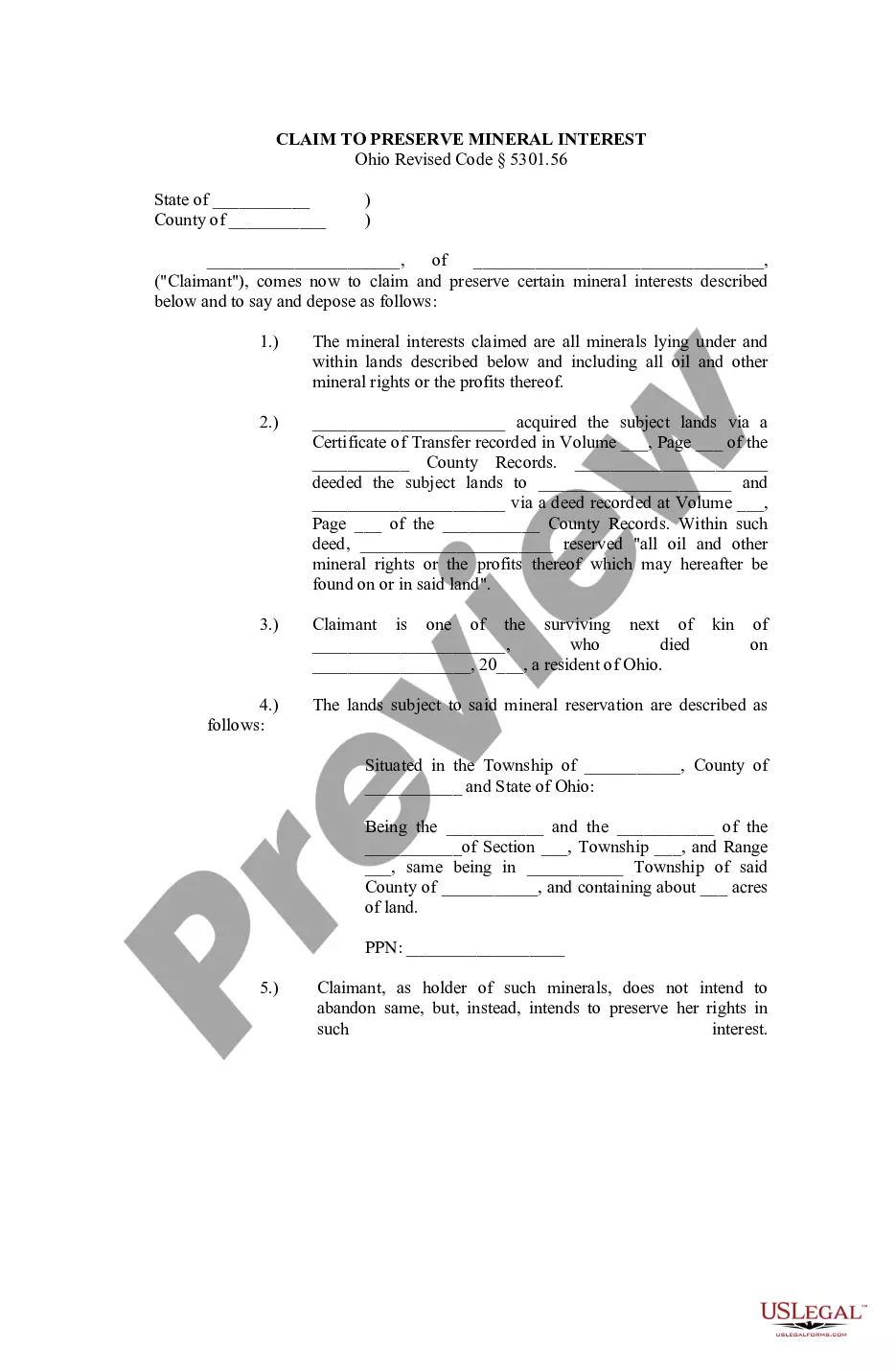
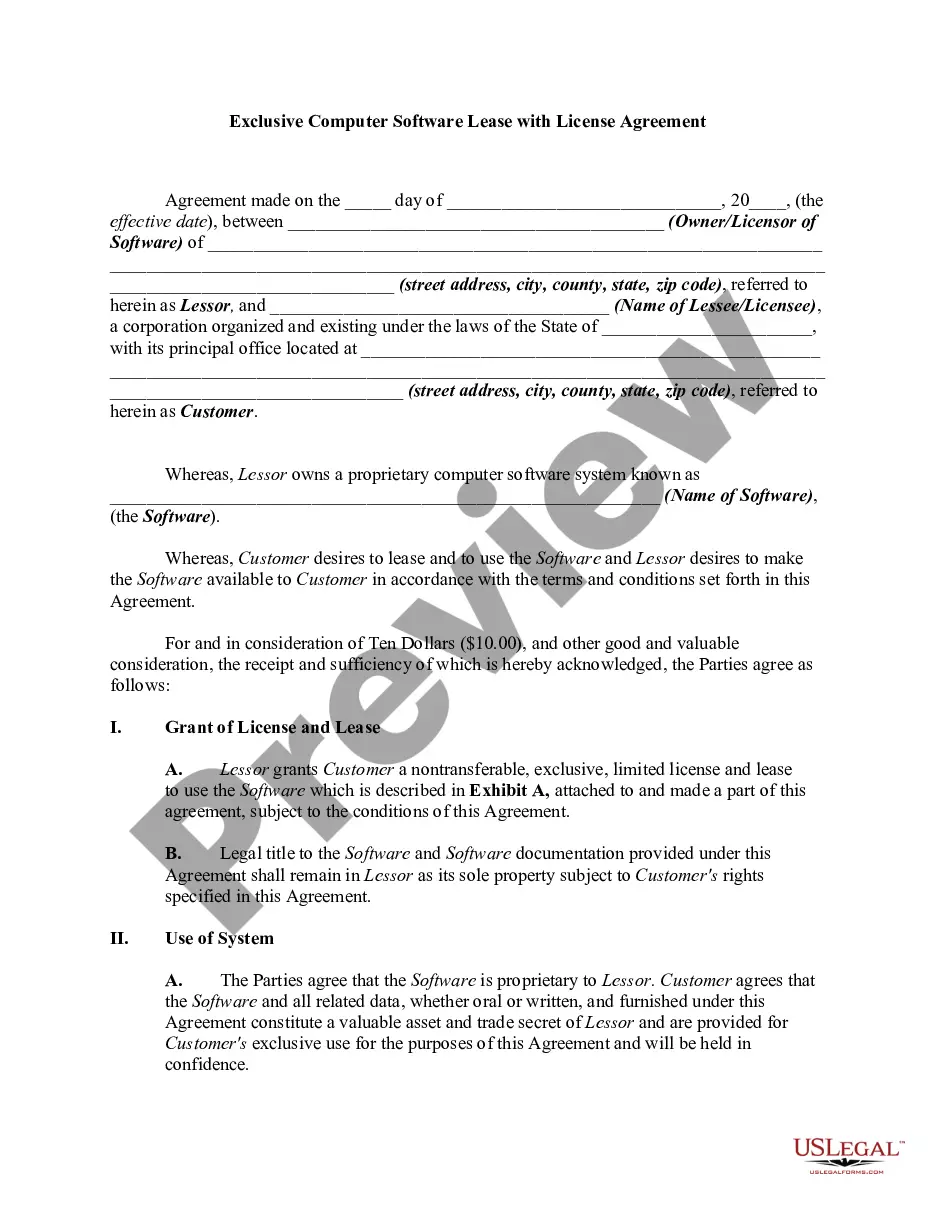
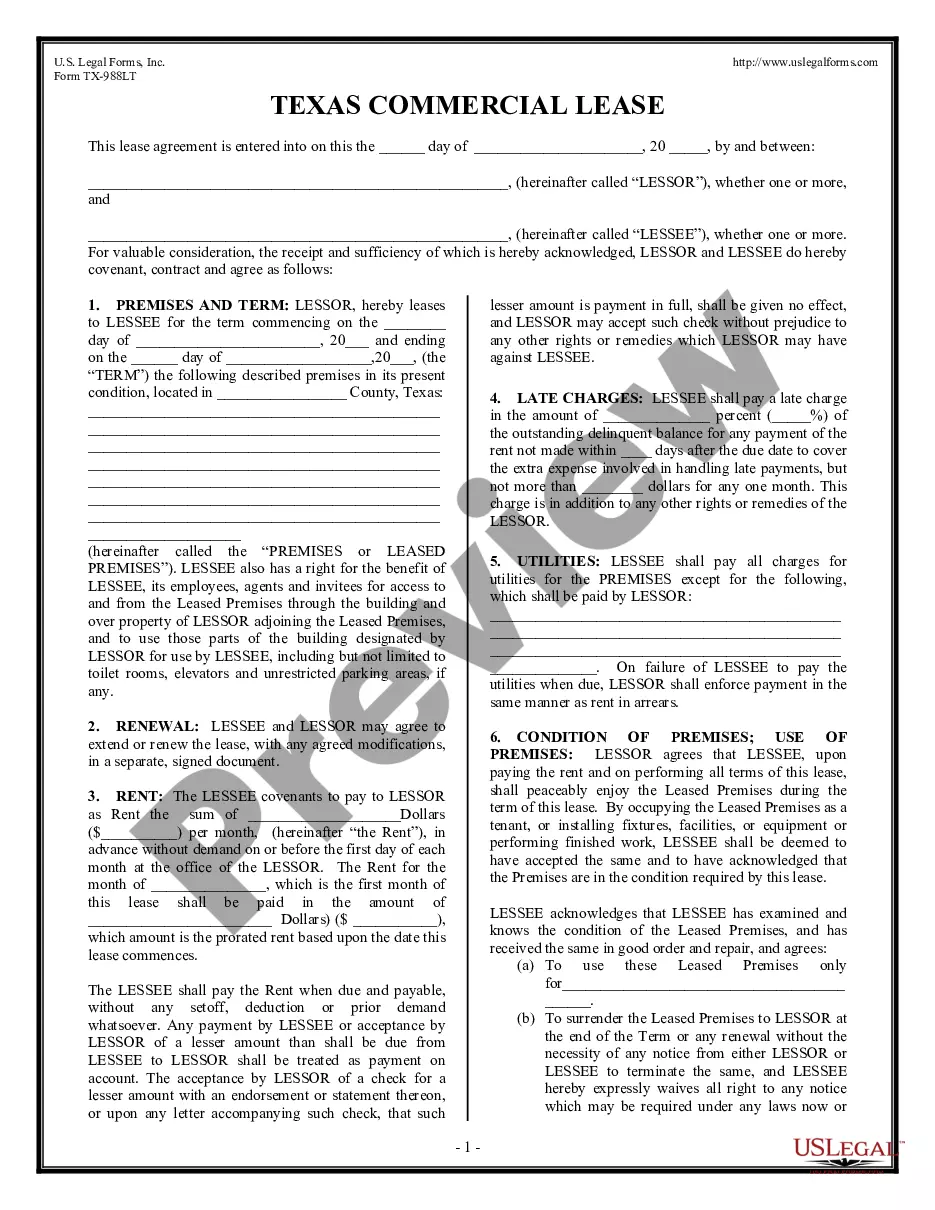
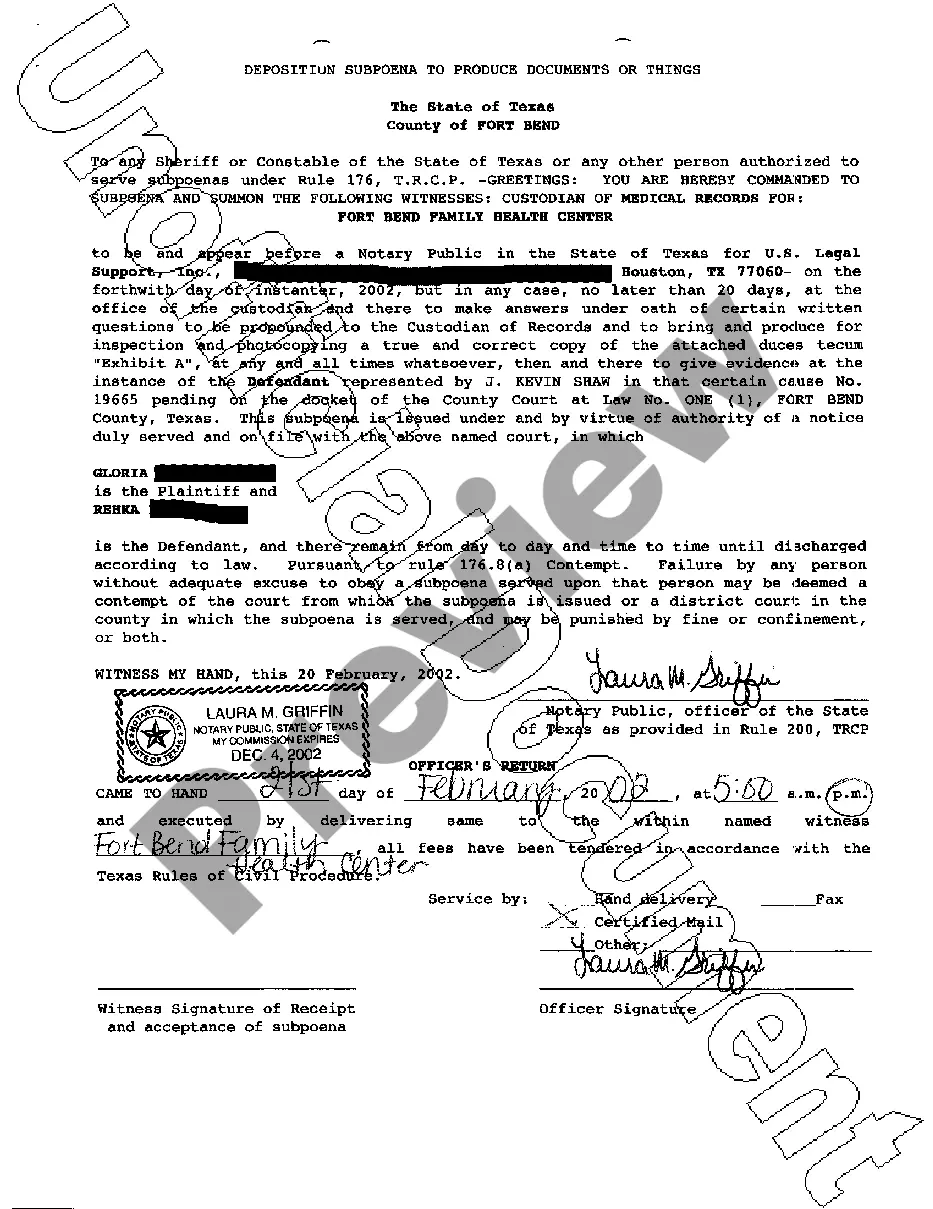

Form popularity
FAQ
Such a brief must include a certificate by appellate counsel or an unrepresented party stating the number of words in the brief. The person certifying may rely on the word count of the computer program used to prepare the brief. (2) Except as provided in (5), a brief produced on a typewriter must not exceed 50 pages.
There are several components that make up your Appellate Brief: Title Page; Table of Contents; Table of Authorities; Statutes Involved; Standard of Review; Question Presented; Statement of Facts; Summary of Argument, Argument and Citation of Authority; Point headings that are within Argument section; Conclusion;
The appellee must serve and file a brief within 30 days after the appellant's brief is served. The appellant may serve and file a reply brief within 21 days after service of the appellee's brief but a reply brief must be filed at least 7 days before argument, unless the court, for good cause, allows a later filing.
Writing an Outstanding Appellate Brief Frame the issue to maximize the persuasiveness of your argument.Simplify the issue and argument.Have an outstanding introduction.Tell a story.Don't argue the facts (unless absolutely necessary)Know the standard of review.Be honest and acknowledge unfavorable law and facts.
The most important difference between an appellate court and a trial court is that the appellate court generally does not decide issues of fact. In a trial court, the factfinder?usually a judge or jury?will make findings of fact.