Massachusetts Affidavit of Executor
Overview of this form
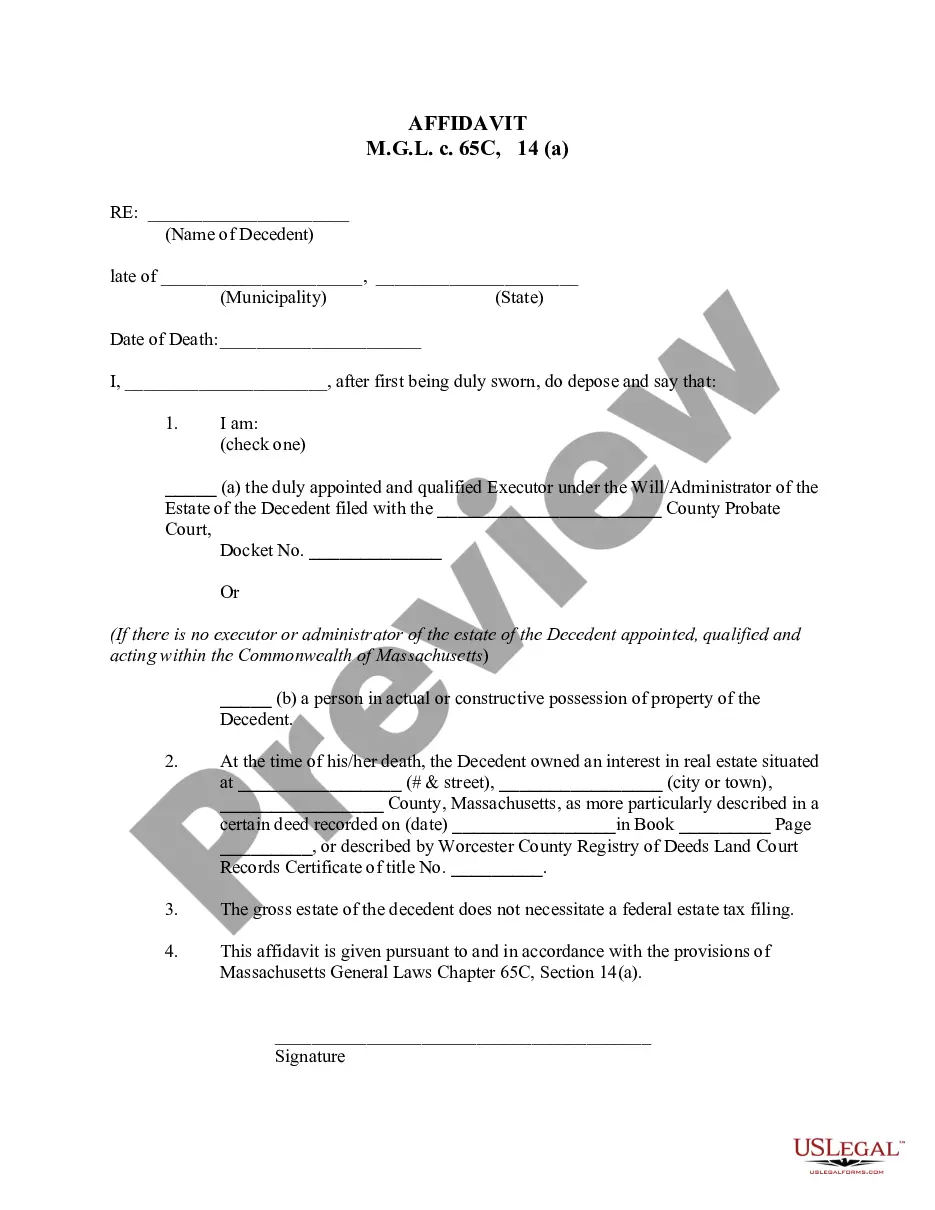
The Affidavit of Executor is a legal document used in Massachusetts to release a lien on a decedent's property. This affidavit is specifically drafted in accordance with Massachusetts General Laws Chapter 65C to ensure that the estate's assets are appropriately handled, particularly when the decedent's gross estate does not require a federal estate tax filing. This form differs from other estate-related documents as it confirms the individual's right to manage the decedent's property without creating an estate administration process.
Key parts of this document
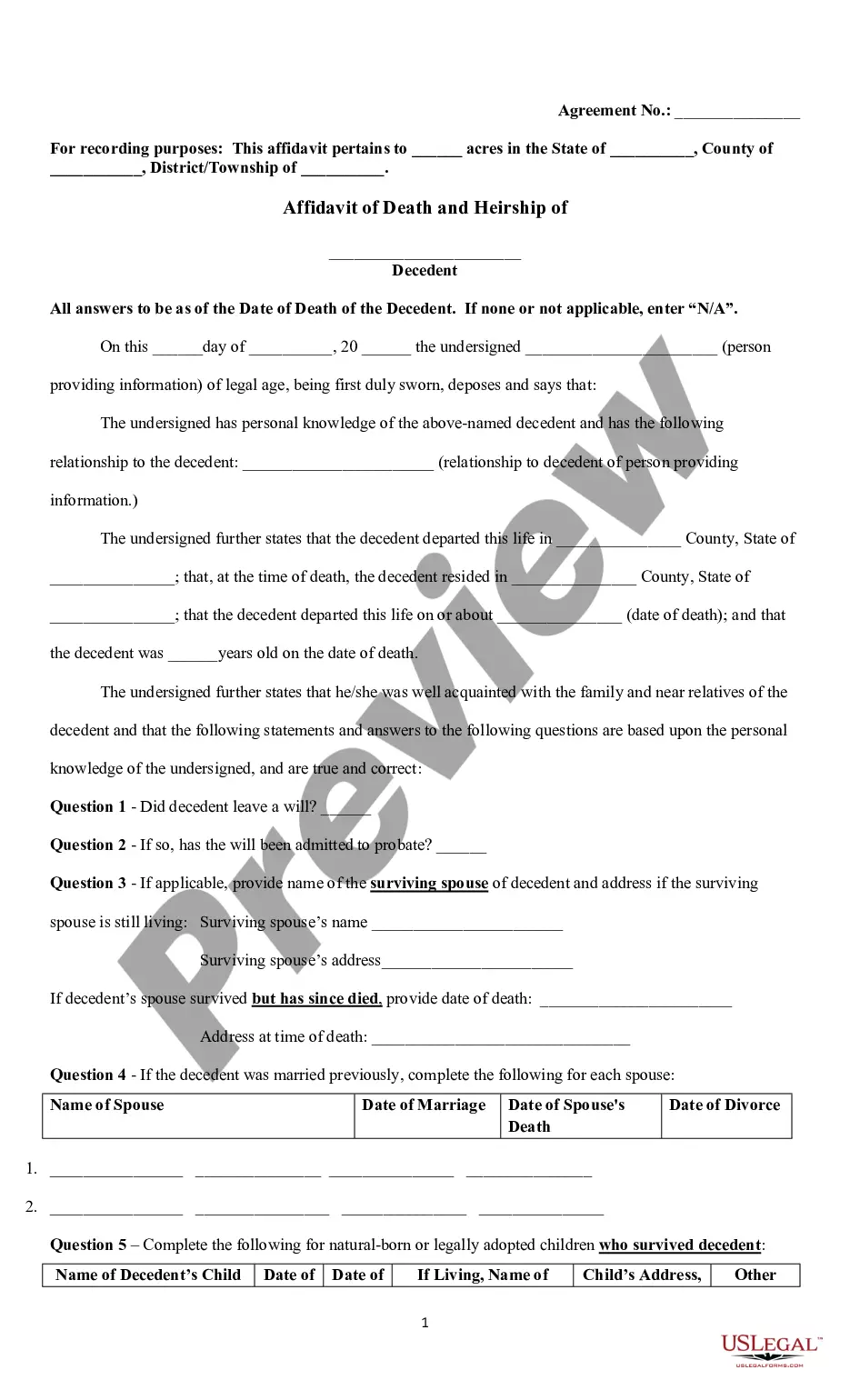
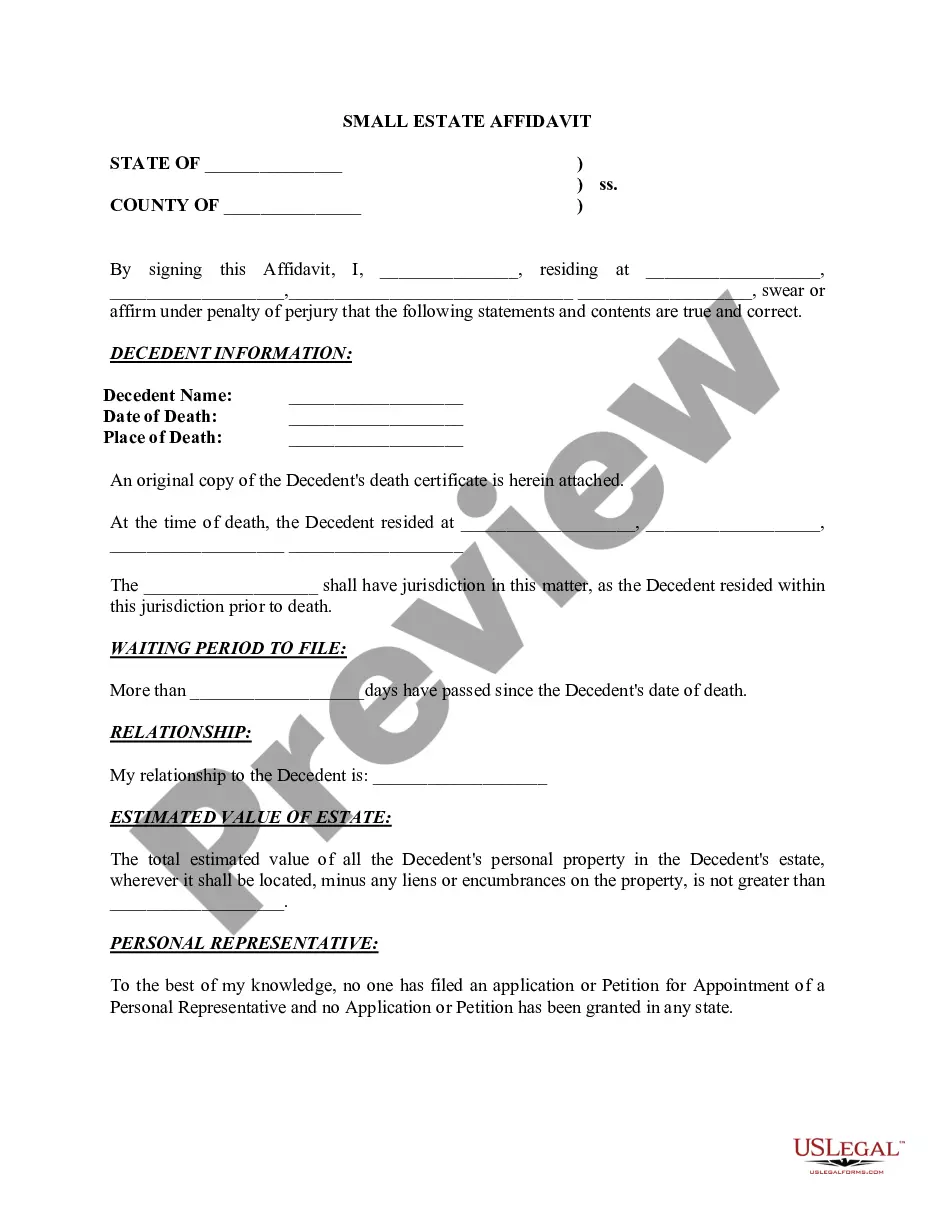
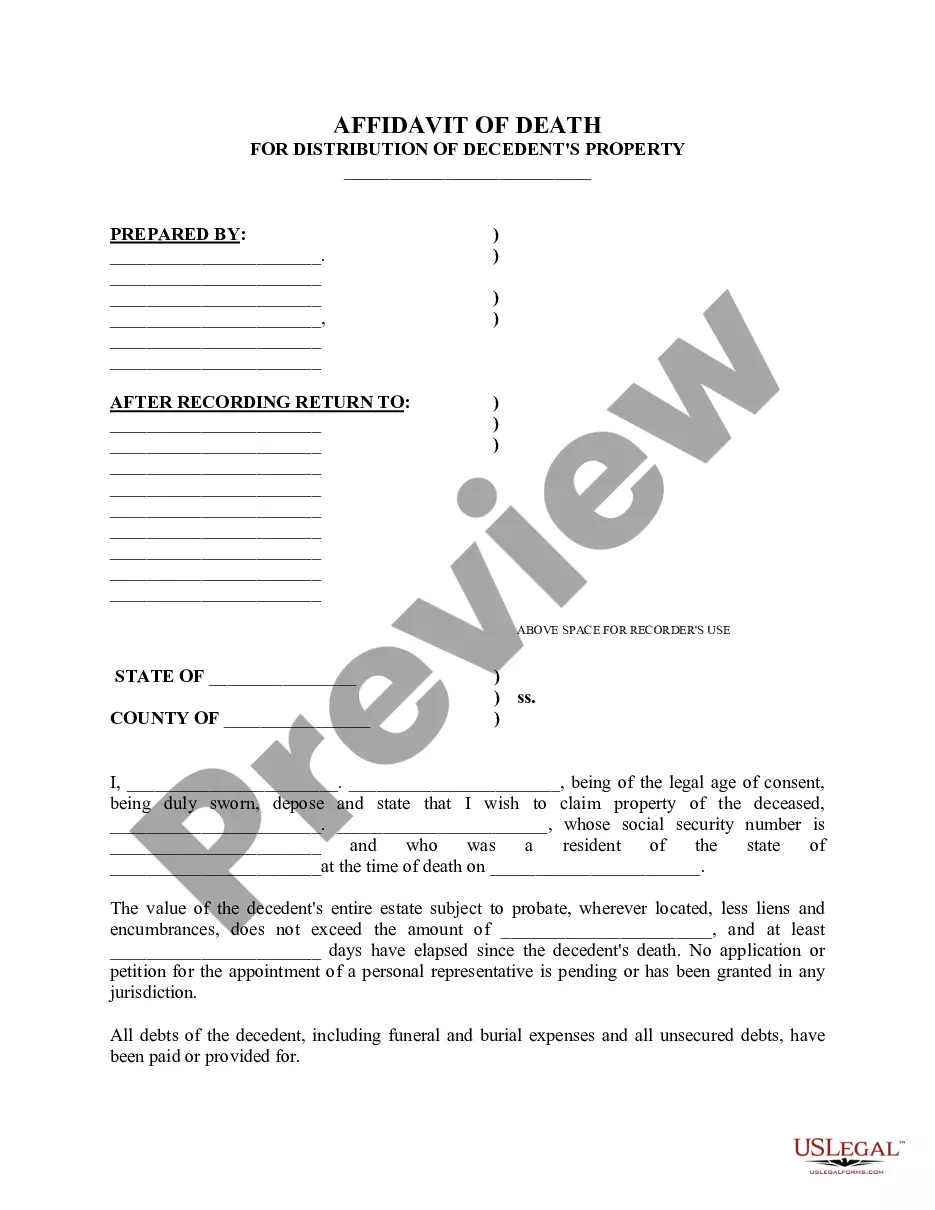
- Name of the decedent and details about the deceased's date of death.
- Identification of the executor or administrator, or an individual in possession of the property.
- Description of the real estate owned by the decedent, including the address and registry details.
- Statement confirming that the gross estate does not necessitate a federal estate tax filing.
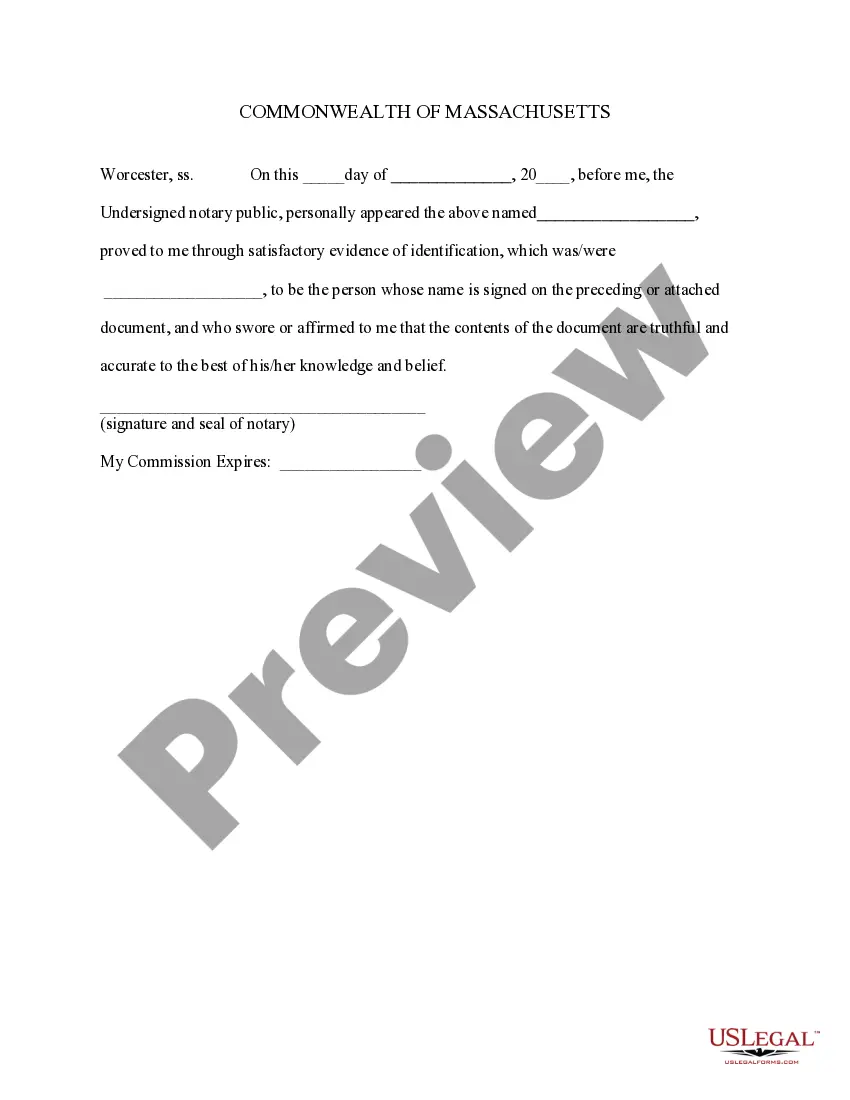
- Signature of the affiant, which must be notarized to validate the document.
Situations where this form applies
This form is necessary when an executor or administrator needs to release a lien on property owned by a decedent, especially in cases where the estate is smaller and does not require extensive probate proceedings. It is commonly used when an estate's assets need to be cleared to allow for the transfer of property or to fulfill obligations such as selling the property.
Who can use this document
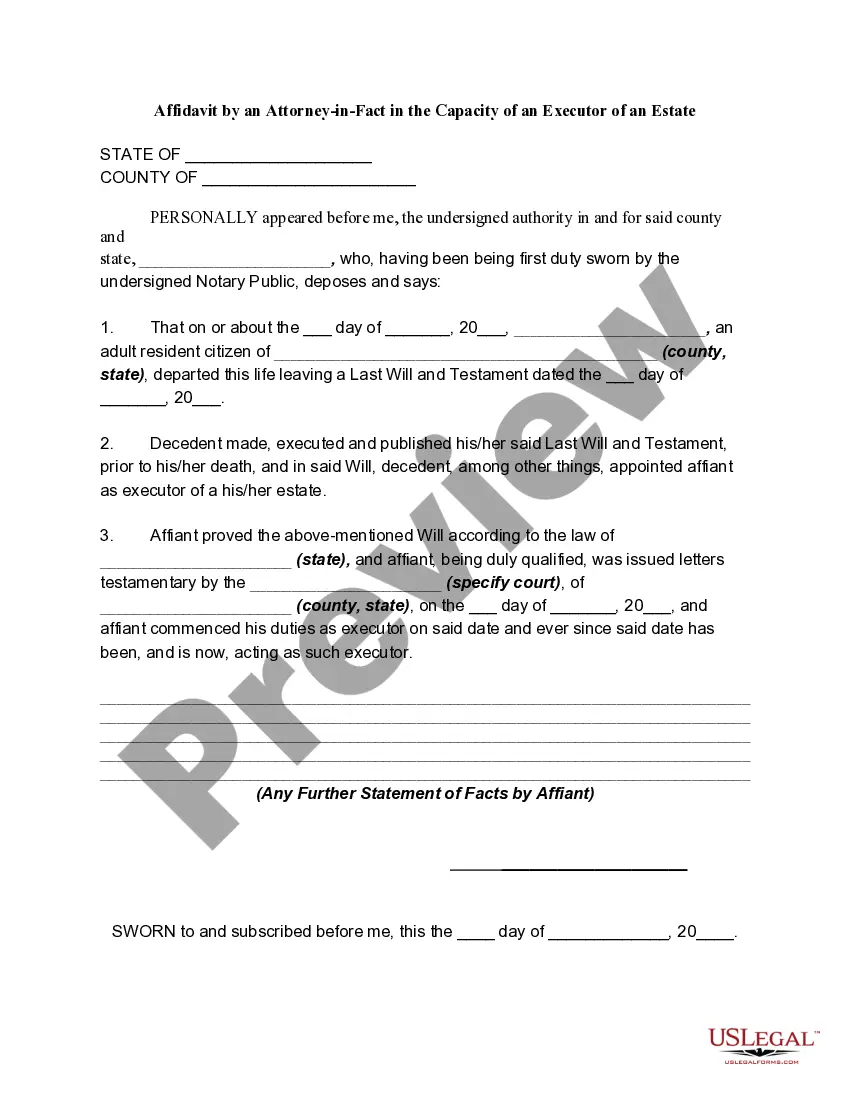
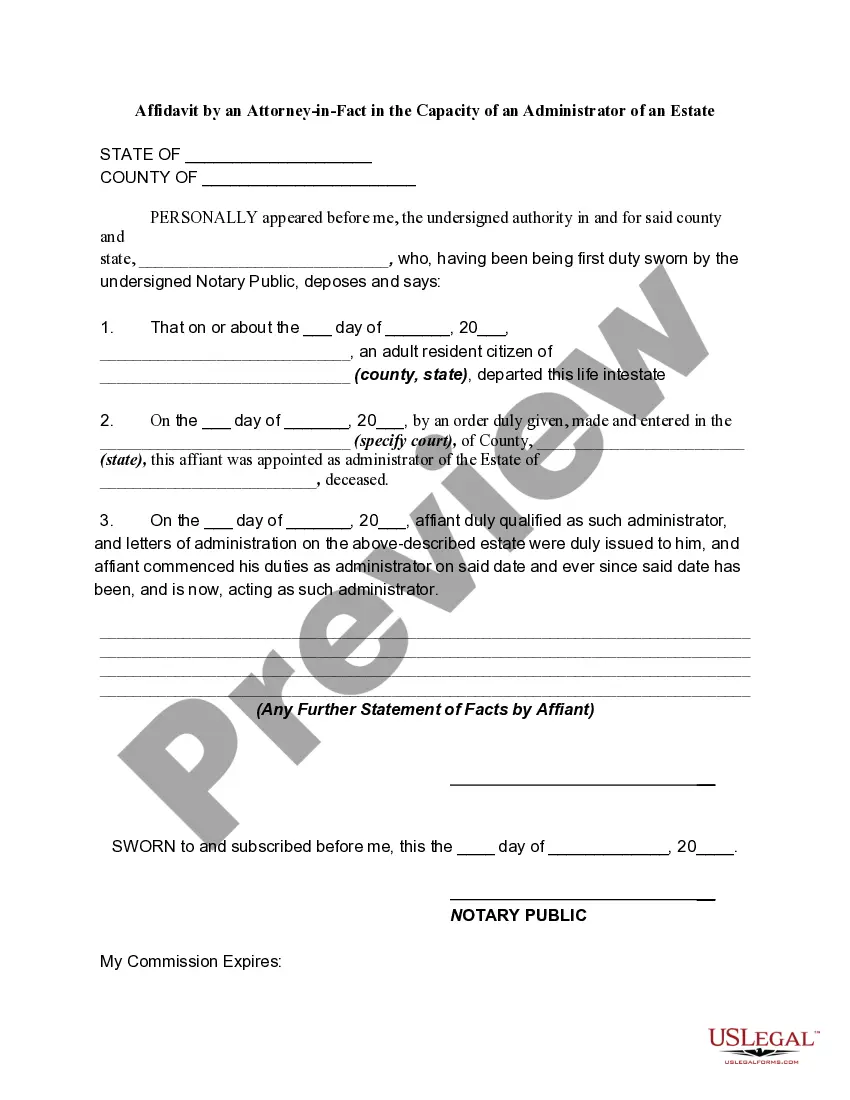
- Executors or administrators appointed under the will of the deceased.
- Individuals in actual or constructive possession of the decedent's property.
- Heirs or beneficiaries needing to confirm their rights to property in the absence of formal estate administration.
Instructions for completing this form
- Fill in the decedentâs name and details regarding their passing.
- Identify yourself as the executor or administrator or as a person in possession of the property.
- Specify the location and details of the real estate owned by the decedent.
- Confirm the gross estateâs standing regarding federal estate tax requirements.
- Sign the affidavit in front of a notary public to finalize it.
Does this form need to be notarized?
Yes, this form must be notarized to be legally valid. Using US Legal Forms, you can complete the notarization process online at any time. The platform provides secure video calls for notarization, ensuring your document meets all legal requirements without the need for in-person visits.
Get your form ready online
Our built-in tools help you complete, sign, share, and store your documents in one place.
Make edits, fill in missing information, and update formatting in US Legal Forms—just like you would in MS Word.
Download a copy, print it, send it by email, or mail it via USPS—whatever works best for your next step.
Sign and collect signatures with our SignNow integration. Send to multiple recipients, set reminders, and more. Go Premium to unlock E-Sign.
If this form requires notarization, complete it online through a secure video call—no need to meet a notary in person or wait for an appointment.
We protect your documents and personal data by following strict security and privacy standards.

Make edits, fill in missing information, and update formatting in US Legal Forms—just like you would in MS Word.

Download a copy, print it, send it by email, or mail it via USPS—whatever works best for your next step.

Sign and collect signatures with our SignNow integration. Send to multiple recipients, set reminders, and more. Go Premium to unlock E-Sign.

If this form requires notarization, complete it online through a secure video call—no need to meet a notary in person or wait for an appointment.

We protect your documents and personal data by following strict security and privacy standards.
Common mistakes
- Failing to notarize the affidavit, which is essential for legal validity.
- Not providing complete information about the decedent's property.
- Checking the wrong box for your role concerning the decedent's estate.
- Omitting required identification information when appearing before a notary.
Why complete this form online
- Convenience to download and complete the form at any time.
- Editability allows for easy customization to meet your specific needs.
- Reliability as the forms are drafted by licensed attorneys familiar with Massachusetts law.
Looking for another form?



Form popularity
FAQ
This form must be used to identify a Decedent's surviving spouse, children and heirs at law. Heirs at law are persons entitled to receive the Decedent's property under the intestacy succession laws if there is no will.
A Massachusetts small estate affidavit is a legal document used to present a claim on the estate or part of the estate of a deceased loved one. The petitioner, or affiant, must provide detailed information about the estate, the property in question, the decedent, and any other potential heirs.
Is there a deadline to probate an estate? The general rule is that an estate has to be probated within 3 years of when the decedent died. However, this deadline doesn't apply to: A voluntary administration.
Voluntary Administration of Small Estates in Massachusetts there's no real estate. the property left behind by the deceased person is worth less than $25,000 (aside from one vehicle) 30 days have passed since the death, and. no petition seeking probate of a will or appointment of personal representative was filed.
Basic Requirements for Serving as a Massachusetts Executor at least 18 years old, and. of sound mind -- that is, not judged incapacitated by a court.
Massachusetts Small Estate Affidavit - EXPLAINED - YouTube YouTube Start of suggested clip End of suggested clip And the will if it exists. Step two fill out the affidavit. Complete the affidavit using theMoreAnd the will if it exists. Step two fill out the affidavit. Complete the affidavit using the information collected. And get it notarized. Step three file with the probate court filed the affidavit.
Massachusetts does not have what's known as an Affidavit procedure for small estates, but they do have a summary probate procedure. An estate value must be less than $25,000 and have no real property to qualify.