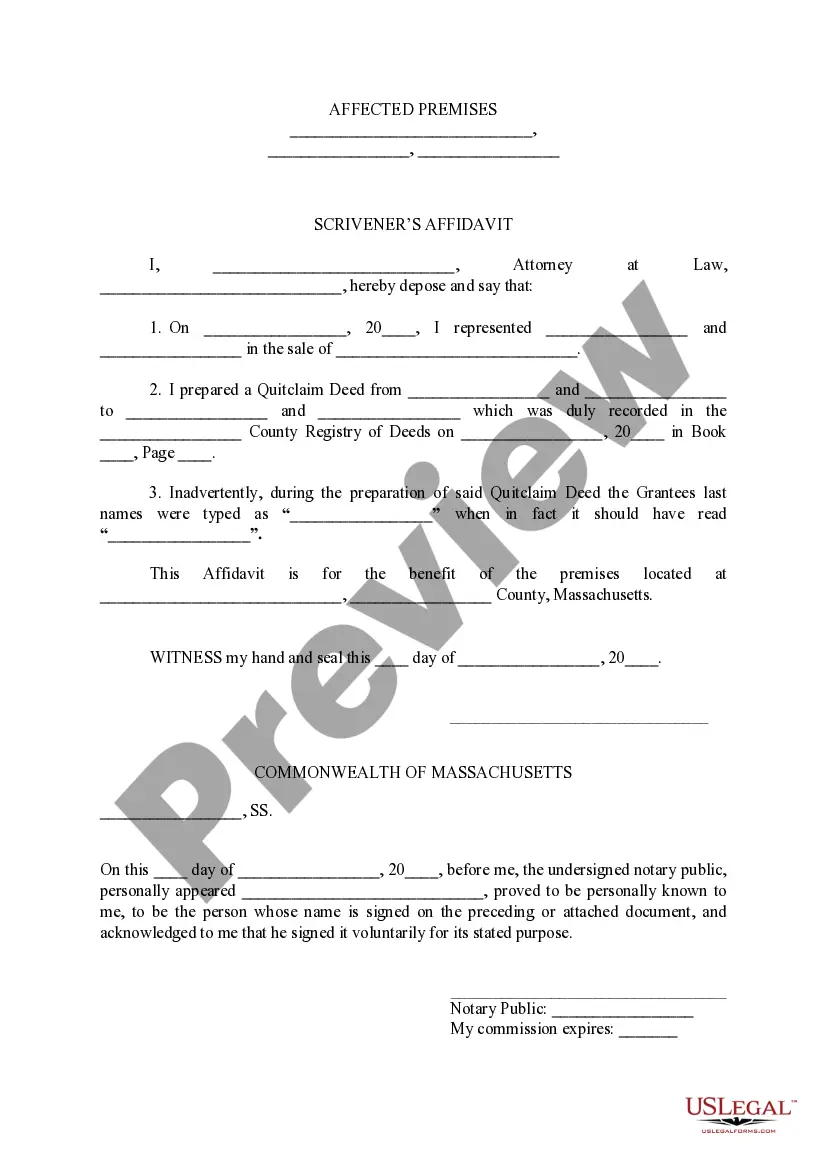
Massachusetts Scrivener's Affidavit
What is this form?
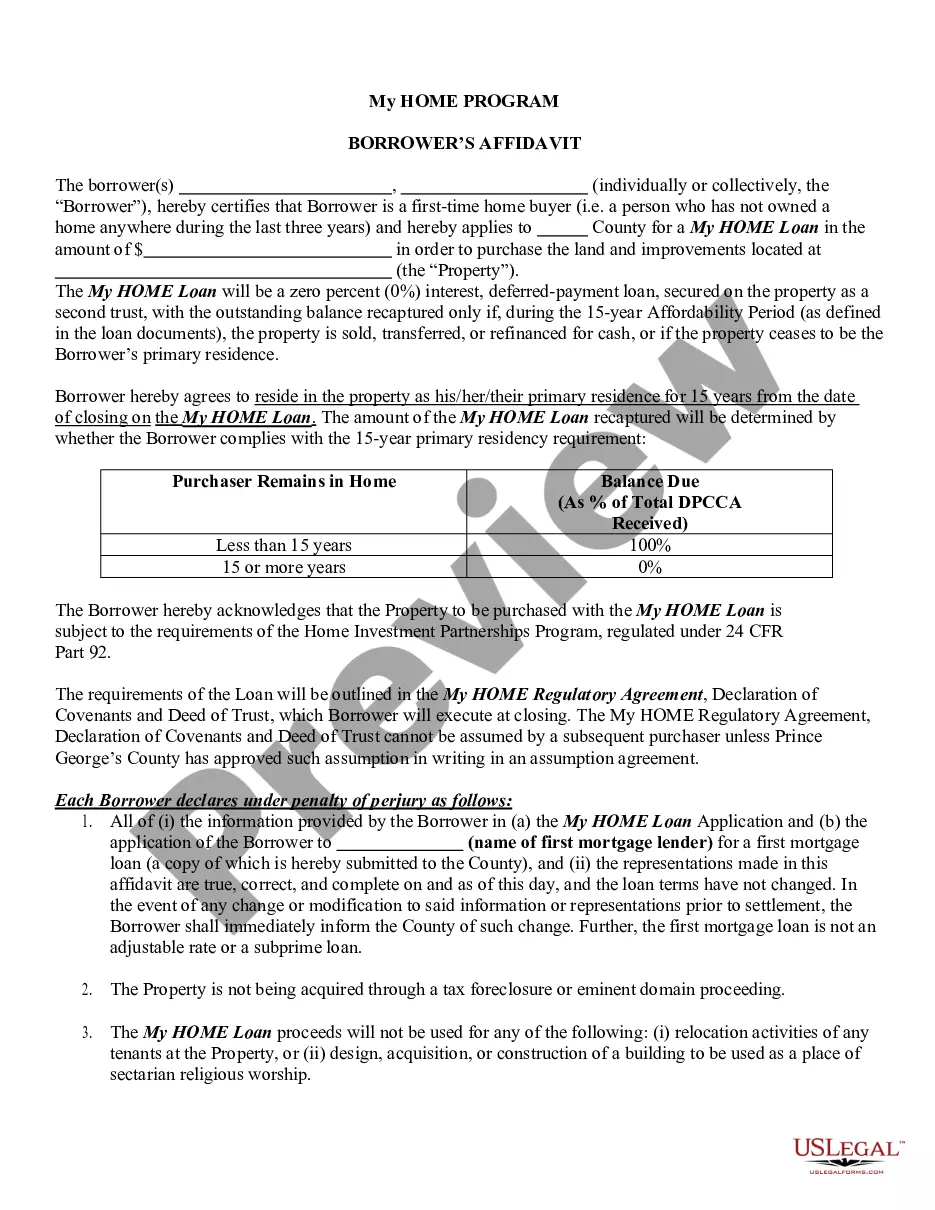
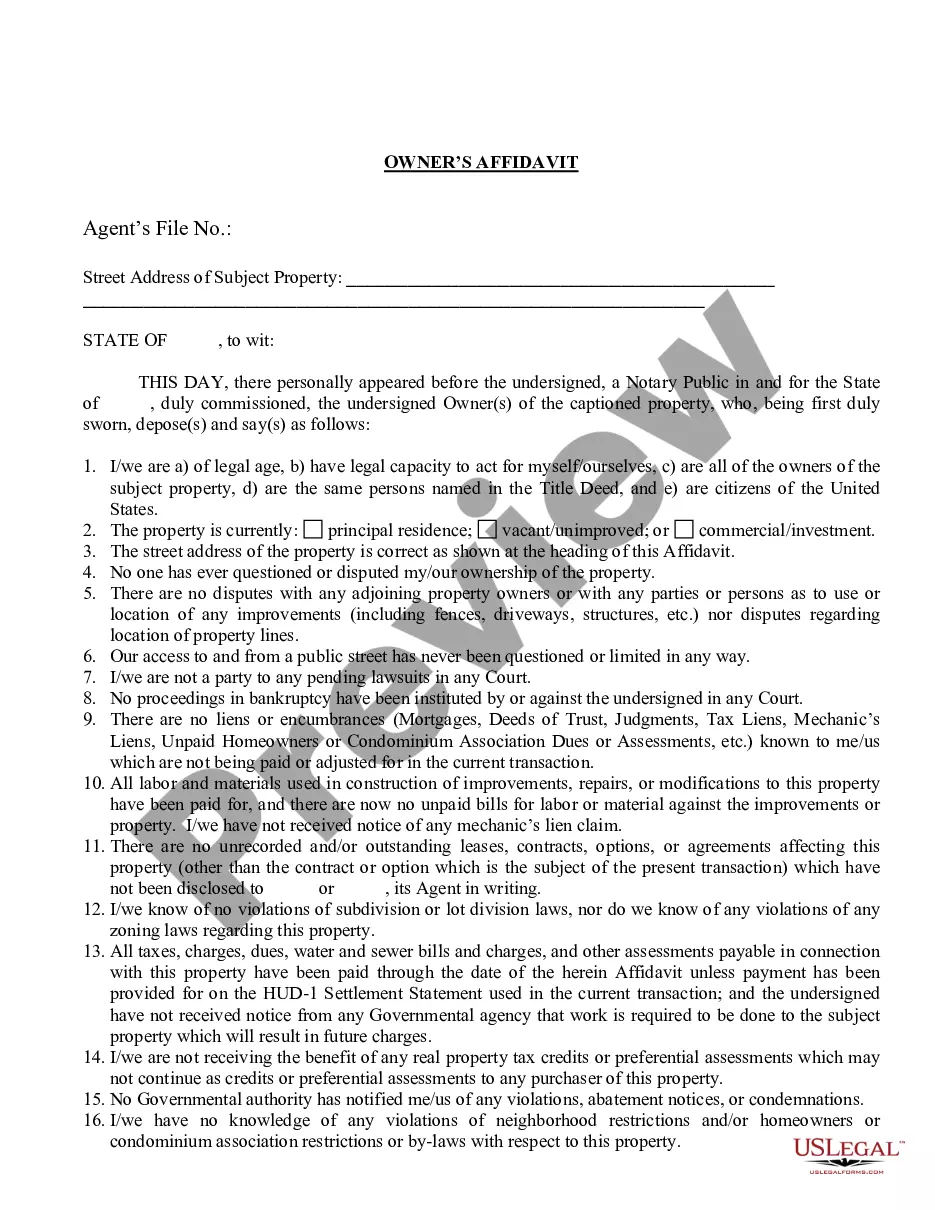
A Scrivener's Affidavit is a sworn statement by the individual who drafted a deed, clarifying details related to the property without correcting any errors in the document itself. This legal form adds essential information to property records, helping to clarify details about prior deeds. It serves a unique purpose distinct from other forms, focusing specifically on providing additional context rather than amending errors.
What’s included in this form
- Affected premises: Identifies the property related to the affidavit.
- Affiant details: Includes name, title, and affiliation of the attorney issuing the affidavit.
- Deed details: Summarizes the Quitclaim Deed, including parties involved, date of preparation, and recording information.
- Error clarification: Specifies the nature of the mistake made in the original deed.
- Signature: Includes a section for the attorney's signature and a notary public acknowledgment.

Situations where this form applies
You should use a Scrivener's Affidavit when discrepancies in property records need clarification. For example, if a Quitclaim Deed has a typographical error in the grantee's name, this form can provide the necessary clarification without altering the original document. It is beneficial in real estate transactions where precise ownership details are essential for future reference.
Intended users of this form
- Real estate attorneys preparing deeds.
- Individuals involved in real estate transactions where clarification of property records is needed.
- Notaries public verifying the signatures on the affidavit.
Steps to complete this form
- Identify the affected premises with the correct property address.
- Enter the names of the parties involved in the deed transactions.
- Specify the date and details of the Quitclaim Deed, including its recording information.
- Clarify any errors by providing the accurate information needed.
- Sign the affidavit in the presence of a notary public for validation.
Notarization guidance
Yes, this form must be notarized to be legally valid. This ensures that the signatures and statements made are verified. US Legal Forms offers integrated online notarization, available 24/7 via secure video call, providing legal equivalence without the need to travel.
Get your form ready online
Our built-in tools help you complete, sign, share, and store your documents in one place.
Make edits, fill in missing information, and update formatting in US Legal Forms—just like you would in MS Word.
Download a copy, print it, send it by email, or mail it via USPS—whatever works best for your next step.
Sign and collect signatures with our SignNow integration. Send to multiple recipients, set reminders, and more. Go Premium to unlock E-Sign.
If this form requires notarization, complete it online through a secure video call—no need to meet a notary in person or wait for an appointment.
We protect your documents and personal data by following strict security and privacy standards.

Make edits, fill in missing information, and update formatting in US Legal Forms—just like you would in MS Word.

Download a copy, print it, send it by email, or mail it via USPS—whatever works best for your next step.

Sign and collect signatures with our SignNow integration. Send to multiple recipients, set reminders, and more. Go Premium to unlock E-Sign.

If this form requires notarization, complete it online through a secure video call—no need to meet a notary in person or wait for an appointment.

We protect your documents and personal data by following strict security and privacy standards.
Avoid these common issues
- Failing to provide accurate property details, which can lead to further confusion.
- Not specifying the error or clarification needed in the original document.
- Neglecting to have the affidavit notarized, if required by local regulations.
Why use this form online
- Convenience: Easily download the form and complete it at your own pace.
- Editability: Tailor the affidavit to fit your specific real estate needs.
- Reliability: Ensure that the form follows standard practices and legal requirements.
Looking for another form?
Form popularity
FAQ
The doctrine of a "scrivener's error" is the legal principle that a map-drafting or typographical error in a written contract may be corrected by oral evidence if the evidence is clear, convincing, and precise.
Correct common errors in a deed, such as typographical mistakes or omissions in various sections of the original deed, by using a corrective deed, which must be signed by the grantor and witnesses and re-acknowledged.
Correcting a Mortgage Record Error If your mortgage record is filed, you cannot unfile it, correct it, and then resubmit it. However, you can amend the record with a corrective or newly executed deed or mortgage.
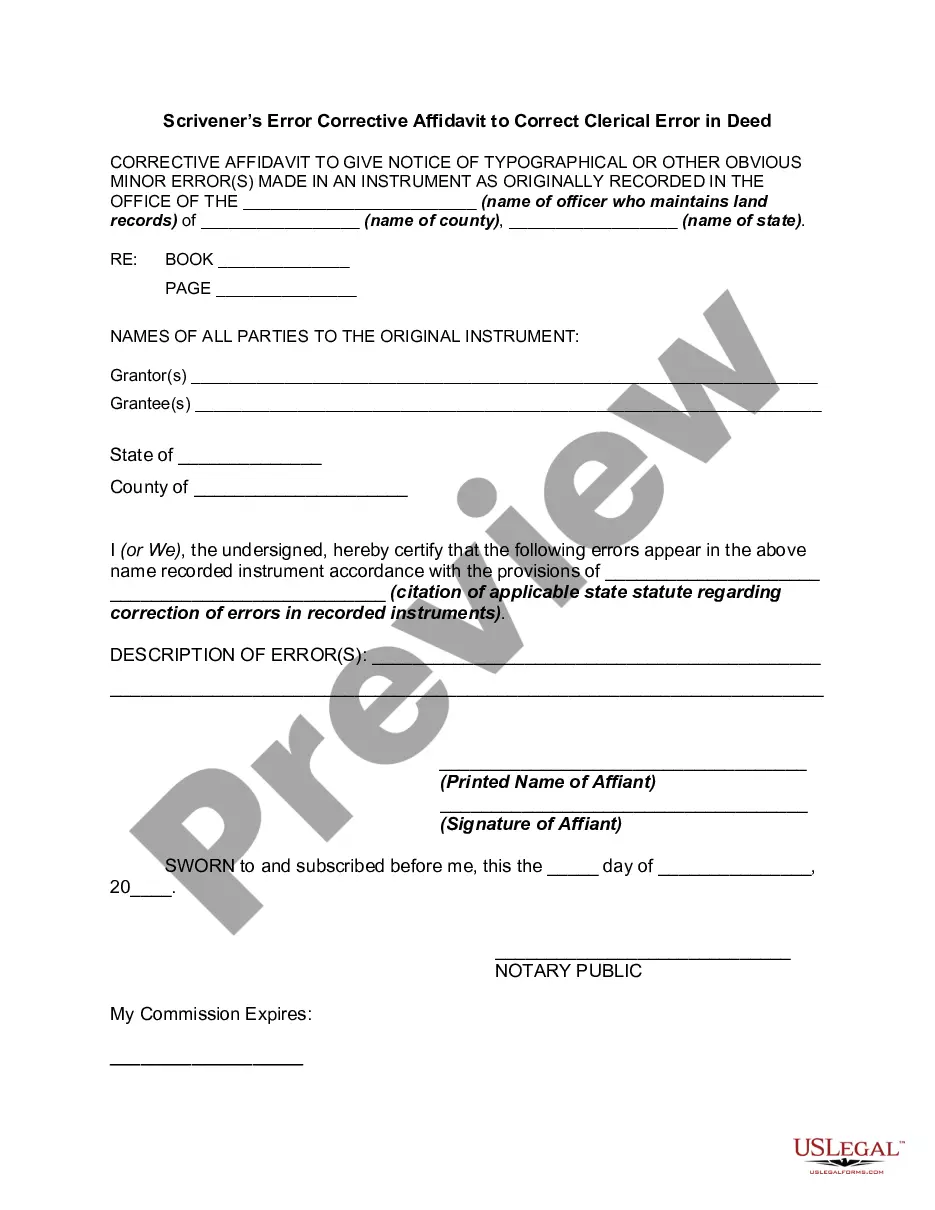
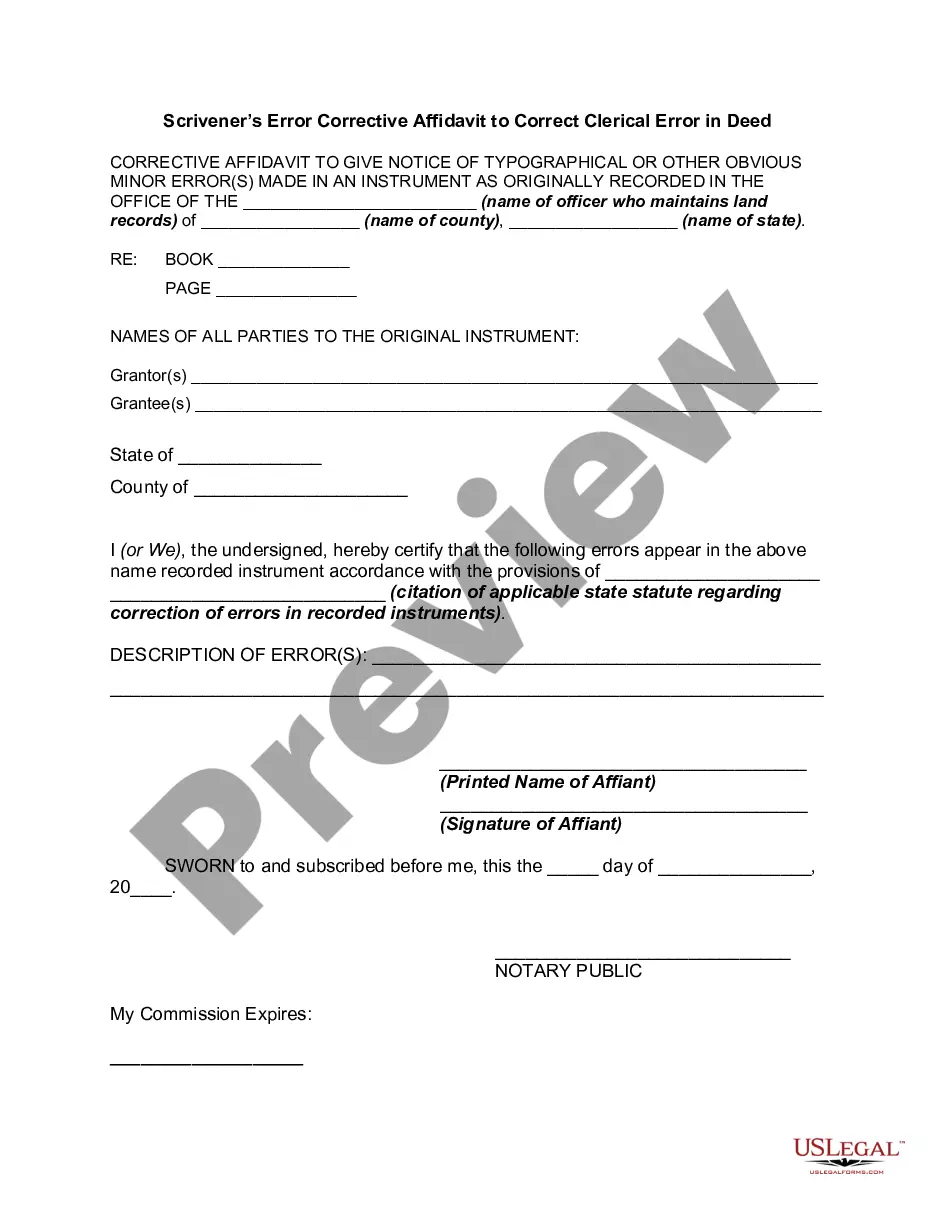
A correction deed is a new deed signed and acknowledged by the grantor. A correction affidavit can be signed by either party but is used in limited situations. This press release was authorized by Mark W. Bidwell, an attorney licensed in California.
First, if the scrivener's error is apparent on the face of the policy, a court may correct that error by applying the general rules of contract interpretation. Second, if a scrivener's error is not apparent on the face of the policy, a court may reform the contract to correct the error if the error is a mutual mistake.
Re-recording of the original document. With corrections made in the body of the original document. A cover sheet detailing the changes. Must be re-signed and re-acknowledged. Correction Deed. A new deed reflecting the corrections/changes. Must meet all recording requirements of a deed.
Determine if the error is harmless or fatal to the transfer of title. Decide what instrument is best suited to the error. Draft a corrective deed, affidavit, or new deed. Obtain the original signature(s) of the Grantor(s). Re-execute the deed with proper notarization and witnessing.
A corrective affidavit is a statutory device under Cal.Gov. Code 27201, used to correct a minor error in a document that has been recorded at an earlier date. Minor errors are those that, when corrected, cause no actual change in the substance of the document.