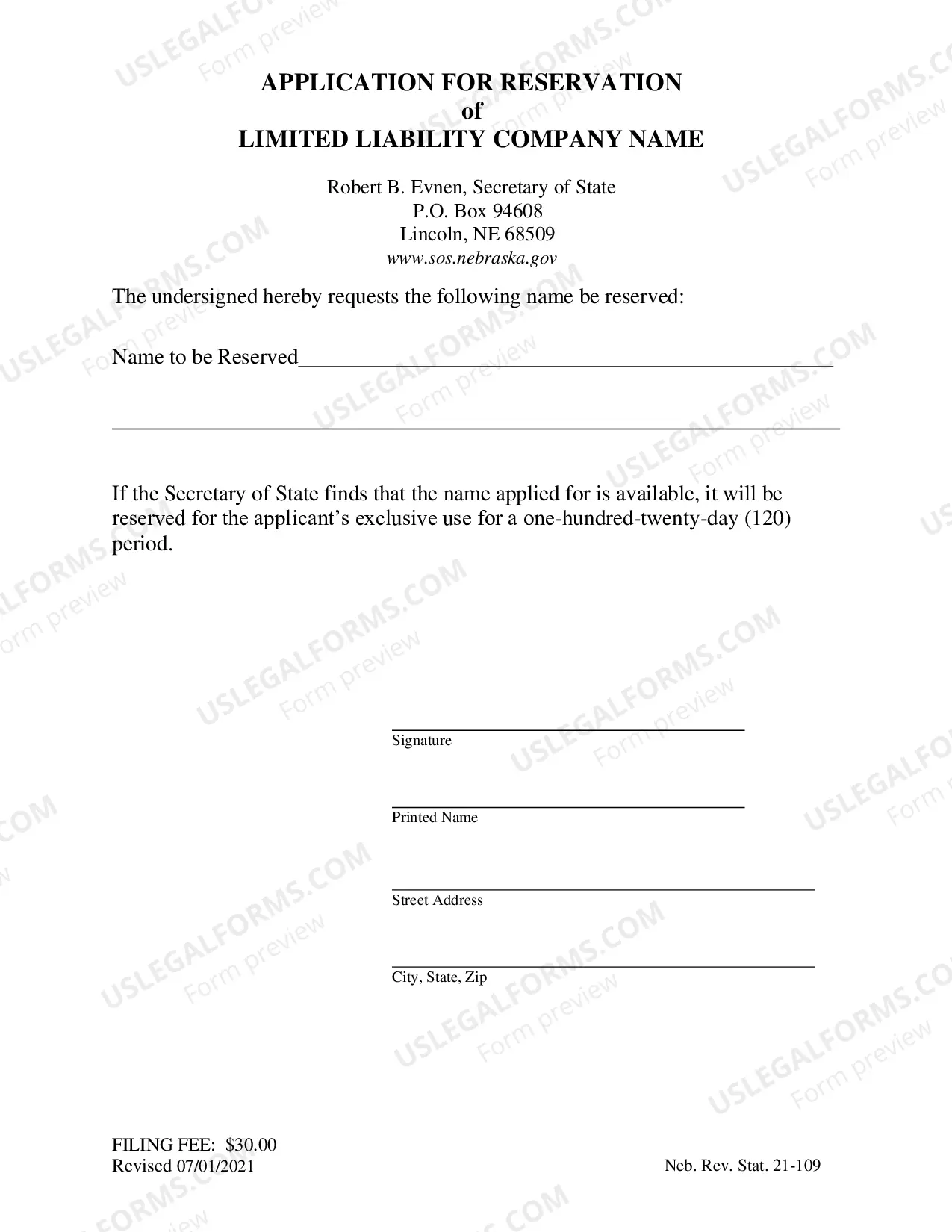
Massachusetts Easement Agreement
What is this form?
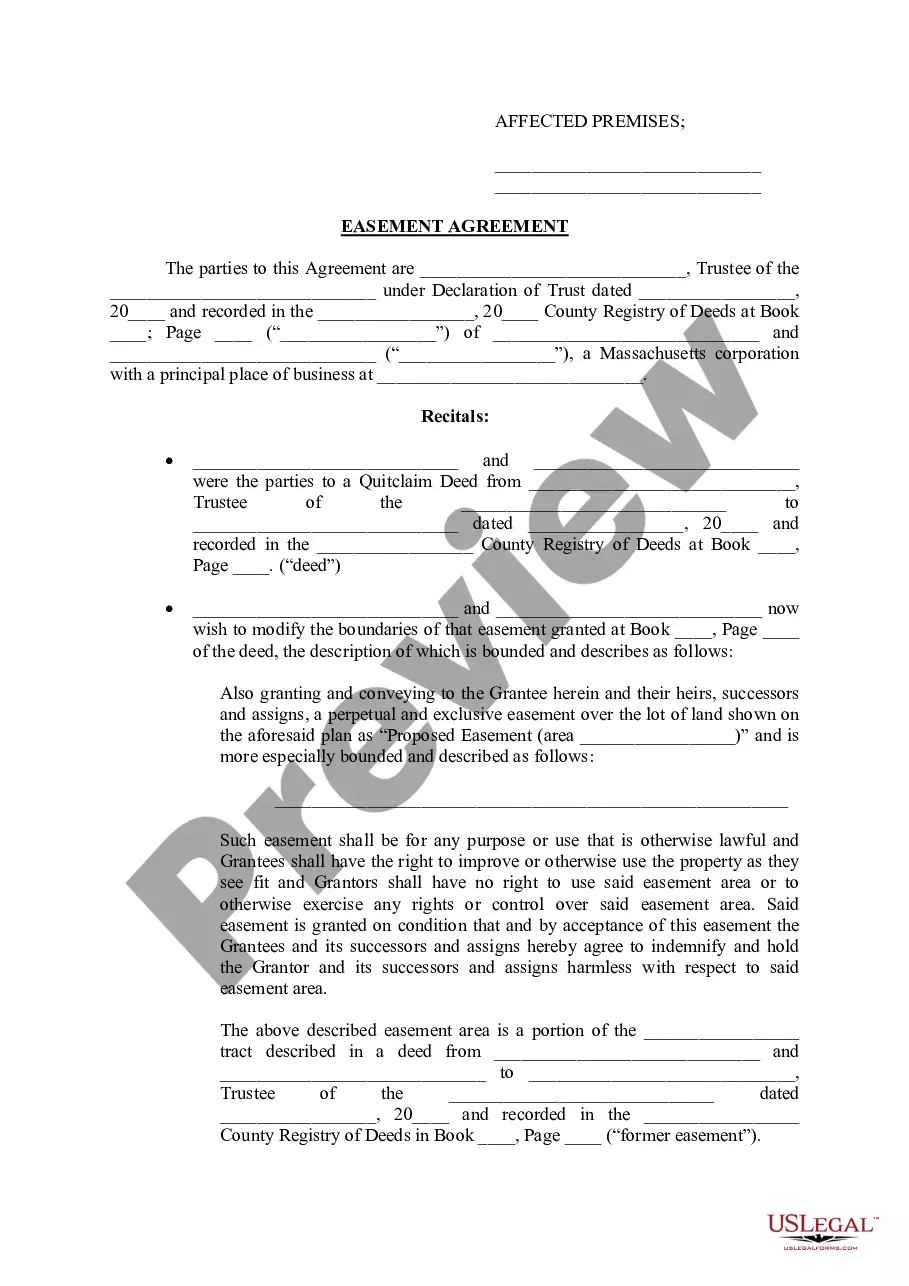
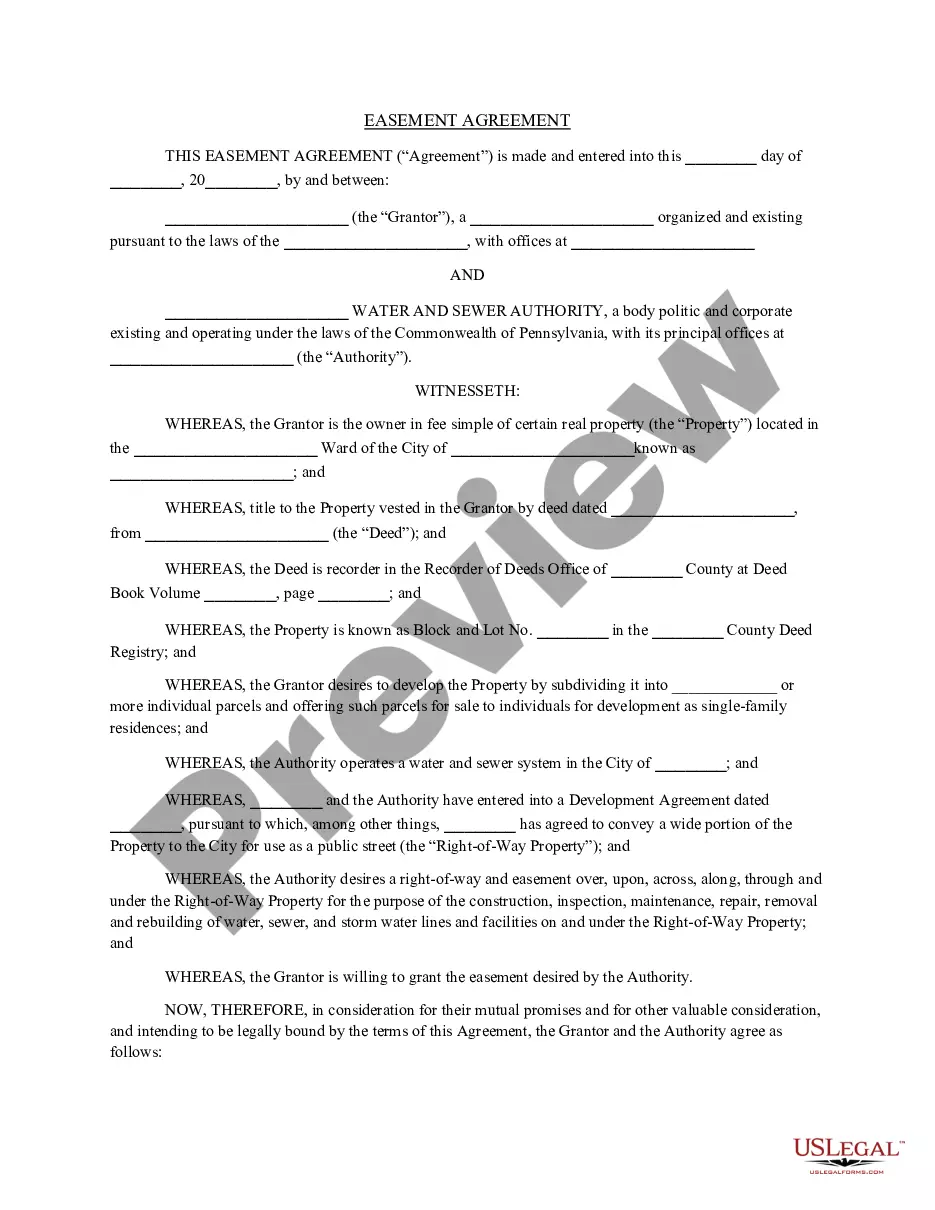
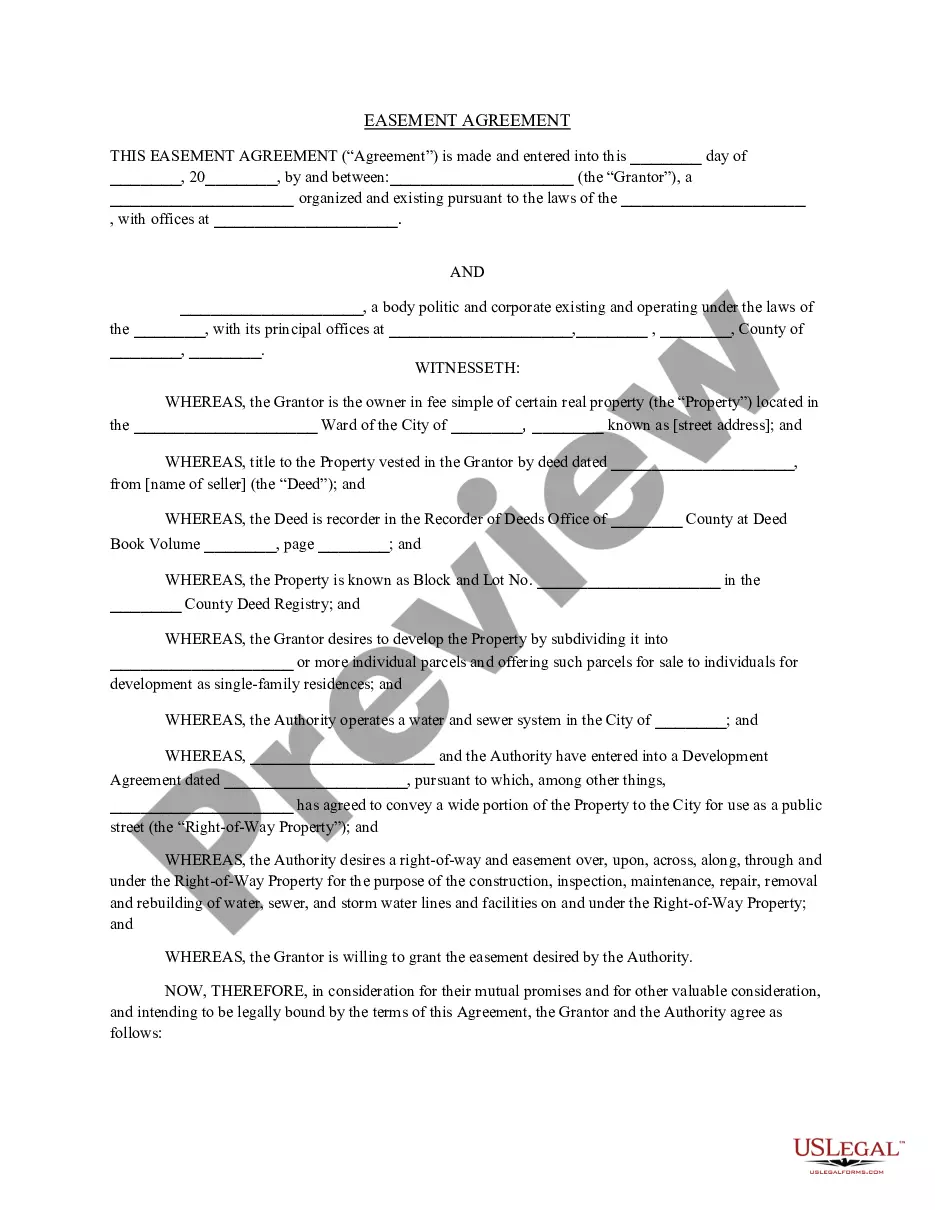
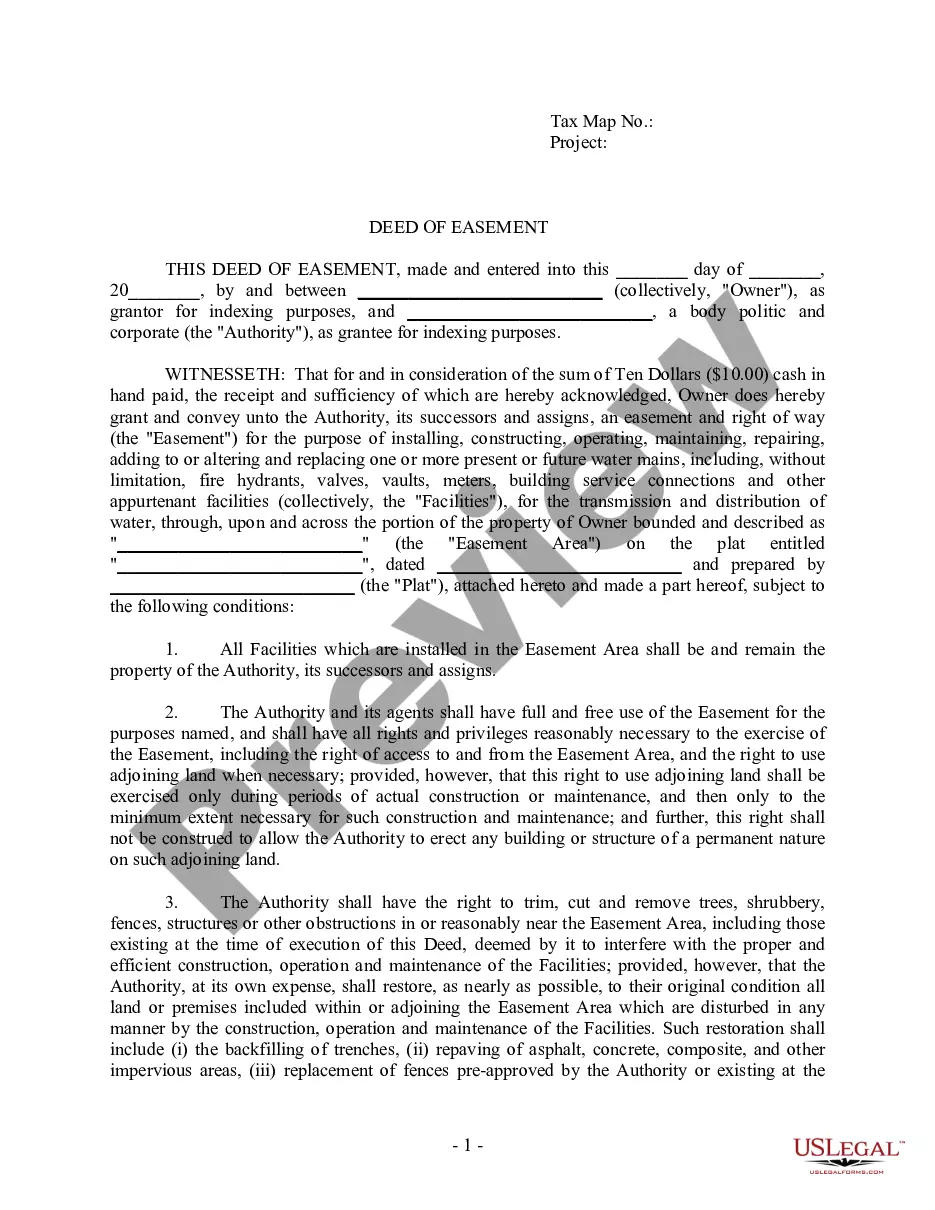
An easement agreement is a legal document that allows a property owner to grant another party the right to use a specific portion of their property for particular purposes. This agreement is used to modify the boundaries of an existing easement. By clearly defining the rights and responsibilities of both parties, it helps prevent disputes and ensures that the easement is used in accordance with the parties' intentions.
Form components explained
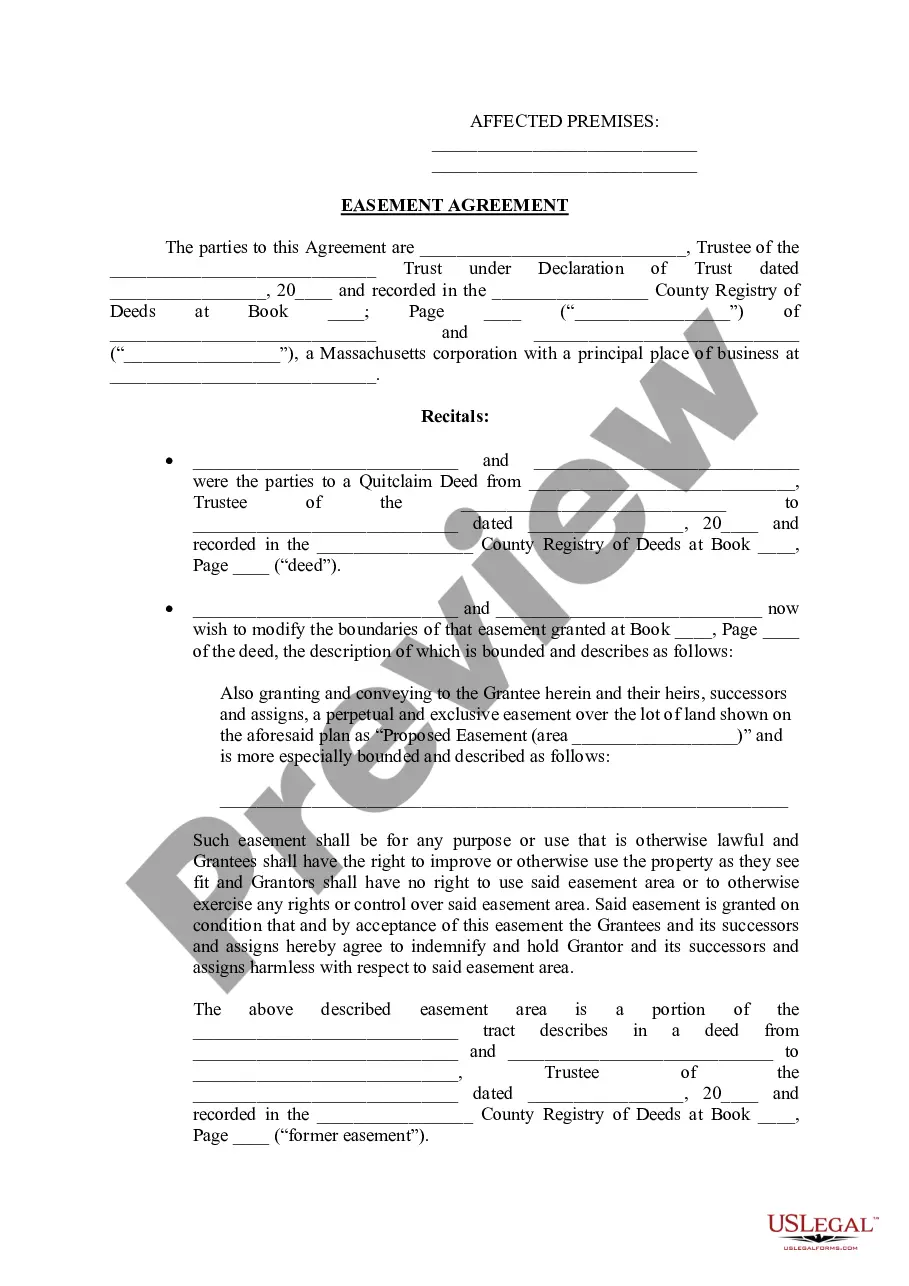
- Affected premises: the property subject to the easement agreement.
- Parties involved: identification of the current owner and the grantee.
- Recitals: background information about previous agreements related to the easement.
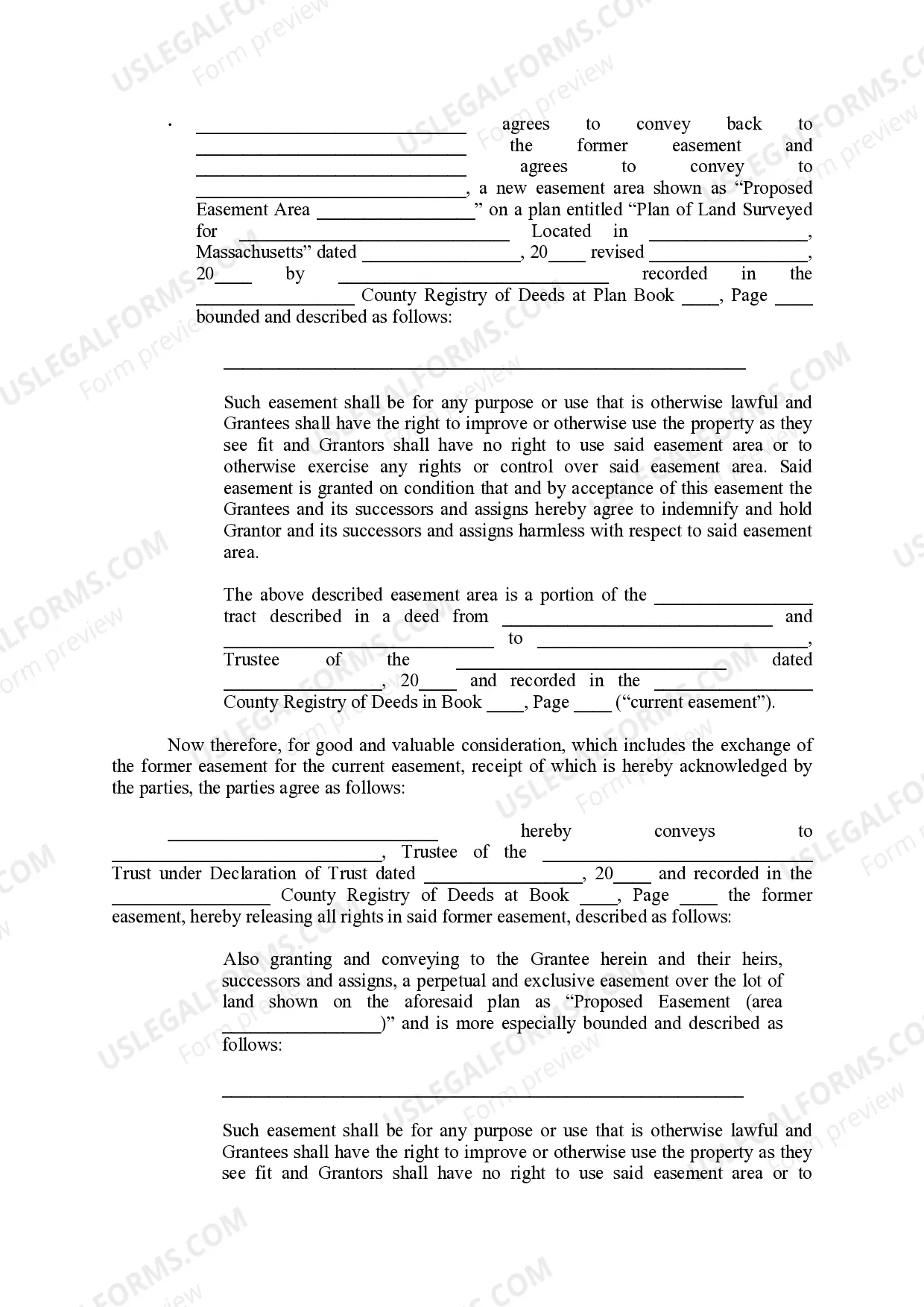
- Description of the easement area: clear boundaries and specific use of the easement.
- Indemnification clause: terms for protecting parties from liabilities associated with the easement.
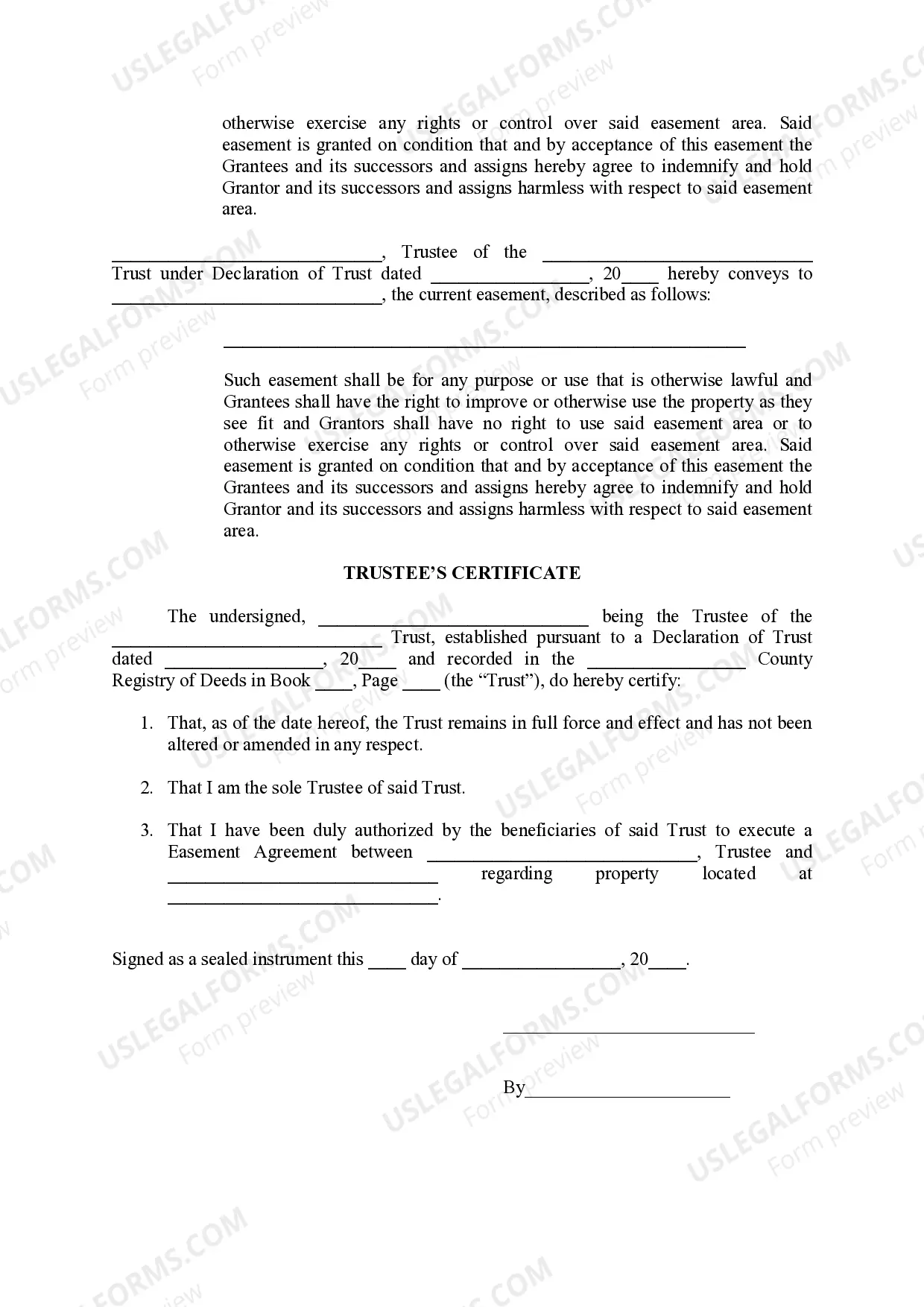
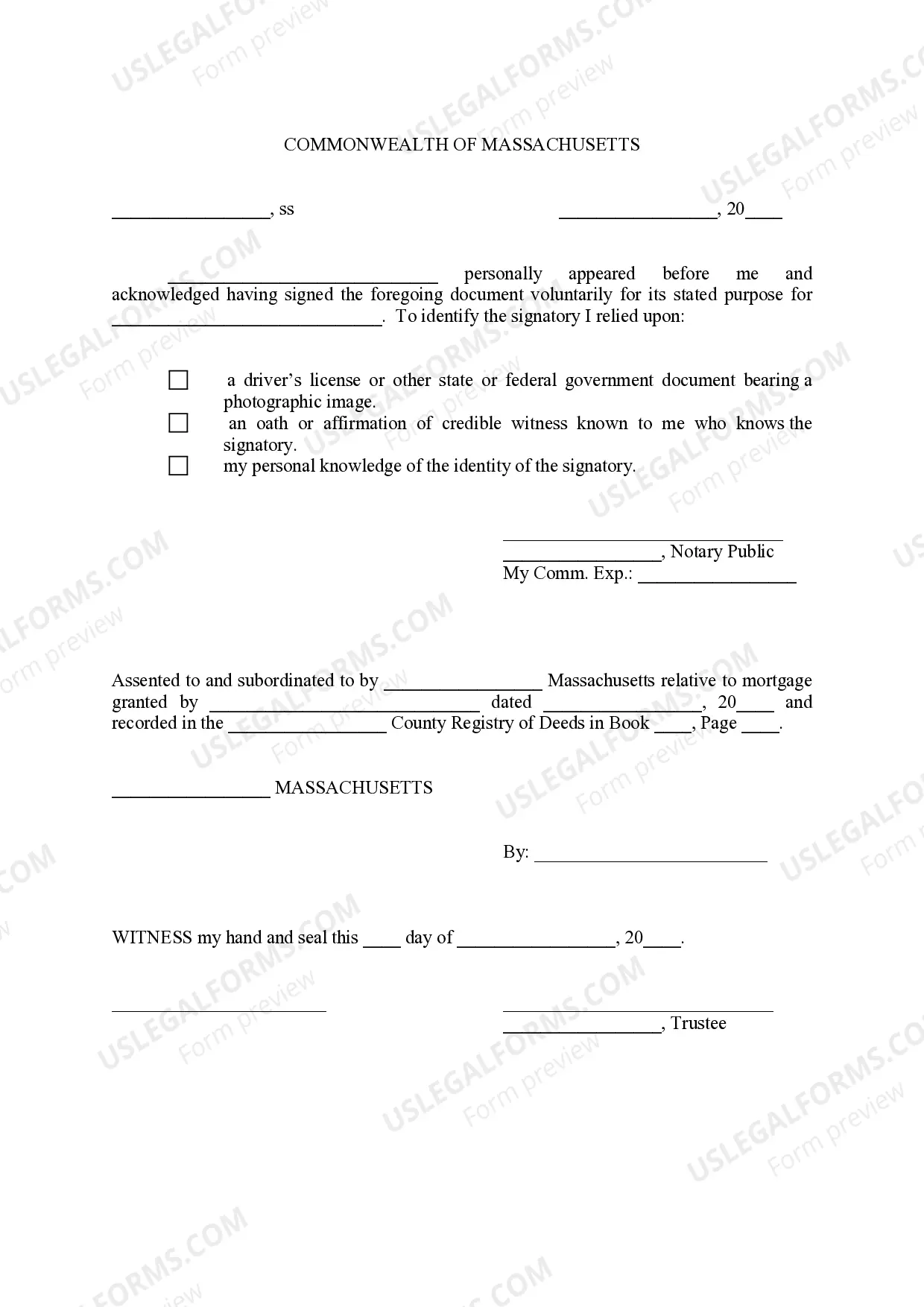
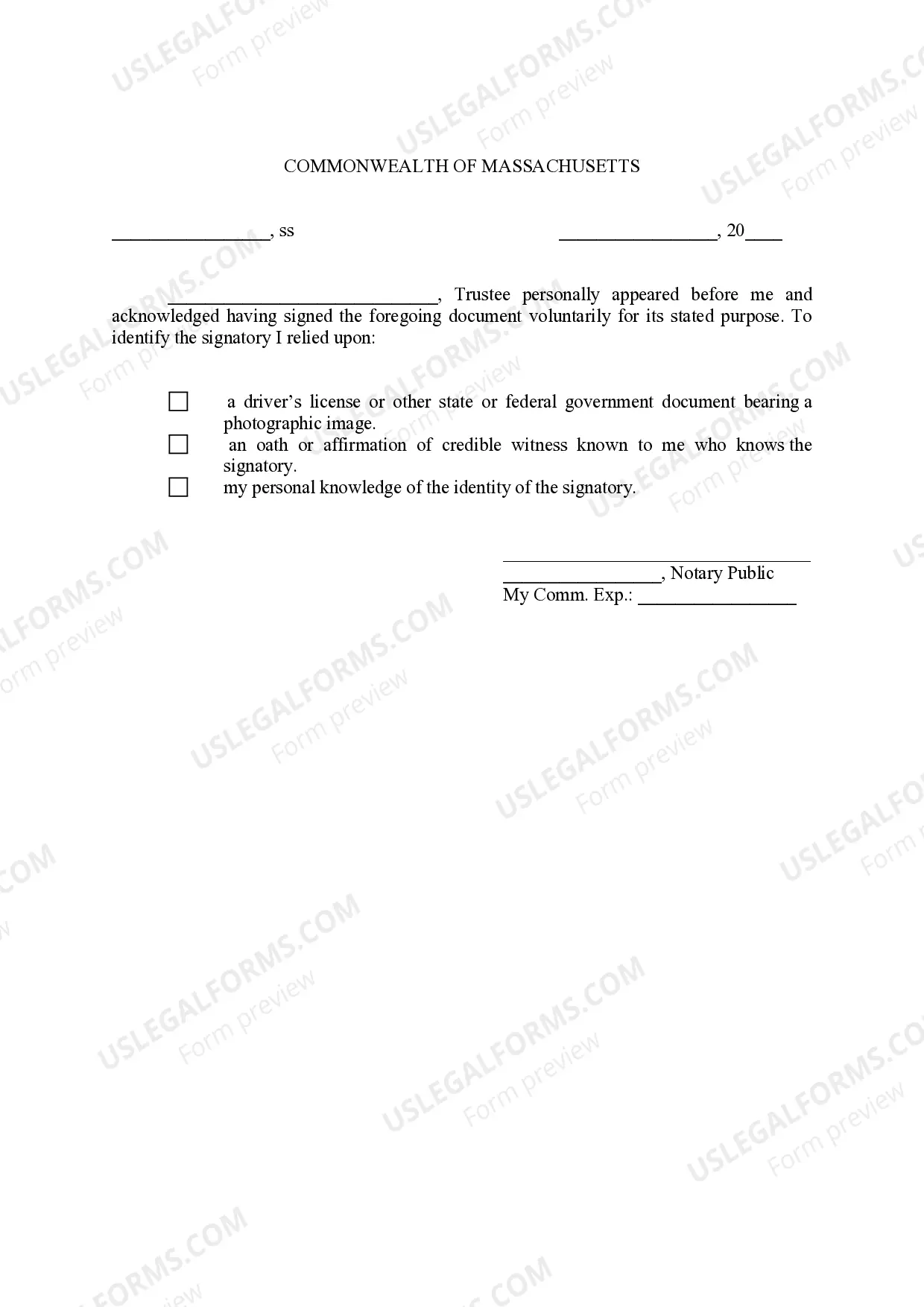
- Notary acknowledgment: confirmation of the proper signing of the agreement.
Situations where this form applies
This easement agreement is necessary when property owners want to modify the boundaries of an existing easement. It may be needed in situations involving shared driveways, utility access, or pathways between properties. This form ensures that all agreements are documented clearly and legally binding, reducing the potential for conflicts in property use.
Who needs this form
This form is designed for:
- Property owners looking to establish or modify an easement on their land.
- Individuals or entities (such as corporations) needing legal access to another property.
- Trustees of property trusts requiring formal agreements for easement adjustments.
Instructions for completing this form
- Identify the affected premises by filling in the property details.
- Clearly state the names and addresses of both parties involved in the agreement.
- Provide the prior easement details, including documentation references.
- Define the new easement area, ensuring clear and specific boundaries are described.
- Sign the document in the presence of a notary public to ensure legal validity.
Does this document require notarization?
Yes, this form must be notarized to be legally valid. The signature of the parties should be acknowledged by a notary public to confirm that the document was signed voluntarily. US Legal Forms offers integrated online notarization services that are secure and efficient, allowing you to complete the process without traveling.
Get your form ready online
Our built-in tools help you complete, sign, share, and store your documents in one place.
Make edits, fill in missing information, and update formatting in US Legal Forms—just like you would in MS Word.
Download a copy, print it, send it by email, or mail it via USPS—whatever works best for your next step.
Sign and collect signatures with our SignNow integration. Send to multiple recipients, set reminders, and more. Go Premium to unlock E-Sign.
If this form requires notarization, complete it online through a secure video call—no need to meet a notary in person or wait for an appointment.
We protect your documents and personal data by following strict security and privacy standards.

Make edits, fill in missing information, and update formatting in US Legal Forms—just like you would in MS Word.

Download a copy, print it, send it by email, or mail it via USPS—whatever works best for your next step.

Sign and collect signatures with our SignNow integration. Send to multiple recipients, set reminders, and more. Go Premium to unlock E-Sign.

If this form requires notarization, complete it online through a secure video call—no need to meet a notary in person or wait for an appointment.

We protect your documents and personal data by following strict security and privacy standards.
Mistakes to watch out for
- Failing to clearly define the boundaries of the easement area.
- Not involving a notary, which may lead to questions of validity.
- Neglecting to include all parties, which can result in future disputes.
- Inadequate description of the purpose of the easement.
Why use this form online
- Convenient access to legal forms without the need for in-person consultations.
- Easily editable fields allow users to customize the agreement for their specific needs.
- Reliable and up-to-date templates created by licensed attorneys.
Looking for another form?

Form popularity
FAQ
An easement is a right which the owner or occupier of certain land possesses, as such, for the beneficial enjoyment of that land, to do and continue to do something, or to prevent and continue to prevent something being done, in or upon, or in respect of certain other land not his own. Kinds/ Types of Easement -
If an authority has an easement registered over your land, they have the right to access the easement to maintain or repair the easement land or their equipment on the land.
The party gaining the benefit of the easement is the dominant estate (or dominant tenement), while the party granting the benefit or suffering the burden is the servient estate (or servient tenement). For example, the owner of parcel A holds an easement to use a driveway on parcel B to gain access to A's house.
An easement owner cannot claim another party has trespassed on their easement, because trespass involves interference with the plaintiff's exclusive possession. Easement holders do not have a right to exclusive possession. They may claim nuisance, but only if the interference is substantial and unreasonable.
Action can be taken against if you interfere with their right to access the easement for example you can't lock or fence them out of the easement land, nor build over the easement land.
Types of Easements An easement may be classified as either an easement appurtenant or an easement in gross. Easement Appurtenant. An easement appurtenant is an easement that benefits one parcel of land, known as the dominant tenement, to the detriment of another parcel of land, known as the servient tenement.
Easement holders have the right to use the land to their enjoyment as long as it does not place an unreasonable burden on the servient estate. Landowners have the right to make whatever use of the land as long as it doesn't unduly affect the easement.