Massachusetts Marital Domestic Separation and Property Settlement Agreement no children
Overview of this form
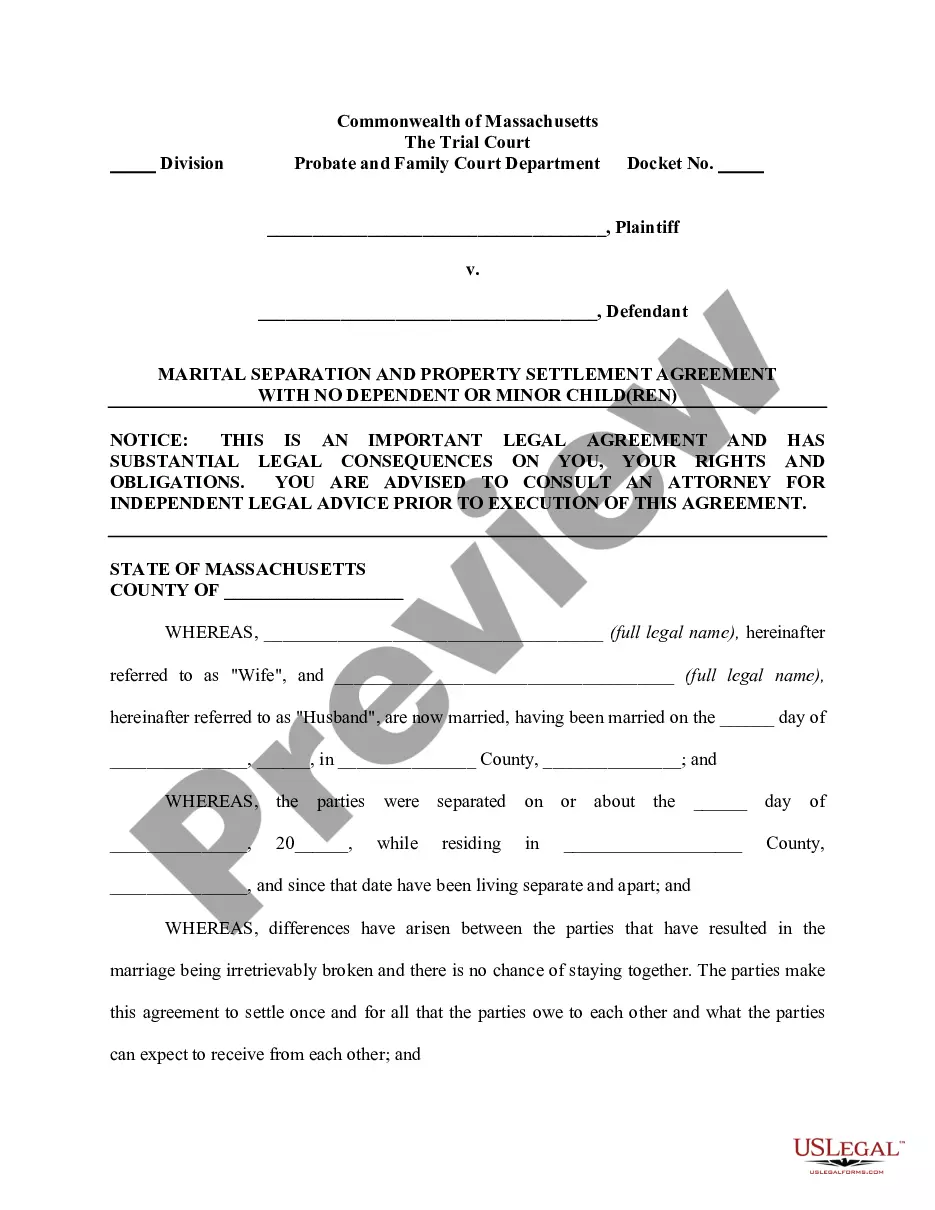
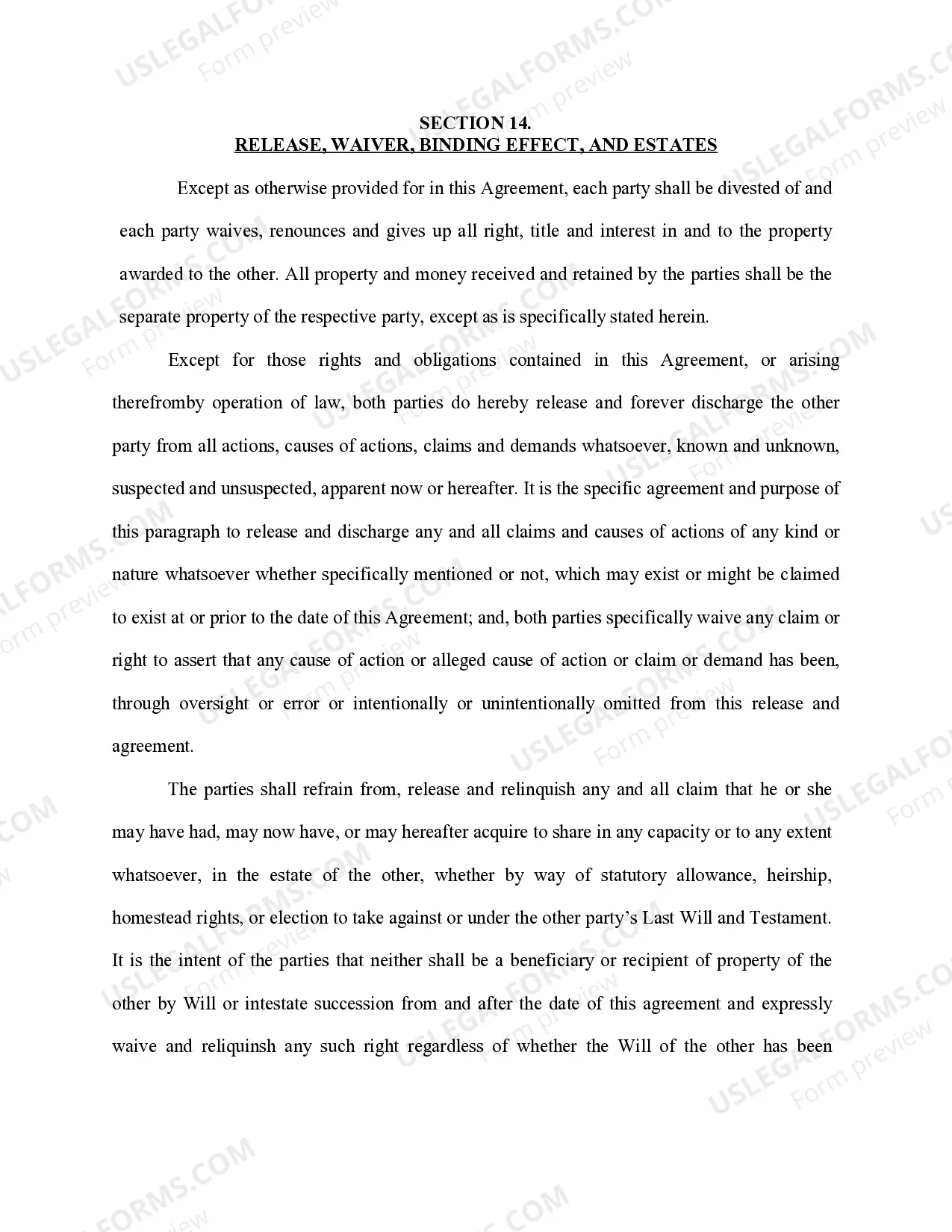
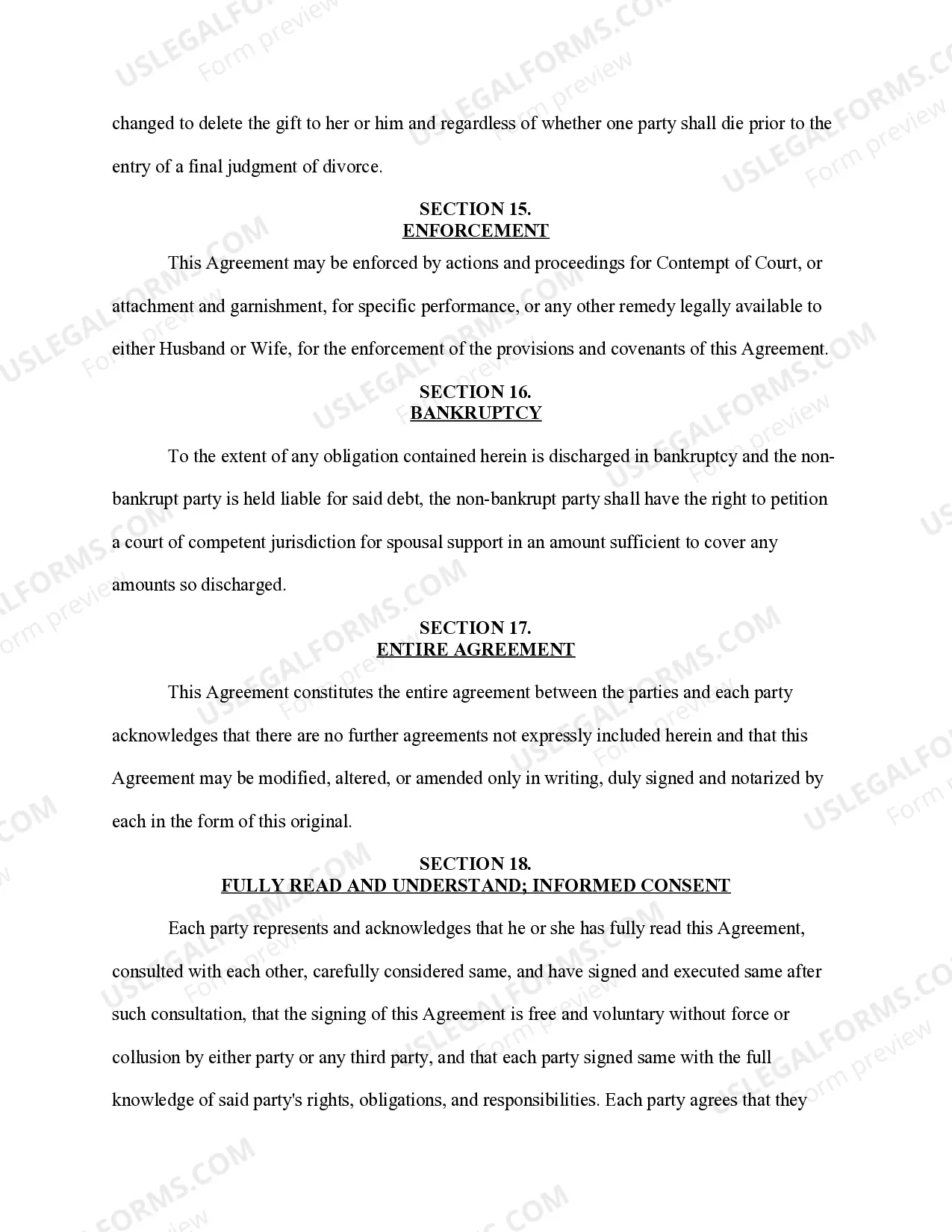
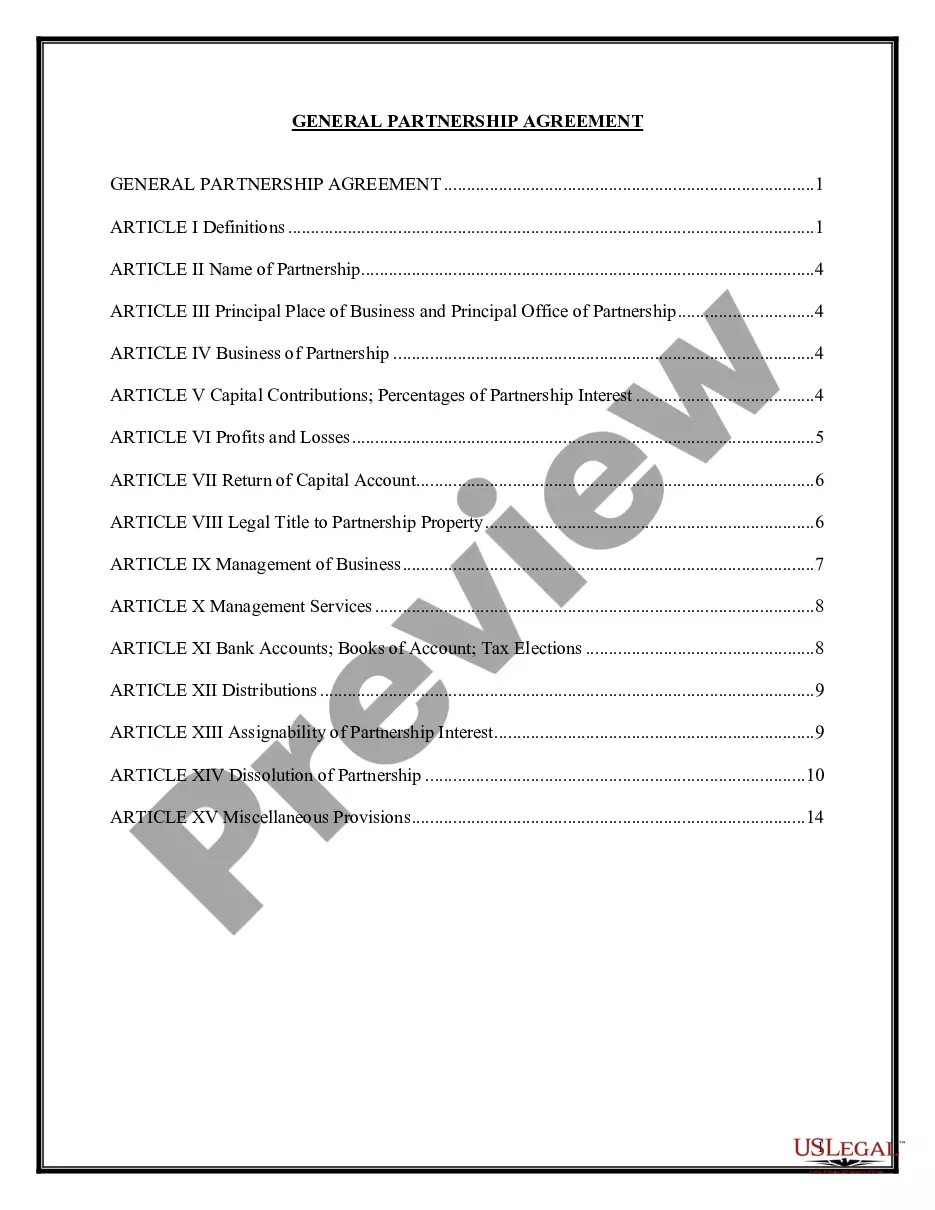
The Marital Domestic Separation and Property Settlement Agreement with No Children is a legal document that helps married couples finalize the distribution of their assets and debts when separating. This form is specifically designed for couples without dependent or minor children, allowing them to outline how they will divide their property and settle their financial obligations. Unlike divorce decrees, which are court judgments, this agreement is a mutual contract that sets clear terms for the separation of property and liabilities between the parties involved.
Main sections of this form
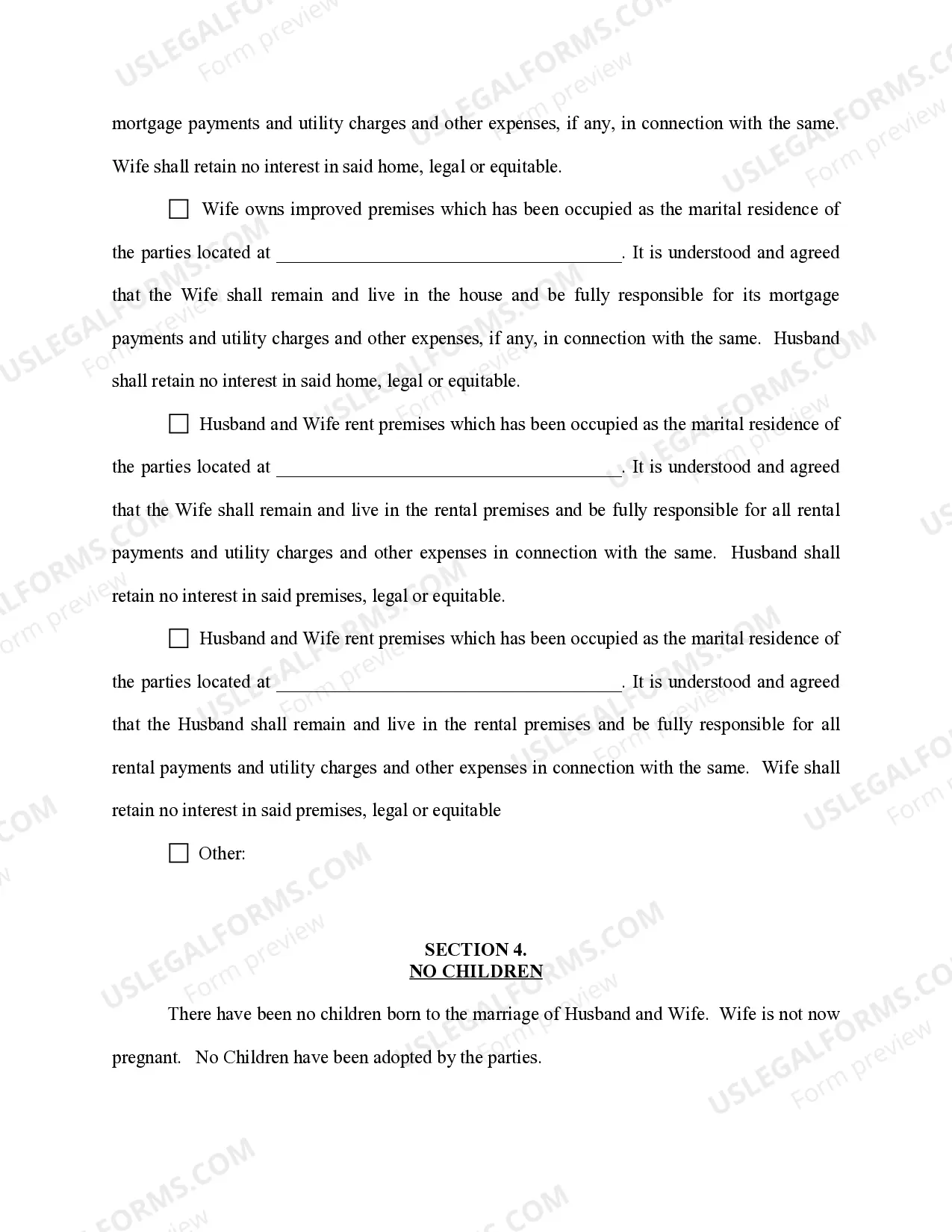
- Identification of the husband and wife, their wedding date, and separation date.
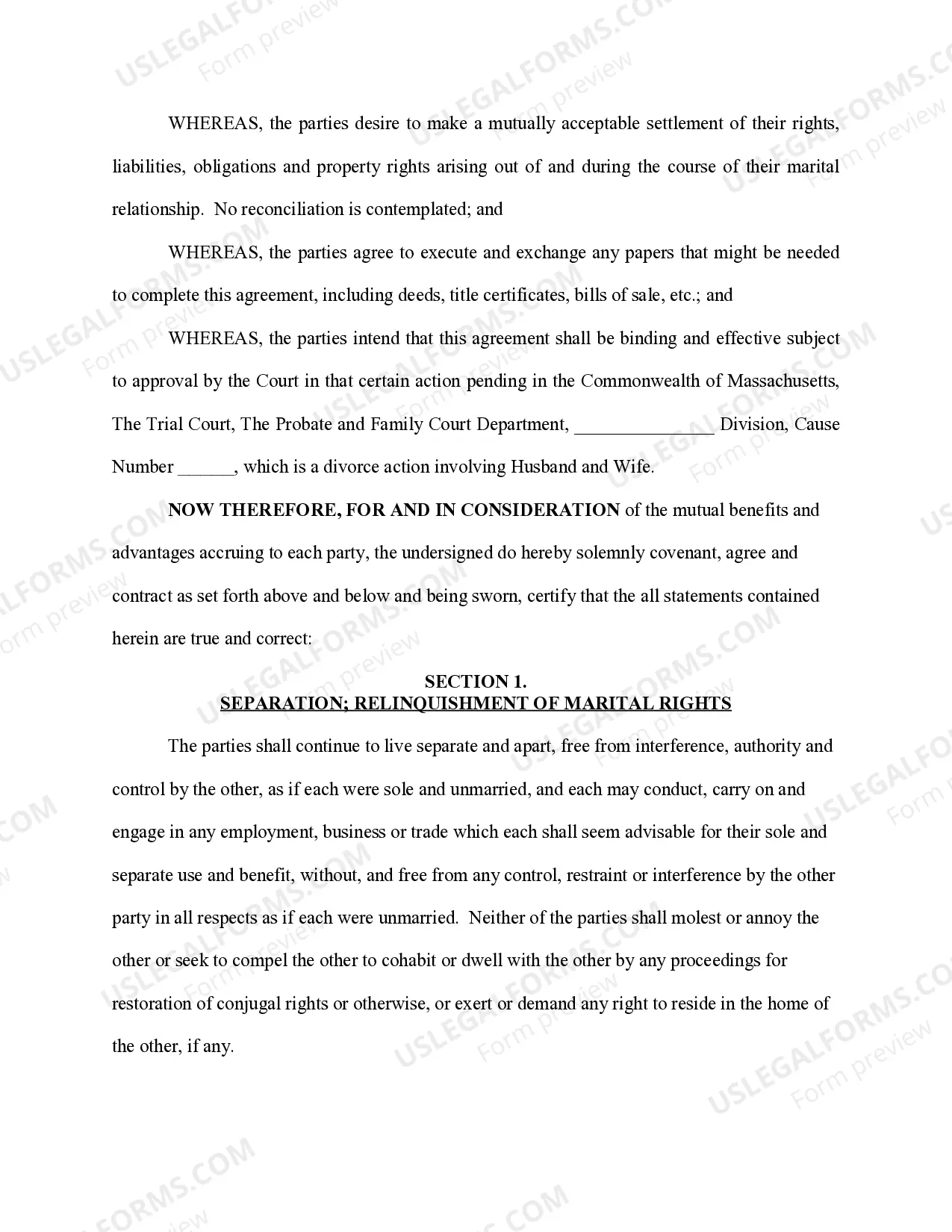
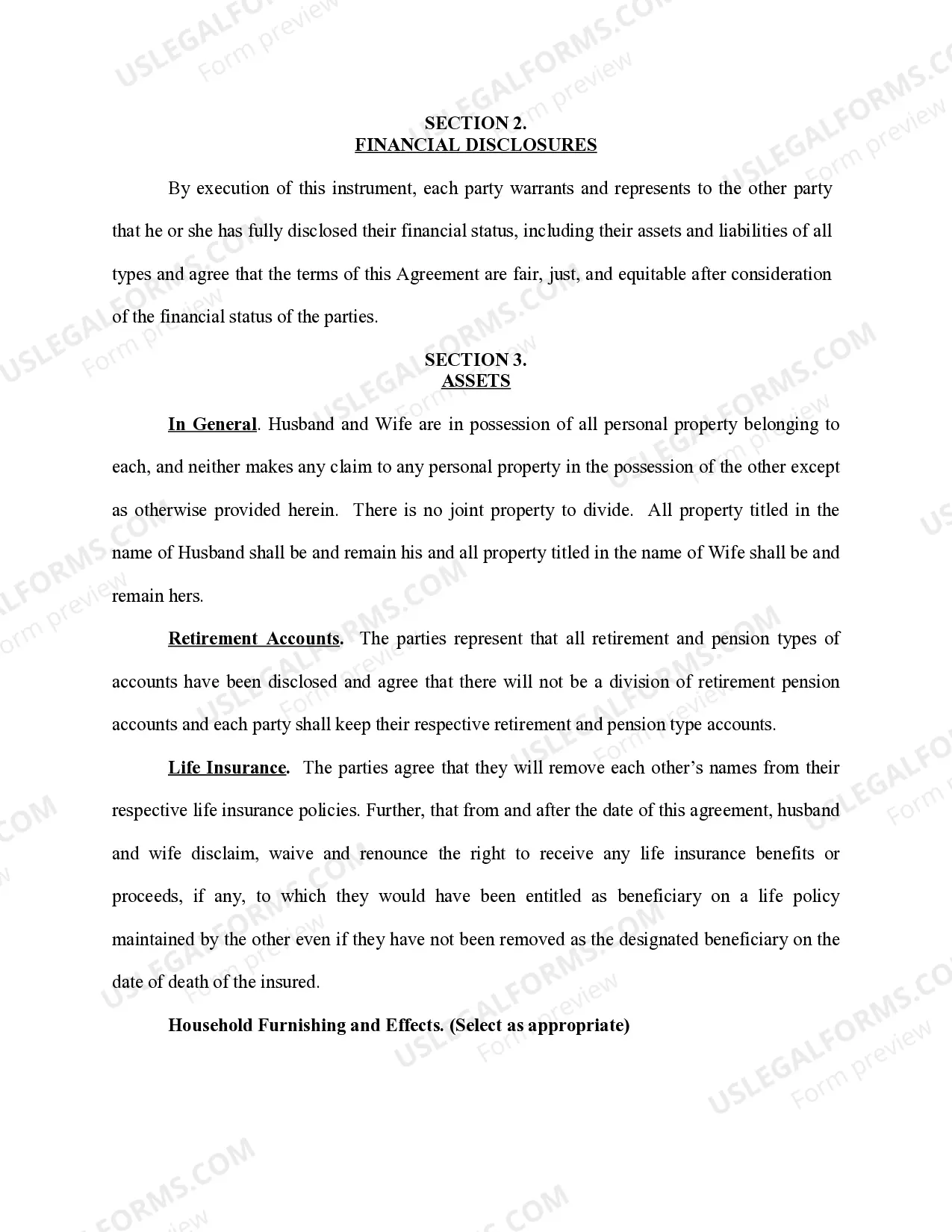
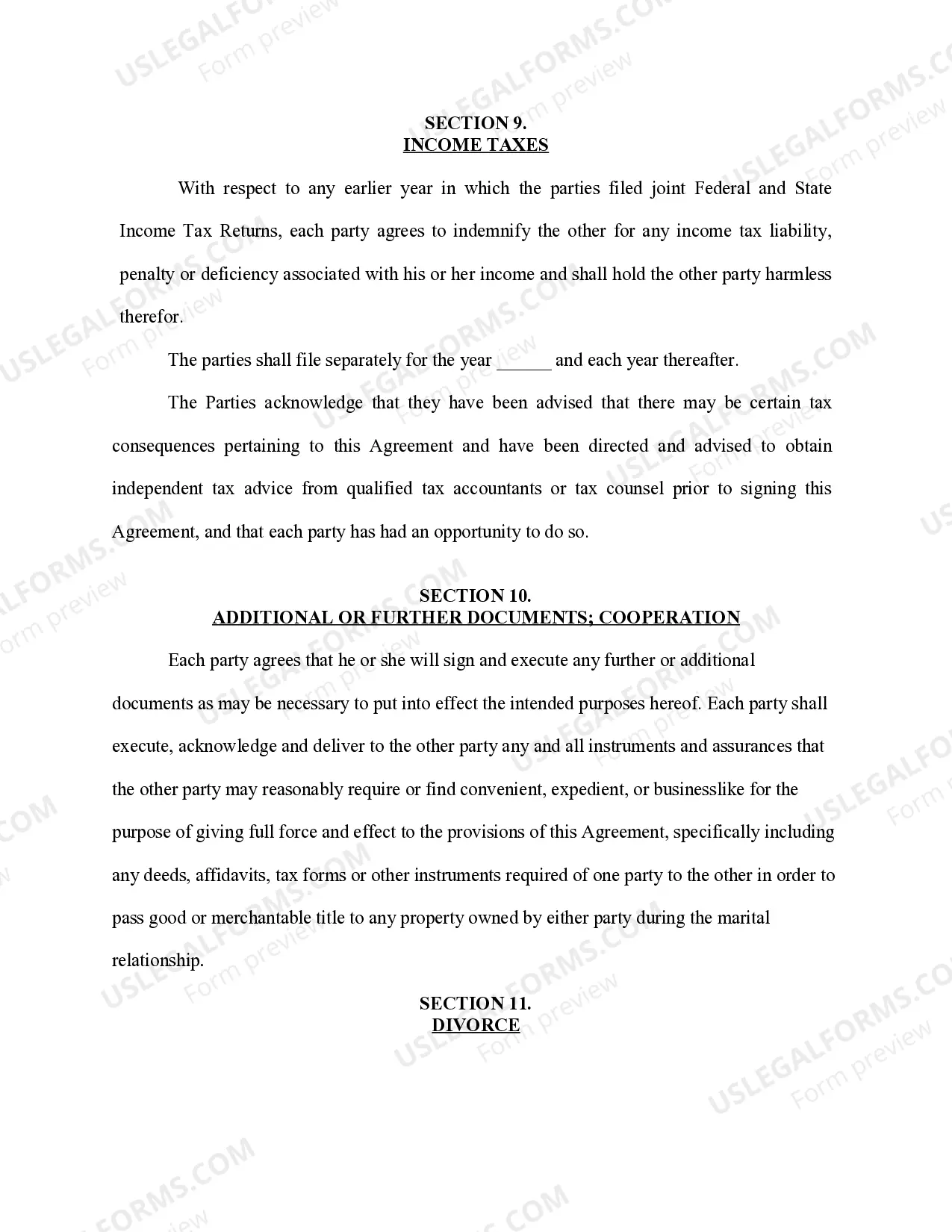
- Sections detailing the relinquishment of marital rights and financial disclosures.
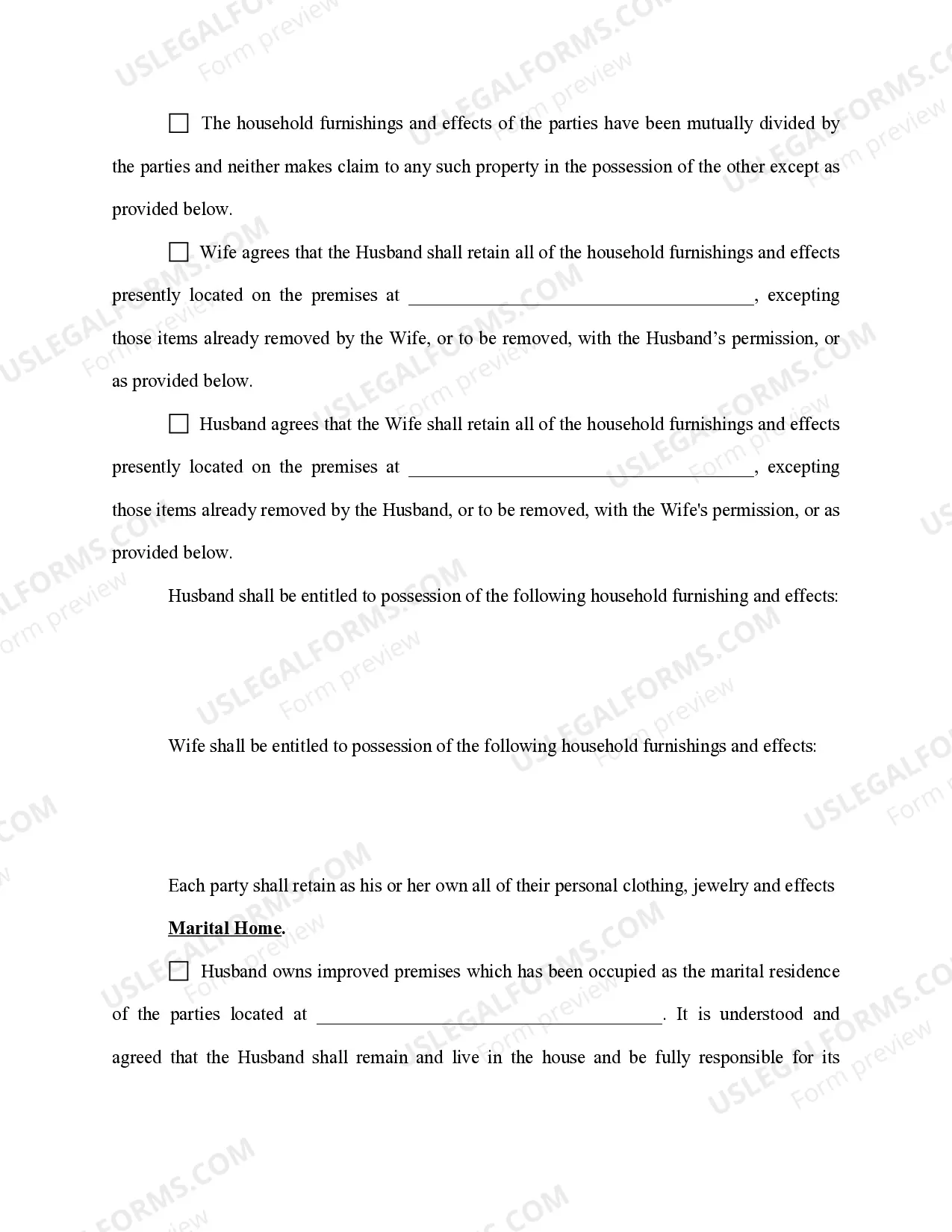
- Clear stipulations regarding the division of assets such as property, personal belongings, and retirement accounts.
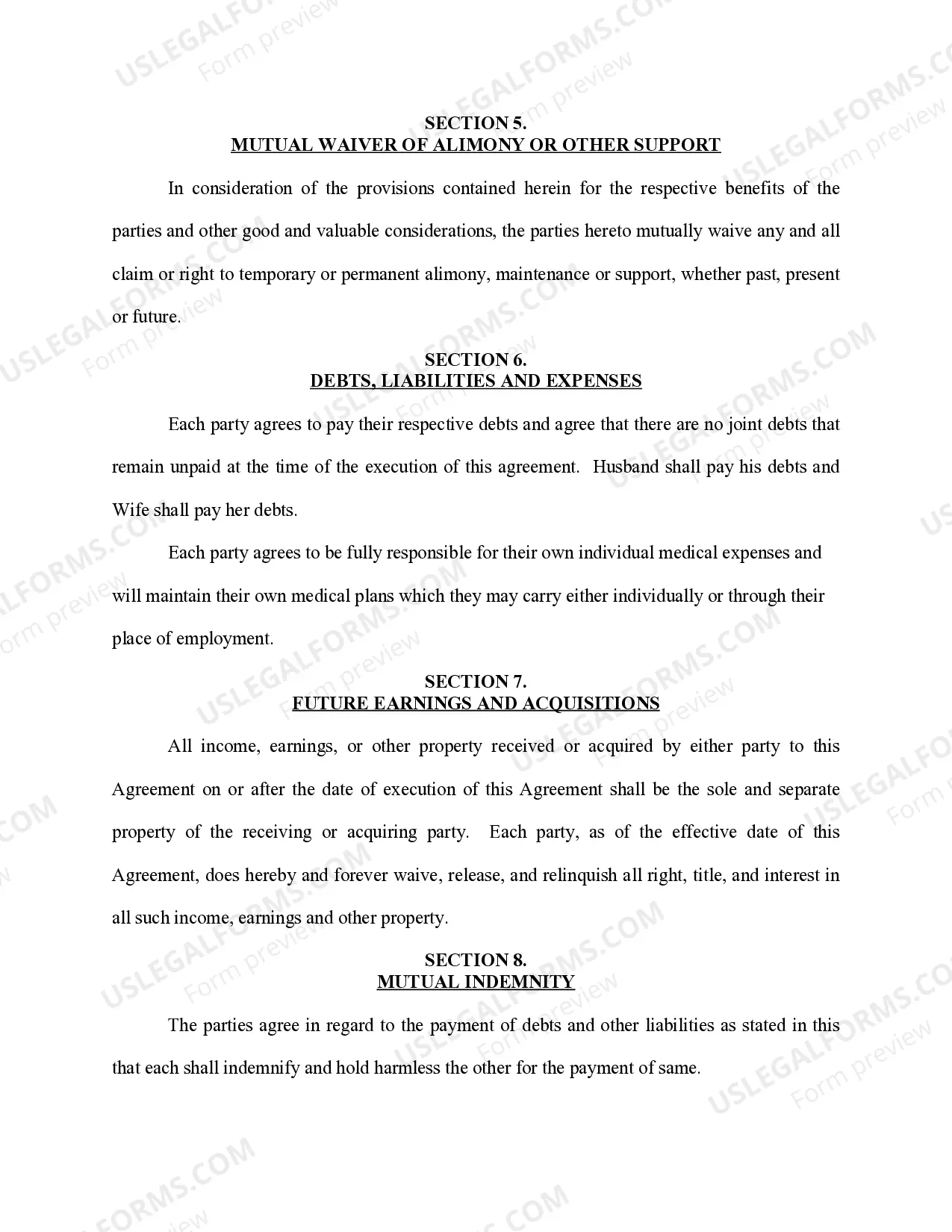
- Provisions for the handling of individual debts and liabilities.
- Agreement on future income and property acquisition, stating that these will remain separate.
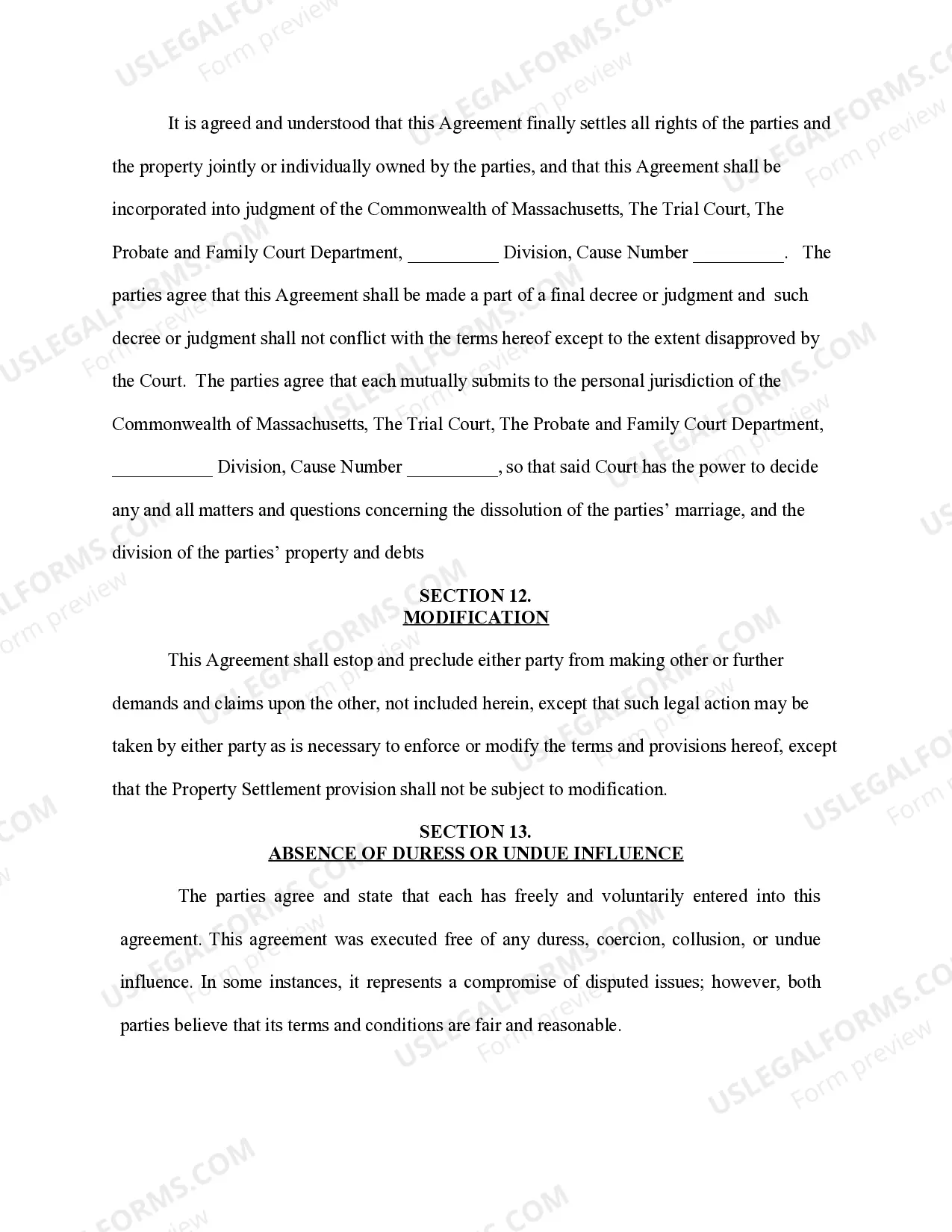
- Clarity on the divorce process and the integration of this agreement into court proceedings.


Situations where this form applies
This form is suitable for couples who wish to formalize their separation without any children involved. It is typically used when both parties agree on how to distribute their property and settle their debts, facilitating a smoother transition into single life. It can be helpful in situations where marital disagreements have arisen, and both parties seek to clarify their rights and responsibilities moving forward.
Intended users of this form
- Couples who are legally married and wish to separate without children.
- Individuals seeking to formalize property and debt agreements in the context of their separation.
- Those who have reached an amicable understanding regarding their financial and personal matters surrounding their marriage.
- Parties seeking to avoid costly legal disputes through a mutual agreement.
How to complete this form
- Identify the parties involved by filling in their full legal names and marriage details.
- Specify the date of separation and ensure accurate disclosures of financial status.
- Detail how assets and debts will be divided between the parties.
- Include sections on future earnings and responsibilities towards any joint liabilities.
- Both parties should sign the agreement, ensuring it is witnessed and notarized as required.
Does this document require notarization?
Notarization is required for this form to take effect. Our online notarization service, powered by Notarize, lets you verify and sign documents remotely through an encrypted video session, available 24/7.
Get your form ready online
Our built-in tools help you complete, sign, share, and store your documents in one place.
Make edits, fill in missing information, and update formatting in US Legal Forms—just like you would in MS Word.
Download a copy, print it, send it by email, or mail it via USPS—whatever works best for your next step.
Sign and collect signatures with our SignNow integration. Send to multiple recipients, set reminders, and more. Go Premium to unlock E-Sign.
If this form requires notarization, complete it online through a secure video call—no need to meet a notary in person or wait for an appointment.
We protect your documents and personal data by following strict security and privacy standards.

Make edits, fill in missing information, and update formatting in US Legal Forms—just like you would in MS Word.

Download a copy, print it, send it by email, or mail it via USPS—whatever works best for your next step.

Sign and collect signatures with our SignNow integration. Send to multiple recipients, set reminders, and more. Go Premium to unlock E-Sign.

If this form requires notarization, complete it online through a secure video call—no need to meet a notary in person or wait for an appointment.

We protect your documents and personal data by following strict security and privacy standards.
Common mistakes
- Failing to fully disclose financial assets and liabilities, which can lead to disputes later.
- Not addressing all joint debts, which may result in unexpected financial obligations.
- Leaving out important terms regarding future earnings or new property acquired post-agreement.
- Not having the agreement reviewed by a legal professional prior to signing.
Why use this form online
- Convenience of accessing, downloading, and completing the form at your own pace.
- Editability enables customization to suit specific circumstances and needs.
- Reliable templates drafted by licensed attorneys ensure you have a legally sound document.
Main things to remember
- The Marital Domestic Separation and Property Settlement Agreement is essential for couples separating without children.
- This form streamlines the asset and debt distribution process, reducing the potential for conflict.
- It is important to have clear financial disclosures and obligations outlined within the agreement.
- Consulting a legal professional can prevent common mistakes and ensure a comprehensive agreement.
Looking for another form?

Form popularity
FAQ
1 attorney answerIf your wife seeks divorce (or if you do) by filing a Petition for Divorce, while the divorce is going on, the law says the expenses of the marriage must be paid. This is called "Interim Support".
If you're in the process of filing for divorce, you may be entitled to, or obligated to pay, temporary alimony while legally separated. In many instances, one spouse may be entitled to temporary support during the legal separation to pay for essential monthly expenses such as housing, food and other necessities.
Mistake #1: using your divorce proceedings to get back at your spouse. mistake #2: confusing material needs with emotional needs. mistake #3: letting other people define and prioritize your needs. mistake #4: embarking on an adversarial process without. mistake #5: not thinking about the family's finances as a whole.
The Family Law Act 1996 also grants the following home rights: The right to stay in your home unless a court order excludes it. The right to ask the court to enable you to return to your home (if you have moved out) The right to know of any repossession action taken out by your mortgage lender.
Under common law, the husband had a duty to support his wife, while the wife had a duty to perform household chores and other services for the husband. All states today require husbands to provide necessities for their wives and children, and in many states wives face similar requirements.
Rights to Property after Separation: When You're Married and Getting a Divorce. The benefit of getting married is that, in the event of a divorce or separation, you are entitled to a share of the property.The right to stay in your home unless a court order excludes it.
Couples who are separated, whether informally or legally, are still married in the eyes of the law, regardless of how independent their lives have become. This means that if either spouse has a sexual relationship with another person during the separation period, they have probably committed adultery.
Marital Settlement Agreements, reached between the parties in writing and signed by the parties, become legally binding when approved by the court at the time of the final court hearing.Once approved by the court, such post judgment stipulations do become legally binding and enforceable between the parties.