Massachusetts Satisfaction of Judgment
What is this form?
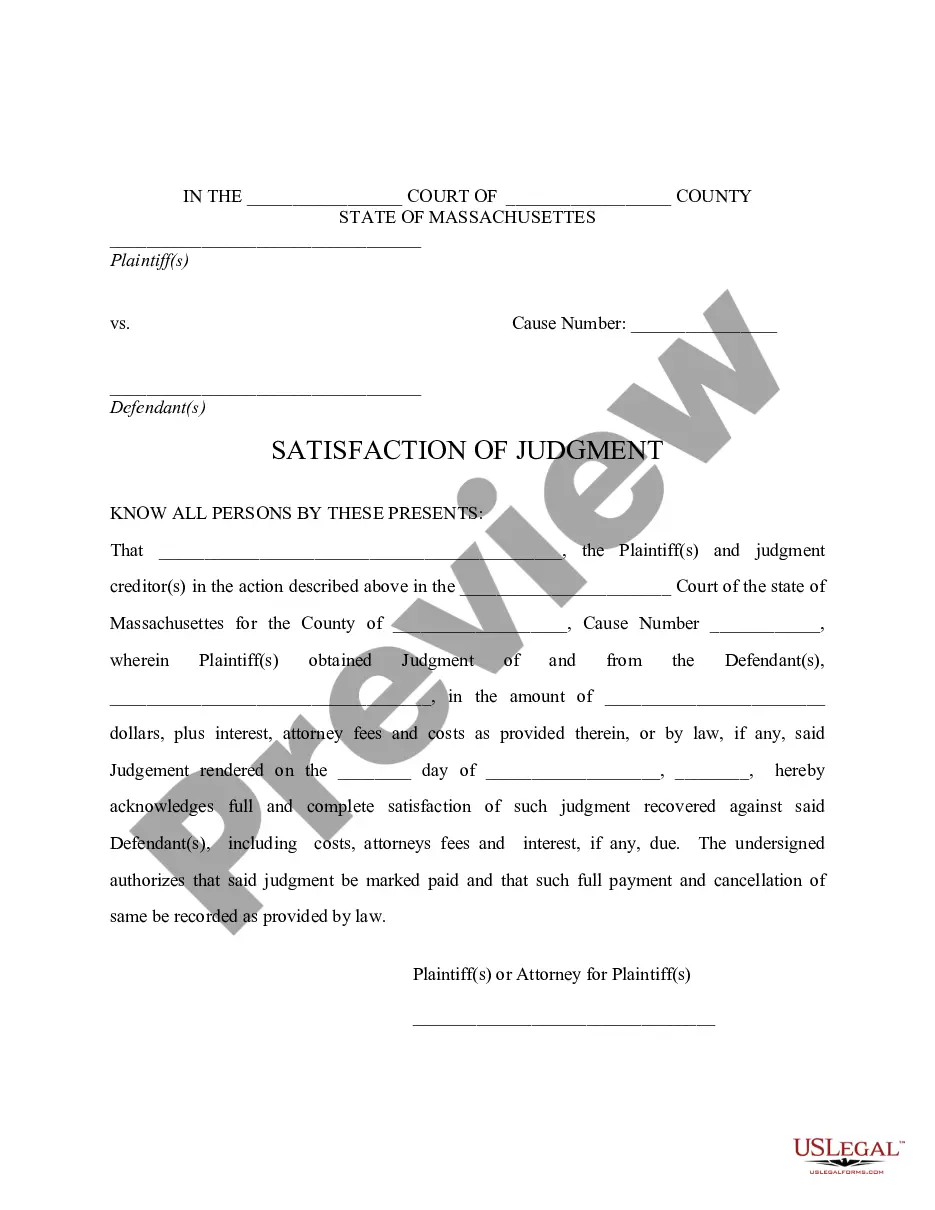
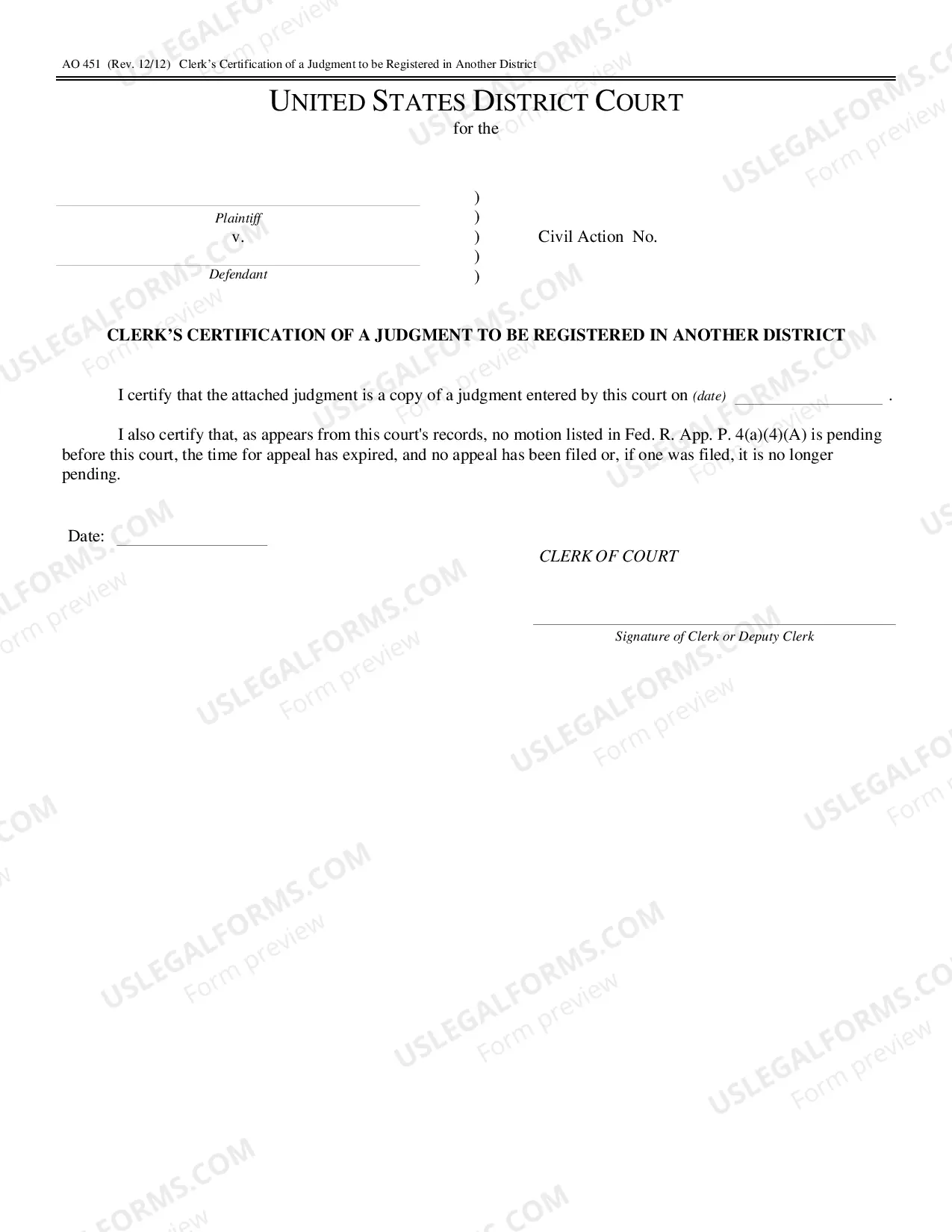
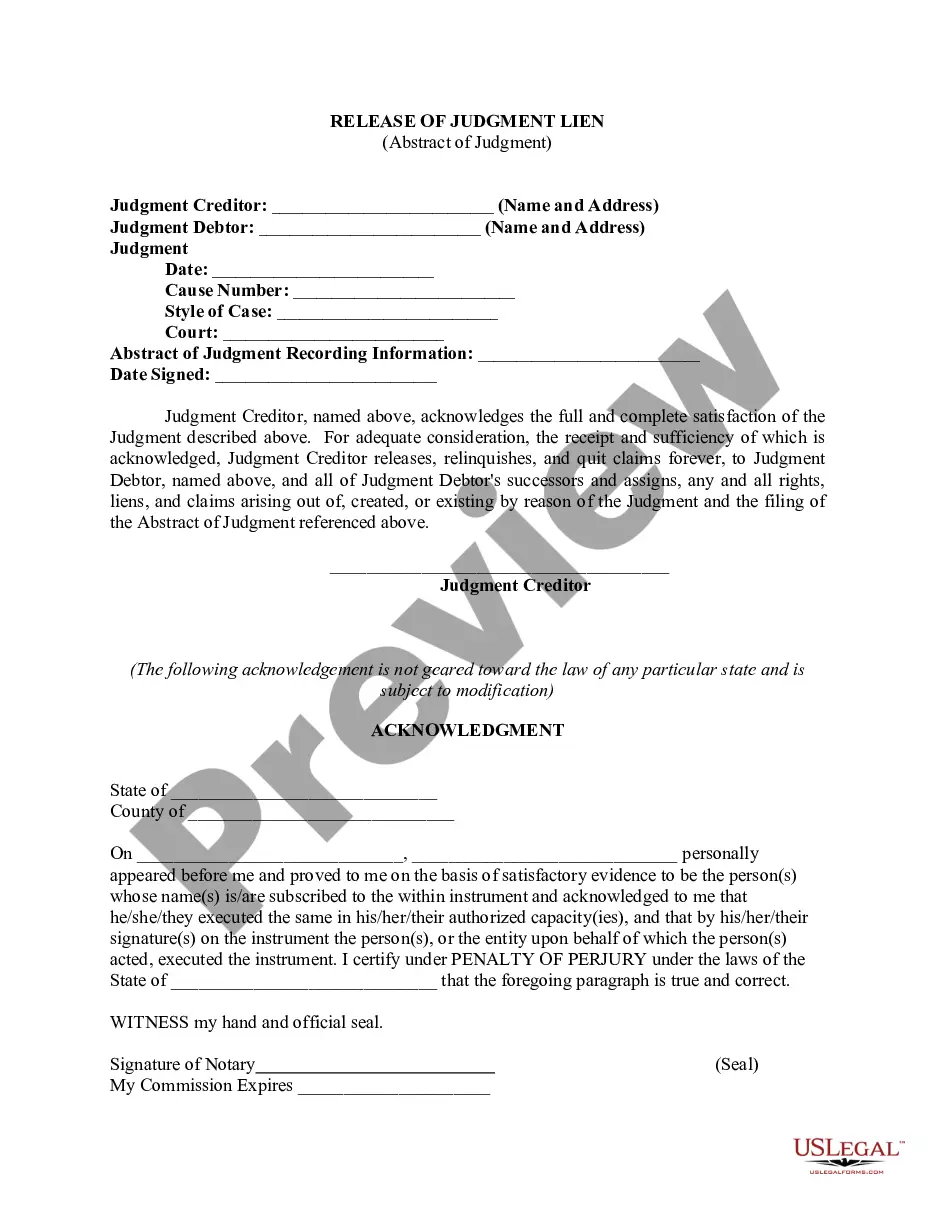
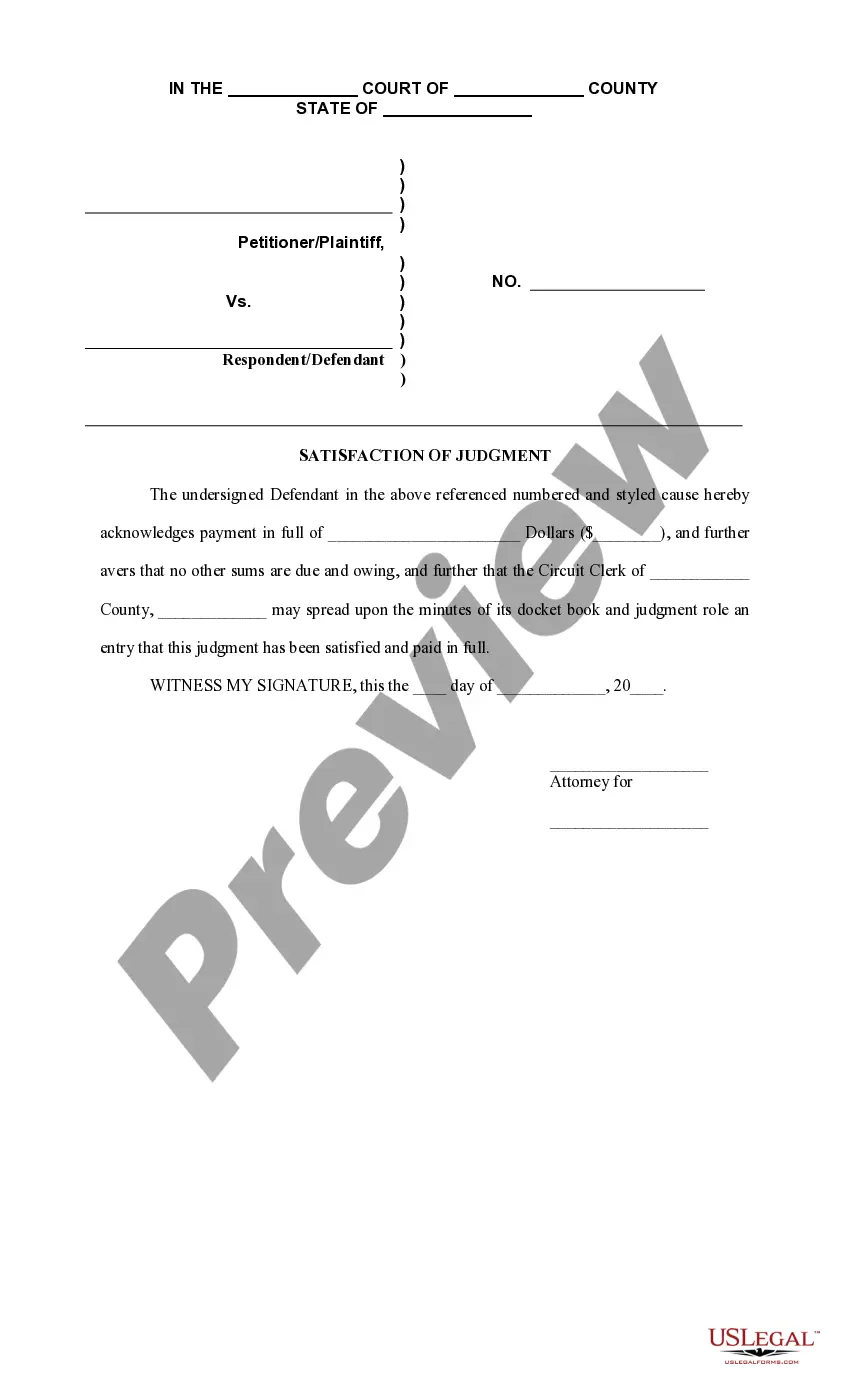
The Massachusetts Satisfaction of Judgment is a legal document that confirms a judgment has been paid in full. It acknowledges that all fees, costs, and interest associated with the judgment have been settled. This form is crucial as it formally directs that the judgment be marked as satisfied in court records, preventing future claims related to this debt.
Main sections of this form
- Identification of the court and county where the judgment was issued.
- Names of the plaintiff(s) and defendant(s) involved in the case.
- The cause number associated with the judgment.
- The total amount of the judgment, including any related fees and interest.
- Signature of the plaintiff or their attorney acknowledging the payment.
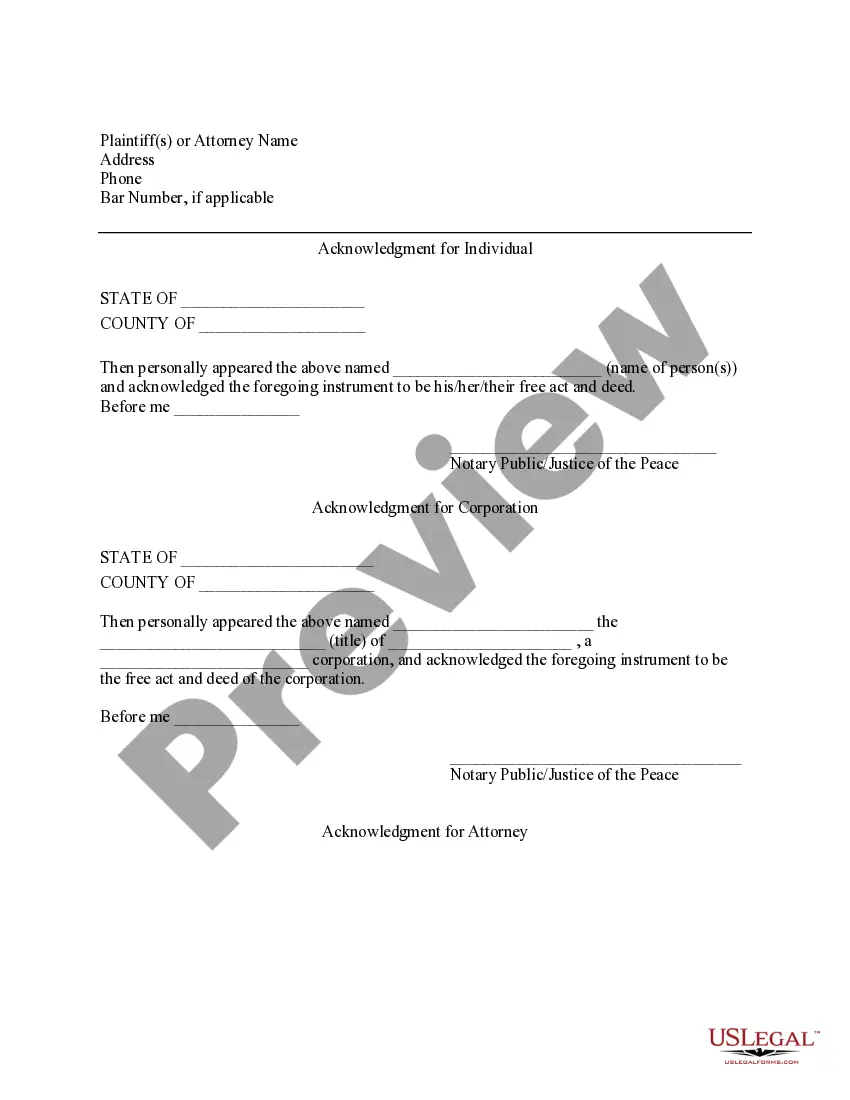
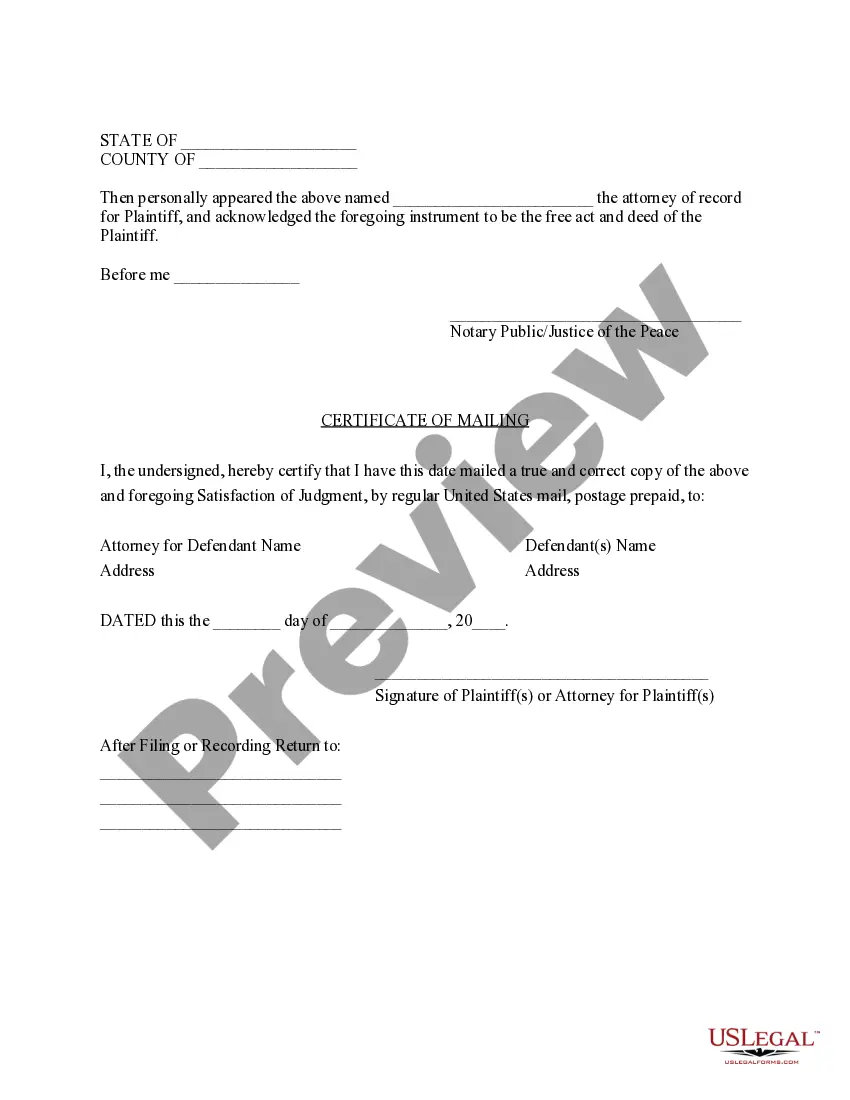
- Notarial sections for individual, corporate, or attorney acknowledgment.


When to use this document
Use the Massachusetts Satisfaction of Judgment when you have fully paid a judgment issued against you or when you, as the plaintiff, have received all due payments from the defendant. This form is necessary to officially record the fact that the debt is cleared, ensuring that there are no further legal implications related to this judgment.
Who this form is for
- Plaintiffs who have received full payment for a judgment against a defendant.
- Defendants who have paid their debts in accordance with a court judgment.
- Attorneys representing either party in the judgment process.
Steps to complete this form
- Identify the court and county where the original judgment was filed.
- Fill in the names of the plaintiff(s) and defendant(s) correctly.
- Enter the cause number associated with the judgment.
- Specify the total amount paid to satisfy the judgment, including any fees and interest.
- Obtain the necessary signatures from the plaintiff or their attorney.
- Have the form notarized if required, ensuring all acknowledgments are complete.
Is notarization required?
Yes, this form must be notarized to be legally valid. Notarization verifies the authenticity of the signatures, making it a crucial step in the completion process. US Legal Forms offers integrated online notarization with 24/7 availability through secure video calls, providing the same legal equivalence as in-person notarization without the need to travel.
Get your form ready online
Our built-in tools help you complete, sign, share, and store your documents in one place.
Make edits, fill in missing information, and update formatting in US Legal Forms—just like you would in MS Word.
Download a copy, print it, send it by email, or mail it via USPS—whatever works best for your next step.
Sign and collect signatures with our SignNow integration. Send to multiple recipients, set reminders, and more. Go Premium to unlock E-Sign.
If this form requires notarization, complete it online through a secure video call—no need to meet a notary in person or wait for an appointment.
We protect your documents and personal data by following strict security and privacy standards.

Make edits, fill in missing information, and update formatting in US Legal Forms—just like you would in MS Word.

Download a copy, print it, send it by email, or mail it via USPS—whatever works best for your next step.

Sign and collect signatures with our SignNow integration. Send to multiple recipients, set reminders, and more. Go Premium to unlock E-Sign.

If this form requires notarization, complete it online through a secure video call—no need to meet a notary in person or wait for an appointment.

We protect your documents and personal data by following strict security and privacy standards.
Avoid these common issues
- Failing to include the correct cause number.
- Not obtaining the signature from all required parties.
- Leaving out the total amount paid, including fees and interest.
- Not completing the notary section, if required.
Benefits of completing this form online
- Convenient access to the form from anywhere at any time.
- Editability allows you to fill in the form easily before downloading.
- Reliability in ensuring that the form is developed by licensed attorneys.
Summary of main points
- The Massachusetts Satisfaction of Judgment confirms that the debt associated with a court judgment has been fully paid.
- It is essential for both creditors and debtors to properly complete and file this document.
- Notarization is required for the form to be legally valid.
Looking for another form?
Form popularity
FAQ
When a judgment is satisfied, it indicates that the debtor has met the financial requirements set by the court ruling. This means the legal obligation has been fulfilled, allowing the debtor to move forward without the burden of the judgment. It is crucial for those involved to understand the implications of Massachusetts Satisfaction of Judgment, ensuring peace of mind and legal closure.
In Massachusetts, a judgment generally lasts for 20 years, allowing the creditor ample time to enforce it. After this period, the judgment can become dormant unless renewed. It is essential to keep track of the time frame related to the Massachusetts Satisfaction of Judgment, as it affects the ability to collect on the debt.
To sue someone in Massachusetts, you have to file a complaint with the clerk of the court. A complaint is not a specific form. It is a document that contains a short statement of the facts showing your claim and why you are entitled to relief and a demand for judgment granting that relief.
(For details, see chapter 246 of the General Laws of Massachusetts.) To levy a judgment debtor's wages, you have to mail the debtor notice of the wage levy request by registered mail, to give them at least ten days notice of the planned wage levy. The first $125 per week of wages are usually exempt.
The statute of limitations on judgments in Massachusetts are 20 years and can be renewed by the court for another 5 years if the judgment is still not satisfied.
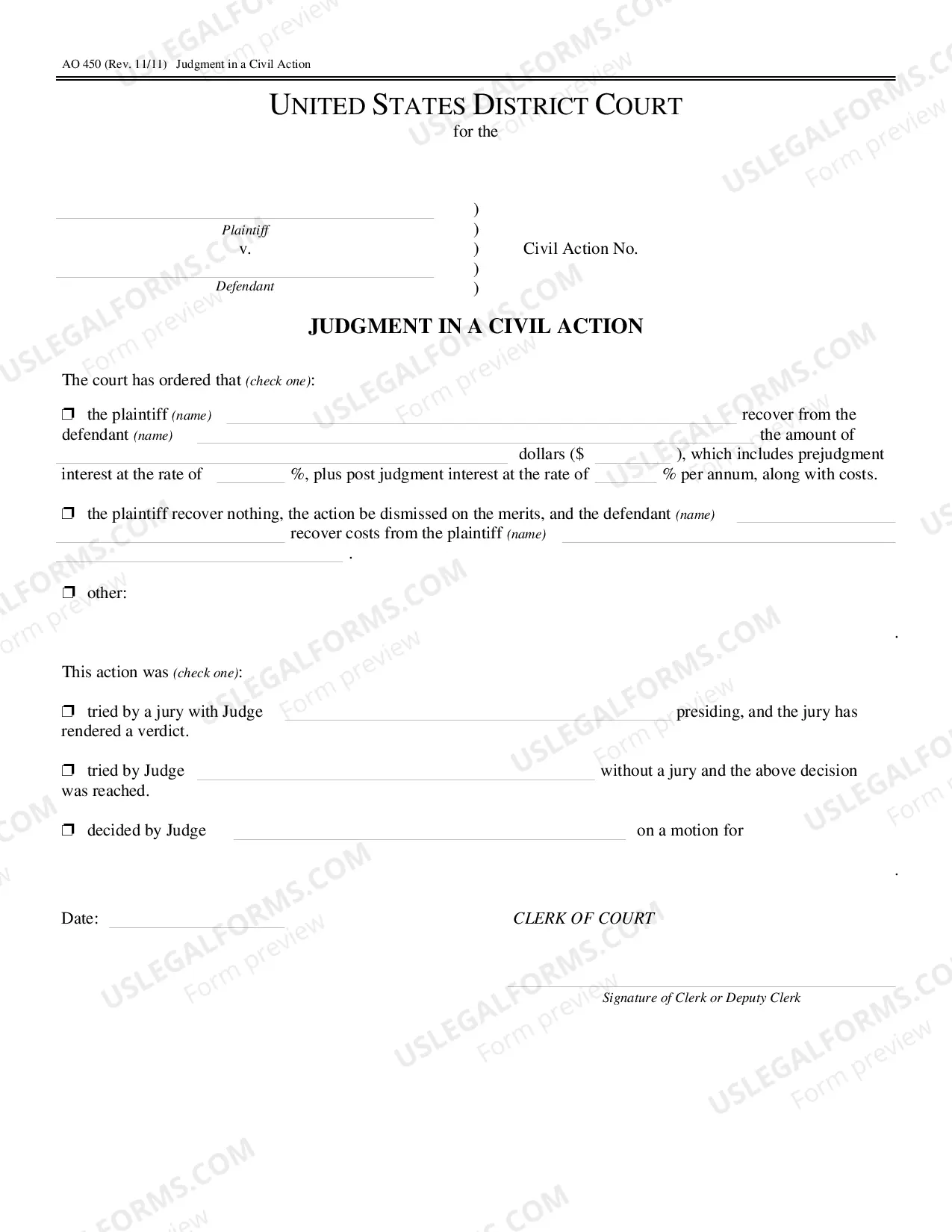
What the Agreement for Judgment (AFJ) does? The agreement acts as full and final judgment on the underlying claim filed with the court, without going in front of a clerk magistrate or judge (unless this is small claims court, then a clerk will approve the AFJ once they review the income section on the AFJ form).