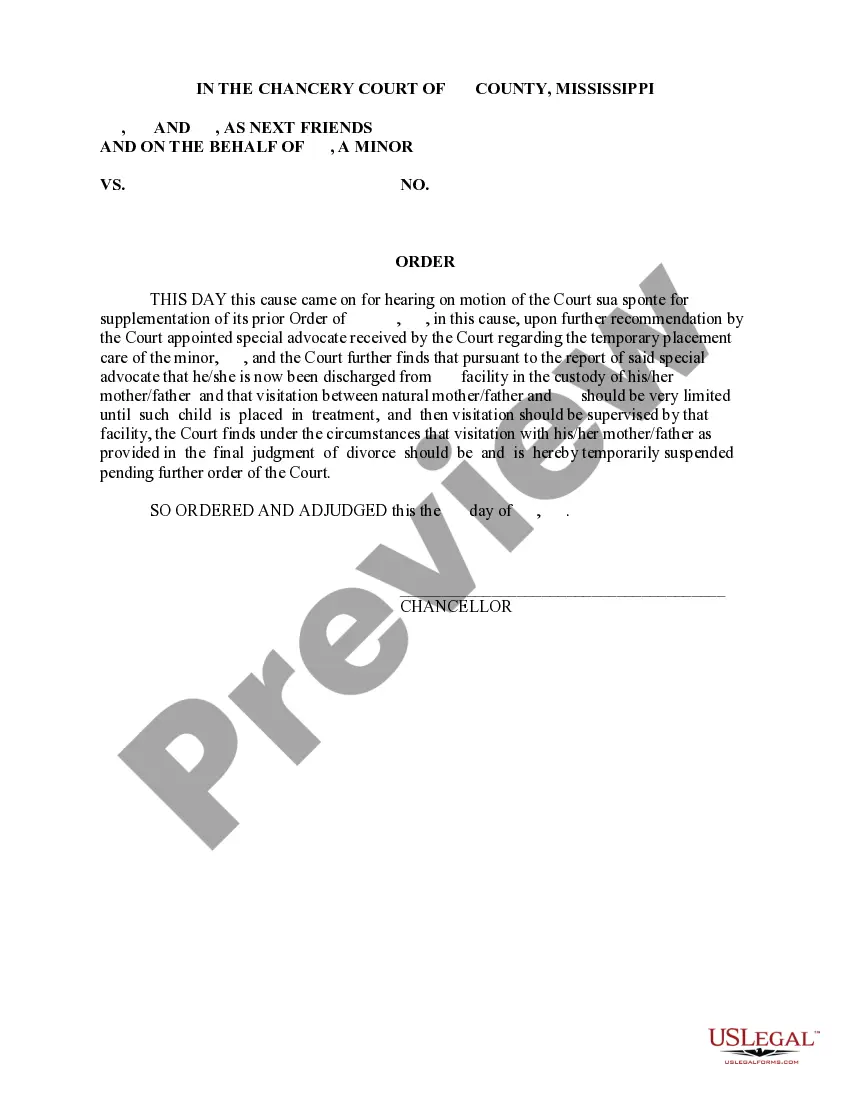
Louisiana Affidavit concerning refusal of guilty plea
What is this form?
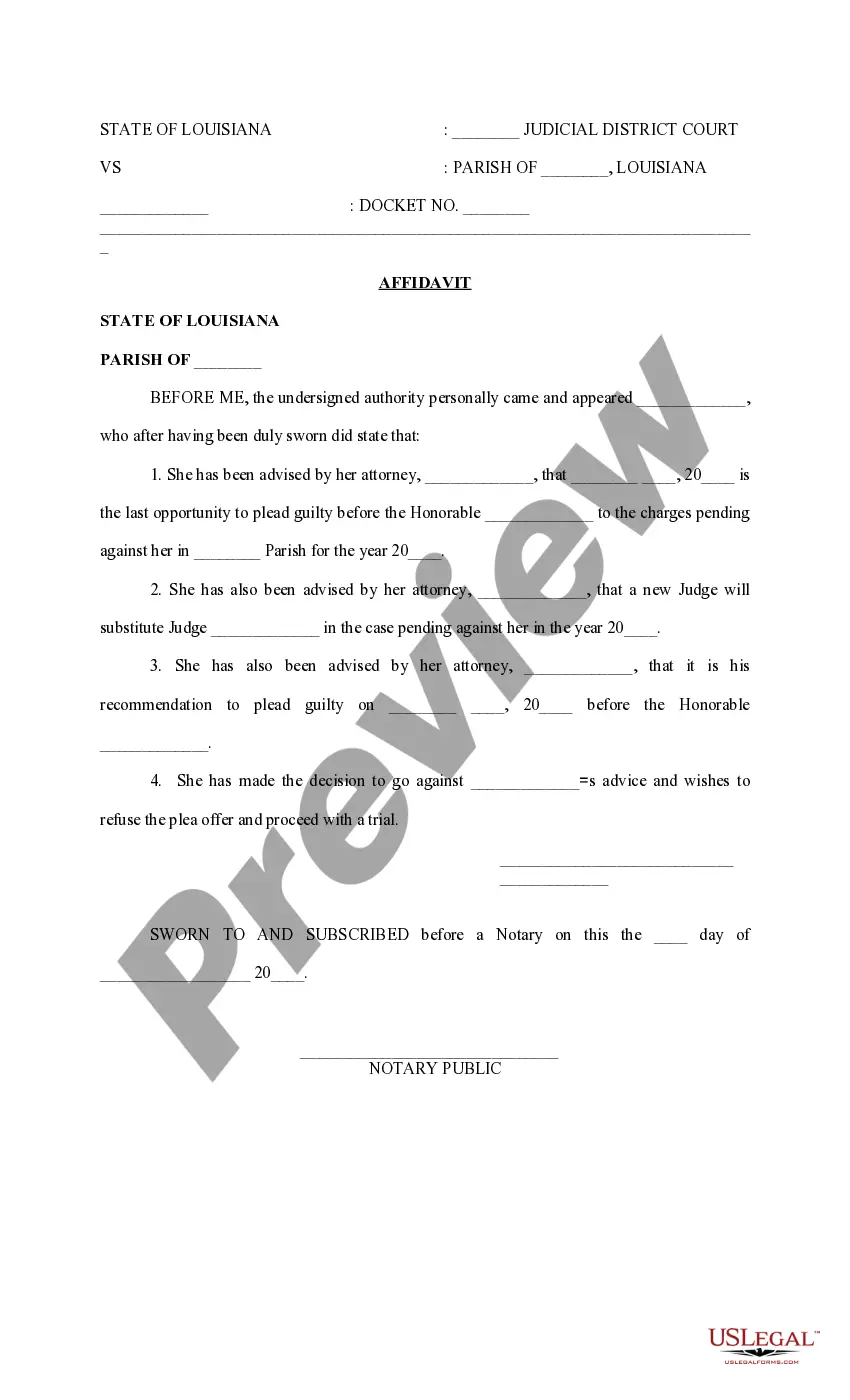
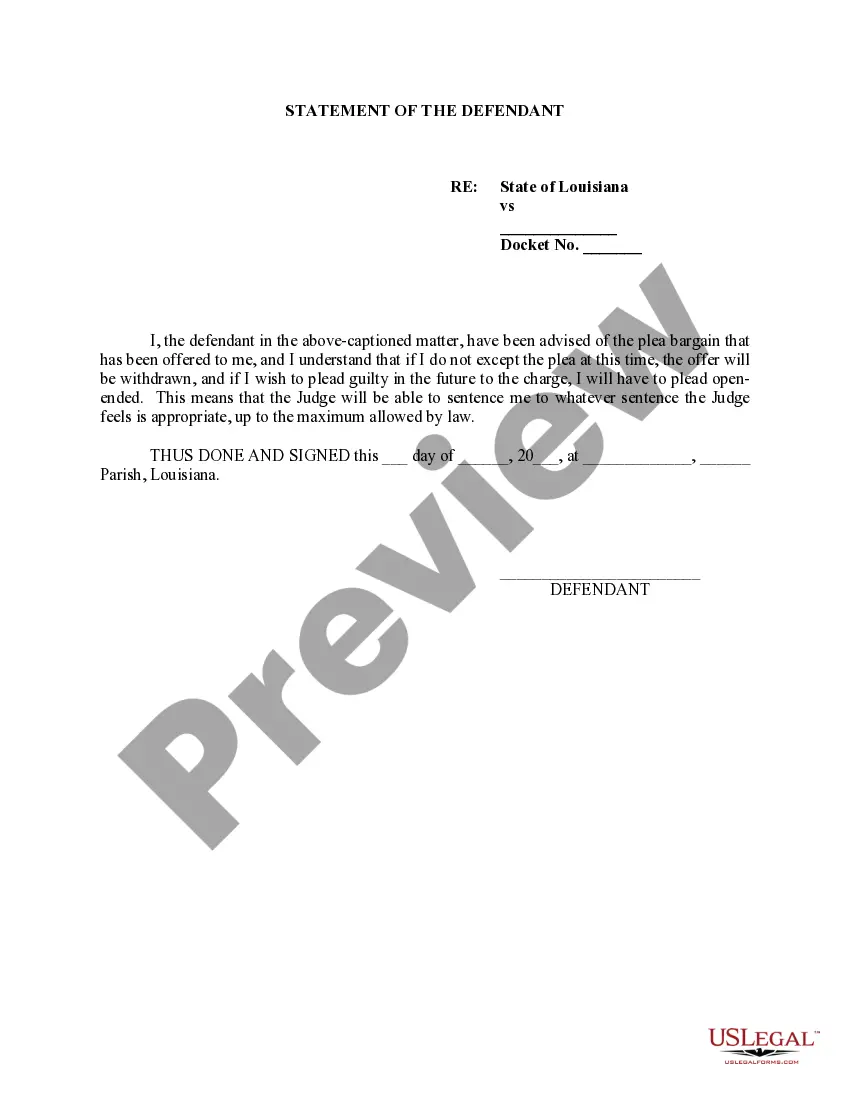
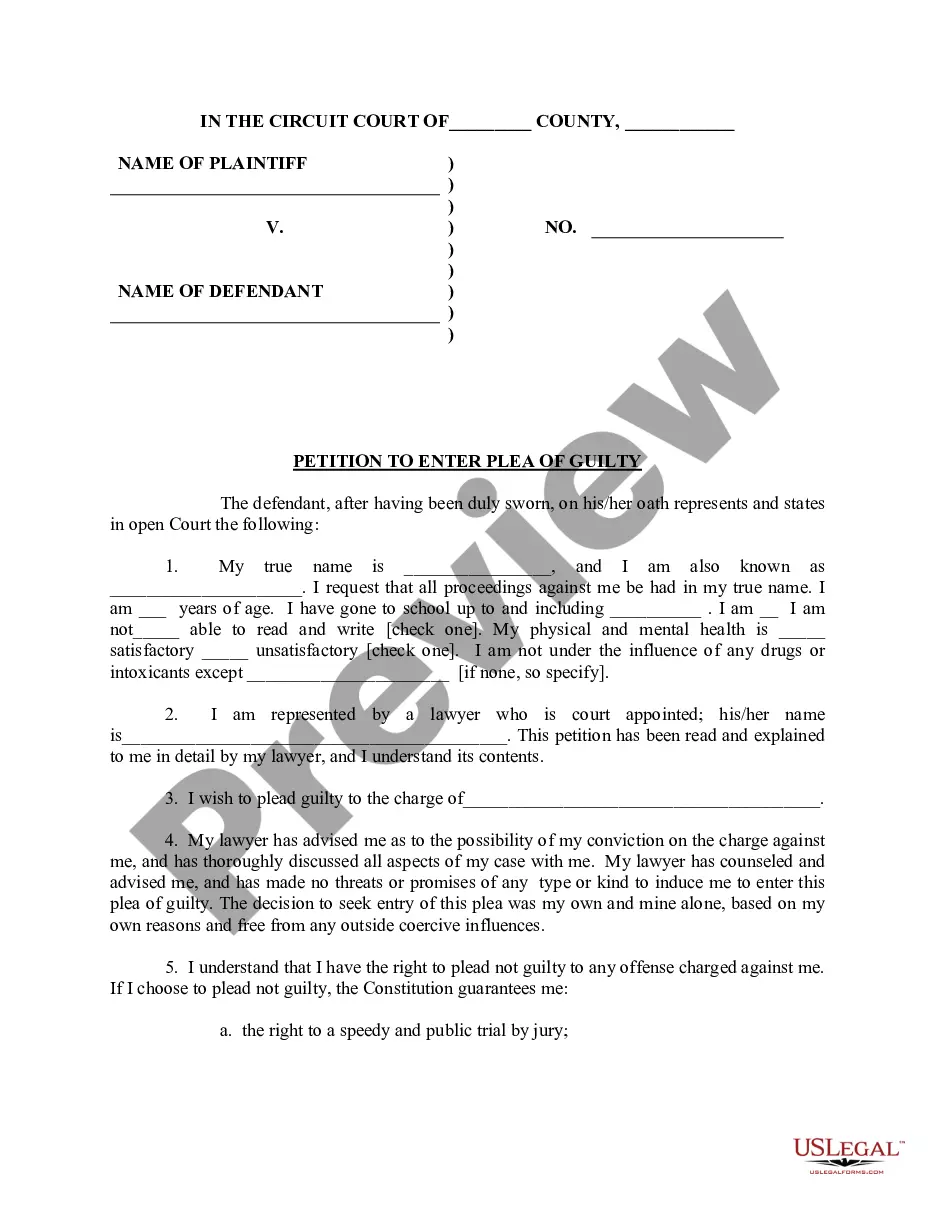
The Affidavit concerning refusal of guilty plea is a legal document in which a defendant formally declares their decision to decline a plea offer and proceed to trial, despite their attorney's recommendation to accept the plea. This affidavit serves to document the defendant's choice and acknowledges the potential consequences of this decision, distinguishing it from other plea-related forms.
Key components of this form
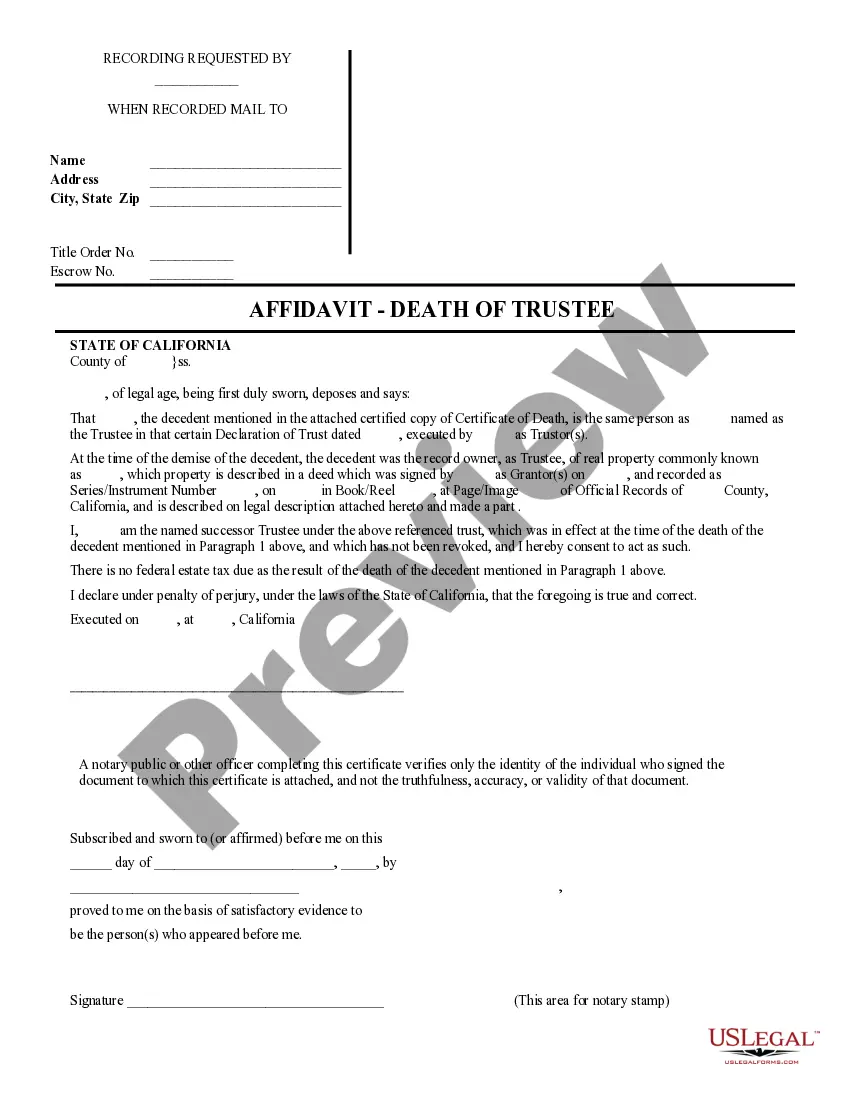
- Identification of the defendant and their attorney.
- A record of the legal advice provided regarding the plea offer.
- Statement of the defendant's decision to refuse the plea and proceed to trial.
- Signature and notarization section confirming the affidavit's authenticity.
Common use cases
This affidavit is necessary when a defendant chooses not to accept a guilty plea recommended by their attorney, intending to go to trial instead. It is crucial to use this form in situations where the defendant wishes to show that they have considered legal counsel and still decided to contest the charges against them.
Who should use this form
- Defendants facing criminal charges who are considering a plea deal.
- Individuals who have received advice from their attorney but wish to contest their charges.
- Those needing to formally document their decision against a plea bargain.
How to complete this form
- Identify the parties involved: the defendant and their attorney.
- Document the plea offer details and advice received from the attorney.
- Clearly state the decision to refuse the plea and proceed to trial.
- Sign the affidavit in the presence of a notary public.
Does this form need to be notarized?
Yes, this form must be notarized to be legally valid. US Legal Forms offers integrated online notarization, available twenty-four-seven via secure video call, ensuring convenience and legal equivalence without the need for travel.
Get your form ready online
Our built-in tools help you complete, sign, share, and store your documents in one place.
Make edits, fill in missing information, and update formatting in US Legal Forms—just like you would in MS Word.
Download a copy, print it, send it by email, or mail it via USPS—whatever works best for your next step.
Sign and collect signatures with our SignNow integration. Send to multiple recipients, set reminders, and more. Go Premium to unlock E-Sign.
If this form requires notarization, complete it online through a secure video call—no need to meet a notary in person or wait for an appointment.
We protect your documents and personal data by following strict security and privacy standards.

Make edits, fill in missing information, and update formatting in US Legal Forms—just like you would in MS Word.

Download a copy, print it, send it by email, or mail it via USPS—whatever works best for your next step.

Sign and collect signatures with our SignNow integration. Send to multiple recipients, set reminders, and more. Go Premium to unlock E-Sign.

If this form requires notarization, complete it online through a secure video call—no need to meet a notary in person or wait for an appointment.

We protect your documents and personal data by following strict security and privacy standards.
Avoid these common issues
- Failing to fully understand the implications of rejecting a plea offer.
- Not properly notarizing the affidavit.
- Leaving out essential information about the charges or attorney's advice.
Benefits of using this form online
- Convenient access to legally drafted templates.
- Allows for easy customization and completion at your own pace.
- Provides peace of mind knowing the form meets legal standards.
Quick recap
- The affidavit documents a defendant's decision to refuse a plea deal and proceed to trial.
- Accurate completion and notarization of the affidavit are critical for legal validity.
- This form must reflect the specific jurisdictional rules of Louisiana.
- Using this form helps protect the defendantâs legal rights and autonomy in the criminal justice process.
Looking for another form?
Form popularity
FAQ
Plea bargaining does require defendants to waive three rights protected by the Fifth and Sixth Amendments: the right to a jury trial, the right against self-incrimination, and the right to confront witnesses.
The defendant agrees to plead guilty or no contest (nolo contendere in Latin) to a crime in exchange for the prosecution dropping some of the charges, reducing the crime charged to a lesser crime, and/or agreeing to a certain sentence. If the defendant pleads guilty, the law requires that he do so honestly.
Know and understand the rights that they are waiving (giving up) by pleading guilty, including (1) the right to counsel if unrepresented, (2) the right to a jury trial, (3) the right not to incriminate themselves, and (4) the right to confront and cross-examine their accusers.
The defendant agrees to plead guilty or no contest (nolo contendere in Latin) to a crime in exchange for the prosecution dropping some of the charges, reducing the crime charged to a lesser crime, and/or agreeing to a certain sentence. If the defendant pleads guilty, the law requires that he do so honestly.
A defendant can typically withdraw a guilty plea that a judge hasn't yet accepted. Also, defendants who have pleaded but not yet been sentenced can sometimes get out of their deals, particularly when the judge rejects the negotiated agreement pursuant to which the defendant pleaded.
1. The Legal Definition of a Tahl Waiver Under California Law. Sometimes in the California criminal court process, a defendant will decide to plead guilty or no contest to a criminal charge or charges. If he does, he must waive certain constitutional rights. A waiver of these rights is known as a Tahl waiver.
Accepting a Guilty or No Contest Plea If the court finds that the defendant suffers from a mental disease or defect that leaves him unable to fully understand the consequences of the legal process, the court can deny the plea. The court must ensure the defendant has also had the opportunity to speak with an attorney.
If the defendant pleads guilty it means they admit to committing the offence they were charged with. The court will then decide what punishment (sentence) the offender will be given.