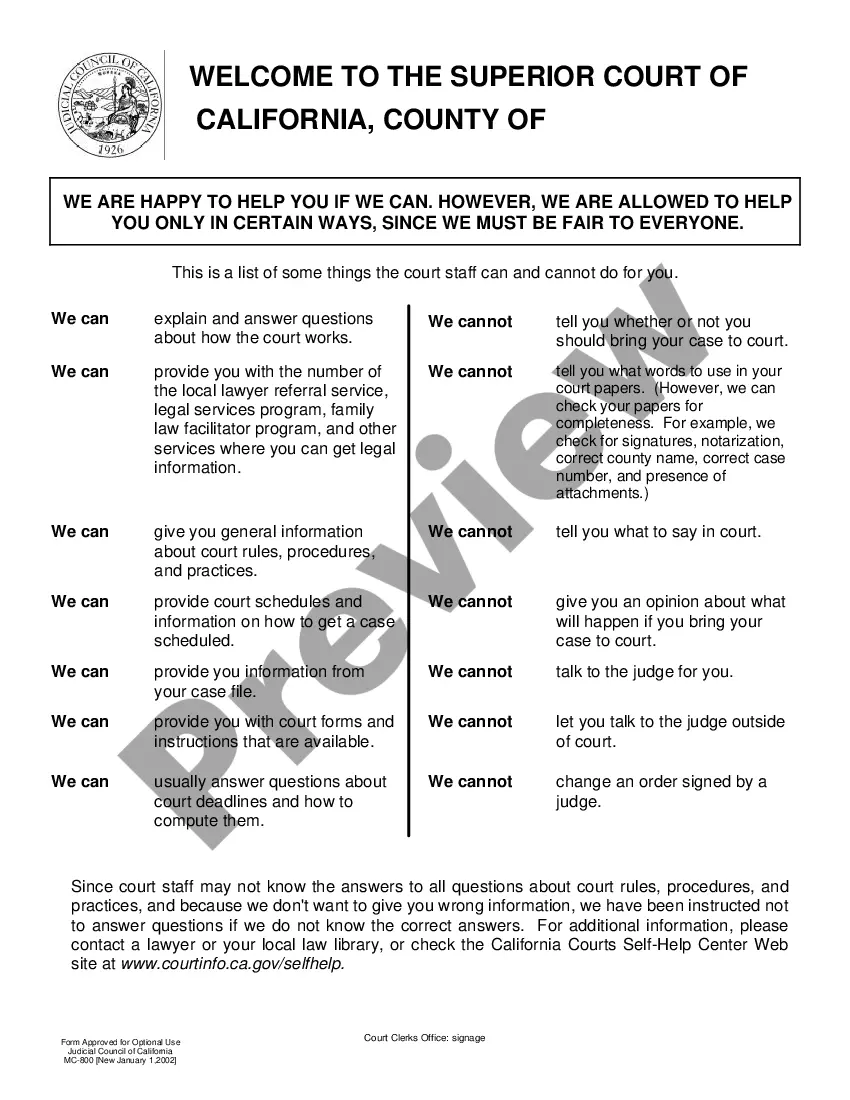
Mississippi Complaint for Writ of Habeas Corpus
About this form
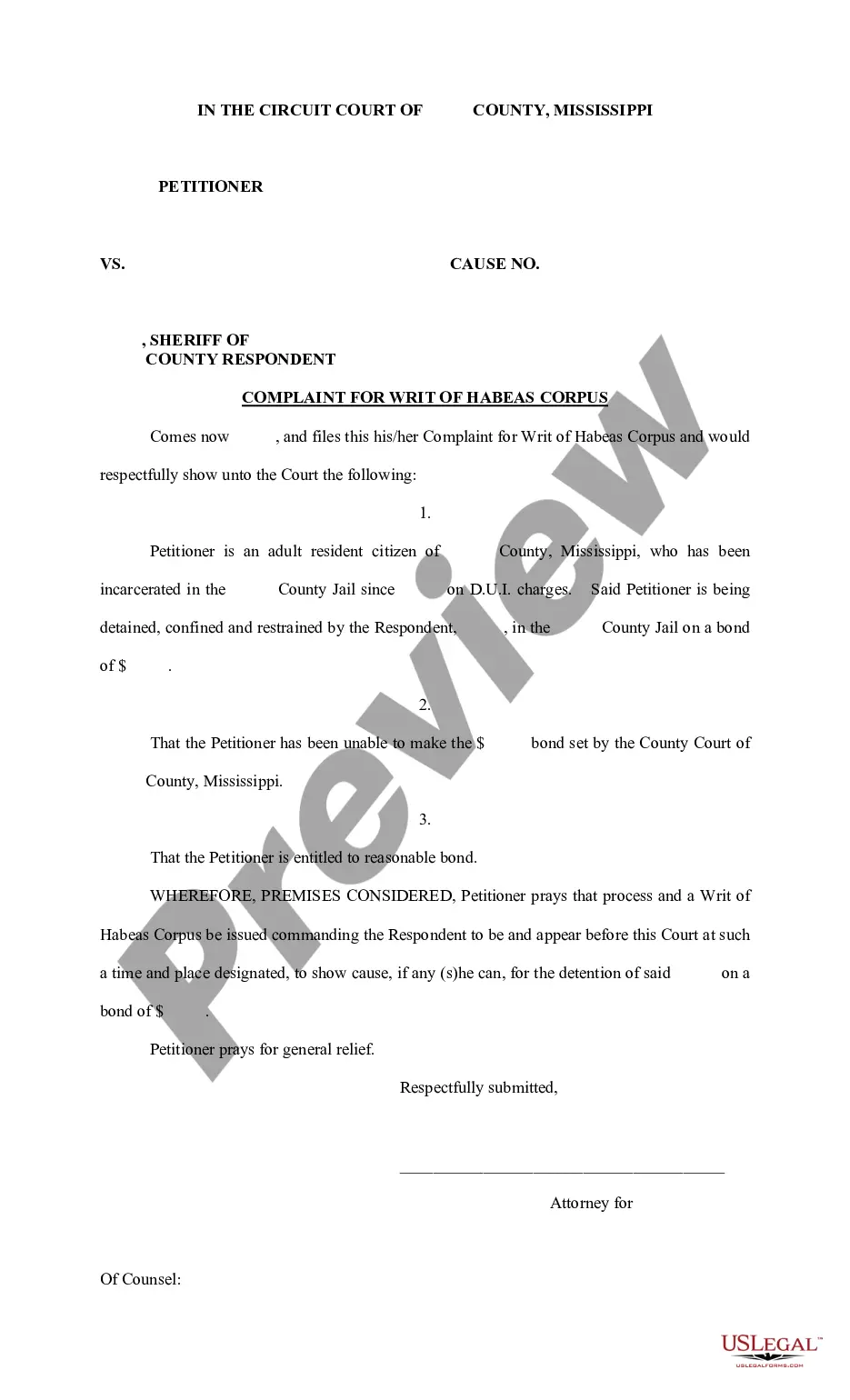
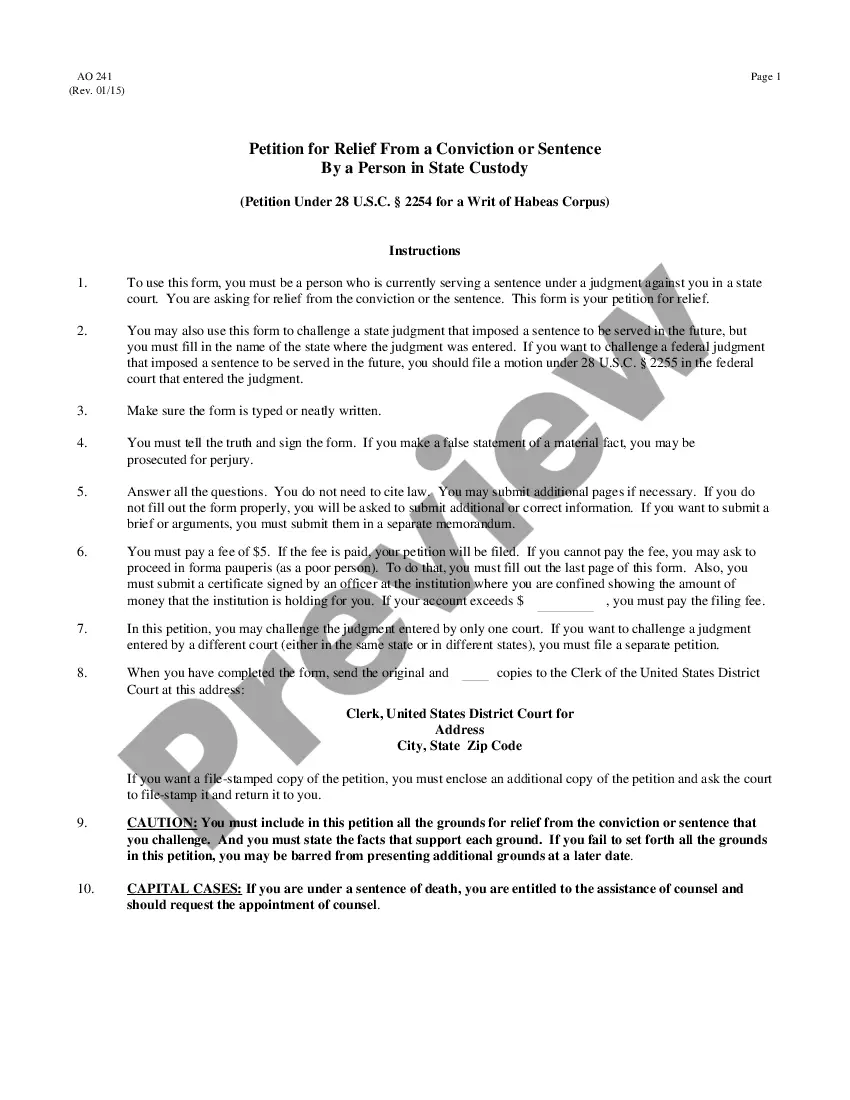
The Complaint for Writ of Habeas Corpus is a legal document used to initiate a court action challenging the legality of a person's detention or imprisonment. This complaint outlines the reasons for the petition and includes the relief sought by the petitioner. Unlike general complaints that may address a wide range of legal issues, this specific form focuses solely on issues related to personal liberty and unlawful detention.
Key parts of this document
- Title of the case, including the names of the parties involved.
- Statement of jurisdiction, explaining why the court has authority over the case.
- Factual allegations detailing the circumstances of the detention.
- Legal grounds for the writ, including applicable laws and constitutional rights.
- Specific relief sought, outlining the exact action the petitioner wishes the court to take.



Situations where this form applies
This form is used when an individual believes they are being unlawfully detained or imprisoned. It is applicable in scenarios such as challenging wrongful convictions, detention without due process, or being held on invalid charges. If you or a loved one are facing such circumstances, submitting a Complaint for Writ of Habeas Corpus may be necessary to seek immediate judicial review of the detention.
Who needs this form
This form is intended for:
- Individuals who are currently incarcerated or detained.
- Family members or advocates acting on behalf of someone who is unable to file the complaint themselves.
- Legal representatives seeking to contest a client's unlawful detention.
Steps to complete this form
- Identify the parties, including the person filing the complaint and the authorities holding the individual.
- Provide a clear statement of jurisdiction to establish the court's authority over the matter.
- Detail the factual circumstances surrounding the detention in a clear and concise manner.
- Articulate the legal basis for the complaint, citing relevant laws and rights violations.
- Specify the relief you are seeking from the court, such as immediate release or other forms of judicial action.
Notarization guidance
This form does not typically require notarization unless specified by local law. However, it is advisable to check specific requirements in your jurisdiction to ensure that the filing is valid and properly executed.
Get your form ready online
Our built-in tools help you complete, sign, share, and store your documents in one place.
Make edits, fill in missing information, and update formatting in US Legal Forms—just like you would in MS Word.
Download a copy, print it, send it by email, or mail it via USPS—whatever works best for your next step.
Sign and collect signatures with our SignNow integration. Send to multiple recipients, set reminders, and more. Go Premium to unlock E-Sign.
If this form requires notarization, complete it online through a secure video call—no need to meet a notary in person or wait for an appointment.
We protect your documents and personal data by following strict security and privacy standards.

Make edits, fill in missing information, and update formatting in US Legal Forms—just like you would in MS Word.

Download a copy, print it, send it by email, or mail it via USPS—whatever works best for your next step.

Sign and collect signatures with our SignNow integration. Send to multiple recipients, set reminders, and more. Go Premium to unlock E-Sign.

If this form requires notarization, complete it online through a secure video call—no need to meet a notary in person or wait for an appointment.

We protect your documents and personal data by following strict security and privacy standards.
Typical mistakes to avoid
- Failing to provide sufficient details about the detention circumstances.
- Not clearly stating the legal grounds or citation of relevant laws.
- Omitting required signatures or dates, which may lead to dismissal.
Benefits of using this form online
- Convenience of downloading the form anytime from anywhere.
- Editability allows you to customize the complaint according to your circumstances.
- Access to forms prepared by licensed attorneys enhances reliability and accuracy.
Summary of main points
- The Complaint for Writ of Habeas Corpus is essential for challenging unlawful detentions.
- It provides a structured format for presenting your case to the court.
- Follow jurisdiction-specific guidelines when using this form.
Looking for another form?
Form popularity
FAQ
Known as "the Great Writ," habeas corpus gives individuals the power to get help from courts to keep government and any other institutions that may imprison people in check.The writ of habeas corpus gives jailed suspects the right to ask a judge to set them free or order an end to improper jail conditions.
The "Great Writ" of habeas corpus is a fundamental right in the Constitution that protects against unlawful and indefinite imprisonment. Translated from Latin it means "show me the body." Habeas corpus has historically been an important instrument to safeguard individual freedom against arbitrary executive power.
An example of habeas corpus is if you file a petition with the court because you want to be brought before a judge where reasons for your arrest and detention must be shown.
A writ of habeas corpus is used to bring a prisoner or other detainee (e.g. institutionalized mental patient) before the court to determine if the person's imprisonment or detention is lawful. A habeas petition proceeds as a civil action against the State agent (usually a warden) who holds the defendant in custody.
A person convicted of a crime must file a habeas corpus petition with the court, typically the California Superior Court. Three requirements must be met before a person can successfully file a writ of habeas corpus petition.