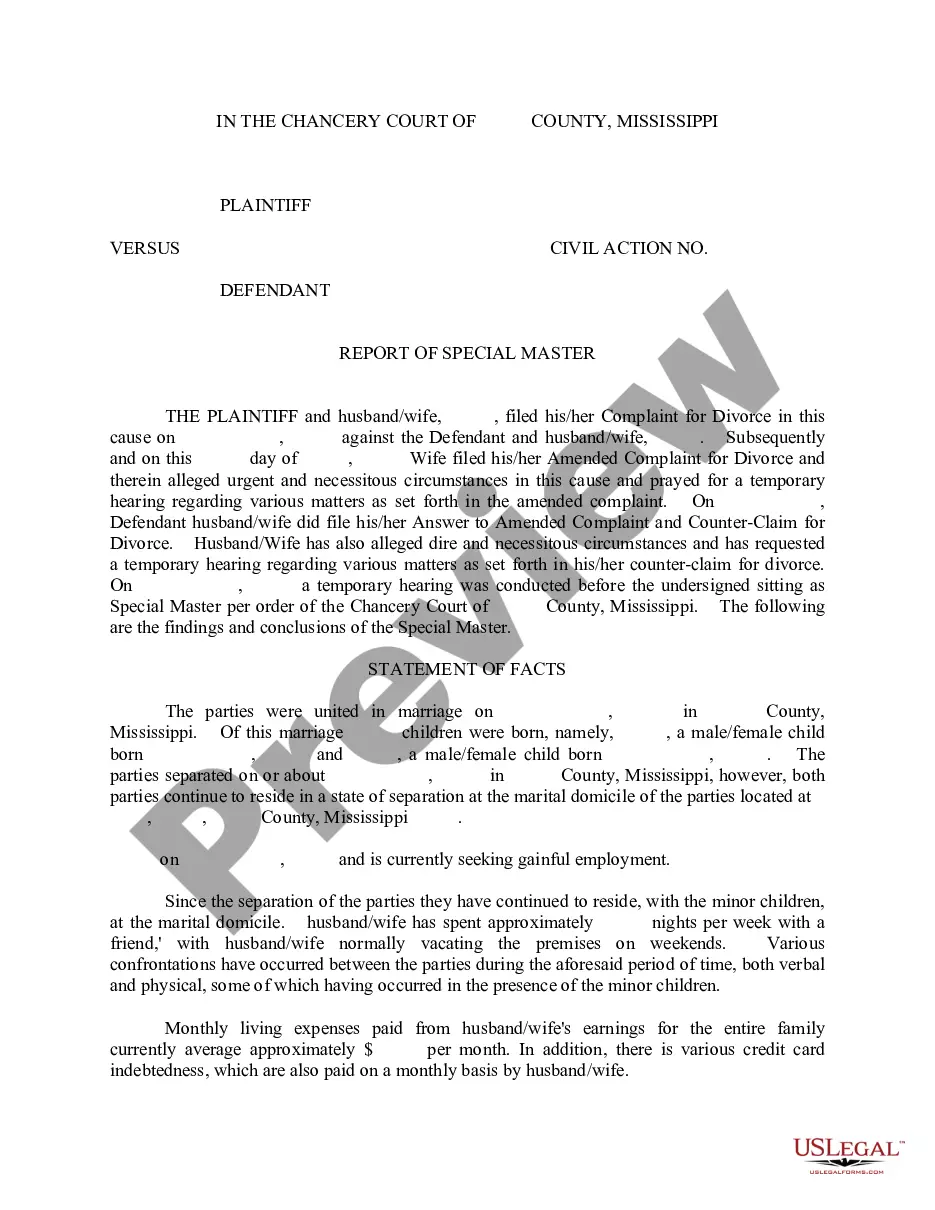
Louisiana Domestic Relations Fact Sheet
Understanding this form
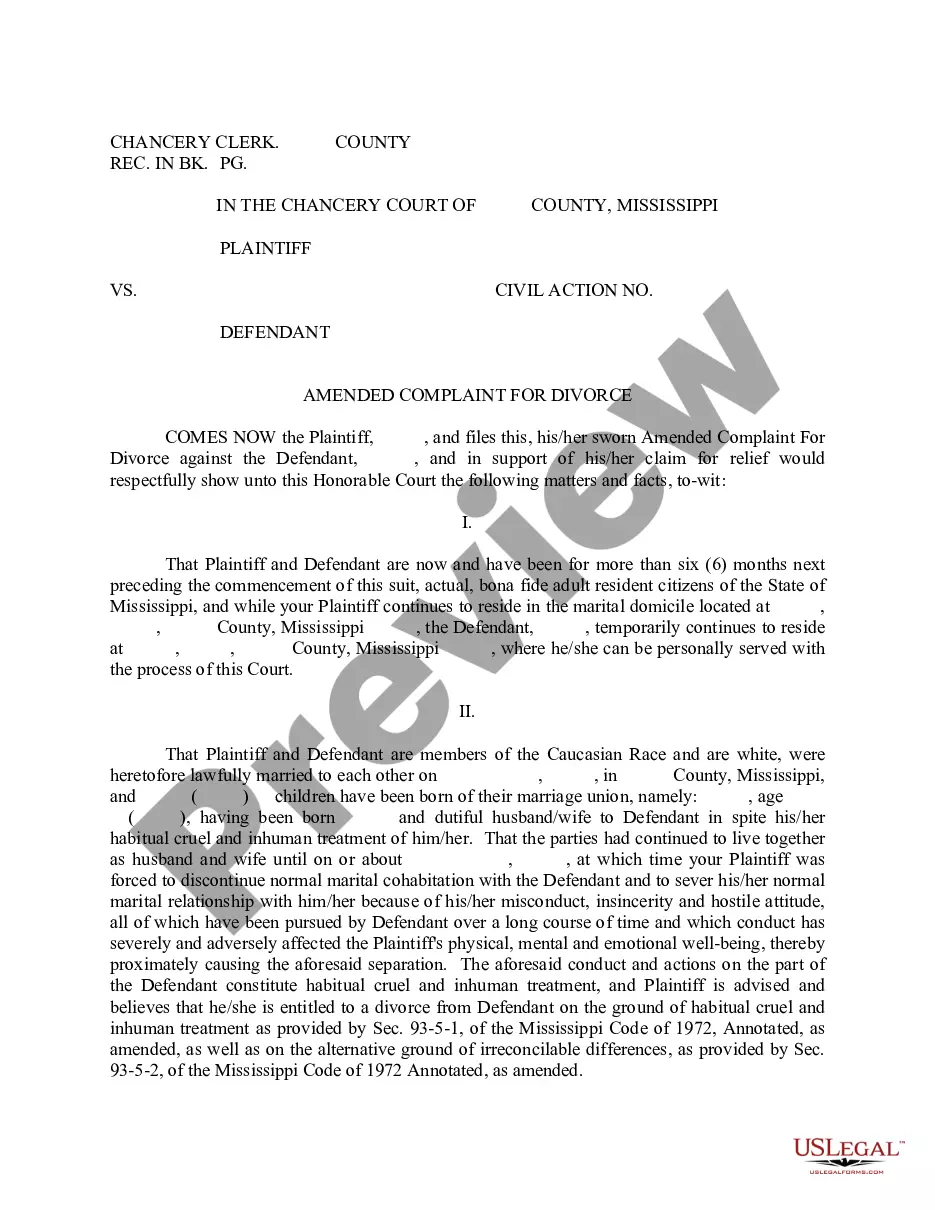
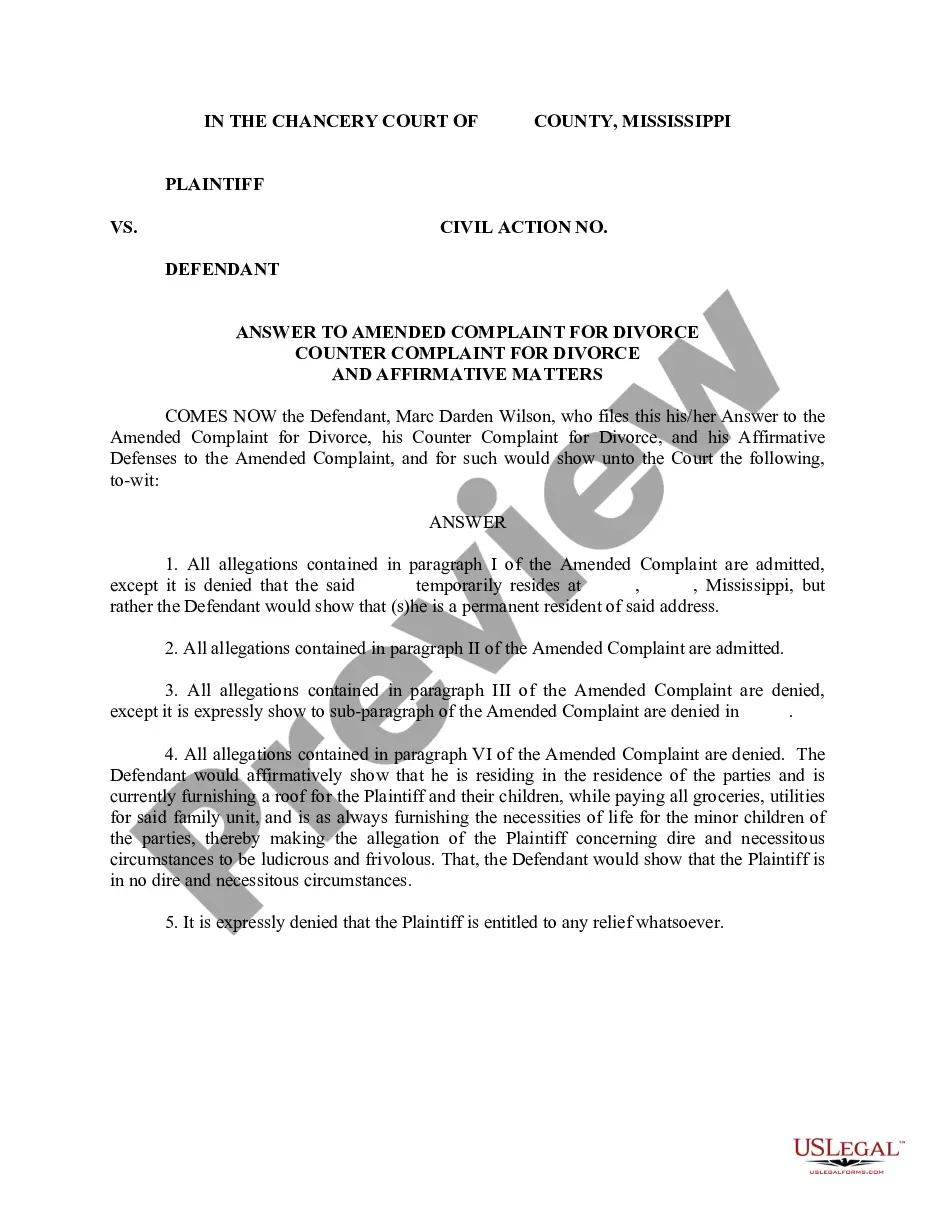
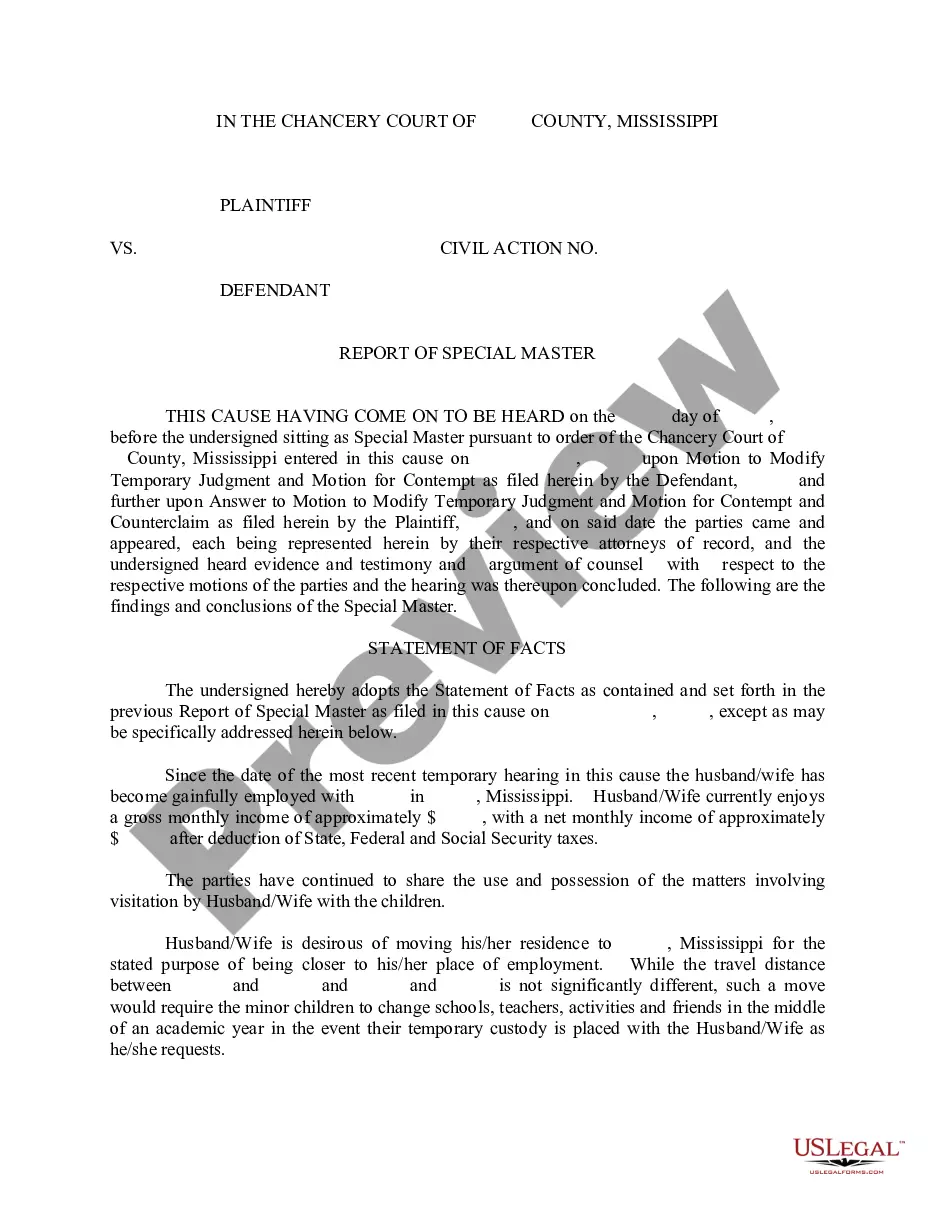
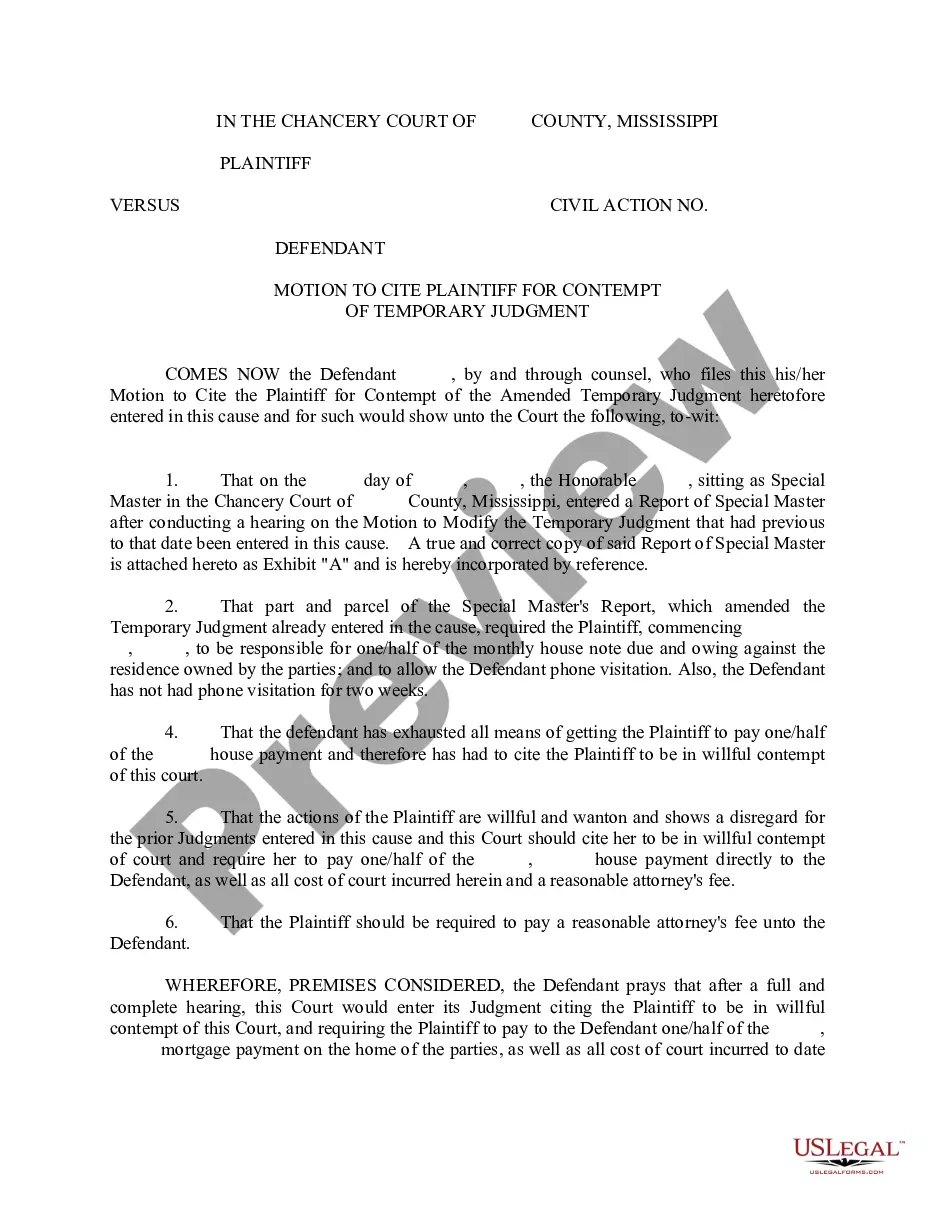
The Domestic Relations Fact Sheet is a legal document used in matters concerning spousal support and child support in family law cases. This form collects essential information about the parties involved, including their employment status, financial circumstances, and information about any children. It serves as a vital tool in court proceedings, aiding judges in making informed decisions regarding support and custody issues.
Key components of this form
- Section 1 captures general information about the case, including names, case number, and attorney details.
- Section 2 focuses on current employment status and ability to work, particularly for those seeking alimony or child support.
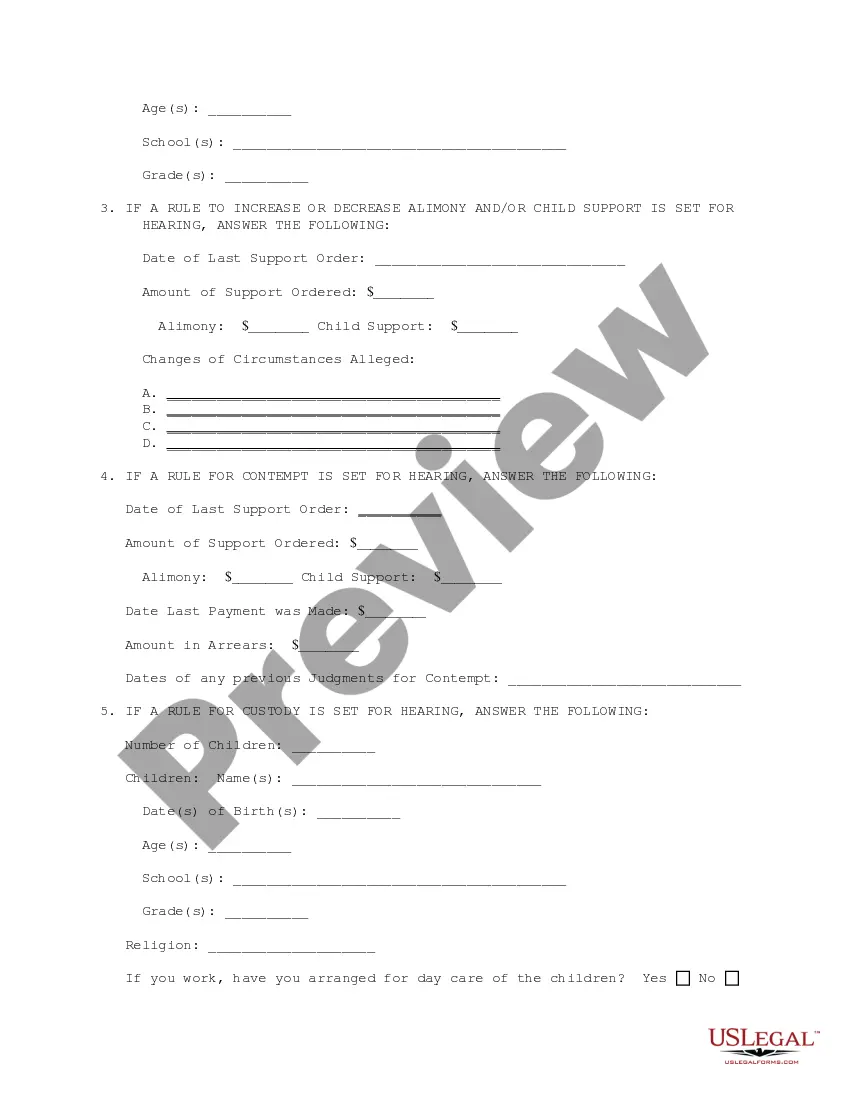
- Section 3 is relevant for modifications to existing support orders, detailing changes in circumstances.
- Section 4 addresses issues of contempt, recording past support orders and any arrears.
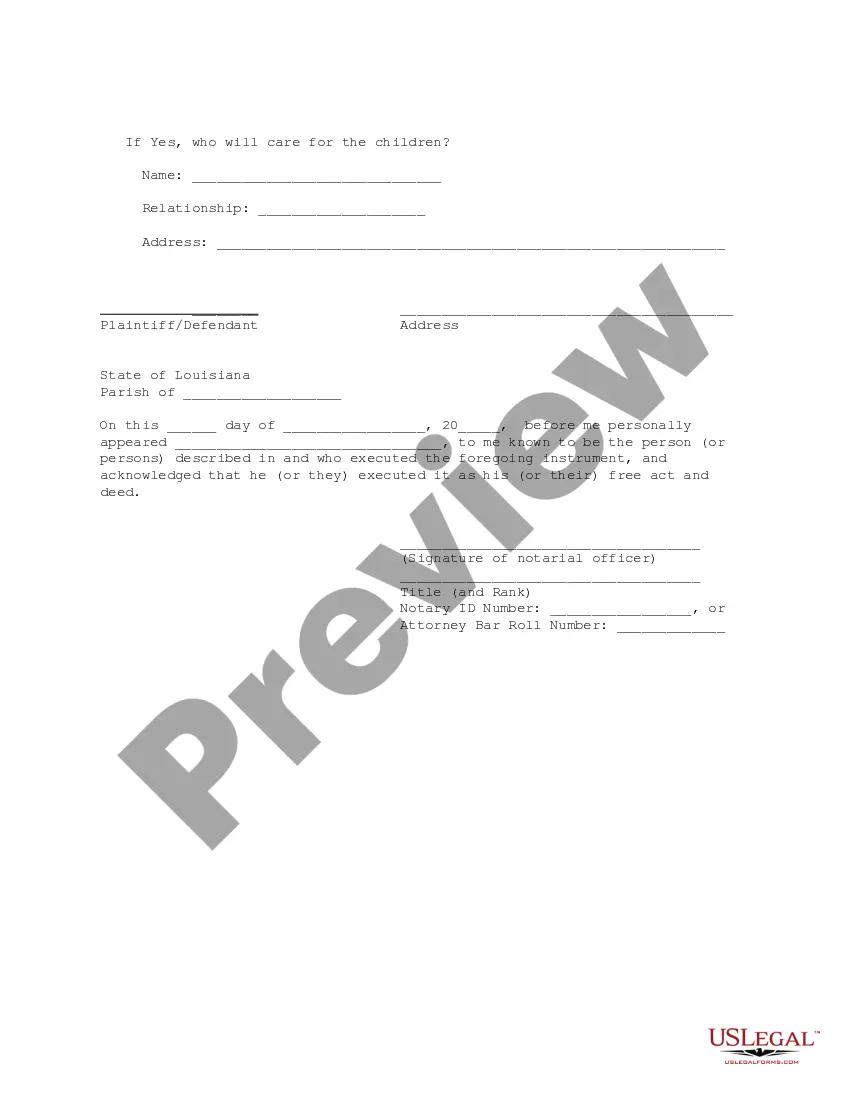
- Section 5 includes custody information, such as children's names, ages, and care arrangements.

When to use this document
This form should be used when seeking spousal support or child support, or when modifications to existing support orders are necessary. It is also applicable in situations involving custody arrangements or contempt of court cases relating to support payments. If you find yourself involved in any related legal proceedings, the Domestic Relations Fact Sheet will help ensure all pertinent information is provided to the court.
Who needs this form
- Individuals seeking spousal support or modifications to alimony.
- Parents requesting or modifying child support payments.
- Persons involved in custody disputes requiring a court hearing.
- Anyone facing contempt proceedings regarding failure to pay ordered support.
How to complete this form
- Identify the parties involved by entering the case name and numbers in Section 1.
- Provide employment details in Section 2, specifying your current job and income.
- Document previous support orders and any changes in circumstances in Section 3.
- Complete Section 4 if there are issues of contempt, detailing past support orders.
- In Section 5, include information about children and any custody arrangements.
Notarization requirements for this form
This form does not typically require notarization unless specified by local law. It is essential to check any specific requirements in your jurisdiction to ensure compliance.
Get your form ready online
Our built-in tools help you complete, sign, share, and store your documents in one place.
Make edits, fill in missing information, and update formatting in US Legal Forms—just like you would in MS Word.
Download a copy, print it, send it by email, or mail it via USPS—whatever works best for your next step.
Sign and collect signatures with our SignNow integration. Send to multiple recipients, set reminders, and more. Go Premium to unlock E-Sign.
If this form requires notarization, complete it online through a secure video call—no need to meet a notary in person or wait for an appointment.
We protect your documents and personal data by following strict security and privacy standards.

Make edits, fill in missing information, and update formatting in US Legal Forms—just like you would in MS Word.

Download a copy, print it, send it by email, or mail it via USPS—whatever works best for your next step.

Sign and collect signatures with our SignNow integration. Send to multiple recipients, set reminders, and more. Go Premium to unlock E-Sign.

If this form requires notarization, complete it online through a secure video call—no need to meet a notary in person or wait for an appointment.

We protect your documents and personal data by following strict security and privacy standards.
Typical mistakes to avoid
- Failing to provide complete and accurate information about employment.
- Omitting the necessary details about children, such as their names and birth dates.
- Not updating the form with recent changes in financial circumstances.
- Neglecting to review for clarity and completeness before submitting to the court.
Benefits of using this form online
- Convenient access to a legally vetted document that simplifies the process.
- Edit and customize the form easily to fit your specific situation.
- Reliable templates ensure compliance with legal standards in your jurisdiction.
Looking for another form?
Form popularity
FAQ
The court estimates that the cost of raising one child is $1,000 a month. The non-custodial parent's income is 66.6% of the parent's total combined income. Therefore, the non-custodial parent pays $666 per month in child support, or 66.6% of the total child support obligation.
The relationship between the child and each parent. The relationship between the child and any siblings residing in the parents' households. Each parent's ability to care for the child. Each parent's ability to provide shelter, clothing, and food for the child.
In cases where parents can't agree, a judge will decide visitation and custody based on the child's best interests.Both parents are bound by the terms of a custody order. If your child refuses to go to visits with the other parent, you could still be on the hook for failing to comply with a custody order.
In many cases, this is known as contempt of court and allows the parent to file a Motion to Show Cause for Contempt of Court. In some states, if a parent does not return the child after visitation and the custodial parent has demanded return of the child, they have 48 hours in which to do so.
Can a child choose not to visit a parent? The mere age of your child will not determine your family law matter. There have been cases before the Court where a 17 year old child's wishes were given limited weight because the basis for this child's decision was not balanced.
Some judges have stated that a 5-year-old child is too young to have an opinion on custody and won't consider such a young child's opinion at all. If the child is at least 12 years old, courts will usually give the child's preference some weight. Courts don't have to follow a child's custodial preference.
Yes, because the law requires a non-custodial parent (that is, a parent who does not live with the child) pay a minimum amount of child support. That minimum amount is $100.00 a month for any number of children.
The legal definition of an unfit parent is when the parent through their conduct fails to provide proper guidance, care, or support. Also, if there is abuse, neglect, or substance abuse issues, that parent will be deemed unfit.
The court estimates that the cost of raising one child is $1,000 a month. The non-custodial parent's income is 66.6% of the parent's total combined income. Therefore, the non-custodial parent pays $666 per month in child support, or 66.6% of the total child support obligation.