Mississippi Petition to Waive First and Final Accounting, Discharge Executrix and Close Estate
About this form
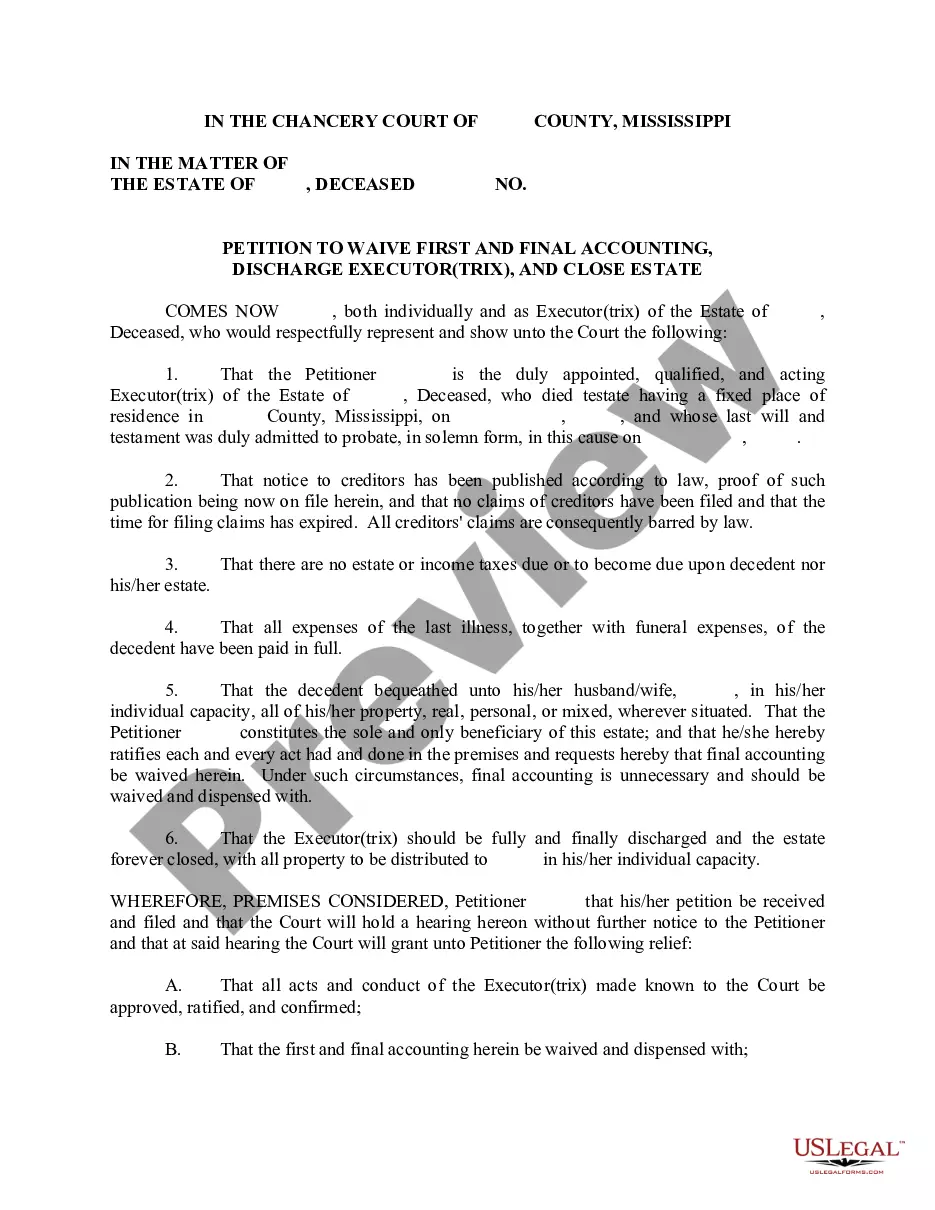
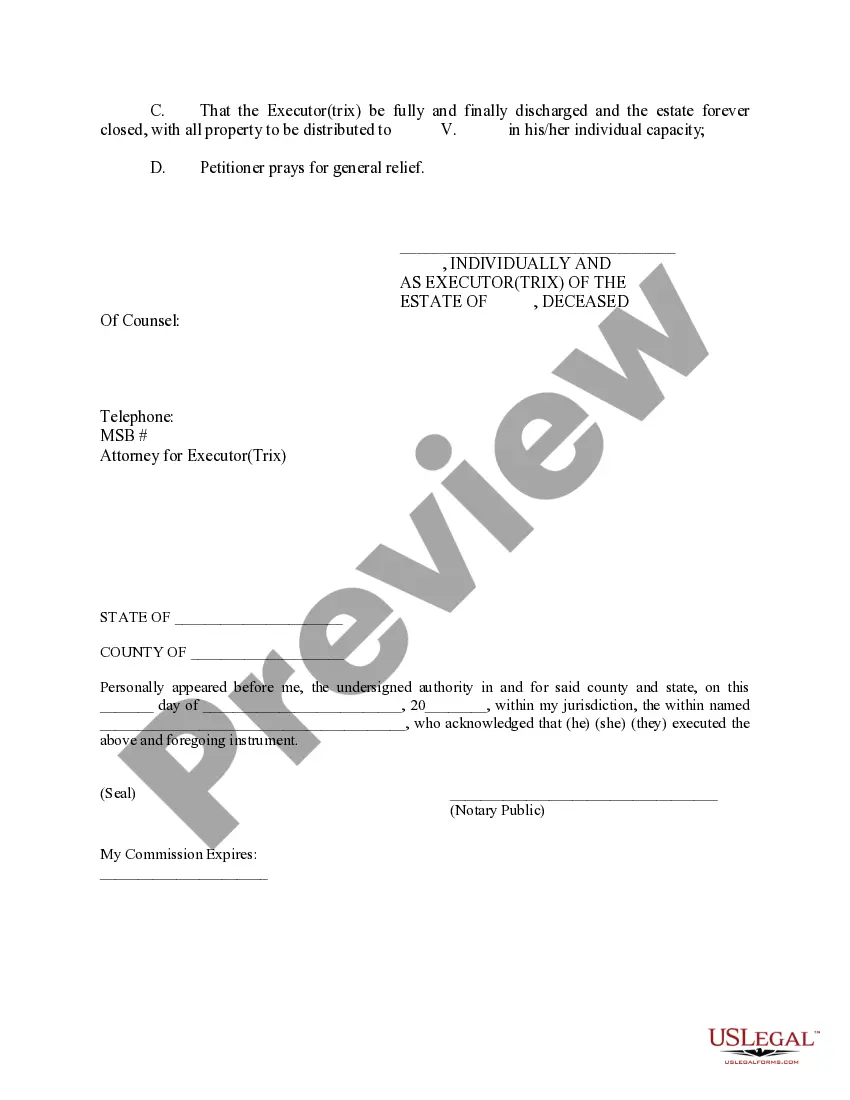
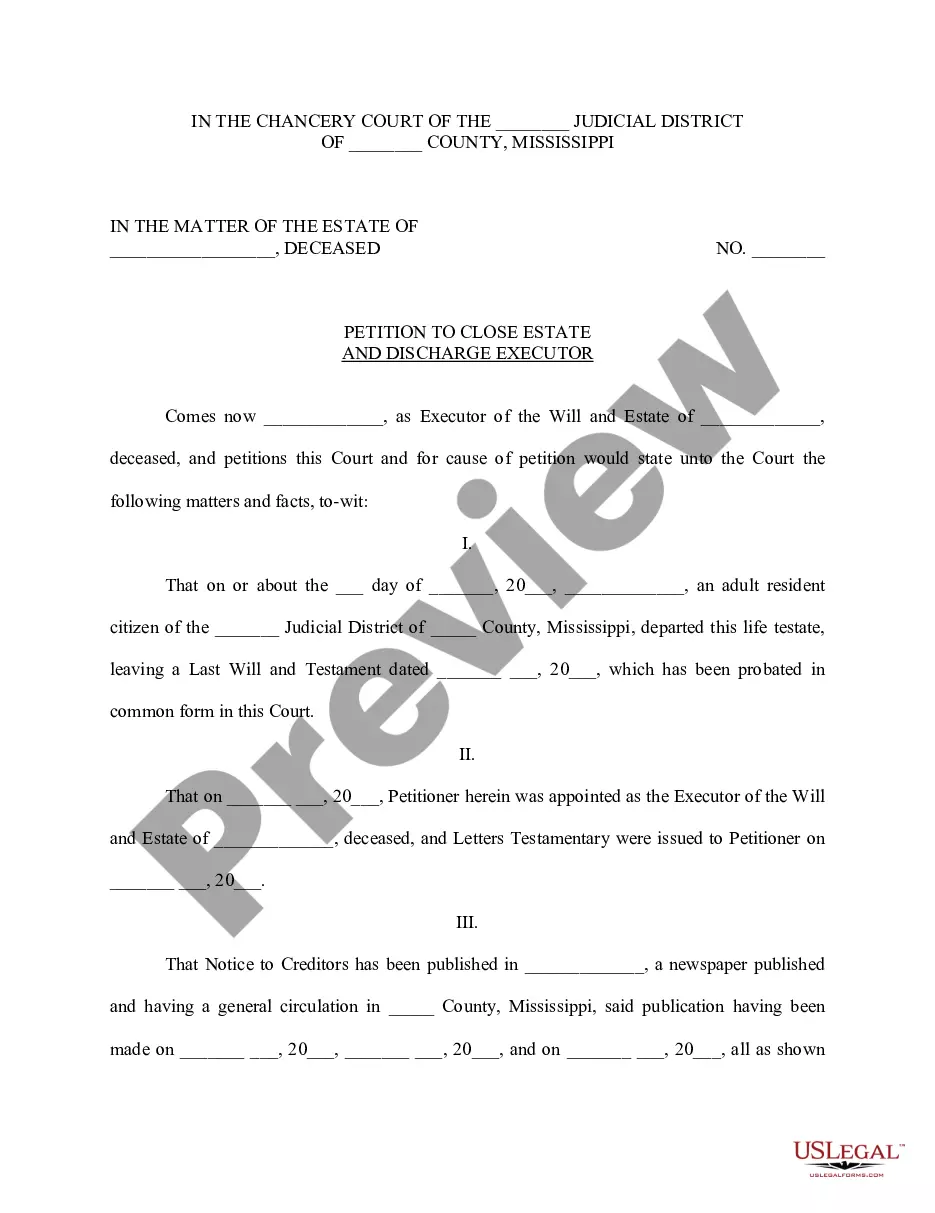
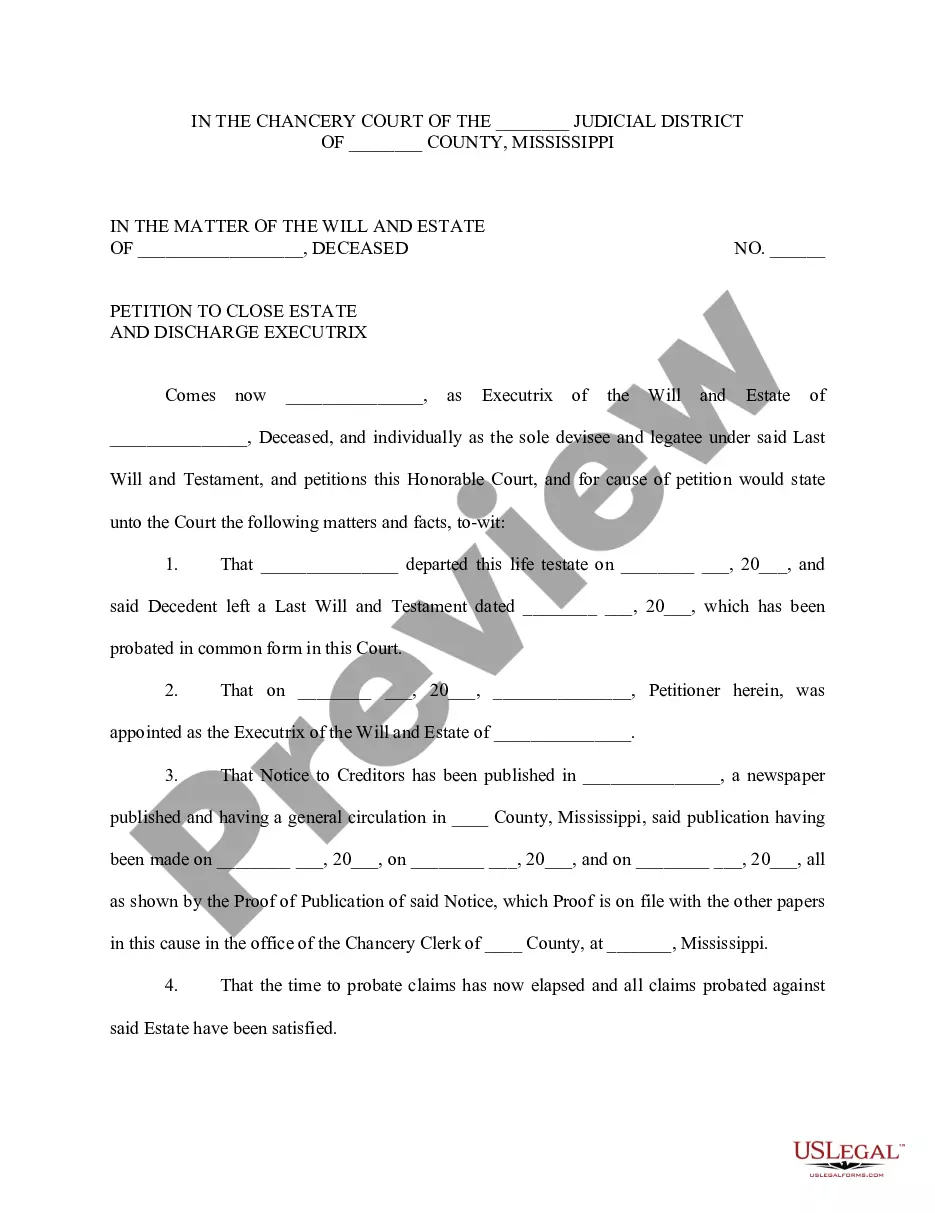
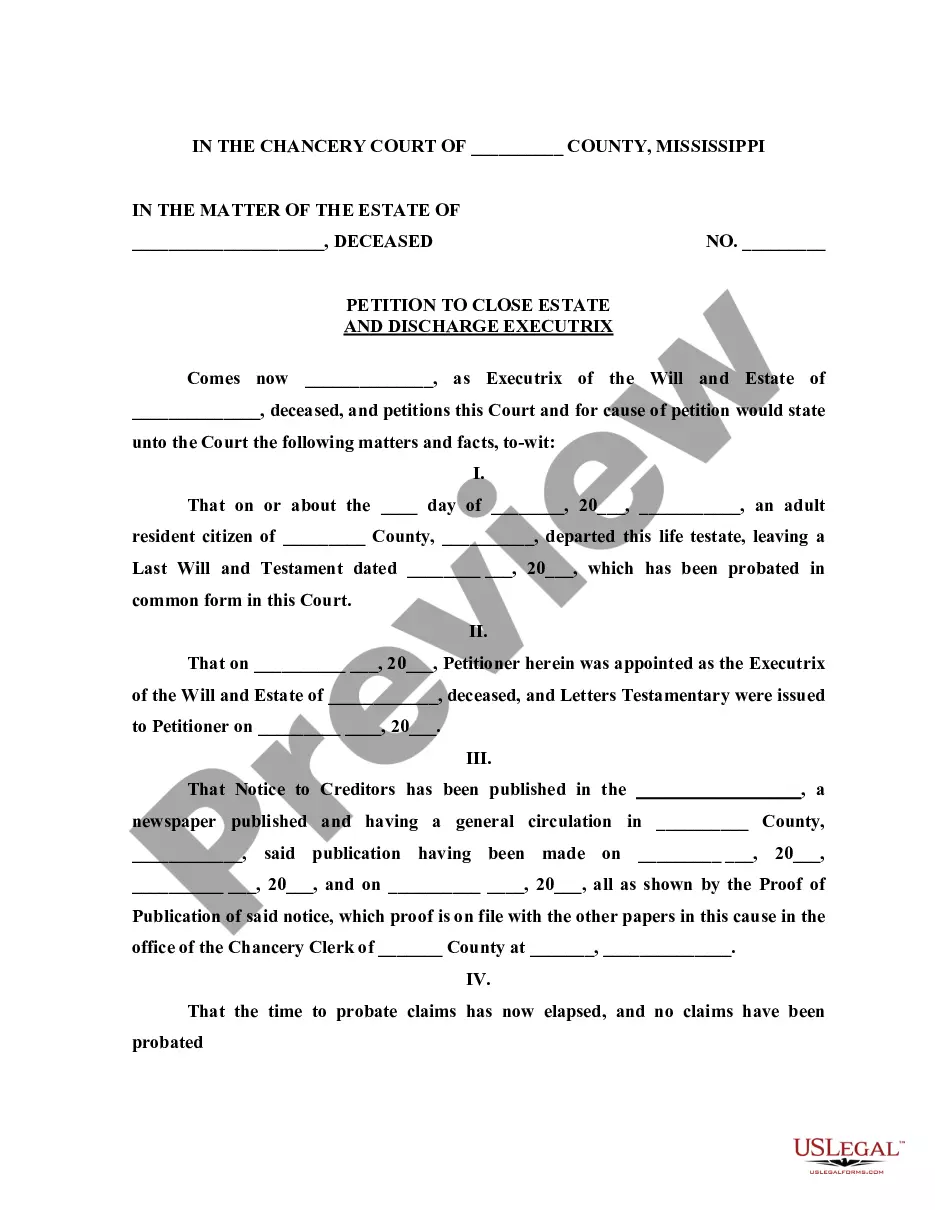
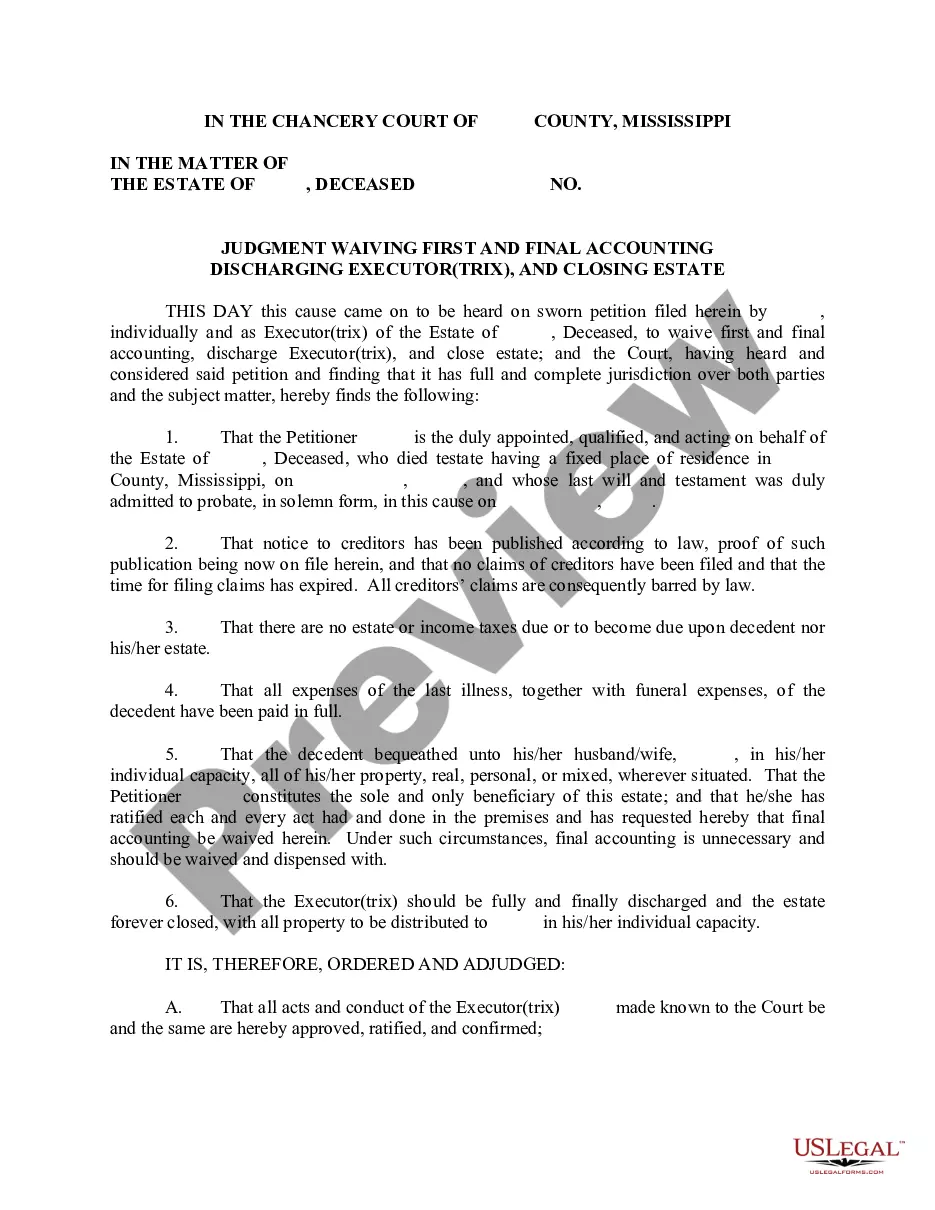
The Petition to Waive First and Final Accounting, Discharge Executrix and Close Estate is a legal document used to request the court's approval for waiving the first and final accounting of an estate, discharging the executrix from duties, and formally closing the estate. This form helps streamline the estate closure process by indicating that all debts and expenses have been settled and that the assets can be distributed to beneficiaries without further accounting requirements. It is essential for managing estate proceedings efficiently.
Key parts of this document
- Declaration of no due estate or income taxes for the deceased and the estate.
- Certification that all final medical and funeral expenses have been paid in full.
- Request for approval, ratification, and confirmation of actions taken by the executrix.
- Provision to waive the first and final accounting.
When to use this form
This form is typically used when an estate is ready to be closed and there are no remaining obligations. It is appropriate for situations where the executrix has completed all necessary tasks related to the estate, including settling debts, paying taxes, and distributing assets to beneficiaries. Using this petition can minimize court involvement and expedite the estate closure process.
Who can use this document
- Executrix or executor of a deceased person's estate.
- Beneficiaries of an estate seeking to expedite the settlement process.
- Personal representatives aiming to close an estate after meeting all obligations.
How to prepare this document
- Enter the details of the deceased, including their name and date of death.
- State that there are no outstanding estate or income taxes.
- Confirm that all final expenses, including medical and funeral costs, have been settled.
- Request court approval of the executrix's actions.
- Sign and date the form as required.
Does this document require notarization?
This document requires notarization to meet legal standards. US Legal Forms provides secure online notarization powered by Notarize, allowing you to complete the process through a verified video call, available 24/7.
Get your form ready online
Our built-in tools help you complete, sign, share, and store your documents in one place.
Make edits, fill in missing information, and update formatting in US Legal Forms—just like you would in MS Word.
Download a copy, print it, send it by email, or mail it via USPS—whatever works best for your next step.
Sign and collect signatures with our SignNow integration. Send to multiple recipients, set reminders, and more. Go Premium to unlock E-Sign.
If this form requires notarization, complete it online through a secure video call—no need to meet a notary in person or wait for an appointment.
We protect your documents and personal data by following strict security and privacy standards.

Make edits, fill in missing information, and update formatting in US Legal Forms—just like you would in MS Word.

Download a copy, print it, send it by email, or mail it via USPS—whatever works best for your next step.

Sign and collect signatures with our SignNow integration. Send to multiple recipients, set reminders, and more. Go Premium to unlock E-Sign.

If this form requires notarization, complete it online through a secure video call—no need to meet a notary in person or wait for an appointment.

We protect your documents and personal data by following strict security and privacy standards.
Avoid these common issues
- Failing to confirm that all debts and taxes are paid before submission.
- Omitting required signatures or information.
- Using outdated forms that do not comply with current legal standards.
Benefits of completing this form online
- Convenient download and access from anywhere, saving time and effort.
- Editable format allows customization to fit your specific needs.
- Forms created by licensed attorneys ensure legal reliability.
Legal use & context
- This form is legally enforceable when properly completed and submitted to the court.
- It is designed to facilitate the closure of an estate without the need for extensive court oversight.
Looking for another form?


Form popularity
FAQ
Summary of the terms of the Will/Rules of Intestacy. balance sheetcapital statementincome statement. securities (investments) schedule. distribution statement.
Beneficiaries often must sign off on the inheritance they receive to acknowledge receipt of the distribution. For example, if you inherit a portion of real estate from the decedent, you must sign a deed accepting that real estate.
Before distributing assets to beneficiaries, the executor must pay valid debts and expenses, subject to any exclusions provided under state probate laws.The executor must maintain receipts and related documents and provide a detailed accounting to estate beneficiaries.
Where a person is a Residuary Beneficiary, they are entitled to receive a full account of the Estate assets and how they have been distributed in order to see how their share has been calculated. The Estate Accounts do not have to be provided until the Estate administration has been finalised.
Beneficiaries are entitled to receive a financial accounting of the trust, including bank statements, regularly. When statements are not received as requested, a beneficiary must submit a written demand to the trustee.The court will review the trust account for any discrepancies or irregular activity.
Before distributing assets to beneficiaries, the executor must pay valid debts and expenses, subject to any exclusions provided under state probate laws.The executor must maintain receipts and related documents and provide a detailed accounting to estate beneficiaries.
All taxes and liabilities paid from the estate, including medical expenses, attorney fees, burial or cremation expenses, estate sale costs, appraisal expenses, and more. The executor should keep all receipts for any services or transactions needed to liquidate the assets of the deceased.
Each beneficiary is entitled to a trustee's accounting, at least annually, at termination of the trust, and on upon a change of trustee. (California Probate Code 16062). Unfortunately, not all beneficiaries are entitled to automatic accounting, nevertheless, the court may force the trustee to provide an accounting.
Find the will, if any. File the will with the local probate court. Notify agencies and business of the death. Inventory assets and get appraisals. Decide whether probate is necessary. Coordinate with the successor trustee. Communicate with beneficiaries. Take good care of estate assets.