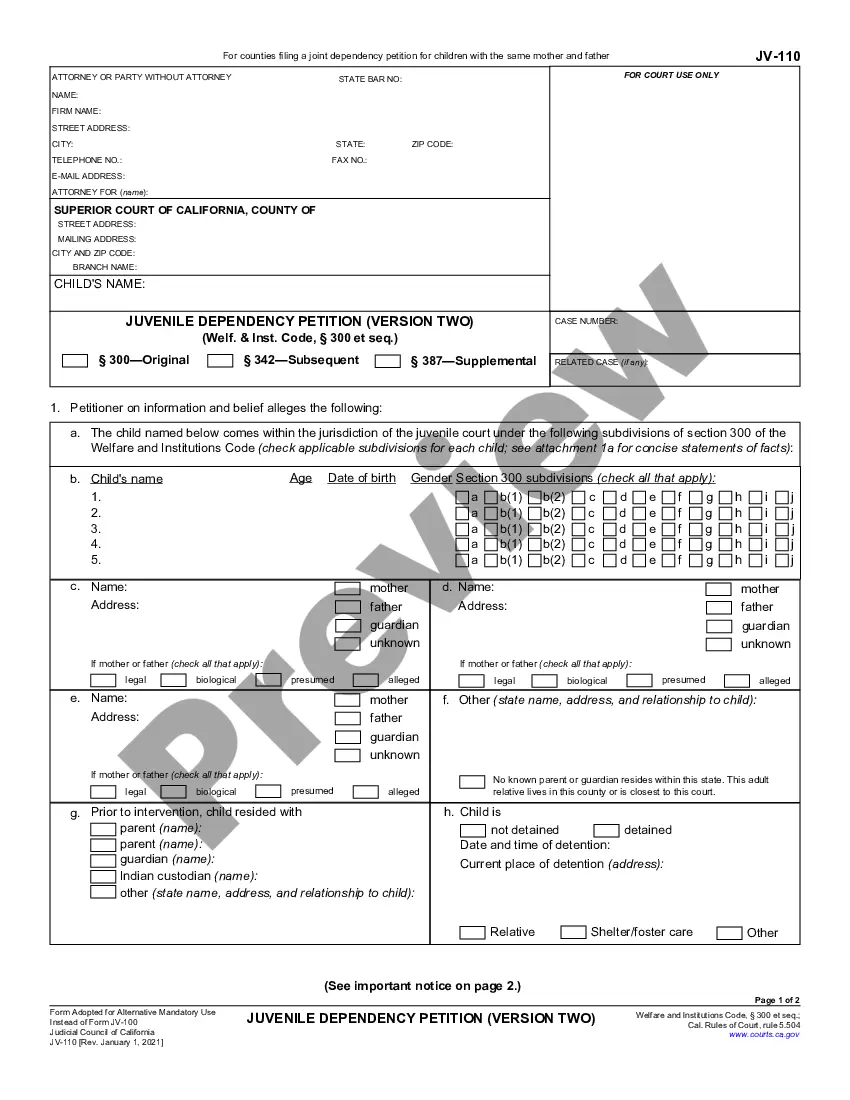
Mississippi Petition for Authority to Cancel Deed of Trust
Understanding this form
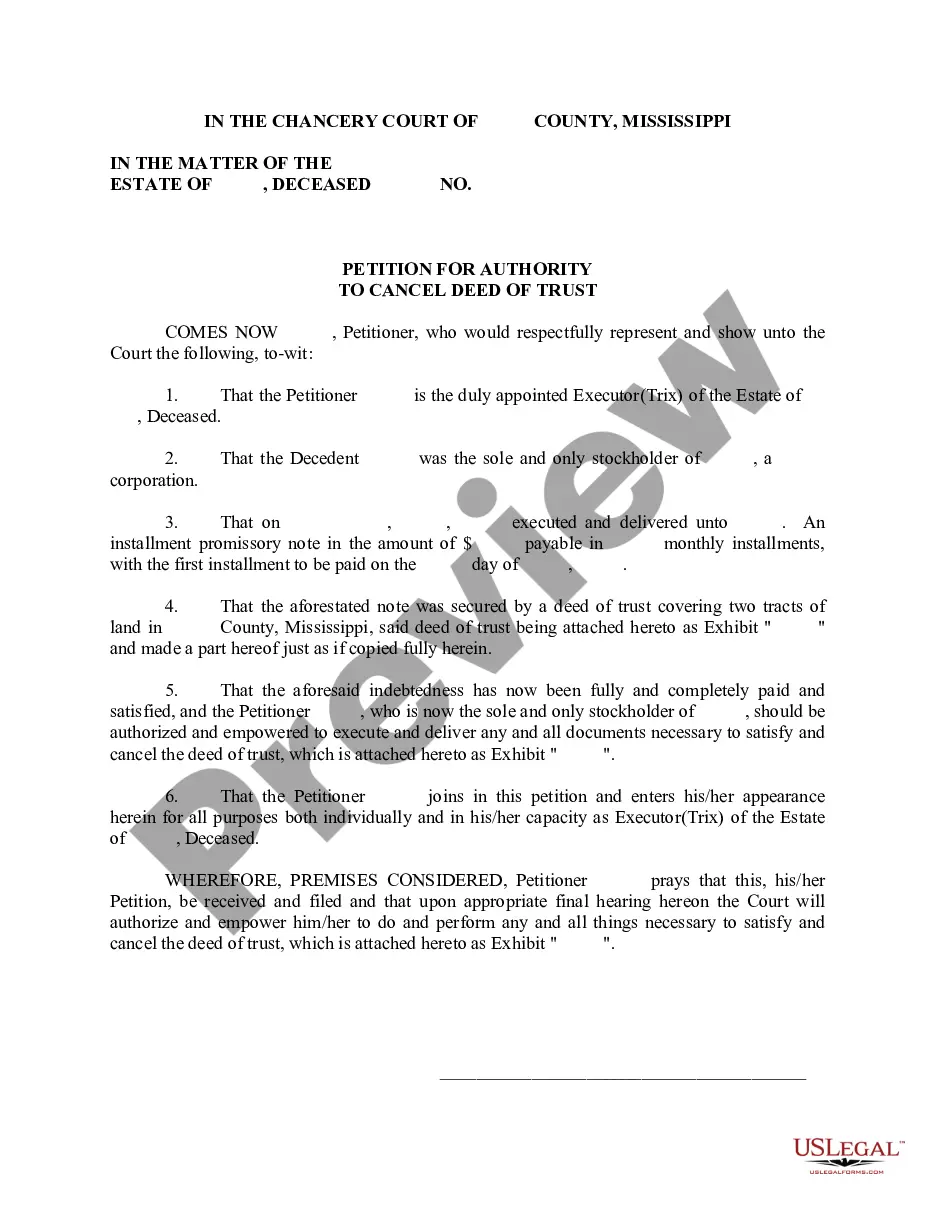
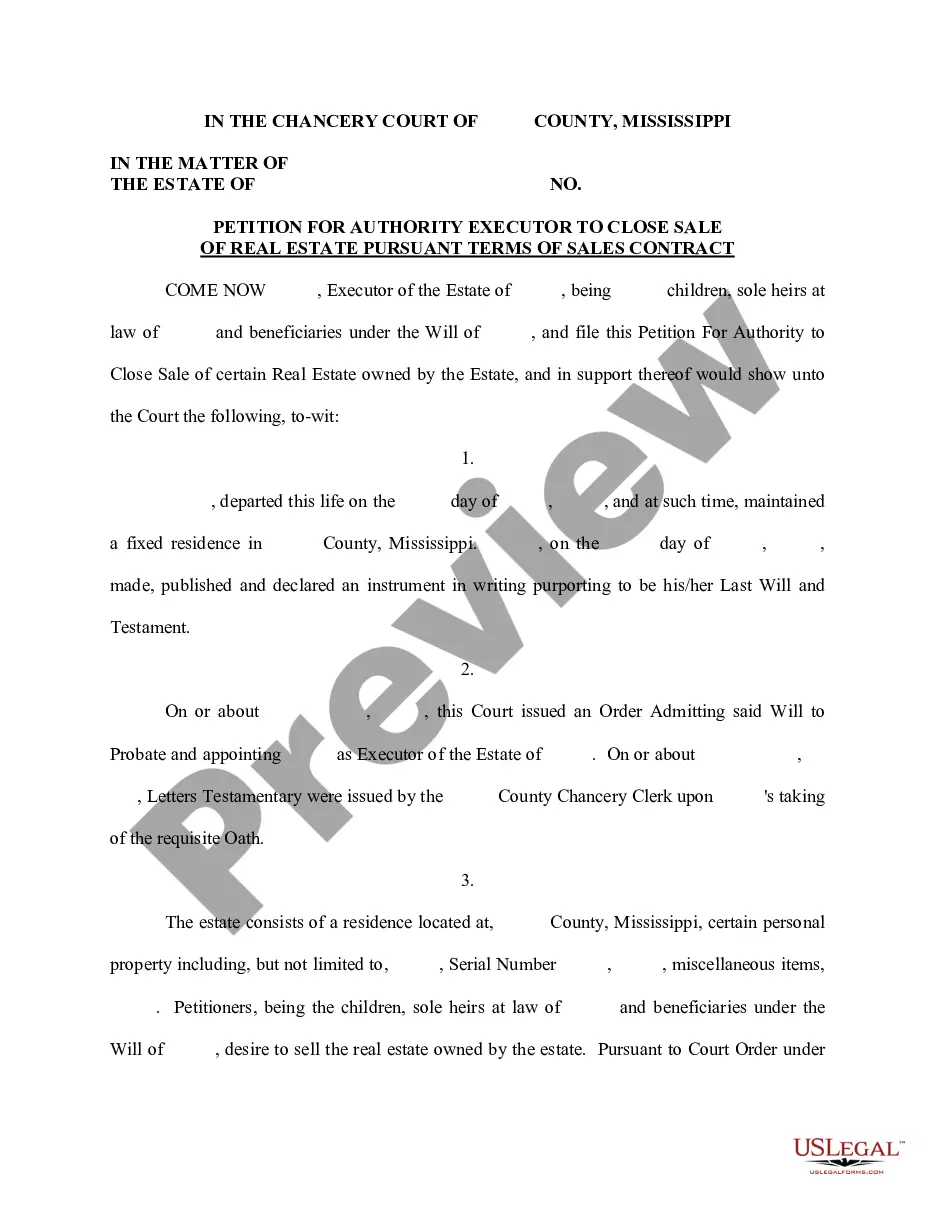
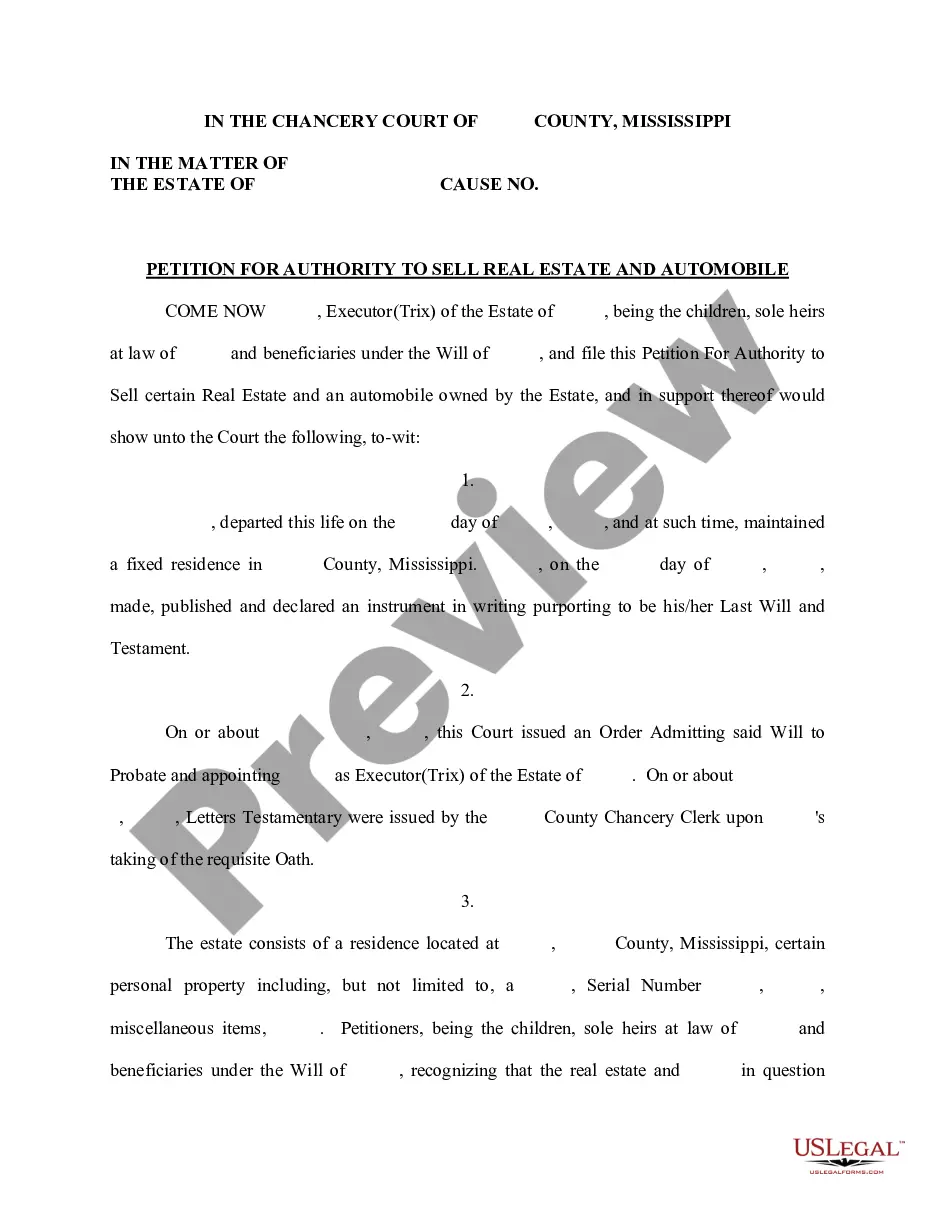
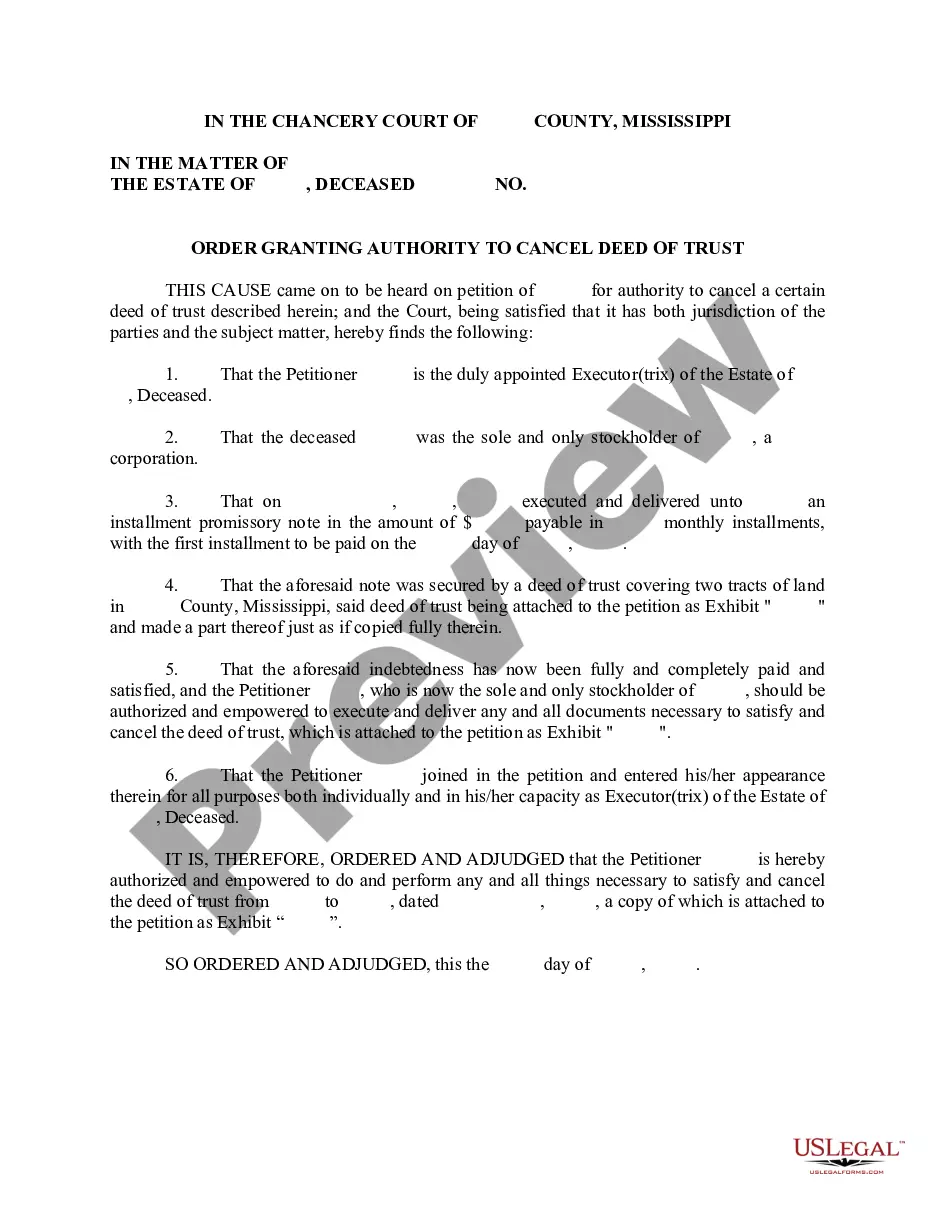
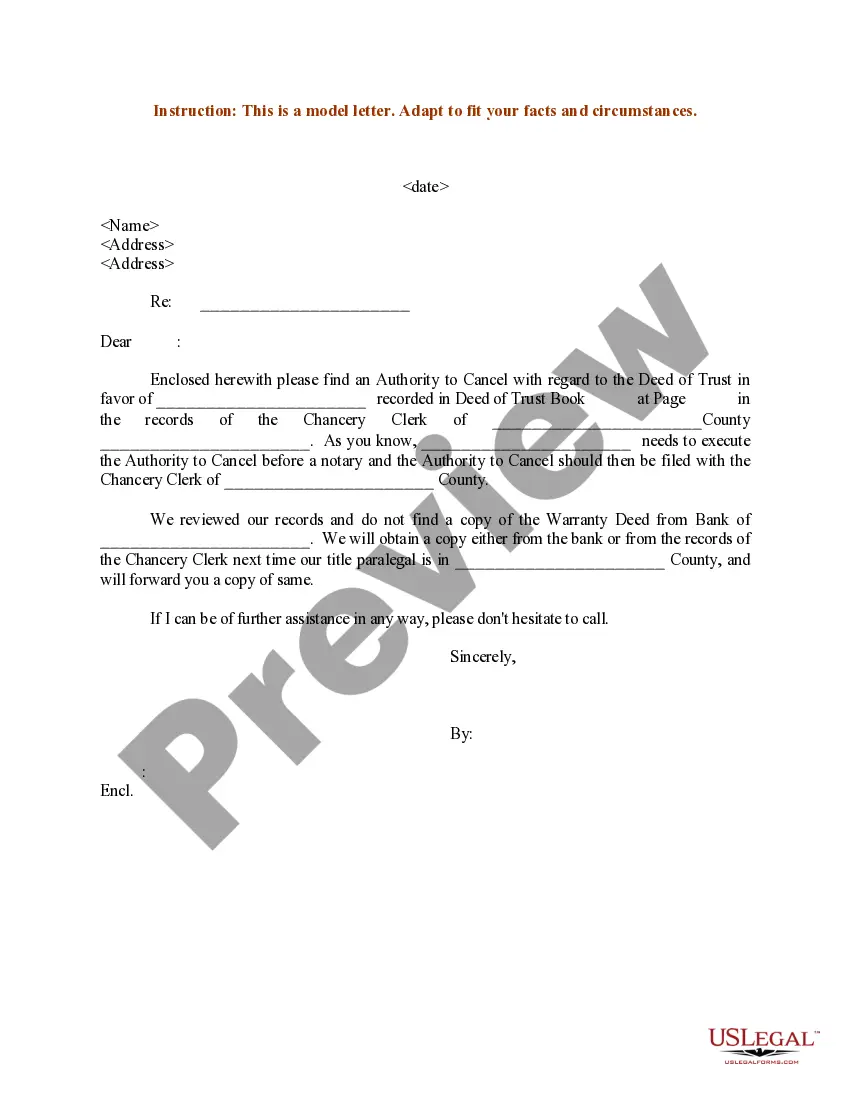
The Petition for Authority to Cancel Deed of Trust is a legal document used to request permission from a court to cancel or terminate a deed of trust. This form is essential for property owners seeking to eliminate an encumbrance on their property due to various circumstances, such as disputes or errors in the original deed of trust. Unlike a typical deed of trust, this petition specifically seeks judicial approval for cancellation, making it a critical step in legally clearing property title issues.
Form components explained
- Identification of the petitioner and property involved.
- Description of the deed of trust to be canceled, including original date and parties involved.
- Statement of the reasons for cancellation.
- Request for court authority to proceed with cancellation.
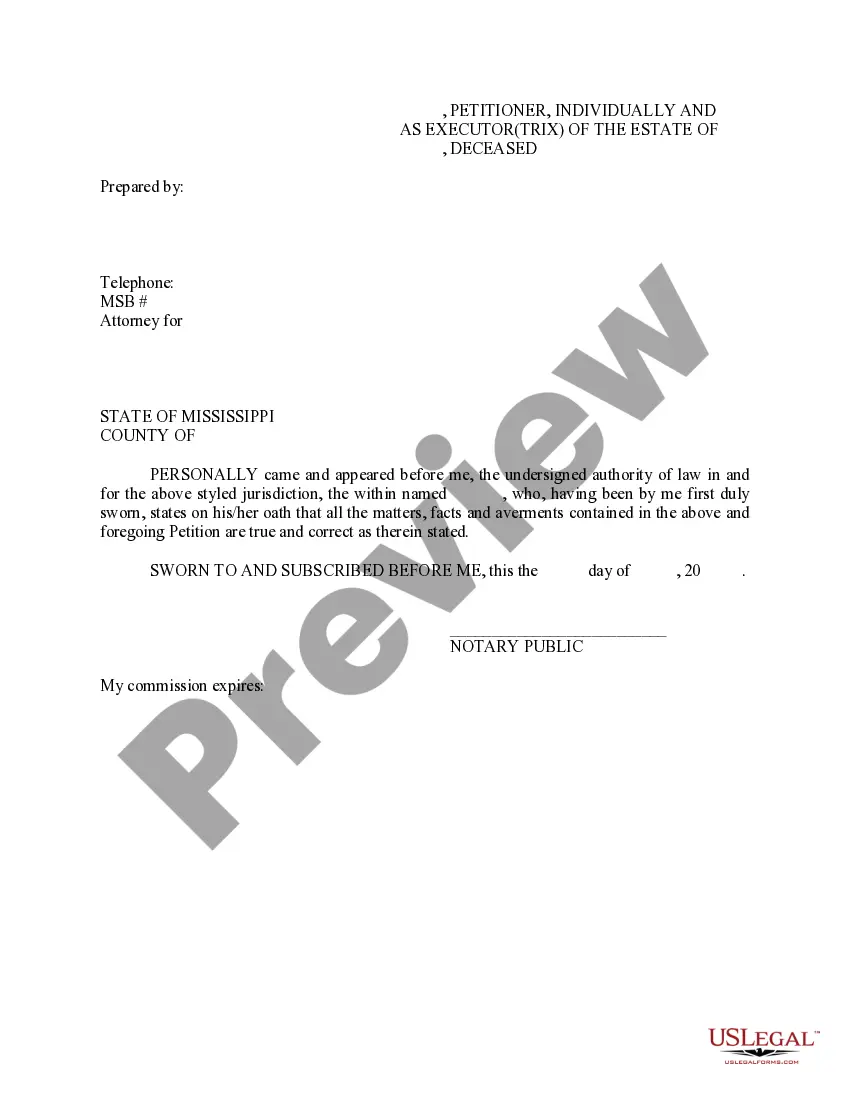
- Signature and date fields for the petitioner.
When this form is needed
This form should be used when a property owner wants to request the court's permission to cancel a deed of trust. Common situations include resolving disputes about the validity of the deed, correcting mistakes made in the original documentation, or when the underlying obligation has been satisfied, thus permitting the cancellation of the deed of trust.
Intended users of this form
- Property owners looking to cancel a deed of trust on their property.
- Individuals involved in legal disputes regarding the validity of a deed of trust.
- Real estate attorneys representing clients who need to clear their property title.
Instructions for completing this form
- Identify the parties involved, including the petitioner and the original parties to the deed of trust.
- Specify the property for which the deed of trust is being canceled, including a legal description.
- Clearly state the reasons for requesting the cancellation of the deed of trust.
- Fill out the required signature and date fields, ensuring all information is accurate.
Notarization guidance
This form does not typically require notarization unless specified by local law. Always check with your local jurisdiction to confirm any notarization requirements before filing.
Get your form ready online
Our built-in tools help you complete, sign, share, and store your documents in one place.
Make edits, fill in missing information, and update formatting in US Legal Forms—just like you would in MS Word.
Download a copy, print it, send it by email, or mail it via USPS—whatever works best for your next step.
Sign and collect signatures with our SignNow integration. Send to multiple recipients, set reminders, and more. Go Premium to unlock E-Sign.
If this form requires notarization, complete it online through a secure video call—no need to meet a notary in person or wait for an appointment.
We protect your documents and personal data by following strict security and privacy standards.

Make edits, fill in missing information, and update formatting in US Legal Forms—just like you would in MS Word.

Download a copy, print it, send it by email, or mail it via USPS—whatever works best for your next step.

Sign and collect signatures with our SignNow integration. Send to multiple recipients, set reminders, and more. Go Premium to unlock E-Sign.

If this form requires notarization, complete it online through a secure video call—no need to meet a notary in person or wait for an appointment.

We protect your documents and personal data by following strict security and privacy standards.
Typical mistakes to avoid
- Failing to provide sufficient detail about the property and deed of trust.
- Not including necessary signatures or dates.
- Overlooking local court requirements for filing the petition.
Why use this form online
- Convenience of completing the form from anywhere at any time.
- Editable format allows users to tailor the petition to their specific situation.
- Access to professionally drafted forms ensures reliability and legal accuracy.
Legal use & context
- The petition serves as a formal request to the court, aiming to uphold property rights.
- Successful cancellation of a deed of trust can clarify property ownership and resolve disputes.
- Users should understand that local laws may affect the enforceability of this document.
Quick recap
- The Petition for Authority to Cancel Deed of Trust is necessary for clearing property encumbrances.
- Detail and accuracy are paramount to avoid delays in court approval.
- Consult local regulations to ensure compliance and proper filing procedures.
Looking for another form?
Form popularity
FAQ
The exercise of UNDUE INFLUENCE also ordinarily serves to invalidate a deed. The test of whether such influence has been exerted turns upon the issue of whether the grantor executed the deed voluntarily. Undue influence is wrongful and serves to confuse the judgment and to control the will of the grantor.
When you sign a deed transferring your interest in real property, you cannot reverse it simply because you regret your decision. Assuming you are on congenial terms with the person who was the grantee of your deed, he can sign a similar deed transferring the property interest back to you.
The deed to the house says who owns it. Removing yourself from the deed requires completing and recording a quitclaim deed. Keep in mind that removing yourself from the deed doesn't absolve you from any mortgage note you are still named on.
Generally speaking, no. Once a quit claim deed has been completed and filed with the County Clerk's Office, the title will officially pass from the grantor to the grantee. The only way to reverse a quit claim deed is to go to court and prove that the grantor was forced to sign the document under duress.
Once the transfer is complete, there is no way to nullify or undo a quitclaim deed unless both parties consent to the arrangement. If the original grantor does agree to take back the property, you must draft and file a new quitclaim deed to void the original.
It will depend what state the property is in. For example, the minimum fee payable when changing the title to have someone removed from a property title in NSW is $133.48. This fee must be paid to the NSW Government Land & Property Information Department.
The only way to forcibly change the ownership status is through a legal action and the resultant court order. However, if an owner chooses to be removed from the deed, it is simply a matter of preparing a new deed transferring that owner's interest in the property.
Decide what sort of deed you wish to use. A reversionary deed includes clauses that allow you to revoke the transfer if certain terms are ignored. Write a reversionary clause into the deed. Complete the deed according to state law. Retain possession of the deed.