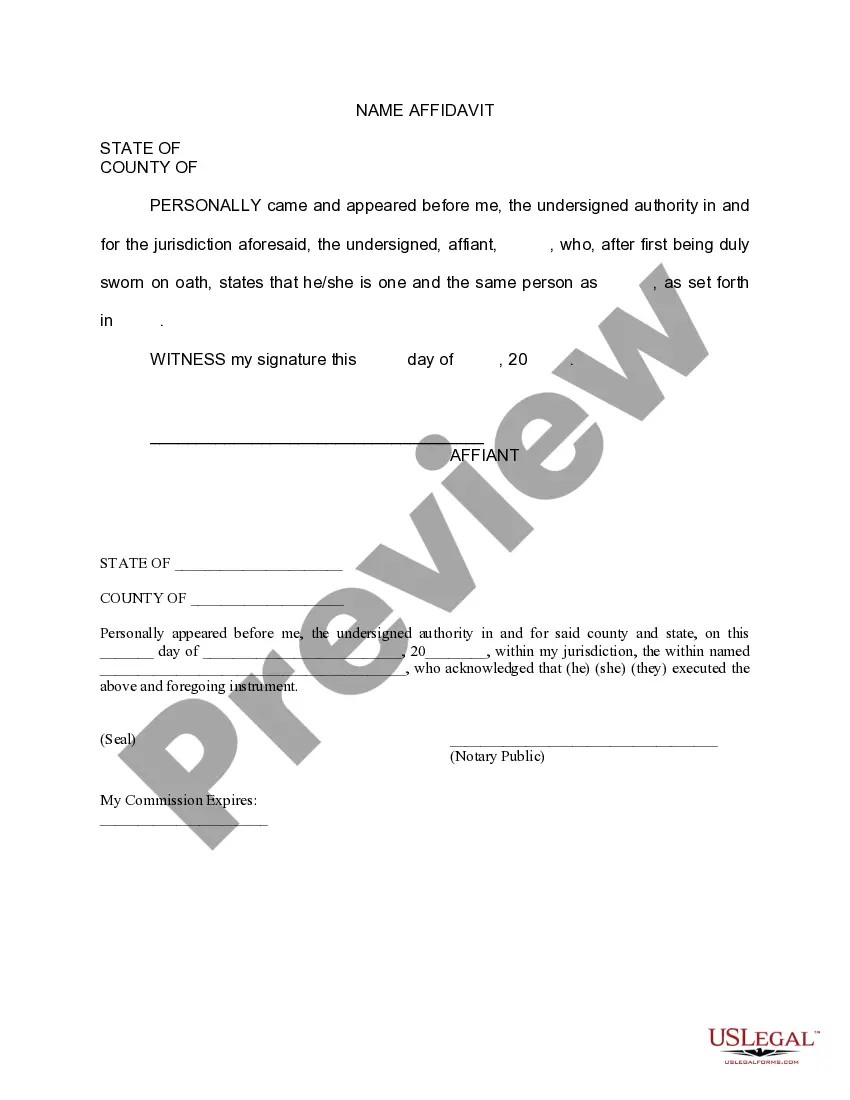
Louisiana Servitude for Drainage Line
About this form
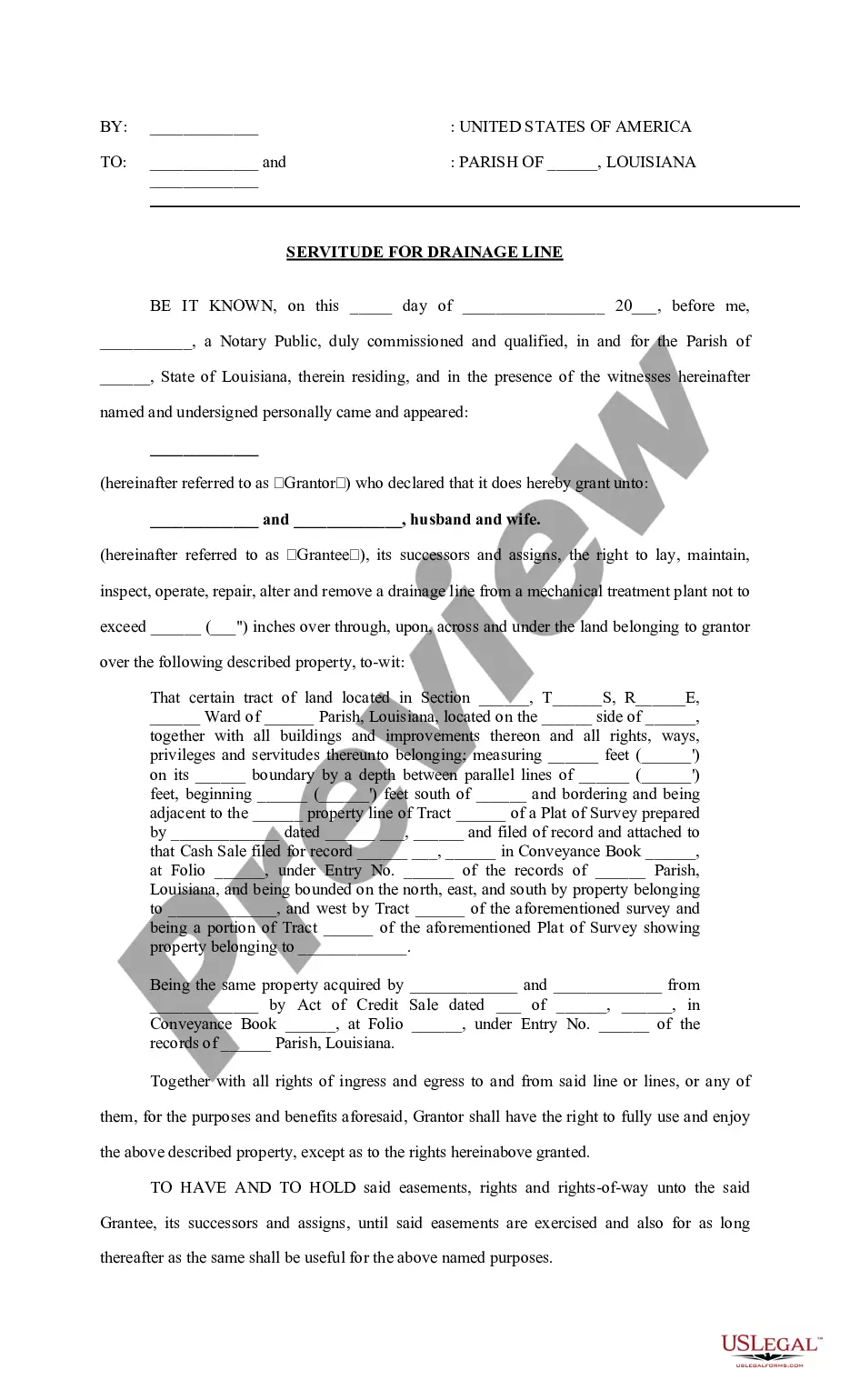
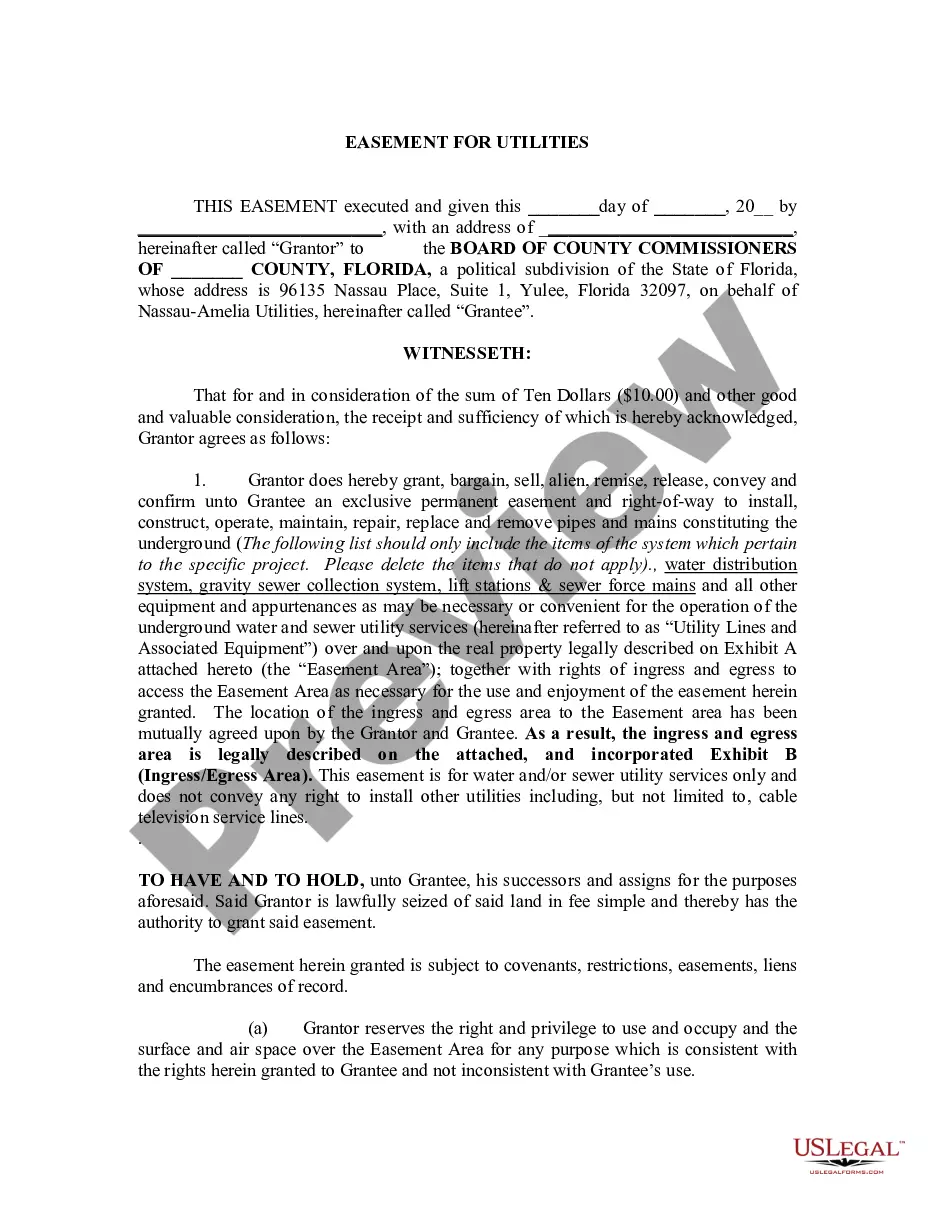
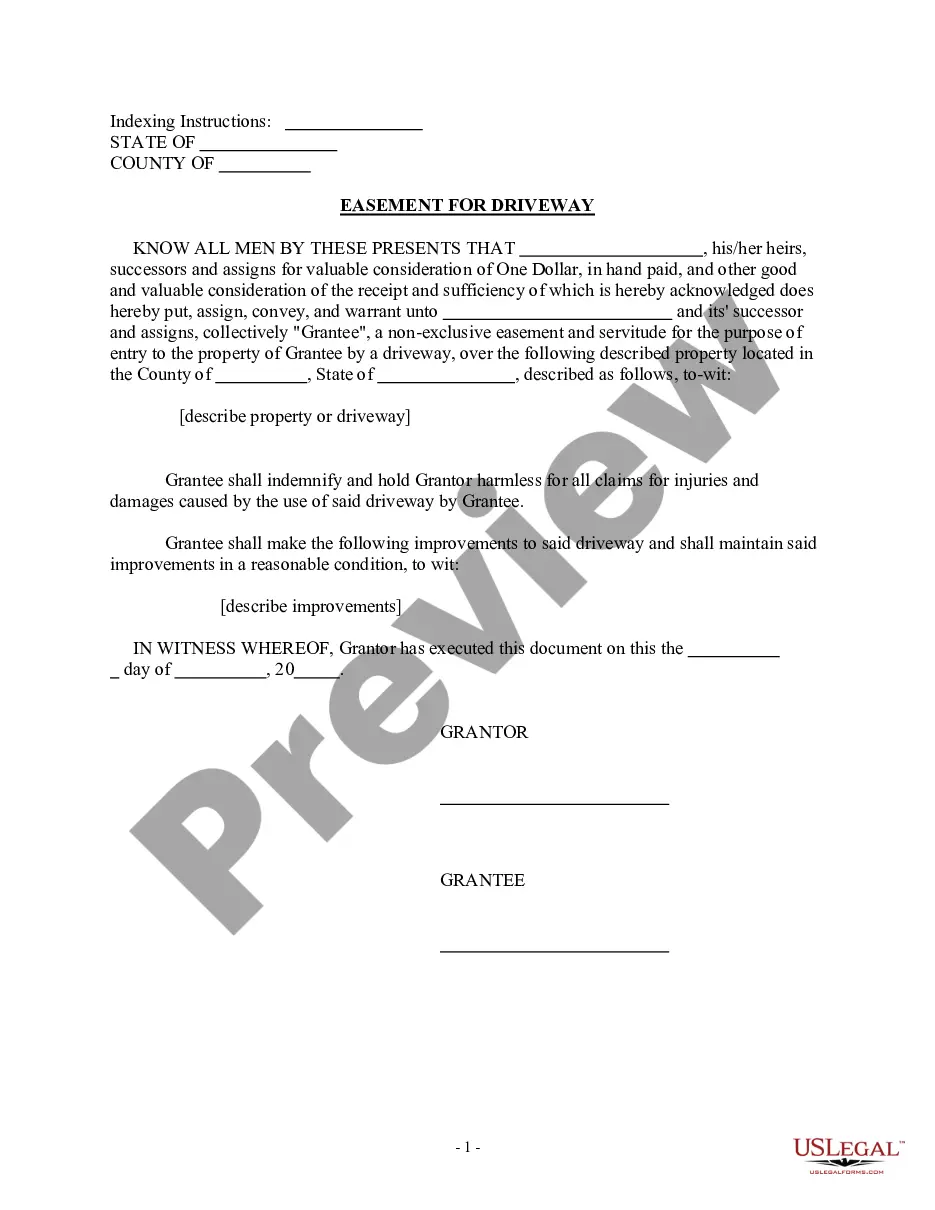
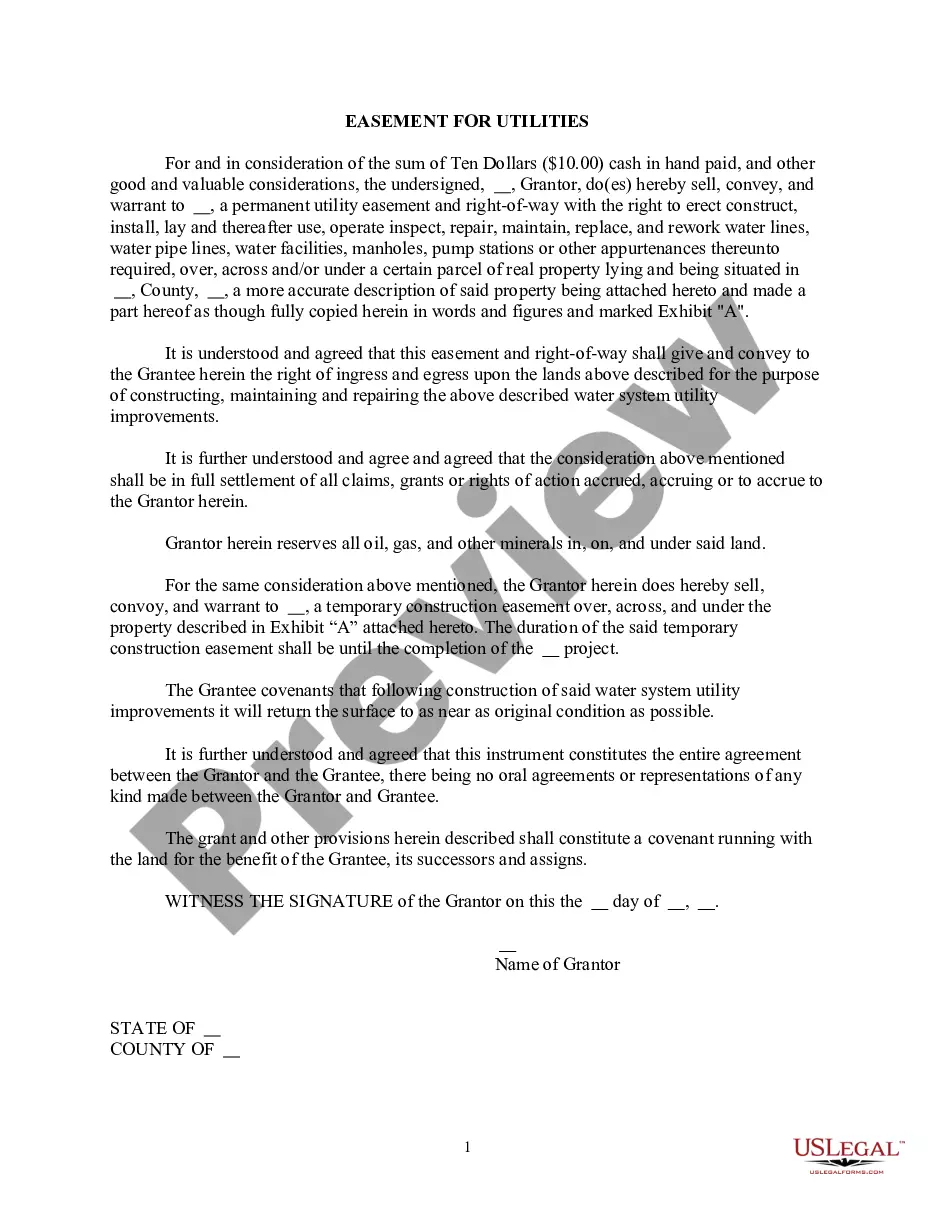
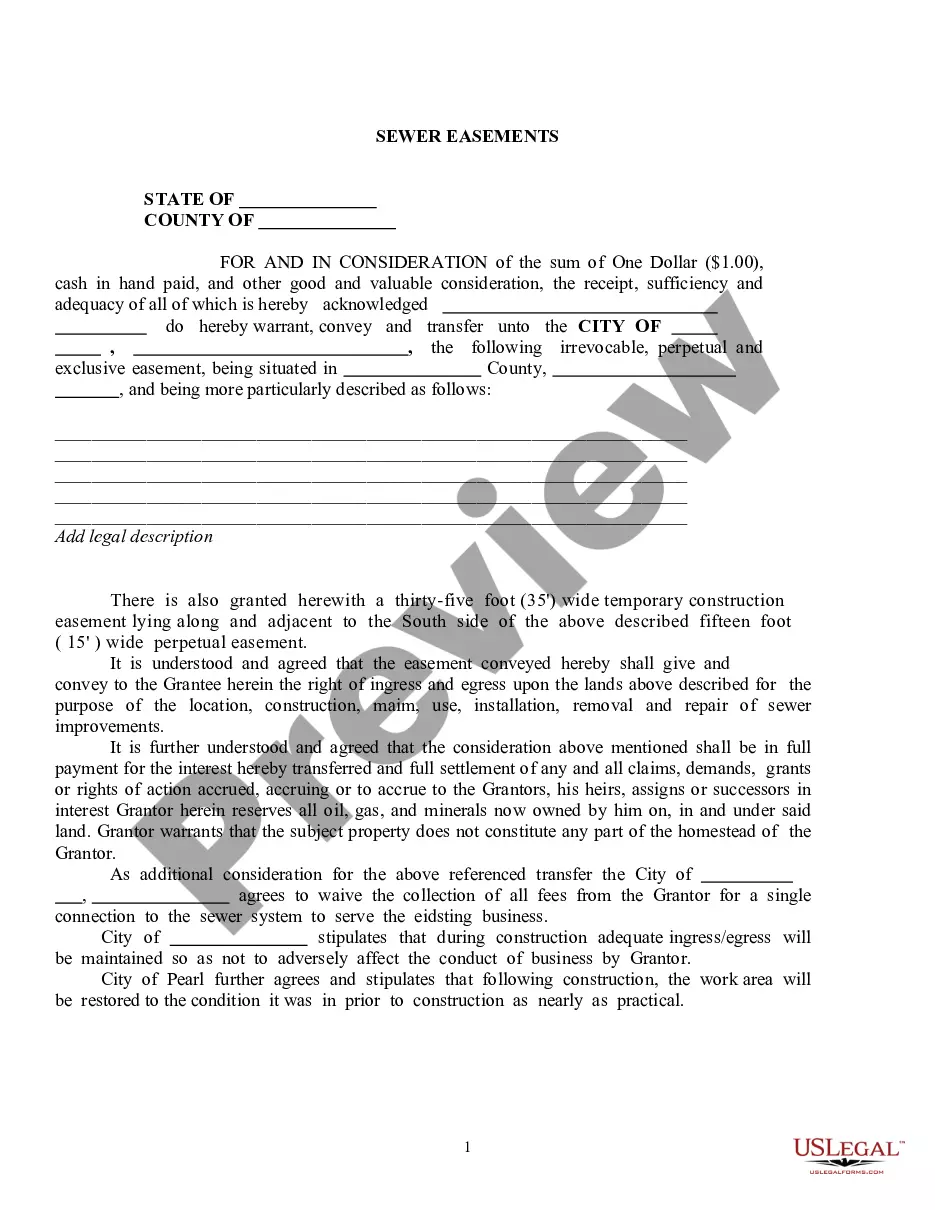
The Servitude for Drainage Line is a legal document that grants one party the right to lay and maintain a drainage line on another party's property. This form is essential in rural areas where the efficient management of drainage is crucial for land use. It differs from other servitude documents by specifically addressing the installation and maintenance of drainage systems required for mechanical treatment plants, ensuring proper water management while delineating the rights and permissions involved.
Main sections of this form
- Identification of the parties involved (Grantor and Grantee).
- Description of the property where the drainage line will be located.
- Specifications regarding the dimensions of the drainage line.
- Rights granted for maintenance, inspection, and operation of the drainage line.
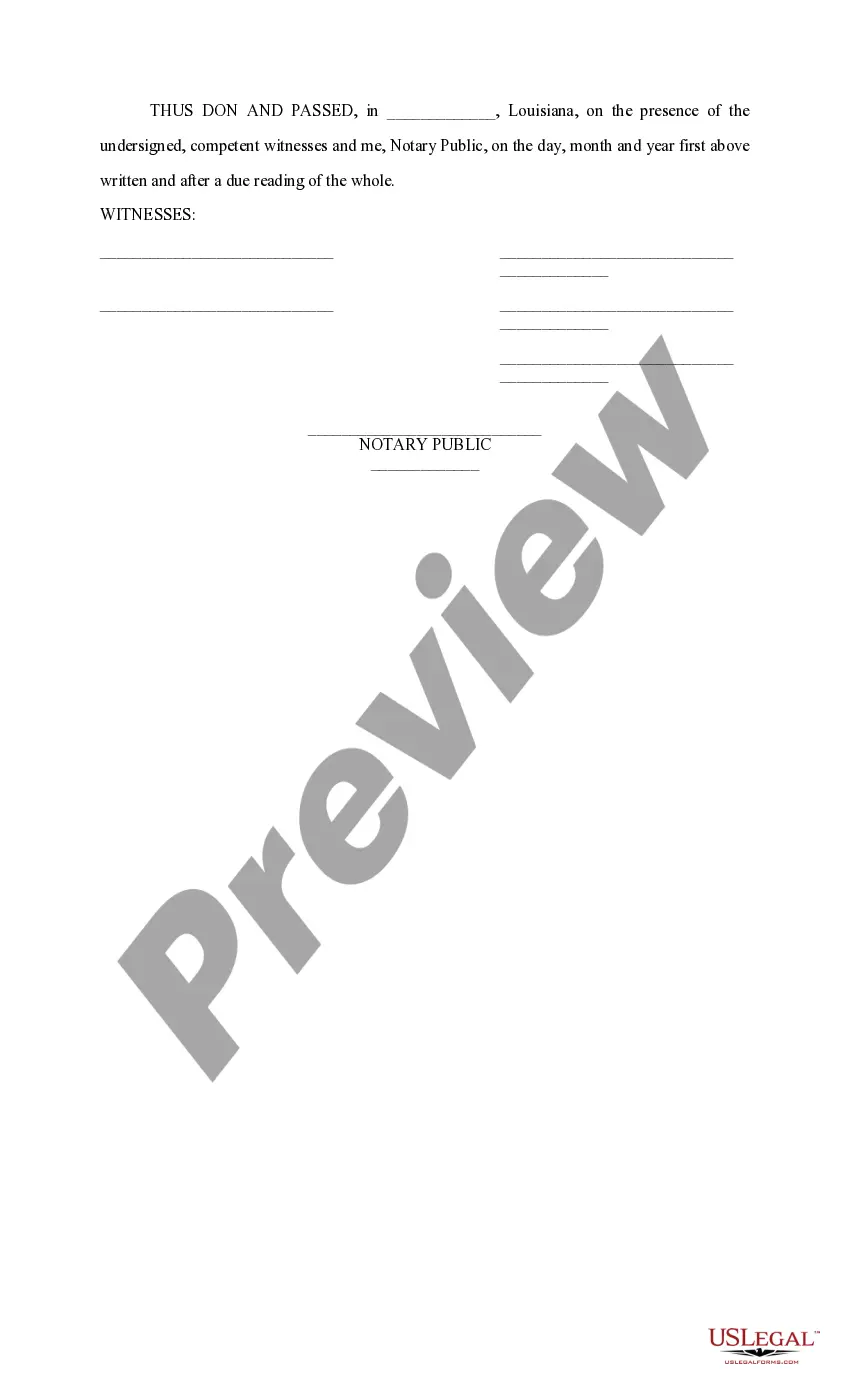
- Signatures of witnesses and a Notary Public for validation.
When to use this form
This form should be used when landowners in rural areas need to establish a legal right to install and maintain a drainage line that benefits their property or another estate. Situations may include connecting to municipal treatment plants or adapting land for agricultural purposes, ensuring proper water flow, and preventing flooding or soil erosion.
Intended users of this form
This form is intended for:
- Property owners granting drainage rights to another party.
- Land developers planning construction that affects drainage.
- Homeowners requiring legal permission for drainage modifications.
- Business owners dealing with waste and drainage management concerns.
How to prepare this document
- Identify the parties involved by entering the names of the Grantor and Grantee.
- Provide a thorough description of the property, including dimensions and boundaries.
- Specify the size of the drainage line needed.
- Enter the date and notary information to ensure authenticity.
- Ensure that witnesses sign the document where indicated.
Does this document require notarization?
Notarization is required for this form to take effect. Our online notarization service, powered by Notarize, lets you verify and sign documents remotely through an encrypted video session, available 24/7.
Get your form ready online
Our built-in tools help you complete, sign, share, and store your documents in one place.
Make edits, fill in missing information, and update formatting in US Legal Forms—just like you would in MS Word.
Download a copy, print it, send it by email, or mail it via USPS—whatever works best for your next step.
Sign and collect signatures with our SignNow integration. Send to multiple recipients, set reminders, and more. Go Premium to unlock E-Sign.
If this form requires notarization, complete it online through a secure video call—no need to meet a notary in person or wait for an appointment.
We protect your documents and personal data by following strict security and privacy standards.

Make edits, fill in missing information, and update formatting in US Legal Forms—just like you would in MS Word.

Download a copy, print it, send it by email, or mail it via USPS—whatever works best for your next step.

Sign and collect signatures with our SignNow integration. Send to multiple recipients, set reminders, and more. Go Premium to unlock E-Sign.

If this form requires notarization, complete it online through a secure video call—no need to meet a notary in person or wait for an appointment.

We protect your documents and personal data by following strict security and privacy standards.
Common mistakes
- Failing to accurately describe the property boundaries.
- Not specifying the size of the drainage line properly.
- Missing signatures from witnesses or the Notary Public.
- Using vague language that could lead to legal disputes.
Why complete this form online
- Convenient access to legally reviewed templates at any time.
- Easy-to-understand instructions help guide the user through completion.
- Editable forms allow users to customize according to their specific needs.
- Secure storage options to keep completed forms on hand.
Main things to remember
- The Servitude for Drainage Line formalizes the granting of drainage access across property.
- It is essential for managing land use, particularly in rural areas.
- Ensure complete and accurate information is provided to avoid legal issues.
- Notarization is required for the document to be enforceable.
Looking for another form?
Form popularity
FAQ
The Louisiana Servitude for Drainage Line is a legal document that grants one party the right to lay and maintain a drainage line on another party’s property. It sets the scope of installation, maintenance, and operation, and specifies the property description, line dimensions, and required signatures and notary for validation—commonly used in rural drainage projects.
A drainage servitude is a legal easement giving one party the right to install, maintain, and operate a drainage system on another person’s property. The Louisiana Servitude for Drainage Line uses this concept to specify who can install the line, where it runs, its size, and maintenance rights, with witness and notary requirements.
The right to drainage granted by this form allows a party to install, maintain, inspect, and operate a drainage line across another owner’s property. It also defines the scope of access, duties for upkeep, and who bears costs, ensuring proper water flow and drainage for rural or agricultural use.
Drainage laws in Louisiana govern how rights to install and maintain drainage facilities are created and enforced. The Louisiana Servitude for Drainage Line provides a Louisiana-specific template to establish a drainage line right, including who is involved, where the line runs, its dimensions, and maintenance rights, with witnesses and a notary. Consulting a Louisiana attorney is advised for compliance.
Louisiana’s servitude law governs how rights to use another land for drainage are created and enforced. The Louisiana Servitude for Drainage Line is a template that implements a drainage easement with clearly identified grantor and grantee, property description, line dimensions, and rights for maintenance and inspection, all validated by witnesses and a notary.
This form specifically creates a drainage servitude for installing and maintaining a drainage line, including detailed sections for identifying the grantor and grantee, describing the property and line dimensions, and granting ongoing maintenance and inspection rights. It also requires witnesses and a Notary Public for validation, ensuring formal, enforceable terms.