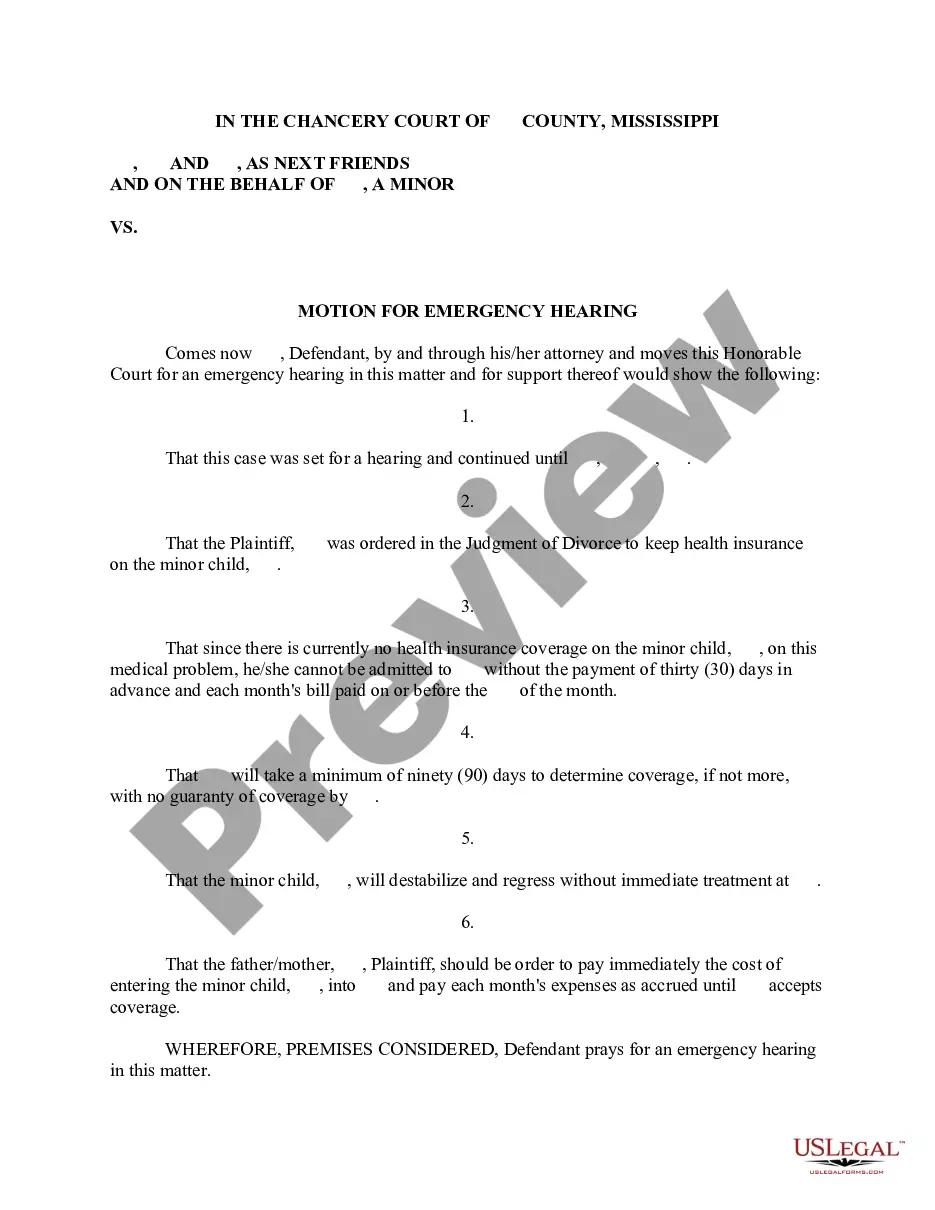
Louisiana Petition for Post-Conviction Relief
Overview of this form
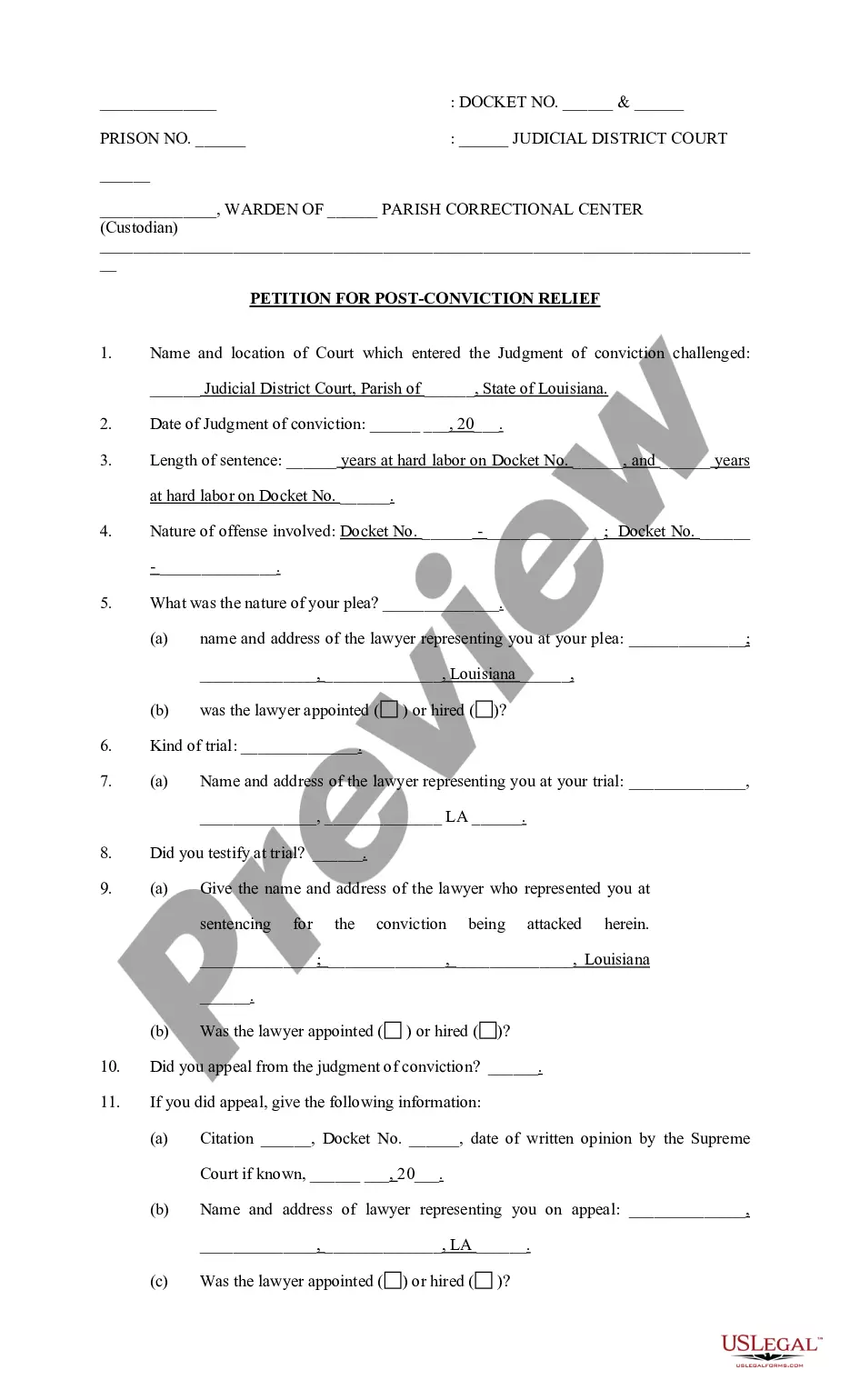
The Petition for Post-Conviction Relief is a legal document that allows a defendant to request the court to reconsider their sentence after a conviction. This form is specifically designed to challenge the legality of a conviction and is distinct from direct appeals, which address errors made during the trial. The post-conviction relief process can lead to modifications of a sentence or even the overturning of a conviction under certain circumstances.
Main sections of this form
- Prison identification number and custodial information.
- Details about the court that entered the judgment and the date of conviction.
- Length and nature of the sentence along with offense details.
- A section to indicate previous legal representation during trial and sentencing.
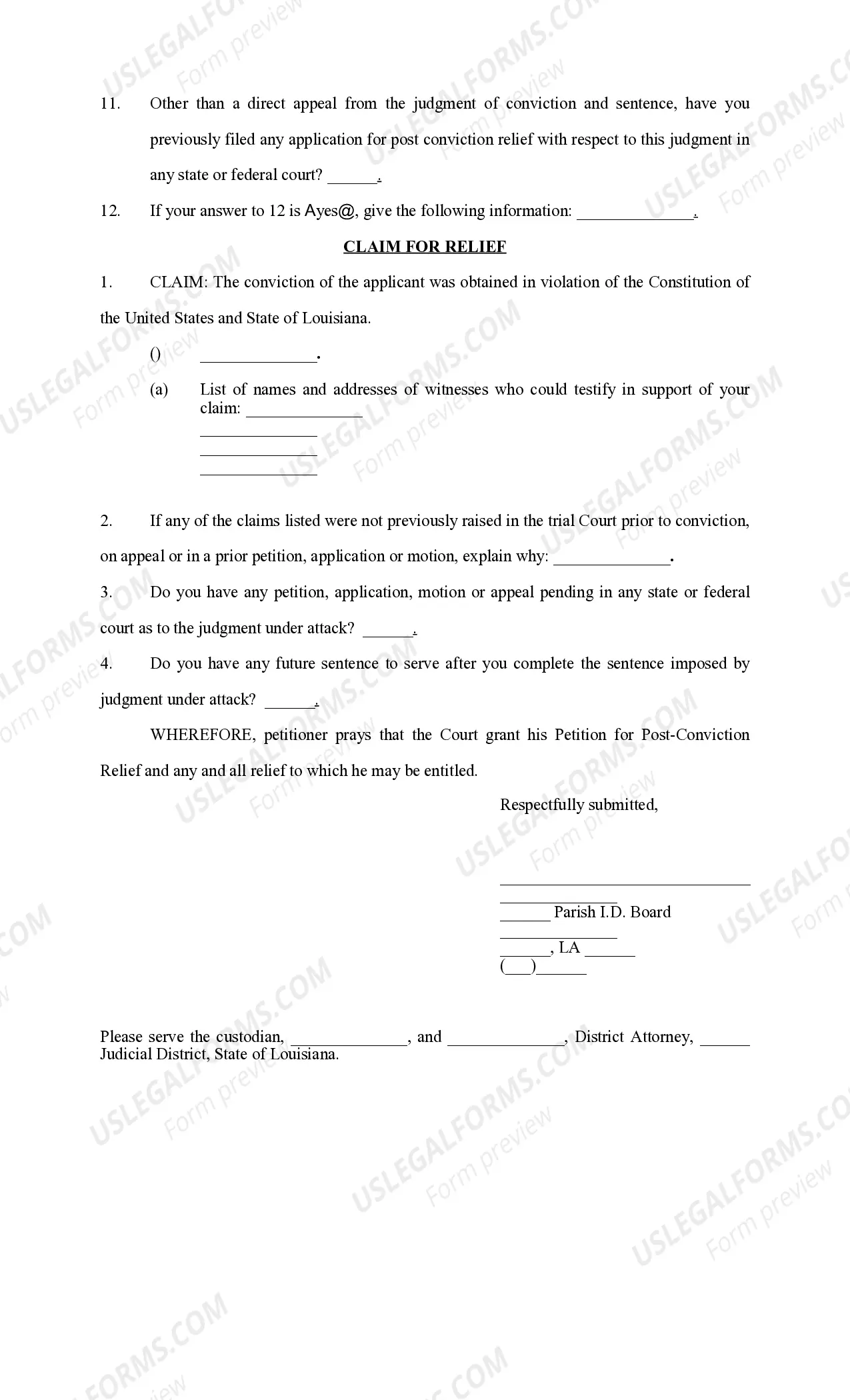
- A claim for relief citing constitutional violations.
- A notary affidavit certifying the truthfulness of the petitioner's statements.


Situations where this form applies
This form is used when an individual has been convicted of a crime and believes that their conviction or sentence is unjust due to legal errors, new evidence, or constitutional violations. It is appropriate when standard appeals have not led to the desired outcome, or when new grounds for relief arise after the conclusion of the trial or appeal process.
Who needs this form
- Individuals who have been convicted of a crime and are seeking to challenge that conviction.
- Those who believe their constitutional rights were violated during the trial process.
- Defendants who have completed their direct appeals and wish to explore post-conviction options.
- Incarcerated persons who cannot afford legal fees and need a structured way to seek relief.
How to complete this form
- Begin by filling out your prison identification number and the name of the custodian.
- Provide information regarding the court that issued the original conviction, including the date.
- Enter detailed information about the sentence, including its duration and nature of the offense.
- State whether you have previously appealed your conviction and include relevant citations if applicable.
- Clearly include your claims for relief based on constitutional grounds and identify supporting witnesses.
- Sign the affidavit and have it notarized to certify the accuracy of your statements.
Is notarization required?
Yes, this form must be notarized to be legally valid. The notarization process ensures the identity of the signer and confirms that they swore to the truthfulness of the statements in the petition. US Legal Forms offers integrated online notarization services to help facilitate this step securely and conveniently.
Get your form ready online
Our built-in tools help you complete, sign, share, and store your documents in one place.
Make edits, fill in missing information, and update formatting in US Legal Forms—just like you would in MS Word.
Download a copy, print it, send it by email, or mail it via USPS—whatever works best for your next step.
Sign and collect signatures with our SignNow integration. Send to multiple recipients, set reminders, and more. Go Premium to unlock E-Sign.
If this form requires notarization, complete it online through a secure video call—no need to meet a notary in person or wait for an appointment.
We protect your documents and personal data by following strict security and privacy standards.

Make edits, fill in missing information, and update formatting in US Legal Forms—just like you would in MS Word.

Download a copy, print it, send it by email, or mail it via USPS—whatever works best for your next step.

Sign and collect signatures with our SignNow integration. Send to multiple recipients, set reminders, and more. Go Premium to unlock E-Sign.

If this form requires notarization, complete it online through a secure video call—no need to meet a notary in person or wait for an appointment.

We protect your documents and personal data by following strict security and privacy standards.
Mistakes to watch out for
- Failing to include all required details about prior legal representation.
- Not addressing all claims for relief or omitting explanations for claims previously unraised.
- Inaccurately filling out the court details or sentence information.
- Overlooking the requirement for notarization of the affidavit.
Why complete this form online
- Convenience of accessing and downloading the form from anywhere, anytime.
- Editability to customize your petition according to your specific circumstances.
- Quick access to latest legal templates drafted by licensed attorneys.
- Secure and reliable process to ensure your petition meets legal standards.
Looking for another form?


Form popularity
FAQ
Louisiana state law allows convicted individuals to seek post-conviction relief after losing an appeal under limited circumstances. Post-conviction relief attempts to overturn a conviction or sentence. It is important to contact a Louisiana post-conviction relief lawyer to understand your eligibility.
The first opportunity a defendant convicted and sentenced for a crime has to request relief is provided for in Florida Rule of Criminal Procedure 3.800 (c), which permits a defendant to motion the trial court for mitigation of sentence within 60 days of imposition of sentence or within 60 days of issuance of a mandate
The most common basis for relief in a petition for post-conviction relief is that a client did not receive effective assistance of counsel in connection with a guilty plea, at trial, at sentencing, or on appeal.
The most common basis for relief in a petition for post-conviction relief is that a client did not receive effective assistance of counsel in connection with a guilty plea, at trial, at sentencing, or on appeal.
Attorneys charge a sum between $400 to $1,400 per criminal charge. Attorney fees could rise to between $1000 to $4000 if the criminal case is complicated. If you can't afford the fee to file a petition for expungement, you or your attorney may request a fee waiver.
The term post-conviction relief refers to legal channels by which defendants convicted of a crime can seek to get their convictions overturned, sentences modified, records expunged or civil rights reinstated.
Attorneys charge a sum between $400 to $1,400 per criminal charge. Attorney fees could rise to between $1000 to $4000 if the criminal case is complicated. If you can't afford the fee to file a petition for expungement, you or your attorney may request a fee waiver.
The term post-conviction relief refers to legal channels by which defendants convicted of a crime can seek to get their convictions overturned, sentences modified, records expunged or civil rights reinstated.