Mississippi Motion for Entry of Default Judgment
What this document covers
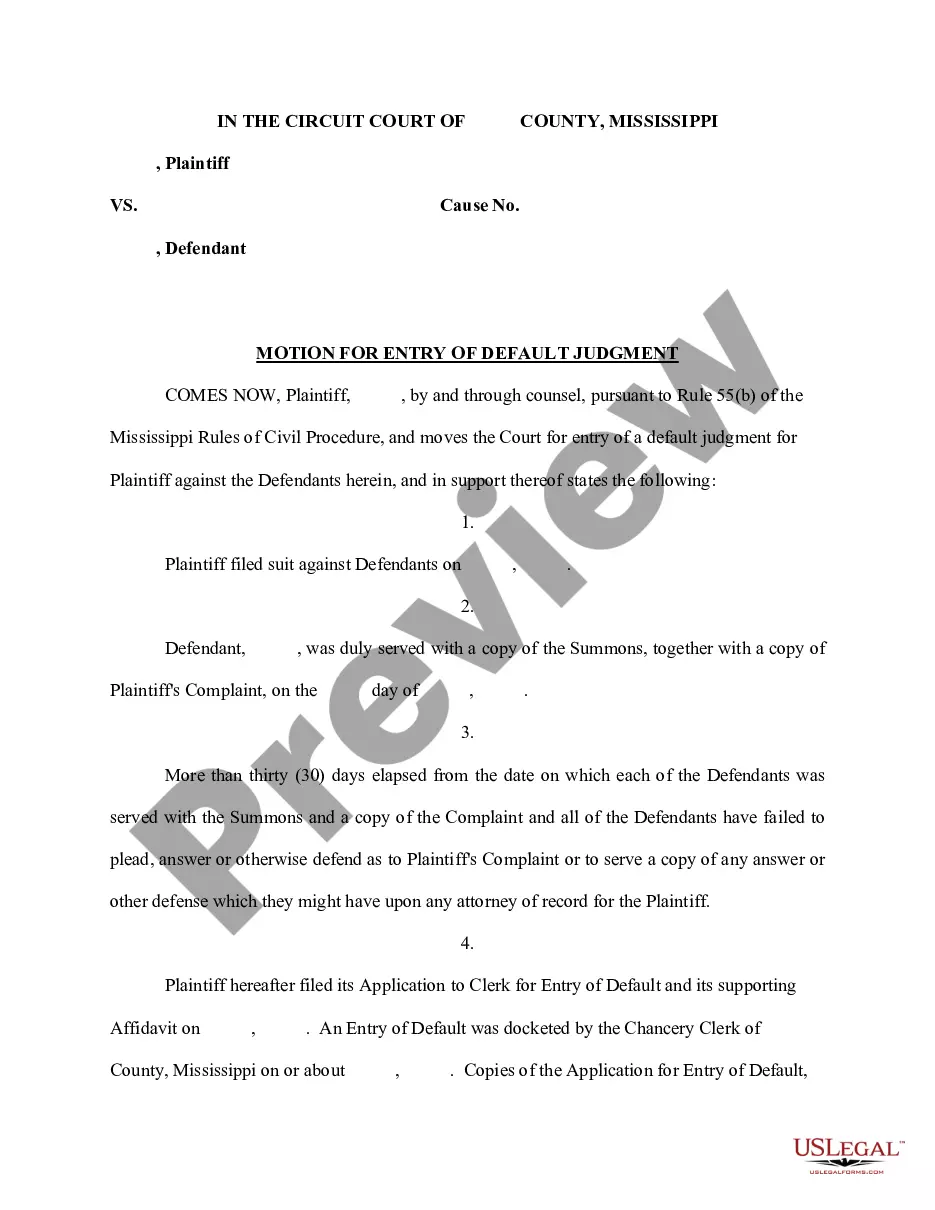
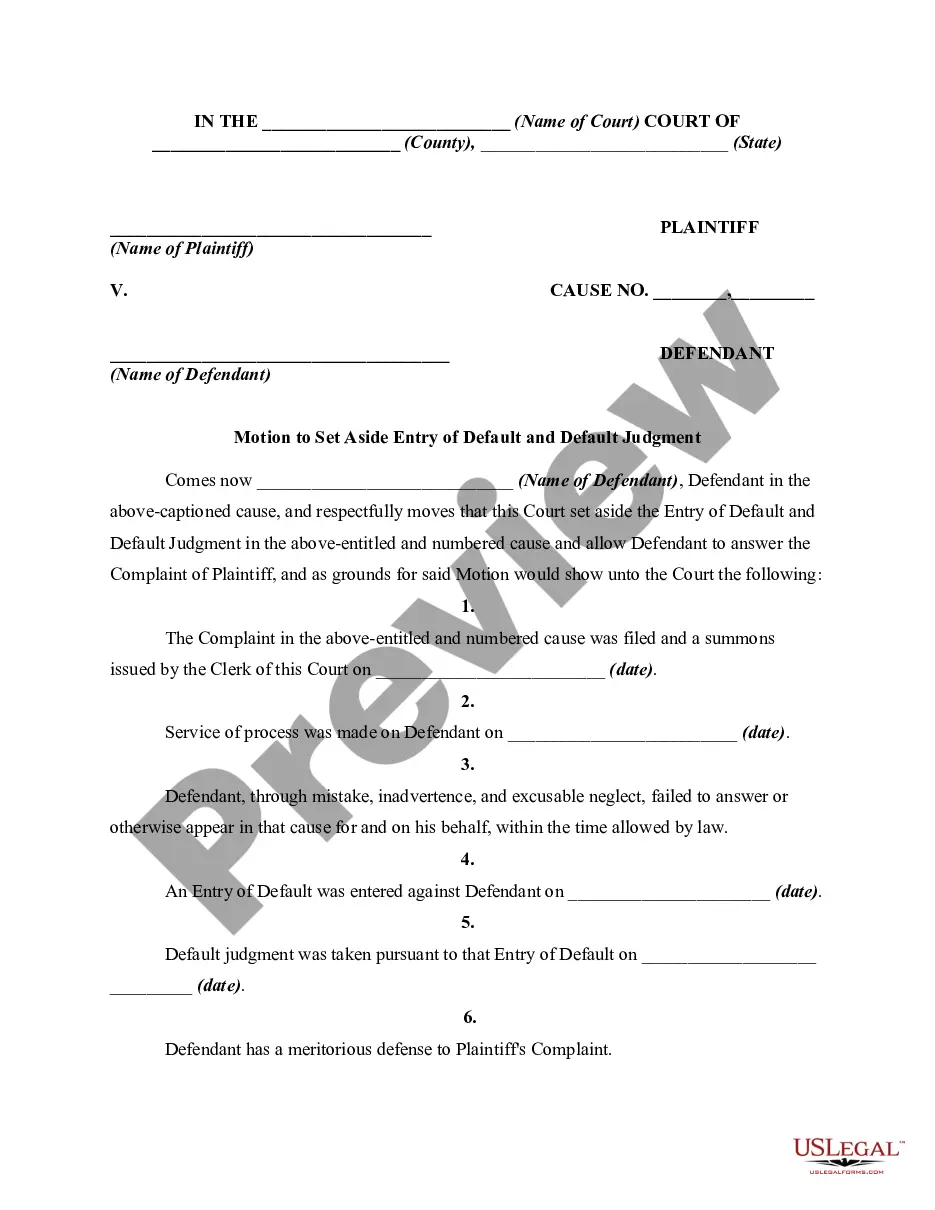
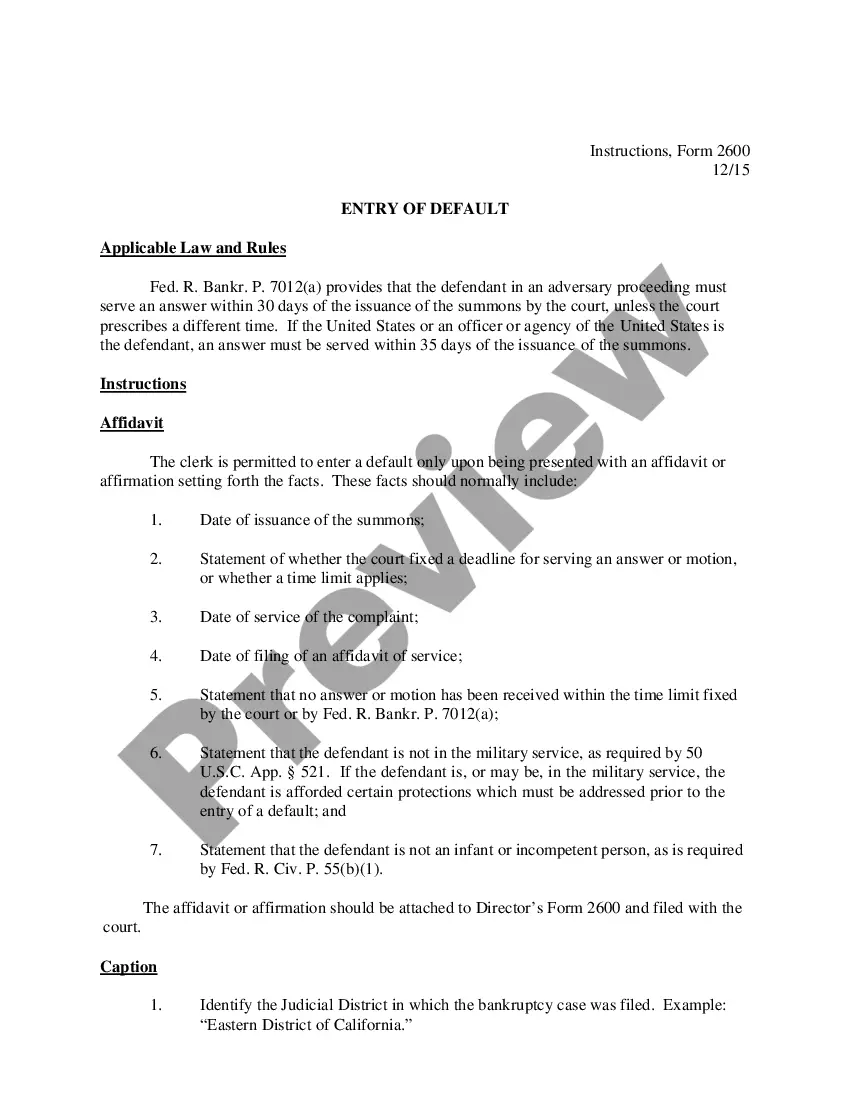
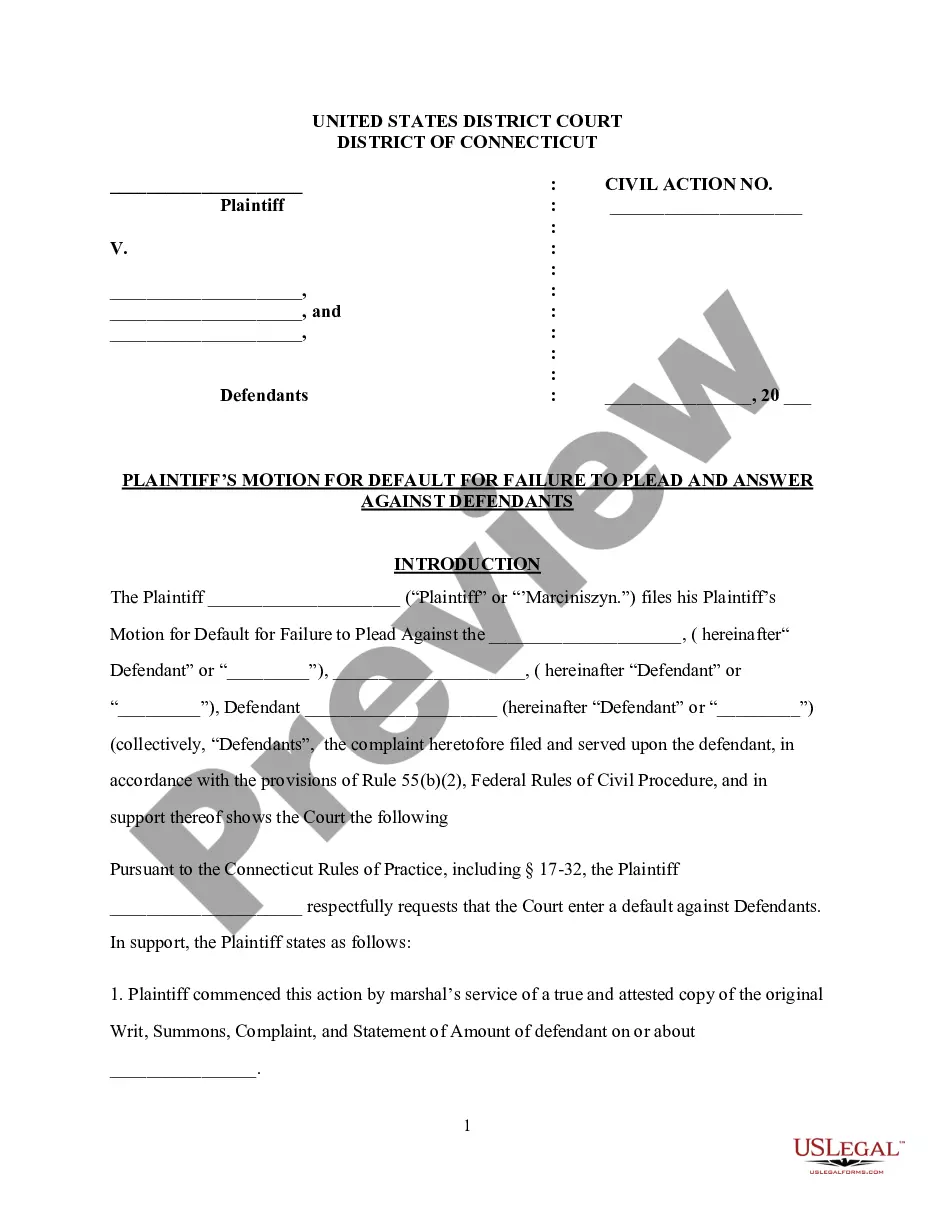
The Motion for Entry of Default Judgment is a legal document used to request a court to issue a judgment in favor of a plaintiff when the defendant has failed to respond or defend against the claim. This motion differs from other motions as it specifically pertains to cases where there is an entry of default due to the defendant not participating in the legal process.
Key components of this form
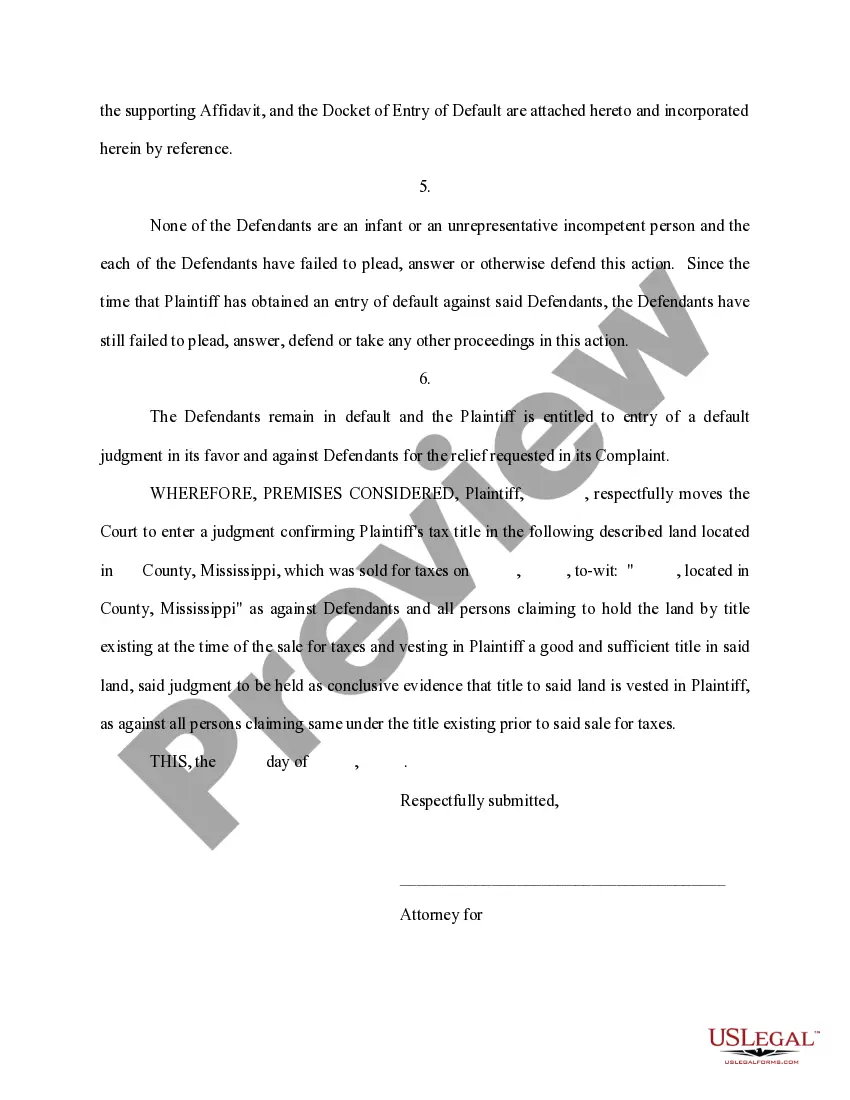
- Statement confirming that none of the defendants are minors or incapacitated.
- Affirmation that defendants have failed to plead or respond to the action.
- Request for the court to grant a default judgment based on the lack of defense from the defendants.

Common use cases
This form is typically used when a plaintiff has filed a lawsuit and the defendant has not responded within the required timeframe. It is appropriate in situations where the plaintiff seeks a judgment without the need for a trial because the defendant has failed to take any action in the case.
Who this form is for
- Individuals seeking to enforce a legal claim against a defendant who has not responded.
- Parties involved in civil litigation where a default judgment is warranted.
- Lawyers representing clients in cases of default by defendants.
Instructions for completing this form
- Identify all parties involved in the case, including the plaintiff and the defendants.
- Include a statement confirming that the defendants have not responded to the lawsuit.
- Specify the relief sought from the court, which typically includes a request for a judgment.
- Sign and date the motion as required by court rules.
- File the completed motion with the appropriate court clerk.
Notarization guidance
Notarization is generally not required for this form. However, certain states or situations might demand it. You can complete notarization online through US Legal Forms, powered by Notarize, using a verified video call available anytime.
Get your form ready online
Our built-in tools help you complete, sign, share, and store your documents in one place.
Make edits, fill in missing information, and update formatting in US Legal Forms—just like you would in MS Word.
Download a copy, print it, send it by email, or mail it via USPS—whatever works best for your next step.
Sign and collect signatures with our SignNow integration. Send to multiple recipients, set reminders, and more. Go Premium to unlock E-Sign.
If this form requires notarization, complete it online through a secure video call—no need to meet a notary in person or wait for an appointment.
We protect your documents and personal data by following strict security and privacy standards.

Make edits, fill in missing information, and update formatting in US Legal Forms—just like you would in MS Word.

Download a copy, print it, send it by email, or mail it via USPS—whatever works best for your next step.

Sign and collect signatures with our SignNow integration. Send to multiple recipients, set reminders, and more. Go Premium to unlock E-Sign.

If this form requires notarization, complete it online through a secure video call—no need to meet a notary in person or wait for an appointment.

We protect your documents and personal data by following strict security and privacy standards.
Mistakes to watch out for
- Failing to confirm that all defendants have been served correctly.
- Neglecting to check whether the defendants are minors or incapacitated.
- Not following specific court rules for formatting and filing the motion.
Benefits of using this form online
- Easy to download and complete from any device.
- Editable templates that can be customized to fit specific situations.
- Access to forms drafted by licensed attorneys for reliability.
What to keep in mind
- The Motion for Entry of Default Judgment requests a court to rule in your favor when defendants fail to respond.
- Ensure all parties are correctly identified and that all required statements are included.
- Utilizing this form can expedite the legal process by seeking a judgment based on default.
Looking for another form?

Form popularity
FAQ
After you notify the defendant of the judgment, you can begin to enforce the judgment. Your judgment might be for money, repossession, eviction, foreclosure, or any number of things. In any case, your rights at this point would be the same as if you had gone to trial and won.
A default judgment means that the court has decided that you owe money. This a result of the person suing you in small claims court and you failed to appear at the hearing.
What happens next? When you file your Motion and Affidavit to Set Aside Default, you will get a hearing date and time from the court clerk. At the hearing, the judge will grant or deny the motion. If the judge grants your motion, the default or default judgment will be set aside, and the case will move forward.
Default judgments happen when you don't respond to a lawsuit often from a debt collector and a judge resolves the case without hearing your side.Next up could be wage garnishment or a bank account levy, which allows a creditor to remove money from your bank accounts to repay the debt.
A simple default doesn't mean you legally owe a certain amount of money. A default judgment identifies the amount you owe the plaintiff. You don't want this to happen because a default judgment makes you a judgment debtor. Plaintiff may use all sorts of legal procedures to legally take your money and property.
The danger of allowing a default judgment against you is once this occurs the debt buyer can garnish your wages and your bank accounts.If you don't submit a written answer to the lawsuit the court can enter a default judgment giving the debt buyer everything they are asking for.
A motion for default is made when a defendant fails to file a timely answer to a complaint/petition.If you were not served with the original petition/complaint, you can always file a petition to reopen the case.
Generally, if a defendant fails to respond to a complaint you can get a default judgment after 45 days. However, the court system is very slow these days and it can take several months to get the court to issue the default judgment.